
Vortex Optics Padded Spotting Scope Storage Case
4.3Editor score
Fits Vortex 65mm and 85mm scopes
Supports straight and angled bodies
Backed by Vortex lifetime warranty
Compare 10 spotting scope protective case options for fit, protection, portability, weather resistance, and secure storage with this practical buyer guide.
A spotting scope protective case should do more than occupy space in a closet. It should protect delicate optics from impacts, moisture, dust, scratches, and the repeated handling involved in birdwatching, hunting, travel, and long-distance observation. A good case also preserves the scope’s position, keeps accessories organized, and makes the equipment easier to carry.
The products in this guide range from soft nylon sleeves and padded backpacks to rigid, waterproof cases and model-specific stay-on covers. They were compared using the supplied fit information, materials, closure systems, carrying options, environmental protection, security features, dimensions, and customer ratings, with special attention to whether each case suits a particular scope and field routine.
Each review explains the case’s strongest benefit, practical limitations, and ideal user, beginning with the three most versatile choices. Ratings reflect the supplied customer feedback, while product availability and pricing can change. Always confirm the exact scope model, objective size, body dimensions, and required clearance before ordering.
4.3Editor score

4.3Editor score

4.9Editor score
This side-by-side comparison covers soft sleeves, padded carry bags, hard protective shells, waterproof travel cases, and model-specific stay-on designs. The differences make compatibility, environmental protection, security, and carrying convenience the most important distinctions to evaluate.


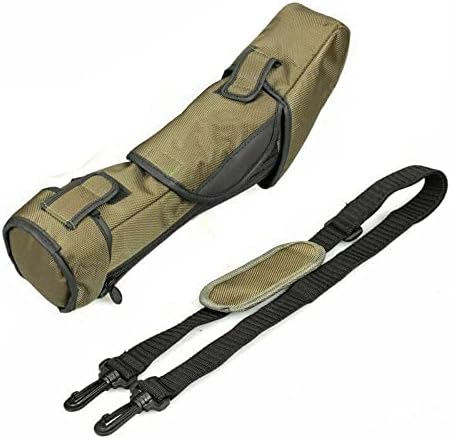


The Vortex Optics Padded Spotting Scope Storage Case is a straightforward, model-focused option for owners of compatible Vortex 65mm or 85mm spotting scopes. Its supplied rating is 4.3, which reflects generally favorable customer feedback. The standout quality is its clear compatibility: it is intended to carry either straight or angled Vortex scopes, reducing uncertainty when purchasing a storage solution.
We may earn a commission when you buy through this link, at no additional cost to you.
Its padded construction is appropriate for everyday transport and storage, particularly when the scope is kept in a vehicle, moved between indoor and outdoor locations, or stored between sessions. Rather than relying on a complex hard-shell format, it focuses on a manageable carrying case that protects the equipment while simplifying storage. The Vortex lifetime VIP warranty adds a meaningful ownership advantage because the protection applies to eligible damage or defects and is transferable.
The main limitation is specificity. The case is not presented as a universal spotting scope bag, and buyers using another manufacturer’s equipment should not assume compatibility. A soft padded case also offers less defense against crushing, severe impacts, and standing water than a rigid waterproof shell. Nevertheless, for a compatible Vortex owner wanting dependable storage without a specialized travel case, those trade-offs are reasonable.
This is the strongest value-oriented recommendation for someone who already owns a Vortex 65mm or 85mm scope and primarily needs convenient transport and protected storage. Verify the precise model and body shape before buying. It is less suitable for travelers needing airline-grade impact protection, users carrying several accessories, or observers whose scopes come from mixed brands.
The fit information covers Vortex scopes with 65mm or 85mm objective sizes in straight and angled configurations. This specificity can be an advantage because compatible owners avoid the need to estimate every body and eyepiece dimension themselves.
Padded protection is most useful for normal storage, vehicle transport, and routine field handling. It is a practical alternative to a bulky rigid case when the priority is carrying convenience rather than maximum environmental protection.
We may earn a commission when you buy through this link, at no additional cost to you.
The Case Club Spotting Scope Case for the Vortex Viper 20-60×85 combines a rigid shell with tailored internal protection. Its customer rating is 4.3, and the most appealing feature is its balance of physical security, practical closures, and organization. It is designed to hold the angled spotting scope, eyepiece, and a small collection of accessories.
We may earn a commission when you buy through this link, at no additional cost to you.
The hard injection-molded exterior is intended to resist shocks, drops, impacts, and exposure to the elements. Inside, nonabrasive closed-cell polyethylene foam helps prevent the scope and accessories from shifting or scratching. Two snap latches offer positive feedback, an integrated carry handle supports mobility, and interlocking stacking ribs make the case easier to organize with similar cases. Four padlock holes provide a way to add cable or similar security.
Its specialized fit is the main compromise. This is not a broad universal shell, and buyers should confirm that the Vortex Viper 20-60×85 angled model matches the one they own. The protected interior may also place practical limits on bulky accessories. Compared with an ordinary padded bag, it takes more planning to arrange items, but the resulting protection is substantially better suited to frequent transport.
Choose this case for a Vortex Viper owner who regularly moves the scope, stores small accessories with it, or wants protection beyond a fabric sleeve. It is a strong all-around choice for road trips, organized gear storage, and field use where a rigid shell is preferable. It is less useful for people who need a waterproof or airline-specific travel solution.
The injection-molded shell is intended to guard against impacts, drops, and other demanding transport conditions. That makes it a more convincing choice than a soft bag when the scope may be set down, stacked, or transported in a crowded vehicle.
Nonabrasive closed-cell foam supports the scope and small accessories while reducing abrasion. Combined with positive-feedback latches and optional padlock compatibility, it creates a more secure system than an open or zippered fabric carrier.
We may earn a commission when you buy through this link, at no additional cost to you.
The Case Club Waterproof Spotting Scope Case stands out as the most travel-focused recommendation in the guide. It carries a supplied customer rating of 4.9, the highest among the listed products. It is built around the Vortex Optics Viper 20-60×85 angled scope, with room for the eyepiece and small accessories.
We may earn a commission when you buy through this link, at no additional cost to you.
Its defining feature is environmental protection. The exterior is described as waterproof and dustproof, while the protective enclosure measures 18.375 inches long, 14.375 inches wide, and 7.48 inches high. A manual pressure-relief valve allows the case to be opened at altitude, an important detail for travelers checking it as baggage. The case is also described as shippable and airline approved for checked luggage.
As with the other model-specific hard case, fit is the decisive limitation. A waterproof enclosure cannot protect an instrument it does not securely accommodate. The hard format also requires more careful packing than a flexible sleeve, and users must close the latches correctly and follow the pressure-relief procedure when appropriate. Those demands are minor for frequent travelers compared with the benefit of environmental isolation.
This is the best pick for a Vortex Viper 20-60×85 owner who checks baggage, encounters rain, travels in dusty conditions, or wants a case designed to withstand demanding transit. It may be unnecessary for occasional users who keep the scope in a dry cabinet, but it delivers the strongest combination of sealing, travel suitability, and protective construction in this selection.
The waterproof and dustproof enclosure is the defining benefit for users who cannot control storage conditions. It is particularly useful for checked luggage, remote outings, and travel through wet or dusty environments.
The built-in manual pressure-relief valve addresses a specific issue associated with sealed cases during air travel. Following the valve procedure helps the user open the case after it has experienced cabin or cargo pressure changes.
We may earn a commission when you buy through this link, at no additional cost to you.
This green spotting scope bag is intended for portable field use with an 80mm or 100mm objective scope, with the listed version designated for the 100mm configuration. Its rating is 4.2. The case combines a durable nylon exterior with a soft interior, creating a lightweight carrier for birdwatching, hunting, and other activities where carrying convenience matters.
We may earn a commission when you buy through this link, at no additional cost to you.
The quick-release buckled shoulder strap makes the bag practical for a long walk or a spot where the scope must be carried across uneven ground. An attached closing system helps keep the scope secure, while the stated dimensions of 12 by 5.3 by 15.3 centimeters and weight of 0.4 kilograms indicate a compact, relatively easy-to-manage format. The green color also suits users who prefer understated outdoor equipment.
The soft construction does not provide the rigid defense of a molded shell, and it lacks the weatherproofing of the dedicated Case Club travel case. Although the description calls it shock absorbing, it should not be expected to withstand crushing or severe exposure. Buyers must also account for the listed objective version carefully, especially if the product’s general description mentions both 80mm and 100mm sizes.
This bag is best for a user who wants a light, shoulder-carried option for routine field sessions and owns a scope matching the designated 100mm fit. It is a sensible alternative to a backpack cover when easy access and compactness matter more than maximum protection. For checked baggage, heavy rain, or rough handling, a rigid waterproof case would be the safer choice.
The stated weight and compact dimensions reduce the burden of carrying a scope over long distances. A quick-release shoulder strap also allows the user to move quickly without adjusting conventional backpack shoulder straps.
The soft interior is useful for separating the scope from harder gear and reducing direct abrasion. It is most appropriate for normal field handling rather than extreme impact, crushing, or water exposure.
We may earn a commission when you buy through this link, at no additional cost to you.
The ALPS OutdoorZ Stalker is a camouflage-oriented protective sleeve designed for field users who want the scope to blend into a hunting or wildlife-watching environment. Its supplied rating is 4.3. The Realtree Edge pattern is the most immediately recognizable feature, but the case also adds meaningful padding around the optic and a dedicated area for a tripod.
We may earn a commission when you buy through this link, at no additional cost to you.
A padded main compartment helps protect the scope during carrying, while extra-thick bottom foam adds cushioning around a commonly vulnerable area. A PE frame sheet contributes structural support, and side compression straps help keep the load close to the body. The side tripod pocket and shoulder-carry format make the sleeve more useful as an active field accessory than as a simple storage cover. Dimensions are listed as 16 inches long by 5 inches deep.
The design does not claim waterproof sealing, and its dimensions alone do not establish compatibility with a particular spotting scope. Users should compare their instrument’s length and profile with the case before ordering. The sleeve also offers less crush protection than a hard shell, making it better suited to normal woodland travel than to baggage handling or rough stacking.
Choose the Stalker for hunters and wildlife observers who value subdued appearance, hands-free shoulder carrying, and somewhere to keep a tripod. It is especially convenient when the scope is used from a stationary position because the tripod pocket removes the need to carry that accessory separately. For wet climates or long-distance travel, pair it with additional weather protection or choose a sealed hard case.
The Realtree Edge pattern gives the sleeve a more natural appearance in outdoor settings. It can reduce visual prominence when the equipment is carried through hunting areas or placed near vegetation.
The side tripod pocket and compression straps streamline a common field setup. Keeping the tripod with the scope makes it easier to move from a vehicle to a viewing position without carrying multiple pieces separately.
We may earn a commission when you buy through this link, at no additional cost to you.
The green 80mm spotting scope case bag is the smaller-designated member of this closely related pair. It carries a 4.2 rating and is intended for birdwatching and hunting use. The supplied fit information describes a bag suitable for 80mm or 100mm objective scopes, while the selected listing is identified for an 80mm telescope, so buyers should follow the specific listing designation.
We may earn a commission when you buy through this link, at no additional cost to you.
The case is built from durable nylon with a soft interior, offering a light alternative to a rigid protective shell. Its attach-and-close system helps keep the scope in place, and the quick-release buckled shoulder strap provides a convenient way to carry the case. Stated dimensions are 12 by 5.3 by 15.3 centimeters, with a weight of 0.4 kilograms, making it easy to place in a vehicle or carry during a modest hike.
Its limitations are similar to those of the other soft field bag: it does not claim waterproof sealing, and it cannot protect against a heavy crushing force. The soft lining can help reduce scratches, but the scope may still shift during vigorous walking unless it is packed carefully. Aesthetically, the plain green exterior is less specialized than the Realtree camouflage of the ALPS OutdoorZ sleeve.
This recommendation makes sense for an 80mm-scope owner who regularly carries the optic on foot and wants a simple, lightweight bag. It is less appropriate for someone needing precise model-specific accommodation, serious weather sealing, or baggage-level protection. Pair it with a separate weather cover if rain and dust are common concerns.
The bag’s stated dimensions and weight support convenient movement between a vehicle and an outdoor viewing site. Its smaller profile also makes it easier to fit into existing storage arrangements than a large hard travel case.
The attach-and-close design keeps the optic contained, while the quick-release buckle allows the user to remove the strap efficiently. These features prioritize frequent access rather than maximum security against determined tampering.
We may earn a commission when you buy through this link, at no additional cost to you.
The Case Club Swarovski BTX Travel Case is built for a distinctive modular spotting scope system. Its supplied rating is 4.3. The scope, eyepiece module, objective lens module, and small accessories shown in product imagery are not included, but the case is designed to accommodate the BTX eyepiece module and objective modules in 65mm, 85mm, 95mm, or 115mm sizes.
We may earn a commission when you buy through this link, at no additional cost to you.
Removable foam spacers are the key functional feature. They allow the internal layout to change according to objective size, which is more flexible than a single fixed cavity. The closed-cell polyethylene foam is nonabrasive and can be wiped clean, a useful characteristic for a case that may collect dust, pollen, or mud. Structural ribs strengthen the exterior, while reinforced standard-size padlock holes add a layer of security.
The low-profile folding handle has a no-slip grip, and the two snap latches provide tactile feedback when the case is closed. The case is approved for airline carry-on or checked luggage according to the supplied information. As a premium modular design, it still requires careful arrangement of the objective module, eyepiece module, and spacers; a user should follow the packing sequence rather than forcing components into position.
This is an excellent option for a Swarovski BTX owner who wants one case to cover several supported objective sizes. It is also appealing to users who value airline suitability, cleanable internal materials, and adjustable protection. It is not suitable for unrelated scopes, and buyers should confirm dimensions and airline policies independently. For anyone outside the BTX system, one of the Vortex-compatible cases may be more appropriate.
Removable foam spacers allow the case to support four stated objective sizes. This flexibility is especially useful when the observer owns more than one compatible BTX objective module.
The folding no-slip handle, tactile snap latches, reinforced padlock holes, and stated airline approval create a comprehensive travel system. Those details make the case easier to move, close, and secure between destinations.
We may earn a commission when you buy through this link, at no additional cost to you.
The Swarovski Optik SOC Stay-On Case for STS 80 is a fitted, model-specific option for an 80mm straight STM or STS scope. Its rating is 4.3. The design centers on a stay-on format, allowing the case to remain associated with the instrument rather than functioning as a completely separate storage box.
We may earn a commission when you buy through this link, at no additional cost to you.
Cordura nylon provides a durable exterior, and the padded interior helps protect the scope from contact with surrounding gear. A full-length zippered closure secures the body, while quick-access objective and ocular covers give the user convenient ways to reach the lens ends. Its modular three-piece construction may also help organize the different sections of a compatible scope during storage and transport.
The decisive factor is fit. Only owners of the specified 80mm straight STM or STS scope should consider this case, and even within that family, checking the exact configuration is important. A stay-on cover is not a full waterproof flight case and should not be expected to withstand checked baggage handling, crushing, or heavy rain. Its advantage is close-fitting protection in situations where quick access remains important.
Choose this model for a compatible older Swarovski straight-bodied scope that needs a protective fitted cover. It is especially useful for users who want the case to remain on the optic between observations or who prefer accessible covers over the lens ends. Owners of angled scopes, modular BTX systems, or modern models should select a more broadly specified travel case instead.
A fitted case can protect the scope more consistently than a loose universal sleeve because it is designed around a particular body configuration. This makes the model designation an essential part of the purchase decision.
Objective and ocular covers make the scope’s ends easier to reach. The full-length zipper adds containment while preserving a practical way to open and close the fitted cover.
We may earn a commission when you buy through this link, at no additional cost to you.
The Swarovski Optik Protective Case in green for the ATM 80 is a fitted stay-on cover with a supplied rating of 4.8. Its central benefit is continuity: the case is designed to remain with the scope rather than requiring the user to remove and reinstall a separate protective shell for every observation.
We may earn a commission when you buy through this link, at no additional cost to you.
The supplied information specifically says that the case does not slip or rub and will stay on even while the spotting scope is in use. Those qualities can prevent unnecessary movement during a viewing session and reduce the chance of the scope contacting nearby equipment. A carrying strap is included, adding a basic transport method for a setup otherwise designed to remain close to the optic.
The obvious limitation is model specificity. The ATM 80 designation is the defining feature, and none of the supplied information indicates that the cover is universal. It also lacks stated waterproofing, crush resistance, or airline approval, so it should be treated as fitted protection rather than a hard travel case. Users who need a sealed enclosure for aircraft, rain, or dusty vehicle storage require a different design.
This is a strong recommendation for an ATM 80 owner who values a secure, close-fitting cover and wants it to remain on the instrument during active observation. Its high rating and straightforward stay-on behavior are compelling for users tired of a loose case shifting while the scope is set up. Confirm the model before ordering and use an additional weather cover when conditions demand it.
A case that remains attached avoids the need to remove protection every time the scope is used. It also helps maintain a consistent relationship between the cover and the optic during setup.
The stated anti-slip and anti-rub behavior is valuable around campsites, vehicles, and other shared storage areas. It helps preserve the setup and reduces the possibility of the protective cover shifting during use.
We may earn a commission when you buy through this link, at no additional cost to you.
The Swarovski Optik Protective Case in green for the STM 65 completes the guide with a compact, model-specific option. Its supplied rating is 5.0, the highest numerical customer rating in this selection. The case uses a protective stay-on design and includes a carrying strap for convenient movement with the compatible scope.
We may earn a commission when you buy through this link, at no additional cost to you.
The key operational benefit is that the cover is designed not to slip or rub and can remain on while the scope is in use. For an STM 65 owner, that creates a tidy setup with fewer repeated removal and installation steps. The green appearance and dedicated fit also offer a more integrated look than a generic black fabric bag or a large rigid travel shell.
The case is exclusively tied to the STM 65 designation, and the supplied data does not indicate universal compatibility. It also has no stated waterproof rating, rigid impact structure, or airline suitability. Those omissions do not make it inadequate for its intended purpose, but they clearly place it in the fitted-observation-cover category rather than the all-purpose travel-case category.
This is the most highly rated product in the guide and a compelling choice for a compatible STM 65 owner seeking a close-fitting cover that stays in position. It is particularly useful for regular wildlife observation, where the user may move between the scope and a viewing position. Buyers should verify the exact model and maintain the case within conditions appropriate for soft fitted protection.
The 5.0 supplied rating reflects exceptionally positive feedback for the compatible STM 65 setup. It is a meaningful confidence signal, although fit still should be confirmed against the buyer’s exact instrument.
Because the cover is designed to stay on and avoid rubbing, it reduces unnecessary handling around the optic. This is useful when the scope is used frequently and setup speed matters.
We may earn a commission when you buy through this link, at no additional cost to you.
The right protective case depends first on exact scope compatibility, followed by the conditions the equipment will face and the way it will be carried. Compare model dimensions, internal construction, closure security, weather resistance, and accessory capacity before making a final selection.
A spotting scope’s advertised magnification, objective diameter, and model name do not always reveal its complete physical shape. Angled and straight bodies have different profiles, while modular scopes may separate into an eyepiece module and an objective module. The correct protective case must accommodate those components without forcing them, pinching cables or seals, or leaving the optic unsupported. Check the full model designation rather than relying only on magnification or objective size.
Choose only a case explicitly listed for your scope, or one whose stated dimensions and adjustable foam system clearly cover it. When in doubt, compare the scope’s length, width, and height with the case’s interior and exterior measurements.
Soft padded cases are appropriate for routine storage and careful field handling. Hard molded shells provide better resistance to impacts, drops, and crushing, while waterproof cases add protection against rain, dust, and accidental immersion. A fully sealed case may be excessive for indoor storage, but it becomes valuable for checked baggage, wet climates, dusty terrain, and long-distance travel.
The right level of protection follows the harshest routine the scope is likely to encounter. Consider whether the case will be left in a vehicle, carried through rain, placed near other equipment, or transported through baggage handling before choosing its construction.
Internal padding should support the scope at its heavier sections and keep the objective and ocular ends from contacting hard surfaces. Nonabrasive closed-cell foam resists scratching and can be wiped clean, making it practical for equipment used in dirty conditions. Removable spacers add flexibility when a case must support more than one objective size, but a perfectly fitted fixed layout can be easier to pack consistently.
Look for a case that holds the scope securely without excessive compression. The internal material should reduce movement, protect vulnerable ends, and remain compatible with any accessories stored alongside the optic.
Closures determine how easily a case can be opened in the field and how well it stays shut during transport. Zippered fabric cases provide convenient access, while rigid snap latches offer a more positive visual and tactile confirmation. Padlock holes add deterrence against casual access, although they do not make a case theftproof. A stay-on cover serves a different purpose: it remains associated with the scope during use rather than enclosing it between sessions.
Choose closures that match the setting. Quick access may matter more in the field, while stronger latches and lock points benefit frequent travel or shared storage. Make sure every latch closes fully and that fabric zippers are not strained when the case is packed.
A case should be convenient for the route between storage and the observation point. A shoulder strap works well for moderate walks, a backpack-style design can distribute weight across both shoulders, and a folding handle is useful for moving a rigid case through airports or vehicles. Integrated tripod storage is valuable when the user regularly carries both pieces of equipment. Every handle, strap, and buckle should remain clear of the scope’s moving parts.
Favor a carrying method that matches the frequency and distance of use. A case that is easy to lift but awkward to wear may be less appealing than a slightly heavier option that can be carried comfortably for hours.
Small accessories such as an eyepiece, adapters, lens covers, and cleaning tools may need a secure place inside the case. A molded interior can keep them from contacting the optics, while a fabric pocket offers flexible storage but less separation. Check whether the accessory space is useful without preventing the primary scope from sitting in its intended position.
Do not force a bag to accommodate equipment beyond its stated purpose. A dedicated case with tailored foam may be better for organized travel, while a simple sleeve works when the scope and tripod can travel separately.
A case intended for travel must be considered alongside the scope’s weight, the airline’s size rules, and the manner in which the baggage will be handled. Cases explicitly described as carry-on or checked-luggage approved provide useful guidance, but travelers should still confirm current airline requirements before departure. Sealed cases may also require attention to pressure changes, making a built-in relief valve an important feature.
For frequent fliers, prioritize a secure closure, clear external dimensions, reliable handle, and confirmed packing method. For occasional travel, a padded storage case may be sufficient and easier to manage.
Customer ratings can reveal practical strengths that a short feature list does not capture, such as comfortable straps, reliable closures, or fit problems involving a particular scope revision. The supplied ratings in this guide range from strong model-specific satisfaction to favorable general performance. They should be treated as one purchasing signal alongside dimensions, materials, and compatibility.
Read recent feedback for recurring complaints, especially about loose fit, difficult latches, or unexpected dimensions. Use the rating to support—not replace—a compatibility check based on the exact model.
Before placing the scope in its case, clean and dry the objective, ocular, and any exposed adjustment surfaces. Remove loose dirt and moisture because trapped particles can abrade the lens or damage the case lining. Fit the scope in the stated orientation, add small accessories only where the design provides a protected area, and avoid forcing a module into a cavity that appears close to its intended fit.
Close every zipper, latch, strap, or cover fully. For a hard case, check that the latches engage evenly and that the perimeter is free of fabric or foam that could interfere with the seal. When using a waterproof case during air travel, follow the manufacturer’s pressure-relief instructions. Position the case securely in checked baggage or within the permitted limits of the cabin, and protect the exterior from damage during handling.
After use, remove the scope if moisture, mud, or salt may be present and let both the optic and case dry in a ventilated area. Wipe the case with a damp cloth and mild cleaner appropriate for its material, avoiding harsh chemicals on optical coatings. Keep closures dry, inspect latches and straps periodically, and store the case in a clean, dry location with the scope properly supported.
Choose the case by the scope’s exact model, body shape, and objective diameter, not magnification alone. Confirm the product’s stated fit and compare the case dimensions with the scope and eyepiece. Angled, straight, modular, and older-style scopes have different shapes, so a case designed for one may not support another even when the objective sizes are identical.
A hard case generally provides stronger protection from impacts, drops, and crushing, while a padded sleeve is lighter and easier to access. Hard cases are valuable for frequent travel, vehicle transport, and shared storage. Padded cases are often sufficient for indoor storage or careful field use where weight and convenience matter more than maximum physical protection.
A waterproof case is most useful for outdoor users, travelers, and anyone storing the scope in a vehicle or humid environment. It provides stronger protection from rain, dust, and splashes than a standard fabric carrier. If the scope will remain in dry indoor storage, a padded or rigid non-sealed design may be sufficient without adding unnecessary bulk.
Some cases use adjustable or removable foam and can support several models or objective sizes, while most are dedicated to one configuration. The Case Club Swarovski BTX case, for example, supports four stated BTX objective module sizes through removable spacers. Always verify the dimensions and supported configurations rather than assuming that a similarly sized scope will fit safely.
Place the scope in its intended orientation and ensure every part rests in the tailored foam without forcing it. Keep small accessories in their designated spaces and prevent them from pressing against exposed lens surfaces. Close the case only after checking that no fabric is caught in the latches or sealing edge, then confirm the closure engages evenly on both sides.
The stay-on cases in this guide are specifically designed to remain attached and avoid slipping or rubbing while the scope is in use. That makes them convenient for repeated wildlife observation because the owner does not need to remove and reinstall the cover every time. They remain fitted protective covers rather than waterproof or crush-resistant travel cases.
A case stated to be airline approved may be suitable for checked luggage, but the current rules of the operating airline still apply. Verify the external dimensions, the combined weight of the scope and case, packing requirements, and any destination restrictions. For a sealed case with a pressure-relief valve, follow the stated opening procedure after flight.
Remove dirt and moisture after each outing, then dry the case fully before closing it. Use mild cleaner appropriate for nylon, molded plastic, or other listed materials, and keep liquids away from the scope. Periodically check zippers, latches, straps, padlock holes, and foam for wear so damaged components can be replaced before they compromise protection.
The Vortex padded case is the practical value choice for compatible 65mm and 85mm scopes, while the standard Case Club hard shell provides a balanced mix of rigid protection, organized storage, and security for the Vortex Viper 20-60×85. For demanding travel, the waterproof Case Club version adds the strongest environmental protection and the highest supplied rating. Each serves a distinct routine rather than attempting to be a universal solution.
Prioritize exact compatibility first, then decide how much protection the way you use the scope actually requires. Soft cases are convenient for regular field access, fitted stay-on covers excel at keeping protection near the optic, and rigid or waterproof shells are better for travel, rough transport, and exposed storage. Accessory capacity, carrying method, closure security, and cleanability should complete the decision.
Finally, recheck the current listing details, dimensions, customer feedback, and availability before purchasing. Scope designs and case versions can change, and current conditions may be represented differently from the supplied product information. Comparing the seller’s latest fit notes and images with your own scope helps prevent an otherwise well-made case from becoming a frustrating mismatch.