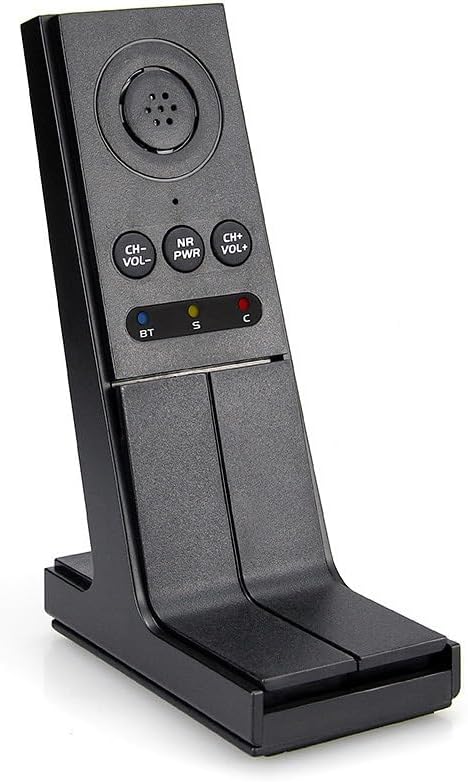
AnyTone BT03 Wireless Desktop Microphone
3.0Editor score
Compatible with specific AnyTone models
Low-latency proprietary wireless link
Responsive push-to-talk control
Comfortable extended-session design
Explore the best Ham Radio Microphone for Base Stations in 2026, comparing 10 wired, wireless, amplified, desktop, and compatible radio options.
A ham radio microphone for a base station should deliver clear voice pickup, dependable push-to-talk operation, and a connection that suits the radio and operating position. The best choice depends on connector compatibility, amplified or standard circuitry, desktop ergonomics, and whether a wired or wireless link better suits your station.
This guide compares ten microphones using the supplied ratings, intended equipment, connector details, control features, construction, and operator-focused benefits. It covers amplified CB and ham desk microphones, wireless desktop models, wired desktop units, DTMF hand microphones, and several radio-specific replacements, while separating genuine base-station choices from handheld-oriented options.
The picks reveal that no single microphone fits every station: some excel as dedicated desktop controls, others add wireless flexibility, and many depend on a particular radio or connector. Ratings and product availability can change, and prices fluctuate, so confirm the connector, radio model, power requirements, and current listing details before purchasing.
3.0Editor score

4.7Editor score
4.7Editor score
The comparison below highlights each microphone's form, connection, major control features, and compatibility considerations. Several options are specialized for particular radios, so the most important comparison point is whether the microphone fits the transceiver and the operator's base-station setup.


The Delta M2 Chrome is the strongest all-around choice in this roundup for operators seeking a dedicated base-station microphone with familiar physical controls. Its supplied rating is 4.7, placing it among the highest-rated products in the group. The listing identifies it as an amplified dynamic power-base microphone for CB and ham applications, with a four-pin Cobra connection and heavy-duty construction.
We may earn a commission when you buy through this link, at no additional cost to you.
Its main advantage is the combination of a dynamic element, amplified design, tone control, and modulation control. Those features give a fixed-station operator more influence over the transmitted voice than a basic replacement microphone. The desktop form also suits a permanent operating position, while the substantial construction appears designed to handle frequent use rather than occasional portability.
The main trade-off is compatibility. A four-pin Cobra-style connection is not a universal base-station interface, so the radio, interface cable, or adapter arrangement must be verified before buying. Because the microphone is amplified, operators should also confirm how it receives power and whether its gain or switching arrangement is appropriate for the connected radio. The chrome finish adds a distinctive station appearance, but appearance should remain secondary to connector fit.
This is the most practical recommendation for a CB or ham operator who wants a purpose-built desk microphone and values manual sound controls. It is especially compelling for operators already using compatible four-pin equipment. For everyone else, check the radio connector and power method first rather than choosing solely on appearance or the amplified feature.
The Delta M2's heavy-duty construction and desktop format are better aligned with a permanent base station than with mobile operation. It gives the operator a substantial microphone and accessible controls for regular QSOs, dispatch-style monitoring, or extended listening periods.
Tone and modulation controls distinguish this model from a simple push-to-talk replacement. Those adjustments can help an operator shape the voice signal around the radio, room acoustics, and preferred speaking style, although exact behavior depends on the connected system.
We may earn a commission when you buy through this link, at no additional cost to you.
The AnyTone BT03 is the wireless option in this guide and stands out for operators who want to move around their base station without managing a microphone cable. Its supplied rating is 3.0, so it does not lead the list on customer feedback. Its appeal instead comes from the proprietary low-latency wireless protocol, desktop design, and focus on simple push-to-talk operation.
We may earn a commission when you buy through this link, at no additional cost to you.
The BT03 is specifically designed for the AnyTone AT-578UV and AT-878 and is not compatible with other radio brands or models. Within that restricted ecosystem, it offers clear advantages: cable-free placement, fast PTT response, strong and consistent connectivity, and an ergonomic shape intended to remain comfortable through long sessions. It is also positioned for dispatch and amateur-radio environments where operators may appreciate freedom of movement.
Its limitations are significant for anyone outside the stated compatibility list. A proprietary connection cannot simply be assumed to work with another base transceiver, and operators must also account for the charging and power needs of a wireless desktop unit. The lower supplied rating is another reason to read recent customer feedback carefully and verify the product's fit with the intended radio before ordering.
The BT03 is a compelling budget-oriented choice for a base-station owner who uses one of the named AnyTone models and prioritizes wireless freedom. It is not the safest universal recommendation in the group. Confirm the exact radio version, included connection requirements, and operating setup before making it part of a primary station.
A wireless microphone allows the desk microphone to be positioned independently of the radio. That flexibility can reduce cable clutter and make it easier to move between operating positions while preserving a familiar push-to-talk workflow.
The BT03 is designed around specific AnyTone models and uses a proprietary low-latency protocol. It is most appropriate when the radio, connector arrangement, and wireless ecosystem have already been confirmed rather than inferred from a general radio brand.
We may earn a commission when you buy through this link, at no additional cost to you.
The Black Chrome Delta M2 offers the core concept of the top-ranked Delta M2 in a darker finish for operators who prefer a less conspicuous desk setup. Its supplied rating is also 4.7. The product is identified as an amplified dynamic power-base microphone with a four-pin Cobra connection, making it more of a specialized station accessory than a universal microphone.
We may earn a commission when you buy through this link, at no additional cost to you.
Its fixed-station form, dynamic element, and amplified design are useful characteristics for a dedicated operating position. The black chrome finish may suit a station with dark equipment, polished desk surfaces, or a restrained visual style. As with the chrome version, the important buying consideration is the four-pin interface rather than the finish, because a correct physical match comes first.
The supplied product information is brief, offering fewer operational details than some other listings in the roundup. That means the buyer should not assume features that are not stated, such as specific tone settings, memory functions, or compatibility beyond the indicated four-pin format. The power requirements and intended radio connection should also be checked in the current listing and radio documentation.
Choose this model when you want the Delta M2's amplified base-microphone concept in black chrome. It is particularly relevant for compatible CB or ham station configurations that benefit from a full-size desk unit. Before purchasing, confirm that the four-pin arrangement matches the radio or existing cable and understand the microphone's power requirements.
Black chrome gives operators another finish option for a permanent desk setup. The visual difference is meaningful for stations where a silver microphone may look visually prominent, while the functional core remains an amplified dynamic base microphone.
The four-pin Cobra-style connector is the defining limitation. It can make the microphone a natural fit for an established compatible system, but an operator with another interface needs to verify pinout and power requirements rather than assuming a simple physical match is enough.
We may earn a commission when you buy through this link, at no additional cost to you.
The TWAYRDIO KMC-9C is a wired desktop microphone designed as a replacement for compatible Kenwood mobile-radio desktop units. Its supplied rating is 4.1. The eight-pin connector, larger push-to-talk button, and extensive list of supported Kenwood models make it a practical option for operators who want a fixed-station control without moving the radio itself.
We may earn a commission when you buy through this link, at no additional cost to you.
The product information identifies compatibility with models including the NX-820HG, NX-920G, NXR-710, NX-5700, NXR-810, NXR-900, NXR-901, TK-6110, TK-7102, TK-7160, TK-7162, TK-7180, TK-7360, TK-760G, TK-880G, TKR-750, TKR-850, TK-760, TK-860, TK-762, and TK-862. It also states that the package includes one KMC-9C desktop microphone. That specificity is useful when comparing it with generic desk models.
The larger PTT button is the most visible ergonomic benefit. It reduces the need to adjust hand position during frequent transmissions and supports a fixed desk operating style. The limitation is that compatibility is model-dependent, and the supplied information does not suggest the microphone is universally interchangeable. As a wired unit, it also retains the cable-management and placement considerations associated with traditional base-station microphones.
The KMC-9C is a sensible recommendation for a Kenwood operator whose exact radio appears in the supported list and who prefers a conventional wired desktop microphone. It offers a useful blend of model-specific fit and a straightforward PTT layout. Review the radio's microphone specification and the connector before ordering, especially if your transceiver is a newer or differently named variant.
The oversized push-to-talk button is designed to make everyday transmission easier from a desk position. For operators making repeated short calls, the feature can reduce small hand movements and make the microphone easier to operate without looking closely.
The long compatibility list is a major strength, but it also makes exact verification important. Operators should compare their transceiver's model designation with the supplied list and confirm that the desktop microphone's eight-pin interface is the intended accessory.
We may earn a commission when you buy through this link, at no additional cost to you.
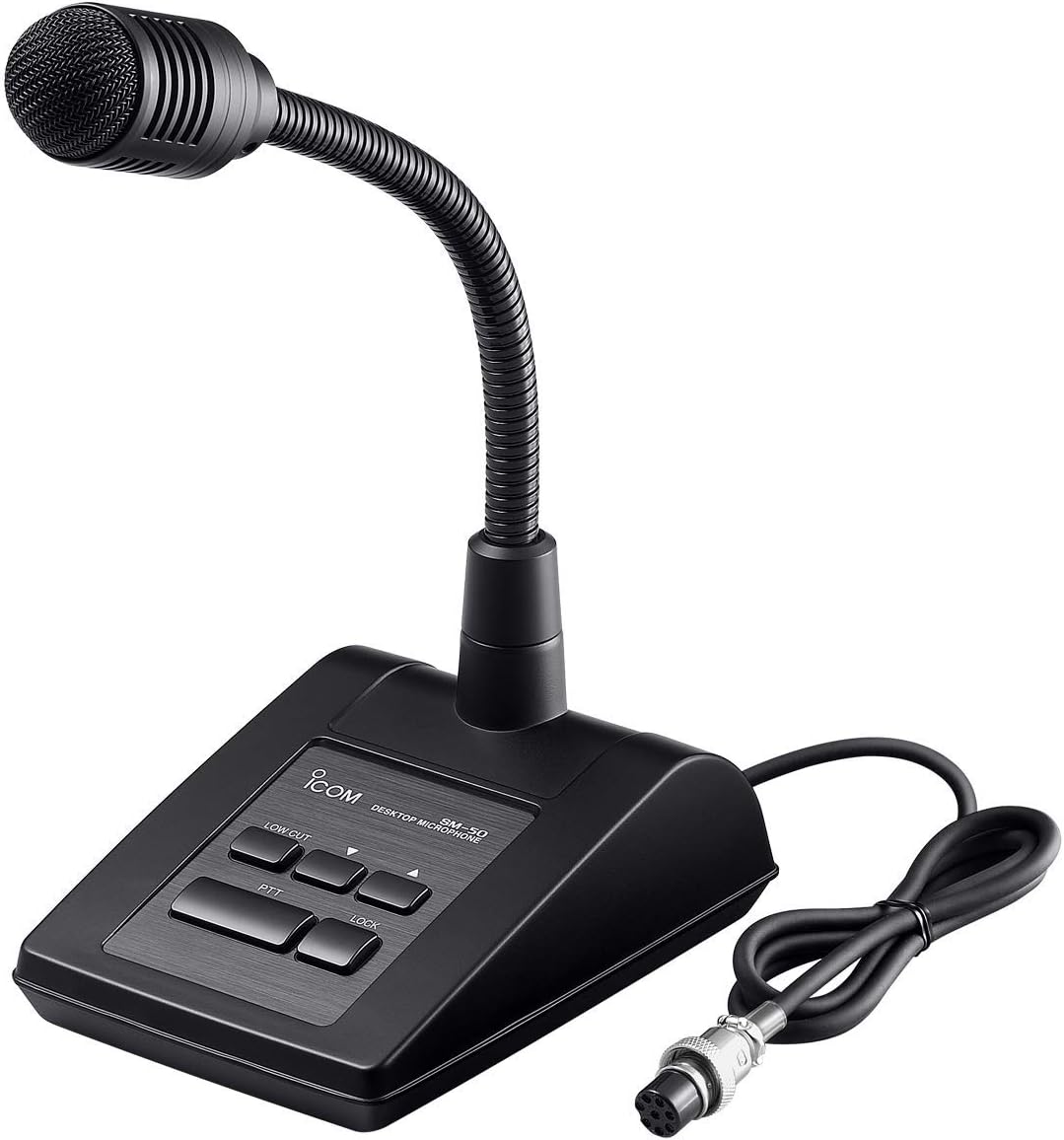
The Icom SM-50 is the premium desk-microphone choice in this guide, combining a 4.7 supplied rating with a feature set designed for clean voice transmission. Its unidirectional polar pattern focuses pickup in one direction, while the stated 70 dB signal-to-noise ratio is intended to reduce the contribution of background noise during operation.
We may earn a commission when you buy through this link, at no additional cost to you.
The microphone is listed as compatible with an amplifier for clear audio, which gives it relevance for operators who want to integrate a desk microphone into a larger station system. Its durable construction suits regular use, and the supplied information emphasizes straightforward setup and adjustment. Together, those qualities make it a refined choice for a permanent position rather than a temporary handheld accessory.
Compatibility is the key caveat. The product is specifically an Icom desk microphone, and the supplied information does not present it as a universal connector standard. The buyer should confirm the exact Icom transceiver, required accessory cable, and amplifier arrangement. Premium positioning also raises the standard for setup: a proper match and clean installation matter if the microphone's focused pickup and noise-control characteristics are to be fully useful.
The SM-50 is best recommended for an Icom base-station operator who values a dedicated desk form, focused pickup, and a clear audio specification. It is also a strong choice when the station includes an appropriate amplifier. For someone with an unrelated radio or an uncertain connector, select a model explicitly listed for that equipment instead of forcing compatibility.
A unidirectional pattern concentrates the microphone's attention on sound arriving from the intended direction. That can be useful in a shared room where the radio station is not the only source of ambient noise and unwanted sound from behind the microphone is a concern.
The stated 70 dB signal-to-noise ratio presents a clear technical reason to consider the SM-50 for voice-focused operation. In practical terms, the intended benefit is a cleaner voice signal with less background noise becoming part of the transmission.
We may earn a commission when you buy through this link, at no additional cost to you.
The Yaesu SSM-17A is not a traditional desktop microphone, but it is a versatile option for a base-station operator who wants a reliable handheld speaker microphone close to the radio. It carries a 4.6 supplied rating and replaces the discontinued MH-34B4B. The product information also says the SSM-17A provides improved sound and performance compared with the item it replaces.
We may earn a commission when you buy through this link, at no additional cost to you.
Compatibility spans numerous Yaesu, Vertex, and Standard Horizon radios, including the FT-60R, VX-3R, FT3DR, FT2DR, FT-70DR, VX-150, VX-5R, VX-160, VX-420, and FT-250R. Its genuine Yaesu branding and one-year manufacturer warranty add reassurance for operators who prioritize established compatibility and accessory provenance.
The main drawback is that the single-pin, non-threaded connector and handheld design make it a different proposition from a full desk microphone. It may be useful at a base station, especially when the radio remains mobile or the operator wants a familiar grip, but it does not offer a fixed desktop PTT button or dedicated audio controls. Compatibility must still be checked against the specific radio and connector arrangement.
The SSM-17A is recommended for someone replacing a discontinued MH-34B4B or seeking a genuine Yaesu handheld microphone for a compatible base setup. It is also a sensible backup for an operating position where the radio remains in mobile form. If the goal is a permanently mounted desk experience, a model explicitly designed as a desktop microphone will be more aligned.
For owners of the discontinued MH-34B4B, the SSM-17A provides a clearly identified replacement route. Matching the original part number and radio model can simplify both purchase planning and connector confidence.
Although this is a handheld speaker microphone, it can still serve a base-station arrangement where mobility around the radio matters. Its broad supported-radio list makes it more adaptable than a microphone built for only one narrow model family.
We may earn a commission when you buy through this link, at no additional cost to you.
The QYT keypad microphone offers one of the most control-heavy designs in the roundup, with a 16-button keypad and dedicated functions for menu navigation, programming, channel selection, scanning, and locking. Its supplied rating is 4.6. The microphone is intended for QYT mobile radios including the KT-8900, KT-8900D, KT-980 Plus, KT-7900D, and KT-5800.
We may earn a commission when you buy through this link, at no additional cost to you.
Menu, up, down, A/B, exit, reverse, scan, and lock functions are explicitly listed. That makes it useful for operators who want to manage radio settings from the microphone rather than relying exclusively on the radio's front panel. The RJ-45 microphone jack is described as using the same pin output as Kenwood, which is useful information when comparing connection formats.
Its shortcoming for a base-station buyer is form factor. This is a handheld speaker microphone, not a weighted desktop unit with a large stationary PTT control. It can still be used from a fixed operating position, especially when the supported radio is also used as a mobile unit, but the overall station experience differs from that of a dedicated desk microphone. Keypad usefulness also depends on the radio's supported functions.
This microphone is a strong pick for a compatible QYT radio owner who values a full keypad and hands-on radio control. It may be especially useful for dispatch-style tasks, programming, or mobile-radio work carried out at a desk. Confirm the radio model and connector before ordering, and choose a dedicated desktop microphone if a stationary PTT button is the primary requirement.
The keypad provides direct access to common radio functions, including menu navigation, scan, reverse, channel-related commands, and locking. This reduces the need to move between a handheld control head and separate programming controls when supported by the radio.
The stated Kenwood-style RJ-45 pin output provides context when comparing this microphone with wired alternatives. Pinout similarity can simplify compatibility research, but the operator should still confirm that the connector is physically and electrically appropriate for the intended QYT radio.
We may earn a commission when you buy through this link, at no additional cost to you.
The Yaesu MH-48A6JA is a DTMF hand microphone intended for a defined group of Yaesu radios, including the FTM-350, FT-1900R, FT-2900R, FT-7800R, FT-8800R, and FT-8900R. Its supplied rating is 4.3. The product is particularly relevant to operators who use DTMF functions and want a genuine Yaesu remote microphone for their radio.
We may earn a commission when you buy through this link, at no additional cost to you.
DTMF support can be useful for systems and operating procedures that depend on tone commands, while the model's compatibility with several listed mobile transceivers gives operators more than one possible radio pairing. As an original-brand accessory, it may also provide greater confidence in connector and control-layout alignment than an unbranded alternative, provided the radio is on the supported list.
The trade-off is that the supplied product information is concise and does not elaborate on detailed button layouts, audio specifications, or construction. The microphone also remains a handheld accessory rather than a desk unit. An operator whose main goal is a comfortable, stationary PTT microphone may find a dedicated desktop model more ergonomic even if the radio itself remains compatible with this control head.
The MH-48A6JA is the right recommendation for a supported Yaesu transceiver that uses this DTMF remote microphone and for operators who value a genuine-brand accessory. It is less suitable as a general base-station microphone because compatibility is narrow and the form factor is designed around handheld operation. Always confirm the transceiver's specified microphone and DTMF requirements before buying.
The DTMF-equipped design adds tone-based control to the microphone. For compatible radios and procedures that rely on those functions, this can make the control head more useful than a basic speaker microphone without extra external hardware.
The listed FTM-350, FT-1900R, FT-2900R, FT-7800R, FT-8800R, and FT-8900R support gives the product a clear use case. Exact model confirmation helps avoid buying a microphone whose connector or DTMF functions do not align with the station radio.
We may earn a commission when you buy through this link, at no additional cost to you.
The Icom HM-151 is a DTMF replacement remote microphone for the IC-7000, with the product information noting that it was standard with the USA version. Its supplied rating is 3.9. For an operator already using that radio, its focused model matching is more important than the broader compatibility offered by general-purpose handheld microphones.
We may earn a commission when you buy through this link, at no additional cost to you.
As a DTMF microphone, it is intended to provide more than basic voice and PTT operation. That can be valuable where radio controls, tone functions, or model-specific remote operation are needed. The dedicated IC-7000 application also makes installation expectations clearer: the operator can focus on the correct radio and its expected remote-microphone arrangement rather than evaluating many generic connector standards.
The limitation is obvious but important: the supplied information points specifically to the IC-7000. This narrow scope means it is unsuitable for someone comparing broad replacement options for unrelated radios. Its 3.9 supplied rating is also lower than those of several other selections, so potential buyers should consider the most recent customer feedback and current product details. The information does not describe the exact button layout or advanced control functions.
The HM-151 is best for an IC-7000 owner who needs the specified DTMF remote microphone, particularly if the original unit needs replacement. It is not a general recommendation for a multi-radio station. Confirm the transceiver version, DTMF requirements, and included wiring before ordering, especially when purchasing a used or previously installed unit.
Matching a replacement microphone to one radio model can simplify the decision considerably. The HM-151's stated IC-7000 focus makes it a practical choice for owners who know exactly which transceiver they need to support.
DTMF capability gives the microphone a more specialized role than a basic voice-and-PTT unit. The operator should confirm which tone functions the radio supports and whether the HM-48A6JA's DTMF feature set matches the intended operating requirements.
We may earn a commission when you buy through this link, at no additional cost to you.
The Standard Horizon SSM-21A is a commercial handheld speaker microphone with a rugged waterproof and submersible design. Its supplied rating is 4.3. Although it is not a traditional base-station desk microphone, it can serve an operating position where radio mobility, environmental resistance, and broad model compatibility matter more than a stationary PTT layout.
We may earn a commission when you buy through this link, at no additional cost to you.
The threaded single-pin four-conductor connector is a notable feature, and the microphone is listed for the HX-870, HX-370, HX-890, HX-400, HX40, VX-6R, HX210, and other selected models. It is also described as a genuine Yaesu or Standard brand item and as a replacement for the discontinued SSM-14A. Together, these points make it a logical option for maintaining equipment that still uses an older Yaesu accessory family.
The trade-off for a dedicated base station is ergonomics. A handheld unit does not provide the stable desk support or oversized stationary PTT button that a dedicated desktop microphone can offer. Its threaded connector may also require more careful installation than a common quick-connect arrangement. Because the supplied compatibility statement includes selected models, operators should verify the exact radio rather than assume every Yaesu handheld is supported.
The SSM-21A is a strong recommendation for operators needing a tough, water-resistant handheld microphone for compatible radios, particularly as a replacement for the SSM-14A. It can also act as a reliable station accessory when the transceiver is used both at a desk and away from it. For a permanent base-station microphone, however, a desktop model will usually offer a more natural operating experience.
The waterproof submersible design makes the SSM-21A more appropriate for demanding operating environments than a basic desktop microphone. It is useful for station owners who need a control head that can tolerate moisture and continue serving a mobile-radio setup.
Replacing the discontinued SSM-14A can preserve a working setup built around an older Yaesu accessory platform. The stated supported-radio list provides a useful starting point, but exact model and connector verification remains necessary before purchase.
We may earn a commission when you buy through this link, at no additional cost to you.
The most important buying decision is whether the microphone physically and electronically fits the radio. After connector and power requirements are settled, operators can compare form factor, amplification, control options, audio characteristics, wireless flexibility, and intended operating environment.
A microphone may look appropriate for a transceiver while still being electrically incompatible. The choices in this guide include four-pin Cobra-style plugs, an eight-pin Kenwood-style desktop connection, a single-pin connector, a threaded single-pin four-conductor plug, and a proprietary wireless arrangement. Check the radio's manual or accessory list, confirm the connector format, and verify pin assignment rather than relying on the connector's physical appearance alone.
Choose a microphone specifically listed for your radio and connector. Compatibility is the first filter because a beautiful desk microphone is of little value if it cannot transmit reliably.
Amplified microphones include active circuitry and are intended to work with a compatible radio or power arrangement. The Delta M2 is explicitly amplified, while the Icom SM-50 is described as compatible with an amplifier. Determine whether your radio supplies the required microphone power, how gain is adjusted, and how the microphone will behave with the station's external equipment.
Match the electrical design to the transceiver. Do not assume an amplified unit will improve every radio, and do not connect a powered microphone to an interface without checking the required voltage and pinout.
A desktop microphone provides a stable resting position and usually places the push-to-talk control where the operator can reach it without picking up a handheld radio. The TWAYRDIO KMC-9C, for example, emphasizes a larger PTT button, while the AnyTone BT03 offers a desktop wireless design for extended sessions. Consider chair height, reach, wrist position, and whether the operator speaks without picking up the microphone.
For a permanent desk, prioritize a stable base and an easy-to-operate PTT. A handset microphone can still work at a base station, but it changes the experience and may require continuous hand support.
A wired microphone offers a direct physical path to the radio and avoids questions about wireless latency, charging, or interference. A wireless model can reduce cable clutter and allow the operator to reposition freely, but the listed AnyTone BT03 uses a proprietary low-latency protocol and supports only specified radio models. Wireless convenience therefore comes with strict ecosystem and power considerations.
Choose wired for simplicity and direct operation, or wireless for placement flexibility after confirming radio compatibility, charging needs, and the manufacturer's supported device list.
Voice clarity depends partly on how the microphone handles ambient sound. The Icom SM-50 uses a unidirectional polar pattern and states a 70 dB signal-to-noise ratio, features intended to emphasize the operator's voice while minimizing background sound. Other amplified dynamic models offer tone or modulation adjustments for a different type of sound shaping. Consider room acoustics and nearby equipment when comparing specifications.
Look for a pickup pattern and signal-to-noise information that match the operating room. A focused pattern is useful in shared spaces, while adjustable tone may be more helpful when changing radio or audio configurations.
Some operators need only voice and PTT, while others want tone access, channel controls, or programming functions. The QYT microphone includes a 16-button keypad and controls for menu, scan, reverse, lock, and other functions. The Icom HM-151 and Yaesu MH-48A6JA are identified as DTMF microphones. These added features are useful only when the connected radio supports the relevant functions.
List the controls you actually use before choosing a feature-rich microphone. Extra buttons help when supported, but they add little value when the radio cannot operate them or the operator never needs them.
A base-station microphone normally remains at a desk, making stability, finish, and comfortable operation the main durability considerations. A rugged handheld such as the Standard Horizon SSM-21A takes a different approach with a waterproof submersible design for demanding conditions. Whether an operator chooses an amplified desk unit or a mobile-radio control head should reflect where the radio actually lives and how it is used.
Match construction to the environment. Prioritize a stable base for the operating desk and environmental resistance for radios that move between the desk, vehicle, field, or workshop.
The supplied customer ratings provide a useful snapshot, ranging from 3.0 for the AnyTone BT03 to 4.7 for both Delta M2 listings and the Icom SM-50. Ratings are not a substitute for compatibility, and they may not reflect every aspect of sound quality, installation, or durability. Review recent customer feedback and the current listing for connector details, included accessories, power requirements, and any changes in product information.
Use ratings to shortlist options, then verify the technical fit. Current availability and pricing also change, so confirm the live listing before making a final purchasing decision.
Begin by confirming that the microphone, connector, radio, and any required power or amplifier arrangement are a supported combination. Read the radio and microphone instructions, identify each connector pin or wireless pairing process, and make the connection while the radio is powered down. For a desktop unit, place it where the operator can reach the PTT naturally and speak toward the intended pickup direction from a consistent position.
After connecting a wired microphone, perform a low-power test and listen for the expected audio level before making normal transmissions. Adjust the radio's gain, microphone gain, tone, or modulation controls gradually rather than making several large changes at once. For a wireless model, complete the required pairing and verify that the PTT action reliably commands the radio. Test the unit in the normal operating environment so cable strain, ambient noise, or placement problems become apparent early.
Care for the microphone by unplugging it before changing connectors, avoiding sharp bends in the cable, and keeping the microphone element clear of dust and moisture. Do not use aggressive chemicals on the housing, grille, or finish. A powered or amplified model should be disconnected when it will not be used for an extended period. Keep replacement instructions and the original packaging so connector details, model information, and compatible accessories remain easy to identify.
The best choice depends primarily on radio compatibility and operating style. The Delta M2 Chrome is a strong overall option for compatible four-pin CB or ham systems, the Icom SM-50 is a premium desk choice with focused unidirectional pickup, and the AnyTone BT03 suits supported AnyTone users who want wireless placement. No universal connector option appears in this list.
Desktop microphones are generally more comfortable for prolonged operation because they rest on the desk and often provide a large stationary PTT button. Handheld models remain useful when the radio is mobile, the operator wants a backup, or the station needs a control head with keypad or DTMF functions. The best form depends on how and where the radio is used.
Check the radio's manual, rear-panel connector description, or official accessory list for the exact microphone model. The products reviewed here include four-pin, eight-pin, single-pin, RJ-45, and proprietary connection arrangements. Also verify electrical requirements, particularly for amplified microphones that need radio-supplied power.
An amplified microphone contains active circuitry that processes or boosts the voice signal before it reaches compatible radio equipment. The Delta M2 is explicitly described as an amplified dynamic base microphone. Amplification can provide useful control, but it must match the radio's voltage, pinout, and gain arrangement to operate correctly.
A wireless microphone can provide stable operation when it is designed for the exact radio and uses a supported protocol. The AnyTone BT03 uses a proprietary low-latency protocol and is limited to specified AnyTone models. Wired models avoid wireless pairing, charging, and potential interference concerns, so the preferred choice depends on compatibility and operating priorities.
DTMF is useful only if your radio, operating procedure, or downstream system relies on tone commands. The Icom HM-151 and Yaesu MH-48A6JA are identified as DTMF microphones, while the QYT model provides a larger keypad. If your station only uses voice and PTT, a simpler model may be easier to operate.
Yes, provided the microphone is compatible with the radio and the operator is comfortable holding it during use. The Yaesu SSM-17A, QYT keypad microphone, Yaesu MH-48A6JA, Icom HM-151, and Standard Horizon SSM-21A are handheld-style options. A true desk microphone is generally easier to use continuously.
Choose wired when straightforward operation, a permanent connection, and minimal charging management are priorities. Choose wireless when cable-free placement and the freedom to move around the operating area matter more. In either case, radio compatibility comes first, and a wireless microphone should only be purchased for the models and protocol explicitly supported by its manufacturer.
The Delta M2 Chrome leads this guide as the best overall fit for a compatible four-pin station because it combines an amplified dynamic element, tone and modulation controls, and heavy-duty desktop construction. The AnyTone BT03 is the leading wireless option for supported AnyTone radios, while the Icom SM-50 represents the premium desktop choice with unidirectional pickup and a stated 70 dB signal-to-noise ratio.
Prioritize connector and radio compatibility before comparing appearance or features. A wired desktop model with accessible PTT controls is ideal for a permanent position, while a wireless unit adds placement flexibility only when the radio is supported. Handheld and DTMF microphones remain useful for operators who need keypad access, model-specific functions, or a radio that moves between mobile and base use.
Finally, review current customer feedback, package contents, power requirements, and the latest product listing before purchasing. Ratings, availability, accessories, and prices can change, and the best microphone is the one that connects correctly, sounds clear in the intended room, and feels comfortable during regular operation.

