
ABBREE Wireless Handheld Speaker Mic
4.0Editor score
Two-pin radio compatibility
Smartphone Bluetooth support
Rotating clothing clip
USB-C fast charging
Best Bluetooth Headset for Ham Radio Operators compares 10 wireless options for compatibility, PTT control, audio clarity, comfort, and everyday use.
A Bluetooth headset for ham radio operators can make long station sessions, mobile communications, and remote-base work more convenient. The right model should pair cleanly with your radio, provide dependable push-to-talk control, reproduce voice clearly, and remain comfortable when worn for hours. Equipment compatibility is the essential starting point.
This guide compares ten headsets and wireless radio accessories using the supplied specifications, including supported radio connectors, PTT arrangements, microphone design, noise reduction, wearing style, battery features, and intended operating environments. It covers purpose-built ham radio equipment alongside general Bluetooth options that may suit particular station, vehicle, or hearing-protection setups.
Each numbered review explains the strongest feature, practical trade-offs, and the operators most likely to benefit from that model. The shortlist highlights the top three choices, while the comparison table makes connector and form-factor differences easier to scan. Product availability and pricing can change, so confirm current details before ordering.
4.0Editor score

3.8Editor score

4.1Editor score
The comparison below organizes the ten products by radio connection, control method, audio and hearing-protection features, and wearing format. Because these accessories use different proprietary, two-pin, Bluetooth, and hearing-protection approaches, connector verification is essential before selecting a model.
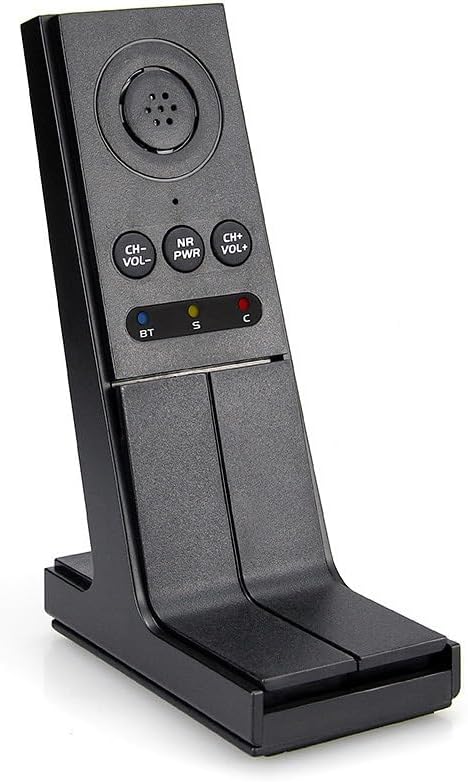


The AnyTone BT03 is a wireless desktop microphone designed specifically for AT-578UV and AT-878 radios. Its 3.7 rating reflects a specialized product with clear operational advantages, particularly for fixed stations that want PTT control without a cable running across the desk. Its main strength is focused compatibility rather than broad, cross-brand versatility.
We may earn a commission when you buy through this link, at no additional cost to you.
The microphone uses a proprietary low-latency wireless protocol to provide stable transmission and clear voice pickup. A dedicated push-to-talk button supports rapid control, while the desktop format places the controls within easy reach during extended QSOs. The supplied information also emphasizes operator comfort, durable construction, and suitability for base-station, dispatch, and amateur-radio environments.
The significant limitation is model-specific compatibility. It is not designed to work with other radio brands or models, and its proprietary wireless link means it cannot serve as a general Bluetooth headset for a phone. The desktop form also makes little sense for an operator who needs mobility, concealed wearing, or an unobtrusive earpiece during field work.
This is a sensible choice for an AnyTone 578UV or 878UV owner whose main objective is a clean, cable-free desk setup. Buy it if your radio is explicitly listed as supported and your operating position is stationary. If you use another brand, change radio models regularly, or need one headset for both phone and radio calls, a more universal two-pin option will be easier to justify.
The dedicated design removes guesswork for owners of the listed AT-578UV and AT-878 models. That specificity is valuable because connector standards and proprietary accessories can otherwise create frustrating compatibility problems.
Keeping the microphone on the desk and using its integrated PTT allows the radio to sit elsewhere within the station area. The design is particularly useful when a permanently attached cable would interfere with operating position, paperwork, or dispatch workflows.
We may earn a commission when you buy through this link, at no additional cost to you.
The black ABBREE Wireless Handheld Speaker Mic combines a two-pin radio connection with Bluetooth support for compatible iOS and Android phones. Its 4.0 rating makes it one of the stronger-rated products in this guide. It is especially attractive to operators who want a wireless speaker microphone without giving up access to supported ham radios.
We may earn a commission when you buy through this link, at no additional cost to you.
Compatibility is a major strength. The listed radio family includes Baofeng UV-5R variants, BF-F8HP, UV-5RM, GM-15PRO, GM-21, UV-5G Plus, AR-152, UV-32, and K5Plus. The package includes a speaker mic, Type-C charging cable, two-pin K adapter, and belt. A 360-degree rotating back clip makes the handheld unit easier to position on a belt, vest, or other attachment point.
The wireless radio link may introduce a one-to-two-second transmission delay on some walkie-talkies, according to the supplied guidance. That delay should be considered in fast-paced teams or emergency-style coordination. Volume buttons adjust output only during an active radio call rather than serving as a general smartphone media control. This is a wireless speaker mic, not a private earbud-style monitoring headset.
Choose this ABBREE model if you operate one of the supported two-pin radios and want one accessory to cover radio and smartphone communication. It is a particularly compelling choice for clubs, field teams, and mobile operators who want more freedom than a permanently cabled handheld mic provides. Confirm your radio model and connector before ordering.
Bluetooth phone support broadens the device beyond a conventional radio speaker mic. That versatility can simplify communication when a team member uses both a walkie-talkie and a smartphone during the same shift or outing.
The rotating clip allows operators to adjust the microphone angle, while USB-C charging can draw power from a wall outlet, vehicle, computer, laptop, or power bank. That makes the accessory practical for field use as well as fixed operation.
We may earn a commission when you buy through this link, at no additional cost to you.
The green ABBREE Wireless Handheld Speaker Mic is a color variation with a feature set similar to the black version. It holds a 4.0 rating and supports a broad group of two-pin radios, including Baofeng, Quansheng, and Wouxun models listed in the product information. The green housing may be easier to identify in a shared kit or busy operating environment.
We may earn a commission when you buy through this link, at no additional cost to you.
This microphone links wirelessly to supported walkie-talkies and can also work with iOS and Android phones. A 360-degree rotating back clip allows the operator to set the angle, while the included USB-C cable supports charging from numerous common power sources. The package also contains a two-pin K adapter and belt for a more complete wearable setup.
Operators should account for the stated possibility of a one-to-two-second delay on some walkie-talkies. As with the black model, volume adjustment applies during a radio call rather than as a conventional phone control. Because it is a shoulder speaker microphone, users receive amplified radio audio without inserting an earpiece, which can be useful in group settings but less private in public spaces.
This model suits operators who prefer the green finish or want to maintain visual consistency across a club fleet. It is a strong alternative to the black ABBREE for supported-radio users who also need smartphone pairing. Confirm that your radio appears in the compatibility list, especially if you depend on precise timing or need discreet private monitoring.
Supporting multiple named radio families makes it easier for a club or event team to standardize on one speaker mic. Operators should still compare their exact radio model and connector, since similarly named variants can differ.
The distinctive finish can help users distinguish the microphone from other equipment in a shared bag or station. Color does not affect the wireless function, but it can simplify inventory and handoff during group operations.
We may earn a commission when you buy through this link, at no additional cost to you.
The Wireless Finger PTT Earpiece is the most directly aligned with the needs of many ham radio operators seeking private monitoring and hands-free transmission. Its 3.8 rating is moderate, yet the feature balance is strong: a two-pin radio earpiece, wireless finger PTT, a noise-canceling microphone, smartphone synchronization, and an adjustable over-ear design.
We may earn a commission when you buy through this link, at no additional cost to you.
The headset supports Baofeng UV-5R, UV-82, BF-F8HP, UV-82HP, RT21, H777, and other devices using a K-type connector. The PTT unit can be secured to a finger, bicycle or motorcycle handlebar, or steering wheel. That flexibility supports mobile use while reducing the need to pick up the radio to transmit. A 270-degree adjustable earbar helps position the earpiece securely on either ear.
Compatibility boundaries are important. The product is not compatible with Motorola, ICOM, Hytera, or radios using a different connector arrangement. Although it can synchronize with a mobile phone, the primary radio function depends on the appropriate two-pin adapter and successful wireless pairing. Operators should also consider whether a finger-mounted control feels natural during their normal activities.
This is the strongest overall recommendation for a supported two-pin radio when discreet listening and accessible PTT are priorities. It suits mobile stations, driving, cycling, security, or field work where a speaker microphone would be intrusive. Owners of Motorola, Midland, ICOM, or Hytera radios should look at a connector-specific alternative rather than risk an incompatible purchase.
The earpiece keeps incoming traffic at the operator's ear, while the wireless finger PTT places transmission under direct fingertip control. Together they reduce the need to handle the radio during movement or in situations where both hands may be occupied.
A noise-canceling microphone is intended to improve transmission clarity in noisy environments. It can be valuable in vehicles, event sites, and outdoor operations where ambient sound may otherwise interfere with voice pickup.
We may earn a commission when you buy through this link, at no additional cost to you.
The Kenwood Two-Pin Wireless Earpiece uses Bluetooth 5.3 to connect a clip-on earpiece receiver with a radio adapter. No customer rating is supplied for this listing, so the evaluation necessarily focuses on its documented functionality. Its most attractive feature is the quick automatic pairing process, commonly completed within approximately five to ten seconds after both devices are powered on.
We may earn a commission when you buy through this link, at no additional cost to you.
Voice prompts report power status, successful connection, disconnection, and low-battery conditions, reducing uncertainty during setup and daily use. The receiver has an integrated PTT: operators press and hold to transmit and release to listen. A coiled cable helps control excess wire, and the clothing clip can attach to a collar, shirt, vest, or backpack strap for a stable over-ear fit.
The included Kenwood-style adapter uses a compatible K1-style arrangement with 3.5 mm and 2.5 mm two-pin ports. It is intended for select Baofeng, Quansheng, Retevis, and Pxton models, but connector layouts can differ by model or revision. The supplied guidance specifically recommends comparing the radio port with the product images before ordering.
This earpiece is well suited to operators who want rapid reconnection and a receiver-side PTT without using a finger controller. It works for security, warehouse, hiking, camping, and routine team communication. Verify the physical connector and radio model before purchase, since the absence of a customer rating makes independent user feedback less available for comparison.
Automatic pairing within approximately five to ten seconds simplifies start-of-shift routines. Voice prompts add useful confirmation, helping users notice a failed connection or low battery before it becomes a communication problem.
The integrated PTT removes the need for a separate finger switch. Mounting the compact receiver on a collar, vest, or backpack strap keeps the control close to the operator's natural hand position.
We may earn a commission when you buy through this link, at no additional cost to you.
The PRYMEBLU BT-503-V2 is a wireless radio adapter designed for Motorola two-pin portable radios. Its 3.5 rating is among the lower scores in this list, but the product addresses a specific and otherwise underserved connector category. It supports listed Motorola CLS, CP, DTR, Mag One, R2, RDX, RMX, and VL50 radios using the M1 or x03 standard.
We may earn a commission when you buy through this link, at no additional cost to you.
The adapter works with PRYME wireless accessories and most consumer Bluetooth headsets that support the HSP profile. Transmit quality is best when a headset boom microphone sits near the mouth. The unit includes push-to-talk on the adapter and can also work with an optional PRYME wireless PTT. Headset accessories with integrated PTT may not require a separate control, although third-party PTT buttons may not be compatible.
Automatic pairing and reconnection reduce repeated setup, while a stated ten-to-twelve hours of operation can cover a full work shift after charging. The product is also compatible with hearing aids supporting Bluetooth HSP, though A2DP-only or AuraCast-only streamer devices are excluded. During headset connection, phone music and streaming audio are blocked so radio traffic can be heard.
This is the leading choice in the group for a Motorola two-pin radio user who needs a professional, headset-based setup. It is especially relevant to security, hospitality, retail, warehouse, construction, events, and public-safety users with compatible equipment. If you own another radio brand or require phone streaming while connected, choose a different connector-specific product.
The adapter targets the standard Motorola M1 and x03 connection used by numerous listed portable-radio models. That focus makes it a practical bridge between familiar Motorola equipment and modern Bluetooth headsets.
HSP compatibility broadens the range of suitable audio devices, including supported Bluetooth headsets and hearing aids. Operators should still consult their hearing-aid manufacturer and audiologist before purchasing to confirm profile and accessory support.
We may earn a commission when you buy through this link, at no additional cost to you.
The radtel Bluetooth Headset comes as a two-pack and supports both walkie-talkies and smartphones. Its 2.8 rating is the lowest among the ten products, which warrants careful attention to compatibility and user expectations. The set may nevertheless be useful for operators who want spare headsets, shared equipment, or continuous access to two device types.
We may earn a commission when you buy through this link, at no additional cost to you.
Its core advantage is dual connectivity. The headset can connect with a radio and a smartphone rather than serving as a strictly radio-only accessory. A stated wireless range of up to ten meters supports common short-range uses, while a noise-canceling microphone is designed to improve communication clarity and a high-capacity battery is intended to reduce charging interruptions.
The soft ear cushions and lightweight construction are presented as benefits for long periods of wear. However, the compatibility description is less granular than those of several purpose-built alternatives. It names Baofeng, Kenwood, BTech, UV-32, UC-5R, AR-5RM, and BF-F8HP PRO among supported equipment, but buyers should confirm the exact adapter or connection method required by their own radio.
This two-pack is most compelling for clubs, volunteer groups, or operators who want a backup headset. It may also suit users who alternate between radio and smartphone calls. Because its rating is relatively low and compatibility details are less specific, confirm the radio model, connector, and included components before buying. It is best viewed as a convenience-focused set rather than the safest specialized choice.
A two-unit package offers practical value for clubs, event teams, or households sharing radio equipment. A spare can remain available while the primary headset is charging or being used by another operator.
Radio and smartphone connectivity lets the headset move between work and personal communication. The ten-meter operating range is best suited to environments where the user can remain nearby rather than at long distance.
We may earn a commission when you buy through this link, at no additional cost to you.
The 3M WorkTunes Connect combines hearing protection, Bluetooth audio, and an AM/FM radio in one over-ear design. Its 4.3 rating is the highest among the listed products. It is not documented as a ham-radio PTT headset, but it may suit operators who spend time in mechanically noisy environments and prioritize hearing protection alongside wireless audio.
We may earn a commission when you buy through this link, at no additional cost to you.
A 26 dB Noise Reduction Rating provides the core protective function, while Bluetooth wireless technology supports calls and music. The self-adjusting safe volume control is designed to keep listening at a safer level throughout the day. The product is water and sweat resistant, making it more practical for active work, travel, and outdoor tasks than a conventional office headset.
Power can come from two AA batteries or an optional Alpha 1100 lithium-ion rechargeable battery. This flexibility lets users choose between readily available disposable cells and a rechargeable setup. However, the supplied information does not describe a radio PTT control, dedicated radio connector, or headset microphone designed specifically for two-way radio transmission.
Choose the WorkTunes Connect when hearing protection is the leading requirement and your communication needs are phone-based or entertainment-oriented. It can be a useful adjunct for a ham operator working around loud machinery, but it should not be mistaken for a direct radio accessory without confirming the actual radio setup. For transmit-and-receive radio control, one of the connector-specific headsets is a better fit.
The 26 dB NRR and over-ear format make the headset more protective than a standard Bluetooth earpiece. This is valuable for operators working around power tools, machinery, outdoor equipment, or other high-noise areas.
Users can select AA batteries or the optional rechargeable battery, while the automatic volume limiter helps manage long listening sessions. Water and sweat resistance adds durability for demanding work environments.
We may earn a commission when you buy through this link, at no additional cost to you.
The 3M Pro-Comms Electronic Hearing Protection is the most specialized hearing-protection and group-communication option in the guide. Its 4.1 rating is strong, and the feature set is aimed at teams working in high-noise environments. For a ham radio operator who also requires environmental awareness, that combination may justify considering it ahead of basic audio-only headsets.
We may earn a commission when you buy through this link, at no additional cost to you.
External microphones help users remain aware of surrounding activity while the 26 dB NRR hearing protection reduces hazardous noise exposure. The NRR is listed as 25 dB when worn with a hard hat. A dedicated noise-canceling boom microphone supports communication in high-noise settings, and recessed microphone construction is intended to resist damage and reduce wind noise.
Bluetooth wireless technology supports calls and music, while push-to-talk through a third-party application enables headset-to-headset and group communication. Ergonomic controls and Audio Assist provide setup guidance. The important limitation is that the documented PTT route depends on a third-party app rather than a native connection to a specific two-way-radio connector.
This is a premium pick for teams needing hearing conservation, environmental awareness, and app-based group communication. A ham operator should evaluate whether app-based PTT fits the operating workflow and whether separate radio integration is required. It is best for industrial or high-noise team settings rather than serving as a direct replacement for a Baofeng, Motorola, or AnyTone radio headset.
External microphones allow surrounding sound to reach the wearer while electronic protection manages hazardous noise. This is particularly helpful when machinery, vehicles, or team movement must remain audible.
The noise-canceling boom microphone and third-party app PTT create a communication system designed for groups working in noisy environments. Operators should confirm that app-based control matches their communications procedure before relying on it in the field.
We may earn a commission when you buy through this link, at no additional cost to you.
The PHILIPS Trucker Bluetooth Headset is a single-ear wireless headset designed for calls, navigation, office work, and call-center communication. Its 4.2 rating is the second-highest in this group. Although it does not provide a documented ham-radio connector, its awareness-focused design can complement a mobile operator's non-radio communication setup.
We may earn a commission when you buy through this link, at no additional cost to you.
An AI noise-canceling microphone helps isolate the user's voice in trucks, warehouses, and busy offices. The single-ear format keeps the other ear open for traffic, coworkers, GPS prompts, or nearby equipment. An adjustable headband and soft ear cushion are intended to make long shifts comfortable, while the instant mute control provides a quick way to pause microphone input.
The headset can pair with two devices at once, allowing a phone and computer to remain connected. Voice assistant compatibility supports hands-free control for calls, directions, settings, and tasks. The battery can be recharged in two hours, and the product is marketed for extended daily use. It is not documented as a radio PTT device, so it cannot transmit directly to a compatible two-way radio.
Choose the PHILIPS headset when you spend significant time in a vehicle or noisy workplace and need one device for phone calls, computer meetings, and navigation. It can complement a ham radio setup but should not replace a radio-specific headset. For operators whose main requirement is over-the-air radio communication, prioritize one of the two-pin or proprietary options reviewed earlier.
The mono over-ear arrangement leaves one ear open, allowing traffic, machinery, coworkers, or navigation prompts to remain audible. This is a meaningful safety advantage in mobile and busy workplaces.
Two-device pairing supports a combination of calls, online meetings, and directional guidance. The instant mute control and voice assistant compatibility further reduce the need to handle the headset during busy periods.
We may earn a commission when you buy through this link, at no additional cost to you.
The right headset depends first on radio connector and control requirements, followed by the operating environment. Consider whether you need private earpiece monitoring, amplified speaker audio, hearing protection, smartphone pairing, or a PTT that remains reachable while moving.
Connector type determines whether an accessory can physically and electronically connect to your radio. The products in this guide cover AnyTone proprietary connections, Kenwood-style or K-type two-pin arrangements, and Motorola M1 and x03 ports. Radio brands can use several connectors under similar names, and revisions of the same model may differ. Check the connector pictured in the listing against the socket on your radio before ordering.
A wireless headset must also provide a dependable way to transmit. Options include an integrated desktop PTT, a receiver-mounted button, a finger-mounted PTT, an adapter-side PTT, an accessory-controlled PTT, or app-based group communication. Finger PTT is convenient while driving or cycling, while a receiver-side control may be easier to operate during long station sessions.
An earpiece provides private monitoring and can reduce distraction in public or shared spaces. A shoulder speaker microphone is louder, easier to locate quickly, and often better for team environments where multiple people need to hear incoming traffic. Consider how much audio privacy you need, whether your radio audio is essential to nearby coworkers, and whether the product must fit under clothing or on a helmet.
Clear transmission depends heavily on microphone placement and environmental noise. A boom microphone positioned near the mouth is generally better suited to high-noise operation than a distant microphone. Noise-canceling features can improve perceived clarity, but they do not remove the need for correct positioning. Test the available voice controls and transmission habits in the locations where the headset will actually be used.
If you work around loud engines, power tools, industrial machinery, or other hazardous sound, hearing protection should influence the decision. A 26 dB NRR hearing-protecting headset offers a different purpose from a lightweight radio earpiece. It can provide environmental awareness through external microphones while reducing hazardous noise, but confirm that its communications system integrates with your radio requirements.
Consider battery life, charging connector, and the availability of power in your operating environment. Some models charge through USB-C from a wall outlet, vehicle, computer, laptop, or power bank. Others use replaceable AA batteries, while one includes an optional rechargeable system. A headset that lasts an entire shift without a spare or accessible charger is more useful for daily operation than one with slightly different features but inconvenient power management.
Long radio sessions can make small fit differences important. Over-ear models use an adjustable bar or headband and may be worn on either side. Clip-on speaker microphones require an attachment point on a belt, vest, or clothing. Finger PTT devices introduce another contact point that should not interfere with sensitive controls, gloves, or steering. Choose a layout you can position repeatedly without shifting or pinching.
Bluetooth support can be useful for calls, navigation, and group applications, but it does not automatically mean the headset connects to a two-way radio. Some models use a proprietary radio protocol, while others pair with a phone and require a separate radio adapter. Also note that a radio headset may block ordinary phone streaming while connected. Decide whether multi-device use is essential before paying for features you will not use.
Begin by confirming the radio connector and model, then install the correct adapter if one is required. Charge the headset fully, power on the radio adapter and earpiece or microphone, and follow the manufacturer's pairing sequence. Allow the stated automatic pairing time when applicable, and confirm connection through the available voice prompts, indicator, or audio test before relying on the unit during operations.
Position the microphone close to the mouth and adjust the earpiece, ear hook, headband, clothing clip, or finger PTT for comfortable access. Test both transmit and receive functions at low volume, then adjust the radio's audio and the headset controls as needed. Learn whether PTT must be held continuously, how the call ends, and whether any radio or phone streaming function is disabled while the headset is connected.
For care, keep charging contacts and connectors clean and dry, and avoid charging a wet unit. Replace damaged earpieces, clips, cables, or adapters rather than forcing a poor connection. Store the headset in a dry place away from excessive heat, follow the battery guidance supplied by the manufacturer, and periodically test both transmission and monitoring before a contest, emergency-support activity, club event, or extended mobile assignment.
Not necessarily. A general Bluetooth headset may connect to a phone, but a two-way radio usually needs a compatible wired adapter or a wireless radio adapter. The radio must support the connector used by that adapter. Always verify the exact radio model and port layout before purchasing a headset marketed for walkie-talkies.
Both terms refer to two-pin-style accessory connections, but they can describe different physical arrangements and model families. Some products use the broader K-type designation, while others specifically mention a Kenwood K1-style 3.5 mm and 2.5 mm arrangement. Connector appearance and the manufacturer's compatibility list are more reliable than the label alone.
It can be very useful when an operator needs private monitoring and hands-free access to transmit. The finger control can be secured to a steering wheel, handlebar, or other suitable point, reducing the need to pick up the radio. Operators should practice the action first so pressing the control remains reliable under movement or while wearing gloves.
A conventional wireless speaker microphone is not necessarily a hearing-protection device. If hazardous noise is present, choose an electronic hearing protector with a stated NRR and an appropriate over-ear design. Even then, confirm that it supports the radio communication method required by your station.
Several models in this guide also support iOS or Android Bluetooth connections. That does not guarantee identical behavior across devices, and a radio model may use a proprietary wireless protocol rather than the phone's Bluetooth connection. Review the pairing instructions and platform support before purchasing for mixed radio-and-phone use.
Some wireless accessory systems add a small processing or transmission delay. The ABBREE speaker microphone documentation specifically notes that some supported walkie-talkies may experience one to two seconds of delay. Operators who coordinate fast-moving teams should test this behavior before relying on it in critical situations.
Record the radio's full model number and connector type, then compare both with the product's compatibility information and images. Similar model names can conceal connector revisions, especially among inexpensive two-pin radios. When in doubt, ask the seller or manufacturer to confirm compatibility using your exact model designation.
An earpiece offers private monitoring and works well when nearby chatter would distract the operator or expose radio traffic. A shoulder speaker microphone is easier to locate, offers stronger shared audio, and suits group operations. The best choice depends on privacy, mobility, ambient noise, and whether other team members need to hear the radio.
The Wireless Finger PTT Earpiece stands out as the most balanced overall choice for supported two-pin radios, combining private monitoring, wireless finger control, noise cancellation, and smartphone synchronization. The ABBREE Wireless Speaker Mic is the best budget-oriented option for operators who want broad radio support and a flexible handheld format, while the 3M Pro-Comms provides the strongest premium hearing-protection and situational-awareness feature set.
Prioritize the radio connector before considering comfort, audio features, or battery life. A beautiful headset is not useful if it cannot connect to the intended radio or if it lacks the PTT method required by the operator. Next, match the wearing style to the environment: use an earpiece for privacy, a speaker microphone for shared awareness, and rated hearing protection for genuinely noisy work areas.
Product details, availability, and pricing can change, so confirm the current listing before purchasing. Recheck the radio model, connector, included adapter, pairing method, PTT behavior, and battery requirements. Those details will determine whether a headset feels purpose-built for your station or merely resembles a radio accessory without delivering the connection you need.
