
Garmin Forerunner 965
4.6Editor score
Full-color built-in maps
Multi-band GPS with SatIQ
Wrist-based running power
Our Distance Tracker for Running guide compares GPS accuracy, battery life, training insights, comfort, and features for every type of runner.
A reliable distance tracker for running should do more than count steps. It should record distance and pace accurately, follow your route, monitor heart rate, and remain comfortable enough for long sessions. The right device depends on whether you value simplicity, detailed training guidance, recovery tools, affordability, or advanced navigation.
We compared ten running-focused watches and activity trackers using their published specifications, supported activity modes, positioning features, display design, battery claims, health sensors, and connectivity options. The list covers dedicated GPS running watches, multifunction fitness smartwatches, and simpler pedometers, giving both dedicated athletes and casual runners practical options.
Each review identifies the product's strongest benefits and honest limitations to help you match the tracker to your goals. User ratings are included for reference, while availability and prices change frequently, so shoppers should confirm current product details before making a final purchase.
4.6Editor score

4.8Editor score

4.2Editor score
This side-by-side comparison highlights the differences in positioning, training depth, health monitoring, connectivity, and battery life across ten distance trackers suited to running and general fitness.


The Garmin Forerunner 165 is a capable all-purpose distance tracker for running, with a 4.6 rating and a feature set that extends well beyond basic time, pace, and distance. Its 43mm body combines a bright AMOLED touchscreen with familiar physical buttons, making it relatively easy to operate during movement or whenever gloves make touch interaction less convenient.
We may earn a commission when you buy through this link, at no additional cost to you.
Built-in GPS handles pace and distance without requiring the phone to remain with you, while wrist-based heart rate supports everyday training insight. Garmin adds personalized suggested workouts, Garmin Coach plans, training effect, recovery time, 25 or more activity profiles, smart notifications, and Garmin Pay. The morning report combines sleep, recovery, training outlook, weather, and HRV information in a useful daily overview.
Its main limitation is that it does not provide the full-color onboard maps and multi-band positioning found in higher-tier running watches. Safety features also depend on a paired compatible smartphone, appropriate setup, and network coverage. Even so, the Forerunner 165 balances those restrictions with a lightweight design, strong display, and generous claimed battery life for regular training.
This is an excellent choice for runners who want credible GPS tracking, adaptive guidance, recovery information, and a polished smartwatch experience without moving into the premium multisport category. It is particularly suitable for everyday road running, treadmill-plus-outdoor routines, and runners beginning structured training plans.
The 43mm format is compact enough for smaller wrists while remaining easy to read during runs. Its traditional buttons support quick control without depending entirely on a touchscreen, and the AMOLED display remains useful for checking pace or workout status at a glance.
Personalized workouts, training effect, recovery time, and Garmin Coach plans make the watch more useful than a simple distance counter. These features can help runners connect daily mileage with readiness, workload, and progression.
We may earn a commission when you buy through this link, at no additional cost to you.
The Built-in GPS Distance Tracking Watch stands out as a value-focused option for runners who want phone-free route, pace, distance, and lap tracking. It carries a 4.2 rating, and its long list of fitness and outdoor functions makes it a broad alternative to watches that focus primarily on running or general wellness.
We may earn a commission when you buy through this link, at no additional cost to you.
Its built-in GPS, altimeter, barometer, digital compass, lap counter, interval timer, and stopwatch cover the essentials for outdoor runs and structured track sessions. A 2.06-inch AMOLED touchscreen provides large numbers, while the stated 50-meter water resistance and swim mode extend its use to pool workouts. The included silicone and fabric bands also allow a degree of comfort and style customization.
Some unusually specific claims, including comparison to top-tier trackers and descriptions of military-grade toughness, should be treated carefully. Bluetooth calling depends on a companion phone rather than independent cellular service, and the stated battery duration varies by use. Buyers should also verify app compatibility, swimming limitations, and operating behavior before relying on less familiar features.
For budget-conscious runners who prioritize a large display, dedicated GPS, many sport modes, and freedom from carrying a phone, this watch offers an appealing package. It is less suitable for buyers who want an established training ecosystem, advanced maps, or extensively documented endurance analytics.
Integrated GPS, route capture, pace, distance, and lap functions let the watch operate independently during a run. Bluetooth remains a companion feature for notifications and calls rather than a requirement for recording basic outdoor activity.
With 170 or more sport modes, swim tracking, altimeter, barometer, compass, weather, and health monitoring, the device can serve multiple athletic and outdoor interests. That breadth of use may justify the space on your wrist.
We may earn a commission when you buy through this link, at no additional cost to you.
The Garmin Forerunner 70 is a polished 43mm running watch with a 4.4 rating, built-in GPS, and a particularly strong focus on recovery, sleep, and training readiness. It is a natural choice for runners who want more guidance than a basic activity tracker but do not need premium mapping hardware.
We may earn a commission when you buy through this link, at no additional cost to you.
Garmin Coach adapts training plans according to performance and recovery, while daily suggested workouts adjust to the same information. Training readiness, training status, training effect, recovery time, sleep stages, energy status, and HRV data help create a fuller picture of workload. The quick workout feature can also create running sessions directly on the watch based on desired time and intensity.
The watch lacks the full-color onboard maps and multi-band positioning highlighted by the Forerunner 965, so it is less compelling for runners who routinely navigate unfamiliar trails. Safety and live-location sharing require a paired smartphone with network coverage. Its estimated GPS battery life is also lower than the Forerunner 70's smartwatch-mode figure, which matters for long-distance use.
Runners pursuing structured improvement, interval consistency, and recovery awareness will find plenty of value here. The combination of 80-plus profiles, adaptive coaching, and straightforward button-and-touch operation makes it suitable for both newer runners and experienced athletes seeking a lighter watch.
Training readiness combines sleep quality, recovery, training load, and HRV status to provide a more informed starting point for a workout. Because these measurements are estimates, they are best treated as one input rather than a substitute for personal judgment.
The quick workout feature reduces the friction of creating a run on the watch itself. It is particularly handy for time-based or intensity-based sessions when a runner does not want to stop for an app before heading out.
We may earn a commission when you buy through this link, at no additional cost to you.
The Zeacool Fitness Tracker is a compact general-purpose activity tracker with a 4.5 rating and a strong emphasis on health monitoring. It tracks heart rate, blood oxygen, temperature, sleep, steps, distance, and calorie consumption through the Da Fit app, making it most relevant to runners whose primary interest is broad wellness rather than advanced performance analysis.
We may earn a commission when you buy through this link, at no additional cost to you.
A 1.47-inch AMOLED color touchscreen provides control over 123 sport modes, and the watch also includes reminders for water, inactivity, menstruation, and weather. Its IP68 rating supports wearing it through wet conditions, while the stated regular-use battery life of 10 to 14 days reduces charging frequency compared with a GPS-heavy running watch.
The supplied specifications do not identify built-in GPS, which is a decisive drawback for anyone needing accurate route-based distance and pace outdoors. Tracking accuracy may also depend on algorithms and device placement, and compatibility with the Da Fit app and a user's phone should be confirmed before purchase. Calling it a running watch would overstate its documented specialization.
This tracker is best for casual exercisers, step-focused users, and anyone who values sleep and heart-rate trends at a modest outlay. It can support general running logs, but dedicated runners should look for a watch with explicit built-in GPS and established running metrics.
Continuous heart-rate, blood-oxygen, temperature, sleep-stage, and activity information creates a useful everyday wellness record. The sleep score and breakdown of deep, light, and awake periods add context beyond simple step totals.
With 123 sport modes and features such as water, sedentary, and menstrual reminders, the tracker can cover many routine habits. These functions make it versatile for users who want one wearable to handle fitness and personal wellness prompts.
We may earn a commission when you buy through this link, at no additional cost to you.
The Garmin Forerunner 965 is the premium choice in this group, combining a 4.6 rating with advanced positioning, onboard maps, multisport tools, and detailed running dynamics. Its 47mm case, titanium bezel, AMOLED touchscreen, and physical controls give it a premium appearance suited to serious daily use.
We may earn a commission when you buy through this link, at no additional cost to you.
Multi-band GNSS with SatIQ is designed to improve positioning accuracy in challenging environments while managing battery use. Full-color maps make it easier to follow routes without a phone, and Garmin's race tools can use a race and course entered in Garmin Connect. The watch also supplies wrist-based running dynamics such as cadence, stride length, ground contact time, and running power.
Its larger size may feel less discreet than a 41- to 43mm model, and the advanced feature set may be unnecessary for someone running one or two easy miles each week. The 31-hour GPS claim still depends on settings and usage, while training readiness and similar recovery metrics remain estimates. As with other safety features, some connectivity functions require a paired phone and network access.
This model is ideal for ambitious runners, racers, trail users, and athletes who want navigation and performance analytics without constantly carrying a smartphone. It is the most technically advanced tracker listed, with positioning and wrist-based running metrics serving as its clearest premium advantages.
Full-color onboard maps reduce reliance on a phone when exploring unfamiliar roads or trails. Multi-band positioning can be especially valuable in areas where satellite conditions are inconsistent, although the underlying measurements remain estimates rather than survey-grade guarantees.
Cadence, stride length, ground contact time, and wrist-based running power give serious runners additional ways to evaluate technique and effort. These metrics are most useful when tracked over time rather than interpreted from a single run.
We may earn a commission when you buy through this link, at no additional cost to you.
The Garmin Forerunner 570 combines the highest rating in the group, 4.8, with a bright AMOLED display, adaptive Garmin Coach plans, and strong recovery reporting. Its 47mm aluminum case and combined button-and-touch interface give it a modern, premium feel while preserving practical control during exercise.
We may earn a commission when you buy through this link, at no additional cost to you.
Training readiness, training status, daily suggested workouts, HRV status, and morning and evening reports make this more than a route recorder. Garmin Coach offers personalized running and triathlon plans that adapt to performance and recovery. The microphone and speaker also support calls from the wrist when paired to a smartphone, and the phone's voice assistant can be used for some responses.
The 47mm dimensions are larger than several competing models and may not suit runners with smaller wrists or a preference for minimal bulk. The supplied specifications do not highlight onboard mapping, and the claimed 18-hour GPS battery life trails the 965 and the Forerunner 70. Voice and safety functions still depend on a compatible paired phone and appropriate network coverage.
For runners who want an adaptable daily watch with exceptional user feedback, clear recovery guidance, reliable built-in GPS, and convenient wrist calling, the Forerunner 570 is the strongest all-around recommendation. It suits road runners, triathletes, and fitness-focused users who want structure without premium navigation complexity.
Garmin Coach plans and daily workout suggestions adjust according to performance and recovery. That makes the watch useful both for runners following a structured progression and for active people who want workout guidance without creating every session manually.
The built-in microphone and speaker allow calls when the watch is paired to a smartphone. This adds everyday convenience without turning the watch into a standalone phone, and notifications remain useful for quick glances between runs.
We may earn a commission when you buy through this link, at no additional cost to you.
The POLAR Pacer Pro is a focused running watch built around low weight, long training endurance, and straightforward fitness data. It has a 4.3 rating and weighs only 41 grams, making it a compelling option for runners who dislike bulk or frequently train for long periods.
We may earn a commission when you buy through this link, at no additional cost to you.
Its GPS tracks time, pace, distance, and laps on a clear color display, while Polar Precision Prime optical heart-rate monitoring adds another important running metric. Recovery tools, sleep tracking, a training program, and specialized support for more than 150 sports broaden the experience beyond simple timing.
The listed 35-hour training-mode battery and 100-hour power-save mode are strong selling points, while the watch-mode figure is seven days. The product data does not detail a touchscreen, onboard maps, wrist calling, or smartphone notifications, so it may feel less advanced than a modern Garmin smartwatch. Its S-L size may also be important to consider for wrist fit.
Runners who prioritize a featherlight device, dependable core metrics, and long battery life should give the Pacer Pro serious consideration. It is especially well suited to steady mileage, interval training, and athletes who want recovery and program tools without the size of a full smartwatch.
At 41 grams, the Pacer Pro is noticeably focused on minimizing bulk. That can improve comfort during long runs, daily wear, and sleep tracking, particularly for runners who prefer a sport watch over a large smartwatch.
The stated 35-hour training battery supports extended runs and multi-day use. Power-save mode extends that potential further, although enabling too many functions may reduce real-world performance compared with the headline claim.
We may earn a commission when you buy through this link, at no additional cost to you.
The Nike+ SportWatch GPS is a purpose-built running watch for people who primarily need speed and distance without a large collection of smartwatch functions. It has a 3.9 rating, the lowest in this list, but its TomTom GPS positioning and ability to continue useful tracking when the signal is interrupted offer clear advantages for straightforward runs.
We may earn a commission when you buy through this link, at no additional cost to you.
Its rechargeable lithium-polymer battery provides a claimed eight hours of run time when GPS and the sensor are active, while standby can last up to 50 days. The water-resistant design suits everyday training and adds a level of durability, while the dedicated layout should keep core run information easy to access.
Compared with current Garmin and POLAR devices, the SportWatch offers a much narrower set of training, recovery, connectivity, and smart features. Its eight-hour GPS life is modest for ultramarathon runners or anyone who wants the watch to remain active throughout a long day. The lower rating may also reflect concerns that prospective buyers should consider carefully.
This watch is best for a straightforward runner who values reliable distance and speed, a no-phone running experience, and minimal wearable complexity. It may also appeal to buyers who want an established dedicated sports watch without a modern app ecosystem or subscription-oriented feature set.
TomTom GPS provides the speed and distance foundation runners need for daily mileage and pace tracking. The ability to maintain useful information during signal interruptions adds a practical layer of resilience in poor conditions.
The watch avoids many features found on multifunction smartwatches, keeping attention on running metrics. That simplicity can be an advantage for users who want quick access to data without notifications, music controls, or app-heavy menus.
We may earn a commission when you buy through this link, at no additional cost to you.
The Garmin vívoactive 5 is a 42mm health and fitness smartwatch with a 4.3 rating, built-in GPS, and a particularly broad collection of wellness features. It is a strong choice for runners who want a single device for activity, sleep, stress, music, and general daily health rather than a narrowly specialized performance watch.
We may earn a commission when you buy through this link, at no additional cost to you.
More than 30 indoor and GPS sports apps cover running, walking, cycling, HIIT, swimming, golf, and other activities. Body Battery, sleep score, sleep coaching, HRV status, automatic nap detection, wrist heart rate, stress tracking, menstrual and pregnancy tracking, fitness age, and meditation create a comprehensive health platform. The always-on display can run for a stated five days, while standard smartwatch use is listed at up to 11 days.
Compared with Garmin's Forerunner line, the vívoactive 5 provides fewer runner-specific tools and no highlighted advanced running dynamics. It is better suited to broad fitness than high-intensity performance analysis. Music downloads from Spotify, Amazon Music, or Deezer and wireless headphone connectivity add value, but compatible accounts and services are required.
This watch is ideal for recreational runners, walkers, and fitness enthusiasts who want convenient GPS tracking alongside everyday health features. It provides enough structure through workout benefit, recovery time, preloaded workouts, and free Garmin Coach plans without reaching the complexity of a dedicated multisport watch.
Body Battery, sleep coaching, nap detection, stress monitoring, and HRV status make the watch useful outside workouts. These features can help users understand how sleep, rest, and activity influence their day.
On-watch music storage and wireless headphone connectivity remove the need to carry a phone during compatible runs. The broad sports library and preloaded workouts also make the device useful across walking, cycling, strength sessions, yoga, and more.
We may earn a commission when you buy through this link, at no additional cost to you.
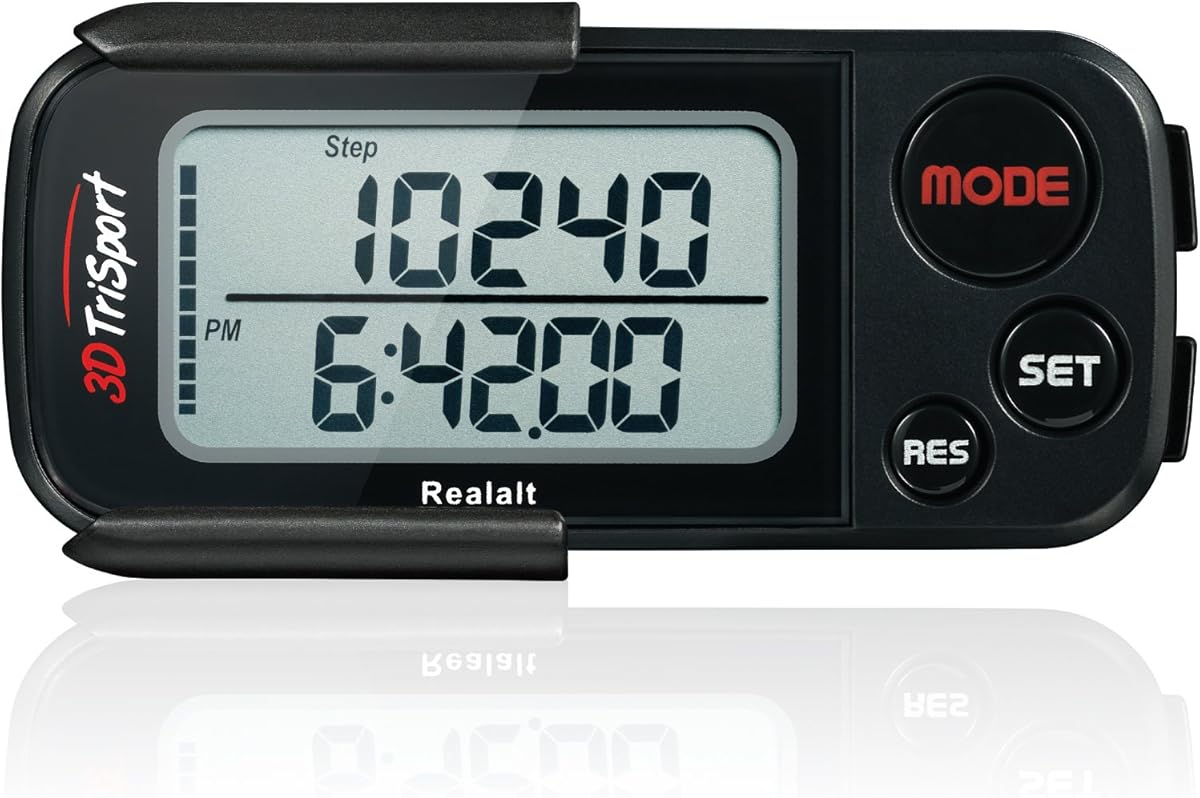
The 3DTriSport Walking Pedometer is the simplest distance-tracking option in the guide, with a 4.0 rating and a focus on accessible step, distance, calorie, and exercise-time records. It uses a 3D tri-axis sensor to track walking and running without requiring a smartphone, downloads, Bluetooth, or a complex app.
We may earn a commission when you buy through this link, at no additional cost to you.
Its versatility is notable: the included clip and lanyard allow it to be worn at the waist, around the neck, or placed in a pocket or bag. The device stores up to 30 days of daily activity records, and its stated battery life can reach 12 months. That makes it attractive for travelers, seniors, children, or anyone who wants a tracker that can remain forgotten yet ready to use.
It does not provide built-in GPS, route maps, pace by location, sophisticated training plans, recovery metrics, or smart notifications. Step-derived distance and calorie figures can vary with placement and movement, so it should not be viewed as an alternative to a dedicated GPS running watch for serious mileage or route analysis.
For casual activity tracking and simple motivation, the 3DTriSport is hard to overcomplicate. Its maintenance-free design and long battery life offer distinct advantages, while runners seeking pace, training load, heart-rate trends, or phone-free route mapping should choose a more advanced option.
There is no app to pair, account to create, or Bluetooth connection to maintain. That simplicity makes the pedometer approachable for users who only want steps, approximate distance, calories burned, and exercise time.
A waist clip, neck lanyard, pocket, or bag placement lets you choose a comfortable carrying method. The claimed 12-month battery life makes it particularly practical for travel, monitoring programs, and users who do not want to charge a wearable regularly.
We may earn a commission when you buy through this link, at no additional cost to you.
Choose a running distance tracker by prioritizing the accuracy, comfort, battery life, and training features that match your routine. GPS capability, display readability, health sensors, connectivity, and ease of use can matter more than the number of extra functions.
Built-in GPS is the most important feature for outdoor running because it allows the watch to calculate distance, pace, speed, and route without a phone. Advanced models may add multi-band positioning for challenging environments, while basic trackers often estimate distance from movement and cannot generate a route. Consider where you run: open parks, wooded trails, urban canyons, and tracks all present different satellite conditions. A watch with a clear route history and a dedicated running profile will generally serve outdoor athletes better than a step-counting band.
A basic tracker may show time, distance, pace, calories, and heart rate, while a dedicated running watch can add cadence, stride length, running power, training effect, recovery time, VO2 max trends, and adaptive workouts. More metrics do not automatically make a device better. Casual runners may only need dependable totals, while racers and coached athletes may value readiness, workload, and progression tools. Review the activity-specific features rather than assuming a general fitness watch can replace a performance-focused running computer.
Compare battery claims in the mode you will actually use. A smartwatch-mode figure may be excellent for everyday wear but says little about a long GPS outing, while GPS-mode claims better reflect active running endurance. Consider charging convenience as well: magnetic cables are convenient, but a watch that lasts several days or even months may be easier to maintain. Ultra-runners should favor the longest active estimate, while regular runners may accept a shorter GPS runtime for a more capable screen.
A large, bright display is easier to read at a glance, but it can make the watch bulkier and reduce battery life. Smaller cases tend to wear more comfortably, while 47mm models provide room for maps and deeper menus. Runners should also consider button placement, touchscreen responsiveness, wrist size, and whether they need to operate the device with sweaty hands or gloves. A traditional button-and-touch layout is often a practical compromise for sports use.
Wrist-based heart rate, sleep stages, HRV status, stress, recovery time, and training readiness can help explain performance beyond raw mileage. These readings are estimates and can be affected by fit, movement, skin contact, and individual physiology. Wear the watch consistently and compare trends rather than reacting to one unusual number. If health tracking is central to your purchase, a platform with well-defined sleep and recovery insights may be more valuable than one with a longer list of unsupported activity modes.
Bluetooth can deliver notifications, calls, music controls, and safety features, but most watches still depend on a nearby phone for those functions. If you want a genuinely phone-free run, look for a watch whose GPS, interval tools, route tracking, and stopwatch operate independently. If you want wrist calls or live location sharing, confirm smartphone compatibility and network requirements. Reading these limitations before buying prevents the disappointment of assuming every smartwatch function works without a connection.
Runners often cross-train, so the available sport modes and water-resistance rating can influence long-term value. A watch rated for swimming can handle pool workouts, rain, and sweat more confidently than a basic fitness band. Avoid hot showers, diving, or high-velocity water activities unless the manufacturer explicitly permits them. For multisport athletes, profiles for cycling, swimming, strength work, hiking, or indoor training may be more valuable than additional smartwatch notifications.
Begin by charging the watch fully, installing the companion app, and completing the relevant profile fields. Set your preferred units, display brightness, notification preferences, and activity profiles before your first run. If the device offers automatic activity detection, review it after the initial session so it does not start recording at inconvenient times. For heart-rate and recovery data, wear the watch snugly enough to maintain steady sensor contact without making it uncomfortable.
For the most useful run data, start the correct running profile and wait for GPS to acquire a signal before setting off. Stand in an open area if the watch struggles to lock onto satellites. Use manual lap or interval functions for structured track workouts, and confirm that distance, pace, heart rate, and route display correctly. Pausing a run prevents unwanted movement from inflating the total, while completing and saving the activity allows the app to calculate pace, splits, calories, and recovery information.
Clean the watch after every workout with a soft, damp cloth and dry it fully before charging. Keep the charging contacts clear of sweat, salt, and grit, and avoid exposing the device to hot water, harsh chemicals, or extreme temperatures when those conditions are outside its rating. Check straps for looseness and replace worn bands as needed. Keep the companion app and watch firmware updated, and periodically review stored data, safety contacts, and emergency settings.
Built-in GPS is strongly recommended if you regularly run outside and need dependable pace, distance, speed, or route data. It allows you to leave your phone at home and continue recording without a Bluetooth connection. A step-based tracker can be useful for casual activity, but it does not provide the same outdoor running experience or navigational context.
The 3DTriSport Walking Pedometer has the longest headline battery claim at up to 12 months because it uses a basic motion sensor rather than GPS or a large color display. Among GPS running watches, the POLAR Pacer Pro lists up to 35 hours in training mode, while the Garmin Forerunner 965 lists up to 31 hours in GPS mode. Actual results depend on settings, screen use, sensor activity, and connectivity.
A running smartwatch is better for independent outdoor tracking, pace, route capture, structured workouts, and recovery context. A basic fitness tracker is often easier to operate, less expensive, and more focused on steps, sleep, and general wellness. The right option depends on whether performance and route information matter more than simplicity and low-maintenance step counting.
Most can record basic GPS runs, laps, stopwatch sessions, and heart rate without a phone once properly configured. Bluetooth calls, messages, app synchronization, music controls, and some safety features may still depend on a paired smartphone. The built-in GPS watch in particular explicitly emphasizes phone-free running, while safety and communication features across the category often require setup and network coverage.
Wrist-based sensors are convenient and can track trends effectively for many runners, especially during steady activity. They may be less accurate during rapid arm movement, loose fit, cold conditions, or intense intervals. For more stable readings, keep the watch snug against the wrist, remain consistent about placement, and compare results with your own perceived effort over time.
A 42mm or 43mm model usually offers a more discreet fit and is easier to wear with a smaller wrist. A 47mm case provides more screen space for maps, data, and controls but may feel bulkier. Try estimating the watch's footprint against your current wearable and consider whether the extra display area justifies the additional size for your training style.
For outdoor running, built-in GPS, a stable satellite connection, and a correctly selected running profile are the central factors. Placement and a consistent wearing position can also affect motion-based sensors. Review pace, route, and split behavior in familiar areas, and remember that no consumer tracker should be treated as a survey-grade measuring instrument.
They can be useful because training adaptation depends on more than mileage. Sleep score, HRV status, training readiness, and recovery time may help a runner decide when to train hard, rest, or maintain an easy pace. These metrics are estimates, so they should support personal judgment rather than dictate every workout or serve as a medical diagnosis.
The Garmin Forerunner 570 is the strongest all-around choice for most runners because it combines a highly rated experience, bright display, adaptive Garmin Coach plans, recovery reporting, built-in GPS, and convenient wrist calling. The Garmin Forerunner 965 is the strongest premium option for runners who value full-color navigation, multi-band positioning, advanced biomechanics, and multisport tools.
At the other end of the market, the Built-in GPS Distance Tracking Watch provides a large display, phone-free GPS, many sport modes, and swim support in a value-focused package. Runners who need extreme lightness may prefer the POLAR Pacer Pro, while casual users who prioritize wellness can consider the Zeacool tracker or the highly simple 3DTriSport pedometer. Prioritize independent GPS, readable controls, comfort, and the training information you will actually use.
Specifications, ratings, features, and availability can change, and prices vary across retailers and over time. Confirm the current listing, size, phone compatibility, water-resistance limits, and included accessories before purchasing. The linked product pages provide the most current details for the device you ultimately choose.