
Magewell Pro Capture Quad HDMI
4.4Editor score
Independent four-channel capture
FPGA hardware video processing
Up to 2048×2160 input
Discover the best Quad HDMI Capture Card options, comparing four-channel capture, resolution, latency, audio, software support, PCIe compatibility, and
A quad HDMI capture card lets a compatible computer ingest several external video sources at once, reducing the need for separate capture devices and complicated switching. The right model can simplify multicamera production, game streaming, conferencing, live performance, and professional monitoring.
This guide compares ten products from the available category, emphasizing the details that materially affect real workflows: input count, supported formats, latency, onboard processing, operating-system compatibility, audio handling, and expandability. It also identifies several single-channel and SDI-focused alternatives that are not direct four-HDMI solutions.
The recommendations show why DeckLink Quad HDMI and Magewell Pro Capture Quad HDMI stand out for professional multi-source work, while ACASIS offers a more approachable PCIe route. Product configurations, software requirements, and prices can change, so confirm current details before purchasing.
4.4Editor score

4.4Editor score

4.3Editor score
The table below compares the ten featured products by their most important attributes. Keep in mind that only three models provide four independent HDMI inputs; the other entries provide useful context, alternative interfaces, or single-source capture options.





The Blackmagic Design DeckLink Quad HDMI is a 4.4-rated, professional PCIe capture card built around four HDMI 2.0b inputs. Its standout combination is simultaneous multi-source capture, support for resolutions up to 4K60, and broad compatibility with macOS, Windows, and Linux. That makes it the most complete match for the quad HDMI capture category in this guide.
We may earn a commission when you buy through this link, at no additional cost to you.
Each of the four inputs can ingest a separate source, allowing cameras, computers, consoles, and presentation equipment to remain connected simultaneously. The card supports 8, 10, and 12-bit RGB 4:4:4 capture in applicable modes, along with 8- and 10-bit YUV 4:2:2. HDR, Deep Color, Rec. 601, Rec. 709, and Rec. 2020 support give it useful color flexibility for streaming, live production, and post-production.
The interface is appropriately serious: PCI Express generation 3 with eight lanes is required, and compatible 8- or 16-lane slots are supported. Embedded 24-bit, 48 kHz audio can carry up to eight channels. It works with Media Express as well as OBS, vMix, Wirecast, and other major applications, so users are not restricted to one production environment. The unavoidable limitation is that copy-protected HDMI cannot be captured.
This is the strongest recommendation for a studio, event team, broadcaster, or serious creator who regularly needs several independent HDMI feeds in one computer. It combines a sensible four-input design, high-resolution support, and cross-platform operation without asking the user to assemble separate single-channel cards. Buyers should confirm that their computer has the required PCIe slot and that their software supports simultaneous multi-input capture.
Four separate HDMI inputs eliminate the need to move cables whenever a live program changes sources. Cameras, laptops, playback systems, and game consoles can stay connected, while software controls the active output and recording layout.
Support for HDR, Deep Color, multiple color spaces, and embedded multichannel audio makes the card relevant beyond basic webcam-style streaming. It is better suited to controlled production environments where signal integrity and format flexibility matter.
We may earn a commission when you buy through this link, at no additional cost to you.
The Magewell Pro Capture Quad HDMI is a 4.4-rated premium four-channel card with a strong emphasis on signal processing and operational reliability. It accepts four simultaneous HDMI feeds, supports input resolutions up to 2048×2160, and can handle frame rates as high as 144 fps when system bandwidth permits. It is a natural fit for professional switching, monitoring, and multi-camera installations.
We may earn a commission when you buy through this link, at no additional cost to you.
Its FPGA performs cropping, scaling, de-interlacing, aspect-ratio conversion, color-format conversion, and on-screen display composition on the card itself. That processing can reduce the burden on the host CPU while giving operators more control over how each source is prepared. The card also accepts 8-, 10-, and 12-bit color, RGB 4:4:4, YCbCr 4:4:4, and 4:2:2 formats, with up to eight channels of embedded audio per input.
Low latency is another defining strength. The design supports latency down to 64 video lines, which can be valuable in live production, monitoring rigs, and switching environments where predictable response matters. Multiple cards can be installed in one system, and a rotary switch ID helps distinguish them. Compatibility with Windows, macOS, and Linux broadens deployment options.
The premium recommendation is justified for organizations that need dependable four-channel capture, hardware-assisted processing, and room to scale beyond one card. It is less compelling for a simple webcam or one-console setup, because those tasks do not require four inputs or advanced onboard processing. Confirm the desired resolutions, frame rates, software, and host-system bandwidth before committing.
FPGA-based scaling, cropping, de-interlacing, color conversion, and OSD composition move routine tasks away from the host processor. This is particularly useful when several sources must be handled at once.
Rotary switch IDs and multi-card support make it possible to expand a single computer beyond four channels. That architecture is valuable for control rooms, production stages, and multi-camera event systems.
We may earn a commission when you buy through this link, at no additional cost to you.
The ACASIS 4-HDMI PCIe Capture Card provides four simultaneous 1080p60 HDMI feeds through a PCIe interface, earning a 4.3 rating and our budget recommendation. It targets creators who need more than one source but do not require the extensive format range or onboard processing of the premium professional cards.
We may earn a commission when you buy through this link, at no additional cost to you.
Its central benefit is straightforward multicamera capture. Users can connect a multi-computer setup through four HDMI inputs, capture without compression, and avoid switching among several individual cards. The card fits PCIe x4, x8, or x16 slots, and its listed operating-system support includes 32-bit and 64-bit Windows variants along with Linux. That makes it particularly relevant to streaming, teaching, conferencing, and broadcast tasks.
A built-in professional turbo fan is designed to move heat downward through the card, supporting stable operation during long capture or streaming sessions. Source flexibility extends beyond dedicated cameras to DSLRs, computers, laptops, tablets, and similar devices. Compatible applications include OBS, vMix, VLC, Wirecast, Windows Media Encoder, Adobe Flash Media Live Encoder, and Real Producer Plus.
This is the best value-oriented choice for an education room, small studio, webinar setup, or home production system that routinely uses multiple HDMI sources. Its limits are equally clear: the advertised capture target is 1080p60 rather than 4K, the operating-system list does not include macOS, and Linux users should verify current driver support. The card is a practical four-input solution, not a full professional broadcast platform.
Four independent 1080p60 inputs support a useful mix of camera, computer, and playback feeds. This makes a single internal card a practical alternative to managing several external one-channel devices.
The integrated turbo fan is intended to improve heat dissipation and support stable operation during extended live or recorded sessions. It is particularly relevant in always-on teaching and streaming environments.
We may earn a commission when you buy through this link, at no additional cost to you.
This Quad HDMI PCIe Video Capture Card is a straightforward four-channel option rated 4.0. It supports simultaneous capture of up to four 1080p60 video sources, uses a PCIe x4 interface, and is listed for Windows 11 and Linux. The feature set is easy to understand, which may appeal to users assembling a straightforward streaming or recording system.
We may earn a commission when you buy through this link, at no additional cost to you.
Four HDMI inputs allow cameras, game consoles, media players, and other sources to remain connected at once. The card works with OBS, vMix, QuickTime, VJ software, Zoom, and VLC, covering common live-streaming, recording, conferencing, and visual-production uses. Its PCIe x4 connection is intended to provide quick transfer with minimal latency.
The principal concern is the limited information supplied about signal processing, color formats, audio, HDR, and maximum system configuration. Drivers are available by contacting the seller, rather than through a prominently described automatic download process. That arrangement may be perfectly workable, but it is less convenient for users who value self-service setup.
This card is worth considering when the essential requirements are four 1080p60 HDMI feeds, a PCIe x4 connection, and support for Windows 11 or Linux. It is less suitable for buyers who need extensive documentation, professional onboard processing, broad high-resolution format support, or clearly documented audio capabilities.
The card consolidates four 1080p60 HDMI sources into one internal device. That can simplify a multicamera workstation and reduce the number of separate capture accessories in a compact installation.
The need to contact the seller for the driver link is the main setup caveat. Prospective buyers should obtain the link and confirm operating-system support before installation.
We may earn a commission when you buy through this link, at no additional cost to you.
The 4-Channel 3G SDI HDMI Video Capture card is a 4.2-rated hybrid solution for work that may involve both HDMI and 3G-SDI equipment. It can capture and record as many as four 1080p60 channels simultaneously, supports Windows 11 and Linux, and can be combined with up to four cards in one computer.
We may earn a commission when you buy through this link, at no additional cost to you.
Its mixed-interface design is useful in installations where newer computers, cameras, and playback devices use HDMI while professional cameras or long cable runs rely on SDI. Rather than committing to one connector type, the card lets a production team standardize ingestion inside the computer. The stated expansion capability is particularly useful for large multi-channel control rooms.
Common applications are supported, including OBS, vMix, QuickTime, VJ, Zoom, and VLC. The PCIe x4 interface provides a familiar path for integrating the card with an existing workstation. As with the preceding generic quad HDMI card, the seller provides the driver download link on request, which is a small but meaningful setup consideration.
This model is recommended for a studio that already uses professional 3G-SDI cameras or wants flexibility between HDMI and SDI sources. It is less suitable when the requirement is four dedicated HDMI-only inputs with extensive published format information. Buyers should also confirm connector layout, audio behavior, and the exact channel configuration against their equipment.
The hybrid connector approach is valuable where consumer and professional equipment coexist. It can simplify a mixed-source installation without committing all devices to a single interface.
Support for up to four cards in one computer creates a path to 16 channels. Actual deployment still depends on available slots, bandwidth, operating-system support, and the production software used.
We may earn a commission when you buy through this link, at no additional cost to you.
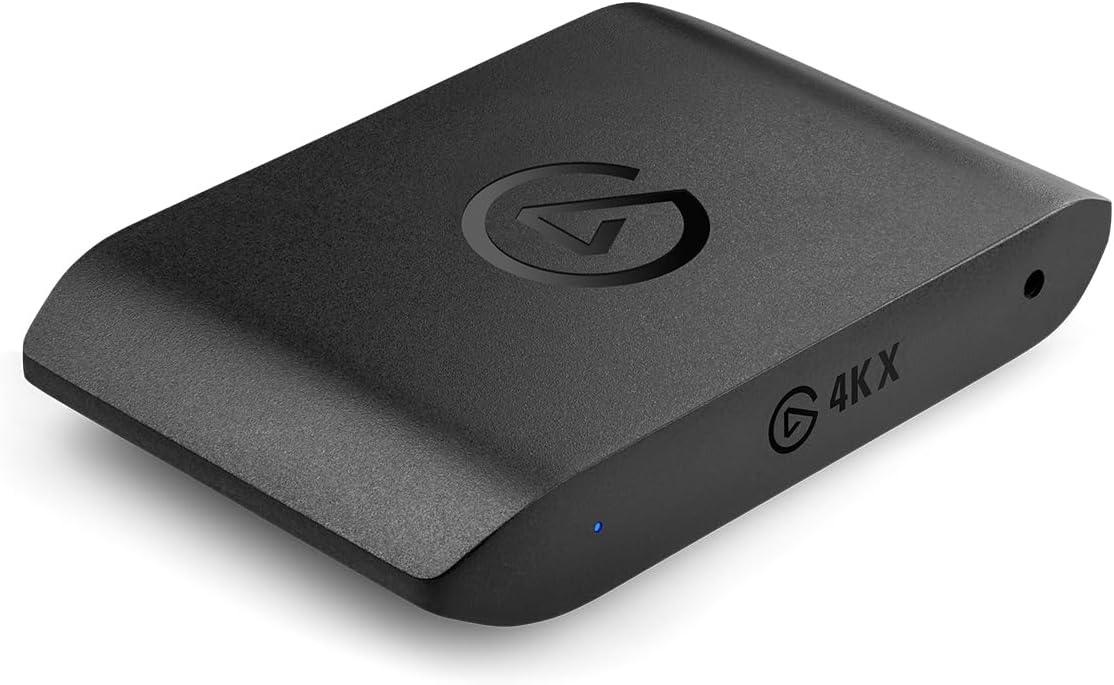
The Elgato 4K X Capture Card is a 4.5-rated, single-input capture device built for modern gaming and high-frame-rate video. It supports HDMI 2.1 input and output, capture up to 4K144, and passthrough of up to 240 fps at 1080p. It is not a four-HDMI solution, but it is a strong specialist option for creators focused on a single console or PC feed.
We may earn a commission when you buy through this link, at no additional cost to you.
Variable Refresh Rate passthrough is particularly relevant to competitive gaming because it supports smoother gameplay on a compatible display. Ultra-low latency is delivered through USB 3.2 Gen 2, helping keep the captured broadcast aligned with the live game. The card works with OBS, Streamlabs, Twitch Studio, Restream, Zoom, Teams, YouTube, Twitch, Discord, and other major platforms.
Its broader app and platform support makes setup approachable for creators who want to record and publish without a complex broadcast rack. The trade-off is fundamental: there is only one source input. It cannot replace a quad card when a production needs simultaneous feeds from multiple cameras, computers, or playback systems.
Gamers should choose this model for high frame rates, VRR, and one-source simplicity. It is especially useful when HDMI 2.1 capabilities matter more than channel count. A multi-source event or seminar should look to the DeckLink Quad HDMI or Magewell Pro Capture Quad HDMI instead.
Capture at up to 4K144 and passthrough as high as 240 fps at 1080p address demanding modern gaming displays. The specification makes the card most relevant to fast-paced gameplay.
Compatibility with widely used streaming, conferencing, and community platforms reduces setup friction. A single USB-connected device also avoids internal PCIe installation.
We may earn a commission when you buy through this link, at no additional cost to you.
The Blackmagic Design DeckLink Quad 2 is a 4.3-rated professional card for 3G-SDI capture and playback. It has eight independent bidirectional connections in Mini-BNC format and can simultaneously capture and play back up to four 1080p60 streams. Although it is not a four-HDMI card, it is an important alternative for productions built around broadcast-standard SDI.
We may earn a commission when you buy through this link, at no additional cost to you.
Its bidirectional design means each connection can be assigned as an input or output, providing flexibility in a professional signal path. Supported formats include 720p, 1080i, and 1080p with 4:2:2 and 4:4:4 sampling. Rec. 601, Rec. 709, and Rec. 2020 color-space support further strengthens its relevance to controlled post-production and live environments.
A reference input accepts blackburst and tri-sync signals for synchronization with external genlock. This is especially useful in multi-camera installations where precise timing matters. The card uses PCI Express generation 2 with eight lanes and works with 8- or 16-lane slots on macOS, Windows, and Linux, while integrating with a range of editing, effects, and streaming applications.
The DeckLink Quad 2 is ideal for broadcast engineers, studios with established SDI infrastructure, and multi-camera teams that value playback and external synchronization. It is not the correct choice for a desktop creator whose cameras and computers expose only HDMI. Its strengths come precisely from a different professional signal standard.
Eight Mini-BNC connections can be used for capture or playback, making the card more than an input-only device. That versatility helps simplify professional routing inside a workstation.
The reference input supports blackburst and tri-sync genlock signals. Precise synchronization becomes especially important as the number of cameras and live video streams increases.
We may earn a commission when you buy through this link, at no additional cost to you.
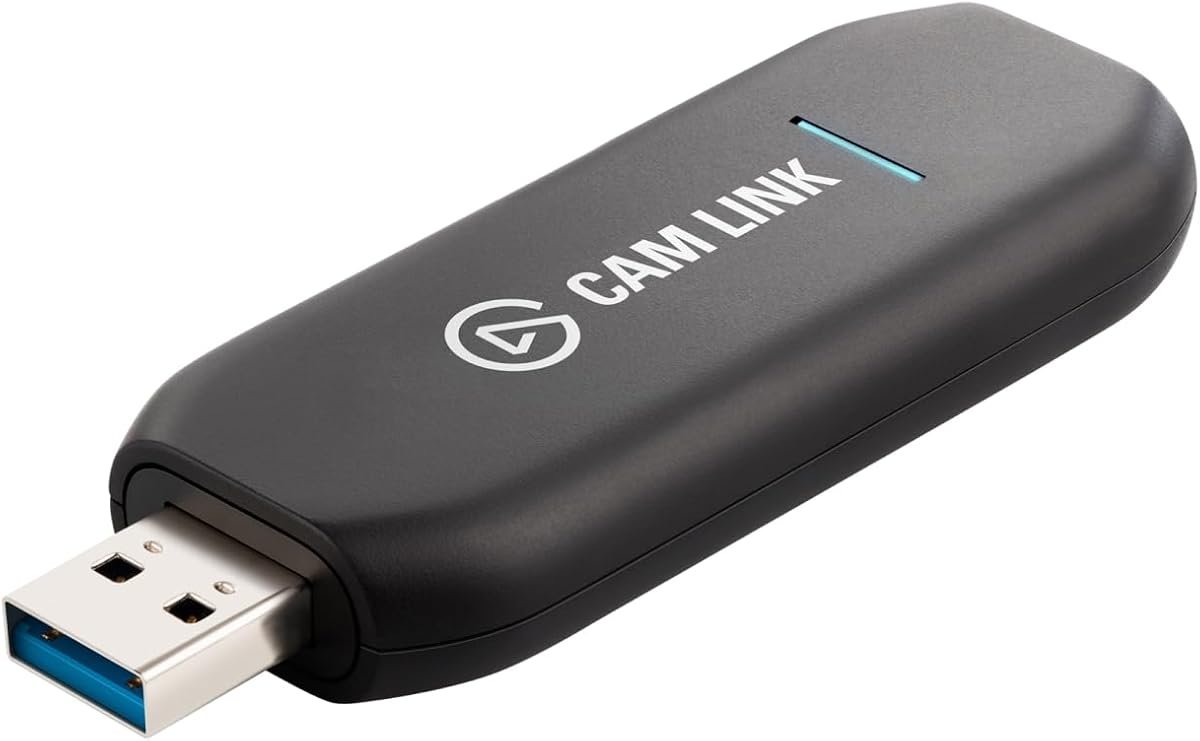
The Elgato Cam Link 4K is a 4.6-rated USB capture solution for DSLR, mirrorless, camcorder, action-camera, iPhone, and iPad workflows. It is not a quad HDMI capture card, but its strong rating reflects a focused purpose: turning a compatible camera into a high-quality computer video source without occupying an internal expansion slot.
We may earn a commission when you buy through this link, at no additional cost to you.
The product can stream and record at 1080p60 or up to 4K60 when used with a compatible camera and the appropriate Cam Link 4K model. Ultra-low latency is designed to keep video and audio synchronized. Its broad device support gives creators a way to improve image quality without replacing an entire camera system.
A particular strength is real-time iPad monitoring through USB-C, which turns the tablet into a practical field monitor. That makes the device useful to filmmakers who want to frame shots, check focus, or review footage away from the main computer. The simple USB connection also makes the unit easier to move between recording locations than an internal PCIe card.
This is a strong recommendation for a creator working primarily with one camera, especially when mobility and image quality matter more than simultaneous source count. It should not be mistaken for a multi-input production device. Teams requiring four simultaneous HDMI feeds need a dedicated quad capture card, while this model is best for focused camera-based content.
A capable camera can become a computer webcam with superior image quality and control. The arrangement is useful for streaming, meetings, recording, and remote appearances.
USB-C support enables an iPad to serve as a real-time field monitor. This adds value for filmmakers who need immediate visual feedback away from the workstation.
We may earn a commission when you buy through this link, at no additional cost to you.
The AVerMedia Live Gamer Ultra S is a 4.2-rated, single-source capture card aimed at console gaming and high-refresh-rate streaming. It supports capture and passthrough at up to 4K60, 1440p144, and 1080p240, along with HDR and VRR. Although it does not address the quad-input requirement, it is a capable specialist alternative for gaming desks.
We may earn a commission when you buy through this link, at no additional cost to you.
Compatibility spans PS5, PS5 Pro, Xbox, Nintendo Switch, PCs, Macs, and iPads across their respective supported operating systems. Recording through Streaming Center or the Streaming Center Plug for OBS adds workflow options for live production. Windows users can capture 5.1-channel audio, while VRR recording is supported at 1440p60 and 1080p240.
Ultrawide dimensions of 3440×1440 and 2560×1080 are supported for 21:9 displays. This is meaningful for streamers and competitive gamers who want to preserve unusual aspect ratios. The USB 3.2 Gen 1 Type-C connection also keeps the device external and portable between production locations.
Choose this card when a single gaming source, modern display features, and straightforward platform compatibility are the priorities. It is well suited to Twitch, YouTube, Discord, OBS Studio, and Streamlabs workflows. It is not appropriate for simultaneous four-camera or four-computer capture, and its advanced passthrough behavior still requires compatible consoles, software, cables, and displays.
Support for 4K60, 1440p144, 1080p240, HDR, and VRR aligns the device with current high-performance displays. It provides a strong feature set for a single-source gaming setup.
Windows workflows can capture 5.1-channel audio, and ultrawide input resolutions are accepted. Together, these features suit creators who want console audio and wide-screen presentation preserved.
We may earn a commission when you buy through this link, at no additional cost to you.
The Magewell USB Capture HDMI 4K Pro is a 5.0-rated, single-channel professional capture device with true DCI 4K60 input, USB 3.2 Gen 2×2 connectivity, and hardware video processing. It is not a quad capture card, but it offers a portable alternative to internal PCIe hardware for users who need one high-quality HDMI source.
We may earn a commission when you buy through this link, at no additional cost to you.
Its HDMI loop-through port permits real-time monitoring without requiring an additional splitter. Audio can come from embedded HDMI or an external microphone or line input, while the headphone output supports monitoring. The broad I/O makes it more versatile than a basic webcam-style device and useful for presenters, conference producers, and compact production racks.
HDR10, 10-bit, and 12-bit formats are supported, but advanced color features require the Magewell SDK and are not available through standard UVC. The FPGA handles de-interlacing, scaling, cropping, color conversion, and OSD composition. Driver-free operation is listed for Windows, macOS, and Linux, while the Magewell USB Capture Utility provides EDID, orientation, resolution, frame-rate, and firmware controls.
This device is an excellent pick for a portable, professional one-source workflow that needs 4K60, embedded and analog audio, monitoring, and reliable processing. Its 24/7-oriented metal housing, thermal protection, and warranty also support continuous operation. It should not be selected when simultaneous multi-channel ingestion is essential, because it provides only one HDMI capture input.
HDMI loop-through and headphone monitoring make it easier to check the live signal and audio locally. USB connectivity allows the same device to move between fixed and mobile production setups.
The FPGA handles common signal transformations, while the utility allows control of EDID, image orientation, resolution, frame rate, and firmware. Advanced HDR and deep-color workflows still require the appropriate SDK support.
We may earn a commission when you buy through this link, at no additional cost to you.
Choosing a quad HDMI capture card requires matching channel count and signal formats to your production, then confirming that the host computer, software, and physical installation can support the device. The most important distinction is whether four simultaneous feeds are truly necessary or whether a single-source specialist card would serve you better.
A quad capture card should accept four independent HDMI inputs and ingest all four at the same time. This matters for live switching, camera comparison, remote feeds, and productions that cannot afford to reconnect a cable. Some products in the broader market have only one HDMI input, while others combine HDMI and SDI, so the connector count alone does not prove four-channel capability.
Look for wording such as four simultaneous channels, four independent inputs, or 4-in-1 capture. Confirm that all channels can operate at the desired resolution and frame rate at the same time.
Professional workflows may require 1080p60, 4Kp30, 4K60, or very high frame rates, while ordinary online teaching may only need 720p or 1080p. The DeckLink Quad HDMI supports capture up to 4K60 with detailed color-format limits, whereas the ACASIS card is presented around simultaneous 1080p60 capture. Always verify the format and frame-rate combination rather than looking only at a headline resolution.
In short, choose a card whose documented limits match the weakest source and software setting in your workflow. High headline resolutions do not guarantee that every channel can sustain them concurrently.
Internal capture cards require a compatible PCIe slot, adequate lanes, appropriate drivers, and enough system bandwidth for all active channels. The DeckLink Quad HDMI requires PCIe generation 3 with eight lanes, while the Magewell Pro Capture Quad HDMI uses PCIe generation 2 with four lanes. Other models use x4 interfaces. Slot size alone is not enough; generation, lane count, CPU capacity, and graphics-driver support all contribute to stability.
Check the system requirements before buying and avoid sharing bandwidth-heavy devices unnecessarily. If portability matters more than channel count, a USB 3.2 capture device may be easier to deploy.
FPGA processing can handle scaling, cropping, de-interlacing, color conversion, aspect-ratio changes, and OSD composition without placing the full load on the host CPU. This is valuable in multi-source workflows because every additional real-time operation can affect stability. The Magewell Pro Capture Quad HDMI explicitly emphasizes this type of hardware processing.
If your workflow only records standard 1080p sources, onboard processing may not be necessary. If you build custom layouts, normalize mixed sources, or operate several channels continuously, hardware-assisted processing deserves a prominent place in the decision.
Video is only half of a live signal. Check whether embedded HDMI audio is captured, how many channels are supported, and whether analog audio or headphone monitoring is available. The DeckLink Quad HDMI supports up to eight channels of 24-bit, 48 kHz embedded audio, while the Magewell USB Capture HDMI 4K Pro provides analog input and output for a more complete monitoring path. Multi-camera SDI installations may also require genlock or an external reference signal.
Decide whether embedded audio is enough or whether separate mixers, microphones, or synchronized feeds are required. For professional multi-camera work, timing features can be as important as image capture.
A capture device is only as useful as the software that recognizes it. The featured professional options mention OBS, vMix, Wirecast, QuickTime, Zoom, VLC, and other major applications, but drivers and capabilities vary by model and operating system. The generic PCIe options require contacting the seller for a driver link, while the Magewell USB device emphasizes driver-free operation across three desktop platforms.
Confirm compatibility with your exact operating-system version, preferred application, and planned workflow. Check whether advanced color, HDR, audio, or multi-channel functions require an SDK, vendor utility, or dedicated driver rather than a standard UVC path.
HDMI sources may block capture through copy protection. The DeckLink Quad HDMI explicitly cannot ingest protected HDMI signals, and other devices can encounter similar limitations. Consoles and computers may also differ in whether they output a clean feed. Test source compatibility before an important event, especially when working with commercial media systems or protected playback devices.
In brief, ask each source owner whether protected content is expected. If it is, use an approved recording or monitoring workflow rather than assuming a compatible connector guarantees capture.
Some systems can scale beyond four inputs by installing multiple cards. The Magewell Pro Capture Quad HDMI and the hybrid 3G-SDI HDMI model both describe multi-card support, while the latter states that up to four cards can work in one computer. Expansion still depends on available slots, lane sharing, power, thermal capacity, and software support. Long unattended recording sessions also make cooling relevant; the ACASIS card includes a dedicated turbo fan for heat dissipation.
Choose for the workflow you have now, but avoid a card that prevents sensible future expansion. Verify both physical space and total bandwidth before planning to install several capture devices.
Begin by inspecting the host computer, confirming the required PCIe generation and lane configuration, and installing the current driver from the manufacturer's supported source. For USB models, use the specified USB port and cable, preferably one on the host rather than an unpowered hub. Connect the desired HDMI sources while the computer is powered down, then configure the intended resolution, refresh rate, color format, and audio route in the capture application.
Build the production in stages. Capture each source individually to confirm its picture, embedded audio, and frame rate; then enable all four channels and check whether the software and computer maintain stable performance. In OBS, vMix, Wirecast, Zoom, or another application, create the scene layout after confirming that every input is recognized. Use the loop-through or reference facilities where applicable to check the source without relying solely on the software preview.
For long sessions, keep the capture area ventilated and do not block a card's fans, heatsinks, or ventilation openings. Avoid repeatedly hot-plugging sources unless the manufacturer permits it, route cables to prevent strain, and shut the computer down normally after recording. Back up recorded media, maintain a separate test setup for critical events, and check driver, firmware, and application updates before a production date.
A quad HDMI capture card ingests four independent HDMI sources into one computer at the same time. This simplifies multicamera production, live switching, teaching, conferencing, and streaming by reducing the need for separate one-channel capture devices. It also allows the production software to arrange multiple feeds into one scene or workflow.
That depends on the specific model and the active format of every source. Some professional cards support high-resolution HDMI capture, but channel count, color depth, frame rate, PCIe bandwidth, and host processing all affect the result. Confirm the documented maximum for simultaneous channels rather than relying on a single-source resolution claim.
A PCIe card is generally better suited to sustained, high-bandwidth multi-channel ingestion because it connects directly to the computer's internal bus. USB devices are easier to move and often simpler to set up, but a single USB model may not accept four independent sources. Your workflow, source count, host hardware, and required resolutions should determine the choice.
Many featured models list OBS, vMix, Zoom, Wirecast, VLC, or QuickTime compatibility. However, operating-system support, driver availability, and advanced features differ by product. Verify the exact model and operating-system version, especially if you plan to use HDR, multichannel audio, hardware processing, or simultaneous four-channel capture.
The DeckLink Quad HDMI cannot capture copy-protected HDMI, and protected sources may not work with other capture hardware either. Consoles, laptops, and media systems can use different signal-protection rules. Test every important source in advance and use an approved workflow when protected content is involved.
The computer needs a compatible PCIe slot, sufficient lanes and bandwidth, supported drivers, and enough processing capacity for the selected software and formats. The DeckLink Quad HDMI specifically requires PCIe generation 3 with eight lanes and supports compatible 8- or 16-lane slots. Other cards have different requirements, so verify the manual before installation.
The supplied product information focuses on hardware capabilities and listed application compatibility; it does not state that every package includes cables or all required software. You may need to provide suitable HDMI cables and obtain drivers or utilities from the manufacturer. Check the package listing and compatibility documentation before completing the setup.
Some models explicitly support multiple cards, and one hybrid card is listed for up to four cards in a single computer. Actual expansion depends on free slots, PCIe bandwidth, power, cooling, operating-system support, and capture software. A full-system compatibility check is essential before planning a large multi-card installation.
The Blackmagic Design DeckLink Quad HDMI is the leading all-around choice because it combines four independent HDMI 2.0b inputs, support for capture up to 4K60, embedded multichannel audio, and operation across macOS, Windows, and Linux. The Magewell Pro Capture Quad HDMI is the premium option for users who value FPGA processing, flexible multi-card deployment, and a professional low-latency design.
For creators seeking a more accessible four-channel system, the ACASIS 4-HDMI PCIe Capture Card provides simultaneous 1080p60 capture, active cooling, and broad streaming-software support. The other products are useful when the requirement is actually one source, SDI capture, camera-based streaming, portable high-resolution capture, or a specialized gaming workflow rather than four simultaneous HDMI feeds.
Before purchasing, verify the simultaneous channel count, maximum resolution and frame rate, host interface, source protection, audio path, and software compatibility for every device in the setup. Product bundles, drivers, software capabilities, and prices can change, so check the current listing and manufacturer documentation before making a final decision.