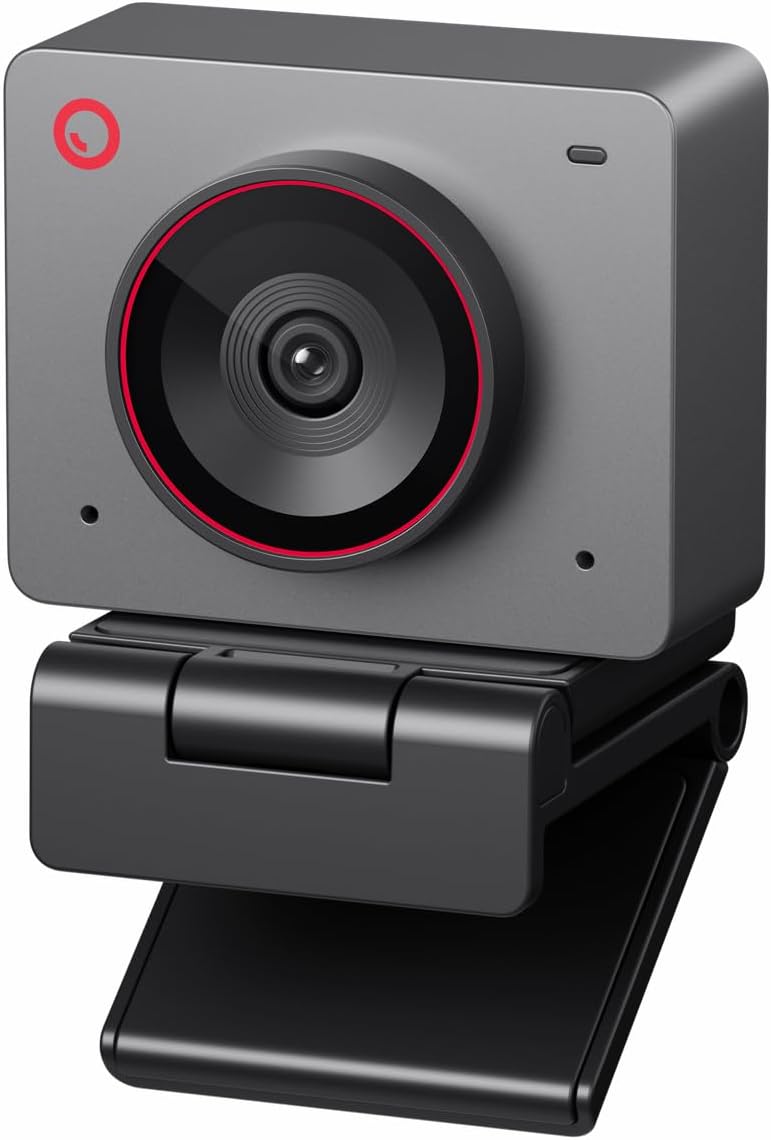
OBSBOT Meet 2
4.4Editor score
AI framing and autofocus
Compact 4K sensor design
Gesture zoom controls
AI-powered webcams have evolved from basic laptop cameras into intelligent tools that can frame people, follow speakers, adjust exposure, control zoom, and improve voice pickup. The best model depends on whether you stream, teach, present, create online, or run group meetings, so basic image quality is only the starting point.
We compared the 10 products using the supplied specifications, focusing on sensor size, resolution, frame-rate options, AI tracking, autofocus, microphone systems, specialized modes, mounting options, and software integration. The list covers premium PTZ cameras, compact travel models, conventional 4K options, and a small-room conference system.
Each review identifies the feature that makes a webcam stand out while noting practical limitations. Ratings reflect the supplied customer feedback, and product availability, features, and prices can change, so readers should verify the current listing and compatibility before making a final purchase.
4.4Editor score

4.4Editor score

4.6Editor score
As an Amazon Associate we earn from qualifying purchases.
The table below compares all 10 cameras by resolution, sensor, AI behavior, autofocus, audio, and practical platform support, making it easier to identify the model that matches your room, workflow, and budget.


The OBSBOT Tiny 2 Lite is a 4.3-rated webcam that combines a 1/2-inch CMOS sensor with motorized pan, tilt, and zoom tracking. It is especially interesting because its AI behavior is unusually flexible for the class: the camera can follow upper bodies, hands, and selected tracking areas, while allowing users to define non-tracking zones that should remain outside the automated frame.
We may earn a commission when you buy through this link, at no additional cost to you.
Its strongest feature is the combination of tracking and production control. Users can create multiple preset positions, assign different parameters to each one, and select a separate AI tracking mode for every preset. That makes the Tiny 2 Lite useful for a teacher moving between a desk and whiteboard, a presenter switching between slides and audience views, or a creator repositioning the camera without physically touching the mount. Dynamic gestures add another layer of convenience: an open hand can lock a portrait target, while an upward gesture can control zoom.
The camera supports horizontal, vertical, and upside-down shooting, and it can adjust its screen orientation according to placement. OBSBOT Center compatibility, SDK support, OSC, Stream Deck, and global hotkey functions make it attractive to users who want more than a basic conferencing webcam. There are trade-offs, though. This Lite version removes the whiteboard mode and voice control found in more feature-rich models, and the supplied information does not describe a sophisticated onboard microphone array. It is therefore more dependent on its imaging intelligence than its built-in audio system.
The Tiny 2 Lite is a strong recommendation for budget-conscious streamers, educators, and meeting users who want genuine PTZ tracking and preset automation without moving to the top premium tier. It offers the most versatile tracking setup in this list, although buyers should choose it primarily for camera control and framing. Those who prioritize onboard noise cancellation, meeting summaries, or a larger sensor may find another model more aligned with their needs.
Custom tracking areas and non-tracking zones make the camera more useful in real rooms. Rather than letting an algorithm indiscriminately follow every movement, you can define where attention should move and where it should remain.
Separate settings for every preset let users switch between presenters, documents, and wide views quickly. That control is especially valuable for teaching, streaming, and hybrid events.
We may earn a commission when you buy through this link, at no additional cost to you.
The EMEET PIXY earns a 4.3 rating and takes a distinctive approach by separating the main 4K imaging sensor from an auxiliary AI camera. The main camera uses a 1/2.55-inch sensor and PDAF focus, while the secondary camera identifies the subject’s position. Together, those systems are intended to keep autofocus, exposure, skin tones, and framing responsive even when the person moves.
We may earn a commission when you buy through this link, at no additional cost to you.
Its three-chip intelligent tracking architecture is the central attraction. The imaging chip maintains stable framing, an AI assist chip predicts motion and lighting, and a dedicated PTZ chip enables 310 degrees of pan and 180 degrees of tilt. An open palm held near the center for two seconds activates gesture control. The result is designed for active environments such as fitness demonstrations, dance streams, teaching, product presentations, and business meetings where a fixed camera would frequently lose the subject.
EMEET STUDIO expands the camera with preset positions, fine framing controls, whiteboard mode, privacy activation, field-of-view options, and built-in AIGC tools that can create shot lists and movements. Its triple microphone array includes a Live Mode for steady noise such as fans and air conditioning, a Noise Canceling Mode for both hums and sudden sounds, and an Original Sound Mode for music or singing. A remote is compatible but sold separately, and a tripod is also not included.
The PIXY is a compelling all-in-one choice for streamers and presenters who need tracking, audio processing, and a broad software toolset. Its dual-camera architecture feels more purpose-built for moving subjects than a conventional fixed webcam. The main drawback is that some advanced functionality depends on EMEET STUDIO, and buyers who want mobile placement should budget for a separate tripod.
The auxiliary camera watches the scene so the main imaging camera can concentrate on focus, exposure, and color. This separation may be particularly useful when a presenter walks, exercises, or demonstrates a product.
The microphone system can suppress environmental hum, reduce abrupt distractions, or preserve natural ambient sound. That flexibility makes the camera useful for both speech and performance.
We may earn a commission when you buy through this link, at no additional cost to you.
The OBSBOT Tiny 3 Lite has a 4.3 rating and delivers a remarkably capable feature set in a body described as 48 percent smaller and 34 percent lighter than its predecessor. Its 1/2-inch CMOS captures 4K at 30fps or 1080p at 120fps, while wide ISO support and HDR improve detail in challenging lighting. Precision PDAF autofocus is designed to adapt to changing light rather than simply hunting between fixed focus points.
We may earn a commission when you buy through this link, at no additional cost to you.
The upgraded AI Tracking 2.0 can identify one person, a group, or more than 200 types of objects. Users can also work with distinct intelligent tracking modes and adjustable composition lines or zone tracking. Voice and gesture commands can wake the camera, begin tracking, adjust zoom, and switch presets, reducing the need to touch the device during a live session. The listed information includes a warning to disable those controls if the gimbal behaves erratically or wakes or sleeps abnormally.
Audio is a major strength. A triple-mic array combines an omnidirectional microphone with two directional MEMS microphones, and the system provides five specialized audio modes. OBSBOT Center adds Beauty Mode, Background Blur, a teleprompter, exposure gamma adjustment, white-balance offset, NVIDIA Maxine Eye Contact, remote interaction, and VR avatar functions. These are meaningful additions for presenters and creators, although availability can depend on the host operating system and connected applications.
The Tiny 3 Lite is a good choice for users who want a small camera that can follow people or objects without sacrificing high-resolution capture or onboard audio. It is easier to recommend than many similarly compact webcams because it combines sophisticated tracking with several high-frame-rate options. Buyers seeking the largest sensor or most advanced meeting transcription tools should still compare it with the full Tiny 3 and the dedicated meeting models.
The small enclosure makes motorized tracking more convenient to reposition, carry, or deploy. A user can move from a desk to a shared workspace without carrying a full studio camera.
Recognition of more than 200 object types expands the camera beyond conventional face-following. That can be useful for demonstrations, hands-on tutorials, and content involving specific props.
We may earn a commission when you buy through this link, at no additional cost to you.
The OBSBOT Tiny 3 carries a 4.4 rating and represents the most complete premium PTZ option in this roundup. Its 1/1.28-inch CMOS is substantially larger than the sensors used by most compact webcams, giving it a stronger foundation for clean 4K images, low-light capture, and detailed 1080p output at 120fps. Dual all-pixel PDAF and DCG HDR further support consistent focus and balanced detail.
We may earn a commission when you buy through this link, at no additional cost to you.
AI Tracking 2.0 identifies individual people, groups, or more than 200 object categories. The camera also adds auto-framing Desk and Whiteboard modes, one-touch presets, composition lines, and zone tracking. Users can command the webcam by voice or gesture to wake it, lock onto a subject, zoom, and move among presets. Those features make it particularly compelling for teachers, presenters, and streamers whose framing needs change frequently.
The upgraded triple microphone array combines one omnidirectional microphone with two directional MEMS microphones and five audio modes. OBSBOT Center extends the feature set with Beauty Mode, background blur, teleprompter support, exposure gamma curves, white-balance offsets, NVIDIA Maxine Eye Contact, remote interaction, and VR avatars. Compatibility is specified for Windows 10 64-bit or later and macOS 11 or later through USB.
The Tiny 3 is the strongest all-around recommendation for buyers who can accommodate the premium tier. It offers a rare combination of large-sensor image quality, motorized tracking, specialized framing, and onboard spatial audio in a notably small body. The chief drawback is straightforward: it costs more than the non-PTZ alternatives. The supplied warning about erratic gimbal behavior or abnormal voice and gesture activation is worth noting, though the feature can be disabled when needed.
The 1/1.28-inch sensor captures considerably more light than a typical laptop webcam. That advantage supports the camera's HDR, low-light, and high-frame-rate claims while giving 4K footage more natural detail.
Automatic desk and whiteboard framing reduces the need to reposition the device manually. These modes sit alongside zone tracking and composition lines for more deliberate shot construction.
We may earn a commission when you buy through this link, at no additional cost to you.
The OBSBOT Meet 2 is a 4.4-rated compact webcam that combines 4K UHD, a 1/2-inch CMOS, AI framing, and autofocus in a body weighing only 40.5 grams. The relatively large sensor expands the camera's light-sensitive area compared with typical built-in laptop cameras, helping it produce clearer and brighter images in difficult rooms.
We may earn a commission when you buy through this link, at no additional cost to you.
Its AI framing algorithm can work with either one person or a group, dynamically adjusting composition and focus so participants remain properly positioned. Dynamic gesture control adds open-hand framing activation and upward-gesture zoom control. The camera connects through one USB-C cable and is designed to work immediately, while OBSBOT Center provides deeper configuration for users who want to adjust image behavior and explore additional features.
Audio comes from dual omnidirectional noise-canceling microphones. Their reduction level can be adjusted according to the scene, which gives the user some control over wind, keyboard, and other ambient noise. The webcam also includes multiple color options and a body described as comparable in size to earbuds, making it particularly easy to carry between a home office, café, and meeting space.
The Meet 2 is a particularly sensible recommendation for people who want a straightforward upgrade from a laptop camera without adding a large desktop unit. It handles groups, framing, and autofocus better than a basic fixed webcam while remaining exceptionally portable. Its limitations are the absence of motorized PTZ movement and a more advanced onboard spatial microphone system. It is a workhorse for calls and teaching rather than a fully automated tracking studio.
At only 40.5 grams, the camera is easy to deploy across different workspaces. Its small footprint makes it easier to keep a better camera available rather than leaving a more capable device permanently installed.
Automatic composition and focus adjustments make the camera useful when the number of people on screen changes. Users do not have to rely entirely on manual framing in short meetings.
We may earn a commission when you buy through this link, at no additional cost to you.
The YOLOLIV YoloCam S3 has the highest customer rating in this group at 4.6, and its headline attraction is a 1/1.3-inch sensor. That large sensor supports uncompressed 4K at 30fps and 1080p at 60fps, while fast PDAF autofocus is intended to maintain crisp close-ups without visible focus lag. The result is a camera aimed at creators who care more about image quality and manual control than automated movement.
We may earn a commission when you buy through this link, at no additional cost to you.
AI-enhanced imaging adjusts exposure, white balance, and HDR, with the manufacturer claiming 2.5-times clearer faces and finer low-light detail. The 82-degree field of view is wide enough to keep the user composed without the aggressive distortion associated with very wide lenses. At 1080p, four-times digital zoom is also claimed to retain a crisp image without blur or cropping.
The supplied software is unusually creator-focused. It offers manual control over contrast, sharpness, saturation, exposure, white balance, autofocus, and color grading. YOLOLIV's Picasso Resolve engine provides a simplified color-grading workflow, though the listed information says it is currently available on Windows and coming soon for Mac. The premium all-aluminum enclosure acts as a heat sink, with the stated goal of stable 24/7 streaming without overheating or lagging.
The YoloCam S3 is the premium pick for streamers and video professionals who want fine control, a large sensor, and sustained operation. It is less obviously suited to users whose main priority is PTZ tracking, since the supplied specifications do not describe motorized movement. Mac users should also account for the current limitation of the color-grading tool. For Windows creators seeking image-first features, however, it is exceptionally compelling.
A 1/1.3-inch sensor gives the camera a strong foundation for 4K detail and low-light performance. It also makes the manual controls more meaningful because the underlying image can retain useful detail.
The aluminum body is designed to dissipate heat away from internal components. This makes the camera better aligned with long streaming sessions than a small housing that cannot provide a comparable thermal path.
We may earn a commission when you buy through this link, at no additional cost to you.
The Insta360 Link 2C earns a 4.5 rating and offers one of the most balanced combinations of imaging, AI behavior, and meeting features. Its 1/2-inch sensor supports 4K visuals with HDR and improved low-light performance, while phase detection autofocus is designed to lock quickly and keep moving subjects sharp. The result is suitable for professional calls, streaming, gaming, and recorded content.
We may earn a commission when you buy through this link, at no additional cost to you.
One of its most attractive features is Natural Bokeh, which the Link Controller can use to reproduce a depth-of-field effect resembling a dedicated camera. Auto Framing automatically zooms and adjusts to keep one person or an entire group visible. Gestures can start AI tracking, alter zoom, and activate Whiteboard Mode, while a smartphone provides remote control for changing settings without walking to the camera.
DeskView and Whiteboard modes support the two common problem areas of office communication: sharing nearby documents and presenting written material. AI noise cancellation filters background noise for clearer communication in busy environments. The dedicated Link Controller software provides advanced settings and personalization, while a physical privacy switch protects the lens when the camera is not in use.
The Link 2C is a strong recommendation for hybrid workers and creators who want more than framing automation. It balances professional image quality with practical conference features and broad compatibility with services such as Teams, Zoom, and Twitch. Two hardware notes are important: it is not currently compatible with ARM-based Windows systems, and Windows Hello Face Recognition is unsupported.
Natural Bokeh can separate a presenter from the surrounding office without requiring a separate blur-heavy camera mode. It gives calls a cleaner visual hierarchy while retaining a relatively natural appearance.
Smartphone control is useful when the camera is mounted beyond easy reach. It complements gesture operation and makes mode changes possible during a presentation or meeting.
We may earn a commission when you buy through this link, at no additional cost to you.
The OBSBOT Meet Flip is built around portability and meeting-specific intelligence. It weighs just 37.7 grams, folds into a compact shape, and includes an integrated stand, so it can move with a laptop without requiring a separate mount. Folding the camera also triggers sleep mode and provides an immediate physical privacy solution.
We may earn a commission when you buy through this link, at no additional cost to you.
Its 1/2-inch CMOS records 4K with HDR for brighter, sharper images and more natural color across changing lighting. PDAF autofocus supports fast, precise focus, while AI Auto Framing composes shots for either one person or a group. The open-hand gesture can activate framing and the upward gesture can adjust zoom, allowing basic operation without touching the device.
Unlike many compact webcams, the Meet Flip includes a dual-microphone system combining omnidirectional and directional pickup. Four audio modes adapt the capture to different circumstances. The supplied information also highlights real-time transcription, smart highlights, AI meeting summaries, and teleprompter support, making it more oriented toward business collaboration than a gaming-only webcam.
The Meet Flip is best suited to mobile professionals, hybrid workers, and anyone who wants a capable camera that can be folded away when the meeting ends. It offers an appealing balance of image quality, group framing, meeting assistance, and physical privacy. Its primary limitation is the lack of motorized PTZ movement; AI framing can adjust composition, but it cannot physically pan and tilt like the Tiny and PIXY models.
Closing the webcam both protects the lens and activates sleep mode. The integrated stand removes another accessory, making the camera convenient for temporary workspaces and travel.
Transcription, highlights, summaries, and teleprompter support give the camera a professional meeting focus. These tools can reduce the need to revisit conversations or manually prepare presentation notes.
We may earn a commission when you buy through this link, at no additional cost to you.
The 4K AI-Powered Conference Webcam is designed for a specific environment: small meeting rooms where several people need to remain visible. Its 120-degree wide angle is intended to cover an entire meeting space without frequent repositioning. AI Auto Framing detects attendees and composes the shot, while Presenter Tracking follows the active speaker during training, client presentations, and interactive discussions.
We may earn a commission when you buy through this link, at no additional cost to you.
The camera includes dual AI noise-canceling microphones that are specified to capture voices clearly across a distance of up to five meters. That makes it more suitable for conference tables than a close-up desk setup. USB plug-and-play operation and compatibility with Zoom, Teams, and Webex simplify deployment, while the title identifies the product as Zoom Certified.
Physical privacy is handled with a lens cover rather than an electronic setting alone. The 4K resolution supports sharp professional communication, although the supplied information does not describe frame-rate options, sensor size, or motorized movement. The 4.1 rating is the lowest among the ten products, which may reflect the specialized nature of the system or variation in customer experience.
This webcam is a sensible dedicated solution for a small conference room, classroom, or team collaboration space. It is less compelling for a solo creator who wants premium 4K detail, manual color controls, or a flexible PTZ movement system. Choose it when broad room coverage, active-speaker tracking, and simple conferencing setup matter more than the specialized creative tools found in the other products.
The 120-degree field of view is designed to keep participants and presentation areas visible. This is a major advantage over a narrow personal webcam that must be moved for every section of a meeting.
Presenter Tracking follows the person currently leading the discussion. Combined with attendee detection, it can keep the room's visual focus aligned with the conversation.
We may earn a commission when you buy through this link, at no additional cost to you.
The OBSBOT Meet SE has a 4.4 rating and focuses on high-frame-rate performance rather than 4K resolution. It supports 1080p at 100fps, 1080p at 60fps, and 720p at 150fps, giving fast-moving streamers considerable flexibility. The supplied information notes that 100fps recording requires selecting More Output Options in OBSBOT software.
We may earn a commission when you buy through this link, at no additional cost to you.
Its 1/2.8-inch stacked CMOS, dual native ISO, 2.9-micrometer pixel size, staggered HDR, and 12-bit dynamic color range form a credible low-light foundation. AI Framing can recognize a person or group and optimize composition and focus in real time. Open-hand and upward gestures control framing and zoom, while the camera also offers adjustable beauty parameters for facial and body contouring and makeup effects.
The Meet SE is designed for easy deployment through a single USB-C connection. More advanced users can access brightness, hue, and other video parameters through OBSBOT Center, while SDK, OSC, Stream Deck, and global hotkey support makes it suitable for customized streaming workflows. It is available in three vibrant colors, giving it a more distinctive appearance than a typical black office webcam.
The Meet SE is an excellent choice for competitive gaming, fast action, and high-frame-rate streaming where 1080p is preferable to 4K. It provides sophisticated framing and controls without requiring the premium tier of a large-sensor PTZ camera. The obvious trade-off is resolution: if 4K is essential for cropping, large displays, or high-resolution recording, this model will not meet that requirement.
The 100fps 1080p and 150fps 720p options provide smooth motion capture for fast gameplay. This is a meaningful advantage over standard 30fps webcams when every movement matters.
Staggered HDR and dual native ISO are intended to preserve detail in uneven illumination. The pixel and color specifications suggest a capable foundation for streaming after dark.
We may earn a commission when you buy through this link, at no additional cost to you.
A useful AI webcam should improve framing, focus, exposure, or audio without making the setup difficult to control. The right choice depends on your room, subject movement, output resolution, software, and willingness to manage accessories.
Resolution determines how much detail the camera can capture, but frame rate is equally important when the subject moves. A 4K camera at 30fps is useful for presentations, tutorials, and high-resolution recording, while 1080p at 100fps or 120fps can look smoother for gaming, sports, and fast demonstrations. Consider the resolution used by the destination platform as well as the resolution of the final recording.
Choose 4K for detail and cropping, or high frame rates for motion. Do not assume a higher number in either category improves every use case.
A larger sensor generally gathers more light and can preserve better detail when the room is dim or the subject is backlit. The models here range from a 1/2.8-inch stacked CMOS to larger 1/1.28-inch and 1/1.3-inch sensors. ISO range, HDR, pixel size, and autofocus behavior also influence low-light quality and should be considered alongside the sensor size.
For dim rooms and sharper 4K, favor a larger sensor. For bright offices, sensor size matters less, and framing or audio may be more valuable.
AI framing generally adjusts the image composition to keep people visible, while PTZ tracking physically moves the camera to follow a subject. Look for the specific behavior you need: person tracking, group detection, object recognition, presenter tracking, zone tracking, or automatic desk and whiteboard modes. Gesture and voice controls can be helpful, but they should supplement rather than replace a clear physical setup.
Fixed cameras suit stable calls; PTZ models suit movement. Group tracking and object recognition add value only when your content actually involves those subjects.
AI features cannot compensate for weak focus or exposure control. PDAF provides fast phase detection, while broader intelligent modes may change focus according to lighting and the subject. HDR, automatic white balance, exposure controls, and AI-enhanced imaging are especially useful when light comes from windows or screens behind the user. Manual controls can also be important for creators who want a consistent look.
Prioritize fast, dependable autofocus. Add HDR and manual exposure control when your lighting or visual style changes frequently.
Onboard microphones can make a webcam more convenient, particularly for mobile workers. Single or dual omnidirectional microphones favor general room pickup, while directional MEMS microphones are better at isolating voices. Noise cancellation, original-sound modes, and multiple recording profiles can help balance speech against music, fans, keyboard noise, and other distractions. Serious streamers may still use a dedicated microphone.
Check the microphone array and modes, not just the resolution. Choose a three-mic spatial system for flexible voice capture or dual microphones for simpler portability.
A webcam that stays in one place may include a clip, integrated stand, or tripod interface, while a portable model may fold for a laptop bag. PTZ cameras need stable mounting because motor movement can reveal vibration. If a tripod or remote is sold separately, include it in the total setup. Magnetic mounts, clips, and integrated stands each suit different workspaces.
Prioritize a stable mount for streaming and a folding design for travel. Verify whether essential accessories are included before ordering.
Computer control software can add framing lines, exposure curves, teleprompter tools, background blur, color grading, and shortcut support. Check whether advanced features require an application, whether they work on both Windows and macOS, and whether any listed tools are still developing for one operating system. Compatibility details also matter for conference services, streaming platforms, and specialized hardware workflows.
Treat software as part of the camera, not an optional extra. Verify OS, service, and accessory compatibility before purchase.
Start by positioning the camera at eye level and close enough to capture the desired composition. Place it above or beside the display rather than below it, since an upward angle can be unflattering and can make meeting participants appear to look over you. For PTZ models, choose a stable mount, define the relevant tracking zone, and test the framing before the meeting or broadcast begins.
Connect the camera with the specified USB cable and open the manufacturer's control software. Select the correct output resolution and frame rate, then test autofocus, exposure, white balance, tracking sensitivity, and audio levels. Gesture and voice features should be calibrated in the intended room, and software notes about disabling them if the camera behaves abnormally should be followed. A short recording is the best way to check skin tones, background noise, framing, and motion smoothness.
Clean the lens with a soft, dry cloth and keep the camera away from direct heat, dust, and moisture. Do not use harsh liquids or abrasive materials. Update the control software when updates are available, review privacy settings, and activate the physical privacy switch or cover when the camera is not in use. For long streaming sessions, leave adequate ventilation around the device and avoid covering its housing.
An AI-powered webcam uses computational intelligence to automate or assist tasks such as finding a person, adjusting composition, maintaining focus, changing exposure, recognizing speech, and applying noise reduction. The useful features vary by model, so an AI label alone does not indicate that a camera includes PTZ movement, object recognition, or high-quality microphones.
Not always. 4K captures more detail and provides more room for cropping, but a 1080p camera operating at 100fps or 120fps can look smoother during fast motion. For gaming and sports, high frame rates may be more valuable, while tutorials, presentations, and edited video often benefit from 4K detail.
Many provide basic plug-and-play operation, but advanced tracking, presets, exposure controls, color tools, and meeting summaries often depend on the manufacturer's control application. Check operating-system requirements before buying, particularly when the listing mentions platform-specific features or tools that are still being developed for macOS.
AI framing digitally adjusts the captured image to keep a subject visible, while PTZ tracking physically pans, tilts, and sometimes zooms the camera. AI framing is convenient in a fixed position, whereas PTZ provides genuine camera movement and a more dynamic presentation style.
It can provide clear enough audio for many calls and casual streams, particularly when the camera has a multi-microphone array and adaptable noise reduction. Professional narration, music, podcasting, or large rooms may still benefit from a dedicated microphone with more precise gain and monitoring control.
Most standard UVC-style webcams appear as a selectable camera in major conferencing and streaming applications. The supplied information specifically mentions broad support for services such as Zoom, Teams, Twitch, Webex, OBS, and YouTube across the products, but users should confirm current requirements and any hardware limitations.
A larger sensor generally helps with light gathering, detail, and dynamic range, but it does not determine every part of image quality. Autofocus, HDR, exposure, lens quality, lighting, and software processing remain important. A smaller camera with stronger controls may still outperform a larger sensor used in poorly arranged lighting.
Use a physical privacy switch or lens cover whenever possible, and close a foldable camera to activate sleep mode. Position the device so unauthorized software changes are less likely, keep account security current, and confirm that the physical privacy action genuinely disables the image feed before relying on it.
The OBSBOT Meet 2 stands out as the best budget-oriented choice because it combines 4K, a 1/2-inch sensor, AI framing, autofocus, and portability. The OBSBOT Tiny 3 is the most complete premium tracker, combining a large sensor with motorized AI movement, desk and whiteboard modes, spatial audio, and extensive software. The YOLOLIV YoloCam S3 is the image-first premium option, with its large sensor, sophisticated manual controls, color tools, and aluminum thermal design.
Your priorities should determine the remaining choice. Choose the Tiny 2 Lite for flexible tracking areas and preset control, the EMEET PIXY for its unusual dual-camera architecture and audio modes, the Tiny 3 Lite for a compact body with object recognition, and the Insta360 Link 2C for natural bokeh, remote control, and meeting features. The conference webcam is purpose-built for small rooms, while the Meet SE prioritizes high-frame-rate streaming.
Before purchasing, verify the current platform support, included accessories, operating-system requirements, and available software features. Prices and product configurations change frequently, so check the current listing and compare the final camera against the specific way you will use it rather than selecting only on resolution or the AI label.