
USB C to 3.5mm with CX31993 & MAX97220 DAC Headphone Adapter
4.5Editor score
Dual CX31993 and MAX97220 chips
Up to 32bit/384kHz PCM
3.5mm output with USB-A adapter
Our DAC for IEM Earphones guide compares 10 compact DACs and related audio options, covering outputs, power, decoding, portability, compatibility, and value.
A dedicated DAC can make a meaningful difference when driving sensitive in-ear monitors, especially when a phone or laptop offers limited output control. The right adapter adds clean conversion, useful amplification, balanced connectivity, and enough power for your chosen IEM without demanding a large desktop system.
We compared the supplied products by examining decoding support, output configurations, measured specifications, headphone power, control options, portability, and device compatibility. The list covers simple USB-C adapters, portable battery-powered units, balanced DAC-amplifiers, and two IEM packages that can help clarify which physical connection and cable standard your setup needs.
Each review explains the product's strongest qualities, practical trade-offs, and ideal listener profile. Specifications describe what the manufacturer states rather than independently measured listening results, and availability, firmware behavior, cable standards, and prices can change, so readers should verify current details before purchasing.
4.5Editor score

4.4Editor score

4.6Editor score
The comparison highlights each product's form factor, decoding capability, output configuration, and strongest practical feature, revealing which options suit simple phone use, balanced hi-fi listening, or broader headphone amplification.



The Linsoul Allegro Mini is a compact USB-C DAC and headphone amplifier designed specifically for portable IEM use. It carries a 4.3 rating and combines a custom decoding chip with both 3.5mm single-ended and 4.4mm balanced outputs. Its main attraction is the uncommon combination of a small aluminum body, balanced connectivity, and extensive high-resolution support.
We may earn a commission when you buy through this link, at no additional cost to you.
The stated decoding ceiling is PCM 32bit/384kHz, while DSD playback extends to DSD128. Its 3.5mm output supports conventional IEM cables, and the 4.4mm connection can offer a balanced path to compatible earphones. The manufacturer reports THD+N of 0.004% at 32 ohms, along with a wide frequency response and strong signal-to-noise performance.
As a USB-powered dongle, the Allegro Mini must remain connected to a phone, tablet, or computer. That eliminates battery-management concerns and makes the unit easy to carry, but it also means the host device controls digital input and power. Listeners should also note that a balanced socket does not automatically make every IEM balanced or improve its sound.
This is a strong choice for mobile listeners who want more flexibility than a basic cable adapter and appreciate a premium-looking, durable enclosure. It suits sensitive IEMs that can be driven by a portable single-ended stage, while the 4.4mm output adds value for listeners whose earphones include a compatible balanced cable.
The dual-output design lets one compact device serve conventional 3.5mm IEMs and balanced 4.4mm models. That versatility is especially useful for travelers who switch between gear without carrying a full-size desktop DAC.
Support for 32bit/384kHz PCM and DSD128 provides ample decoding capability, while the stated low THD+N figure suggests a clean target for sensitive earphones. Actual audible performance still depends on the source, IEM impedance, and output matching.
We may earn a commission when you buy through this link, at no additional cost to you.
The HiFiGo M3 Ultra is the most distinctive premium entry in this guide, using a genuine JAN6418 vacuum tube within a portable USB-C DAC-amplifier. It has the highest supplied rating at 4.6 and combines tube-derived harmonic character with very low stated distortion. Both 3.5mm and balanced 4.4mm outputs are available.
We may earn a commission when you buy through this link, at no additional cost to you.
Its output stage is unusually capable for a dongle format, with the manufacturer specifying 460mW through the 3.5mm connection and 480mW through the balanced connection. The ES9028Q2M decoding chip supports PCM up to 32bit/384kHz and DSD256. Those capabilities make the device more versatile than a basic IEM adapter.
The main technical concern with a tube design is microphonics: mechanical movement can make a vacuum tube ring or otherwise disturb the signal. HiFiGo addresses this with a balanced circuit, algorithmic cancellation, and physical shock absorption. Even so, users should handle the dongle carefully and avoid leaving it connected to sensitive IEMs while moving it aggressively.
The M3 Ultra is best suited to an enthusiast who wants a portable DAC with genuine tube character and enough power for demanding IEMs. It is also appropriate for listeners who later want to connect more challenging headphones, although its premium construction and specialized design make it less compelling for someone seeking only a simple phone adapter.
The JAN6418 stage is intended to add smoother harmonics and a more natural presentation without abandoning low distortion. The unusually high output figures also provide useful headroom beyond what many ultra-sensitive IEMs require.
The 4.4mm connection and stated 480mW output give the M3 Ultra room for difficult earphones and selected over-ear models. It therefore works as a compact shared hub for a broader headphone collection.
We may earn a commission when you buy through this link, at no additional cost to you.
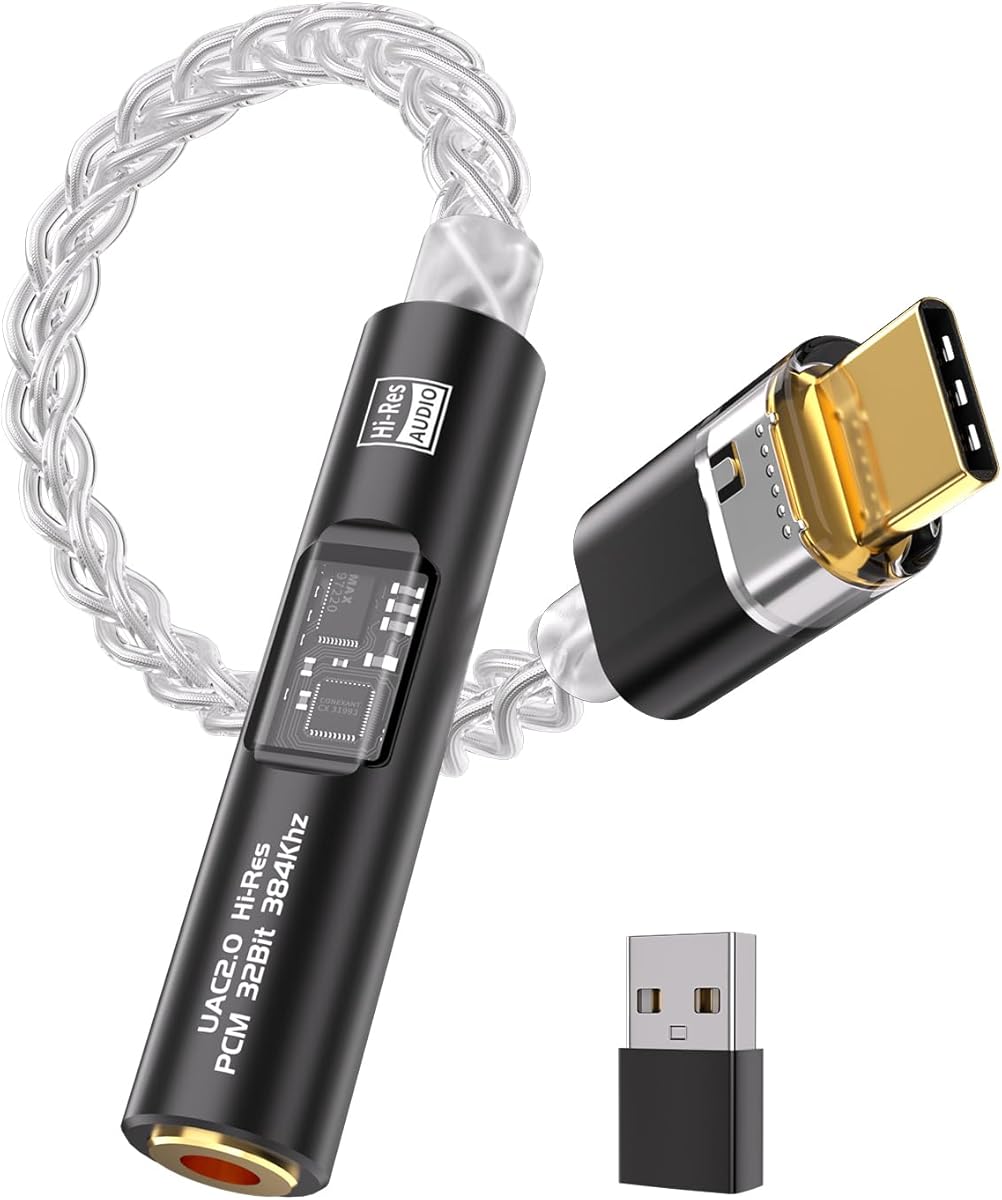
The CX31993 and MAX97220 USB-C adapter is a straightforward way to add dedicated decoding and amplification to a phone, tablet, or computer. Its 4.5 rating reflects a capable specification for an entry-level adapter, including 32bit/384kHz PCM support, 63mW of output at 32 ohms, and compatibility with headphones from 16 to 600 ohms.
We may earn a commission when you buy through this link, at no additional cost to you.
The adapter uses two named chips, a CX31993 for decoding and a MAX97220 for amplification, rather than relying entirely on the host device. Manufacturer-stated figures include THD+N as low as -95dB, signal-to-noise ratio above 115dB, and dynamic range above 111dB. The 20Hz-to-40kHz response is appropriate for normal hi-fi listening.
Its construction is a meaningful step above a basic USB-C-to-3.5mm cable. The stated CNC-anodized aluminum body and eight-strand single-crystal copper cable with silver plating and gold-plated connectors emphasize durability and signal integrity. The included USB-A interface broadens compatibility with older ports and car stereos or computers that lack USB-C.
This adapter is a compelling first DAC for listeners using moderately demanding IEMs who do not need balanced output or onboard volume control. It also makes sense as a backup adapter for travel. Extremely sensitive or difficult-to-drive IEMs may expose the limits of its 63mW output, so high-end users may prefer a stronger balanced unit.
Using dedicated decoding and amplification chips separates the task from the phone's internal audio path. The result is a more deliberate portable setup without requiring a large desktop unit.
At 63mW into 32 ohms, the adapter is best matched to common multi-driver IEMs and less demanding single-driver models. Its stated 16-to-600-ohm range adds flexibility, though sensitivity remains important.
We may earn a commission when you buy through this link, at no additional cost to you.
The iFi hip-dac3 is the most complete all-round portable DAC here, combining a rechargeable battery, true balanced circuitry, flexible analog controls, and generous output power. Its 4.4 rating reflects a well-rounded package aimed at listeners who want more than a simple adapter and may move between IEMs and full-size headphones.
We may earn a commission when you buy through this link, at no additional cost to you.
The manufacturer states output power of up to 400mW into a 32-ohm load, giving the device enough authority for demanding IEMs and many headphones. Decoding includes PCM and DXD up to 384kHz, DSD from 2.8MHz to 12.4MHz, and MQA. Two USB-C ports improve cable routing, and one can be used for charging while the other carries audio.
Hardware controls add meaningful flexibility. A balance switch enables the balanced output, iEMatch is intended to reduce sensitivity-matching issues with easy-to-drive IEMs, PowerMatch adjusts output to different loads, and XBass offers analog bass enhancement. These options are not all essential, but they let the user tune the interaction between source, IEM sensitivity, and amplifier behavior.
The hip-dac3 is our Editor's Choice because it offers the strongest combination of user controls, battery convenience, high-resolution decoding, and output capability in a portable format. It suits committed listeners who want one device to serve a phone, laptop, sensitive IEMs, and more demanding headphones without changing systems.
The stated 400mW output and true balanced circuit create useful headroom for a wide range of IEMs. The balanced path is most meaningful when paired with a cable and earphone designed for that connection.
iEMatch, PowerMatch, and the balance switch address practical matching concerns rather than adding decoration. They give listeners a way to manage sensitivity, impedance, and channel configuration more deliberately.
We may earn a commission when you buy through this link, at no additional cost to you.
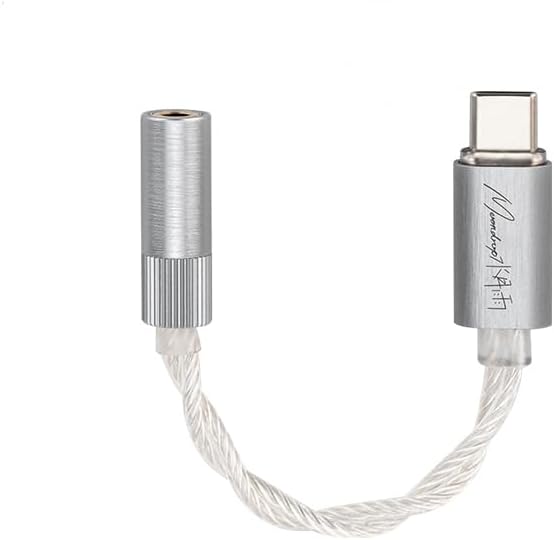
The BZINK CX31993+MAX97220 adapter offers dedicated decoding and amplification in a familiar USB-C-to-3.5mm format. It has a 4.4 rating and shares a straightforward purpose with the earlier CX31993 and MAX97220 adapter: providing a more deliberate audio path for phones, computers, tablets, and compatible car systems.
We may earn a commission when you buy through this link, at no additional cost to you.
The adapter supports PCM up to 32bit/384kHz and is described as Hi-Res Gold Label certified. Its cable uses an eight-strand 4N single-crystal copper and silver-plated construction, while the housing is made from anodized aluminum alloy. These choices are intended to improve durability and maintain stable signal transmission.
The key limitation is its single-ended 3.5mm output. It does not offer a 4.4mm balanced path, onboard gain, or independent volume control. Consequently, it is better suited to mainstream single-driver and multi-driver IEMs than to listeners who require maximum output power or balanced operation for a difficult earphone.
The included USB-A adapter increases its usefulness across older and newer host devices. This product is a sensible option for users who want a more substantial adapter than a simple cable and value the named DAC and amplifier chips. It is also convenient as a secondary travel adapter, although buyers seeking advanced matching features should look to a dedicated unit with selectable output modes.
The dedicated chips distinguish this adapter from passive or host-controlled alternatives. It provides a compact upgrade for listeners who want higher-resolution decoding and an integrated amplifier stage.
The included USB-A adapter broadens the list of compatible computers, vehicles, and legacy accessories. That makes the same adapter useful across changing locations without requiring another accessory.
We may earn a commission when you buy through this link, at no additional cost to you.
The Linsoul AD1 is a Type-C-to-3.5mm DAC adapter built around the KT02H20 chip. It has a 4.3 rating and focuses on high-resolution decoding, low-noise operation, and convenient use with Android phones and monitor headphones that include inline microphones and control buttons.
We may earn a commission when you buy through this link, at no additional cost to you.
Decoding support reaches PCM 32bit/384kHz. The manufacturer reports THD+N of -85dB, dynamic range of 100dB, and monitor-level fidelity. The 3.5mm female connection is specifically CTIA-compliant, allowing compatible Android equipment to recognize an attached headset's microphone and remote buttons.
Its most useful feature is inline control support. Users can change volume, pause or resume playback, and answer calls through compatible earphone controls rather than reaching for the phone. This advantage is limited to CTIA devices and compatible accessories; the adapter will not work with OMTP, TS, or TRS microphone devices.
The AD1 is a practical choice for Android users who prioritize everyday convenience and want dedicated decoding in a simple adapter. It is less versatile for balanced systems, computers without a USB-C audio input, or iPhone users who need a Lightning-compatible interface. Its straightforward design nevertheless covers the common mobile use case well.
CTIA compatibility is important for monitor IEMs and gaming headsets that combine audio with a microphone. The connection allows supported Android phones to recognize those inline functions.
The adapter operates without additional software, making it convenient for travel, rehearsals, and quick sessions. Plug it into a compatible source, connect the earphones, and manage playback through the headset controls.
We may earn a commission when you buy through this link, at no additional cost to you.
The MOONDROP Dawn PRO 2 is a feature-rich portable DAC-amplifier built around dual Cirrus Logic CS43198 chips. It carries a 4.4 rating and provides 3.5mm single-ended and 4.4mm balanced outputs, 32bit/384kHz PCM, DSD256 support, and a separate hardware volume-control scheme designed to avoid relying on the source device.
We may earn a commission when you buy through this link, at no additional cost to you.
The design uses three independent low-dropout regulators to separate power for decoding and digital circuitry. An independent crystal oscillator and dual DAC arrangement are intended to improve efficiency, reduce distortion, and provide stronger overall performance. The stated 4Vrms output voltage and 124mW plus 124mW power ratings give it meaningful authority for many IEMs.
One of its most interesting tools is the updated MOONDROP app, which provides a parametric equalizer with adjustable filter type, frequency, gain, and Q. A headphone frequency-response database is included as a reference. These software features make the device more flexible than a fixed cable, although users who dislike app-based control may not need them.
The Dawn PRO 2 is well suited to listeners who want balanced output, precise volume adjustment, and optional equalization in a compact unit. It is a particularly logical choice for users who understand IEM sensitivity and want to manage gain and channel balance directly. The lack of a stated battery means it is intended for use while connected to a powered source.
The 100-level control separates adjustment from the smartphone's own volume handling. This can reduce dependence on digital attenuation and provide a more consistent way to match sensitive IEMs.
The updated app makes filter type, frequency, gain, and Q adjustable, while its response database provides a useful starting point. Users can shape the output to their own IEM rather than relying on a fixed internal profile.
We may earn a commission when you buy through this link, at no additional cost to you.
The Moondrop Echo-A is a portable USB-C DAC and amplifier built for direct connection to wired headphones and compatible IEMs. Its 4.1 rating is the lowest among the rated DAC-focused products here, but the specification sheet covers the essentials: 32bit/384kHz hardware decoding, a 3.5mm output, and online-controlled microphone support.
We may earn a commission when you buy through this link, at no additional cost to you.
The Echo-A uses an integrated high-resolution audio system-on-chip that combines decoding, digital processing, and amplification. The manufacturer reports THD+N as low as 0.01% and a signal-to-noise ratio up to 100dB. It is designed to work without drivers on computers, Android devices, and compatible iOS devices equipped with USB-C.
Its practical advantage is a short learning curve. There are no complex menus or advanced matching switches, and the headphone volume can be controlled from the connected device. The adapter also supports online control and microphones, which can be useful for calls, livestreams, and monitoring, provided the source and connected headset use a compatible standard.
The Echo-A fits listeners who want a straightforward hi-fi adapter rather than a feature-heavy portable DAC. It is a practical alternative to a bundled phone cable and a sensible backup for travel. However, listeners seeking balanced connectivity, stronger output, or independent hardware volume will find more capable choices elsewhere in this guide.
The integrated decoding and amplification path removes reliance on the host's headphone output. That gives compatible USB-C devices a consistent path to wired earphones with support for 384kHz PCM files.
Microphone and online-control support extend the adapter beyond music playback. Compatibility can vary between operating systems and headset standards, so users should confirm the required connection method.
We may earn a commission when you buy through this link, at no additional cost to you.
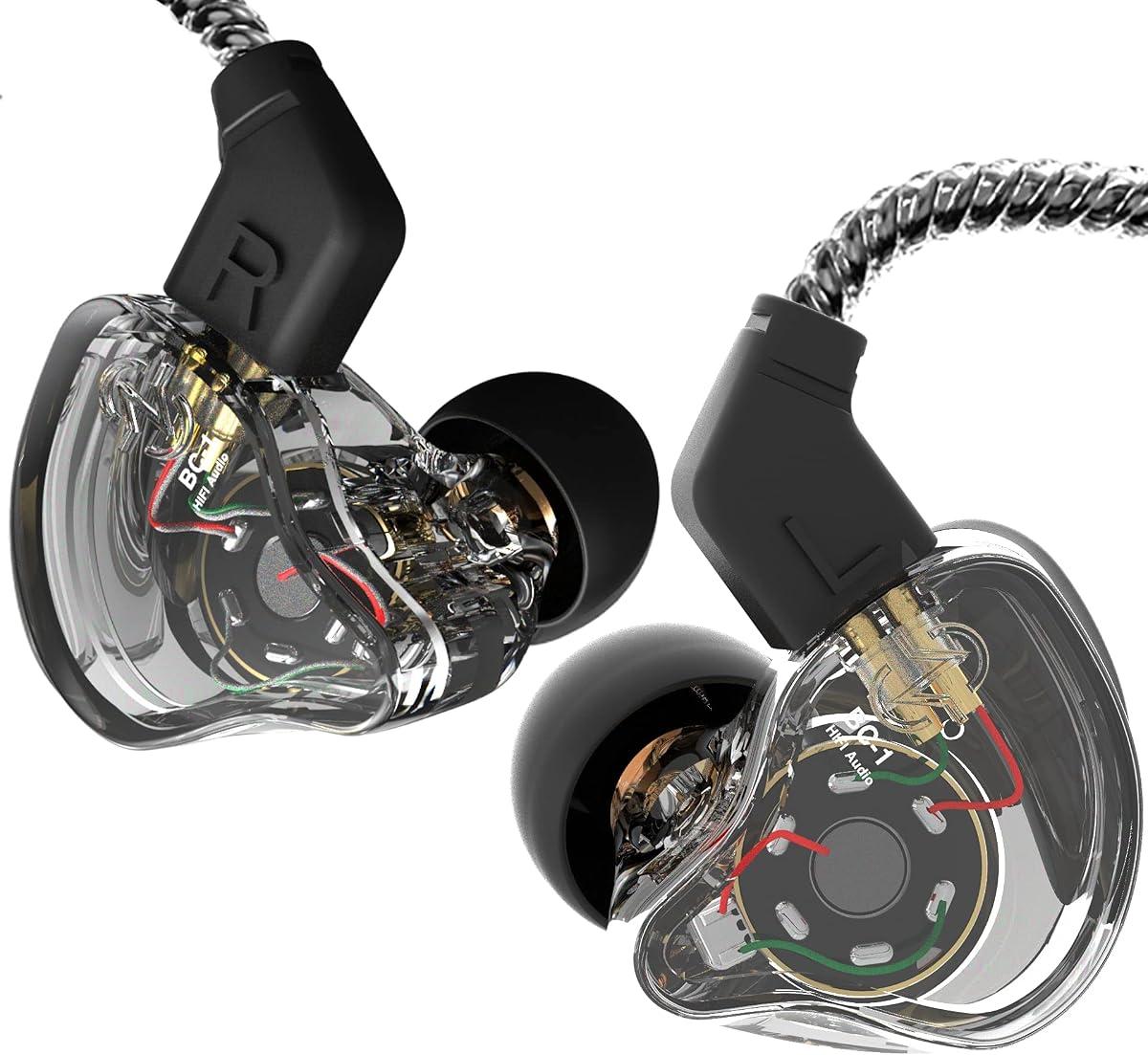
The CCZ Yinyoo Melody is an IEM rather than a DAC, but its inclusion provides a useful reference for the kind of wired earphone a portable DAC is likely to serve. It has a 4.4 rating and uses a hybrid 1DD plus 1BA configuration, with a detachable two-pin cable and a conventional 3.5mm plug.
We may earn a commission when you buy through this link, at no additional cost to you.
The polycarbonate cavity is covered with UV varnish, while TPE ear tips and a wrap-around ear fin support comfort and stability. At 2.3 grams per earphone, the Melody is designed to remain light during rehearsals, performances, studio sessions, travel, gaming, and everyday use. Three sets of silicone tips allow the fit to be adjusted.
The supplied cable uses four-core 4N OFC construction, and the detachable two-pin connector allows replacement or upgrade with another compatible cable. The product description notes a relatively bright and clear presentation with deep bass, natural vocals, and detailed treble. Some descriptions also mention an inline microphone, while the product title identifies the listed configuration as without a microphone.
The Melody is best understood as a ready-made entry into wired IEM listening. It can be paired with one of the DAC adapters in this guide, provided the selected output and cable terminate correctly. It is not itself a DAC, so buyers should not expect digital conversion or amplification from this product. Its greatest value is the complete, lightweight package and detachable-cable design.
The 2.3-gram housing and soft TPE tips reduce the physical burden of wearing an IEM. Ear fins add stability, which can be helpful during stage movement or extended mobile use.
The detachable two-pin connection makes the Melody suitable for users who may later experiment with cables. Because the included plug is 3.5mm, compatibility with a balanced DAC depends on an appropriate replacement cable and connector standard.
We may earn a commission when you buy through this link, at no additional cost to you.
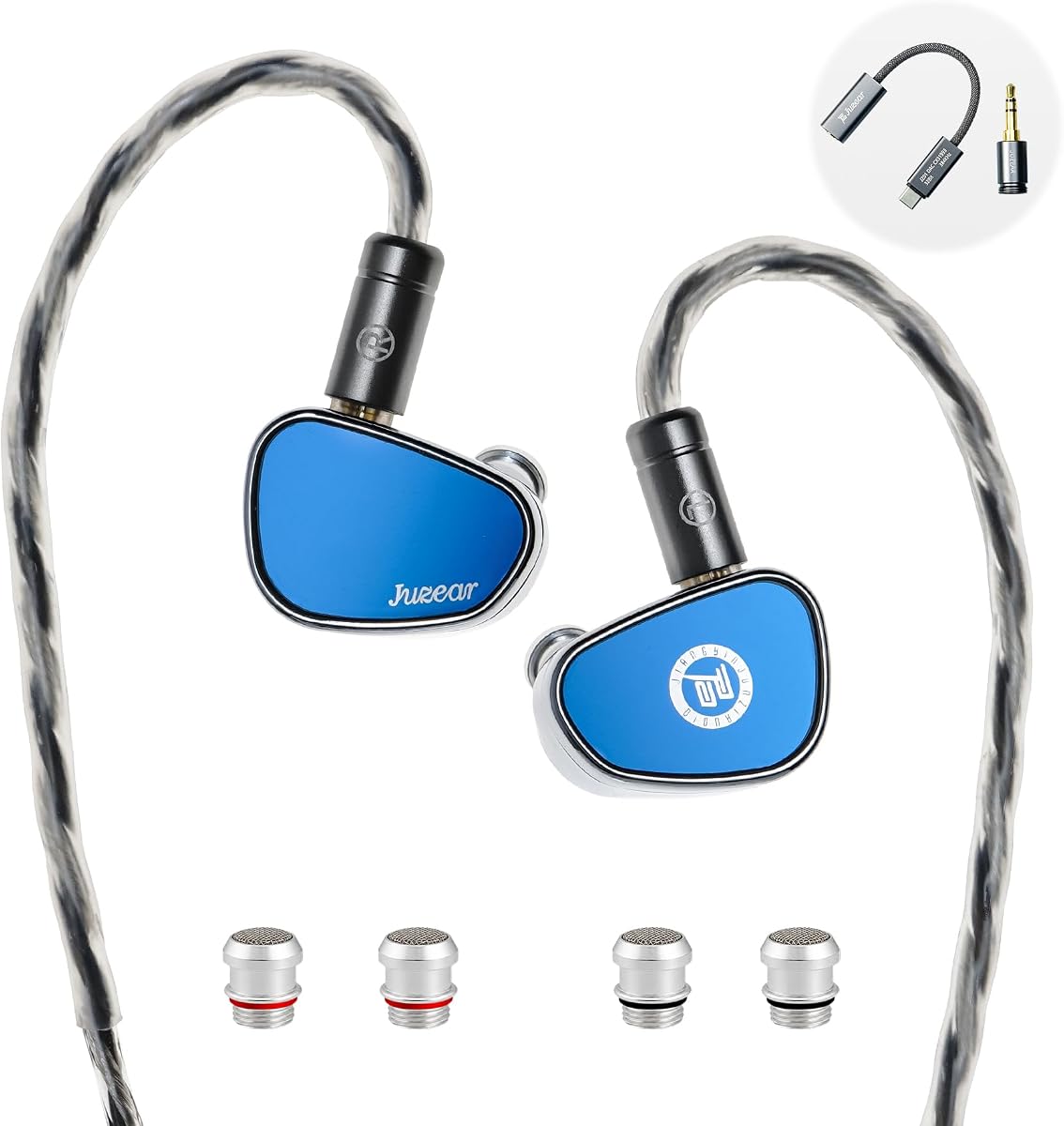
The HiFiGo Nimbus is another IEM included to demonstrate how a portable DAC can fit into a complete listening setup. It uses a custom 10mm MACCD composite dynamic driver and offers three interchangeable tuning nozzles: Balanced, Bright, and Bass. No customer rating is supplied, so the product should be evaluated primarily from its documented design.
We may earn a commission when you buy through this link, at no additional cost to you.
The tuning nozzles let the user vary the tonal presentation without relying on digital equalization. Balanced is intended for general use, Bright emphasizes clarity and instrument detail, and Bass increases low-end impact. This makes the Nimbus adaptable to different genres and listening priorities, from pop and rock to jazz, EDM, classical, podcasts, and movies.
Its Hi-Fi version includes interchangeable 3.5mm and 4.4mm plugs, making it a natural match for both single-ended and balanced DAC outputs. The detachable 0.78mm two-pin cable can also be replaced or upgraded. The zinc alloy shells, laser-iridescent faceplates, 9.2-gram weight, and stated 26dB passive isolation combine durability with portability.
The package includes multiple silicone tips, both plug options, a silver-plated single-crystal copper cable, a protective pouch, and a manual. Nimbus is a strong companion product for buyers assembling a portable wired system, but it is not a DAC. For direct use with a phone, a computer, or portable DAC, select the appropriate output and ensure the source supports the required USB-C or digital connection.
Interchangeable nozzles provide a more tangible method of tonal adjustment than software equalization. The Balanced option is the natural starting point, while Bright and Bass serve listeners with specific tonal priorities.
The supplied 3.5mm and 4.4mm plugs allow the earphones to connect to different portable DACs. That makes the Nimbus a useful test of whether balanced operation suits a particular listener and IEM.
We may earn a commission when you buy through this link, at no additional cost to you.
The right DAC depends on source compatibility, IEM sensitivity, output standard, desired controls, and portability. Begin with the earphone and host device you already own, then choose the smallest feature set that reliably meets their requirements.
Match the DAC to the source as well. USB-C is common for modern phones, tablets, and computers, while older computers may need the included USB-A adapter. Some portable DACs also need a second cable for charging while audio remains connected.
Choose power based on the hardest earphone in your collection, then use appropriate volume attenuation for sensitive models. If you only own one easy-to-drive IEM, a more powerful unit may offer little practical advantage over a clean compact adapter.
For a first portable DAC, 3.5mm output is usually sufficient. Choose 4.4mm balanced output when your IEM supports it, your source system is built around balanced use, and you expect to connect multiple sensitive or demanding headphones.
Prioritize stable decoding, low noise, and good volume control before chasing the largest format number. DSD support may be useful for local libraries, while MQA and DXD support can matter only if the listener uses those formats.
Look for smooth attenuation, low channel imbalance, and a gain setting suited to your IEM. If you use an inline microphone, confirm that moving to a hardware-controlled DAC does not break headset buttons or microphone support.
Choose a dongle for minimal bulk and frequent use with a computer. Choose a battery-powered unit for phone listening, easier charging management, and more control over output. Check the stated playtime and charging arrangement before traveling.
Avoid pulling directly on the cable near the plug and keep connectors dry. If using a replaceable IEM cable, confirm that its pin dimensions and orientation match the socket on the earphone before purchase.
For music-only listening, microphone support is a secondary consideration. For a headset used for work or gaming, it may determine whether the DAC is practical, and it should be evaluated before decoding specifications.
Begin by confirming that your source device has a compatible digital audio output and that the DAC supports the required connector. Connect the DAC first if its manual recommends that sequence, then attach the IEM cable. Select the matching output in the source's audio menu, begin at low volume, and increase it gradually until the level is comfortable.
For balanced models, use an IEM cable wired specifically for the DAC's balanced output and terminate the earphone end correctly. Do not use an ordinary single-ended cable merely because it physically fits. If an app, filter, equalizer, or gain control is available, configure it before critical listening and document the settings so they can be reproduced later.
Store the unit in a dry pouch and avoid sharp bends around the cable-to-connector junction. Keep contacts clean, do not leave the DAC connected while the source is in a pocket, and use a supported charger for battery models. If a connector becomes intermittent, inspect the cable and socket before assuming the decoding circuit has failed.
Not always. A modern phone or computer can provide adequate sound for many IEMs, especially those with moderate sensitivity and easy electrical demands. A dedicated DAC becomes more valuable when the host has a poor headphone output, insufficient volume control, unwanted noise, or when the earphone benefits from a cleaner or more powerful amplifier.
It can be, provided the amplifier has a low noise floor and suitable output impedance. Output voltage and current matter more than the connector label alone. A sensitive IEM may also benefit from independent hardware volume control, which avoids some of the distortion and imbalance associated with aggressive digital attenuation.
No. Balanced operation can provide practical advantages such as channel separation and additional output capability, but the result depends on the DAC implementation and matching IEM cable. A properly designed single-ended system may be more effective than a poorly implemented balanced one, and many listeners hear little difference.
It describes the maximum PCM resolution and sample rate the hardware can decode. It does not mean every track is recorded at that rate or that a 384kHz file automatically sounds better. Source quality, mastering, noise performance, and output matching often matter more in everyday listening.
Usually, yes, when the device supports USB-C digital audio output and the operating system recognizes the adapter as a sound device. Some tablets and computers have restrictions on analog audio accessories, so check the manufacturer's compatibility information. USB-A adapters or cables may be needed for older ports.
Most common single-driver and moderate multi-driver IEMs are driven effectively by a clean adapter with a few tens of millivolts or milliwatts of available output. Difficult multi-driver or hybrid IEMs may benefit from more voltage. Extremely sensitive models need a quiet amplifier and careful gain control rather than maximum power.
A DAC can provide a cleaner and more appropriate conversion and amplification path, but it cannot correct the fundamental tuning, limitations, or recording quality of the earphone. It also cannot guarantee that a lost or damaged digital signal will be recovered. The best match remains one with suitable output power, low noise, and compatible connections.
A battery is convenient for phone listening because it separates the DAC from the phone's volume control and may support charging while audio remains active. USB-powered dongles are simpler and smaller but remain dependent on the source for power and may inherit its volume behavior. Choose based on how and where you expect to listen.
The iFi hip-dac3 stands out as the most well-rounded option, combining a battery, true balanced output, strong power, high-resolution decoding, and useful matching controls. The HiFiGo M3 Ultra is the premium choice for listeners attracted to a genuine vacuum-tube stage, while the CX31993 and MAX97220 adapter provides the most focused budget upgrade.
Prioritize the connection your IEM actually uses, sufficient output for its impedance and sensitivity, and a noise level appropriate to the model. A basic 3.5mm adapter may be entirely adequate, but balanced output, independent volume, microphone support, equalization, or battery operation become valuable when they solve a real need in your system.
Finally, check current specifications, device compatibility, and prices at the time of purchase. Product revisions, cable standards, app updates, and retailer availability can change, and the right DAC is ultimately the one that works cleanly with your source, earphone, and listening habits.