
Oura Ring 5 Smart Ring
4.4Editor score
Tracks over 50 health metrics
Six to nine-day battery life
AI-powered Oura Advisor
Titanium construction
Works with 40-plus apps
Searching for a smart ring for kids can be misleading because most products marketed as smart rings are designed for adults, while child-focused wearables usually take the form of smartwatches. The strongest options combine comfortable tracking, useful health data, and family-friendly controls, but the right choice depends heavily on a child’s age, activity level, and supervision needs.
We compared all 10 products using the supplied specifications, focusing on tracking capabilities, battery life, water resistance, communication, safety functions, app support, and ease of use. The list includes adult-oriented smart rings that may suit teens, affordable trackers for basic goals, and kids smartwatches that provide more practical features for younger children.
Each review explains what a product does best, where it falls short, and who is most likely to benefit from it. The top picks represent a premium health ring, a subscription-free smart ring, and a child-focused fitness watch, while prices and availability can change, so readers should confirm current details before purchasing.
4.4Editor score

4.2Editor score

4.6Editor score
As an Amazon Associate we earn from qualifying purchases.
This side-by-side comparison shows which products are true rings, which are general health rings, and which are child-focused smartwatches. It highlights the major differences in sizing, location tracking, calling, battery life, water resistance, and recurring fees so buyers can match the wearable to the child’s age and daily needs.

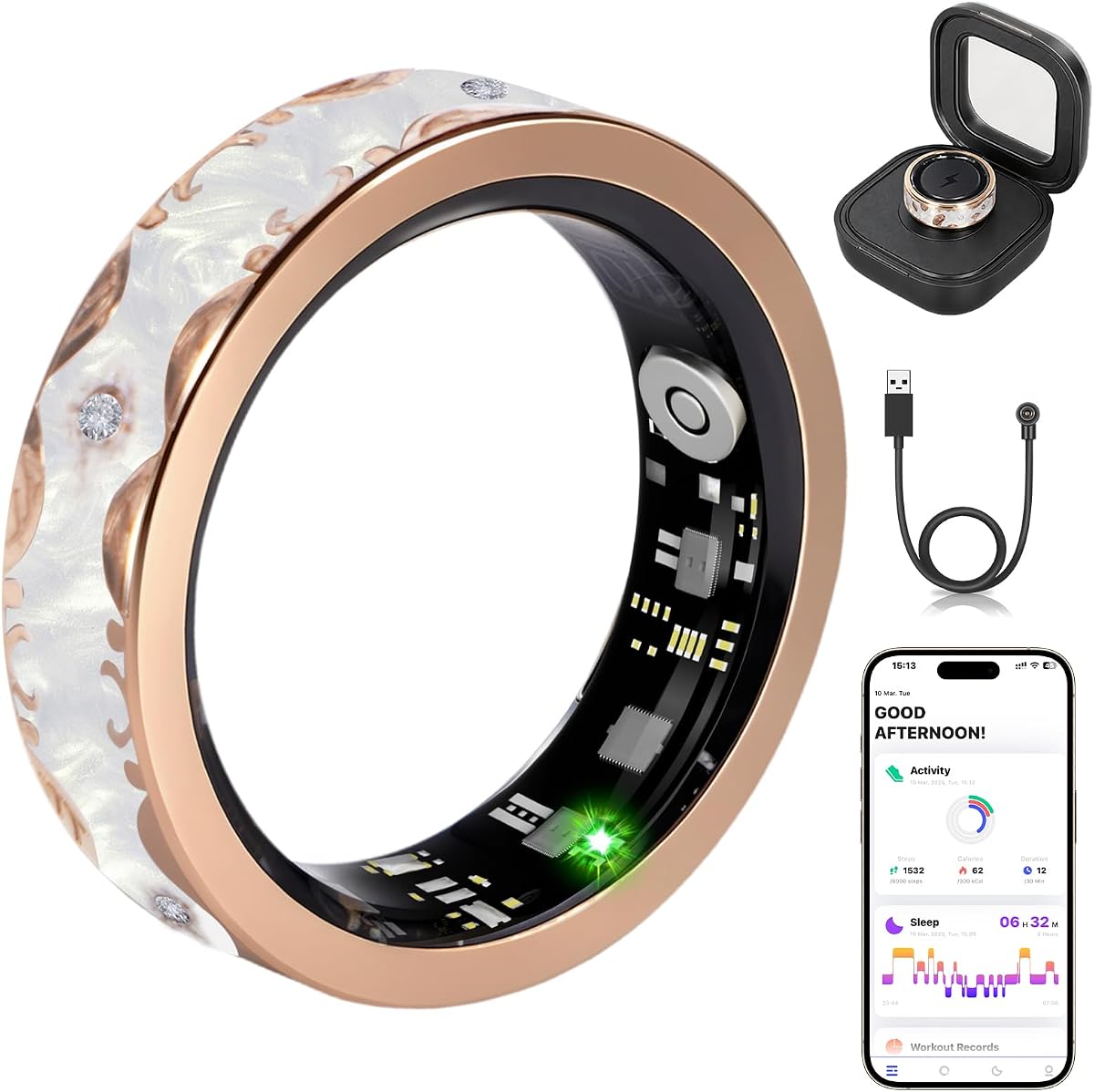



The Oura Ring 5 is the most sophisticated health-focused ring in this group, earning a 4.4 rating for its compact titanium design, extensive sensor suite, and detailed daily insights. It tracks more than 50 metrics spanning sleep, activity, stress, heart health, metabolic health, and women’s health, making it appealing for a teen interested in establishing a long-term wellness routine.
We may earn a commission when you buy through this link, at no additional cost to you.
Its strongest advantage is the depth of information available in the Oura app. Sleep, readiness, activity, stress, heart-related measurements, and personalized guidance are presented within a mature ecosystem that also integrates with more than 40 applications, including Natural Cycles and Strava. Battery life of six to nine days reduces charging interruptions, while the smaller, lighter construction and scratch-resistant titanium shell make it more suitable for continuous wear than many bulkier rings.
The principal trade-off is membership. New members receive the first month, but access to the full service continues through a recurring subscription afterward. The ring also uses a unique sizing system, making the manufacturer’s sizing kit important before purchase. Most importantly, it is not designed as a child locator or communication device, so a parent seeking independent contact and geofencing should use a kids smartwatch instead.
This is a strong choice for older children or teens who want discreet fitness and sleep tracking and already have a family phone. It is less suitable for younger kids who need calls, SOS features, school controls, or parent-managed location updates. For those priorities, the Oura’s advanced health analysis should be considered a wellness tool rather than a complete child wearable.
The ring’s small titanium profile avoids the visual bulk of a smartwatch, which can be useful for older children who are self-conscious about wearables. At the same time, the breadth of sleep, stress, activity, and heart-related data gives parents and teens a detailed view of daily patterns.
Oura Advisor provides guidance based on the user’s patterns, while integrations with fitness, cycle, and wellness apps broaden the value of the data. Families should remember that software guidance supports healthy habits but is not a substitute for medical advice.
We may earn a commission when you buy through this link, at no additional cost to you.
The RingConn Gen 2 Air combines a discreet 2-millimeter profile, a weight of just 2.5 grams, and no recurring subscription for standard features. Its 4.2 rating reflects a balanced approach to sleep, activity, heart rate, stress, blood oxygen, menstrual-cycle, and general wellness tracking, with an AI assistant that turns raw data into personalized reports.
We may earn a commission when you buy through this link, at no additional cost to you.
Battery performance is a major selling point because a full charge is stated to last up to ten days, and the ring reaches a full charge in approximately 90 minutes. That combination reduces the likelihood that a child will abandon the device because it frequently needs charging. The IP68 rating also supports swimming, diving, showers, rain, and other wet conditions, while the light design minimizes interference during sports and sleep.
The absence of recurring app fees makes RingConn attractive for families that want continuous data without a membership attached to the child’s account. However, it still has no GPS, calling, messaging, or emergency contact tools, so it does not independently solve child-location and communication concerns. Its unique sizing standards also mean that a normal jewelry ring size should not be assumed, and a dedicated sizing kit is recommended.
Overall, RingConn is a convincing middle ground for a teen or older child who wants a thin, low-maintenance health tracker. It is also better suited to budget-conscious families than many recurring-membership ecosystems. For younger children, however, its AI reports and detailed health metrics are less useful than the direct activity feedback, reminders, and game-based engagement found in dedicated kids watches.
Lifetime use of standard app features removes an ongoing cost that can matter when a wearable is intended for regular long-term use. The app continuously organizes sleep, stress, heart rate, blood oxygen, activity, and cycle information for a straightforward wellness overview.
The 2-millimeter profile and 2.5-gram weight make the ring less noticeable during sleep, running, diving, and everyday tasks. Water resistance gives active children more freedom to keep tracking through showers, rain, and aquatic activities.
We may earn a commission when you buy through this link, at no additional cost to you.
The LuckRing Smart Ring is a straightforward tracker for children who want a simple ring rather than a watch, and its 4.3 rating is supported by a useful set of everyday metrics. It records steps, heart rate trends, sleep quality, and body-energy information in a companion app, giving a child or parent an accessible overview of daily routines.
We may earn a commission when you buy through this link, at no additional cost to you.
Its 2.5-gram aluminum design is among the lightest products reviewed. The ring supports five to seven days of active use and recharges in about one hour through the included cable, without requiring a bulky charging case. IP68 protection allows it to remain in place during handwashing, swimming, exercise, and outdoor weather, and the app supports 28 languages for broader family accessibility.
The product is less sophisticated than the Oura Ring 5 and RingConn Gen 2 Air. It does not provide the same depth of AI guidance, sleep-stage analysis, or long-range metrics, and the listed remote-photo gesture control is an unusual feature whose practical restrictions are not explained. It also lacks the communication and location tools that parents often expect from a children’s wearable.
This is most appropriate as a low-cost introduction to wearable health tracking for an older child. A parent can introduce the ring as a simple way to encourage movement and discuss sleep habits without presenting it as a medical monitor. Younger children who need direct communication, games, or location updates will be better served by a child-focused smartwatch.
Step counts, heart rate trends, and sleep quality provide enough information to start conversations about movement and recovery. The lightweight build and fast charging also make the ring convenient for children who do not want to charge a larger device every day.
Support for 28 languages can make setup and daily interpretation easier for multilingual families. Users should still confirm device compatibility and become familiar with the app’s data presentation before relying on it for routine feedback.
We may earn a commission when you buy through this link, at no additional cost to you.
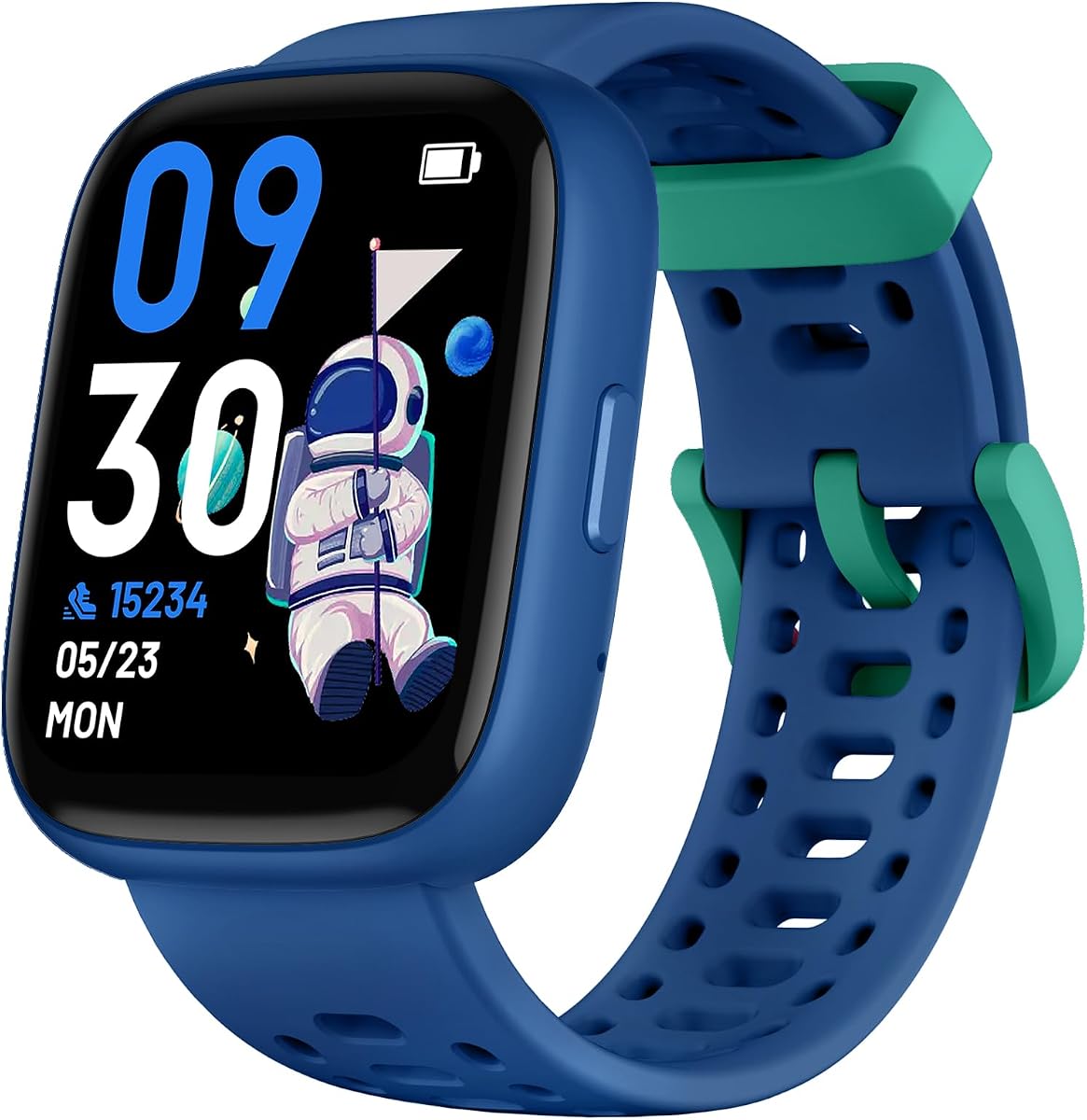
The Verfit Kids Smart Watch holds a 4.6 rating and is one of the strongest choices for elementary-school children who want an activity tracker with meaningful parental controls. Its 1.83-inch HD touchscreen is larger and more colorful than a ring display, while the device can operate independently for basic functions or connect to the VeryFit app for expanded management.
We may earn a commission when you buy through this link, at no additional cost to you.
Automatic tracking covers steps, distance, calories burned, exercise duration, heart rate, blood oxygen, and sleep patterns. The watch supports 80 activity modes, including walking, running, cycling, and basketball, making it versatile for school recess, organized sports, and everyday movement. Parents can also manage five puzzle games, restrict them during school, set playtime limits, and lock them entirely.
Its standout convenience is the ability to use the watch without a phone, while the app adds deeper settings. The Find My feature is restricted to iOS users and has no cross-platform equivalent listed. Unlike the 4G models in this guide, the Verfit does not offer independent cellular calling, GPS location, or a dedicated SOS function, so it works best as a fitness and habit-building device rather than a child safety communicator.
This watch is a strong fit for parents seeking an approachable first wearable that rewards activity, limits screen-based games, and does not require a cellular plan. It is particularly useful for children old enough to understand goals but not yet ready for full phone responsibilities. Families that need live location and emergency communication should examine a 4G kids watch instead.
With 80 sport modes and automatic tracking of steps, distance, calories, and duration, the watch makes everyday exercise measurable. Children can see progress in a format that feels more engaging than a static step counter on an adult tracker.
The five puzzle games are intended to support reaction time and math skills, but their value depends on thoughtful limits. Parents can disable games at school, define playtime, or lock them permanently, helping balance entertainment with focus.
We may earn a commission when you buy through this link, at no additional cost to you.
The Smart Ring Health Tracker offers an unusually broad set of body and sleep measurements, including heart rate, blood oxygen, blood pressure, sleep patterns, steps, and calories. Its 3.5 rating places it below the more established smart rings, but the product remains appealing for older children or teens whose main interest is detailed rest and recovery information.
We may earn a commission when you buy through this link, at no additional cost to you.
The distinguishing feature is sleep-stage analysis. The ring identifies deep sleep, light sleep, and REM periods, assigns a sleep-quality score, and tracks trends over a week. That can help families notice patterns in bedtime routines, although the data should be treated as general wellness information rather than a clinical diagnosis. Dual charging through a portable case and USB gives families more ways to keep the device ready.
The ring weighs about 5 grams and has an IP68 waterproof rating, making it suitable for continuous wear. However, its stated three-to-five-day battery is shorter than the ten-day maximum offered by RingConn and the six-to-nine-day range of Oura Ring 5. Its lower rating also suggests that some buyers may find the overall experience less consistent or polished than the category leaders.
For a child interested in sleep and recovery, this remains a feature-rich, subscription-free option. It is less convincing for younger children because it offers no communication, geofencing, games, or parent reminders, and it is less attractive to families that want the strongest battery life or app ecosystem in the guide.
Tracking deep sleep, light sleep, REM, and weekly trends goes beyond a single sleep rating. This can help an older child notice how consistent schedules affect recovery, though parental supervision and medical guidance remain more important than wearable estimates.
The included portable case is convenient for travel, while USB charging provides another familiar option. Families should plan for regular charging because the stated active-use battery is shorter than that of the leading ring alternatives.
We may earn a commission when you buy through this link, at no additional cost to you.
The BOYACARE Smart Ring distinguishes itself with a built-in vibration motor that can deliver call alerts and customizable alarm vibrations directly to the finger. It carries a 4.5 rating and tracks heart rate, blood oxygen, HRV, temperature, stress, sleep stages, steps, calories, and distance without requiring a recurring app subscription.
We may earn a commission when you buy through this link, at no additional cost to you.
The vibration feature is a meaningful advantage for a teen who wants discreet alerts without pulling out a phone. Sleep reports cover time asleep, waking periods, deep sleep, and light sleep, while HRV analysis offers a daily view of mood and stress. Automatic activity tracking adds progress feedback and exercise tips, and 5ATM sealing allows immersion up to 50 meters for swimming and showering.
Battery life reaches up to six days, and the magnetic case provides many recharges, although some power may be lost in storage or shipping. The first-use instruction to charge both ring and case fully is worth following. It is important not to confuse vibration notifications with full call handling: the ring alerts the user, but it does not independently provide the two-way cellular calling found in a smartwatch.
BOYACARE is best suited to an older child or teen who wants discreet notifications, richer wellness tracking, and no ongoing fee, but does not need GPS location or emergency communication. The unique sizing system should be checked carefully, and anyone expecting a medical-grade reading should not substitute consumer wearable estimates for clinical equipment.
Call vibration can be useful during meetings, workouts, or other situations when looking at a screen is inconvenient. Customizable alarm vibration offers a gentler wake-up option and preserves the low-profile benefit of choosing a ring.
Heart rate, blood oxygen, HRV, temperature, and sleep-stage information create a useful daily recovery picture. The app presents daily, weekly, and monthly sleep reports, helping older children compare routines over time rather than focusing on one isolated reading.
We may earn a commission when you buy through this link, at no additional cost to you.
The 4G Kids Smart Watch with GPS Tracker is the most safety-focused product in the guide, with a 4.1 rating and features aimed at children age three and older. It combines real-time positioning, safe-zone alerts, 4G video and voice calls, messaging, an SOS button, remote listening, and comprehensive parental controls in one wearable.
We may earn a commission when you buy through this link, at no additional cost to you.
Location performance is supported by AI-assisted positioning and multiple satellite systems, while GPS, WiFi, and LBS can work together to provide updates. Parents can review location history, see daily routes, create multiple geofences, and receive alerts when a child enters or leaves a designated area. The watch also supports remote ringing, video calls, voice messages, a family group chat, and preset emergency contacts.
This is a substantial step up in complexity compared with a health ring. It uses 4G connectivity, supports a SIM card and WiFi, and needs a compatible service. The supplied listing states that it works only in the United States, so it cannot be considered a universal solution. The battery provides five days of daily use or seven days on standby, and the device is protected by an IP68 rating.
This watch is an excellent fit for families seeking location, communication, and emergency features in a child-focused device. Its class mode, unknown-call blocking, remote shutdown, scheduled power controls, and contact restrictions make it adaptable to school and home routines. It is less appropriate where cellular service is unavailable or where a simple, screen-free health ring is the actual goal.
Real-time location, route history, refresh-on-demand, remote ringing, and multiple electronic boundaries give parents several ways to monitor movement. The combination of satellite, WiFi, and LBS positioning can improve the usefulness of location updates in different environments.
Video calls, voice calls, messages, a family chat, and SOS support offer multiple ways for a child to reach a guardian. Contact restrictions, unknown-call blocking, class mode, and remote management help create a more controlled communications environment.
We may earn a commission when you buy through this link, at no additional cost to you.
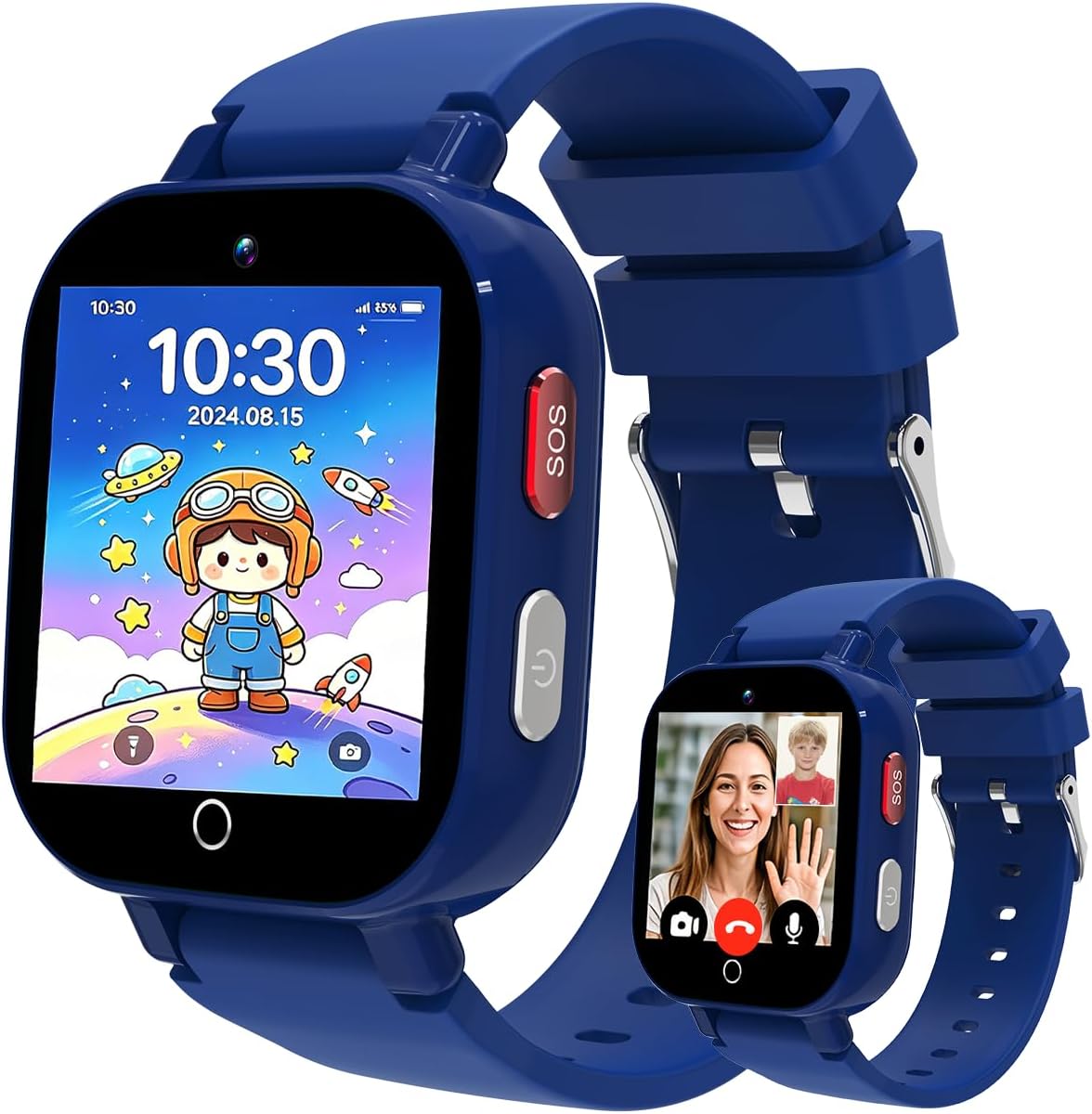
The Kids GPS Video Watch is built for children ages five to 12 and earns a 4.4 rating for its balanced mix of location, communication, and entertainment. It supports GPS and LBS positioning, real-time location viewing, historical journeys, safety-fence alerts, phone and video calls, voice chat, a camera, an alarm clock, and a pedometer.
We may earn a commission when you buy through this link, at no additional cost to you.
The external SOS control is designed to call preset family numbers when held for more than five seconds, and as many as three guardian numbers can be configured. The watch also allows up to 15 everyday phone contacts, giving children a way to reach approved family and friends. Two-way video calls allow parents to check in visually, while the class mode and safety-fence features support everyday routines.
The product also includes games, a photo album, and math-oriented play for younger users, making it more engaging than a plain tracker. However, it requires a Speedtalk Nano SIM card, and no SIM is included in the package. The watch must be restarted after insertion, and some users may need to configure the APN settings. These setup steps add complexity compared with a Bluetooth fitness watch.
This is a good choice for families that want a child to carry a first communication device with location support. Its combination of guardian calling, video chat, and geofencing is particularly useful for school trips and outings. Buyers should prepare a compatible SIM, verify carrier coverage, and set up guardian contacts before the child needs them.
Two-way video calling gives children a direct way to check in with a parent, while voice chat and the approved contact list provide simpler alternatives. The ability to call three guardians supports redundancy when the primary caregiver is unavailable.
Safety fences alert guardians when a child leaves a defined area, and historical route viewing provides context after a trip. Class mode helps reduce distractions at school, while the camera and games add familiar entertainment during appropriate downtime.
We may earn a commission when you buy through this link, at no additional cost to you.
The ENOMIR Kids Fitness Watch has a 4.6 rating and is arguably the most direct answer to the keyword because it is explicitly designed for children rather than adapted from an adult wearable. It monitors heart rate, sleep, blood oxygen, steps, and activity while providing reminders for water, rest, and homework.
We may earn a commission when you buy through this link, at no additional cost to you.
More than 80 sports modes cover activities such as running, biking, and jump rope, with tracking for steps, calories, and distance. Parents can set activity and exercise goals in the app, and the watch provides a reward reminder when a target is reached. Five built-in puzzle games offer more than 100 customizable watch faces, creating a child-friendly environment that can make consistent wear more appealing.
It can be used directly without a phone, which simplifies setup and prevents a child from becoming dependent on connected features. A two-hour fast charge supports five to seven days of daily use, while IP68 protection allows wearing during handwashing and swimming. The listing also provides a three-year hardware-defect warranty and states that an after-sales team responds within 12 hours and aims to resolve issues within 24 hours.
ENOMIR is ideal for a child whose goals center on movement, routines, and positive habit formation. It lacks cellular calls, GPS, and emergency features, so it is not a substitute for a connected safety watch. Parents should also treat its health data as an educational aid and discuss healthy habits directly rather than relying on the device alone.
Water, rest, and homework reminders help children remember basic habits when parents are not nearby. Adjustable goals for steps, exercise time, and water intake turn reminders into achievable daily tasks with visible rewards.
The extensive sports-mode list makes it easier for children to log different playground, school, and recreational activities. Tracking distance, steps, and calories provides feedback across a broad range of movement instead of focusing on a single sport.
We may earn a commission when you buy through this link, at no additional cost to you.
The Junicare 4G Kids Watch is a balanced first-phone-style wearable for children ages four to 12. It earns a 4.2 rating through a combination of 4G calls, text chat, two-way HD video, GPS and LBS location, electronic geofences, one-touch SOS, and a parent-managed app.
We may earn a commission when you buy through this link, at no additional cost to you.
Pairing is refreshingly direct because a built-in QR code connects the watch with the Junicare app. Guardians can then manage contacts, block unknown incoming calls, view real-time location, define safe areas around home or school, and receive alerts when a child leaves a boundary. Route playback provides a 24-hour history, and class mode can disable entertainment functions while preserving location and emergency calling.
The watch includes a Speedtalk SIM card for use in the United States, but the card must be activated on the official Speedtalk website and a suitable plan selected. The watch should be powered off before SIM insertion. Although the hardware is included, families should treat cellular service as a separate ongoing cost, making this less predictable as a budget purchase than a standalone fitness watch.
This model works well for children transitioning to greater independence, especially when parents need live location and direct communication. Its 1.7-inch curved display, skin-friendly breathable silicone strap, and woven strap provide comfortable styling, while the included games, camera, calculator, pedometer, and stopwatch add familiar entertainment. It is less focused on detailed health analytics than the dedicated rings in this guide.
Approved contacts, unknown-call blocking, geofences, and class mode help parents define how a child can use the device. The watch supports communication while limiting the risks associated with giving a young child unrestricted access to a full smartphone.
Scanning the internal QR code with a phone streamlines the initial app connection. The included Speedtalk SIM reduces hardware shopping friction, although activation and service-plan selection still require attention before use.
We may earn a commission when you buy through this link, at no additional cost to you.
The most important decision is whether a child needs a health ring, a simple fitness watch, or a cellular device with location and emergency communication. Age, independent mobility, family phone habits, and the importance of uninterrupted tracking should guide the choice.
Start with the child’s actual need rather than the shape of the product. Choose a ring for low-profile wellness tracking, a non-cellular watch for exercise and habit building, or a connected watch for independent communication and location.
Match the interface to maturity. Simple routines suit younger children, while deeper wellness data and discreet alerts tend to suit teenagers.
If independent travel or school commutes are part of the plan, choose tested geofencing and direct communication over basic step counting.
Choose a device that can reach a full charge before bedtime and remain comfortable through a full school and activity day.
Verify the exact rating and activity limits, and treat the device as water-resistant rather than completely waterproof under every condition.
Factor in both device and service costs, then confirm that essential features remain accessible without an expensive recurring plan.
Never assume a normal ring size will fit. Measure the intended finger and follow the exact brand’s sizing guidance before ordering.
Enable only the tracking and communication features the family genuinely needs, and establish clear privacy rules with the child.
Begin by measuring the child’s finger and following the exact sizing instructions for the selected ring. Smartwatches should be fitted loosely enough to remain comfortable during sleep and exercise but securely enough not to rotate during tracking. Read the app setup guide, connect the device through its QR code or manufacturer process, and set the correct date, units, and notification preferences before handing it over.
Introduce the wearable as a tool for learning rather than a substitute for parental care. Establish a simple routine around charging, wearing, and reviewing data. If the product includes games, limits, class mode, or geofences, agree on the rules together. For connected models, activate the SIM through the listed carrier process, verify the network and APN settings, and program guardian contacts before the child leaves home.
Care for the device according to its water and charging guidance. Rinse off sweat, soap, or chlorine when appropriate, dry the band or ring thoroughly, and avoid using abrasive cleaners. Charge only with the supplied or approved cable, remove the device before vigorous activity if the manufacturer recommends it, and inspect the band, contacts, and casing for damage. Revisit app permissions, contacts, safe zones, and activity goals as the child grows or needs change.
Most smart rings are designed for adults, so a child may need close supervision when interpreting health data. Some options in this guide offer lightweight construction and long battery life that could suit teens, but none includes child location, emergency calling, or parental geofencing. Younger children will usually receive more useful features from a dedicated kids watch.
The RingConn Gen 2 Air is specifically designed around a 2-millimeter profile and 2.5-gram weight, making it one of the most discreet choices for overnight tracking. The Oura Ring 5 is also compact and lightweight, though its membership requirement may be less attractive to families seeking simple ongoing use. Comfort should always be confirmed with the correct sizing kit.
None of the smart rings provides independent cellular calling or child GPS tracking. The 4G kids smartwatches are the relevant products for video calls, voice calls, route history, geofences, and SOS functions. A family that values location and emergency communication should compare those watches rather than assuming a ring can provide the same safety features.
The smart rings in this guide can track sleep, heart rate, heart-rate variability, blood oxygen, and other wellness metrics to varying degrees. The Oura Ring 5 offers the broadest stated health range, while RingConn provides AI-assisted reporting and BOYACARE emphasizes stress, recovery, and sleep trends. These consumer readings should not replace medical equipment or professional clinical advice.
The Verfit and ENOMIR fitness watches can operate without a paired phone, although a parent app expands their controls. The 4G watches require cellular service for calls and location, and their listed SIM arrangements differ. One model includes a SIM card, another requires a Speedtalk Nano SIM that is not included, and the included card must be activated separately.
Subscription-free smart rings and non-cellular fitness watches avoid recurring app fees, making them predictable for basic tracking. Cellular kids watches may still require a carrier or data plan even when hardware is included. Oura Ring 5 includes the first membership month and then uses a recurring subscription, so families should compare the full service cost rather than only the wearable.
Several products list IP68 protection, and the BOYACARE ring lists 5ATM water resistance up to 50 meters. These ratings indicate strong resistance to water in specified conditions, but users should still follow the manufacturer’s instructions, avoid exposing devices to hot water, and dry them after swimming or showering. Water resistance does not remove the need for careful charging practices.
Begin with the child’s age, maturity, and reason for using the device. Then verify sizing, battery life, app compatibility, subscription or carrier costs, water resistance, location accuracy, contact controls, and the data the product collects. For younger children, direct communication and safety tools may matter more than detailed sleep analytics.
The Oura Ring 5 stands out for detailed health metrics, mature app integrations, and a discreet design, while RingConn Gen 2 Air offers an attractive subscription-free alternative with a particularly thin profile. The ENOMIR Kids Fitness Watch is the most child-focused budget selection, combining activity tracking, routine reminders, sports modes, and simple standalone operation.
The right choice depends on the purpose of the wearable. A teen who wants quiet sleep and fitness insights may prefer a ring, while a younger child who benefits from goals, reminders, and games may find a fitness watch more engaging. Families seeking live location, direct calls, geofencing, and emergency support should focus on the 4G kids smartwatches and verify carrier coverage before purchase.
Before ordering, confirm the current size, app requirements, included accessories, service terms, and compatibility details. Prices and promotions can change, so shoppers should compare the current listing and total ownership requirements rather than relying on an older recommendation alone. The most valuable product is the one the child will wear consistently and the family can manage without creating unnecessary complexity.