
EASYLONGER ES720 PRO & ES720 Dual CPAP Battery Power Supply
Over 540Wh combined battery capacity
Four to six-night claimed runtime
Eight included DC connection cables
Four convenient recharging methods
Battery Backup for Cpap Machine options compared for runtime, compatibility, charging options, portability, safety, and outage readiness in this practical
A reliable battery backup can protect sleep therapy during outages, travel, camping, and unreliable hotel power. The right unit must match your CPAP model, provide enough runtime, and deliver clean power at the correct voltage without complicated setup. Capacity, compatibility, and recharging options all matter.
We compared ten battery systems, adapters, and bundles using the supplied specifications. The list distinguishes dedicated CPAP batteries from power banks, vehicle adapters, converter cables, and solar combinations, while highlighting runtime claims, supported devices, charging methods, safety features, and travel considerations.
Each pick reveals a different use case, from a budget-friendly adapter to high-capacity dual-battery and solar systems. Product ratings are shown only when available, and specifications may change as manufacturers revise products. Readers should verify their exact CPAP model and current listing details before purchasing.


4.3Editor score
The comparison below covers dedicated batteries, solar bundles, vehicle-powered alternatives, and adapter-only products. Capacity, runtime, device support, and charging flexibility help separate short-term emergency solutions from systems intended for multi-day use.



The KFD 12V-24V Car Charger DC Adapter is a converter cable rather than a self-contained battery, but it offers a useful way to power compatible ResMed machines from a vehicle socket, power bank, or portable power station. It carries a 4.3 rating and is positioned as an economical alternative for owners who already have an appropriate backup power source.
We may earn a commission when you buy through this link, at no additional cost to you.
Its principal strength is input flexibility. The cable accepts a 12V to 24V source with a maximum current of 12A, while the listed operating range extends from 9V to 32V. Output reaches 24V at 2.71A and 65W. Compatibility covers the ResMed AirSense 11 family, including AutoSet and Elite versions, as well as the AirMini. The manufacturer also lists several ResMed part numbers for easier identification.
The important limitation is that the adapter does not store energy. It requires a power bank, battery pack, vehicle outlet, or power station with a suitable 12V to 24V DC output and more than 65W of available power. The cigarette-lighter connector itself also depends on a socket that supports the required current. Users must confirm the capabilities of their chosen power source before relying on it during an outage.
This product makes the most sense for a ResMed AirSense 11 or AirMini owner who already owns a high-capacity portable power station and wants a dedicated CPAP connection cable. It is less suitable for someone seeking a complete, ready-to-use battery system. Verify the exact machine model and ensure the power source can deliver the required output before purchasing.
The KFD adapter turns compatible external power supplies into a direct CPAP connection. It is especially useful during travel or outages when carrying a larger portable power station is already part of the user's emergency plan.
The manufacturer expressly excludes several older ResMed and Philips models. Checking the exact model number and the cable's requirements can prevent an otherwise smooth power connection from failing.
We may earn a commission when you buy through this link, at no additional cost to you.
The EASYLONGER ES960 PRO combines a 297.6Wh LiFePO4 CPAP battery with a 110W foldable solar panel, making it one of the most complete emergency power bundles in this list. It is designed for outages, travel, camping, and RV use, with a stated runtime of up to two to three nights when the humidifier and heated hose are off.
We may earn a commission when you buy through this link, at no additional cost to you.
Device support is a major strength. The battery offers 12V, 19V, and 24V DC output and is listed for ResMed AirSense 10 and 11, AirCurve 10 and 11, AirMini, DreamStation 2, and Luna TravelPAP. Users can recharge through a wall outlet, vehicle, or the included solar panel, which has built-in maximum power point tracking for more efficient solar charging.
The panel adds useful flexibility beyond CPAP support. It has TX60, Anderson, DC, USB-C, and USB-A ports and a listed conversion efficiency of 23.4%. That makes the system useful for phones and other personal electronics. The LiFePO4 chemistry is also associated with a long cycle life and strong safety characteristics compared with many conventional lithium-ion packs.
Travel is the main caveat. At more than 160Wh, the battery is expressly not TSA-approved, and its stated runtime depends on using the machine without the humidifier or heater. It is best suited to home preparedness, road trips, and camping. Buyers should confirm their CPAP model and remember that direct solar charging depends on sunlight and changing environmental conditions.
The included folding panel eliminates the need to source a separate solar charger. It can recharge the ES960 PRO while the battery also provides a practical reserve for overnight therapy.
A 297.6Wh battery gives this bundle more endurance than compact travel packs. The stated two-to-three-night target is particularly relevant for outages that cannot be restored within a single evening.
We may earn a commission when you buy through this link, at no additional cost to you.
The EASYLONGER ES720 combines a 266.4Wh battery with an 84W 12V and 24V car adapter, creating a flexible power setup for home emergencies, road travel, and camping. It supports ResMed, Philips, and Luna G3 systems, although heated-tube use is excluded, and the package includes four DC cables with the battery plus four more with the vehicle adapter.
We may earn a commission when you buy through this link, at no additional cost to you.
Pass-through charging is the defining feature. The car adapter can be plugged into the battery's cigarette-lighter port while the CPAP remains connected, allowing the battery to recharge and supply power at the same time. This reduces the likelihood of therapy interruption when mains electricity becomes available but the user does not want to disconnect the machine immediately.
The ES720 also functions as a general travel power hub. Its cigarette-lighter port supports up to 180W, its adjustable DC output covers 12V to 24V, and four USB ports provide additional charging options. The included vehicle adapter adds 84W DC, 30W USB-C, and 18W USB-A outputs, allowing it to support compatible laptops, phones, drones, and other travel devices.
This system is a good choice for users who want more than a dedicated CPAP battery but do not need a large solar bundle. A built-in battery management system offers overcharge, over-discharge, overcurrent, and short-circuit protection, while an adapter switch can isolate the cigarette-lighter output when it is not needed. Check the supplied cable and your exact machine before ordering.
Pass-through operation allows the battery to recharge while continuing to power the CPAP. That makes it easier to remain on therapy when normal power returns without immediate replugging.
The multiple USB outputs, adjustable DC port, and vehicle adapter turn the unit into a compact power hub. That versatility can reduce the number of separate accessories needed for a multi-day trip.
We may earn a commission when you buy through this link, at no additional cost to you.
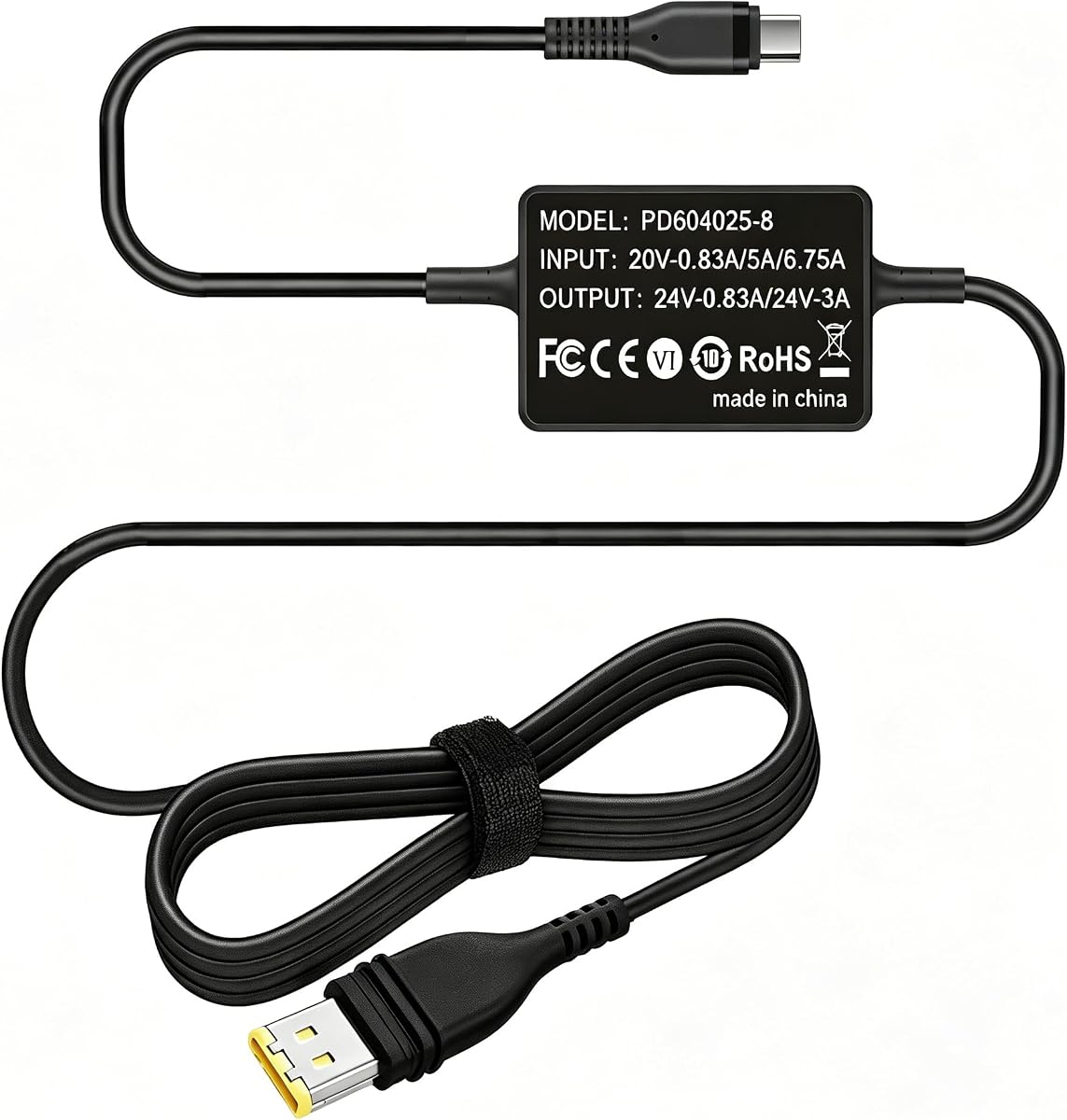
This 20V CPAP power cord is another adapter-based solution, but its 4.7 rating and straightforward PD-to-DC design make it attractive for ResMed AirSense 11 and AirMini owners. It converts power from a compatible USB-C supply or battery backup into the connection required by the machine.
We may earn a commission when you buy through this link, at no additional cost to you.
The key input requirement is substantial. The cable needs a USB-C PD output of at least 20V and 65W, and the product details also reference compatible 60W and 61W arrangements. Lower PD settings of 5V, 9V, and 15V will not work. At the CPAP end, the listed output options are 24V at 0.833A and 20W or 24V at 2.71A and 65W.
Compatibility information includes the AirSense 11 family, AirCurve 11 Elite, several ResMed part numbers, and the AirMini. The manufacturer reports CE, FCC, and RoHS certification. It also provides a specific connection sequence: attach USB-C first, wait three to five seconds, and then connect the machine. If power does not begin, unplug the cable, wait approximately 30 seconds, and repeat.
This cord is best for a user who already owns a power bank or power station with a sufficiently powerful 20V USB-C PD output. It does not provide stored energy on its own, and a charger that merely supports USB-C without the required voltage and wattage may still fail. Confirm both the power source and the exact CPAP model to avoid an incompatible combination.
The cable is best understood as a converter, not a backup battery. Its usefulness depends on having a separate power bank or station capable of supplying the required PD output.
The manufacturer's wait-and-retry instructions can resolve a delayed connection. Following the specified sequence is particularly helpful with some USB-C power banks.
We may earn a commission when you buy through this link, at no additional cost to you.
The Pilot-24 Lite Charging Adaptor and DC Output Cable is a purpose-built accessory for connecting an AirSense 11 to a Medistrom Pilot-24 Lite. It has a 4.0 rating and includes both a DC output cable and a short charging adapter cable. The battery and CPAP machine are not part of the package.
We may earn a commission when you buy through this link, at no additional cost to you.
Its main benefit is integration with the Pilot-24 Lite's backup architecture. The cable allows the AirSense 11 to remain connected to the battery as a backup source. According to the supplied information, the battery can automatically take over if main power fails, avoiding the need to reconnect the machine during the transition. The same connection can support travel or standalone use away from wall power.
Because this is an accessory rather than a complete system, it suits existing Pilot-24 Lite owners or people who intend to buy that battery. It offers a more focused solution than a general power station, reducing the number of connection decisions during an emergency. The included short charging cable is also intended to support the battery's charging setup.
The trade-off is obvious: buyers without a Pilot-24 Lite cannot use this kit as a complete backup. They would need to acquire the battery separately and confirm that the AirSense 11 and selected battery configuration are supported. This makes the adapter most attractive for users who value a dedicated, manufacturer-aligned setup over the broader ports offered by a general-purpose power hub.
Keeping the AirSense 11 connected to the Pilot-24 Lite allows the battery to serve as a backup without reconnecting equipment. That can be valuable during brief nighttime utility failures.
The package contains the necessary cables but no battery. Buyers should treat it as an add-on for existing owners, not as a complete emergency-power solution.
We may earn a commission when you buy through this link, at no additional cost to you.
The EASYLONGER ES960 and ESP110 bundle combines a dedicated CPAP battery with a 110W folding solar panel. It is intended for users who want a self-contained renewable power setup for outages, camping, RV travel, and other off-grid situations. The simple premise is practical: the battery stores energy, while the panel provides a way to replenish it outdoors.
We may earn a commission when you buy through this link, at no additional cost to you.
The listed device support covers ResMed AirSense 10 and 11, AirCurve 10 and 11, AirMini, and DreamStation and DreamStation 2. The panel folds for transport and connects to the battery through a straightforward arrangement described as plug-and-play. This reduces the number of separate components users need to organize before an emergency.
Compared with converter cables, this bundle offers genuine energy storage. That distinction matters when an outage lasts beyond the capacity of a phone or ordinary power bank. It also means the system can be prepared away from mains power, provided the panel receives sufficient sunlight. The manufacturer positions the bundle as a way to build greater independence from utility power.
The trade-offs are weight, charging time, and model verification. A larger solar panel and battery take more space than a compact travel pack, and solar output varies with sunlight, angle, and weather. No customer rating is available in the supplied listing data, so buyers should evaluate the current listing and warranty details carefully. Confirm the exact CPAP model before ordering.
The 110W panel is a meaningful addition for extended outages. It can help maintain the battery when the user has access to daylight but not reliable mains electricity.
The folding panel and dedicated battery create a portable power station for RV trips and campsites. The system is more substantial than a cable-only solution but remains designed around a relatively compact footprint.
We may earn a commission when you buy through this link, at no additional cost to you.
The EASYLONGER ES720 PRO and ES720 dual-battery package is built for extended outages and multi-day travel. It combines a 276.48Wh ES720 PRO with a 266.4Wh ES720, creating more than 540Wh of total capacity. The stated runtime is two to three nights per battery and four to six nights when both are used with the humidifier off.
We may earn a commission when you buy through this link, at no additional cost to you.
The package includes eight DC cables and supports ResMed, Philips, and Luna systems. The ES720 PRO adds a digital display, 100W USB-C charging rather than 60W, 15W wireless charging rather than 10W, a wider 12V to 24V DC input range, and stronger DC output rated at 12V/6.7A or 24V/3.8A. These additions make the upgraded model useful as both a CPAP battery and an all-purpose travel power hub.
Both units include a cigarette-lighter port, adjustable DC output, and four USB ports. They support pass-through charging and can recharge by AC, USB-C PD, solar, or a car outlet. A battery management system provides overcharge and overdischarge protection, and the ES720 PRO also includes an LED light with an SOS mode. These features make the pair practical for prolonged emergencies and mobile work.
The main disadvantages are bulk and the absence of an available customer rating. Two batteries are more difficult to pack than one, although carrying both can provide redundancy if one unit is unavailable or needs separate charging. The four-to-six-night figure also assumes the humidifier and heater are turned off. This is the most substantial dedicated battery package in the roundup and is best for users with extended outage concerns.
Two batteries can be used independently or alternately. That flexibility allows one unit to remain in reserve or recharge while the other supports therapy.
The digital display, 100W USB-C, adjustable DC, and wireless charging extend the system's value beyond the CPAP. Users can consolidate several charging accessories into one power hub.
We may earn a commission when you buy through this link, at no additional cost to you.
The EASYLONGER ES400 AIR bundle pairs a compact CPAP battery with an ESP110 110W folding solar panel. It is positioned for camping, RV trips, and emergency preparation, with a simple setup intended to avoid extra adapters or converters. The product listing also states support for AirSense 11, AirMini, DreamStation 2, and additional compatible devices.
We may earn a commission when you buy through this link, at no additional cost to you.
One unusual detail is the capacity description: the supplied information refers to a 48Wh ES400 AIR while also stating 148Wh in another line. That discrepancy deserves careful attention from buyers. They should consult the current product page and manufacturer specifications to identify the exact battery configuration, output requirements, and expected runtime before purchase.
The ESP110 panel adds fast solar charging potential, while its foldable construction keeps it easier to transport than a rigid panel. The system is described as simple and plug-and-play for the ES400 AIR. It can also power phones, tablets, and other small electronics, adding value during an outage when several devices need emergency charging.
Compared with the ES960 and dual ES720 packages, the ES400 AIR appears designed to balance portability and solar functionality. Its smaller battery may be better suited to a weekend trip or a compact emergency kit than to a prolonged outage. No customer rating is available, and users should verify the ambiguous capacity description and exact device compatibility before ordering.
The compact ES400 AIR is easier to integrate into a travel bag or vehicle kit. It prioritizes portability while retaining a bundled solar charging option.
The supplied listing contains both 48Wh and 148Wh references. Buyers should confirm the current specification and expected runtime directly rather than assuming which figure applies.
We may earn a commission when you buy through this link, at no additional cost to you.
The Medistrom Pilot-24 Lite bundle combines a 95Wh CPAP backup battery with 12 resealable sachets containing 10 unscented mask wipes each. The battery is especially notable for travel compliance: the supplied information describes it as TSA-approved and FAA-compliant, with a weight of 1.3 pounds and a form factor suitable for carry-on use.
We may earn a commission when you buy through this link, at no additional cost to you.
It includes two DC output cables, one for direct connection to AirMini and another for AirSense 10. Additional cables for the AirSense 11, S9, prismaSMART, Luna, DreamStation Go, and iCH are sold separately, so buyers with those machines should not assume every required lead is in the box. The Pilot-24 Lite can operate as a standalone battery or as a backup power supply for more 24V CPAP machines.
The claimed runtime is up to 16 hours on one charge, although actual use depends on pressure settings, machine model, features, and other operating conditions. Recharging takes approximately two to three hours, which is useful for quick preparation between uses. The included wipes are made with aloe vera and are designed for routine mask cleaning without fragrance.
This is a compelling choice for travelers, campers, and anyone who wants a battery that meets stated airline rules. It is less convenient for an AirSense 11 owner who still needs to purchase a separate cable. The up-to-16-hour figure should be treated as a maximum rather than a promise. Users should check their airline's current policy and identify the correct cable before travel.
The 95Wh capacity, stated TSA approval, and stated FAA compliance distinguish this unit from larger non-approved packs. That makes it a practical consideration for travel CPAP users.
The included leads cover AirMini and AirSense 10, but the AirSense 11 cable is listed as a separate accessory. Confirm the machine and obtain the appropriate lead before departure.
We may earn a commission when you buy through this link, at no additional cost to you.
The EASYLONGER ES720 PRO with 12V and 24V car adapter is a road-oriented power package that combines a 276.48Wh battery with a vehicle adapter and four connection cables. It carries a 5.0 rating in the supplied data and is compatible with major ResMed and Philips machines. The stated runtime is two to three nights with CPAP use, depending on operating settings.
We may earn a commission when you buy through this link, at no additional cost to you.
The car adapter accepts 12V and 24V inputs, allowing it to recharge the battery in different vehicles and to serve as a power source when connected to the ES720 PRO. The battery itself supports four charging methods, and its digital display provides a visible status reference. A safety switch and dual-circuit protection are included to help manage charging and power delivery.
This system also functions as a general portable power station. It includes an adjustable DC port, a cigarette-lighter socket, and USB ports, while the listed bundle is ready for camping, road trips, and home backup. A carrying bag is included, which helps keep the battery, adapter, and cables together during travel.
Unlike the solar bundles, this package does not include a folding solar panel. That may be preferable for travelers who recharge through vehicles or wall outlets and want to avoid carrying a panel. The battery and full cable set may still occupy meaningful luggage space, so users should balance portability against the two-to-three-night runtime advantage. Verify the included lead for their exact machine.
Support for both 12V and 24V vehicle inputs makes the adapter useful across a broader range of cars and trucks. It also supports replenishing power during multi-day road travel.
The cigarette-lighter socket, adjustable DC output, and USB connections make the ES720 PRO useful for more than the CPAP. That versatility is valuable when travel devices also need backup charging.
We may earn a commission when you buy through this link, at no additional cost to you.
Choosing a reliable backup means matching stored capacity, output, connectors, and power requirements to your exact CPAP. The following factors help separate complete emergency systems from lightweight accessories and reveal the trade-offs behind each product category.
CPAP machines do not all use the same voltage, connector, or power profile. Start with the model name printed on the device and identify whether it belongs to the ResMed AirSense, AirCurve, or AirMini family, the Philips DreamStation range, or another brand. Some bundles support several models, but their listed cable assortment may not include the lead for every machine. A device can be electrically similar while using a different physical connector or a proprietary power requirement.
Never rely on a broad phrase such as universal without checking the detailed compatibility list. If the listing includes a model number, compare it with the label on the machine. When uncertain, contact the seller or manufacturer and request confirmation before ordering. Purchasing the wrong lead can interrupt therapy even when the battery itself is fully charged.
Capacity is measured in watt-hours, abbreviated Wh, and indicates how much stored energy the battery contains. Larger capacities generally support longer periods away from wall power, while smaller packs are easier to carry. Runtime also depends on CPAP pressure, heated-tube use, humidifier operation, display brightness, and whether the battery supports pass-through charging. Manufacturer estimates are best treated as comparative guidance rather than guaranteed results.
A two-to-three-night system is more relevant to a multi-day outage, while a compact pack may be sufficient for an overnight emergency. For frequent travel, consider the tradeoff between airline rules and capacity. Larger batteries are not automatically permitted in carry-on luggage, so always check the applicable aviation authority and airline policy.
Pass-through charging allows the CPAP to operate while the backup battery is connected to another source and recharging. This is valuable because it reduces the need to disconnect and reconnect therapy equipment when utility power returns. It is especially helpful for users who rely on their CPAP continuously and cannot tolerate even a brief interruption.
Not every cable-only solution supports this feature, and not every battery behaves identically. Review the system instructions to determine whether the CPAP remains powered throughout the transition and whether the output source must be turned off before connecting. Pass-through operation can also affect total available runtime, so a large claimed capacity should not be interpreted as identical performance during and after charging.
A useful battery offers more than one way to connect equipment. DC outputs may support adjustable 12V, 19V, or 24V levels for different CPAPs, while USB-C PD can supply modern devices. A cigarette-lighter socket is useful with compatible vehicle adapters and portable power stations. Some bundles include several DC leads, which is more convenient than identifying a single proprietary cable before an outage.
Pay close attention to voltage and power, not just connector shape. The included 20V and 24V cables in this roundup require a capable source, and lower PD settings cannot substitute for the specified output. For converter-only options, inspect the required wattage, voltage, and current of the external power bank or power station. A USB port alone does not guarantee that a cable will work.
A backup is only useful if it can be replenished in the situations where it is needed. Wall charging is the most convenient option at home, while USB-C PD can reduce the number of adapters required. Car charging is valuable for road trips, and solar charging is useful when an outage lasts long enough for dependable sunlight to become relevant. The ES960 and ES400 bundles pair a battery with a folding panel for this reason.
Consider how quickly you may need to move from stored to usable power. Some systems support pass-through operation, while others need more involved reconnection procedures. Solar charging also depends on weather, panel orientation, and available space. A complete emergency plan should include a dependable primary charging method as well as renewable charging when conditions permit.
A CPAP battery stores enough energy to warrant deliberate safety features. Look for battery management systems that protect against overcharging, overdischarge, overcurrent, and short circuits. Devices with a physical power switch offer an additional way to isolate outputs when equipment is not in use. The KFD and EASYLONGER descriptions include certification or protection features, although certifications and included protections vary by product.
Quality charging equipment is equally important. Use the supplied cables and observe the manufacturer's connection order, especially for USB-C PD converters. Do not assume that a cable will negotiate the required power profile with every source. If a system repeatedly disconnects or behaves inconsistently, stop troubleshooting through repeated unplugging and review the instructions or seek manufacturer support.
The most capable battery is not automatically the most convenient choice. Large-capacity systems, dual-battery bundles, and folding solar panels take more room and may be too heavy for everyday carry. Compact 95Wh units are easier to transport and may be permitted in airline carry-on luggage, while larger solar kits are better suited to vehicle storage, camping, and home emergency preparation.
Think about where therapy will occur. A home backup should be charged and ready near the sleeping area. A travel unit needs to fit the user's luggage without becoming burdensome. A vehicle kit can prioritize capacity and charging flexibility. Buying a larger system makes sense only when the user can realistically keep it charged and transport it to the location where it may be needed.
Before relying on a backup system, identify the exact CPAP model, choose the correct included cable, and confirm that the battery output matches the machine's requirements. Charge the unit fully through a supported method, then test it with the CPAP while normal wall power is disconnected. This dry run should occur before an emergency, allowing the user to verify startup, display behavior, and uninterrupted operation.
For cable-based products, follow the stated connection sequence. With the 20V PD cable, connect the USB-C end to the power source, wait three to five seconds, and then attach the CPAP. If it does not start, unplug the cable, allow approximately 30 seconds for power to clear, and repeat. For batteries with pass-through charging, consult the manual and make sure the CPAP remains connected while the battery recharges.
Store the battery in a dry, temperature-appropriate location, inspect cables for damage, and recharge it according to the manufacturer's maintenance instructions. Keep the power bank or power station's capacity available rather than using it exclusively for therapy. Replace damaged cords, avoid exposed moisture, and periodically confirm that the battery still holds a useful charge after extended storage.
Runtime depends on battery capacity, CPAP pressure, heated-tube use, humidifier settings, and the machine itself. Dedicated systems in this guide claim anywhere from a single overnight session to several nights, with the longest estimates based on turning off the humidifier and heater. Treat those figures as maximum conditions and test the actual setup under normal therapy settings before an emergency.
Only if it can supply the correct voltage, current, and power profile through the appropriate converter cable. Some USB-C power banks offer 20V PD output, while others remain limited to lower voltages that cannot run compatible ResMed machines. A dedicated CPAP battery is generally simpler and less dependent on the source's PD behavior.
No. Larger capacity can provide longer runtime, but it also adds weight, bulk, charging time, and possible travel restrictions. A smaller travel-focused battery may be more convenient for a weekend away, while a larger system is better for extended outages or home preparedness. Choose based on where the equipment will be used and how regularly you can keep it charged.
Airline acceptance depends on the battery's watt-hour rating, airline rules, and the applicable aviation authority. The Medistrom Pilot-24 Lite in this guide is described as TSA-approved and FAA-compliant at 95Wh, while the larger ES960 PRO is expressly not TSA-approved. Always check current rules with the airline before traveling and keep the battery in your carry-on baggage when required.
The purpose of pass-through charging is to keep the CPAP operating while the backup battery recharges from another source. Actual behavior varies by system, so test the arrangement in advance. Follow the instructions for the order in which the battery, source, and CPAP are connected, and never assume a pass-through setup provides the same runtime as using the stored charge alone.
Several EASYLONGER models include USB-A, USB-C, DC, and cigarette-lighter outputs for phones, tablets, laptops, cameras, and other compatible electronics. Running several devices at once reduces the available CPAP runtime and may create additional load on the power system. Use only the output and adapter appropriate for each device.
A solar panel is optional but valuable for prolonged outages where reliable mains power is unavailable. It is especially useful for camping, RV travel, and remote households that can expose the panel to sufficient sunlight. A wall or vehicle charging method should still be part of the plan because solar output varies with weather, panel angle, and available daylight.
Charge the battery according to the instructions, connect the correct cable, and operate the CPAP for at least one full therapy session. Then unplug mains power and confirm that therapy continues without an error. Record the battery display or remaining-charge reading before and after the session, and also test any pass-through arrangement that you expect to use during an outage.
The EASYLONGER ES960 PRO solar bundle stands out for its balanced capacity, broad device support, and included renewable charging, while the dual ES720 PRO and ES720 package offers the strongest endurance and redundancy in the list. For a more economical approach, the KFD adapter is useful when paired with a suitably powerful power bank or portable power station.
Prioritize exact machine compatibility first, then choose the amount of runtime that matches the realistic duration and location of an outage. Pass-through charging, output variety, safety protections, and airline rules can be just as important as raw capacity. A simpler system that is always charged and kept nearby is more useful than a larger unit that is difficult to store or transport.
Ratings, specifications, bundle contents, and current prices can change, so consult the latest listing and manufacturer instructions before buying. Check the included cables, output requirements, storage guidance, and warranty details, and perform a complete test with your own CPAP before relying on the backup during an emergency.