
Lenovo 15.6 FHD Business Laptop
4.5Editor score
Portable 1.55-kilogram design
8GB LPDDR5 memory
Full HD anti-glare display
USB-C DisplayPort connectivity
A laptop for non-gamers should place usability, comfort, battery life, and dependable performance ahead of specialized graphics hardware. The right model can handle remote work, classes, streaming, browsing, spreadsheets, and family computing without intimidating controls or unnecessary complexity.
We compared all ten products by examining their processors, displays, memory, storage, connectivity, operating systems, portability, and everyday features. The list covers traditional Windows laptops, a business-oriented model, and a Chromebook for people who prefer a simpler cloud-focused experience.
Each review explains who the laptop suits, which capabilities stand out, and where compromises appear. The top selections represent our strongest overall, budget-oriented, and premium choices, while current specifications, software details, and product availability may change over time.
4.5Editor score

4.5Editor score

4.4Editor score
As an Amazon Associate we earn from qualifying purchases.
This side-by-side comparison highlights the main differences in screen size, processor, memory, storage, and operating system, helping you identify the most appropriate laptop for everyday work, study, communication, and entertainment.




The Dell 15.6-inch DC15250 is a straightforward Windows laptop built around an Intel Core i5-1334U processor and a familiar 15.6-inch full HD display. It carries a 4.3 rating, but its greater appeal lies in how neatly it combines conventional sizing, useful controls, and practical support features for students, office workers, and home users who do not need gaming hardware.
We may earn a commission when you buy through this link, at no additional cost to you.
Dell emphasizes productivity throughout the design. The full HD panel provides a useful balance between screen space and portability, while the lifted hinges create a more natural typing angle. A roomy keyboard, separate numeric keypad, and calculator hotkey make the system particularly appealing for spreadsheets, data entry, budgeting, and general office work. ComfortView software is included to help reduce blue-light emissions during extended sessions.
Battery support is another practical advantage. Express Charge is designed to restore a meaningful amount of charge quickly, while energy-efficient battery behavior is intended to help users remain productive away from an outlet. The one-year onsite service plan also adds reassurance, since Dell states that a technician can visit the user's home, office, or another chosen location if a covered hardware issue cannot be solved remotely.
The main limitation is that the supplied product information does not identify memory or storage capacity, so buyers should verify both before purchasing. The 15.6-inch footprint is also larger than the most travel-friendly alternatives. Even so, the combination of a Core i5 processor, full HD screen, numeric keypad, and supportive service makes this Dell a strong recommendation for anyone seeking a conventional laptop that does the essentials well.
The lifted hinges, roomy keyboard, calculator shortcut, and ComfortView support show attention to the hours people spend typing and viewing documents. These details make the DC15250 feel more purpose-built for school and office routines than a generic entertainment laptop.
Express Charge helps minimize downtime between tasks, while Dell's one-year onsite service provides a potentially convenient alternative to repeatedly packing the computer for in-person support. The exact battery runtime can vary with workload, screen settings, and wireless activity.
We may earn a commission when you buy through this link, at no additional cost to you.
The HP OmniBook 3 17.3 stands out as a value-focused, large-screen Windows laptop. Its 4.5 rating reflects a broadly favorable feature set that includes a full HD IPS panel, an AMD Ryzen 3 30 processor, 8GB of LPDDR5 memory, and a 512GB PCIe NVMe solid-state drive. It is a natural fit for anyone who wants more visual workspace than a compact notebook provides.
We may earn a commission when you buy through this link, at no additional cost to you.
The 17.3-inch display uses IPS technology and wide viewing angles, which makes it easier to share spreadsheets, presentations, websites, or streamed content with someone sitting nearby. Wi-Fi 6 and Bluetooth 5.4 provide modern wireless connectivity, while the NVMe drive supports quick boot times and efficient file access. The supplied description also positions the Ryzen 3 processor for routine multitasking, casual gaming, photo editing, streaming, and general productivity.
Features designed around communication are unusually thoughtful. Advanced AI noise reduction can focus on a user's voice and suppress competing sounds during online meetings. The FHD camera includes HDR auto-switch functionality to balance image contrast and color in challenging backlight. A dedicated Copilot Key provides one-press access to Windows 11's AI-powered assistant, which may be helpful for organizing information and drafting content.
The large chassis is the obvious trade-off. A 17.3-inch screen is excellent for stationary use but less convenient in crowded classrooms, on airplane trays, or during daily commutes. The 8GB memory configuration is adequate for common tasks, though heavy browser use and multiple demanding applications may benefit from more memory. For a desktop-replacement-style laptop, however, this OmniBook combines a spacious screen, modern connectivity, and generous storage at an approachable tier.
The large IPS display is the defining advantage, offering comfortable space for side-by-side documents, web research, and media. Wide viewing angles also make the laptop more accommodating when a second person needs to see what is on screen.
AI noise reduction, an FHD HDR camera, and dual microphones support a more professional virtual-meeting experience. These features are particularly relevant to remote workers, students, and anyone who regularly joins calls from a shared environment.
We may earn a commission when you buy through this link, at no additional cost to you.
The HP 17-inch business laptop is a roomy productivity machine for users who regularly handle documents, spreadsheets, presentations, and browser-based work. It earns a 4.5 rating and combines a latest-generation AMD Ryzen 5 processor, 16GB of RAM, and a 512GB SSD. Those specifications provide a more generous foundation for multitasking than many basic laptops intended for light use.
We may earn a commission when you buy through this link, at no additional cost to you.
Its 17.3-inch full HD anti-glare display is designed to reduce distracting reflections while preserving sharp detail and vivid color. The slim bezels create a modern appearance, and the wide screen gives users room to arrange several open applications. A brushed full-size keyboard and ten-key number pad further support office work, accounting, inventory tasks, and anything that benefits from rapid numerical entry.
The webcam and digital microphones are tuned for practical communication rather than decorative use. HP Fast Charge is included, and the product description cites long battery life, although it does not provide a specific runtime. Windows 11 comes preloaded, along with Office 365 for the Web, supporting familiar document, presentation, and spreadsheet workflows. Built-in Copilot tools are also described as useful for organizing tasks, summarizing information, and creating content.
This is not the laptop to prioritize if minimum weight and a compact footprint are your chief requirements. The 17.3-inch display requires more desk space and can be less convenient to carry. In exchange, it offers a generous viewing area, ample memory, fast storage, a numeric keypad, and a full Windows software environment. It is especially convincing for students and office users who value screen area and productivity features over gaming-specific hardware.
The 16GB RAM configuration gives users more room to keep browser tabs, messaging apps, office documents, and media open simultaneously. Combined with the Ryzen 5 processor and 512GB SSD, it is a sensible platform for a demanding but non-gaming workload.
The anti-glare panel, slim bezel design, full-size keyboard, and numeric keypad create a practical workspace. These features make the laptop well suited to long document sessions and number-heavy office applications.
We may earn a commission when you buy through this link, at no additional cost to you.
The Dell 16 Laptop DC16251 is the premium choice in this group, pairing a 16-inch FHD+ 16:10 display with an Intel Core 7-150U processor and 16GB of RAM. Its 4.4 rating and business-oriented feature set indicate a refined general-purpose computer for demanding professionals, students, and home users who prefer a larger, more polished workspace.
We may earn a commission when you buy through this link, at no additional cost to you.
The 16:10 aspect ratio provides a useful balance between width and height, making documents, webpages, and side-by-side application work easier to navigate than on a very tall display. Dell ComfortView Plus is designed to reduce harmful blue-light emissions while preserving color accuracy. An up-to-FHD camera with wide dynamic range and temporal noise reduction supports clearer video calls under changing lighting conditions.
Adaptive thermals are another premium-oriented feature. The system can detect when it is placed on a stable surface and adjust power and thermal behavior accordingly. Dell says this helps it operate more efficiently in that position. The included one-year onsite service also adds convenience for users who want a support option beyond remote troubleshooting.
This laptop is best for people who can benefit from a larger screen and stronger processor tier without seeking specialized gaming performance. The exact storage capacity is not stated in the supplied information, so it should be confirmed before purchase. Its broad screen may also demand more room in a bag, but for stationary productivity, media viewing, and professional communication, the DC16251 offers one of the most polished experiences in the roundup.
The wide display offers more room for documents, browser pages, and communication tools without the narrow proportions of some compact laptops. Its FHD+ resolution and ComfortView Plus support make it appealing for both work and extended viewing.
Wide dynamic range and temporal noise reduction can improve video-call clarity in challenging lighting. Adaptive thermals adjust behavior based on whether the laptop is resting on a stable surface, supporting efficient everyday operation.
We may earn a commission when you buy through this link, at no additional cost to you.
The Lenovo V15 Gen 4 is a business-oriented Windows 11 Pro laptop that emphasizes practical connectivity. It has a 4.3 rating, a 15.6-inch full HD display, an Intel Core i5-13420H processor, and a 16GB RAM and 512GB SSD configuration as identified in the product title. That combination places it squarely among the more versatile options for office and academic use.
We may earn a commission when you buy through this link, at no additional cost to you.
Its ports are the standout feature. The laptop includes two USB-A ports, one USB-C port, HDMI, an RJ45 Ethernet connection, a combined headphone and microphone jack, Wi-Fi, Bluetooth, and a webcam. That variety reduces the need to carry adapters when connecting to a wired office network, external monitor, projector, wired peripherals, or charging equipment.
The Core i5-13420H has eight cores, twelve threads, 12MB of Intel Smart Cache, a stated base speed of 1.5GHz, and up to 4.6GHz turbo frequency. It is intended for responsive everyday performance, and integrated Intel UHD graphics handle standard visual workloads. A numeric keypad improves productivity for spreadsheet and data-entry tasks, while Windows 11 Pro provides familiar multitasking layouts and collaboration tools.
One detail deserves attention: the product title uses the phrase 'Beat i7-1355U,' which is a marketing comparison rather than a standardized technical category. Buyers should compare the actual processor specifications against their needs instead of relying on that wording. With that caveat, the V15 Gen 4's ports, display, memory, storage, and Pro operating system make it an excellent fit for office users who still rely on Ethernet.
RJ45 Ethernet, HDMI, and multiple USB ports provide practical flexibility for offices, classrooms, and shared workspaces. This is a meaningful advantage over ultraportable laptops that increasingly rely on a small selection of USB-C interfaces.
Windows 11 Pro supports configurable layouts for arranging open applications and offers tools intended for collaboration and task management. Combined with the numeric keypad, it creates a capable environment for administrative and analytical work.
We may earn a commission when you buy through this link, at no additional cost to you.
The Ryzen-equipped Lenovo V15 Gen 4 is a durable business notebook with a 4.5 rating and a strong emphasis on security, resilience, and connectivity. Its AMD Ryzen 5 7430U processor, 8GB RAM, and 512GB SSD make it suitable for routine office work, browsing, communication, and multitasking, while the 15.6-inch form remains more manageable than a 17-inch system.
We may earn a commission when you buy through this link, at no additional cost to you.
The 15.6-inch FHD IPS display is anti-glare and rated at 300 nits, helping maintain visibility in bright surroundings. An 88% screen-to-body ratio gives the panel a modern appearance and useful vertical area. For communication, Lenovo Smart Appearance can enhance camera effects, while intelligent noise cancellation helps reduce distractions during virtual meetings. Dolby Audio adds an emphasis on clear sound for calls and entertainment.
Security and durability differentiate this model. The webcam includes a physical privacy shutter, TPM 2.0 supports software-based encryption, and a Kensington NanoSaver Lock can help deter physical theft. Lenovo says the laptop is tested to military-grade standards across temperature, pressure, humidity, and vibration conditions. It also uses responsibly sourced materials and holds several sustainability certifications.
The eight gigabytes of memory is the principal limitation for users who routinely keep dozens of applications open or perform heavy content creation. Integrated Radeon graphics are also not intended for demanding three-dimensional work. For ordinary business use, however, the sturdy platform, modern ports, 300-nit screen, and security provisions make the Ryzen V15 Gen 4 a compelling, durable alternative.
A physical webcam shutter, TPM 2.0, and a Kensington NanoSaver Lock address different everyday risks. Together they create a useful security foundation for offices, classrooms, travel, and public study areas.
The stated military-grade testing covers demanding environmental conditions, while the chassis also offers a conventional business appearance. Responsibly sourced materials and sustainability certifications add appeal to buyers who consider environmental credentials alongside performance.
We may earn a commission when you buy through this link, at no additional cost to you.
The HP 14-inch Student Business Laptop is aimed at users who want a complete first computer rather than a bare system. It has the highest rating in the roundup at 4.6 and includes a 500GB external drive, wireless earbuds, a USB extension cord, an HDMI cable, mousepad, wireless mouse, and lifetime Microsoft Office alongside the laptop.
We may earn a commission when you buy through this link, at no additional cost to you.
Inside, a 13th-generation Intel N150 quad-core processor provides the main computing platform. The system includes 4GB of LPDDR5 memory, a 128GB UFS storage component, and a 500GB external drive, creating a stated total of 628GB. Wi-Fi 6 support helps maintain efficient wireless connectivity, while Windows 11 Pro provides security features and a capable multitasking interface.
Its 14-inch HD anti-glare display is compact and practical for classes, shared desks, and travel. A True Vision 720p camera and dual-array microphones suit online classes and meetings. The included Copilot functionality is intended to help users organize tasks and work with information, while the accessory package reduces the immediate need to purchase common peripherals separately.
This configuration is better suited to light schoolwork, browsing, video calls, and document editing than intensive multitasking. Four gigabytes of RAM is the main constraint, and the display resolution is lower than the full HD alternatives in this list. Nevertheless, for a student or first-time Windows user who values a ready-to-use package, the bundled accessories and familiar operating system make this a distinctive and practical choice.
The external drive, mouse, earbuds, HDMI cable, extension cord, mousepad, and Office software cover many of the accessories a new student might otherwise need immediately after opening the box.
The 14-inch anti-glare screen is easier to fit into a daily study setup than a large-screen laptop. Wi-Fi 6, a 720p camera, and dual microphones support the connected classroom and remote-learning experience.
We may earn a commission when you buy through this link, at no additional cost to you.
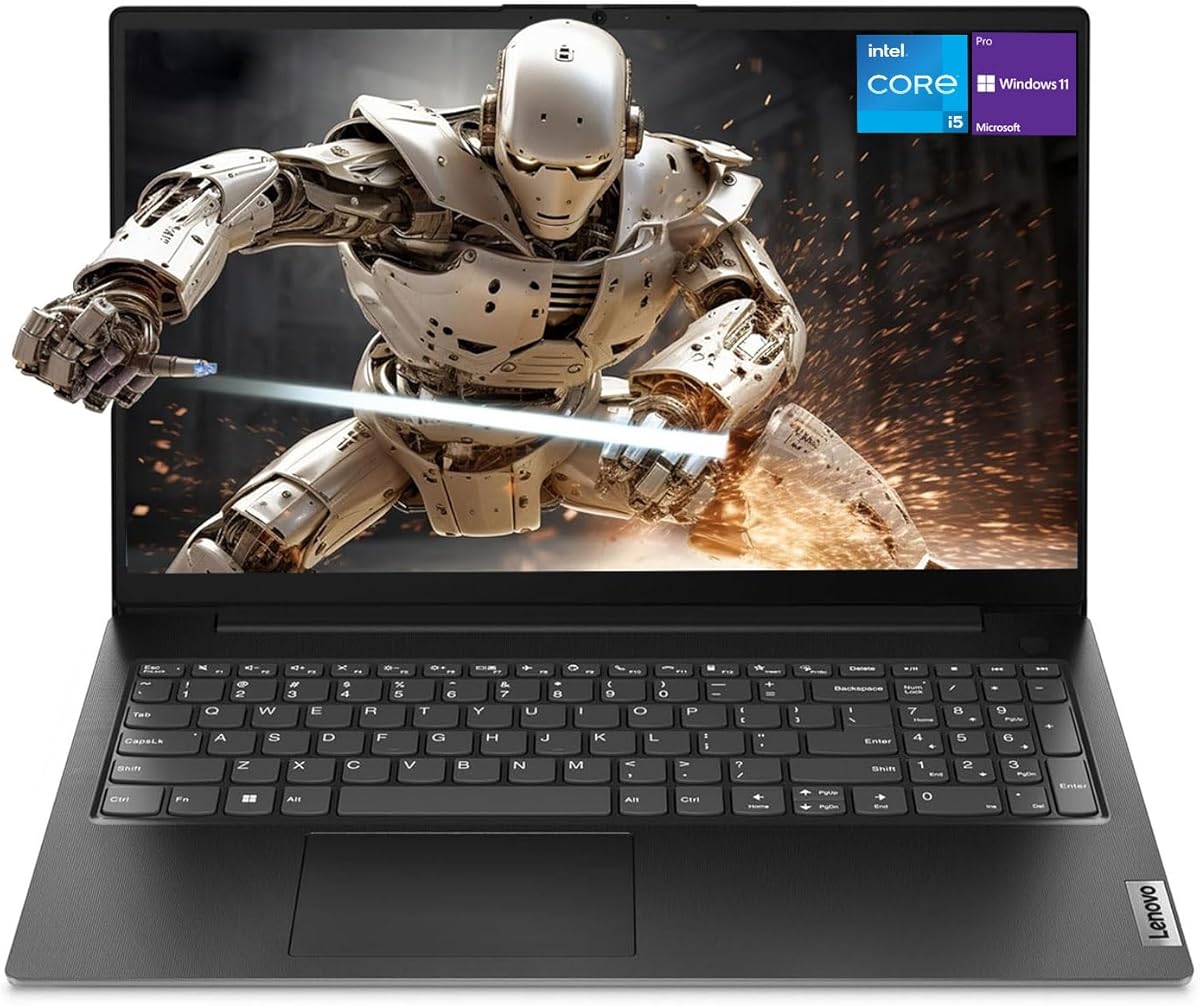
The Lenovo 15.6-inch FHD Business Laptop is a highly portable general-purpose system built for students, commuters, and light productivity users. It has a 4.5 rating, weighs just 1.55 kilograms, and is only 17.9 millimeters thick. Despite its conventional appearance, the slim chassis and full HD screen make it a practical travel companion.
We may earn a commission when you buy through this link, at no additional cost to you.
An Intel N150 processor with four cores, four threads, and up to 3.6GHz turbo boost is paired with 8GB of LPDDR5-4800 memory. A 128GB UFS 2.2 drive supports quick boot times and file access, while integrated Intel graphics handle standard applications and casual entertainment. The supplied information specifically targets web browsing, document editing, streaming, and light productivity work.
The anti-glare 15.6-inch full HD panel has 250 nits of brightness and an 88% screen-to-body ratio. A 720p camera includes a privacy shutter, and TÜV Rheinland low-blue-light certification supports comfortable viewing. For connections, the laptop offers two 5Gbps USB-A ports, a USB-C port with Power Delivery and DisplayPort 1.2, HDMI 1.4, an SD card reader, and a 3.5mm audio jack. Wi-Fi 6 and Bluetooth 5.2 round out the wireless features.
The 128GB storage capacity is the clearest limitation, particularly for users who keep large photo libraries, extensive music collections, or many desktop applications locally. An external drive or cloud storage can supplement it, and the included one-year Microsoft 365 Personal subscription provides 1TB of OneDrive storage. For a buyer who values mobility, a full HD display, and generous memory over local storage, this Lenovo is a strong fit.
A 1.55-kilogram weight and 17.9-millimeter thickness reduce the bulk associated with a full-size screen. The design is well suited to commutes, study sessions in different rooms, and working from different locations throughout the day.
USB-C with DisplayPort makes external-monitor use straightforward, while the SD card reader is useful for media transfer. The included Microsoft 365 Personal subscription adds cloud storage and familiar document applications without changing the laptop's compact design.
We may earn a commission when you buy through this link, at no additional cost to you.
The renewed Dell Latitude 5420 is a compact business laptop offering a potentially useful balance of memory, portability, and familiar Windows features. It has a 3.8 rating, which is lower than the other products here, but its 16GB of RAM, 14-inch full HD display, Core i5 processor, and 256GB SSD make it worth considering for cost-conscious buyers.
We may earn a commission when you buy through this link, at no additional cost to you.
The Core i5-1145G7 is described as a quad-core processor operating at 2.00GHz, with the supplied listing emphasizing responsive everyday performance. Sixteen gigabytes of DDR4 memory is generous for browsing, office applications, video meetings, and multiple browser tabs. A 256GB SSD provides a useful local storage foundation and enables fast startup compared with a traditional hard drive.
Its 14-inch form is easier to carry than the 17-inch models in the roundup, making it appropriate for commuting or hybrid work. The inclusion of a camera, HDMI, and Windows 11 Pro supports everyday communication and compatibility with office software. Latitude is a business line, which makes renewed units interesting for buyers who value its practical chassis over gaming aesthetics.
Because the system is renewed, appearance, battery condition, warranty terms, and cosmetic wear may differ from a new model. It is essential to review the seller's condition description, return policy, and coverage before ordering. The lower rating and older processor generation warrant that caution. Still, for a buyer who understands refurbished equipment and needs a compact, memory-rich office laptop, the Latitude 5420 can deliver useful capability.
The 16GB RAM configuration gives this renewed business laptop more multitasking headroom than many entry-level new systems. It is a meaningful advantage for users who keep email, browser tabs, documents, and calls open throughout the day.
Renewed products can provide strong value, but they are not identical to new inventory. Checking cosmetic condition, battery expectations, included accessories, warranty coverage, and the return window can prevent surprises.
We may earn a commission when you buy through this link, at no additional cost to you.
The Lenovo Flagship Chromebook is a lightweight alternative for people who spend most of their time online. It has a 4.2 rating and pairs a 14-inch full HD touchscreen with Chrome OS, an octa-core MediaTek Kompanio 520 processor, 4GB of RAM, and 64GB of eMMC storage. Rather than competing with full Windows laptops, it offers a simpler, cloud-oriented computing experience.
We may earn a commission when you buy through this link, at no additional cost to you.
The MediaTek Kompanio 520 has four A73 cores and four A53 cores, each listed at 2.0GHz. It is designed for efficient everyday activities such as browsing, schoolwork, communication, and streaming. Chrome OS includes web-based protection and cloud backup, which can simplify account management and file synchronization for users who are comfortable working through online applications.
The display is one of the laptop's strongest features. Its 1920-by-1080 resolution, IPS technology, wide viewing angles, LED backlight, and touch support make it useful for browsing, classes, and casual media use. A 720p webcam with privacy shutter, dual-array microphones, Wi-Fi 6, and Bluetooth 5.1 support the product's video-call and online-learning emphasis.
The Chromebook weighs 2.86 pounds and measures 13.23 by 8.7 by 0.73 inches, making it easy to carry. However, 4GB of RAM and 64GB of local storage limit heavy multitasking and offline file capacity. It is best for students, travelers, and casual users who rely on cloud storage, while Windows software needs or intensive desktop applications make it less suitable. Within that narrower role, it remains a clean and approachable option.
Chrome OS is built around browser-based workflows, cloud backups, and a straightforward interface. This reduces setup complexity and can be especially effective for users whose primary activities involve web applications, online classes, and communication services.
The 14-inch full HD panel supports direct finger navigation, while the 2.86-pound chassis is easy to carry. The privacy shutter and dual microphones make the system particularly well suited to mobile learning and video calls.
We may earn a commission when you buy through this link, at no additional cost to you.
The best laptop for non-gamers balances processing power, a comfortable display, sufficient memory, practical connectivity, and portability without paying for specialized gaming components. Prioritizing your daily workload and the environment where you will use the computer is more useful than chasing isolated specification numbers.
Windows is the most flexible option in this roundup because it supports a large selection of established desktop applications, business tools, games, and accessories. A standard Windows laptop is sensible when you use specialized software, need to connect a broad range of peripherals, or want one system for work and entertainment. Windows 11 Home is oriented toward everyday personal use, while Windows 11 Pro adds features commonly valued in managed business environments.
Chrome OS is a simpler alternative for users whose work and communication happen mainly through web-based services. It can offer a clean experience with less local storage and fewer demanding applications. Consider the operating system before hardware because software compatibility can determine whether a lightweight Chromebook or a full Windows notebook is the right foundation.
A modern Intel Core i5 or AMD Ryzen 5 processor provides a sensible middle ground for document work, web browsing, communication, streaming, and moderate multitasking. More demanding spreadsheet analysis, software development, creative work, or many simultaneous applications benefit from a higher processor tier. Basic Intel N-series and lower-tier Ryzen 3 chips are best for light tasks, online classes, and basic productivity.
Do not rely on broad phrases comparing one processor with another. Review core count, supported memory, graphics capabilities, thermal limits, and the specific applications you intend to run. The right processor should handle your regular tasks smoothly without forcing constant waiting or lowering system responsiveness.
Memory determines how comfortably a system can keep several browser tabs, office documents, messaging applications, and media active at once. Eight gigabytes is a practical minimum for a new general-purpose laptop, while 16GB provides more breathing room for heavier multitasking and larger work projects. Four gigabytes can feel constrained quickly, especially on Windows.
For a Chromebook, the same amount of memory may be adequate when usage is focused on browser-based tasks, but local Android applications and numerous open tabs can still create pressure. Match memory to your workload rather than assuming every modern device feels equally fast. A higher memory configuration is generally more useful to a non-gamer than expensive discrete graphics.
A solid-state drive provides faster startup, snappier file access, and better responsiveness than a mechanical hard drive. A 256GB or 512GB SSD is more appropriate for general use, while 128GB configurations are best treated as a starting point that may require an external drive or cloud storage. USB-C, USB-A, and SD card access can make file expansion and transfer easier.
Think about what you actually keep on the device. Cloud storage can reduce local pressure for documents and media, but it does not replace local capacity for offline files or large applications. Check both the available storage type and the included accessories before deciding whether the configuration is sufficient.
A 14-inch laptop is easier to carry, a 15.6-inch model offers a practical balance of workspace and portability, and a 17.3-inch screen is better for stationary use and side-by-side work. Full HD provides a clearer image than an HD panel, while anti-glare and low-blue-light features can improve comfort in bright rooms or during extended viewing sessions. A wider 16:10 aspect ratio is useful for documents and web pages.
Consider brightness, viewing angle, touch support, and the size of the keyboard as well as raw resolution. A larger screen should ideally be paired with a full-size keyboard, and some business models add a numeric keypad. The best display is the one that remains comfortable and useful in the places where you plan to work.
If the laptop will travel between classrooms, offices, or home spaces, weight, thickness, battery behavior, and charging convenience deserve close attention. A system around 1.55 kilograms with a full HD display is easier to carry than a 17-inch model. Fast charging can be useful, but battery life claims should be treated as guidance because real runtime varies with brightness, wireless activity, and workload.
Ports determine how often you need adapters. USB-A remains useful for existing peripherals, USB-C improves modern docking and charging options, HDMI simplifies external displays, and RJ45 provides a reliable wired network connection. A good balance of ports can make a laptop more convenient than an ultra-minimal design that leaves users carrying multiple accessories.
A comfortable keyboard, usable touchpad, precise webcam, adequate microphones, and clear speakers can affect daily satisfaction more than headline specifications. Privacy shutters, AI noise reduction, and HDR camera features are particularly helpful for frequent video calls. Wide viewing angles make shared-screen work easier, while numeric keypads improve spreadsheet and data-entry tasks.
Ergonomics also depend on the setup. Lift-hinge designs can create a more natural typing angle, and a larger chassis may leave more space for a full keyboard. Look for features that match where and how you communicate, particularly if you attend online classes, join remote meetings, or regularly share your screen with other people.
A warranty, onsite service, easy return policy, and dependable technical support can reduce the cost of ownership. Renewed systems may offer useful value, but their condition and coverage need careful review. Look for clearly defined return windows, descriptions of battery wear, included accessories, and whether repairs are handled locally or through the manufacturer.
Environmental certifications and responsibly sourced materials may also matter to some buyers. Support quality, repairability, upgrade options, and the availability of replacement parts are worth researching before purchase. A laptop that fits your workflow and has credible support is usually a better long-term choice than one that wins on a single specification.
Begin by completing the operating-system setup, connecting to a trusted network, signing into your preferred account, and enabling system updates. Create separate accounts for work and personal use when appropriate, especially on a shared family computer. Configure screen brightness, keyboard backlighting, notification preferences, and power modes so the laptop behaves comfortably in your normal environment.
Organize large files into clearly named folders and use both local storage and a reliable backup service appropriately. Keep an external drive or cloud copy of important documents, but do not confuse synchronization with a complete backup. For a Chromebook, check which files are available offline before traveling. For Windows, periodically review startup programs and storage usage if the device begins to feel slow.
Care for the hardware by keeping vents clear, avoiding soft surfaces that can block airflow, and using a stable, clean workspace. Clean the screen and keyboard with a soft microfiber cloth, and unplug accessories before cleaning. Charge with the specified or a compatible adapter, avoid exposing the computer to extreme heat or moisture, and update the operating system and core applications on a regular schedule.
Usually, no. Integrated graphics are sufficient for web browsing, office work, video calls, streaming, and routine photo viewing. A dedicated GPU becomes more relevant for video editing, 3D design, advanced creative software, or demanding games. For a non-gaming laptop, prioritize a good display, memory, storage, and battery over specialized graphics hardware.
Eight gigabytes is a practical minimum for browsing, schoolwork, office applications, and video calls. Users who routinely run many browser tabs, heavier spreadsheets, creative tools, or simultaneous work and communication applications benefit from 16GB. Four gigabytes can work for light tasks, but it may feel constrained more quickly on a full Windows installation.
Choose a Chromebook if most of your work happens in web applications and you value simple maintenance, cloud integration, and a lightweight design. Choose Windows if you depend on traditional desktop software, specialized business tools, extensive local files, or a broader range of accessories. The operating system should follow your software requirements rather than general perceptions of power or simplicity.
It depends on where you use it. A 17.3-inch screen is excellent for desk work, presentations, and side-by-side applications but can be cumbersome during commuting or travel. A 14-inch or 15.6-inch laptop is generally easier to carry. The larger models in this guide make the most sense for users who value workspace and a numeric keypad more than compact mobility.
Full HD resolution, anti-glare treatment, comfortable brightness, and good viewing angles are practical priorities. A 16:10 aspect ratio can provide additional vertical room for documents and webpages. Low-blue-light features may improve comfort for long sessions, while touch support is helpful for browsing and casual use but is not essential for every workflow.
They can be worthwhile when the hardware configuration, warranty, and return terms are favorable. A renewed model may provide more memory or a business-oriented chassis at a lower cost, but cosmetic wear, battery condition, and component replacement history can vary. Review the seller's condition notes and support policy before treating a renewed laptop as equivalent to a new system.
A 256GB or 512GB solid-state drive is a useful general starting point, especially for Windows applications and locally stored documents. A 128GB laptop may need an external drive or cloud storage, while a 64GB Chromebook is most appropriate for users with modest local-file needs. Applications and media files usually consume more space than web browsing itself.
USB-A supports many existing accessories, while USB-C can provide charging, data transfer, and display output on modern systems. HDMI is useful for external monitors and presentations, and an SD card reader helps move photos and files. An RJ45 port remains valuable in offices where reliable Ethernet is preferred over wireless connectivity.
The HP 17-inch business laptop is our leading all-around choice because its 16GB memory, 512GB SSD, large anti-glare display, numeric keypad, and Windows software environment support demanding productivity work. The Lenovo 15.6-inch business model offers a more portable budget-oriented alternative, while the Dell 16 DC16251 represents the premium pick for users who want a larger 16:10 screen, a Core 7 processor, and polished comfort and support features.
For most buyers, prioritize the specifications that match the actual workload. Eight gigabytes of memory and a 256GB or 512GB solid-state drive form a sensible general-purpose baseline, while 16GB provides more comfortable headroom. Choose a 14-inch model for mobility, 15.6 inches for balance, or 17.3 inches for a spacious desk-based experience, and make sure the operating system supports every application you need.
Specifications, package contents, software terms, availability, and current pricing can change, so compare the live product listing before purchasing. Check the exact memory, storage, ports, warranty, and included accessories, then read current customer feedback for the specific configuration. That final verification helps ensure the laptop you choose is genuinely suited to your everyday computing rather than simply a strong general recommendation.