
Intel Core Ultra 9 285K
4.6Editor score
24 cores, 24 threads
5.7 GHz maximum boost
40 MB processor cache
Our CPU for Excel and Data Analysis guide compares ten processors for spreadsheet speed, large datasets, multithreaded analytics, memory support, and platform
A capable CPU for Excel and data analysis should handle large spreadsheets quickly, remain responsive during intensive calculations, and support a memory configuration that can sustain demanding analytical workflows. The best processor depends on whether your work involves mostly formulas and PivotTables, enormous datasets, Python, R, or database-adjacent computation.
We compared all ten processors by core count, thread count, clock speed, cache, architecture, platform support, and practical relevance to spreadsheet and data-analysis workloads. The list includes AMD Ryzen 5000, 9000, and X3D models alongside Intel Core 14th Gen and Core Ultra processors across different performance tiers.
Each review explains who the processor is best suited for, what capabilities distinguish it, and where important platform or accessory considerations apply. Ratings reflect the supplied customer feedback, while product specifications provide the technical context. Prices and availability change frequently, so confirm current details before purchasing.
4.6Editor score

4.8Editor score

4.8Editor score
This side-by-side comparison highlights core and thread counts, cache capacity, maximum clock speeds, and platform considerations for ten processors suited to spreadsheet, statistical, and data-processing workloads.


The Intel Core Ultra 9 285K combines 24 cores, 16 threads, and a maximum boost frequency of 5.7 GHz, making it a compelling high-end choice for heavy Excel work and data analysis. Its supplied rating of 4.6 reflects generally favorable customer feedback, while the specification mix indicates strong capacity for processor-intensive workflows.
We may earn a commission when you buy through this link, at no additional cost to you.
The processor divides its workload between eight Performance cores and sixteen Efficiency cores. That arrangement can benefit mixed analytical tasks in which a spreadsheet calculation, a background data import, and a separate analytical program all need attention. Forty megabytes of cache provides useful support for repeated access to data and instructions, while the unlocked design allows owners with a suitable chipset and cooling system to tune performance.
The main drawback is platform cost and complexity. Compatibility is specified for Intel 800-series chipset-based motherboards, and no thermal solution is included. A buyer should therefore budget for the motherboard, memory, operating system, and a capable cooler as parts of a complete system rather than treating the processor as a drop-in upgrade.
This is our leading recommendation for analysts who regularly manipulate large workbooks, run repeated calculations, or alternate between Excel and more demanding data-processing tools. The combination of many cores and high clock speed gives it broader headroom than most alternatives, especially for users who want a platform that can also serve demanding general-purpose computing.
The processor's Performance cores and 5.7 GHz maximum boost are well aligned with formula-heavy Excel work. They help the system maintain pace during chained calculations, repeated lookups, and large table operations while the remaining Efficiency cores manage background activity.
Support for Intel 800-series motherboards, PCIe 5.0 and 4.0, and Intel Optane Memory makes this an appealing foundation for a new analysis workstation. Memory capacity and speed remain equally important because large datasets can exceed what a modest configuration handles comfortably.
We may earn a commission when you buy through this link, at no additional cost to you.
The AMD Ryzen 7 9800X3D stands out for its substantial 96 MB L3 cache and a customer rating of 4.8. Its eight Zen 5 cores and 16 threads may appear modest beside processors with more cores, but cache capacity can make it especially effective for workloads that repeatedly operate on the same instructions and data.
We may earn a commission when you buy through this link, at no additional cost to you.
Maximum clock speeds of up to 5.2 GHz support responsive single-threaded performance, which remains relevant when Excel is recalculating formulas, processing UI commands, or waiting on tasks that do not scale perfectly across every core. The cache design also helps when the working set is large enough to benefit from a deeper processor cache rather than immediate memory access.
Its limitation is straightforward: workloads capable of using 12, 16, 24, or more cores may not receive the same parallel throughput from eight physical cores. The supplied data also notes that a cooler is not included. For users who need maximum breadth rather than a gaming-oriented cache advantage, the Ryzen 9 models in this guide offer more processing resources.
Choose the 9800X3D for a balanced analysis PC whose work benefits from strong cache performance, fast everyday responsiveness, and a modern AM5 foundation. It is especially interesting for spreadsheet users who also play games and want one processor to handle both roles without moving to a much larger core count.
The 96 MB L3 cache is the defining feature. It gives the processor room to retain frequently accessed data and instructions, which can be valuable when an analyst repeatedly opens, calculates, and revisits large spreadsheets.
Sixteen threads provide solid multitasking capacity without the complexity and power envelope of a much larger flagship. The result is a processor suited to mixed productivity, development, analysis, and entertainment use on Socket AM5.
We may earn a commission when you buy through this link, at no additional cost to you.
The Intel Core i9-14900K offers 24 cores, 32 threads, and a maximum boost clock of 6.0 GHz. It is particularly attractive for Excel and data-analysis users who want a high clock rate for responsive single-threaded work while retaining substantial core count for parallel calculations and background applications.
We may earn a commission when you buy through this link, at no additional cost to you.
Its hybrid arrangement includes eight Performance cores and sixteen Efficiency cores. Intel UHD Graphics 770 is integrated, which can make this processor convenient when a system does not need a discrete graphics card. Compatibility with both Intel 600-series and 700-series chipset-based motherboards broadens the possible platform choices, although some 600-series systems may require a BIOS update.
The trade-off is that its supplied rating of 4.2 is the lowest among the ten products, so buyer confidence should not be based on clock speed alone. Like other high-end unlocked processors, it also demands careful platform and cooling decisions. Users who only need light spreadsheet acceleration may find that the cost and complexity exceed their requirements.
The i9-14900K makes sense for a high-performance workstation that alternates between Excel, code, and data-processing applications. It is particularly attractive when maximum turbo frequency is a priority and the builder can select a suitable motherboard, memory, and cooling solution. For a newer platform, the Core Ultra options offer a different set of architectural advantages.
A 6.0 GHz maximum boost gives the i9-14900K a strong starting point for tasks that depend heavily on one core. That can translate into a more immediate experience when navigating complex workbooks or executing sequential analysis steps.
Thirty-two threads allow substantial parallel activity. Eight Performance cores handle demanding foreground tasks, while sixteen Efficiency cores can support lighter background work without requiring a second processor.
We may earn a commission when you buy through this link, at no additional cost to you.
The AMD Ryzen 5 9600X is a capable six-core, 12-thread processor with a 5.4 GHz maximum boost and a 4.8 customer rating. It offers enough performance for serious Excel use, frequent PivotTable creation, statistical calculations, and moderate data-processing jobs without moving into a large flagship processor.
We may earn a commission when you buy through this link, at no additional cost to you.
Its 38 MB cache and Zen 5 architecture make it a modern foundation for spreadsheet-heavy systems. The unlocked multiplier allows performance tuning, and support for DDR5-5600 provides a strong memory foundation. Selected AM5 motherboards can also provide PCIe 5.0 support, helping the system remain suitable for current and emerging storage or expansion needs.
The clearest limitation is that six physical cores may constrain heavily parallel workloads. A user running simulations, compiling code, processing large data through command-line tools, or using several virtualized environments concurrently could gain from a 12- or 16-core Ryzen 9. The processor also does not include a cooler, so a thermal solution must be selected separately.
The Ryzen 5 9600X is an excellent fit for a focused workstation where Excel is the primary application but the machine must also handle browsing, communication, visualization, and occasional programming. It provides more than enough processing power for most individual analysts while preserving a straightforward path to a modern AM5 build.
A 5.4 GHz maximum boost supports the quick, sequential portions of spreadsheet work, while six Zen 5 cores provide useful parallelism for imports, exports, sorting, and background calculations.
DDR5-5600 support and optional PCIe 5.0 on select motherboards create a modern platform foundation. Pairing the processor with ample memory is particularly important for workbooks and datasets that do not comfortably fit within a smaller working set.
We may earn a commission when you buy through this link, at no additional cost to you.
The Intel Core Ultra 7 270K Plus combines 24 cores with a 5.5 GHz maximum boost, creating a strong option for demanding spreadsheet and analytics users. Its 4.7 customer rating sits near the top of the list, and the combination of Performance and Efficiency cores provides flexibility across foreground and background workloads.
We may earn a commission when you buy through this link, at no additional cost to you.
The processor is built for Intel 800-series motherboards using the LGA1851 socket. It supports PCIe 5.0 and 4.0 as well as high-speed DDR5 memory up to 7200 MT/s, giving a new workstation a well-specified foundation. Unlocked performance tuning is available when paired with an Intel Z-series chipset, making the processor relevant to builders who enjoy optimizing a system.
Thermal design deserves careful attention. The listed 125W base power and 250W maximum turbo power indicate substantial sustained-performance potential, but they also make cooling a central part of the build. Enthusiast overclocking further increases the importance of motherboard power delivery, firmware settings, airflow, and a suitable cooler.
Choose this model for users who need many cores but do not require the full 32-thread count of the i9-14900K. It is a compelling analysis platform when paired with a new 800-series board, generous DDR5 memory, and adequate cooling. More modest spreadsheet workloads may not need its capabilities, but it offers ample room for demanding and expanding workloads.
Eight Performance cores can take on demanding foreground tasks while sixteen Efficiency cores handle lighter concurrent activity. This can keep an analysis desktop responsive when a workbook recalculation occurs alongside imports, rendering, or other applications.
Support for DDR5 memory up to 7200 MT/s, along with PCIe 5.0 and 4.0, provides a strong platform feature set. Fast, ample memory can complement the processor when analytical files exceed the limits of ordinary desktop configurations.
We may earn a commission when you buy through this link, at no additional cost to you.
The AMD Ryzen 9 9950X is our top recommendation for users who want exceptional multithreaded capacity without moving to a 24-core processor. It provides 16 Zen 5 cores, 32 threads, a 5.7 GHz maximum boost, and 80 MB of cache, all of which make it especially suitable for large, sustained analytical workloads.
We may earn a commission when you buy through this link, at no additional cost to you.
Excel benefits from more than raw clock speed when calculations, imports, data models, and background applications need to operate together. Thirty-two threads can divide demanding work across many cores, while the large cache provides a substantial local working area. The processor is also unlocked, giving experienced builders room to tune it with compatible hardware and a stable cooling solution.
The supplied information recommends a liquid cooler and notes that no cooler is included. That recommendation is worth respecting because sustained multi-core performance requires a system designed to manage heat. Buyers should also budget for DDR5 memory, a quality AM5 motherboard, and adequate storage, all of which influence the real-world usefulness of a high-end analysis platform.
For large workbooks, programmatic data transformation, simulations, and mixed analysis workloads, the Ryzen 9 9950X offers an excellent balance of capacity and clock speed. It is less necessary for a typical office spreadsheet, but for a professional workstation that regularly handles demanding files, the extra processing resources can meaningfully reduce time spent waiting.
Sixteen physical cores and 32 threads provide broad scaling potential. This is particularly useful when a workbook calculation can run alongside Python, R, database tools, or virtualized analysis environments.
Eighty megabytes of cache and the Zen 5 architecture complement the high core count. The combination helps balance sequential responsiveness with throughput when many independent tasks need to be processed.
We may earn a commission when you buy through this link, at no additional cost to you.
The Intel Core i7-12700KF remains a capable analysis processor, with 12 cores, 20 threads, and a maximum boost of 5.0 GHz. Its 4.7 rating and generous cache arrangement make it an interesting option for buyers who already own compatible LGA-1700 components or who want a proven platform rather than the newest socket.
We may earn a commission when you buy through this link, at no additional cost to you.
The hybrid design contains eight Performance cores and four Efficiency cores. That mix is useful in a productivity system where an interactive Excel session should remain responsive while another task performs background processing. The processor's 11 MB L2 and 25 MB L3 caches are particularly relevant for computation-intensive applications, helping reduce the frequency with which the CPU must retrieve data from system memory.
The F designation means a discrete graphics card is required. That is rarely a problem for an analysis workstation, but it matters when planning a complete system because the graphics cost and power requirements are additional considerations. The LGA-1700 platform is also not the newest option in this roundup, so prospective buyers should compare it carefully against current-generation alternatives.
The i7-12700KF is best for an existing compatible build or a deliberate platform choice with a capable motherboard and memory. It should handle substantial spreadsheets, code, and general productivity well, though the Ryzen 9 9950X and newer Core Ultra processors offer more cores for workloads that can exploit them.
The listed 11 MB L2 and 25 MB L3 caches provide meaningful storage close to the processor cores. This is useful for calculation-heavy applications that repeatedly access active instructions and datasets.
Socket LGA-1700 can be attractive to owners of compatible 600-series systems. The processor's 125W base-power specification also makes thermal planning easier than with many higher-tier alternatives.
We may earn a commission when you buy through this link, at no additional cost to you.
The Intel Core i5-14400F delivers ten cores, 16 threads, and a maximum boost of 4.7 GHz, making it our best budget-oriented recommendation for Excel and data analysis. The supplied 4.8 rating is among the highest in the group, while the hybrid core design provides useful capability for both interactive and background tasks.
We may earn a commission when you buy through this link, at no additional cost to you.
Twenty megabytes of cache, support for DDR4 and DDR5, and compatibility with Intel 600-series or 700-series chipset-based motherboards provide several practical advantages. Existing compatible components can make a system easier to assemble, while the included RM1 thermal solution reduces one common early-build hurdle. The processor is unlocked, offering further tuning potential for informed builders.
Because this is an F-series model, a discrete graphics card is required. It also offers only six Performance cores, so a user whose work consistently saturates every available thread should consider a Ryzen 9 or Core i9. Memory capacity can also become a bottleneck before the CPU if a large dataset must be loaded into an undersized system.
The Core i5-14400F is a strong value choice for students, small businesses, and working analysts who need more capability than an entry-level processor without building around a flagship. It handles typical Excel formulas, PivotTables, reporting, and moderate programming tasks well, especially when paired with a discrete GPU and ample memory.
Six Performance cores handle demanding spreadsheet operations, while four Efficiency cores support concurrent lighter activity. Sixteen threads provide a practical balance for productivity workloads that do not justify a larger flagship.
Support for both DDR4 and DDR5 gives builders more options. An existing compatible system can be reused, while a new build can use current high-speed memory and a motherboard with the required PCIe features.
We may earn a commission when you buy through this link, at no additional cost to you.
The AMD Ryzen 9 9900X offers 12 Zen 5 cores, 24 threads, a 5.6 GHz maximum boost, and 76 MB of cache. That combination gives it a particularly balanced position for Excel users who need serious multithreaded capability but may not need a 16-core flagship.
We may earn a commission when you buy through this link, at no additional cost to you.
The 24-thread count can help with parallel imports, data transformations, statistical packages, and code compilation. At the same time, the 5.6 GHz boost preserves strong responsiveness for tasks that depend on rapid execution of a single stream of instructions. The large cache is another useful feature for analytical applications that repeatedly access active working data.
The Ryzen 9 9900X uses the Socket AM5 platform and supports DDR5-5600. Select compatible motherboards can provide PCIe 5.0 support. As with the other unlocked AMD processors in this guide, a cooler is not included, and the final system needs a motherboard, memory, and cooling solution selected as a coordinated package.
This is a strong recommendation for a serious AM5 workstation that regularly performs more than basic spreadsheet calculations. It offers a useful middle ground between the six-core Ryzen 5 9600X and the 16-core Ryzen 9 9950X, making it a versatile choice for analysts who want extra parallel headroom without stepping up to the largest available core count.
Twelve cores provide meaningful parallel capacity, while the 5.6 GHz boost supports responsive sequential work. This combination is useful for a desktop that regularly alternates between spreadsheet formulas, code, reporting, and data preparation.
Socket AM5 offers a current platform with DDR5 and optional PCIe 5.0 support. Users can select a motherboard and memory according to workload and expansion needs rather than relying on an older system architecture.
We may earn a commission when you buy through this link, at no additional cost to you.
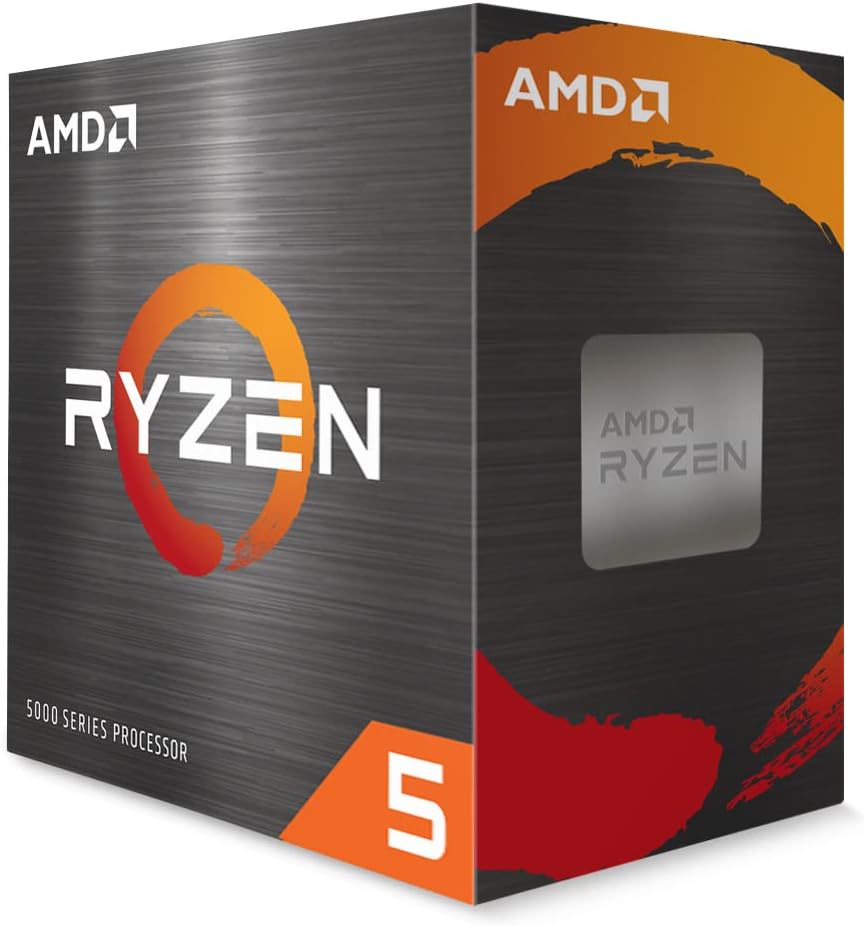
The AMD Ryzen 5 5500 is the most approachable processor in the guide, offering six cores, 12 threads, and a 4.2 GHz maximum boost. It is a practical option for Excel, reporting, PivotTables, and light data analysis when the priority is building a capable system without moving to a flagship platform.
We may earn a commission when you buy through this link, at no additional cost to you.
Its 19 MB cache and DDR4-3200 support are sufficient for common spreadsheet workloads, and the processor is unlocked for users who want to explore performance tuning. The most convenient feature for a first build is the bundled AMD Wraith Stealth cooler, which can help simplify the initial assembly.
The processor belongs to the older Socket AM4 platform, so it should not be chosen by someone who specifically wants the newest memory and chipset capabilities. Its lower clock speed and smaller cache also place it behind newer Zen 5 alternatives. Very large datasets, intensive simulation, and fully saturating multithreaded work can expose those limitations.
Choose the Ryzen 5 5500 for an affordable, established-platform analysis PC or an AM4 upgrade. It remains well suited to everyday business spreadsheets, data cleanup, dashboards, and moderate analytical applications. Users with more demanding work should move toward the Ryzen 5 9600X or Ryzen 9 models for additional clock speed, cache, and platform capability.
The included Wraith Stealth cooler means buyers do not need to select a separate thermal solution for a straightforward installation. This simplifies the build and keeps the processor accessible for first-time workstation builders.
Twelve threads and DDR4 support are capable enough for routine Excel operations and common business analytics. The processor is best suited to workbooks and datasets that remain comfortably within a conventional desktop memory and storage configuration.
We may earn a commission when you buy through this link, at no additional cost to you.
The right analytical processor depends on workload size, software, parallelism, platform, and memory needs. Use the following factors to identify which specification matters most before assembling or upgrading a workstation.
Core count determines how many independent tasks a processor can execute at once, while thread count reflects the additional execution streams exposed by the architecture. Excel often combines fast sequential operations with background work, and professional data pipelines may include Python, R, database utilities, and visualization tools running alongside a workbook. A 12-core or 16-core processor offers more parallel headroom than a six-core alternative, but users working only with ordinary spreadsheets may gain little from the largest available chips.
Maximum boost frequency is an indicator of how quickly a processor can accelerate when a workload can benefit from high per-core speed. Spreadsheet navigation, formula recalculation, sorting, and many statistical operations include portions that are sensitive to rapid single-threaded execution. A higher boost clock does not guarantee better performance in every multithreaded program, but it can make an interactive analysis desktop feel more responsive. Compare boost specifications together with cores, cache, and platform support rather than treating frequency as the only measure.
Cache is local processor memory designed to hold recently accessed data and instructions. The AMD Ryzen 7 9800X3D stands out with 96 MB of L3 cache, while the Ryzen 9 9950X and 9900X provide 80 MB and 76 MB respectively. Large caches can be useful when an analytical application repeatedly accesses a working set, although actual results depend on the software and the size of the data. Cache should therefore complement—not replace—a system with sufficient RAM and fast storage.
A processor can only work efficiently with data that the system can access. Excel workbooks, imported CSV files, and analytical models may need far more memory than casual office use suggests. Current DDR5 platforms provide modern bandwidth and capacity options, while Intel 600-series and 700-series boards may also support DDR4. The Ryzen 5 5500 uses DDR4-3200, and the 9800X3D, 9600X, 9950X, and 9900X list DDR5-5600 support. The correct choice is the one that lets your typical dataset load comfortably alongside the operating system and active applications.
Processor performance is only one part of a complete upgrade. Socket AM5 serves the Ryzen 5 9600X, Ryzen 7 9800X3D, Ryzen 9 9900X, and Ryzen 9 9950X. Intel 800-series motherboards support the Core Ultra 7 270K Plus and Core Ultra 9 285K, while the Core i9-14900K and Core i5-14400F can use 600-series or 700-series boards, with a potential BIOS update. The i7-12700KF uses LGA-1700, and the Ryzen 5 5500 uses AM4. Check chipset, socket, memory type, BIOS support, and PCIe requirements before purchasing.
Sustained analytical workloads can hold several cores at high activity for long periods, making thermal design essential. The Intel Core Ultra 9 285K and Core Ultra 7 270K Plus have no included cooler, and the supplied information recommends a liquid cooler for the Ryzen 9 9950X. AMD's Ryzen 7 9800X3D, Ryzen 5 9600X, and Ryzen 9 9900X also omit a cooler. By contrast, the Core i5-14400F includes an RM1 thermal solution, and the Ryzen 5 5500 includes the Wraith Stealth cooler. Match the cooler to the processor's power characteristics and the case's airflow.
Discrete graphics are not inherently required for every Excel or data-analysis system, but processors without integrated graphics need a separate card. The Intel Core i5-14400F and i7-12700KF require one, and the Ryzen 5 5500 also specifies that a discrete card is needed for its listed gaming performance. The Core i9-14900K includes Intel UHD Graphics 770, while the Core Ultra 9 285K includes integrated Intel Graphics. Users performing extensive visualization, large 3D datasets, or GPU-accelerated analytics should evaluate graphics hardware independently of the CPU.
Several processors in this list are unlocked, including the Core Ultra 9 285K, Core Ultra 7 270K Plus, Core i9-14900K, Core i5-14400F, Ryzen 7 9800X3D, Ryzen 5 9600X, Ryzen 9 9950X, Ryzen 9 9900X, and Ryzen 5 5500. Unlocking provides latitude for performance tuning, but the benefit depends on cooling, motherboard quality, memory configuration, and the user's comfort with firmware settings. It is not essential for Excel and should not outweigh stability. A stock system that handles its workload comfortably may be the more sensible choice.
After installing the processor, confirm that the operating system recognizes the correct processor and that the motherboard is running an appropriate BIOS version. Install the current chipset, graphics, and storage drivers, then update Office or your analytical environment. Open a representative workbook to confirm normal calculation, sorting, PivotTable, and import behavior before beginning a deadline-sensitive project.
Monitor CPU utilization, memory use, and temperatures during your most demanding tasks. Sustained full utilization is normal for heavy calculations, but persistent thermal throttling or unusually slow performance can indicate cooling, memory, storage, or software problems. Keep the system updated, preserve adequate free storage, and avoid interrupting large imports or transformations unless necessary. Use workbook copies for critical work and save regularly to reduce the impact of unexpected interruptions.
Keep the intake paths clear, clean dust from filters and heatsinks, and verify that all fans are operating. Do not change voltage, clock, or memory settings without understanding the stability and cooling implications. If the processor is unlocked, make conservative adjustments and test the workloads you depend on. For long analytical jobs, allow the system to run cool and stable rather than repeatedly forcing maximum settings.
Six cores are generally sufficient for typical spreadsheet work, PivotTables, reporting, and moderate analysis. Twelve to sixteen cores become more useful when you run large imports, code, simulations, or several analytical programs concurrently. Choose based on whether your software can divide work across cores, since a higher clock speed can still matter more for sequential operations.
Both AMD and Intel offer capable processors for these workloads. AMD Ryzen 9 models provide high core counts and large caches, while Intel Core Ultra and Core i9 models offer high boost clocks and hybrid architectures. The best choice depends on the motherboard, memory, software, and whether your workflow is more serial or parallel.
A faster processor can reduce calculation time, particularly for formula-heavy or sequential operations. Multithreaded tasks also benefit from more cores and threads. Spreadsheet performance is never determined by the CPU alone, however, because memory capacity, storage speed, workbook design, and the specific calculation all influence the result.
It depends on the workbook and any tools running alongside Excel. Ordinary analytical work may fit comfortably in less memory, while very large datasets, long formula chains, and concurrent programming tasks can benefit from 64 GB or more. A CPU with strong cache cannot compensate for a system that repeatedly runs out of memory and must swap data to storage.
No. Unlocked processors provide additional tuning flexibility, but Excel and common analytical software generally benefit more from stable memory, adequate cooling, and sufficient storage than from manual overclocking. Select an unlocked model if you enjoy tuning a system or have a clear reason to pursue extra performance, but otherwise a reliable stock configuration is usually sufficient.
Only if the socket, chipset, BIOS, and memory type are compatible. Ryzen 5000 models generally require AM4, while the listed Ryzen 9000 and X3D processors require AM5. Intel Core Ultra models use 800-series boards, whereas the Core i5-14400F and i9-14900K can use compatible 600-series or 700-series boards, sometimes after a BIOS update.
Basic Excel and many data-analysis tasks do not require one if the processor has usable integrated graphics. The Core i5-14400F and i7-12700KF require a discrete card, while other listed processors include integrated graphics. A separate card may still be worthwhile for extensive charting, visualization, large displays, or software that uses GPU acceleration.
Cooling requirements depend on the processor, workload, case, and desired tuning level. The Core Ultra 7 270K Plus lists a 250 W maximum turbo power, and the Ryzen 9 9950X comes with a liquid cooler recommended, so both deserve a serious thermal solution. The i5-14400F includes an RM1 cooler, while the Ryzen 5 5500 includes the Wraith Stealth cooler.
The Intel Core Ultra 9 285K is the strongest all-around recommendation for buyers creating a new high-end system, offering 24 cores, a 5.7 GHz boost, and modern 800-series support. The AMD Ryzen 9 9950X is the premier choice for maximum multithreaded analysis capacity, while the Intel Core i5-14400F provides the most approachable route into a capable hybrid-core workstation.
Prioritize the workload you actually perform. A six-core Ryzen 5 9600X or Ryzen 5 5500 can handle many standard spreadsheet requirements, while a 12- or 16-core Ryzen 9 becomes more compelling when Python, R, simulations, or background processing share the machine. Always give memory and storage equal attention, because even a fast processor cannot eliminate the delays caused by insufficient RAM or a slow drive.
Before purchasing, confirm the current platform details, supported memory type, required BIOS version, and cooler inclusion. Product prices and availability change over time, and complete-system costs can vary substantially. Use the comparison to identify the right processor class, then verify current retailer listings and component compatibility before placing an order.
