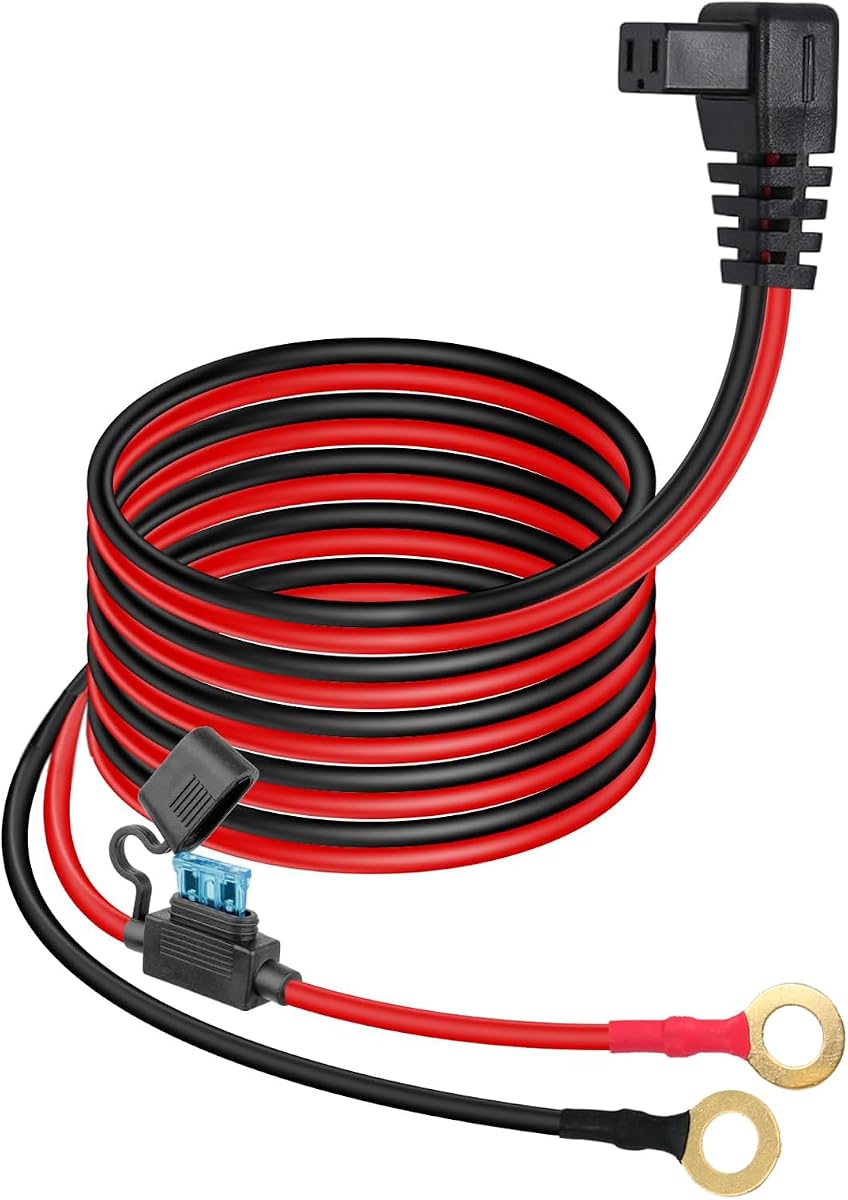
12V DC Car Fridge Power Cord
4.4Editor score
Broad refrigerator connector compatibility
15A fused protection circuit
10-foot copper power cable
Compare the best battery to run refrigerator options, including portable power stations, battery adapters, vehicle fridges, cords, and cooling fans for travel.
Running a refrigerator from a battery requires more than choosing a battery-shaped box. Capacity, output, connector compatibility, cooling demand, and vehicle protection all influence whether a setup will work reliably on a road trip, at a campsite, or during an outage.
This guide compares ten relevant products across portable power, charging adapters, refrigerator hardware, replacement cords, and airflow accessories. The evaluation emphasizes documented specifications, usable capacity, voltage support, cooling performance, portability, and compatibility rather than assuming every product performs the same role.
The top selections represent a practical power station, a capable vehicle refrigerator, and an affordable connection cable. Each remaining entry explains where it fits, while the buying guide helps readers build a safe and compatible battery-powered refrigeration setup. Prices and availability can change.
4.4Editor score

4.2Editor score

4.4Editor score
The comparison below organizes products by their function in a battery-powered refrigeration system, from high-output power stations and vehicle refrigerators to power cords, tool-battery adapters, and internal circulation fans.


The BougeRV 12V Refrigerator 23 Quart is the strongest all-around match for travelers who want a complete, battery-compatible cold-storage appliance rather than a basic cooler. It carries a 4.6 rating, and its documented range of minus 8 to 50 degrees Fahrenheit makes it useful for refrigerated food as well as frozen items.
We may earn a commission when you buy through this link, at no additional cost to you.
Compressor technology is central to its performance. The manufacturer states that the unit can cool from 77 degrees Fahrenheit to 32 degrees Fahrenheit in 15 minutes and reach minus 5 degrees Fahrenheit in 50 minutes. Eco mode draws less than 45 watts, while maximum mode is rated at 60 watts, giving battery operators a clearer way to estimate energy demand.
Three-level voltage battery protection is particularly relevant to the keyword because it helps prevent a connected vehicle battery from being drained completely. The unit also supports 12- and 24-volt DC power, which broadens its usefulness across SUVs, trucks, RVs, vans, campers, and boats. A relatively compact 22.27-pound weight supports easier transport, although securing it during travel remains important.
This is a strong recommendation for campers, road-trippers, and anyone who wants one refrigerator to handle both chilled and frozen food. It is less appropriate for someone seeking a battery and refrigerator as a single all-in-one product, because the portable battery is not included. Buyers should still verify connector dimensions and their own battery's output before purchasing.
The documented cooling ramp from ambient temperature to freezing is one of this model's strongest features. That performance makes it more versatile than a cooler designed only to maintain an already-cold drink.
Adjustable shutdown thresholds help protect a vehicle battery, while the sub-45-watt Eco setting reduces the continuous load. These controls matter because a refrigerator can otherwise become a major overnight draw.
We may earn a commission when you buy through this link, at no additional cost to you.
The AFERIY P280 Portable Power Station is the most capable dedicated power source in this guide. Its 4.4 rating, 2,048-watt-hour LFP battery, and 2,800-watt continuous AC output make it suitable for running a portable refrigerator and other equipment when a dependable off-grid supply is more important than minimal weight.
We may earn a commission when you buy through this link, at no additional cost to you.
The power station can expand to 10.24 kilowatt-hours with extra batteries, creating a path to much longer runtime than a small vehicle battery can provide. Pure sine wave AC output is also useful for sensitive electronics, while the listed NEMA TT-30 industrial outlet adds flexibility for demanding loads. Its UPS response is stated at less than 10 milliseconds.
Charging is another major strength. The unit supports 1,800 watts of AC input and 1,200 watts of PV input, with a stated charge time of 38 minutes from zero to 80 percent under the manufacturer's stated conditions. Dual PV inputs can accept multiple solar channels without requiring separate MPPT management, and the LFP battery is rated for more than 4,000 cycles.
Choose the P280 when the refrigerator must remain powered through a campsite, tailgate, remote work location, or temporary outage and the budget supports a full-size station. It is not a refrigerator itself, and its substantial output and expanded-capacity potential should be weighed against portability. Always confirm the refrigerator's connector and power requirements before connection.
The base 2,048-watt-hour capacity can be expanded to 10.24 kilowatt-hours, giving owners flexibility as their energy needs grow. This makes the station useful for more than a single weekend appliance.
High AC input, dual PV connections, and a stated rapid charging cycle reduce downtime between uses. Solar support is particularly relevant for campers seeking to recharge where vehicle charging alone may be insufficient.
We may earn a commission when you buy through this link, at no additional cost to you.
The 12V DC Car Fridge Power Cord is the most straightforward way to run many portable refrigerators directly from a vehicle battery. It has a 4.4 rating and removes the need for a mains power station when the goal is simply dependable 12-volt connection during a drive or camping trip.
We may earn a commission when you buy through this link, at no additional cost to you.
Its 10-foot length gives the refrigerator more freedom from the battery compartment, while the 14AWG pure copper construction is intended to support stable power transfer. O-ring terminals attach directly to common battery posts, and the included 15-amp fuse helps protect against overvoltage, overcurrent, overheating, and short circuits.
Compatibility is broad but not universal. The cable is listed for Alpicool, Bodega, Euhomy, BougeRV, ARB, Dometic, ICECO, Setpower, JoyTutus, and most 12- or 24-volt portable refrigerators. The manufacturer specifically notes that it is not for MINI car refrigerator connections, so checking the refrigerator's socket is essential.
This cable is an excellent low-cost solution for a compatible compressor refrigerator and a healthy vehicle battery. It does not protect the battery from prolonged depletion or provide extra stored energy, and a low-voltage cutoff or three-stage protection remains valuable. Confirm both the terminal and refrigerator-side connector before buying.
O-ring terminals make the connection process familiar to anyone who has attached other vehicle accessories. The generous cable length helps position the compressor unit conveniently inside a truck or camper.
A 15-amp fuse provides a meaningful safety layer for a cable that may carry a running compressor. It does not replace correct fusing near the vehicle battery, so installation should still follow safe electrical practices.
We may earn a commission when you buy through this link, at no additional cost to you.
The DeWalt Battery Car Fridge Adapter is designed for users who already own compatible 18V or 20V DeWalt batteries. It carries a 4.3 rating and offers a convenient way to operate a compatible 12- or 24-volt portable refrigerator without relying on a vehicle outlet or continuous wall power.
We may earn a commission when you buy through this link, at no additional cost to you.
The adapter is compatible with batteries such as the DCB201, DCB202, DCB203, DCB204, DCB205, and DCB206. Although the product is specifically described for T-SUNiceM refrigerators, the manufacturer also lists broad compatibility with AstroAI, ARB, Aspenora, AUTOOMMO, BougeRV, BODEGA, Eucmy, ICECO, JOYTUTUS, Kalamera, Kohree, Setpower, Wagam, and other 12-volt car refrigerators.
USB-A and USB-C ports add useful charging flexibility for phones and other small devices. At 2.75 by 3.74 by 1.37 inches and 142 grams, the adapter body is compact, while its 1.96-foot lead helps reduce cable clutter. The product does not include a battery, so the user must already own or separately purchase one.
This is a practical choice for job sites, tailgating, camping, and other mobile uses where DeWalt batteries are already part of the equipment mix. Compatibility should be checked carefully because the manufacturer expressly warns that not every car refrigerator or freezer will work. Confirm both the battery platform and refrigerator power requirements first.
For DeWalt users, this adapter can make the existing battery collection useful beyond the workshop. It is especially practical where conventional power outlets are scarce.
The USB-A and USB-C connections provide a convenient way to top up mobile devices during travel. That utility extends beyond the refrigerator's primary power function.
We may earn a commission when you buy through this link, at no additional cost to you.
The RV Fridge Fan with 3,000 R/M Motor is a small internal accessory for circulating cold air inside an RV refrigerator. Its 3.5 rating places it behind the higher-rated appliances and power components in this list, but it addresses a different problem: moving chilled air around the compartment.
We may earn a commission when you buy through this link, at no additional cost to you.
The fan's multi-sided openings are intended to distribute air in several directions. It runs on two D batteries, which are widely available and easy to replace. Its compact size is especially helpful in RV refrigerators where every inch of interior space matters.
The manufacturer says the fan can help keep food fresher and reduce temperature differences between shelves. Air circulation may also help limit the need for repeated opening or manual redistribution of chilled items. However, the product is not a battery or refrigerator itself, and it does not add cooling capacity.
This accessory makes the most sense for RV owners whose refrigerator already cools correctly but develops warm spots. Buyers should consider the lower rating and the ongoing need for replacement batteries. It is best treated as a circulation aid rather than a substitute for an efficient compressor or a properly sized power station.
Openings on multiple sides help the fan move cold air around the interior rather than directing it in only one direction. This can improve consistency on shelves that otherwise receive less airflow.
Two D batteries are easy to find and replace. Removing them during long storage helps prevent accidental operation and reduces unnecessary drain.
We may earn a commission when you buy through this link, at no additional cost to you.
The Low-Noise RV Refrigerator Fan is built for campers, trailers, RVs, and boats that need more consistent airflow inside a refrigerator compartment. It has a 3.8 rating and uses a 3,000-RPM motor to promote circulation without occupying a large portion of the available interior space.
We may earn a commission when you buy through this link, at no additional cost to you.
Multiple ventilation openings are designed to create airflow in several directions, helping move cold air between shelves. The product information also links better circulation with reducing freezing or frosting on refrigerator fins, a concern in compact units where stationary cold air can collect around certain surfaces.
A bottom sliding switch provides direct activation and deactivation. The manufacturer says its position helps prevent accidental shutdown when the fan is bumped by nearby contents. Two D batteries are required but not included, and the batteries should be removed when the refrigerator is not being used for extended periods.
The fan is a good supporting accessory for an RV owner who wants to reduce warm pockets inside an already functioning refrigerator. It cannot cool food, add capacity, or operate the refrigerator itself. Its value is therefore greatest when paired with a reliable compressor model and a suitable battery supply.
The fan's multidirectional openings are intended to reduce temperature variation from top to bottom. That can make chilled and frozen food more consistently accessible.
The sliding switch is easy to reach while also reducing the chance of accidental activation. Compact construction suits refrigerators where interior space is tightly limited.
We may earn a commission when you buy through this link, at no additional cost to you.
The Alpicool C30 Portable Car Freezer is a high-capacity refrigeration and freezing appliance with a 4.2 rating. Its 28-quart internal volume, 12- and 24-volt DC support, and 100- to 240-volt AC compatibility make it a flexible centerpiece for vehicle and stationary use.
We may earn a commission when you buy through this link, at no additional cost to you.
The compressor can cool from 77 degrees Fahrenheit to 32 degrees Fahrenheit in about 30 minutes and can reach minus 4 degrees Fahrenheit. Maximum mode prioritizes rapid cooling, while Eco mode reduces energy use. That dual-mode approach is useful when operating from a vehicle battery because it gives the user some control over the compressor's energy demand.
Three battery-protection settings—Low, Medium, and High—help manage the risk of excessive vehicle battery drain. A temperature-memory function is also included. The stainless-steel case, corner protection, durable handle, and stated capacity for 42 twelve-ounce cans indicate that the unit is oriented toward practical mobile use rather than minimal camping storage.
This refrigerator is an excellent choice for road trips, camping, tailgating, and backup cold storage where a 28-quart capacity is important. It does not include a battery, so buyers need a suitable vehicle outlet, portable station, or compatible cable. Verify power requirements and ventilation before use, and use the battery protection settings suited to the trip.
A stated low point of minus 4 degrees Fahrenheit lets the C30 handle frozen goods as well as chilled food. This expands its usefulness across seasons and trip types.
Operating from 12- or 24-volt DC makes the unit suitable for many vehicles, while AC support allows use at home, in a garage, or at a powered campsite.
We may earn a commission when you buy through this link, at no additional cost to you.
The black BougeRV CRPRO 21QT is a compact 12-volt refrigerator with a 4.5 rating. It offers the same documented minus 8 to 50-degree Fahrenheit range as the larger BougeRV model, making it appealing to campers who want refrigeration without taking up as much cargo space.
We may earn a commission when you buy through this link, at no additional cost to you.
Maximum mode uses 60 watts and Eco mode uses 45 watts, providing recognizable operating levels for battery planning. A 45-decibel operating specification supports quiet use, while the shock-resistant design is stated to tolerate uneven roads and operation at a 30-degree inclination when off-road. An interior LED adds practical nighttime visibility.
Four tie-down points, positioned on both sides, allow the refrigerator to be secured in a vehicle with ropes. The included storage box can hold a 266-watt-hour BougeRV portable power station and accessories, though the power station itself is not included. The package includes a 12- or 24-volt DC cord, a portable-battery charging cord, an AC adapter, and a manual.
This model suits travelers who prioritize a smaller footprint, secure mounting, and included cord options. Those who need more volume may prefer the 23-quart BougeRV, while buyers wanting a complete battery package must obtain a separate compatible station. Confirm the available tie-down space and the connector needed for the chosen power source.
Four tie-down points give the owner options for restraining the refrigerator on slippery or uneven surfaces. Securement is especially important because a heavy portable appliance becomes hazardous if it moves.
The storage box can organize a compatible 266-watt-hour station and loose accessories. Including a dedicated portable-battery cord simplifies this common connection method.
We may earn a commission when you buy through this link, at no additional cost to you.
The grey BougeRV CRPRO 21QT is a compact portable refrigerator for road trips, camping, and vehicle organization. It has a 4.5 rating and shares the CRPRO's core combination of a 21-quart capacity, a minus 8 to 50-degree Fahrenheit range, two operating modes, and a relatively quiet compressor.
We may earn a commission when you buy through this link, at no additional cost to you.
The power requirements are clearly defined: maximum mode draws 60 watts and Eco mode draws 45 watts. A three-level battery-protection feature is not expressly repeated in the supplied description, so users should also rely on the refrigerator's own power-management instructions and the protection features of the connected battery or station.
Four tie-down points help prevent movement in a truck, car, or camper. The included storage box provides a place for a compatible 266-watt-hour BougeRV power station and accessories, and the package includes a 12- or 24-volt DC power cord, a charging cord for a portable battery, a 100- to 240-volt AC adapter, and a user manual.
This is a good choice for buyers who want a smaller refrigerator but still expect modern compressor performance and a range of connection options. The separate battery requirement is the main limitation, particularly for new campers who do not yet own portable power equipment. Match the unit to a power source that can support its 45- or 60-watt operating draw.
The 21-quart format offers a practical balance between carrying capacity and physical size. It is easier to accommodate in a crowded vehicle than a larger 28-quart unit.
Eco mode's 45-watt draw is the more efficient choice for extended battery operation, while the 60-watt maximum mode is useful when rapid cooling takes priority.
We may earn a commission when you buy through this link, at no additional cost to you.
The Portable Mini Large Capacity Refrigerator Serum Interferon Battery is a compact cooling appliance intended for travel, camping, and use in vehicles such as SUVs, trucks, RVs, vans, campers, and boats. It is the final selection in the list, but the supplied information does not include a customer rating or detailed electrical ratings.
We may earn a commission when you buy through this link, at no additional cost to you.
Its most useful documented features are an automatic defrost function, an easy-to-operate thermostat with a stop setting, and a low-noise design. The compact, lightweight enclosure is said to be easy to place in different environments, while the defrost function is intended to keep the interior cool and clean.
The listing describes a large capacity in general terms but does not provide a quart measurement, voltage range, wattage, battery inclusion, or specific connector details. As a result, buyers should treat exact runtime and refrigerator performance as unconfirmed until those specifications are available from the seller or manufacturer.
This product may be useful for a buyer seeking a small portable refrigerator with uncomplicated controls and automatic defrosting. It is not the strongest choice for someone who needs precise energy planning because its power specifications are incomplete. Confirm the power input, battery requirements, physical dimensions, cooling range, and included accessories before purchase.
Automatic defrost is a useful feature in a compact appliance because it reduces the need for manual thawing. The system is intended to help keep the internal cabinet fresh and clean.
The low-noise, compact format suits travel and camping where carrying capacity and placement flexibility matter. It can be moved among the listed vehicle types without the footprint of a large domestic refrigerator.
We may earn a commission when you buy through this link, at no additional cost to you.
A dependable battery-powered refrigerator setup depends on matching the appliance's electrical demand to a suitable power source while accounting for connector type, runtime, cooling range, and vehicle safety.
Start with the refrigerator's operating draw rather than the size of the battery alone. A compressor refrigerator in this guide may use 45 watts in Eco mode and 60 watts in maximum mode. Multiply that load by the desired runtime, then allow additional headroom for conversion losses, startup demand, lighting, and other connected devices. A portable station with 2,048 watt-hours of base capacity offers far more flexibility than a fully depleted vehicle battery, while a dedicated vehicle lead is often more appropriate for a single trip.
Choose capacity by working from your expected hours of operation and the power source's documented output.
A battery may have enough stored energy but still lack the output needed to start and operate a compressor. Look for a continuous rating above the refrigerator's maximum documented draw rather than relying on peak output. Voltage also matters: many portable refrigerators accept 12- or 24-volt DC input, while the AFERIY P280 provides 2,800 watts of AC output. Never assume that a household-style outlet on a power station automatically matches the refrigerator's connector or voltage.
Verify continuous output, input voltage, and connector format before connecting any appliance.
Connector compatibility is one of the easiest details to overlook. The 12V DC cable uses O-ring battery terminals and a refrigerator-side connection that fits many Alpicool, ARB, ICECO, BougeRV, Dometic, and other portable units, but it explicitly does not fit every MINI refrigerator. The DeWalt adapter uses a slide-battery interface instead, and the CRPRO models include several cords. Compare both ends of the connection, including diameter, polarity, and whether the device requires a proprietary power profile.
Measure and compare every connector rather than relying only on the broad brand name.
A battery can power a refrigerator effectively only if the appliance maintains the required food temperature. The BougeRV 23-quart and both CRPRO models are specified from minus 8 to 50 degrees Fahrenheit, while the Alpicool C30 reaches minus 4 degrees Fahrenheit. Capacity should match the trip: 21 to 23 quarts suits more compact use, and the C30's 28 quarts provides more room for longer food storage. Assess both storage volume and the temperatures required for the food being transported.
Match capacity to trip length and verify the appliance can reach your target temperature.
Refrigeration loads can drain a vehicle battery over an evening, particularly if the compressor runs continuously during travel. Select a refrigerator with adjustable low-voltage protection, such as the BougeRV 23-quart or Alpicool C30, and pair it with a power source that provides appropriate cutoff behavior. The dedicated O-ring cable provides a fused connection but does not itself promise complete discharge prevention. Use the lowest protection setting that still allows normal operation during your trip.
Use adjustable low-voltage protection and never assume a fuse prevents battery depletion.
A larger power station can support longer runtime, but it also adds weight and takes up vehicle or campsite space. The BougeRV CRPRO's 21-quart format is more compact than the 28-quart Alpicool C30, while the 23-quart BougeRV weighs 22.27 pounds according to its specifications. The mini refrigerator in this guide is described as compact and lightweight, although its exact dimensions are not supplied. Plan the entire system, including cables, adapters, and the battery, rather than considering only the refrigerator.
Budget space and carrying weight for the appliance, battery, cables, and protective mounting.
Runtime is only one part of an off-grid setup. The AFERIY P280 supports high AC input, 1,200 watts of PV input, and dual solar connections, offering several ways to restore capacity. A vehicle-based system depends on driving time, alternator output, and the ability to recharge while camping. Consider how quickly the power source can recover and whether it supports pass-through operation for the use case. Also check whether the refrigerator's low-voltage behavior is compatible with the power station's output.
Plan the recharge schedule, not only the expected runtime.
Accessories can improve usability without replacing the core appliance. O-ring cables simplify direct vehicle-battery connections, while a DeWalt battery adapter serves users already invested in that tool platform. Refrigerator fans circulate air inside RV compartments but cannot cool a unit that lacks adequate power. Tie-down points, storage boxes, fuses, and correctly rated cords help make the system safer and easier to organize. Add only accessories that solve a defined compatibility or storage problem.
Prioritize safe connections and secure mounting before optional convenience features.
Before connecting anything, read the refrigerator and power-source instructions, confirm voltage and polarity, and inspect the cable, terminals, and connectors for damage. Secure the refrigerator upright in a ventilated area, away from direct sunlight and combustible materials. Use a fused connection for a vehicle battery, tighten terminals properly, and avoid pinching or routing power leads where doors or moving seats could damage them.
Choose the operating mode that matches the situation. Eco mode is generally more appropriate for conserving stored energy during extended use, while maximum mode is useful for rapid cooling after loading warm food. Allow the compartment to cool before placing temperature-sensitive items inside, leave adequate space around vents, and avoid overfilling the refrigerator because restricted airflow can reduce performance.
For maintenance, clean the interior and condenser area according to the appliance manual, and do not use the refrigerator as a freezer if its specifications do not permit it. Remove batteries from internal fans during long storage, monitor the vehicle battery during prolonged stationary use, and adjust the low-voltage protection as needed. Inspect cables regularly and replace damaged components rather than repairing a compromised power lead with unsupported methods.
A deep-cycle lead-acid battery, lithium battery, or portable power station can run many portable refrigerators when its voltage and output match the appliance. The most important values are continuous output, usable capacity, and connector compatibility. The refrigerators in this guide commonly operate from 12- or 24-volt DC systems, so a basic 12-volt vehicle lead is not always the best option for extended use.
Runtime depends on battery capacity, compressor load, ambient temperature, and how often the compressor cycles. A 45-watt Eco setting does not consume 45 watts continuously because the thermostat cycles it on and off, which means actual average consumption is generally lower. For dependable multi-day use, a portable power station with a large battery capacity and safe recharging options is usually more practical than repeatedly starting with a vehicle's starting battery.
No. The adapter is designed for compatible 18V or 20V DeWalt batteries and must also match the refrigerator's required input and connector. Although the product information lists many 12-volt portable refrigerator brands, the manufacturer warns that it does not suit every car refrigerator. Verify the adapter's output, refrigerator power requirements, and connector before use.
It can support substantial refrigerator use because the listed compressor models draw 45 to 60 watts during operation, although actual runtime depends on the duty cycle and ambient conditions. A 2,048-watt-hour station also provides room for phones, lights, and other low-power devices. The AFERIY P280 can be expanded with additional batteries for users who need substantially more runtime.
No. An internal fan only circulates air inside the appliance and has no effect on the vehicle battery or the power station's capacity. Battery protection comes from the refrigerator's voltage cutoff, the power source's management system, and correct electrical connections. A fan may improve temperature consistency, but it cannot prevent battery depletion.
A direct connection can work well for travel if the refrigerator has low-voltage protection and the cable is properly fused and compatible. The dedicated 12V cord in this guide uses O-ring terminals and a 15-amp fuse, but it does not replace the need for an appropriate cutoff. For prolonged stationary use, a portable power station is generally more convenient and less likely to leave the vehicle battery depleted.
Capacity should reflect trip length, group size, and the food being stored. The 21- and 23-quart BougeRV models prioritize a compact footprint, while the 28-quart Alpicool C30 offers more room and flexible AC or DC operation. Whichever size is chosen, the battery source must support the refrigerator's continuous operating draw and the correct low-voltage protection.
Only if the power station and refrigerator support the arrangement described by their manufacturers. Some power stations provide pass-through AC output, but a refrigerator's startup and cycling behavior must be compatible with that function. Do not improvise connections or place a refrigerator on both sources at once without following the instructions for both devices.
The best choice depends on whether the priority is a ready-to-use refrigerator, a flexible off-grid power source, or a direct vehicle connection. The BougeRV 23-quart refrigerator stands out for fast cooling, battery protection, and broad vehicle compatibility, while the Alpicool C30 provides greater capacity and flexible AC or DC operation. The dedicated 12V cord is the most economical way to connect a compatible refrigerator directly to a vehicle battery.
For users who need longer runtime, a power station such as the AFERIY P280 provides the most advanced energy platform, with expandable capacity, substantial AC output, fast charging, and solar input. Before buying, prioritize connector compatibility, continuous output, usable battery capacity, low-voltage protection, secure mounting, and a cooling range appropriate for the intended food.
Finally, check current prices, availability, included accessories, and manufacturer specifications before ordering. Product bundles and technical details can change, and a setup that appears suitable may still require a different cable, battery adapter, or refrigerator. A few minutes spent verifying the complete power chain can prevent costly compatibility problems at the campsite or on the road.