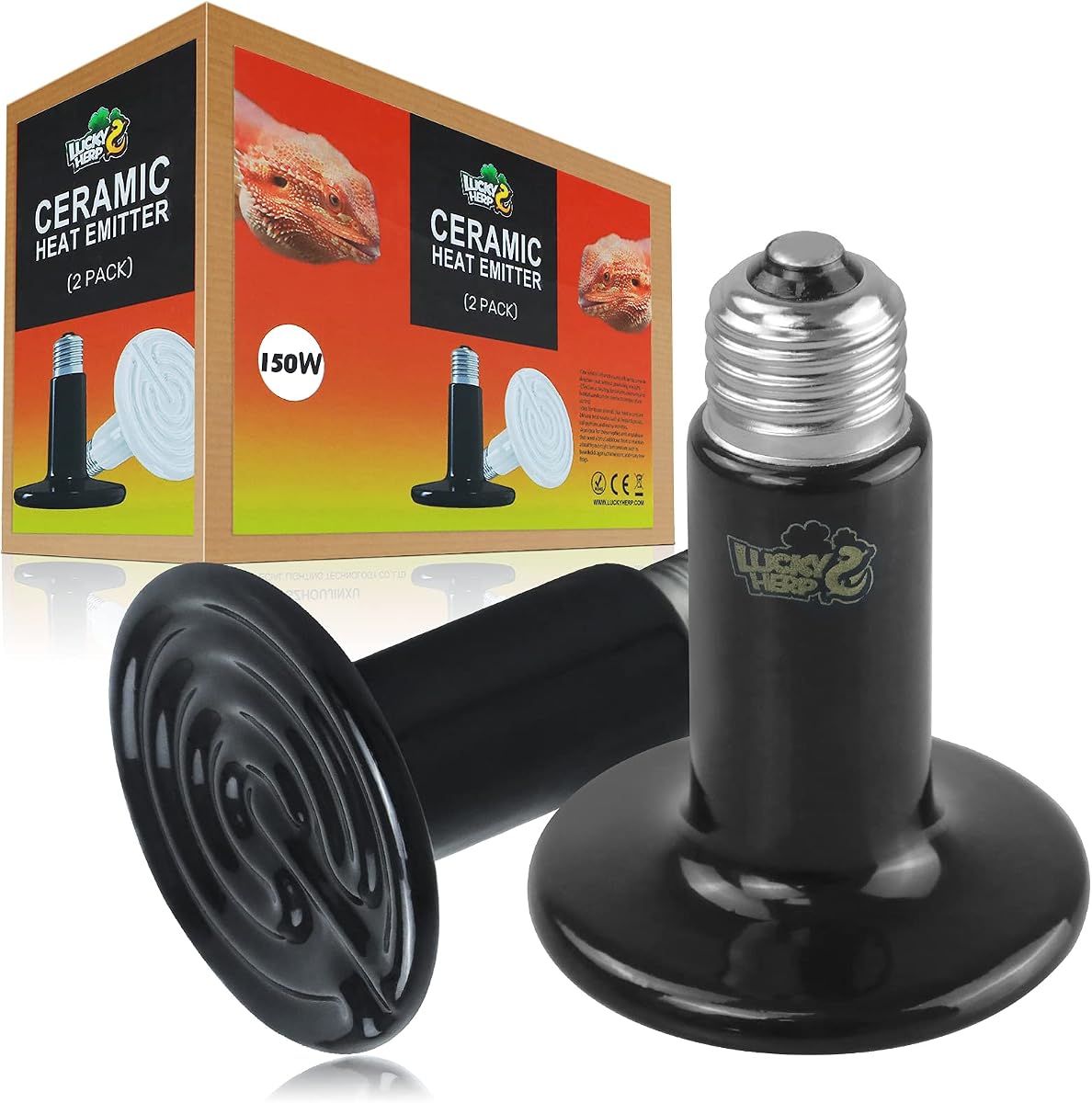
LUCKY HERP 150W Ceramic Heat Emitter
4.6Editor score
Two ceramic emitters included
No visible light emitted
E26 base, 120 volts
Our heat lamp for chickens guide compares ten options by heating power, safety features, coverage, installation, and suitability for brooders, coops, and
A dependable heat lamp for chickens can make the difference between a comfortable brooder and a cold, stressful flock. Useful heaters combine steady warmth, protected heating elements, adjustable output, simple hanging hardware, and enough coverage for the animals in your care. The right choice depends on flock size, housing, climate, and how much control you need.
This guide compares ten chicken coop heaters using their listed power levels, heating technology, safety features, dimensions, installation requirements, animal compatibility, and intended applications. It includes traditional infrared bulbs, ceramic emitters, multi-setting fixtures, and carbon fiber designs so readers can compare both familiar and more specialized heating formats.
Each review highlights the most useful benefits and the tradeoffs that may affect a purchase. The selections show that the best option for a small brooder is not necessarily the best choice for a larger winter coop. Product availability and marketplace details can change, so confirm the current specifications, included accessories, and instructions before ordering.
4.6Editor score
4.9Editor score

4.0Editor score
The table below compares the ten heaters by their power options, heating technology, safety features, installation method, and best-fit environment. It makes it easier to distinguish a small ceramic brooder lamp from a high-output carbon fiber unit designed for a larger coop.




The Woods Clamp Lamp is a versatile 120-volt fixture rated for bulbs up to 300 watts, earning it a 4.4 rating among buyers. Rather than being designed exclusively as a poultry brooder, it offers a practical combination of a strong clamp, an adjustable reflector, a double-ball joint, and a metal guard that gives owners more freedom in lamp placement.
We may earn a commission when you buy through this link, at no additional cost to you.
The clamp grips are designed to avoid marking the surfaces they contact, while the built-in hook provides another hanging option. The six-foot, 18 AWG SPT-2 cord gives the fixture enough reach for many temporary installations. Its broad reflector can concentrate light and heat downward, making it useful for a small brooder, workshop, pantry, basement, or indoor plant area.
The important limitation is that the bulb is not included. Buyers must provide a compatible medium-base E26 bulb within the stated 300-watt limit and use the lamp with an appropriate fixture. It also provides only a simple on-off arrangement rather than adjustable output or built-in temperature controls, so placement and bulb selection are central to managing heat.
This is a sensible choice for someone who already owns a suitable bulb and values flexible placement. It is particularly useful in temporary chicken brooders or coops where drilling is undesirable, although dedicated heaters with guards, chains, and selectable power may be more convenient for long-term poultry use.
The clamp and double-ball joint allow the reflector to be repositioned as chicks move, grow, or gather near different parts of a brooder. This makes the fixture useful when heat needs to shift during the brooding period.
The round reflector directs heat toward the intended area while the metal guard helps prevent accidental contact with the bulb. Buyers should still position the fixture securely and follow the included safety guidance.
We may earn a commission when you buy through this link, at no additional cost to you.
This 250W Chicken Coop Heat Lamp has a 4.5 rating and is built around a straightforward idea: provide useful infrared warmth in two output levels while protecting the bulb from contact. The kit includes 250W and 175W bulbs, an all-metal shade, a stainless steel guard, and two hanging chains for adjusting the distance above chicks.
We may earn a commission when you buy through this link, at no additional cost to you.
Its listed operating guidance separates colder conditions from milder weather, with the 250W bulb intended for extreme cold and the 175W bulb for milder conditions. Adjusting bulb choice and hanging height creates a temperature gradient rather than relying on one fixed setting. The die-cast aluminum shade and stainless steel guard are designed to withstand heat while protecting the heating element.
The waterproof and dustproof construction is a meaningful advantage for chicken coops, barns, and semi-outdoor brooding spaces where moisture and dust are difficult to avoid. Buyers should still confirm that electrical connections remain dry and follow the installation instructions, as weather resistance does not eliminate the need for sound electrical practices.
This heater is a good match for small brooders, brooder boxes, and livestock sheds where two heat levels are useful. It is less suited to buyers who want quiet, no-light radiant heating or exact electronic temperature control, but its guarded all-metal design and included bulbs make it a versatile dedicated poultry option.
Including both a 250W and a 175W bulb makes it easier to respond to changing temperatures. Owners can also alter the hanging height to shape the heat gradient around young birds.
The aluminum shade, stainless steel guard, and dustproof design suit everyday coop use better than an unprotected basic bulb. Regular inspection of the guard and connections remains essential.
We may earn a commission when you buy through this link, at no additional cost to you.
The 17.5-inch carbon fiber chicken heater has a 4.4 rating and emphasizes a long heating surface rather than the compact shape of a standard bulb lamp. Its extended body is designed to spread warmth across a wider area, making it interesting for brooders, coops, and pens containing chicks, ducks, or other small animals.
We may earn a commission when you buy through this link, at no additional cost to you.
Two selectable output levels, 150W and 300W, allow the owner to vary the amount of heat as animals grow or conditions change. The listing also states that the carbon fiber element converts electricity to heat with efficiency above 95%, heats rapidly, and has a rated lifespan of up to 10,000 hours. Those are manufacturer-provided specifications rather than independently verified test results.
The metal mesh helps prevent direct animal contact with the heating tube, and the system uses infrared-style radiant heating without an open flame. The all-in-one format includes an adjustable chain and requires no drilling. As the heater is much longer than conventional reflectors, however, the brooder must provide sufficient clearance and enough width to position it safely.
This product suits buyers who want broad coverage from a single suspended element and value rapid heating with selectable power. It may be less appropriate for a very small brooder, where its length limits placement options, or for someone requiring a temperature-controlled fixture with an integrated thermostat.
The 17.5-inch heating length provides a wider radiant area than a compact bulb reflector. This can benefit larger brooder groups and pens where birds need to spread out beneath the heat source.
Switching between 150W and 300W provides more flexibility than a single-output lamp. The element's rapid heat-up claim also supports quick use in cold-weather brooding setups.
We may earn a commission when you buy through this link, at no additional cost to you.
The 400W large carbon fiber brooder heater combines high output with one of the most extensive safety feature lists in this comparison. Its 4.0 rating reflects an otherwise capable design aimed at chicken coops, brooding boxes, livestock enclosures, and homes for young or sick animals.
We may earn a commission when you buy through this link, at no additional cost to you.
Owners can select 200W or 400W and adjust the hanging height to accommodate different weather conditions and animal sizes. The manufacturer reports a 12,000-hour carbon fiber element lifespan, one- to two-second heating, up to 5,000 square centimeters of even heat coverage, and 90% heat conversion efficiency. The included installation hardware is intended to make setup possible without drilling.
Safety and durability are central to the design. It includes an aluminum composite housing, heavy-duty stainless steel mesh, a UL-certified power cord, and an IP67 waterproof rating. The listing also describes the unit as heat-resistant, shatterproof, dustproof, and drop-resistant, making it a compelling option for environments where a conventional exposed bulb could be vulnerable.
This is the top premium choice for buyers who want extensive construction features, broad output, and installation convenience. It may be unnecessarily powerful for newly hatched chicks or a very small brooder, so lower output and careful height adjustment are important. Even with a four-star average, its certification and protection details distinguish it from simpler fixtures.
A UL-certified cord and IP67 enclosure add confidence for damp or dusty coop environments. Electrical connections should still be protected, inspected, and installed according to the manufacturer's guidance.
The 200W mode supports lower-intensity warming, while 400W offers stronger output for cold conditions or larger groups. Combining those settings with height adjustment helps distribute warmth more evenly.
We may earn a commission when you buy through this link, at no additional cost to you.
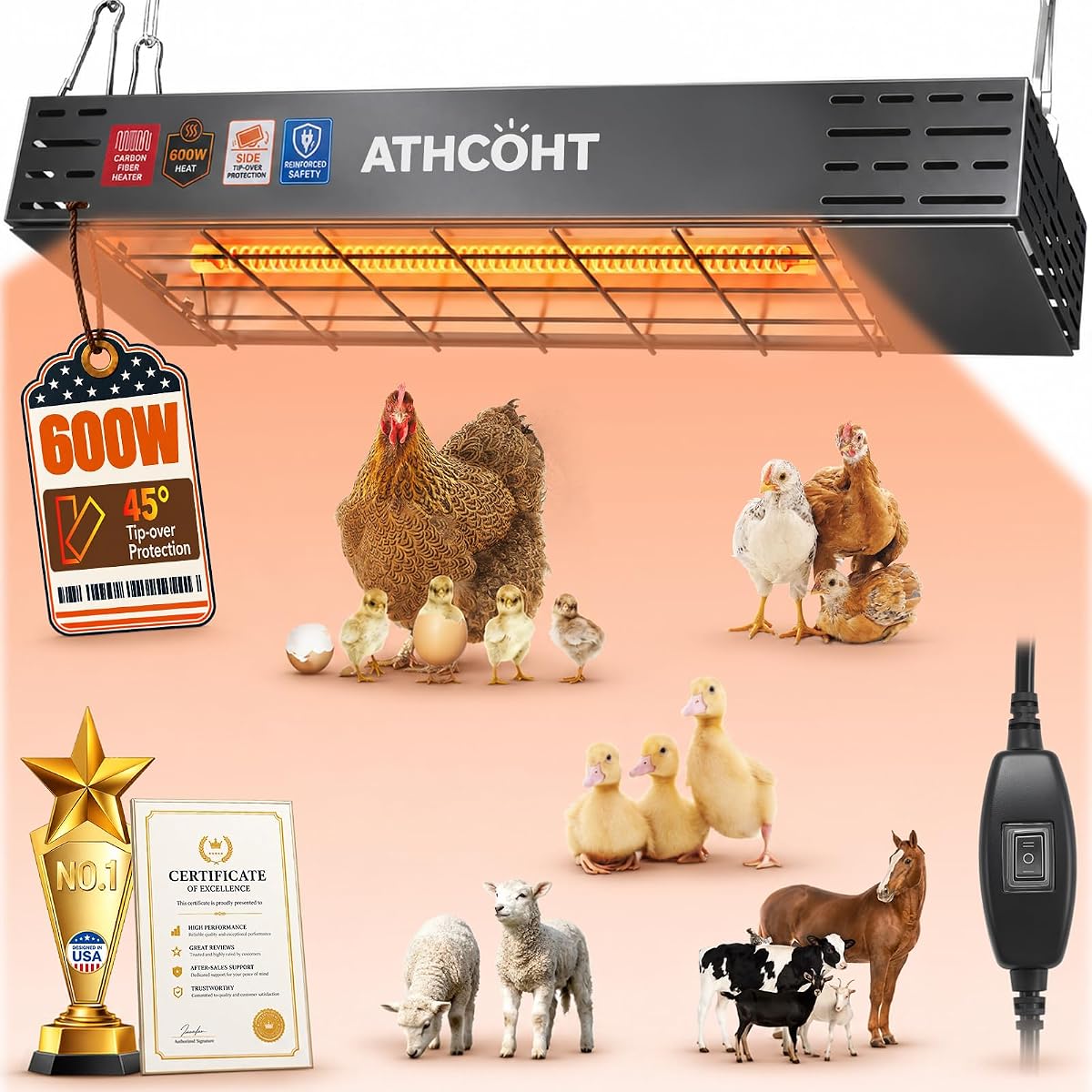
The 600W carbon fiber chicken coop heater carries a 4.9 rating, making it the highest-rated option in this roundup. It combines substantial heating capacity with a compact feature set centered on two power levels, automatic tip-over protection, and a protective grille for use around animals.
We may earn a commission when you buy through this link, at no additional cost to you.
Owners can select 600W or 300W to match seasonal conditions, animal size, and the required level of warmth. The carbon fiber system is listed as providing 90% heat output, saving 28% power compared with traditional heating, and lasting up to 12,000 hours. Its extended 5.40-foot heating design is intended to distribute warmth over a broader area than a compact reflector.
Automatic shutoff is the standout practical feature. If the heater is overturned, the built-in tip-over mechanism cuts power rather than allowing continuous heating to continue. Multiple layers of protection—including a protective grill and durable housing—are especially relevant in chicken coops, where birds may move suddenly around hanging equipment.
This is the editor's choice for buyers seeking strong output, simple controls, and an extra layer of protection in a larger coop or barn. Its 600W maximum is not necessary for every flock, and very small brooders should use the lower setting only if adequate space and safe clearance are available.
Tip-over shutoff interrupts power when the unit is overturned. This reduces one avoidable risk of a hanging heater and adds confidence in busy animal spaces.
The 600W setting and extended heating body target coops, barns, sheep houses, and horse stables. Buyers should match output to the area and adjust the hanging position to prevent excessive heat near animals.
We may earn a commission when you buy through this link, at no additional cost to you.
The 350W carbon fiber chicken coop heater also holds a 4.9 rating, but its lower maximum output makes it a versatile middle ground between a compact brooder lamp and a high-output livestock heater. It offers two clearly selectable heat levels, a broad housing, and installation hardware for suspension without wall drilling.
We may earn a commission when you buy through this link, at no additional cost to you.
The unit heats in a claimed three seconds and uses a wide-angle design intended to distribute warmth evenly. Its two operating levels are 350W and 175W, allowing owners to respond to growth stages and day-night temperature changes. The product information gives the heating element a 15,000-hour lifespan and describes the unit as UL certified.
Protection comes from an aluminum alloy shade and stainless steel mesh cover, along with overheat protection and a water-resistant coating. The mesh helps protect the element from pecking and direct contact, while the five-point-six-foot cord offers more installation reach than a short appliance lead. As with any outdoor heater, the connection should remain dry even though the housing is designed for demanding conditions.
This heater is well suited to chicken coops, brooders, and mixed animal areas where two power levels are enough. It does not include an automatic temperature sensor, so temperature management still depends on observation, thermometer placement, and adjustment of the power setting or hanging height.
Two settings at 175W and 350W give owners more control than a single-output fixture without moving immediately to the highest output in this guide. That balance works well for many brooder and coop situations.
A metal shade, stainless mesh, overheat protection, and a water-resistant coating support regular use around poultry. Routine checks help ensure that neither the guard nor the electrical connection is compromised.
We may earn a commission when you buy through this link, at no additional cost to you.
The QRQ chicken coop heater is a multifunction unit that combines heating, supplementary lighting, ultraviolet output, brightness adjustment, and programmable timing. Its 4.1 rating places it in the middle of the comparison, reflecting a broad feature set that may not be necessary for every poultry keeper.
We may earn a commission when you buy through this link, at no additional cost to you.
Heating is available at 200W, 350W, or 500W, while the lighting has three brightness levels. The unit includes full-light bulbs along with UVA and UVB bulbs, and the product information includes a UV test card. Its timer can run for three, six, nine, or twelve hours or remain on continuously, giving owners several scheduling options.
The lamp is described as UL and FCC certified and made with flame-retardant materials. It also includes overload and overheating protection, an insulated shell, and an E26/E27 holder. The installation guidance recommends hanging the unit by its top ring rather than its wires, because lifting it by the wiring could damage internal parts.
This heater is most attractive to owners who want warmth and controlled light in one fixture, particularly in mixed-animal environments such as chicken houses, dog houses, or reptile areas. Those wanting pure heat without illumination, fewer controls, or a simpler setup may prefer a carbon fiber or ceramic emitter instead.
Five timing choices allow the lamp to follow a programmed daily cycle. Owners can select a timed operating window or continuous operation according to animal needs and their own monitoring plan.
Combining adjustable heating with dimmable full-spectrum and ultraviolet light saves space and simplifies wall-mounted setups. The added lighting functions are optional benefits rather than substitutes for outdoor daylight.
We may earn a commission when you buy through this link, at no additional cost to you.
The LUCKY HERP 150W ceramic heat emitter has a 4.6 rating and offers a simple way to add radiant warmth without visible light. The two-pack includes ceramic bulbs that fit standard E26 lamp bases and operate on 120 volts, making them usable in compatible lamp holders beyond poultry housing.
We may earn a commission when you buy through this link, at no additional cost to you.
Because the bulbs produce heat without emitting visible light, they are especially useful at night or in brooder areas where owners do not want continuous illumination. The listing reports a noticeable temperature rise after ten seconds and a rated-temperature reach in approximately four minutes. The thick ceramic construction is described as stronger than ordinary heating lamps, with a stated lifespan of up to 10,000 hours.
Safe use depends on the fixture and placement. The instructions call for a good-quality ceramic lamp holder, more than 30 centimeters of distance from reptiles, and avoiding rapid repeated switching or restarting the bulb immediately after it has been turned off. These reminders matter because hot ceramic and frequent power cycling can shorten bulb life or create avoidable hazards.
This is the best budget choice for a small brooder, supplemental warmth, or nighttime heating where visible light is undesirable. It does not include a shade, guard, chain, or integrated controls, so it is less convenient than the dedicated hanging units in this roundup and requires careful mounting.
The ceramic element provides radiant warmth without visible illumination, which can help maintain dark rest periods. It is also useful for reptiles, amphibians, and other animals that benefit from a heat source without a bright lamp.
Two 150W bulbs provide spare capacity or allow separate zones. Because fixtures are not included, buyers should select durable, heat-rated holders and follow all clearance instructions.
We may earn a commission when you buy through this link, at no additional cost to you.
The 600W adjustable brooder heater is a high-output option designed for poultry, pets, and livestock, with a 3.9 rating. Its 14-inch body, metal mesh, galvanized steel construction, and dual settings place it among the more robust conventional designs in the roundup.
We may earn a commission when you buy through this link, at no additional cost to you.
The heater offers a substantial jump between its 600W and 100W modes. The product listing explains that chicks generally need a target brooding temperature near 93°F that decreases as they grow, and that output plus hanging height can be combined to customize conditions. It claims rapid heating in approximately five to ten seconds and coverage for as many as 100 baby chicks.
Protective mesh reduces the chance of direct contact with the heating element, while the thickened power cord is described as carrying international UL certification. The unit uses an all-in-one format with a chain for hanging and no drilling required. Those details make setup relatively straightforward, although users should confirm that the heater is positioned to prevent accidental contact.
This product suits owners with a large brooder or substantial livestock area who want the option of very strong heat. Its 4.0 rating is the lowest in the comparison, so buyers should carefully assess the detailed specifications. The wide gap between operating modes also means that height adjustment and close temperature monitoring remain important.
A 600W maximum is useful when a large group of chicks needs rapid warmth in a cold environment. The claimed capacity for up to 100 baby chicks makes this more of a high-output unit than a compact nursery lamp.
Galvanized steel and a protective mesh add physical durability. The included chain allows adjustable placement without modifying coop walls, making the heater easier to reposition as birds grow.
We may earn a commission when you buy through this link, at no additional cost to you.
The 400W carbon fiber brooder has a 4.8 rating and combines a high-output no-light heating format with selectable 200W and 400W settings. Its extended enclosure, protective cage, and eight-foot cord make it suitable for owners who need broad radiant warmth without adding visible light to the coop.
We may earn a commission when you buy through this link, at no additional cost to you.
The carbon fiber element is listed as heating in one to two seconds, delivering faster and more stable warmth than conventional lamps. The manufacturer also claims 28% lower power use, a lifespan of 12,000 hours, and a one-year replacement. The unit is described as flameless and no-light, which can be advantageous in dark rest areas or whenever continuous illumination is undesirable.
Safety information includes UL testing and five protection categories: corrosion resistance, high-voltage resistance, fire retardancy, waterproofing, and explosion resistance. A protective cage helps separate animals from the element. Because the listing specifically instructs users to install the lamp before use, following the supplied directions is an essential part of safe operation.
This heater is a strong option for chicken coops, rabbit areas, livestock housing, and indoor animal spaces that need substantial warmth. It may be more than a small brooder requires, so the 200W mode and careful height placement are important. Even so, the combination of wide coverage, no-light heating, and multi-layer protection makes it a versatile final recommendation.
The flameless, no-light element warms the surrounding area without turning the coop into a continuously illuminated space. That makes the format useful for nighttime brooding and animals that do not need extra visible light.
An eight-foot cord simplifies placement in larger coops and livestock areas. The built-in switch provides direct output control, while the cage and two heat levels support adaptable installation.
We may earn a commission when you buy through this link, at no additional cost to you.
Choosing a chicken heat lamp requires balancing heat output, enclosure size, animal age, electrical safety, and your ability to monitor the environment. The most useful heater is one that can maintain a comfortable zone without creating hot spots, fire hazards, or unnecessary light.
Begin with the size of the heated area and the number of animals, then select a heater with enough capacity to warm that zone. Listed wattages range from 150W for a ceramic emitter to 600W for high-output units. Higher wattage does not automatically mean better results because the fixture's reflector, heating length, hanging height, and enclosure insulation also affect how warmth reaches the birds.
Match the output to the space. A high-output heater in a small brooder can create dangerously hot areas, while a low-output emitter may struggle in a drafty or uninsulated coop. Use multiple gentler heat sources when one powerful lamp would create uneven temperatures.
Traditional infrared bulbs provide visible light and radiant warmth, while ceramic emitters generate heat without visible light. Carbon fiber designs are marketed as fast-heating, no-light alternatives with broad radiant coverage. Multifunction lamps may add UVA, UVB, adjustable brightness, and timers. The best technology depends on whether your priority is visible illumination, nighttime darkness, rapid heating, or compact supplemental warmth.
Choose based on the flock's environment rather than novelty. A no-light emitter can support dark rest periods, while a timed lighting fixture may be useful where controlled supplementary light is desired. Always follow the heating technology's stated clearance and switching instructions.
Look for a metal guard or cage, overheat protection, high-temperature-resistant housing, flame-retardant materials, and a suitable electrical cord. Several options also list UL certification, while one carries an IP67 waterproof rating. Tip-over shutoff is an added protection on the 600W carbon fiber model. These features reduce risk, but they do not replace secure hanging, dry connections, regular inspection, or responsible placement.
Prioritize units with several independent layers of protection. The strongest design should combine physical separation from the element with electrical safeguards and a durable outer housing. Replace damaged guards, cracked bulbs, or compromised cords rather than attempting to use a compromised heater.
Consider both floor area and available ceiling height. Long carbon fiber heaters need enough width to hang safely, while high-output fixtures require clearance above chicks to prevent excessive heat. Small brooders generally benefit from lower-output bulbs or emitters, while coops housing adult chickens may need broader coverage and less concern about visible light.
Plan for a heat gradient rather than attempting to warm every corner equally. Animals should be able to move away from the warmest area. Measure the enclosure, confirm the hanging clearance, and avoid placing a lamp where birds can bump it or where moisture can reach the electrical connection.
A thermostat can simplify temperature management, but most units in this comparison use selectable wattage instead. Dual and triple power settings allow faster manual control, while timer functions can automate lighting and heating schedules. Timers do not guarantee ideal animal temperatures because outdoor conditions and brooding needs change throughout the day.
Use a reliable thermometer at chick level and adjust the wattage or hanging height as the flock grows. Scheduled operation works best as one part of a broader routine that includes observation, ventilation, and responding to signs of heat or cold stress.
Most dedicated heaters include chains, hooks, or threaded hanging hardware, allowing installation without drilling into walls. A clamp lamp offers similar portability but requires a sturdy support and a compatible bulb. Ceramic emitters need a separate heat-rated fixture. Consider cord length, available attachment points, and how easily the unit can be raised or lowered as birds grow.
Favor simple, secure setups that allow daily inspection. The installation should prevent animals from contacting the heater, avoid extension cords where practical, and keep the plug and connections dry. Follow the instruction sheet before the first use, especially for units that explicitly require assembly or protective components to be fitted.
Visible heat lamps can provide extra light but may disturb resting birds or interfere with a desired day-night routine. Ceramic emitters and no-light carbon fiber units avoid adding visible illumination. Multifunction lamps can provide dimmable full-spectrum and ultraviolet light, which may be appealing to owners seeking scheduled supplementary lighting for enclosed housing.
If natural daylight is sufficient, a no-light heater may create a less disruptive environment. If young birds are housed where darkness needs to be controlled, use a separate light schedule and verify that the heat setting matches the birds' age and the measured brooder temperature.
Clean dust from guards and reflectors, check the cord for damage, and confirm that chains and hooks remain secure. Avoid frequent switching of ceramic emitters, and allow heated bulbs to cool as directed. Carbon fiber elements require less visible maintenance according to their listings, but the housing, mesh, connections, and suspension should still be inspected.
Keep spare bulbs or a known-working replacement unit for critical brooding periods. Familiarize yourself with normal behavior and signs of overheating or chilling before the coldest weather arrives. Reliable equipment is only part of responsible animal care; observation remains essential.
Before installation, read the product instructions, confirm that the voltage and bulb or heater rating match your electrical setup, and inspect every included component. Secure a suitable overhead support and ensure that the lamp hangs level, remains out of reach of pecking birds, and has enough clearance to prevent accidental contact. Install guards, chains, cages, and covers exactly as directed before connecting the unit.
Place a thermometer at chick level and use the lowest suitable heat setting while monitoring the brooder. Chicks should be able to move toward or away from the heat. Adjust wattage and hanging height in small steps, account for nighttime temperature drops, and provide ventilation so warm air does not accumulate near the ceiling. Do not leave a young brooder unattended without a dependable monitoring plan.
Inspect the heater and electrical connection regularly for dust, moisture, damaged wires, loose hardware, cracked bulbs, and bent guards. Clean only as directed, never move a hot heater, and avoid rapid on-and-off cycling of ceramic bulbs. If a protector is damaged, replace it before operation; if a cord or heating element is compromised, remove the heater from service until it is repaired or replaced.
The appropriate wattage depends on brooder size, insulation, weather, chick age, and heater design. A 150W ceramic emitter may be sufficient for a small, insulated brooder, while 300W to 600W fixtures may suit larger or colder setups. Measure temperature at chick level and adjust the hanging height rather than assuming a fixed wattage is correct.
It depends on the flock and the surrounding lighting schedule. Traditional infrared bulbs add visible light, whereas ceramic emitters and several carbon fiber products provide radiant warmth without visible light. No-light heating can support dark rest periods, while a multifunction fixture may be useful where controlled supplementary and ultraviolet lighting is desired.
There is no universal distance because heat output, housing, reflector size, and brooder conditions all matter. Start according to the manufacturer's guidance, provide clear space around the fixture, and observe chick behavior. Chicks crowded directly beneath the heater may need more distance, while birds staying at the edges may indicate insufficient warmth or an uneven gradient.
They can offer useful advantages such as rapid heating, no visible light, wide radiant coverage, and no open flame, but safety still depends on the entire installation. A protected carbon fiber heater still requires secure hanging, adequate clearance, dry electrical connections, suitable ventilation, and regular inspection of its cage, cord, and housing.
It depends on the unit's output, the coop's size and insulation, and the birds' needs. A single 600W heater may cover a larger area than a 150W emitter, but even a high-output fixture can leave cold zones in a large or drafty building. Multiple controlled heat sources or a smaller, well-insulated shelter may produce more even results.
Use the lowest practical setting, hang the heater at the recommended clearance, and monitor a thermometer positioned at chick level. Watch for panting, moving away from the heat, and crowding beneath the lamp. Also verify that ventilation is adequate, because warm air and humidity can make a brooder feel hotter even when the direct lamp output does not change.
A thermostat is not included with every model and is not a substitute for observation. Selectable wattage levels and adjustable hanging height provide manual control, but an external thermometer remains important. In demanding weather or for young chicks, an independent monitoring system can help detect dangerous temperature changes quickly.
Check the bulb or element, guard, housing, chain, hooks, cord, plug, and electrical connections regularly. Remove accumulated dust according to the instructions, and replace damaged protective parts immediately. For ceramic emitters, avoid frequent rapid switching and allow cooling before restarting, following the manufacturer's specific guidance.
The LUCKY HERP ceramic emitter stands out as the best budget option because its two-pack provides compact, no-light heat for compatible fixtures. The 600W carbon fiber heater is the editor's choice for its strong output, dual settings, wide heating design, and automatic tip-over shutoff, while the feature-rich 400W large brooder heater earns the premium position with its certification, weather resistance, and durable protective construction.
Prioritize safe installation, appropriate heat output, secure suspension, and the ability to monitor the actual brooder temperature. A feature-rich timer is useful, but reliable observation matters more than any single setting. Match the fixture to the size of the heated area and choose visible or no-light heating according to your flock's daily light needs.
Before ordering, confirm the included bulbs, chains, guards, cord length, voltage, dimensions, and installation requirements against your particular coop. Marketplace details and available configurations can change, so checking the current listing helps ensure that the selected heat lamp for chickens remains compatible with your setup.