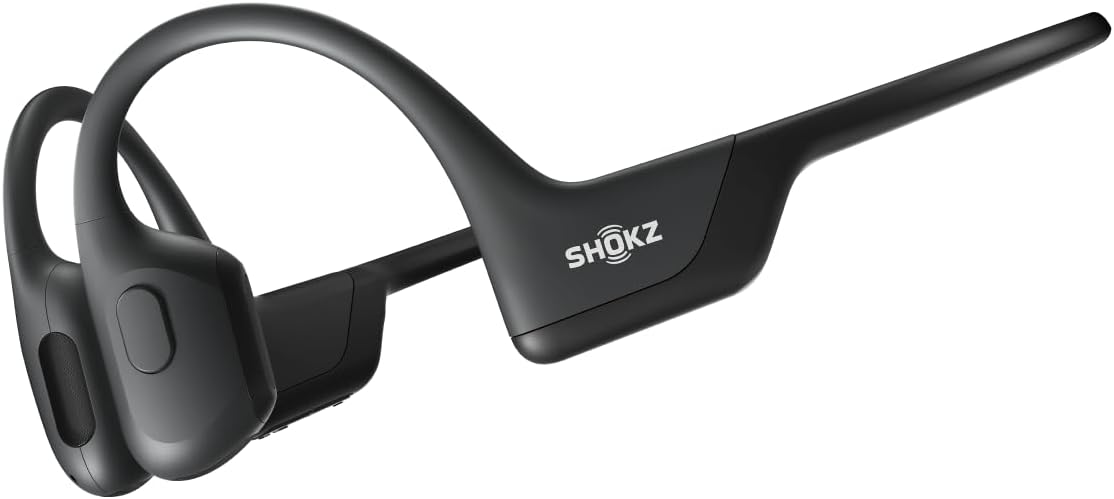
SHOKZ OpenRun Pro
4.5Editor score
Open-ear bone-conduction listening
Titanium wraparound frame
Ten hours of music and calls
Discover the best Bluetooth headset for glasses wearers, with 10 expert picks compared for comfort, secure fit, audio quality, calls, battery life, and outdoor
Bluetooth headsets for glasses wearers must avoid the pressure and awkward fit that conventional earbuds can create around the temples of a frame. The strongest options use open-ear, clip-on, external, or bone-conduction designs to deliver audio while keeping the ear canal unobstructed and the surrounding environment audible.
We compared these ten headsets using the supplied specifications and customer ratings, focusing on compatibility with glasses, comfort, stability, audio characteristics, microphone features, wireless connectivity, battery life, and resistance to sweat or weather. The list includes clip-on earbuds, neckband models, external frame attachments, and open-ear sports headsets.
Each selection below shows how the headset is designed to work, where it appears strongest, and which trade-offs may matter to a particular listener. The featured products range from compact clip-on models to a premium bone-conduction headset, giving commuters, runners, drivers, and everyday users several paths to consider. Prices and availability can change.
4.5Editor score

5.0Editor score

3.6Editor score
The side-by-side comparison highlights the different ways these headsets accommodate glasses, ranging from external attachments and tiny clip-on earbuds to flexible neckbands and lightweight ear-hook designs. It also compares core specifications such as driver type, wireless version, battery duration, and sweat resistance to help narrow the field.




This open-ear bone-conduction headset has a 4.6 rating and stands out for a flexible, skin-friendly neckband that weighs only 25g. Rather than entering the ear canal, it sends audio through bone-conduction technology while leaving the ears open. That architecture can be especially useful for glasses wearers who dislike the pressure created by in-ear tips or conventional over-ear cups.
We may earn a commission when you buy through this link, at no additional cost to you.
Its most appealing feature is the combination of Bluetooth 6.0 and dual-device connection. A user can remain connected to two devices and move between music, video, calls, and work tasks without repeatedly repairing. The built-in microphone supports hands-free calling, while three EQ modes—Vocal, Bass, and Balanced—provide useful variations for podcasts, music, conversations, and workouts.
The headset also offers up to 10 hours of playtime and an IP65-rated, sweat-resistant build for running, cycling, hiking, commuting, and gym use. A potential trade-off is the neckband format: although it avoids ear pressure, the band may not sit equally well with every combination of glasses, hairstyle, and collar. It is also not intended for swimming or underwater use.
This is a strong choice for an active glasses wearer who wants broad functionality from a lightweight headset. It is particularly attractive if dual-device switching, adjustable sound profiles, and environmental awareness matter more than an all-day battery or a completely frame-independent form factor. The open construction and stable neckband make it more versatile than many basic clip-on alternatives.
The 25g neckband rests around the back of the head rather than inside the ears, reducing the stuffiness and pressure associated with sealed earbuds. Its flexible construction is designed to adapt to different head shapes and remain comfortable during extended wear.
Dual-device connectivity makes this headset practical for users who alternate between a phone and computer. The three EQ modes also reduce the need to change devices simply to find a more suitable sound profile for music, dialogue, or exercise.
We may earn a commission when you buy through this link, at no additional cost to you.
The OHAYO A7 is purpose-built for people who regularly wear glasses, and it has a 5.0 rating in the supplied data. Each 4.7g earbud clips around the ear without blocking the ear canal or pressing directly against the temples. That explicit glasses-first positioning makes it one of the most relevant choices in this roundup.
We may earn a commission when you buy through this link, at no additional cost to you.
Its 12mm dual drivers offer rich bass and clear sound, while Bluetooth 5.4 is intended to provide stable transmission and reduced delay for music, movies, gaming, and calls. ENC microphone technology is included to improve voice clarity. The open-ear format also helps users remain aware of traffic, conversations, and other environmental sounds while walking, running, or commuting.
Battery life is a major strength: the earbuds provide up to 40 hours of playback when used with the charging case, and quick charging is supported. The stable clip-on structure is designed to remain in place during running, HIIT, and other workouts, while IPX6 protection helps resist sweat and light rain. The inherent compromise of this design is some open-ear sound leakage.
This is the most direct recommendation for someone whose main problem is finding a headset that does not fight with a glasses frame. It combines a tiny, low-pressure form with strong battery specifications, stable wireless performance, and call-focused features. Users who prioritize lightweight comfort and glasses compatibility will likely find its design especially persuasive.
Rather than depending on a headband or an over-ear speaker, the A7 wraps around the outer ear and avoids pushing against the glasses temples. At only 4.7g per earbud, it also limits the fatigue associated with heavier clip-on devices.
The included charging case extends playback to as much as 40 hours, reducing the need to recharge between commutes or workouts. This makes the A7 more practical for travelers and regular users than a headset limited to a short single-charge session.
We may earn a commission when you buy through this link, at no additional cost to you.
The LICAEVEY model takes a different approach by attaching directly to the temples of eyeglasses or sunglasses. It has a 3.5 rating, lower than the other choices in the list, but its universal-fit concept is valuable for wearers who want audio without adding a separate pressure point around the ear. The ear canals remain free, which also supports environmental awareness.
We may earn a commission when you buy through this link, at no additional cost to you.
An elastic and adaptive silicone cover is intended to hold the device securely on the temples of most frames. The design is marketed for running, cycling, driving, and other active uses. Bluetooth 5.3 is included for stable, power-efficient transmission, and the controls support calls, music, and intelligent voice-assistant activation.
The main limitations are the shorter eight-hour battery life and the inherent uncertainty of any universal attachment. Frame thickness, shape, and material can affect stability, and the device adds hardware directly to the glasses. Its 3.5 rating suggests that compatibility or overall satisfaction may vary more than with some dedicated clip-on alternatives.
This headset makes the most sense for a user who wants a simple, glasses-integrated setup and values the frame attachment over discreet earbud aesthetics. It is less suitable for anyone who changes frames constantly, dislikes accessories mounted on spectacles, or expects the battery to last through several uninterrupted workdays without charging.
Because the speakers connect externally to the frame, the headset does not need to sit over the ears or inside the ear canals. The result is a wearable configuration that can preserve the familiar feel and function of the user's regular glasses.
The adaptive silicone cover supports many temple shapes, but universal-fit language does not guarantee equal results on every design. Buyers should compare the attachment size with their frames and consider whether a more purpose-built clip-on model would be less conspicuous.
We may earn a commission when you buy through this link, at no additional cost to you.
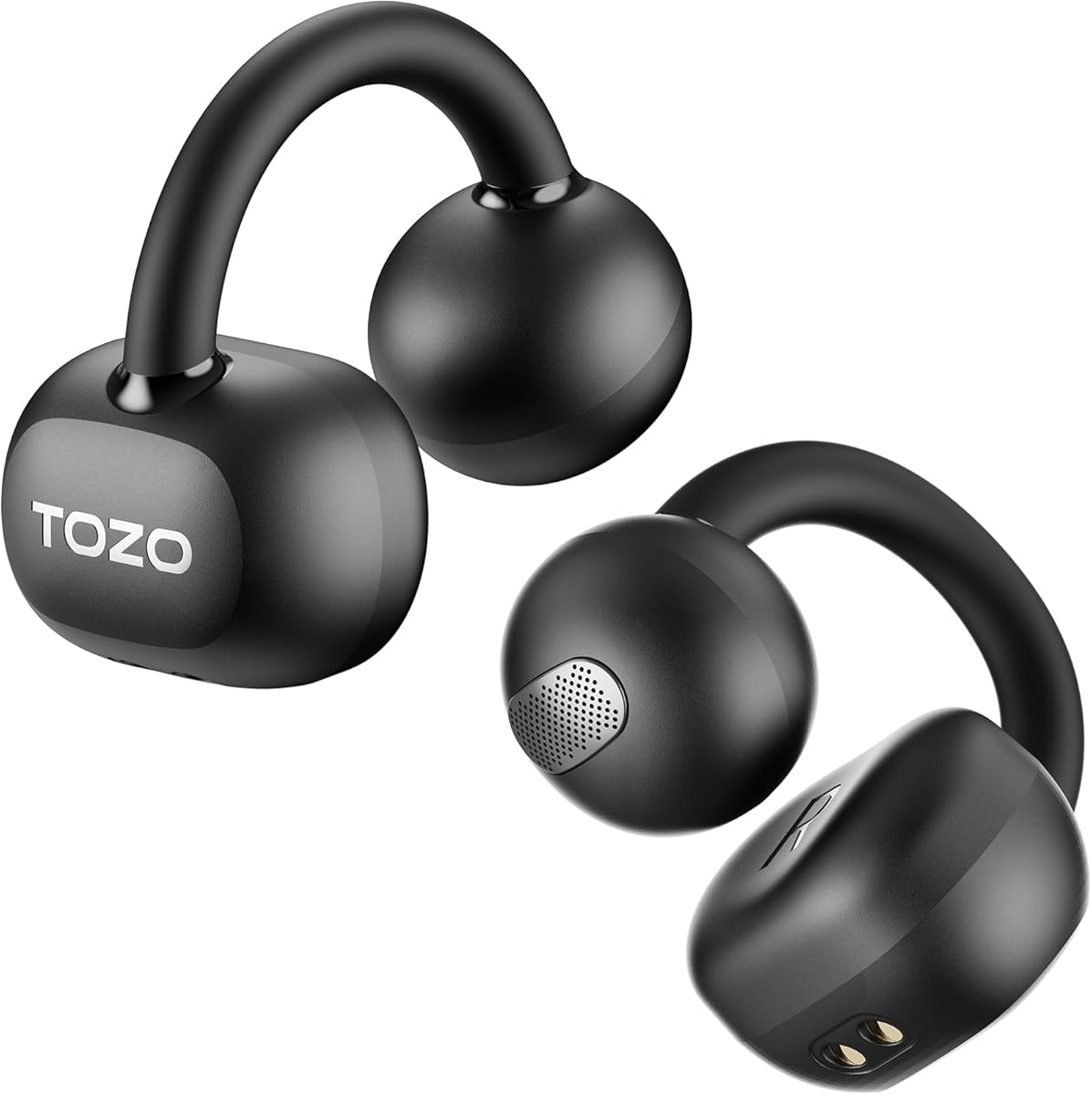
The TOZO OpenEarRing combines a glasses-friendly clip-on design with extensive sound customization, earning a 4.3 rating. Each earbud weighs 5.1g and contours around the ear without entering the canal or clashing with a frame. The skin-friendly silicone is intended to remain comfortable during extended sessions.
We may earn a commission when you buy through this link, at no additional cost to you.
Its strongest differentiator is app-based EQ control, with 32 modes available for different musical styles. TOZO's OrigX acoustic technology is positioned for stereo detail, clearer vocals, and more intelligible dialogue in movies. The hardware supports Bluetooth 5.4, a claimed connection range of 15 meters, and automatic pairing when both earbuds leave the charging case.
The compact charging case has a digital display and supplies up to 30 additional hours after the earbuds deliver as much as 10 hours on a single charge, for a stated total of 40 hours. IPX5 water resistance adds useful protection for exercise and outdoor use. The trade-offs are the shorter per-charge runtime and the need to use the app to take full advantage of the EQ options.
This is a strong pick for a glasses wearer who likes having control over sound and wants a conventional two-earbud setup. It is well suited to music, podcasts, video, and casual exercise, particularly when the charging case's battery reserve is appreciated. Users who need the most direct controls without an app may prefer a simpler headset.
Thirty-two EQ modes let listeners move between vocal-forward and genre-specific profiles, while the open-ear clip keeps the canal clear. This combination is useful for people who want some personalization without moving from their glasses to separate earbuds.
The digital display on the charging case makes remaining power easier to check at a glance. Combined with the stated 40-hour total, it reduces uncertainty when carrying the earbuds through a work week, travel schedule, or series of workouts.
We may earn a commission when you buy through this link, at no additional cost to you.
The O2 open-ear headphones have a 4.9 rating and are clearly oriented toward runners, hikers, cyclists, and other active users. They weigh 26.4g and use a flexible titanium frame that sits outside the ear canal. The manufacturer also states that the ergonomic hook was specially tested for comfort alongside glasses.
We may earn a commission when you buy through this link, at no additional cost to you.
Fifteen-millimeter dynamic drivers are larger than those commonly found in compact workout headsets, and air conduction directs sound toward the ear canal. Bluetooth 5.3 supports quick pairing, a claimed range of 33 feet, and simultaneous connection to two devices. Intuitive button controls and a built-in microphone are intended to reduce accidental touches during exercise.
Battery performance is another strength. The headset offers up to 12 hours of continuous music and calls, plus 150 hours of standby. A ten-minute magnetic fast charge is said to add one hour of playback, which is useful before a run or hike. It is sweat resistant but not designed for swimming, and its open construction may produce some sound leakage.
This headset is an excellent choice for active people who wear glasses and want a secure, pressure-free fit. The combination of a titanium hook, large drivers, fast charging, and dual-device connectivity makes it versatile for workouts and daily work. Those who need swimming capability or a completely discreet profile should choose accordingly.
The flexible hook follows the outer ear without entering it and is designed to remain stable during vigorous movement. Because it was specifically considered alongside glasses, it may be a safer recommendation than a general earbud that could press against the temples.
The magnetic charging system can provide one hour of playback after a ten-minute charge. That makes the headset easier to use for short sessions without waiting for a full recharge, while the 12-hour maximum covers longer runs and commutes.
We may earn a commission when you buy through this link, at no additional cost to you.
The LEVN open-ear headset has a 3.8 rating but distinguishes itself through work, driving, and calling features. Its 29g silicone frame and three-dimensional rotating ear hooks are designed to remain stable with glasses, hats, or helmets. Because the ear canals stay open, it can support awareness of traffic, conversations, and other surroundings.
We may earn a commission when you buy through this link, at no additional cost to you.
The headset uses an AI microphone system intended to reduce background clutter during calls. A dedicated mute button provides one-touch microphone control, while the boom microphone rotates through 270 degrees so it can be positioned closer to the mouth. A multifunction button handles track changes, playback, and call management.
Bluetooth 5.3 is included with true multipoint, allowing the headset to stay connected to two devices such as a phone and laptop. The stated wireless range extends to 49 feet. It also rests around the neck when not in use, and its sweat-resistant construction is aimed at outdoor work and workouts. The open hooks may look less understated than conventional wireless earbuds.
This is a practical recommendation for drivers, remote workers, and people who regularly take calls around glasses wearers. The rotating microphone and quick mute control are more meaningful than extra EQ modes for many professionals. It is less compelling for listeners whose priority is discreet everyday music and minimal external hardware.
The rotating boom can be adjusted toward the speaker's mouth, while the AI microphone system is designed to reduce background clutter. These details are particularly relevant in vehicles, warehouses, and shared workspaces where open-ear listening leaves more ambient sound present.
True multipoint keeps a laptop and phone available at the same time, allowing the user to move between music and calls. It reduces the repeated reconnection process that can interrupt a workday.
We may earn a commission when you buy through this link, at no additional cost to you.
This second bone-conduction Bluetooth 6.0 listing shares the same core feature set as the first product: a 25g flexible neckband, open-ear bone-conduction audio, 3 EQ modes, up to 10 hours of playtime, and IP65 protection. It carries the same 4.6 rating, making it another strong choice for active users who want awareness without ear-canal pressure.
We may earn a commission when you buy through this link, at no additional cost to you.
The anti-leak audio feature is intended to reduce some sound escaping into the surrounding environment. That makes the open design more practical than it may initially sound, although it cannot guarantee complete privacy. Dual-device connection allows the headset to move between calls, videos, music, and work sources, and the skin-friendly neckband is designed to adapt to different head shapes.
As with the related neckband model, the main trade-off lies in how the band interacts with a particular pair of glasses. Some frame and temple combinations may feel crowded even though the headset does not use in-ear tips. The 10-hour battery is suitable for most exercise sessions and commutes but may require an overnight recharge for heavy daily use.
This listing is worth considering when the same open-ear feature set is available under a different product identity. The technical emphasis is balanced between outdoor durability, call support, sound customization, and device switching. It is best suited to runners, cyclists, hikers, commuters, and outdoor workers who value hearing their surroundings.
Bone conduction keeps the ear canal open and transmits sound through the frame resting near the head. This can be useful for outdoor users who need to hear vehicles, other people, or environmental cues while listening.
The three EQ modes and dual-device support make the headset suitable for more than exercise. Vocal, Bass, and Balanced profiles cover many listening needs, while simultaneous device connections simplify switching between entertainment and communication.
We may earn a commission when you buy through this link, at no additional cost to you.
The O1 open-ear headset earns a 5.0 rating and is built around high-quality calling and balanced open-ear sound. It uses a 15mm dynamic driver, with the manufacturer noting that air conduction can deliver better bass than traditional bone conduction while keeping the ears unobstructed. Mids and highs are intended to remain clear for podcasts and coaching cues.
We may earn a commission when you buy through this link, at no additional cost to you.
For communication, dual microphones use AI noise reduction to lessen road and background sounds. The 210-degree rotatable microphone can be aimed toward the mouth, and a three-press mute control provides quick confirmation through a voice prompt. The same multifunction button manages playback, track changes, and calls, making it accessible without navigating a companion app.
Bluetooth 5.4 and a stated 33-foot range support stable everyday connectivity. Battery life is listed at up to 12 hours of talk time, making the headset appealing for drivers, meeting participants, and online learners. As an open-air product, it will not isolate external sound as completely as an over-ear headset or sealed earbud.
This is a strong choice for glasses wearers who take more calls than they play games. The combination of a 5.0 rating, adjustable boom, and noise-reduction microphones gives it a clear calling orientation. It is less compelling for someone who wants maximum privacy, total silence, or a pocket-sized two-earbud design.
The 15mm driver and air-conduction design are intended to provide fuller bass than conventional bone-conduction models. That makes the O1 a useful option for listeners who want open awareness but still expect music to have some weight and definition.
A dedicated mute sequence, adjustable boom, and multifunction button streamline communication without requiring a display or app. Voice prompts confirm mute status, which is useful when the wearer cannot easily see the headset controls.
We may earn a commission when you buy through this link, at no additional cost to you.
The Xmenha Open Over Ear Earbuds are positioned as a lightweight, glasses-friendly option with a 3.6 rating. Their ultra-thin memory-metal ear hooks are designed to be nearly imperceptible and to avoid clashing with glasses. Unlike conventional in-ear earbuds, the design does not insert anything into the ear canal, which may appeal to listeners who dislike pressure or stuffiness.
We may earn a commission when you buy through this link, at no additional cost to you.
The open acoustic structure keeps surrounding sounds audible, benefiting walking, commuting, and outdoor exercise. It also permits easy conversation without removing the earbuds. A charging case provides up to 2.5 additional full charges, taking total stated use to 12 hours, although the earbuds themselves offer only four hours per charge. The case can be fully charged in about one hour.
The manufacturer is candid about the compromises: minor sound leakage makes the earbuds less ideal for quiet indoor listening, bass is mild, and volume may need to be kept lower in sensitive environments. The supplied guidance also notes that iPhone 17 series users may need to pair manually because automatic pairing is temporarily unavailable for the listed model.
This is a sensible budget-oriented pick for a glasses wearer who values an unobtrusive hook and open-ear comfort more than deep bass or long wireless endurance. It can work well for podcasts, light music, and casual outdoor use. Heavy users may find the four-hour runtime inconvenient and should consider a charging case or a higher-capacity model.
The memory-metal hooks are intentionally narrow and flexible, reducing both visual bulk and contact with the glasses temples. This is a useful design for users who want their headset to remain noticeable to themselves without dominating the appearance of their frames.
The open design creates some leakage and a milder bass response, but it also preserves a wide, natural presentation for podcasts and light music. Keeping the volume moderate can make the experience more comfortable for both the wearer and nearby listeners.
We may earn a commission when you buy through this link, at no additional cost to you.
The SHOKZ OpenRun Pro combines a 4.5 rating with a more premium feature set. Its bud-free bone-conduction design avoids placing speakers inside the ears, helping reduce the discomfort associated with in-ear headphones. An included headband provides an additional way to secure the headset during active movement.
We may earn a commission when you buy through this link, at no additional cost to you.
Ninth-generation bone-conduction technology and SHOKZ TurboPitch are used to deliver clear sound, stronger volume, and richer bass through the cheekbone area. The lightweight wraparound titanium frame remains stable during intense training, while a sweat-resistant construction is designed for running and workouts. The open format also helps users remain connected to their environment.
Battery life reaches up to 10 hours for music, calls, and podcasts. A five-minute quick charge provides as much as 1.5 hours of additional playback, which is useful for a short session when the headset is nearly depleted. Magnetic induction charging and universal Bluetooth pairing extend compatibility with Android, iOS, Windows, and other Bluetooth-enabled devices.
This is the premium recommendation for a glasses wearer who prioritizes a refined open-ear construction, stable fit, and stronger bone-conduction audio. Although bone conduction will never recreate the sealed isolation of an over-ear headphone, the OpenRun Pro is designed to offer a convincing balance of sound, awareness, and workout stability. It is especially well matched to runners and active users.
TurboPitch is intended to improve the volume and bass response commonly associated with bone-conduction headsets. The result is a more substantial presentation while preserving the open-ear experience that allows environmental awareness.
The wraparound titanium frame is designed to remain secure through intense workouts. The included headband adds another stabilizing option for users who move vigorously or want additional confidence during running and training.
We may earn a commission when you buy through this link, at no additional cost to you.
The most important consideration is not simply whether a headset is open-ear, but how its physical structure interacts with your frame, ears, and daily routine. The following factors help narrow the options according to fit, sound, calls, durability, and battery needs.
Glasses-compatible headsets generally use one of four formats: a clip that wraps around the outer ear, a hook that follows the ear, a neckband that rests behind the head, or an external module attached directly to the frame temples. Each approach affects stability, visibility, and compatibility. Clip-on products are generally the least visually intrusive, while external temple attachments integrate closely with the glasses but depend on frame dimensions.
Choose by how your glasses are worn. Thick acetate temples may work well with a broad clip, while thin metal frames may favor a small earbud or flexible hook. A neckband can fit around most frames but may interfere with longer hair, high collars, or loose hoods.
Open-ear and bone-conduction technologies keep the ear canal unobstructed, allowing users to hear traffic, conversations, and other environmental cues. This is a meaningful safety benefit for runners, cyclists, and drivers. The tradeoff is reduced isolation and some audible sound leakage. Models with anti-leak technology may manage leakage better, but they cannot create the private listening environment of sealed earbuds.
Think about where the headset will be used. Open designs are compelling outdoors, while offices, shared trains, and quiet rooms may require a moderate volume to keep the music audible without bothering nearby people.
A headset can be lightweight and still create pressure if it presses against the glasses temples or sits incorrectly around the ear. Look for soft, skin-friendly materials, flexible frames, and a weight that suits all-day use. The OHAYO A7 and TOZO OpenEarRing are among the lightest options at 4.7g and 5.1g per earbud, while neckband and hook designs use more structure to achieve stability.
Comfort is individual, so weight alone cannot determine the best choice. A heavier frame may feel more secure during running, while a tiny clip may be preferable for desk work. Check whether the product can rest around the neck when not in use, and avoid tightening a fit aggressively enough to leave marks on the skin.
The list covers conventional dynamic drivers, air-conduction speakers, and bone-conduction systems. Dynamic-driver clip-on models can provide pronounced bass and clear voices, while air conduction may offer a fuller open-ear signature. Bone conduction is designed to reduce sound leakage and keep the ears open, but bass will generally be less substantial than that of a sealed consumer headphone.
Consider the content as well as the environment. Call-focused users should prioritize intelligible mids, a flexible boom, and noise-reducing microphones. Music listeners may place more emphasis on driver size, EQ controls, and bass. All open designs should be evaluated at moderate volume for the best combination of audio quality and awareness.
A headset that sounds good for music may still perform poorly as a work headset. Look for a boom microphone, dual microphones, AI noise reduction, ENC, a dedicated mute control, and an adjustable microphone position. The O1 and LEVN models emphasize these features, while the OHAYO A7 includes ENC and quick charging for additional call convenience.
The placement of a microphone matters more than a long feature list. A rotating boom can be aimed toward the mouth, whereas a fixed microphone in an earbud may pick up more street, wind, or room noise. Test call clarity in the environments where the headset will be used, especially if vehicle noise is a regular concern.
Battery specifications can be misleading when a product combines earbuds and a case. Some headsets offer a moderate per-charge runtime but much longer total use with the case. The OHAYO A7 and TOZO OpenEarRing list 40 hours with their charging cases, while the O2 provides 12 hours per charge and a fast-charge option. SHOKZ adds a five-minute quick-charge procedure for shorter sessions.
Consider both total and single-charge endurance. A long total runtime is useful for travel, but a user who forgets to recharge the case may value a headset that can deliver a full day from one charge. Also note that a neckband normally requires one larger battery, while two-earbud systems require both earbuds and their case to be charged.
Bluetooth 5.3 and 5.4 appear across the list, while two neckband models use Bluetooth 6.0. Newer versions generally support efficient pairing and stable transmission, but real-world performance also depends on the phone, computer, environment, and antenna interference. Several options support dual-device connectivity, which is valuable for moving between music, phone calls, and computer audio.
For gaming and video, low-latency performance is relevant. The OHAYO A7 specifically highlights Bluetooth 5.4 low latency, while the O2 and LEVN headsets emphasize simultaneous connections. Users should also confirm that their preferred devices support the intended Bluetooth profile and that the headset can be reset or re-paired easily if a connection changes.
Sweat resistance is useful for running, cycling, gym sessions, and outdoor work. The specifications include IP65 and IPX6 ratings on several models, while the TOZO OpenEarRing carries IPX5 protection and the O2 is described as sweat resistant. A water-resistance rating does not necessarily mean the headset can be submerged, and none of the listed specifications should be interpreted as swim-ready.
For outdoor use, consider a secure clip or hook, a covered charging port if available, and the manufacturer's care instructions. After a sweaty workout, dry the headset before charging it and avoid leaving it in a hot vehicle. These habits help preserve the microphone, contacts, and flexible materials.
Begin by fully charging the headset and any included case using the supplied or manufacturer-approved cable. Confirm the fit before pairing: place a clip or hook around the ear without pushing the frame temples, or attach the external module evenly to both glasses temples. For a neckband, center the earpieces and position the band behind the head so it does not sit on top of the glasses.
Pair the headset through the Bluetooth menu of the intended phone, tablet, or computer. If the product supports multipoint, connect the second device before starting playback. Use the physical controls or companion app to select the desired EQ mode, adjust the microphone, and confirm mute status. When switching devices, allow the headset to move naturally between the active audio source rather than repeatedly disconnecting it.
After use, remove sweat and moisture with a soft, dry cloth. Do not submerge the headset unless the manufacturer explicitly states that it is waterproof for that use, and avoid alcohol, abrasive cleaners, and compressed air. Keep the charging contacts clean and dry, store the headset in its case, and inspect clips, hooks, silicone covers, and cables for damage before the next session.
They can be, because a well-designed model should not insert anything into the ear canal or press heavily against the frame temples. Clip-on and ear-hook formats are often the most direct options, while neckband models avoid the ears but may conflict with some frames. Individual frame shapes and temple thickness can still affect the result, so proper placement is important.
The OHAYO A7 is the most explicitly glasses-focused model in the list, with a tiny clip-on format and a 4.7g weight per earbud. The O2 and SHOKZ OpenRun Pro are strong alternatives for active use, while the Xmenha model provides a more budget-oriented option. The right choice depends on whether frame fit, sound quality, calls, or battery endurance is the main priority.
They are designed to reduce leakage because sound is transmitted through the cheekbone rather than directed from a speaker beside the ear canal. Nevertheless, open-ear headsets still produce some sound, and bone conduction can offer less bass than sealed headphones. The O1 uses air conduction for a potentially fuller open-ear sound, while the SHOKZ model emphasizes bone-conduction performance.
Several models are specifically intended for running, cycling, hiking, and other workouts. Stable clips, rotating hooks, and titanium frames can improve security, while IPX5, IPX6, or IP65 protection helps resist sweat and rain. Because open-ear designs preserve environmental awareness, users can hear traffic and warnings, but they should still remain attentive and follow local safety rules.
Several have water-resistance ratings, including IPX5, IPX6, and IP65 examples in the list. These ratings indicate differing levels of resistance to sweat, rain, and splashes, but they do not mean every model can be submerged. The first and seventh bone-conduction products are expressly not intended for swimming, and the same caution should be applied to the other open-ear models unless their documentation states otherwise.
Start with a design that keeps audio hardware away from the temples, such as a compact clip-on earbud or an ear hook. Adjust the headset so it rests on the ear without pushing the frame, and reposition the glasses so the temples do not sit over the same contact point. If a product still shifts, a different frame shape or attachment format may provide a better match than tightening the current setup.
A neckband distributes weight behind the head and can feel secure during exercise, but it may compete with bulky frames, collars, or long hair. A clip-on model is smaller, more discreet, and often better suited to work and commuting, although its stability depends on the shape of the outer ear. Consider the primary activity, visual preference, and frame style before choosing.
For products with separate earbuds and a case, yes. The OHAYO A7 and TOZO OpenEarRing achieve their advertised 40-hour totals by combining earbud playback with additional charges from the case. Single-earbud or neckband products list their own per-charge endurance differently, so check whether a stated total requires the case to be charged in advance.
The OHAYO A7 is the strongest general recommendation because it was designed explicitly for glasses wearers, weighs just 4.7g per earbud, and combines a stable clip-on fit with a 40-hour charging case. For active users, the O2 offers a titanium frame, fast charging, and a 4.9 rating, while the SHOKZ OpenRun Pro stands out as the premium bone-conduction option.
Prioritize the feature that will cause the most frustration in daily use. Frame compatibility and low pressure matter most for long sessions, while stability and water resistance matter more for running or outdoor work. Callers should examine boom placement, noise reduction, mute controls, and multipoint connectivity rather than choosing only on battery specifications or EQ features.
Finally, check the current listing, warranty details, included accessories, and latest price before purchasing, since availability and promotions can change. The supplied information may not cover every frame shape, accessory, or firmware behavior, and manufacturer instructions should take priority for charging, pairing, water resistance, and cleaning.


