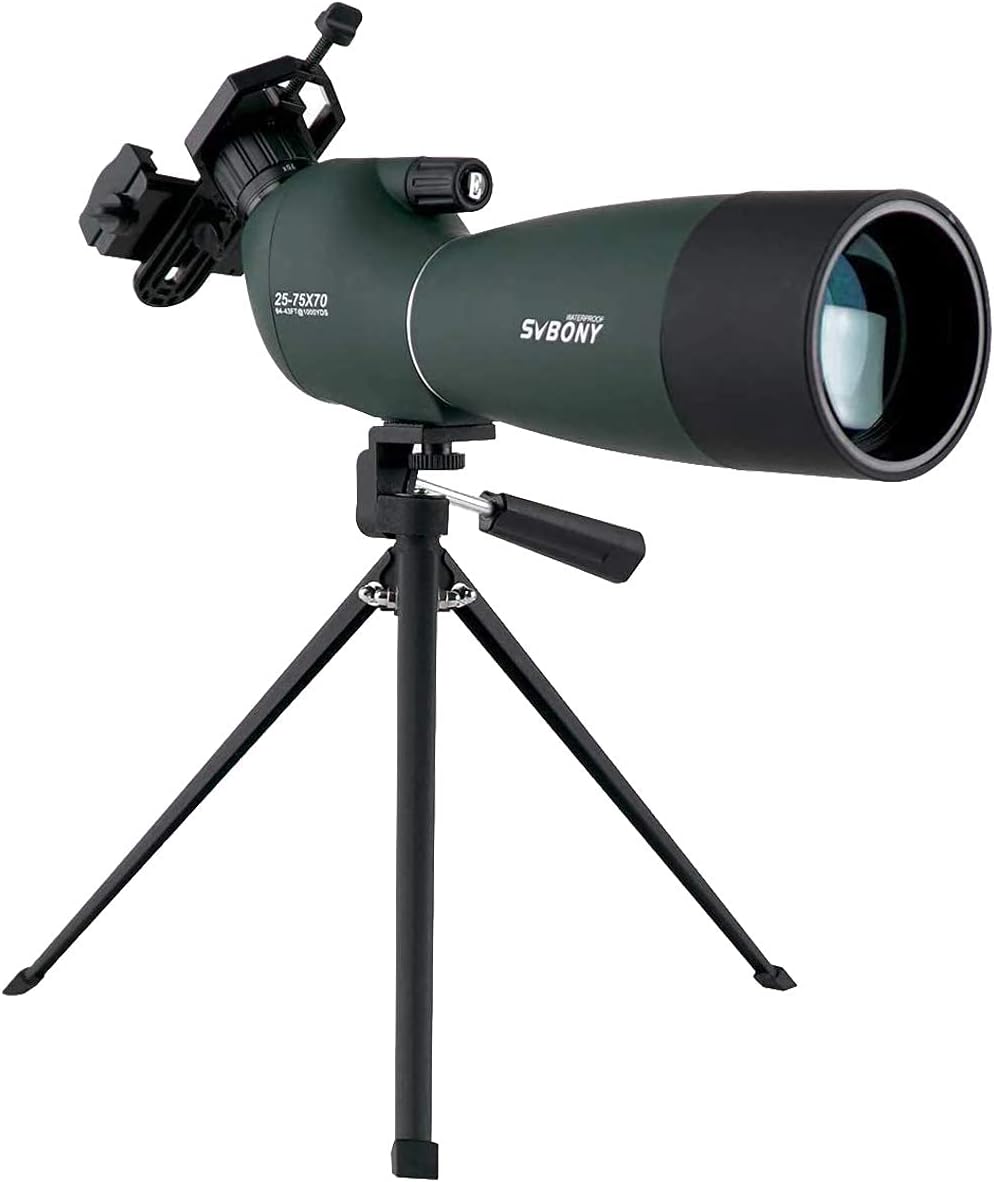
SVBONY SV28 25-75×70
4.4Editor score
25-75x variable magnification
70mm objective lens
Waterproof portable design
Phone adapter included
Desktop tripod included
Explore the best Birding Field Scopes for 2026, comparing magnification, objective lenses, optical coatings, weather resistance, tripods, and portability.
Birding field scopes bring distant birds, wetlands, ridgelines, and wildlife into clear view, but the right optic depends on how and where you observe. Magnification, objective diameter, light transmission, eye comfort, field of view, and packability all influence how useful a scope feels in the field.
This guide compares ten spotting scopes and compact monoculars suited to birding, wildlife observation, hiking, travel, and other outdoor pursuits. The evaluation focuses on stated magnification, objective size, prism and lens coatings, focusing systems, weather protection, tripod compatibility, and included accessories.
The picks represent several ways to observe outdoors, from portable monoculars to full-size scopes and a premium ED optic. Each review explains the strongest features and practical trade-offs, while current prices and availability can change at any time.
4.4Editor score

4.4Editor score

4.3Editor score
The table below compares magnification, optical design, portability, weather protection, and bundled equipment across ten options suited to birding and general outdoor observation.




The SVBONY SV28 is an angled 25-75×70 spotting scope that combines a useful zoom range, a relatively large objective, and a straightforward accessory bundle. Its 4.4 rating reflects a generally favorable balance of capability and accessibility, making it an appealing first field scope for birders who want more magnification than a conventional monocular.
We may earn a commission when you buy through this link, at no additional cost to you.
The 70mm objective provides more light-gathering potential than smaller monocular objectives, while the extendable sunshade helps control glare. The scope is described as waterproof and made with a seamless nonslip finish, which is useful when handling it in damp conditions. A phone adapter and portable desktop tripod make it easier to begin observing or recording without buying every accessory separately.
The main limitation is the desktop tripod. It works well for seated observation, a vehicle-side setup, or a stable table, but it does not provide the adjustable height of a full-size tripod. The 70mm objective also remains smaller than the 80mm, 85mm, and 100mm objectives offered by several competitors, so demanding users should not expect the same low-light capability.
This is a strong budget-oriented choice for casual birding, camping, family outings, and scenic observation. It offers enough magnification and light gathering for many practical uses while remaining light and easy to carry. Choose it if a complete, approachable kit matters more than maximum aperture or professional-grade optical refinement.
The 25-75x range allows a user to start with a wider view and increase magnification as a bird moves or becomes more distinct. That flexibility makes the scope useful across open fields, woodland edges, and distant scenery without changing optics.
The included desktop tripod provides a straightforward base for stationary viewing, while the phone adapter offers a convenient way to frame wildlife or distant subjects for photographs and video.
We may earn a commission when you buy through this link, at no additional cost to you.
This 20-60×85 scope earns the Editor's Choice position because it combines a large objective, broad magnification range, weather-resistant construction, and a genuinely useful adjustable tripod. Its 4.4 rating supports its reputation as a well-rounded option for birding, wildlife viewing, and other activities that require detailed observation at a distance.
We may earn a commission when you buy through this link, at no additional cost to you.
The 85mm objective paired with a BAK4 prism and FMC coating is intended to provide bright, color-rich images, including during early morning and dusk observation. Its stated field of view ranges from 101 to 48 feet at 1,000 yards, giving the user room to locate subjects before narrowing the view. The tripod extends from 13.3 to 63 inches and includes a bubble level for steadier positioning.
Weatherproof and dirt-resistant construction makes it suitable for variable outdoor environments, although the full-size tripod and larger barrel inevitably require more storage space than a compact monocular. The accessory set is extensive, including a carrying bag, phone adapter, and cleaning kit, which improves convenience but also means there are more items to store and maintain.
This scope is a strong all-around recommendation for birders who want room to grow beyond a monocular and appreciate a complete support system. It works well for scanning a marsh, viewing across a wide clearing, or watching wildlife at a comfortable standing height. It is less suitable for travelers who require minimal pack weight.
The large 85mm objective and fully multi-coated optical path are well suited to dawn, dusk, and shaded woodland observation. These are common birding windows when light is limited but activity remains high.
The adjustable height, rotating support, and bubble level improve stability compared with a small desktop tripod. Users can move between seated, standing, and elevated positions while maintaining a consistent view.
We may earn a commission when you buy through this link, at no additional cost to you.
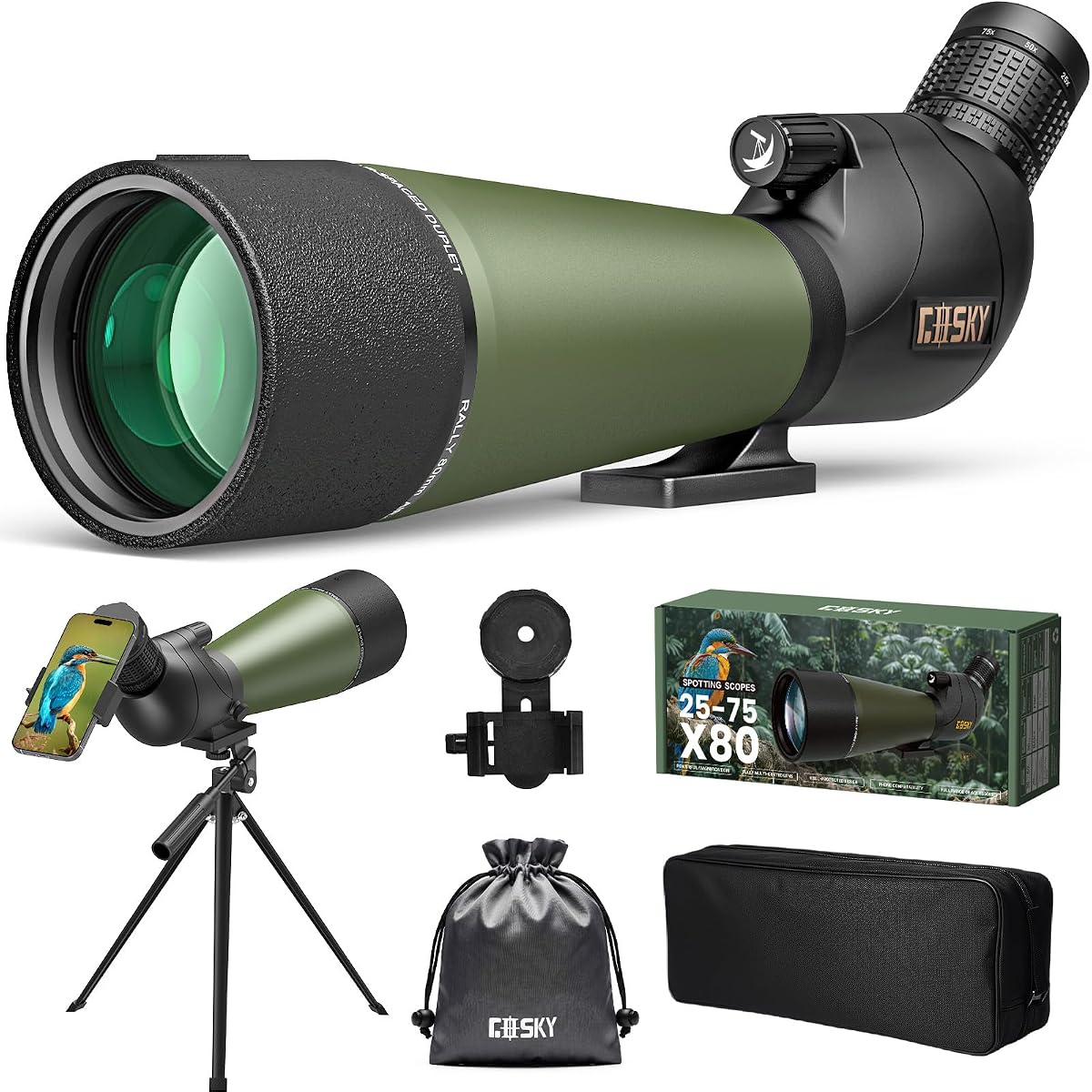
The Gosky DiamondEdge 25-75×80 is a well-equipped scope whose stated highlights include a 23mm eyepiece, an 80mm objective, BAK4 prism, and FMC optics. Its 4.4 rating and broad accessory package make it a balanced option for birdwatching, hiking, wildlife observation, and other outdoor activities.
We may earn a commission when you buy through this link, at no additional cost to you.
The larger 23mm eyepiece is a notable feature because it can provide a more comfortable view with less eye strain, particularly during extended observation. The rotating body supports different viewing positions, while the retractable sunshade reduces glare. Nitrogen filling and O-ring sealing are designed to protect the internal optics in changing outdoor conditions.
Its standard 1/4-20 metal base works with many universal tripods, but the included tabletop support is limited for users who want a standing field setup. The complete package includes a portable case, pouch, cloth, and lens covers, which is helpful for storage and maintenance. As with other 80mm scopes, the body is bulkier than a pocket monocular.
This is a strong recommendation for birders who value a roomy eyepiece, durable weather protection, and accessories that support a full day outdoors. It also appeals to target shooters and wildlife observers who want more power than a handheld monocular. It is best for users willing to add a full-size tripod if they plan to observe for extended periods.
A 23mm eyepiece and rotatable body give this scope a more comfortable setup for long viewing sessions. The adjustable orientation also helps when a bird is above, below, or partly hidden by vegetation.
Nitrogen filling and O-ring seals support dependable outdoor use, while the rubber-armored body improves grip and durability. Lens covers add protection when the scope is not actively in use.
We may earn a commission when you buy through this link, at no additional cost to you.
The Flagship 20-60×80 combines a wide 20x starting point, a useful 60x upper limit, and an 80mm fully multi-coated objective. Its 4.4 rating reflects a versatile package that works for birdwatching, wildlife observation, hiking, camping, scenery, archery, and even casual stargazing.
We may earn a commission when you buy through this link, at no additional cost to you.
A BAK4 Porro prism supports light transmission and the objective coating is intended to produce bright, clear images. The stated field of view spans 82.9 to 48 feet at 1,000 yards, helping users find moving birds before increasing magnification. The rubber-armored body, nitrogen filling, and sealed construction are all favorable for exposed field conditions.
The included smartphone adapter is useful, but it is designed for phones between 2.13 and 3.54 inches wide and no more than 14 millimeters thick. That limitation is worth checking before purchase. The desktop tripod is stable and metal-built, though a full-height tripod would be more suitable for prolonged standing observation.
This scope is an attractive choice for birders who need both broad scanning and moderate telephoto detail without moving to a much larger system. Its lens covers, carrying case, and cleaning cloth support regular use. It works particularly well for users who appreciate a complete kit and want smartphone capture capability in the same setup.
Beginning at 20x gives the observer a wider starting field than many high-powered scopes. Increasing toward 60x then provides useful detail for perched birds, wildlife, and distant targets.
Nitrogen filling, sealed optics, and a nonslip rubber exterior help the scope tolerate variable weather and rough handling. A stretchable eyepiece shield provides additional protection during transport.
We may earn a commission when you buy through this link, at no additional cost to you.
The Nocs Provisions Zoom Tube is the highest-rated option in this group, with a 4.6 rating, and it fills a different role from the larger scopes. At 8×32 and 9.5 ounces, it is designed for birdwatching and backpacking where carrying a full-size spotting scope would be inconvenient.
We may earn a commission when you buy through this link, at no additional cost to you.
Its fully multi-coated optics, central focusing mechanism, and Swiss-designed BAK4 prism are intended to deliver a bright, crisp view with a 384-foot field of view at 1,000 yards. The wide field makes it useful for scanning and following nearby birds without the narrowness associated with stronger telephoto magnification.
IPX4 water resistance offers protection in rain, fog, and snow, while the Rugged Wave Grip and impact-resistant housing are designed for portable use. The three-position twist-up eyecup can accommodate different preferences and eyeglass wearers. A built-in 1/4-20 thread also permits tripod mounting when greater stability is desired.
This monocular is ideal for walkers, travelers, and casual birders who value pocketability and quick access more than extreme magnification. It cannot match the identification detail of an 80mm or 100mm spotting scope, but it can cover many common birding tasks with far less bulk. Its portability and 4.6 rating make it a particularly compelling option for mobile observers.
The 9.5-ounce weight and compact dimensions make the Zoom Tube easy to carry on a hike, in a daypack, or in a vehicle. It can be pulled out quickly when a flock appears without setting up a larger optical system.
The three-position eyecup adjusts eye relief for people who wear glasses and those who do not. Central focusing is simple to reach and useful when subjects change direction or distance.
We may earn a commission when you buy through this link, at no additional cost to you.
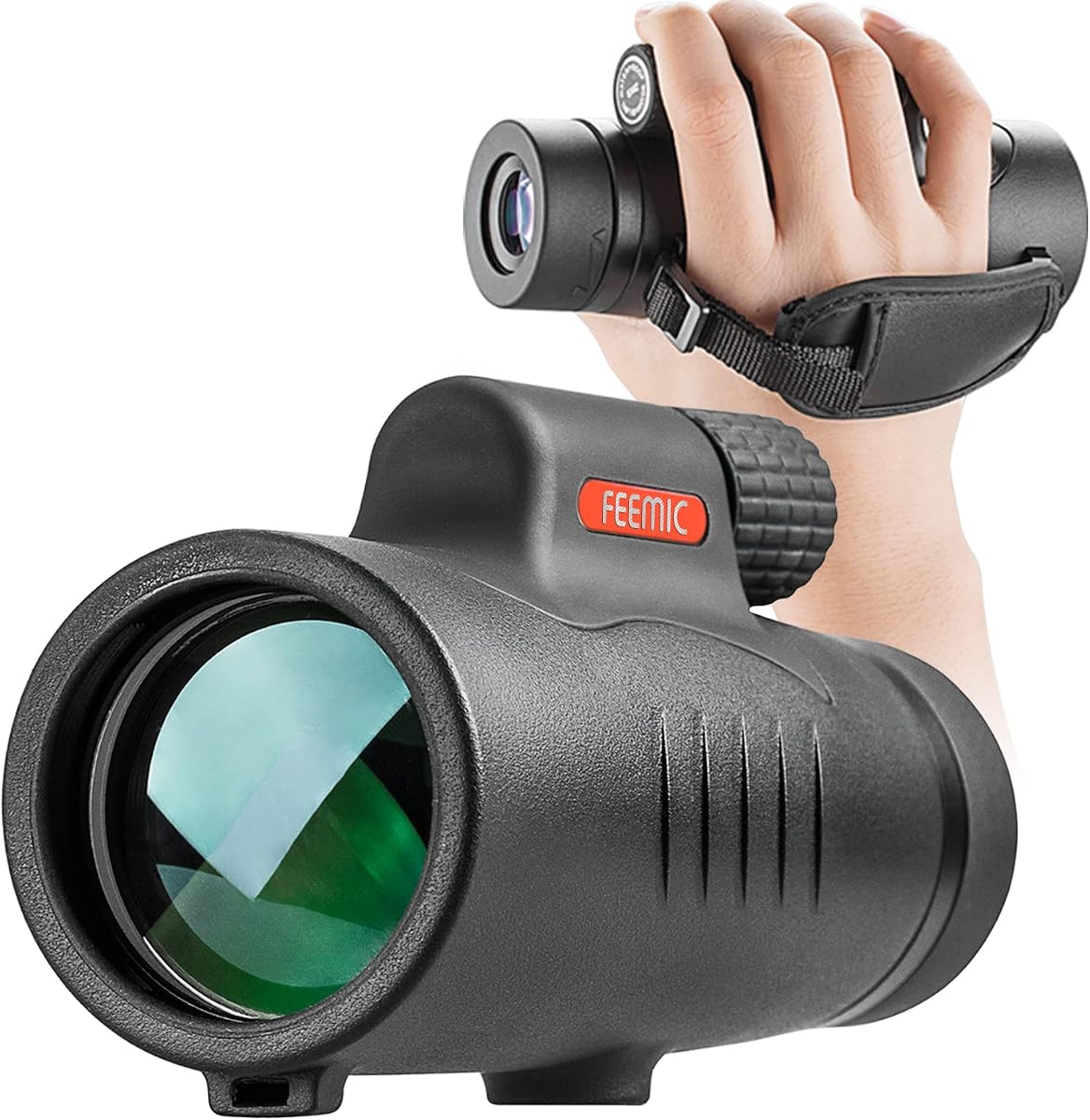
The Compact 8×42 monocular combines a relatively wide objective with a small body designed for one-handed use. Its 4.4 rating and broad range of stated uses make it a versatile choice for bird watching, wildlife, hiking, camping, travel, and general scenery observation.
We may earn a commission when you buy through this link, at no additional cost to you.
The FMC lens elements, BAK4 prism, and 42mm objective are intended to provide brightness and light transmission, with a stated field of view of 360 feet at 1,000 yards. That broad view is valuable for locating birds in wooded areas or scanning a landscape before switching to a more powerful spotting scope.
The nitrogen-filled housing is described as waterproof, fogproof, dustproof, and shockproof. Adjustable eyecups accommodate viewing with or without glasses, while striped rubber armor improves grip. A bottom tripod connector adds optional stability, and the included hand strap and case simplify carrying and storage.
This is a sensible secondary optic for active travelers who want a broader view and simple handling. It is not designed to replace a high-powered scope when distant birds require feather-level identification. Its strength lies in accessibility: it is easy to carry, quick to use, and less likely to become a burden on a long outing.
The compact dimensions and textured rubber body support comfortable one-handed use. This makes the monocular convenient for moving between sights or checking wildlife without finding a stable setup.
Nitrogen filling and sealed construction help protect the optics in changing weather. The rubber exterior adds impact resistance, while the supplied case and strap make the unit easier to carry between outings.
We may earn a commission when you buy through this link, at no additional cost to you.
This 20-60×80 HD scope has a 4.5 rating and distinguishes itself with dual focusing controls, a detachable 1.25-inch eyepiece, and an ergonomic 45-degree body. These details make it a thoughtful choice for birders who spend substantial time observing from seated, standing, or crouched positions.
We may earn a commission when you buy through this link, at no additional cost to you.
The BAK4 prism and full broadband multi-coating are designed to improve light transmission and image clarity in dim morning, dusk, and foggy conditions. Its stated field of view ranges from 86.4 to 48.2 feet at 1,000 yards. Separate focusing controls can help users refine a distant subject without repeatedly changing magnification.
The twist-extendable eyecup is designed for different eye relief needs, including use with glasses, and the detachable standard eyepiece interface offers additional compatibility options. Nitrogen purging supports fog and moisture resistance. The rotating tripod and bracket aid stability, although the supplied accessories make the complete package less compact than a basic optical tube and tripod.
This scope is a strong recommendation for birders who prioritize focus control, eyecup flexibility, and all-day ergonomics. It is also useful for wildlife observation and scenic viewing. Buyers who want a simple monocular should look elsewhere, while those building a more capable viewing setup will appreciate its adaptable eyepiece and tripod arrangement.
Dual focusing knobs separate coarse adjustment from fine refinement. This can be useful when a distant bird shifts position, because the observer can center the subject before applying careful focus.
The 45-degree angled design supports several postures, while the twist eyecup can be configured for glasses or unglassed viewing. The rotating tripod helps place the eyepiece in a comfortable position.
We may earn a commission when you buy through this link, at no additional cost to you.
The WOZEL 25-75×80 combines a 25x to 75x zoom range, an 80mm objective, and a broad set of included accessories. Its 4.4 rating makes it a competitive all-purpose scope for birdwatching, wildlife observation, archery, target shooting, and stargazing.
We may earn a commission when you buy through this link, at no additional cost to you.
The fully multi-coated green-film objective and BAK4 prism are intended to preserve brightness and provide vivid images, while the retractable sunshade helps in strong sunlight. A one-handed zoom knob and quick-focus system are useful when tracking active subjects. The stated field of view shifts from 82.9 to 48 feet at 1,000 yards as magnification increases.
Nitrogen filling and O-ring seals support waterproof and fogproof performance, although outdoor durability should not be confused with complete immunity to every condition. The included tripod, large carrying case, phone adapter, lens covers, and cleaning cloth make the package convenient, but it requires more storage than a monocular.
This scope suits birders who want more power than an 8x handheld optic and appreciate a ready-to-use bundle. It is particularly helpful for stationary wildlife observation and target practice. The main trade-off is pack bulk and a narrower view at the upper end of the zoom range.
The one-handed zoom control makes it easier to change magnification while keeping the other hand steady. Quick focusing helps users lock onto wildlife that moves between cover or across open ground.
O-ring sealing and nitrogen filling help resist moisture and internal fogging. A rugged body and included lens covers further protect the optics when the scope is carried through rough terrain.
We may earn a commission when you buy through this link, at no additional cost to you.
The Celestron Regal M2 100ED is the premium optical choice in this roundup, pairing a large 100mm objective with extra-low-dispersion glass and a 22-67x zoom eyepiece. Its 4.3 rating is supported by a feature set aimed at serious long-range observation, precise imagery, and specialized digiscoping.
We may earn a commission when you buy through this link, at no additional cost to you.
ED glass is designed to reduce chromatic aberration and color fringing, producing cleaner, more natural-looking images. Celestron's proprietary XLT coatings are applied to all air-to-glass surfaces to support light transmission and brightness. The large objective gives this scope a substantial light-gathering advantage over smaller monoculars and 70mm or 80mm models.
The rotating tripod mount allows the eyepiece to be positioned at a comfortable angle, and the scope can accept compatible 1.25-inch astronomical eyepieces. Its large 100mm barrel and premium construction make it less convenient to carry than the more compact products in the list. Users should also consider the size and weight of the support system they choose.
This is the strongest option in the guide for serious birders who value optical refinement, low-light potential, and long-range detail. The included T-mount adapter also appeals to users interested in DSLR digiscoping. Choose this scope when image quality and capability matter more than portability or a simple travel setup.
Extra-low-dispersion glass is particularly valuable at higher magnification because it is designed to minimize colored fringes around high-contrast branches, feathers, and distant ridgelines. XLT coatings further support a bright optical image.
The included T-mount adapter creates a path to attaching a compatible DSLR camera. Combined with the stable rotating mount, this makes the Regal M2 useful for birders who want more control than a phone adapter provides.
We may earn a commission when you buy through this link, at no additional cost to you.
The SVBONY SV28 100mm is built around a very large objective and a 25-75x zoom range. Its 4.2 rating is the lowest among the listed products, but the scope still offers a notable combination of light-gathering capacity, useful magnification, and a well-equipped package for serious observation.
We may earn a commission when you buy through this link, at no additional cost to you.
The product information states that the 100mm lens has 2.3 times the focusing power of a 65mm lens and more than double the brightness. Fully multi-coated optics are intended to improve light transmission, making the scope relevant for wildlife and birds viewed in dim dawn, dusk, or shaded conditions.
The large objective makes the optical body inherently less portable than the monoculars and 70mm model in the list. A universal 1/4-20 mount allows use with a more suitable full-height tripod, but the included desktop tripod is only a basic starting point. The phone adapter, carrying case, and lens covers are useful additions.
This scope is recommended for birders and wildlife observers who specifically value a large aperture and want the strongest stated light-gathering potential in the group. It is less attractive for travelers focused on compactness. Users seeking the most refined premium optical system may prefer the Celestron Regal M2 100ED instead.
A 100mm objective can gather substantially more light than the smaller objectives in this roundup. That makes the scope appealing during low-light periods when many birds begin feeding or moving.
The rotatable eyecup can be adjusted for a comfortable eye position, while the universal tripod mount allows the scope to be paired with a full-height support. A retractable hood helps reduce glare.
We may earn a commission when you buy through this link, at no additional cost to you.
Choosing a birding field scope means balancing magnification, light gathering, portability, eye comfort, weather resistance, and support equipment according to where and how often you will observe.
Magnification determines how much a distant subject is enlarged, while field of view describes how much area remains visible at a fixed distance. A scope beginning around 20x is easier to scan and reposition, whereas a 25x or higher starting point is better for locating and studying specific birds. Higher magnification narrows the field, makes shake more noticeable, and can make tracking a moving subject difficult.
Choose a moderate starting magnification and a usable upper limit. For most birding, 20x to 75x provides flexibility, but a tripod becomes increasingly important near the maximum.
The objective lens determines how much light the scope can gather. Larger 85mm and 100mm objectives generally provide better low-light performance and greater detail than smaller 32mm, 42mm, and 70mm apertures. They also tend to be larger, heavier, and more physically imposing. Smaller objectives make excellent travel companions when users prioritize quick access and low pack weight.
Match the aperture to the light and distance involved. A 70mm to 80mm objective is versatile, while a 100mm objective favors dawn, dusk, woodland shade, and distant wildlife.
BAK4 prisms and multi-coated lenses are common among quality birding optics because they support light transmission, brightness, contrast, and color. Full broadband or fully multi-coated systems may be advantageous in shaded and low-light habitats. Coatings should be considered together with prism quality and objective size, since any one specification does not determine total image performance.
Look for a named prism type and multiple coatings, but avoid choosing only on technical labels. Eye comfort, sharpness, contrast, and a stable image remain the practical measures that matter.
Nitrogen-filled, O-ring-sealed, or otherwise sealed housings help prevent internal fogging and protect optical elements from rain, humidity, dust, and temperature changes. Rubber-armored bodies improve grip and withstand knocks, which matters around trails, blinds, and crowded observation areas. A supplied lens cover and weather-resistant case add another layer of protection.
For year-round birding, prioritize sealed construction and a durable exterior. Even weather-resistant equipment should be covered before heavy rain and allowed to acclimate gradually when moving between temperature extremes.
A tripod reduces hand fatigue and improves the ability to focus at higher magnification. Desktop models are convenient for vehicle-based observation and short outings, but full-size adjustable tripods are much more comfortable for standing, seated, and elevated viewing. Rotating tripods and angled eyepieces make it easier to keep the eyepiece aligned with a natural eye position.
Check included tripod height, mounting thread, and adjustment range. A universal 1/4-20 mount offers flexibility, but a larger, properly adjusted tripod is usually the most important accessory for long sessions.
A large eyepiece, generous eye relief, twist-up or extendable eyecups, and a rotating body improve comfort during long sessions. These features are particularly important for birders who wear glasses, since incorrect eye relief can make a wide field difficult to see. Diopter adjustment and a clearly marked near-focus setting can also help users with different vision needs.
Test the eyepiece position whenever possible and confirm that the stated phone adapter or tripod fits your equipment. Comfort is an essential optical feature, not merely an ergonomic accessory.
Full-size scopes with 80mm to 100mm objectives deliver greater detail and light gathering but require dedicated storage and a stable support. Monoculars weighing only a few ounces are easy to carry and quick to deploy, making them ideal for hiking, travel, and casual scanning. The best choice depends on whether you prioritize identification detail or the ability to keep an optic with you at all times.
Consider how often you will use the optic, how far you will walk, and whether you need phone photography. A compact monocular may be more useful than a larger scope that is rarely carried.
Phone adapters, carrying cases, cleaning cloths, lens covers, and desktop tripods can make a scope more convenient from the start. Check phone dimensions because adapters vary considerably in compatibility. For higher-resolution bird photography, a T-mount or compatible camera system may offer more control, though it also requires additional equipment and careful alignment.
Treat accessories as part of the purchase decision, but evaluate optical performance first. A complete package is useful only when its components fit the user's devices and intended workflow.
Begin by setting up in a stable position with the tripod legs spread evenly, then adjust the eyepiece and focus at the lowest useful magnification. Identify the nearest subject first, center it, and increase magnification gradually. Watching briefly before zooming can help prevent overshooting a moving bird, while lowering the power makes reacquisition much easier.
Allow the scope to acclimate before using it across large temperature changes, especially in humid conditions. Keep the objective and eyepiece covered when not in use, and avoid touching optical surfaces. Clean only with the supplied microfiber cloth or a lens-safe method, because facial oils, grit, and harsh solvents can damage coatings.
For wildlife photography, stabilize the scope on a tripod and align the phone or camera adapter carefully before increasing magnification. Keep the device supported so its weight does not pull the scope out of alignment. After use, wipe the body, retract the sunshade if appropriate, cover the optics, and store the instrument in its case in a dry location away from prolonged direct sunlight.
A range beginning around 20x provides an easier way to locate birds before zooming in, while a top end between 60x and 75x offers useful detail. The best upper limit depends on stability and light. Beginners often get more from a stable 30x to 40x view than from an unstable shot at maximum magnification.
No. A larger objective generally gathers more light and can reveal finer detail, especially in dawn, dusk, or shaded habitats. It also makes the scope larger and often heavier. For travel and casual observation, a compact monocular may be more useful than a large objective that is inconvenient to carry.
A tripod becomes increasingly important as magnification rises because it reduces shake and eye fatigue. It also makes it easier to scan slowly and frame distant subjects. Desktop tripods work for stationary viewing, while an adjustable full-size tripod is better for standing observation and extended sessions.
Nitrogen filling helps reduce internal condensation and fogging when temperature or humidity changes. It is most effective in a properly sealed housing, so it should be considered alongside O-ring seals and weather-resistant construction. It does not make an optic immune to moisture or impact.
Many included adapters make basic phone photography and video possible, although image quality and alignment vary. Check the adapter's phone width and thickness limits before buying. Stabilize the scope on a tripod, use the lowest practical magnification, and take several frames because moving birds and atmospheric shimmer can reduce sharpness.
A monocular is usually better for hiking because it is lighter, smaller, and easier to deploy. A spotting scope offers more magnification, light gathering, and accessory flexibility, but it is less convenient to carry. Many birders use a monocular while walking and a larger scope for scans and long-distance identification.
Use a clean microfiber cloth and follow the manufacturer's instructions. Avoid dry wiping visible grit because particles can scratch coatings, and do not use household cleaners, saliva, or ordinary paper towels. Keep the lens covered while stored and clean the exterior and eyepiece gently after each outing.
Use a stable tripod, center the subject at lower magnification, and avoid holding maximum power continuously. An eyecup with sufficient eye relief, particularly one that accommodates glasses, can improve comfort. Periodic breaks and changes in viewing posture also help reduce strain during all-day observation.
The SVBONY SV28 25-75×70 stands out as the best budget option with a portable angled design, phone adapter, and desktop tripod. The 20-60×85 scope is the best overall choice for observers wanting a large objective and adjustable full-size tripod, while the Celestron Regal M2 100ED leads the premium group with ED glass, XLT coatings, and a 100mm objective.
Prioritize the viewing conditions you encounter most often. Choose a compact 8x monocular for hiking and rapid scanning, an 80mm to 85mm scope for a versatile balance of power and light gathering, or a 100mm premium optic for low-light detail and serious long-range observation. A stable tripod and comfortable eyepiece can improve the experience more than maximum magnification alone.
Ratings, product availability, and prices can change, so confirm the current specifications and cost of the selected model before purchasing. Use the comparison table as a starting point, then check accessory compatibility, weather protection, and your expected viewing locations.