
POWER Tornado ECHO Mic
3.9Editor score
Delay and reverb effects
Standard four-pin connector
Requires one 9V battery
Explore the best CB Echo Mic options, comparing echo effects, noise cancellation, connector compatibility, power controls, durability, and value for CB users.
A CB echo microphone can make a standard radio installation sound more distinctive by adding effects such as delay, reverb, talkback, and repeated voices. The right model should also produce a clear, powerful signal while fitting the connector arrangement and controls used by your particular CB radio.
This guide compares ten echo and replacement microphones using their stated specifications, supported features, connector types, noise-reduction functions, physical construction, and customer ratings. It covers models for standard four-pin radios, six-pin President equipment, amplified base microphones, and practical replacements without built-in echo effects.
The picks show which option offers the most approachable introduction to echo, which provides the most refined feature set, and which is aimed at enthusiasts seeking extensive digital sound processing. Product details and availability can change, so readers should confirm compatibility and current pricing before purchasing.
3.9Editor score
4.7Editor score

4.2Editor score
The comparison below highlights the strongest differences among the ten microphones, including sound effects, noise control, connection type, power requirements, and intended operating style.


The POWER Tornado ECHO Mic is a compact and approachable way to add echo to a compatible CB or amateur radio installation. Its stated 3.9 rating reflects a functional design rather than a feature set focused on extensive digital processing. The microphone combines delay, reverb, talkback, and adjustable sound effects in a standard four-pin package.
We may earn a commission when you buy through this link, at no additional cost to you.
Its main appeal is the combination of useful effects and broad compatibility. The manufacturer states that it fits most CB radios with a standard four-pin microphone connector, including examples from Cobra, Uniden, Galaxy, Connex, and Superstar. That makes it a practical option for anyone who wants echo without moving to a more complicated digital microphone platform.
There are some constraints to consider. The microphone requires one 9V alkaline battery, which is not supplied, so owners must add a suitable battery before use. Talkback also will not function when the radio can receive without a microphone connected, meaning radio configuration and accessory wiring can affect the result.
This is a sensible choice for a first echo microphone, a straightforward replacement, or a user who specifically values delay and reverb without a robotic voice simulation. It is not the most elaborate option in the list, but its focused feature set, common connector, and accessible design make it a compelling starting point.
Delay and reverb are the defining features here, allowing the transmitted voice to carry a noticeable echo effect. These controls offer a more familiar echo presentation than the RF Limited model and may suit users who want added depth without an intentionally artificial digital character.
The four-pin connector is important because it covers many common Cobra, Uniden, Galaxy, Connex, and Superstar radios. Buyers should still verify the connector and control layout of their own equipment before ordering.
We may earn a commission when you buy through this link, at no additional cost to you.
The RF Limited EC-2018-XTR is the most feature-oriented echo microphone in this guide, combining a cyborg or robotic voice, endless digital echo, double-talker repetition, noise reduction, and talkback. Its 4.2 rating indicates a capable product, although the abundance of processing means it is better suited to users who enjoy experimenting than to those seeking only a natural microphone.
We may earn a commission when you buy through this link, at no additional cost to you.
The endless echo is the model’s signature attraction. Rather than being limited to a conventional fixed repeat, the effect can range from no echo to a continually repeating sequence. The double-talker function separately repeats spoken content, while the robotic voice adds a much more dramatic tone than the basic delay and reverb found in the POWER Tornado.
Noise reduction is especially relevant in a noisy vehicle, where road, engine, and wind sounds can enter a transmission. According to the product information, an advanced noise-reduction circuit decreases microphone sensitivity and reduces background noise. Talkback allows users to monitor their transmissions, adding a practical control that goes beyond novelty effects.
The main drawback is that the microphone requires a 9V battery, and none is included. Effect-heavy processing can also feel excessive in ordinary conversations. Even so, the EC-2018-XTR is the premium choice for CB operators who want broad digital sound control, repeated vocals, and a microphone that can create a genuinely customized transmission style.
Robotic voice, double-talker repetition, and adjustable endless echo provide more creative range than conventional echo microphones. The variety makes the model especially attractive for experimentation, roadside entertainment, and distinctive radio personas.
The advanced noise-reduction circuit and monitorable talkback function can make communication more practical in a loud environment. Noise reduction is not the same as true echo, but it adds meaningful value for everyday CB use.
We may earn a commission when you buy through this link, at no additional cost to you.
The Workman DM452 is a replacement CB radio echo microphone with a straightforward focus on sound controls. Its 3.8 rating places it near the lower end of this group, but the stated features are relevant: a slide control for echo volume, a built-in variable power control, and a separate echo-time adjustment.
We may earn a commission when you buy through this link, at no additional cost to you.
The combination of echo volume and echo time gives users more control over how the effect sounds. Echo time determines the spacing or duration of repetitions, while the volume control lets the user balance the processed signal against the direct voice. Built-in variable power is another useful addition for tailoring output to different radios and operating conditions.
The microphone is designed with a four-pin connector for Cobra and Uniden radios, placing it in the same broad compatibility category as several other choices in this guide. Its appeal is less about exotic processing and more about giving a user adjustable echo from a conventional replacement microphone.
This model makes the most sense for a CB operator who wants straightforward controls, a standard connection, and a replacement that can add echo. The less descriptive listing and lower rating mean buyers may want to confirm the control markings and physical operation, but the fundamental feature set is well suited to the target audience.
Separate volume and time controls make it easier to refine the character of the echo. Users can make repetitions more prominent or subtle without relying on a single combined effect switch.
The built-in variable power function offers another layer of control over microphone output. That can be helpful when matching the microphone to a radio, although users should avoid excessive amplification or overmodulation.
We may earn a commission when you buy through this link, at no additional cost to you.
The RoadKing RK56B is a black four-pin dynamic noise-canceling CB microphone with a 4.5 rating, placing it among the most well-regarded products reviewed here. Unlike the models built specifically around echo and digital effects, its defining advantage is cleaner, more focused voice communication.
We may earn a commission when you buy through this link, at no additional cost to you.
A dynamic noise-canceling element is particularly useful in a mobile setting, where ambient cabin noise and roadway sound can make a microphone difficult to use. The standard four-pin connector also gives it a familiar installation path for many CB radios, making it a straightforward microphone to consider before changing equipment.
The information supplied for this model is concise, so it would be inaccurate to claim additional functions that are not stated. In particular, the product listing does not identify delay, reverb, robotic voice, or endless echo. The RK56B should therefore be treated as a clean replacement microphone rather than an echo-effects device.
This pick is best for drivers who prioritize intelligible transmissions and noise control over sound effects. It may also serve as a quality general-purpose microphone for a compatible four-pin radio. For anyone specifically searching for programmable echo, the POWER Tornado or RF Limited models are more directly aligned with that requirement.
The dynamic noise-canceling design focuses on reducing unwanted background sound during transmission. This makes the RK56B most useful in vehicles where road and engine noise can compete with speech.
Its four-pin connector suits many common CB radio configurations and keeps the installation straightforward. Compatibility should still be confirmed against the specific radio and any existing accessories.
We may earn a commission when you buy through this link, at no additional cost to you.
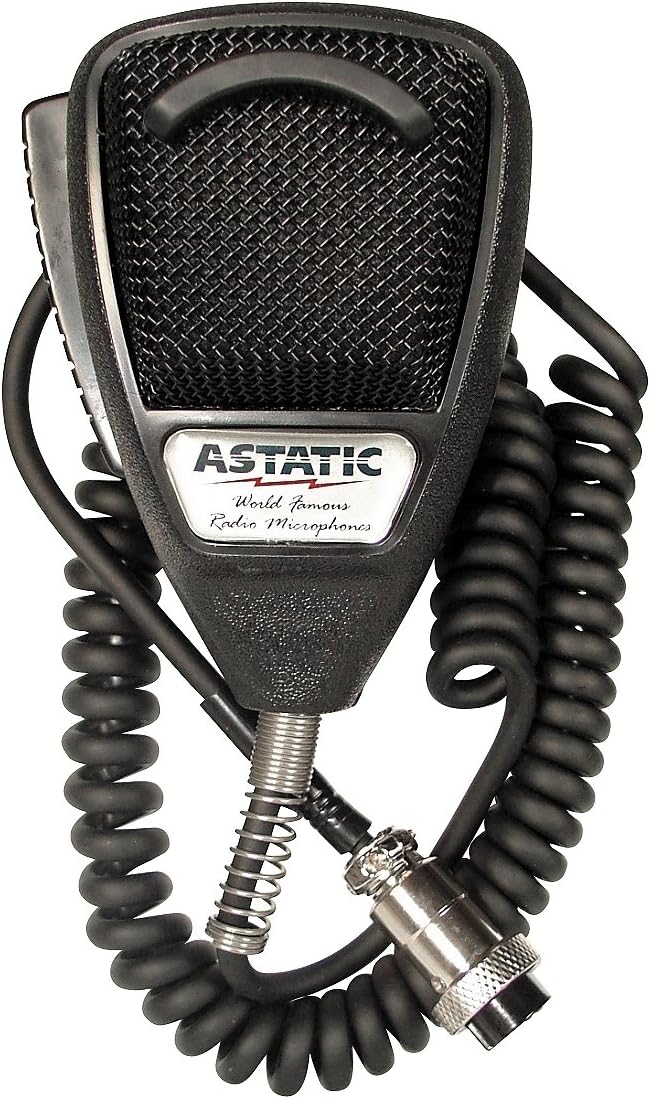
The Astatic D104M6B takes the familiar amplified D104 approach and adapts it into a handheld four-pin CB microphone. With a 4.2 rating, it is a well-regarded option for users who want a robust, powerful replacement with a straightforward connection.
We may earn a commission when you buy through this link, at no additional cost to you.
Its amplified ceramic element is the main attraction. Ceramic microphones are known for their clear speech response and useful power-handling characteristics, while the amplified configuration can provide a stronger signal in an appropriate installation. The product description calls it a handheld version of the classic D-104 desk microphone, bridging familiar performance with a mobile form factor.
Construction is another strength. The black ABS housing is described as tough, the chrome-plated grille helps protect the microphone element, and the coiled cord allows some freedom of movement while contracting when stored. These details are especially relevant in a vehicle, where microphones are repeatedly handled and exposed to vibration.
The D104M6B does not have listed echo functions, so it is not the direct answer for an enthusiast seeking repeated vocals. It is a strong choice for clear, amplified communication and a durable four-pin replacement. Users should still match the microphone gain and radio settings carefully to avoid an overly hot signal.
The amplified ceramic element gives the microphone a strong voice and a close, clear presentation. It is especially attractive for operators who already appreciate the conventional D104 microphone format.
The molded ABS body, protected grille, and retractable coiled cord are practical features for vehicle installation. These qualities prioritize durability and convenient storage over decorative controls.
We may earn a commission when you buy through this link, at no additional cost to you.
The Astatic 302-636LB1 is a well-rounded four-pin dynamic microphone with a 4.7 rating, tying for the highest customer score in this comparison. It emphasizes clean close-talking audio, dynamic noise cancellation, and rugged construction rather than decorative echo processing.
We may earn a commission when you buy through this link, at no additional cost to you.
The low-impedance dynamic element is designed to deliver clear sonic clarity for close-talking applications, which suits a handheld CB microphone. Dynamic noise cancellation reduces background interference, while the polyurethane-coated steel grille protects the element from the wear associated with regular mobile use.
Its compatibility extends beyond CB radios. The manufacturer positions it as a quality replacement for CB, amateur radio, and SSB communication systems with standard four-pin connections. A flexible coiled cord extends when needed and retracts for storage, making it convenient to keep in a vehicle without leaving excess cable in the way.
The word bulk appears in the product title, which may create uncertainty for a buyer expecting a retail-branded package. Nevertheless, the stated construction, noise-canceling behavior, broad equipment use, and excellent rating make this an Editor’s Choice for users who want reliable everyday audio. Those seeking digital echo should choose a dedicated effects microphone instead.
The low-impedance dynamic element is optimized for intelligible speech at a normal handheld distance. Combined with noise cancellation, it can improve clarity in vehicles where competing ambient sound is unavoidable.
The steel grille receives a polyurethane coating to improve protection and longevity. The rugged housing and coiled cord keep the focus on dependable operation rather than novelty features.
We may earn a commission when you buy through this link, at no additional cost to you.
The Road King RK56CHSS combines a noise-canceling dynamic microphone with a polished chrome cord and a physical slide switch. Its 4.3 rating suggests a well-regarded product, and its visual finish makes it especially noticeable in a display-style or carefully coordinated installation.
We may earn a commission when you buy through this link, at no additional cost to you.
The key operating feature is the noise-canceling dynamic element, which helps keep background interference from overwhelming the operator’s voice. That makes the microphone suitable for routine mobile communication where clean transmission matters. It does not, however, include any stated delay, reverb, robotic voice, or repeated-vocal effects.
A two-position momentary slide switch with normally open contacts provides a straightforward physical control. The listed information does not explain the switch’s exact function, so it would be prudent to check the product documentation and determine how it interacts with the connected radio before relying on it.
The six-conductor chrome cord adds a coordinated appearance and supports the multi-conductor layout commonly found in equipped CB microphone cables. Overall, the RK56CHSS is a refined, practical four-pin microphone for users who care equally about noise control, tactile operation, and appearance.
The two-position slide switch offers a direct physical interface, while the dynamic noise-canceling element supports clearer speech. Buyers should confirm the switch behavior against their particular radio setup.
The chrome-covered six-conductor cord complements the microphone’s finish. For installations where the microphone is visible, that visual consistency can be as appealing as the noise-control function.
We may earn a commission when you buy through this link, at no additional cost to you.
The Astatic 636LSE is a silver four-pin noise-canceling microphone with a 4.7 rating, making it one of the highest-rated choices in the guide. Its special anniversary edition combines a familiar low-impedance dynamic format with a chrome-covered cord and a polyurethane-coated steel grille.
We may earn a commission when you buy through this link, at no additional cost to you.
The product is intended for CB, amateur radio, and SSB communication systems, so its core purpose is clear, dependable voice transmission. Noise cancellation helps reduce background interference, while the dynamic element is designed to provide a clear response when the microphone is spoken to at a normal distance.
Construction details reinforce its premium replacement positioning. The coated steel grille offers protection for the element, and the chrome-covered cord coordinates with the silver finish. The four-pin connection makes it suitable for many compatible CB and amateur radio installations, although users should verify their equipment before ordering.
The main limitation is functional rather than physical: no echo effects are listed. This microphone is therefore better for clean, noise-controlled communication than for theatrical vocal processing. Its customer rating, low-impedance element, and protected construction make it an excellent general-purpose choice with a distinctive finish.
The low-impedance dynamic element supports clear voice pickup for CB, amateur radio, and SSB systems. It is a versatile choice for operators who use more than one type of radio with compatible connections.
A polyurethane-coated steel grille helps guard against regular handling and environmental wear. The chrome-covered cord and silver finish add visual refinement to a functionally durable microphone.
We may earn a commission when you buy through this link, at no additional cost to you.
The President DIGIMIKE is a digitally oriented noise-reduction microphone with a 4.6 rating. Unlike many older replacement models, its selling point is a dedicated noise reduction circuit paired with noise cancellation, making it particularly relevant to owners of compatible President equipment.
We may earn a commission when you buy through this link, at no additional cost to you.
Noise reduction can make a meaningful difference in a moving vehicle by lowering distracting background sound before transmission. A dedicated circuit is preferable to expecting a conventional microphone to solve cabin and road noise by itself. The result should be assessed through the actual radio and antenna system, since microphone processing interacts with gain, filtering, and radio noise controls.
Its heavy-duty weight gives the microphone a substantial, stable feel in the hand. That extra mass can feel less convenient during long handheld sessions, but it also contributes to a durable, purposeful construction. The President connection is the defining compatibility consideration: it is listed for President six-pin CB radios and 10M radios.
There are no stated echo or repeated-voice effects, so the DIGIMIKE is not the right choice for that specific purpose. It is a strong recommendation for a President owner who prioritizes clean digital noise control and substantial construction. Buyers should confirm their radio uses the matching six-pin arrangement.
The integrated NRC and noise-cancellation functions target background interference at the microphone. This is particularly useful for reducing environmental sound that would otherwise distract listeners during a transmission.
The weighted housing gives the DIGIMIKE a planted, substantial appearance. It is suited to a permanent vehicle setup where stability and durability matter more than minimal weight.
We may earn a commission when you buy through this link, at no additional cost to you.
The Delta M2 Chrome is an amplified dynamic power microphone designed in a base-station style, with a 4.7 rating that ties for the highest customer score in the guide. It supports CB and ham radio use and provides tone and modulation controls in addition to its amplified output.
We may earn a commission when you buy through this link, at no additional cost to you.
Those separate controls offer more granular control over the transmitted sound than a basic handheld microphone. Tone can shape the perceived character of the voice, while modulation control helps manage the relationship between the microphone signal and the radio’s final transmission. These functions make the model appealing to users who want to fine-tune a permanent installation.
The amplified dynamic element provides the strong output needed for a base microphone, while heavy-duty construction suits a setup that remains in one location. A four-pin connector is intended for compatible Cobra CB radios and other supported equipment, so compatibility should be confirmed before installation.
The M2 does not provide the echo effects sought by someone shopping specifically for an echo microphone. It is instead a high-output, controllable alternative for a fixed installation. Its outstanding rating, robust build, and separate tone and modulation adjustments explain why it remains one of the strongest general-purpose choices available.
Separate controls let operators shape both the character and strength of the microphone signal. This offers more refinement than a basic fixed-output microphone and is useful in a dedicated radio station.
The heavy-duty base format is intended to remain at a desk or mounted location. Its amplified dynamic element supports clear, powerful communication when properly matched to the radio and antenna system.
We may earn a commission when you buy through this link, at no additional cost to you.
Choosing a CB echo microphone involves balancing the desired sound effect, radio compatibility, noise control, physical design, and installation method. The most feature-rich model is not necessarily the most useful if its connector or operating controls do not match the radio.
Match the connector and pin arrangement exactly, then confirm that any talkback or external amplifier wiring will function as intended. Connector shape alone is not enough.
Start with a natural effect if clarity is the priority, and move toward repeating or robotic voices if character and experimentation matter more.
For noisy mobile use, prioritize a microphone with effective noise cancellation and keep the effect level moderate enough to preserve speech clarity.
Choose amplification for a deliberate high-output setup, not simply because a model is described as powerful. Proper gain matching matters more than maximum output.
Choose a handheld model for flexibility, or a base model for a fixed station with a preference for substantial, adjustable controls.
Budget for a fresh compatible battery when applicable, and treat routine power checks as part of maintaining reliable transmission.
Favor a protected element, robust housing, and flexible cord, then inspect the cable and connector periodically for wear.
The best sounding effect is not the loudest or most dramatic one; it is the level that keeps the operator’s message clear to other stations.
Begin by confirming that the microphone connector and wiring match the radio. Turn the radio volume and microphone gain down before connecting or changing equipment, then install the microphone with the power source disconnected where appropriate. For battery-powered models, install a fresh 9V alkaline battery with the correct polarity. Review the microphone controls and identify the echo, power, tone, talkback, or switch functions before transmitting.
Start with the echo disabled or at its lowest level and make an ordinary transmission to establish a clear baseline. Increase the effect gradually while listening to a monitor or asking another station for feedback. If using amplified models, adjust radio gain and modulation controls conservatively. Avoid speaking excessively close to the element, and keep the grille unobstructed so the microphone can reproduce the voice accurately without added distortion.
For maintenance, unplug the microphone or turn off the radio before inspecting the connector. Keep the grille clean and dry, avoid pushing debris into the openings, and check the battery periodically in battery-powered models. Do not yank the cable to disconnect it; release the connector carefully. Inspect the coiled cord for flexing or damage, particularly near the strain relief, and replace the microphone if the connector becomes loose or the signal becomes intermittent.
An echo microphone adds processed audio to the transmitted voice, commonly through delay, reverb, or repeated-vocal effects. A normal microphone primarily converts speech into an electrical signal and may offer noise reduction or amplification without repeating the voice. The POWER Tornado and Workman DM452 are direct echo choices, while several of the Astatic, RoadKing, Road King, President, and Delta models focus on noise control, power, or installation style instead.
Most of the products here use a four-pin connection intended for many compatible Cobra and Uniden radios. The President DIGIMIKE is different because it is listed for President six-pin CB and 10M radios. Even among four-pin microphones, individual wiring for audio, power, and talkback can vary, so the exact radio model and connector requirements should be checked before purchase.
The POWER Tornado is a practical starting point because it offers recognizable delay and reverb rather than a highly complex digital effects system. It also supports many standard four-pin radios, although it requires a 9V battery that is not included. Beginners should keep the effect level low at first and increase it only after confirming that the voice remains intelligible.
The RF Limited EC-2018-XTR has the broadest stated effects range. It combines a robotic voice, endless digital echo, a double-talker repetition function, advanced noise reduction, and talkback. That makes it suitable for users who want to experiment, though the dramatic processing may be excessive for ordinary communications and it also requires a 9V battery.
No. The POWER Tornado and RF Limited EC-2018-XTR specifically require a 9V battery, and neither includes one. The other listed microphones are not identified as battery powered, although their electrical requirements should still be confirmed from the product information. A fresh battery should be used and replaced as needed to avoid unreliable operation.
Yes, if the priority is clean and intelligible communication rather than a processed vocal effect. Noise-canceling models can reduce background interference in a vehicle, while an echo microphone deliberately repeats or modifies the transmitted voice. Some users may choose a clean microphone for daily traffic and reserve a dedicated echo microphone for special occasions or enthusiast operation.
The result may be affected by excessive echo level, long delay times, high microphone gain, background noise, or an unsuitable radio filter setting. Begin with the echo off, establish a clear voice, and add the effect gradually. Also confirm that noise reduction is not fighting the echo function and that the microphone is positioned consistently near the operator’s mouth.
A base microphone is generally better suited to a fixed installation because it can provide a larger, more substantial control arrangement and stay in one position. A handheld microphone offers mobility, quicker access, and a coiled cord that stays out of the way when not in use. The best format depends on the radio location, mounting space, and how the equipment will be used.
The POWER Tornado ECHO Mic is the most approachable dedicated echo option, offering delay and reverb with broad compatibility for standard four-pin radios. The Astatic 302-636LB1 stands out as the Editor’s Choice for clean, rugged everyday communication, while the RF Limited EC-2018-XTR takes the premium position for users who want robotic voice, endless echo, and extensive digital processing.
The right choice depends on the application. Select a dedicated effects microphone when the echo itself is central to the experience, but consider a noise-canceling dynamic model for regular driving. Verify connector type, talkback behavior, power requirements, and radio compatibility first, and keep effects at a level that preserves clear communication.
Ratings and product information provide a useful starting point, but current specifications, included accessories, and prices can change over time. Review the latest listing and manufacturer details before buying, especially when a microphone must work with a specific radio, amplifier, or unusual wiring arrangement.