
Amazon Basics 16-Gauge Speaker Wire Cable
4.7Editor score
100-foot two-conductor cable
Clear protective jacket
Visible polarity stripe
Hard spool dispensing
16 Gauge Speaker Wire guide comparing conductor materials, ratings, lengths, installation features, and ideal uses for home and car audio.
16 gauge speaker wire connects receivers, amplifiers, and passive speakers while balancing conductor size, installation convenience, and signal quality. The right cable depends on run length, environment, connector style, and whether pure copper or copper-clad aluminum best fits your system and routing needs.
This guide compares ten 16 gauge speaker wire options using supplied specifications, customer ratings, conductor construction, spool length, polarity markings, jacket flexibility, and installation-related certifications. It covers choices for home theaters, car audio, studios, outdoor speakers, in-wall runs, and other low-voltage audio projects.
Each review explains the product's most useful attributes and practical trade-offs. Three standout picks are highlighted for budget shopping, general versatility, and premium construction, while prices and availability can change, so confirm current listing details before purchasing.
4.7Editor score

4.8Editor score
4.8Editor score
The table below compares all ten cables by conductor type, length, installation rating, and notable routing features, making it easier to match a cable to a specific home, automotive, studio, or outdoor project.




Install Link's 100-foot 16 AWG cable combines copper-clad aluminum conductors with a stranded construction and softflex jacket, earning a 4.8 customer rating. It is a practical all-around cable for connecting home theater or car audio speakers to an A/V receiver or amplifier, particularly when routing flexibility matters.
We may earn a commission when you buy through this link, at no additional cost to you.
The jacket clearly identifies the red and black conductors, which helps reduce polarity mistakes during installation. Its stranded, flexible design should be easier to maneuver around furniture, through wall cavities, or behind vehicle trim than a stiff solid-conductor cable. A full 100-foot spool also provides enough length for common room or vehicle runs with room for routing changes.
The central trade-off is conductor material. Copper-clad aluminum uses an aluminum core beneath a copper layer, so it is lighter and less conductive than the pure-copper alternatives in this guide. That distinction may matter in demanding high-power installations or unusually long cable runs, but for many standard systems it remains a sensible general-purpose option.
Choose this Install Link cable if you want one versatile 16-gauge speaker wire for multiple indoor or automotive projects and value easy handling. It is our top overall pick because its combination of length, flexibility, polarity visibility, installation focus, and 4.8 rating is particularly well suited to broad DIY use.
The softflex jacket and stranded construction support controlled bends around corners, cabinet backs, and vehicle panels. That flexibility can make a long installation less frustrating and reduce the likelihood of kinking the cable while positioning it.
Distinct red and black conductors make it easier to maintain consistent polarity from amplifier or receiver terminals to the speakers. Clear identification is particularly valuable when multiple channels or repeated speaker runs are involved.
We may earn a commission when you buy through this link, at no additional cost to you.
Amazon Basics offers a 100-foot, 16-gauge speaker wire with a plastic jacket, a visible polarity line, and hard-spool packaging. Its 4.7 rating and uncomplicated feature set make it an appealing option for connecting speakers to an A/V receiver or amplifier in a standard home installation.
We may earn a commission when you buy through this link, at no additional cost to you.
The black line along the jacket removes ambiguity about conductor orientation, allowing installers to maintain polarity without relying only on subtle jacket printing. The hard plastic spool makes the cable easier to dispense during a project and helps keep the remaining length organized when it is not in use.
The supplied specifications do not identify the conductor as oxygen-free copper or copper-clad aluminum, so buyers should not assume a specialty construction. It also lacks the in-wall or outdoor safety ratings highlighted by several competing cables. Those limitations matter when the wire will be permanently concealed or exposed to demanding conditions.
This is the best budget choice for a straightforward indoor speaker connection where dependable polarity marking, convenient dispensing, and ample length matter more than specialized construction. It also works for users who are replacing a comparable length of basic speaker cable without changing their connectors or system design.
The cable is designed around the common task of linking an A/V receiver or amplifier to passive speakers. That focused design makes it a sensible starting point for a new home theater, stereo setup, or replacement run in an accessible indoor location.
Dispensing from a rigid spool helps control tangles and keeps the cable organized between projects. It is especially convenient when making one long run rather than many short, separate connections.
We may earn a commission when you buy through this link, at no additional cost to you.
Kinter Cable combines 16-gauge copper-clad aluminum conductors, a flexible clear PVC jacket, a red polarity stripe, and printed foot markings in a 100-foot spool. Its 4.8 rating reflects a well-received balance of convenience and performance for home theater, hi-fi, surround, and automotive amplifier connections.
We may earn a commission when you buy through this link, at no additional cost to you.
Foot markings are a practical distinction. They allow installers to monitor cable length while dispensing it, reducing the need to stop repeatedly and measure each section. The transparent jacket can also make the cable less visually intrusive in visible installations, while the red stripe gives the positive conductor an easy visual reference.
Like the Install Link selections, this cable uses copper-clad aluminum rather than pure copper. It should therefore be judged as a flexible, feature-oriented option for ordinary speaker runs, not as a premium conductor for the most demanding long-distance or high-power installations. The specifications also do not identify it for concealed outdoor or in-wall use.
Choose Kinter Cable when you want inexpensive 16-gauge wiring with clear polarity, convenient length markers, and a discreet jacket. It is particularly useful for stereo, surround, home theater, and car amplifier projects where accurate cut lengths and clean routing are priorities.
Sequential foot markings let the installer estimate consumed cable while pulling it from the spool. This is helpful when each channel requires a different cable length and repeated measuring would otherwise interrupt the workflow.
The clear PVC jacket can blend more readily into some room and cabinet arrangements than a strongly colored cable. A red polarity stripe preserves a clear connection cue despite the transparent outer jacket.
We may earn a commission when you buy through this link, at no additional cost to you.
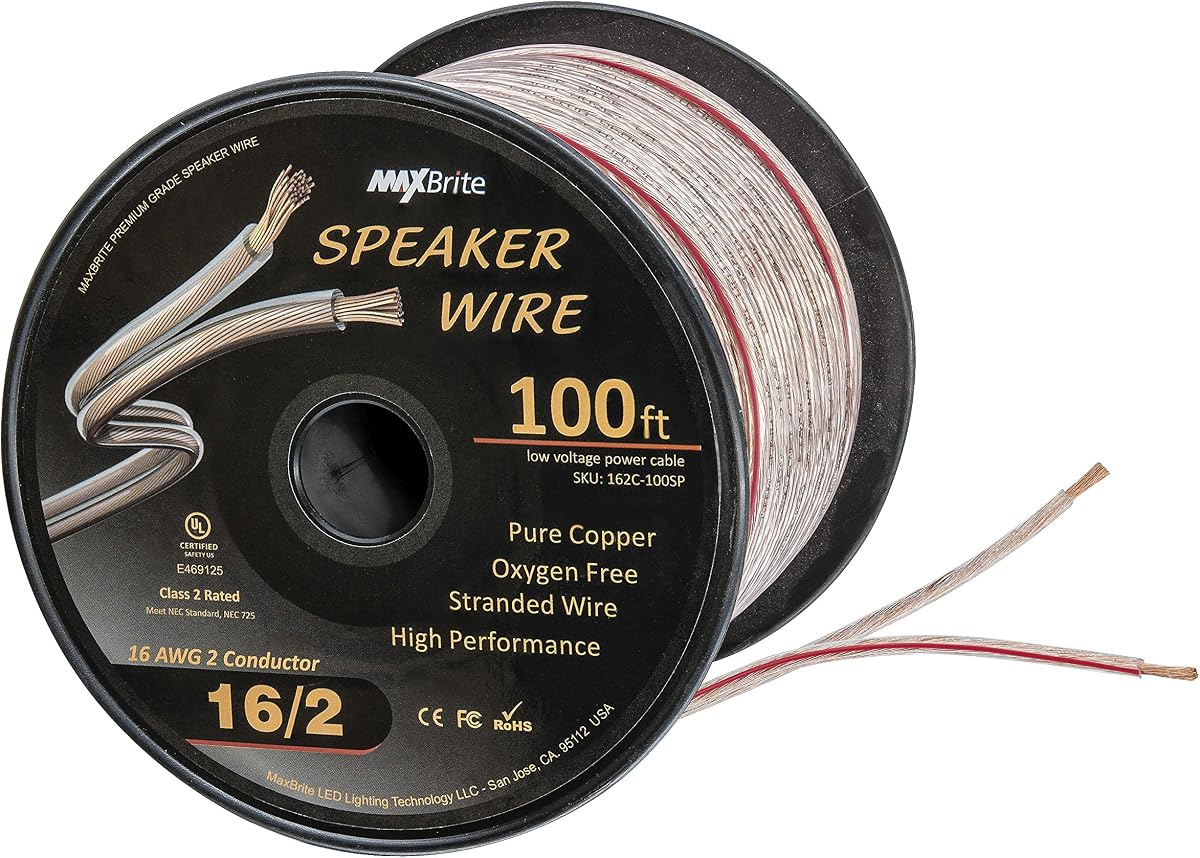
This 100-foot spool uses 99.99% oxygen-free copper with 26 strands per channel and holds a 4.8 customer rating. It is among the strongest technical choices here for users who want pure-copper conductors, clear installation guidance, and recognized low-voltage safety certification.
We may earn a commission when you buy through this link, at no additional cost to you.
Its clear PVC jacket carries a red stripe for polarity, while markings descending from the reel's start toward the core help users estimate length during dispensing. The conductors are compatible with bare-wire connectors, banana plugs, spade tips, and bent-pin connectors, giving installers flexibility when matching existing hardware.
The UL Listing and NEC Class 2 rating distinguish this cable from many general-purpose alternatives. Those specifications are useful for home and commercial low-voltage installations, although local electrical codes and project requirements still control which cable type may be used. As a premium copper option, it naturally costs more than CCA models.
Buy this cable for a high-fidelity home theater, stereo system, studio, or commercial speaker network where pure copper and certification are priorities. For the money, it offers the most robust combination of conductor purity, strand count, safety rating, and installation features in the group.
Oxygen-free copper provides a high-purity conductor option without relying on an aluminum core. This makes the cable appealing for quality-focused audio systems and installations where the user prefers a straightforward copper signal path.
UL safety certification and NEC Class 2 rating provide useful documented characteristics for low-voltage wiring plans. They can help installers compare the cable with local building requirements before work begins.
We may earn a commission when you buy through this link, at no additional cost to you.
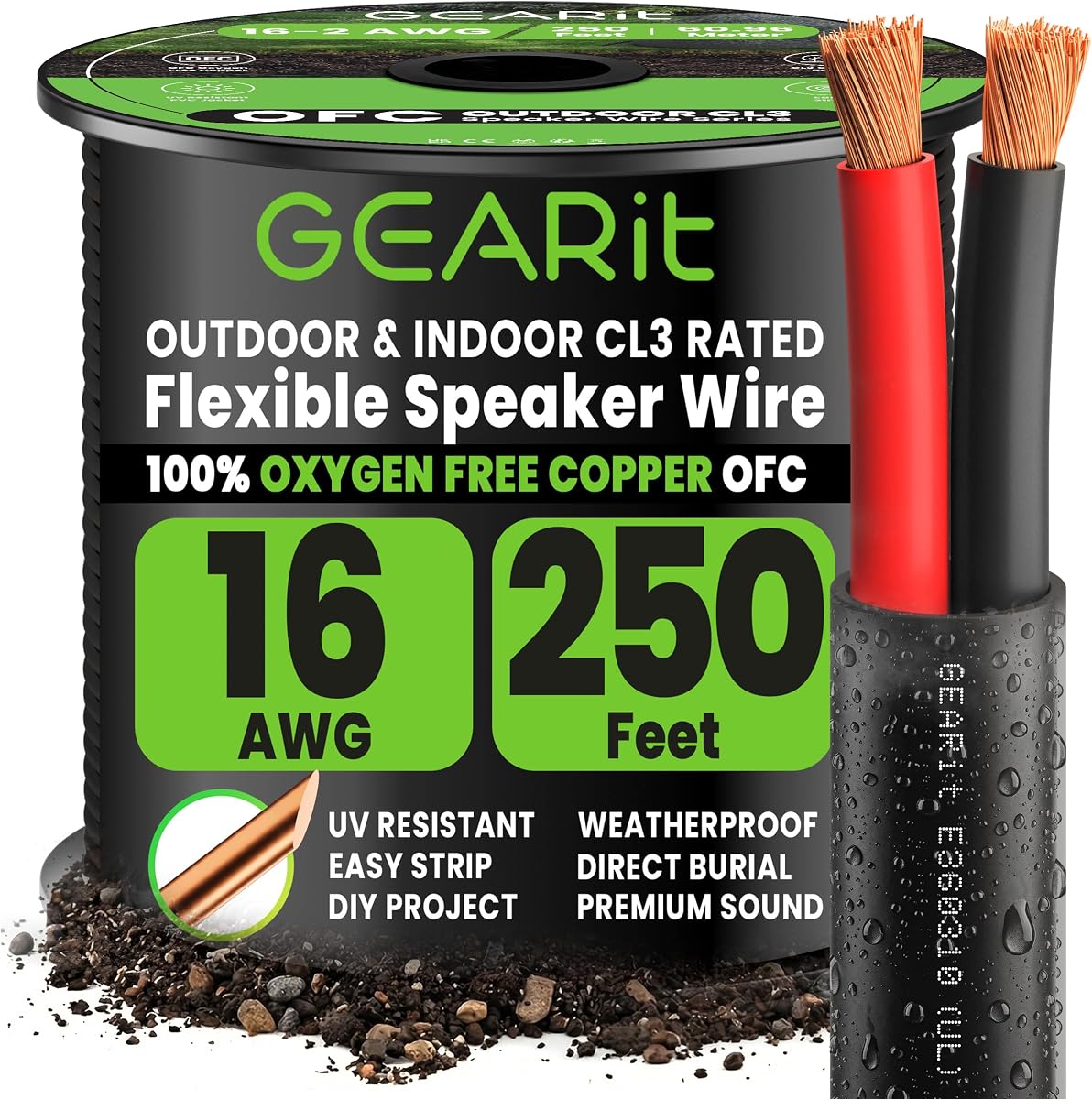
GEARit's 250-foot 16/2 cable is designed for ambitious outdoor, in-wall, whole-home, commercial, and residential speaker runs. It uses oxygen-free copper, a flame-retardant black jacket, red and black polarity markings, and sequential foot markers, earning a 4.7 customer rating.
We may earn a commission when you buy through this link, at no additional cost to you.
Its UL Listing and CL3 rating are the defining advantages for projects involving outdoor speakers, in-wall routing, ceiling runs, or direct-burial installations. The jacket is described as soft and flexible despite its protective characteristics, which should assist when pulling the cable through wall studs, around tight corners, or across longer garden distances.
The main practical drawback is physical scale. A 250-foot spool offers excellent reach but requires more room than a 30- or 100-foot option, and some users may buy more cable than a small installation needs. Pure-copper construction also places it above basic CCA cables in the material hierarchy.
This is the pick for a patio, garden, distributed audio system, or other long outdoor run where CL3 approval, pure copper, and substantial length matter. Choose it when the installation plan genuinely benefits from one large spool and when its rating matches the intended route.
CL3 rating supports use in outdoor, in-wall, ceiling, and direct-burial speaker cable applications. That broader rating makes the cable useful when a basic indoor spool would not be appropriate for the planned route.
A 250-foot length can cover extensive garden or whole-home layouts with fewer separate rolls. Reducing unnecessary splices can simplify installation and keep the signal path continuous.
We may earn a commission when you buy through this link, at no additional cost to you.
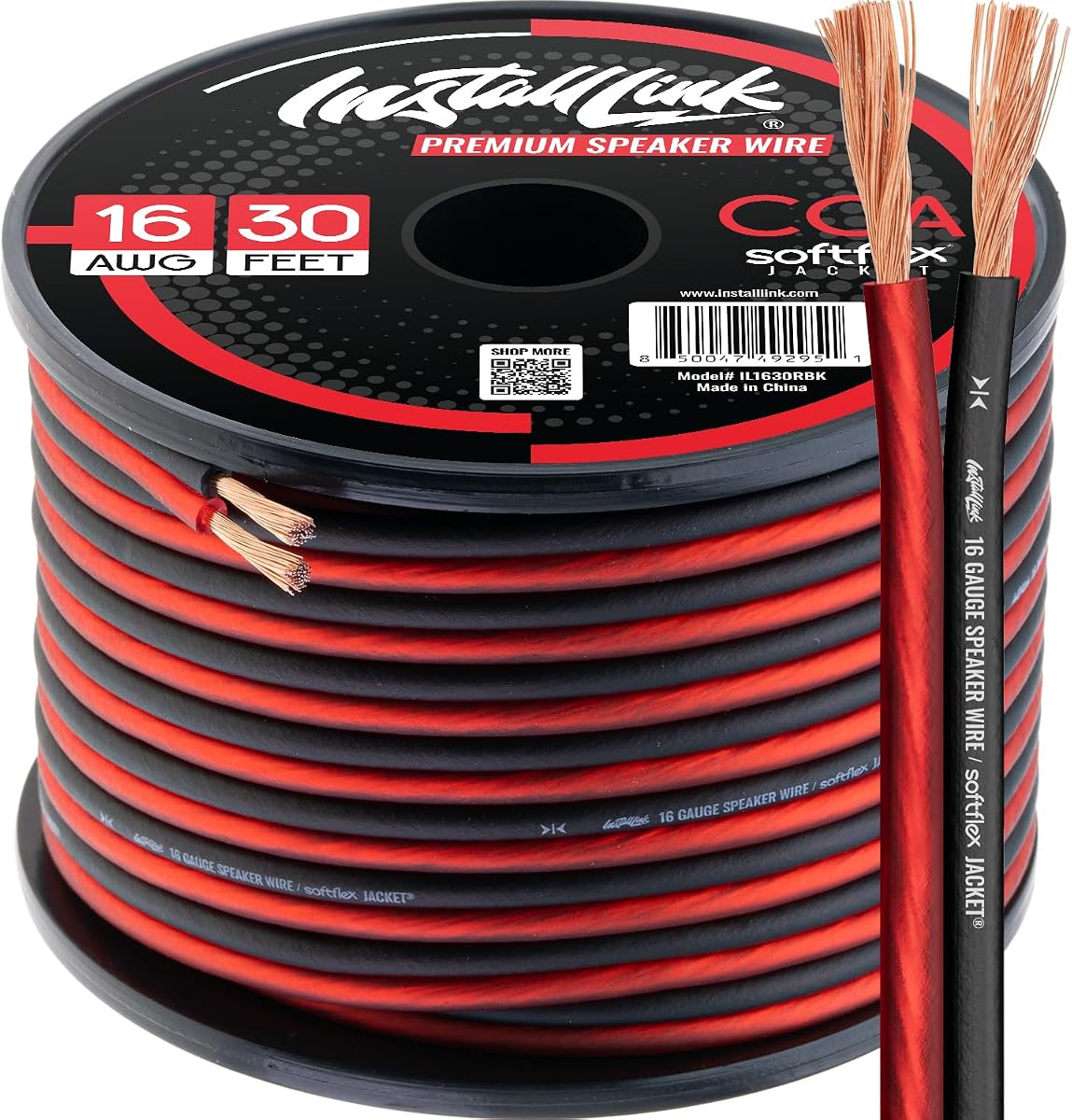
Install Link's 30-foot spool is a compact option for smaller home theater, car audio, studio, or amplifier connections. It carries a 4.7 rating and shares the recognizable red-and-black appearance, stranded construction, and softflex jacket found in the brand's longer 100-foot offering.
We may earn a commission when you buy through this link, at no additional cost to you.
The shorter run is the feature that distinguishes it from most of the list. It can be more convenient for a single nearby speaker, compact vehicle installation, or a replacement lead that does not need a full 100 feet. The jacket remains easy to route and the color coding helps maintain correct polarity.
Buyers should account for total conductor length when planning a two-channel installation. Depending on whether both channels are run from one spool or separate lengths are required, a 30-foot spool may be insufficient for a standard stereo layout. The conductor is also CCA, so it does not offer the conductivity of the pure-copper choices.
Choose this cable for a short, clearly defined connection or a modest project where avoiding excess wire is valuable. It is less compelling for large rooms, multi-speaker theater systems, or installations with long wall and ceiling routes.
Thirty feet is well suited to one nearby speaker or a compact installation where minimizing leftover cable improves organization. It is also convenient for carrying only the amount needed for a focused repair.
The flexible jacket, stranded construction, and red-black polarity scheme make this model familiar to users considering the 100-foot Install Link option. Only the spool length changes.
We may earn a commission when you buy through this link, at no additional cost to you.
GEARit's 100-foot OFC speaker wire is aimed at permanent in-wall and ceiling installations, with a 4.7 customer rating. It combines a CL2 rating, oxygen-free copper conductors, a flame-retardant flexible jacket, foot markers, and red-black polarity coding in one professional-installation-oriented cable.
We may earn a commission when you buy through this link, at no additional cost to you.
The jacket is designed to resist fraying and environmental wear while remaining soft enough to pull through wall studs and tight corners. Sequential markings help installers make precise cuts without repeatedly consulting a tape measure, and the distinct conductor colors speed up polarity matching at amplifiers and speakers.
CL2 rating is a meaningful distinction for concealed indoor routes, but it should not be confused with the CL3 rating offered by GEARit's outdoor and direct-burial model. Users with exposed outdoor or underground plans should verify the applicable rating. The pure-copper construction also costs more than a basic CCA cable.
Choose this product for a new in-wall home theater, whole-home audio installation, classroom, church system, or similar permanent low-voltage project. It is especially suitable when a documented rating and oxygen-free copper are priorities for an installer working around building structures.
CL2 approval and a flame-retardant jacket make this cable appropriate to evaluate for low-voltage in-wall and ceiling runs. The rating should still be checked against local code and project specifications.
Oxygen-free copper supports efficient signal transfer, while printed foot markers and color coding reduce two common installation errors: inaccurate cuts and reversed polarity.
We may earn a commission when you buy through this link, at no additional cost to you.
DS18 SW-16GA-100RB is a 100-foot, 16-gauge speaker cable built around stranded copper-clad aluminum conductors and an ultra-flex design. Its 4.8 rating makes it a strong option when bendability, routing through confined spaces, or resistance to repeated physical handling is the leading requirement.
We may earn a commission when you buy through this link, at no additional cost to you.
The product information emphasizes adjustable flexibility, elasticity, and impact resistance. Those qualities are valuable in vehicle installations, tight cabinet cavities, mobile audio builds, and other locations where a stiffer cable can be awkward to position. Separate red and black conductors also make polarity easy to identify.
CCA is the trade-off for buyers seeking maximum conductivity or long-run performance. The product description itself notes that systems requiring more power should consider OFC wiring. No specialized in-wall or outdoor safety rating is listed in the supplied data, so it should not be selected solely on an assumption that it is suitable for concealed or exposed outdoor routes.
Choose DS18 when maneuverability is the deciding factor or when a compact, flexible cable is needed for an automotive audio installation. For stationary home theater use, a certified in-wall option or pure-copper cable may offer a more advantageous specification set.
A highly flexible cable can be easier to route behind dashboards, through narrow trim openings, or around compact speaker mounting areas. The stranded design also tolerates frequent repositioning better than a rigid installation.
The red and black cable design lets installers identify each conductor before cutting and terminating. This reduces confusion around amplifier outputs and speaker input terminals.
We may earn a commission when you buy through this link, at no additional cost to you.
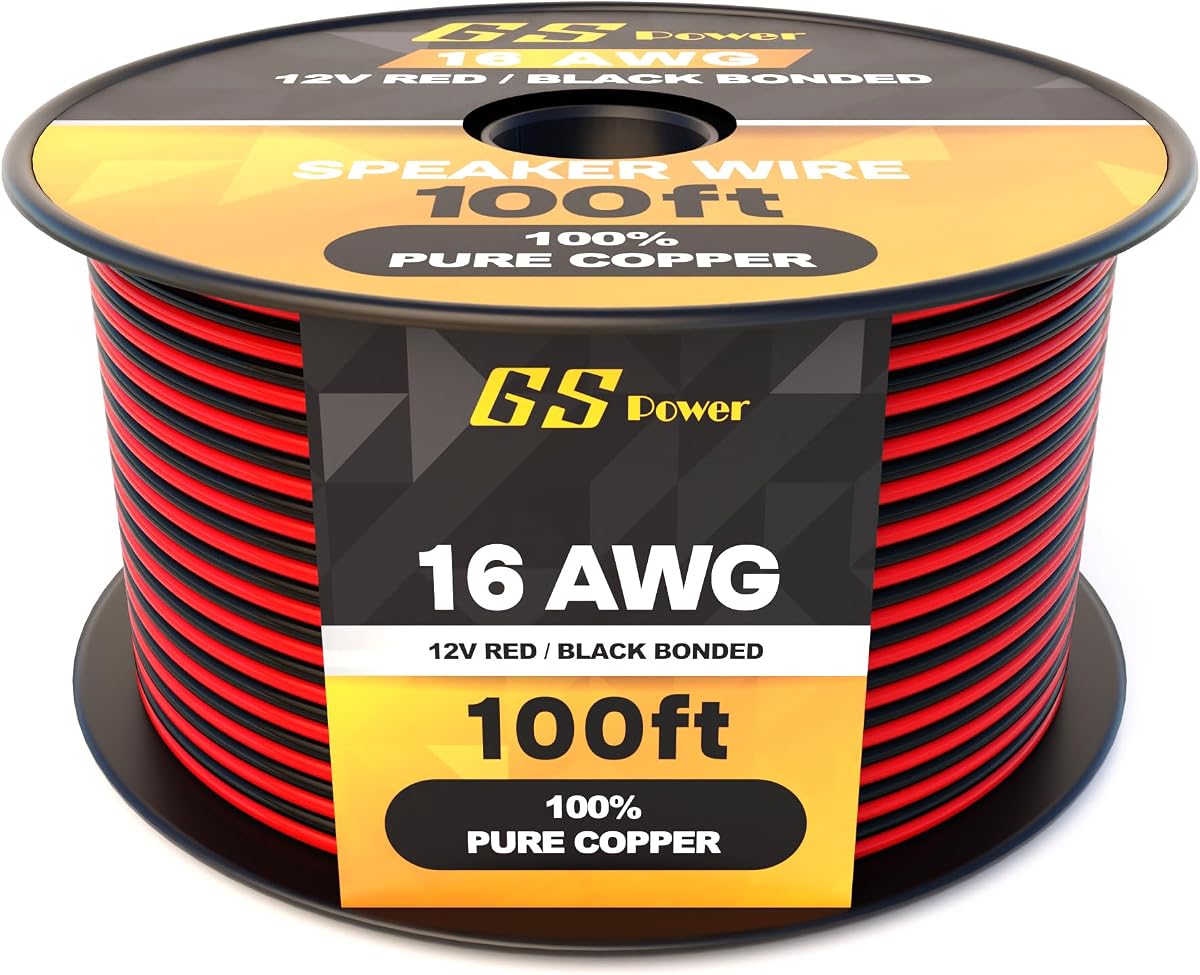
GS Power takes a broader low-voltage approach with a spool containing 100 feet each of red and black 99.99% oxygen-free copper wire. Its 4.8 rating, 27-strand construction, and automotive-grade GPT PVC insulation make it a compelling choice for car audio and other 12-volt DC projects.
We may earn a commission when you buy through this link, at no additional cost to you.
Each conductor consists of 27 strands of 0.25mm copper, creating a flexible cable that can route behind dashboards, through door panels, under boat consoles, or along trailer frames. The hard plastic spool supports tangle-free dispensing, and the bonded red-and-black configuration keeps polarity organized until the conductors are separated.
The insulation is described as resistant to oil and gas exposure and rated from -40°F to +176°F, which is useful in automotive and outdoor low-voltage environments. The same characteristics also suit trailer wiring, landscape lighting, LED strips, and hobby projects. It must not be used for AC mains or other high-voltage circuits.
Choose GS Power for a multi-speaker car audio build, trailer harness, marine installation, or other 12V project requiring true copper and rugged insulation. It is less suited to a conventional permanently concealed home speaker run because the stated environmental rating and intended application focus on low-voltage DC work.
GPT PVC insulation is described as resistant to oil and gas exposure, with a stated operating range from -40°F to +176°F. These characteristics make the cable better aligned with under-hood and outdoor vehicle conditions than a general indoor-only cable.
The bonded spool provides 100 feet of red and 100 feet of black, totaling 200 feet. Users can keep polarity organized for a large build or separate the conductors for individual 12V circuits and custom projects.
We may earn a commission when you buy through this link, at no additional cost to you.
GEARit's 100-foot outdoor speaker wire combines a CL3 rating, copper-clad aluminum conductors, a soft flame-retardant jacket, and red-black polarity coding. The 4.7 rating reflects a well-received option for users who need documented outdoor or in-wall suitability without purchasing the much larger 250-foot spool.
We may earn a commission when you buy through this link, at no additional cost to you.
CL3 approval supports consideration for outdoor speakers, in-wall paths, ceiling runs, and other professional low-voltage projects. The jacket is built to resist fraying and wear while remaining flexible enough to pull through studs and corners. Printed foot markers allow more accurate cuts, and the color coding simplifies polarity alignment.
Compared with the 250-foot OFC version, this cable uses CCA and provides less total length. It may therefore be less attractive for a very large garden or whole-home distribution network, and it does not offer the higher conductivity of pure copper. Local requirements and exposure conditions should always guide the final choice.
Choose this GEARit model for a medium-length patio, garden, home theater, church, or in-wall speaker run where CL3 rating and flexible handling are central. It is a more compact outdoor-rated option than the 250-foot cable and a higher-specification choice than generic indoor wire.
The CL3 rating distinguishes this cable from standard indoor choices and supports use in outdoor or in-wall low-voltage projects. Users should still verify that the rating and installation method satisfy applicable local requirements.
Sequential foot markings make it easier to judge cable length while dispensing it. This reduces repeated measuring and is helpful when several speaker locations require different run lengths.
We may earn a commission when you buy through this link, at no additional cost to you.
The right 16-gauge speaker wire depends on conductor material, route length, installation environment, connector compatibility, and the level of documentation needed for your project.
Pure copper and copper-clad aluminum are the two main conductor approaches in this category. OFC options use high-purity copper throughout, while CCA uses an aluminum core with a copper coating. CCA is lighter and can suit many ordinary speaker or low-voltage installations, whereas pure copper is generally the more conductive choice for demanding power transfer, long runs, or quality-focused audio work.
In short, choose OFC when conductivity, long-run performance, or copper purity is a stated priority. Choose CCA when flexibility, lighter handling, and general-purpose installation value matter more.
Do not calculate only the straight-line distance between equipment. Include service loops, routing around obstacles, extra length at terminals, speaker placement changes, and a margin for future repairs. A stereo system may need multiple runs, and a whole-home or outdoor project can require far more cable than its floor measurement suggests.
Select a 30-foot spool for one short, defined connection, 100 feet for many rooms and vehicles, or a 250-foot spool for large distributed systems. Remember that some automotive spools provide 100 feet of each color rather than 100 feet total.
An indoor cable is not automatically appropriate for an outdoor patio, buried line, ceiling cavity, or wall installation. Look for documented ratings such as CL2 for certain in-wall applications or CL3 for qualifying outdoor and direct-burial speaker cable routes. Flame-retardant jackets and oil-resistant insulation are also useful indicators for more demanding environments.
Use the required rating to narrow the field, then confirm local rules and project specifications. If the cable will be concealed, exposed to moisture, or routed through building structures, it should not be chosen solely on gauge or appearance.
Flexibility affects how easily a cable follows walls, passes through studs, bends around furniture, or fits behind vehicle trim. Stranded constructions are generally easier to position than rigid alternatives, and the products here emphasize stranded or flexible jackets. DS18 makes flexibility its primary selling point, while GEARit and Install Link also describe their cables as soft and easy to route.
For difficult routes, favor a cable explicitly designed for flexible routing. For straight, accessible runs, flexibility is less important, so conductor construction, length, and environmental rating can take priority.
Correct polarity helps speakers reproduce the intended soundstage and prevents one channel from arriving out of phase with another. A red conductor, black conductor, or contrasting stripe on the jacket makes positive and negative identification easier. This matters especially when many speakers, channels, or in-wall terminals are involved.
Look for a visible, continuous cue on the jacket and keep it intact during stripping. Clear markings are not a substitute for checking terminals, but they reduce the chance of a reversed connection during installation.
The cable should terminate cleanly into the connectors already used by your equipment. Common possibilities include bare-wire connectors, banana plugs, spade tips, bent-pin connectors, and direct speaker or amplifier terminals. Some product descriptions explicitly confirm compatibility with several of these options, while others focus more broadly on easy cutting and stripping.
Confirm the connector system before buying, especially for a finished installation. Also check whether the conductor diameter and construction suit the intended terminal rather than assuming every 16-gauge wire will fit the same accessory.
Features such as printed foot markers, hard spools, recyclable spools, and visible polarity stripes can make a meaningful difference on a real installation. Foot markers reduce repeated measuring, rigid spools prevent tangles, and color coding speeds termination. These details do not change the core electrical specification, but they improve workflow and reduce avoidable errors.
Compare the practical aids that matter to your route. A large project benefits from markings and organized dispensing, while a short repair may need little more than a manageable spool and clear conductor identification.
The strongest technical specification is not automatically the right choice for every project. A pure-copper UL-listed cable may be ideal for a permanent professional installation, while a CCA cable may be more practical for an accessible home or car project. The correct decision combines conductor type, documented safety rating, cable length, environment, and connector needs.
Start with requirements rather than a brand or rating alone. Once the must-have specifications are set, compare the remaining products by construction, handling, and ease of installation.
Begin by planning the complete route, confirming receiver or amplifier compatibility, and estimating the needed length with a small allowance for bends, service loops, and future service. Before cutting, identify the positive and negative conductors using the jacket markings and test that the identification remains consistent through the entire run.
Route the cable away from power wiring where practical, avoid creating tight bends or exposed sections that can be damaged, and use appropriate connectors and terminations for the equipment. Keep the jacket intact until the conductor reaches its final connection point, then strip it carefully without nicking the individual strands.
After installation, inspect each termination and confirm that polarity matches at both the amplifier or receiver and the speaker. Keep unused cable dry, organized, and protected from sharp edges, excessive heat, oil, and sunlight when it is not in use. For any concealed or outdoor installation, verify that the cable's listed rating matches the planned route and applicable local requirements.
Yes, 16 gauge speaker wire is commonly used for many home theater and stereo speaker connections, especially moderate-length runs from a receiver or amplifier. The appropriate choice also depends on speaker impedance, amplifier power, and total cable distance. For unusually long runs or demanding high-power systems, a larger conductor may be worth evaluating.
OFC speaker wire uses oxygen-free copper as its conductor, while CCA uses an aluminum core covered with a thin copper layer. OFC generally provides higher conductivity and is preferred for demanding power transfer, long runs, or higher-fidelity installations. CCA is lighter and often works adequately for shorter, standard speaker or low-voltage wiring projects.
Only when the cable is rated and approved for the intended outdoor route. GEARit's CL3 models are specifically described for outdoor, in-wall, and qualifying direct-burial speaker cable applications. A general indoor cable may deteriorate or create code issues when exposed to moisture, sunlight, or the elements.
The jacket color is an identification aid, but the positive conductor still needs to be matched correctly to the corresponding positive terminal. Red or a marked stripe commonly identifies the positive conductor, while black commonly identifies the negative conductor. Always verify the markings and terminal labels before energizing the system.
Measure every intended run and add extra length for service loops, bends, obstacles, terminal work, and possible future changes. A stereo system may require two separate runs, while multi-zone audio needs enough cable for each speaker location. For very large outdoor or distributed systems, a 250-foot spool can reduce unnecessary splices.
Several products in this guide explicitly support banana plugs, spade tips, bare-wire connectors, or direct speaker terminals. However, connector fit should be checked against the exact cable and accessory because conductor diameter, jacket thickness, and termination design can vary. Confirm compatibility before cutting or crimping the cable.
CL2 and CL3 are classifications used to describe suitability for particular low-voltage in-wall and outdoor cable installations. CL2 is featured here for in-wall and ceiling routing, while the listed CL3 products are described for outdoor and qualifying direct-burial uses. Local codes and project specifications determine the final requirement.
It can be worthwhile when conductivity, long cable runs, high power transfer, or a pure-copper signal path are priorities. For many shorter home and car speaker runs, a well-made CCA cable can provide adequate performance and easier handling. The right decision depends on your system rather than conductor name alone.
The Install Link 100-foot CCA cable stands out as the most versatile general pick because it combines a 4.8 rating, flexible routing, clear polarity, and broad home and automotive applicability. Amazon Basics is the straightforward budget option, while the 100-foot High Performance OFC cable is the premium selection for pure copper, strand construction, and UL Class 2 documentation.
For specialized installations, match the cable to the route rather than choosing on appearance alone. GEARit CL2 and CL3 options suit specific concealed and outdoor applications, GS Power focuses on rugged 12V automotive work, and the shorter Install Link spool works well for compact connections. Pure copper, flexibility, length, markings, and connector compatibility should be prioritized according to the actual project.
Before purchasing, confirm the current listing details, conductor construction, length configuration, certification, and connector fit, and check whether prices or availability have changed. Those checks are especially important for outdoor or concealed wiring because the cable's documented rating must suit the installation method.