
AAWipes Cleanroom Cloth Wipes 4×4
4.7Editor score
1200-grade cellulose-polyester wipes
Controlled cleanroom edge treatment
Suitable for precision applications
Keeping a 3D printer clean improves workflow consistency, protects delicate surfaces, and makes maintenance easier to manage. The right wipe should lift dust, grease, water, or cured resin without leaving fibers, scratches, streaks, or troublesome residue. Material, strength, size, and chemical compatibility all shape which wipe works best for a particular printer.
This guide compares ten cleaning-wipe options for resin printers, FDM machines, build plates, vats, laboratory equipment, and related precision surfaces. The evaluation considers absorbency, lint control, tear resistance, wet or dry performance, edge construction, pack quantity, and suitability for sensitive components. It also distinguishes plain dry wipes from alcohol-prepped options.
Each pick highlights a different practical reason to buy, including large-area resin cleanup, disposable microfiber maintenance, cleanroom-grade handling, and solvent-assisted electronics cleaning. Ratings reflect the supplied customer feedback, while specifications come from the listed product information. Availability and prices can change, so confirm the current listing before purchasing.
4.7Editor score

5.0Editor score

4.2Editor score
As an Amazon Associate we earn from qualifying purchases.
The table below compares all ten options by material, format, size, quantity, and most practical use, helping readers distinguish dry maintenance wipes from solvent-prepped cleaning products.



The FYSETC Resin 3D Printing Cleaning Wipes are aimed squarely at resin-printer owners who need a dependable way to remove liquid resin, water, dust, and debris from the machine and its work area. They carry a 4.2 rating, making them the lowest-rated product in this group, but the supplied specifications present a compelling combination of natural cotton construction, large dimensions, low lint, and high absorbency.
We may earn a commission when you buy through this link, at no additional cost to you.
Each wipe measures 7.87 by 5.9 inches, providing substantially more coverage than a typical small utility wipe. That size is useful on release films, silicone mats, build plates, curing stations, funnels, and vats. The material is described as 100 percent cotton with extra-thick, nonwoven construction, combining a gentle touch with the ability to soak up substantial liquid without readily tearing.
The main tradeoff is material identity. Cotton offers a natural fiber feel and high liquid retention, whereas some synthetic microfiber products are engineered for extremely low fiber shedding and rapid drying. FYSETC also describes the wipes as solvent-resistant and low lint, but the broader customer rating suggests some buyers may have found their performance less consistent than that of the highest-rated options.
This is a sensible choice for a home resin setup that needs large, soft, disposable wipes at a modest purchase cost. It is especially helpful for cleanup around curing equipment, buckets, mats, and printer surfaces. Buyers needing the absolute lowest lint level for optics or cleanroom work should consider a purpose-built polyester or cellulose-polyester wipe instead.
The generous wipe dimensions cover more of a release film, silicone mat, or build plate in fewer passes. That reduces repeated handling around uncured resin and makes the wipes practical for regular maintenance rather than merely spot cleaning.
The listed soft cotton construction is intended to lift dust and debris without damaging printed objects or sensitive printer surfaces. Its absorbency also makes it useful for water left around resin-curing equipment.
We may earn a commission when you buy through this link, at no additional cost to you.
The 300-piece 3D Printer Cleaning Kit stands out as the most broadly useful option in this roundup. It earns a 5.0 rating and directly addresses routine care for FDM and resin workflows, with six-by-six-inch Model 3009 microfiber cloths designed to remove dust, fingerprints, grease, and light residue from build surfaces and common components.
We may earn a commission when you buy through this link, at no additional cost to you.
These cloths can be used dry for routine dust removal or lightly dampened with water or a preferred plate-cleaning solution. The low-shedding, nonabrasive construction is suitable for PEI sheets, textured and smooth plates, glass beds, magnetic surfaces, touchscreen panels, enclosure glass, camera lenses, rails, lead screws, and other maintained areas.
The principal drawback is that the package contains disposable cloths rather than a reusable roll. That makes the 300-count format convenient for service businesses, schools, and frequent maintenance, but a careful owner may find single-use microfiber less economical than washing and reusing dedicated cloths. It also does not include cleaning fluid, which preserves compatibility with different printers and preferred solutions.
Despite that limitation, the kit is the easiest recommendation for a broad audience. Its large stock, high rating, gentle material, and wet-or-dry versatility cover the majority of 3D printer cleaning tasks. It is particularly attractive to owners of Bambu Lab, Creality, Anycubic, Flashforge, and other desktop machines who want a dependable disposable supply.
Build plates, touchscreen panels, enclosure glass, rails, lead screws, camera lenses, and printer frames can all be addressed with the same microfiber format. This makes the refill-style package convenient for a broad maintenance routine.
Dry wiping handles routine dust, while controlled dampening supports more thorough cleaning of grease and light residue. Keeping the cleaning solution separate gives users flexibility and reduces unwanted chemical exposure.
We may earn a commission when you buy through this link, at no additional cost to you.
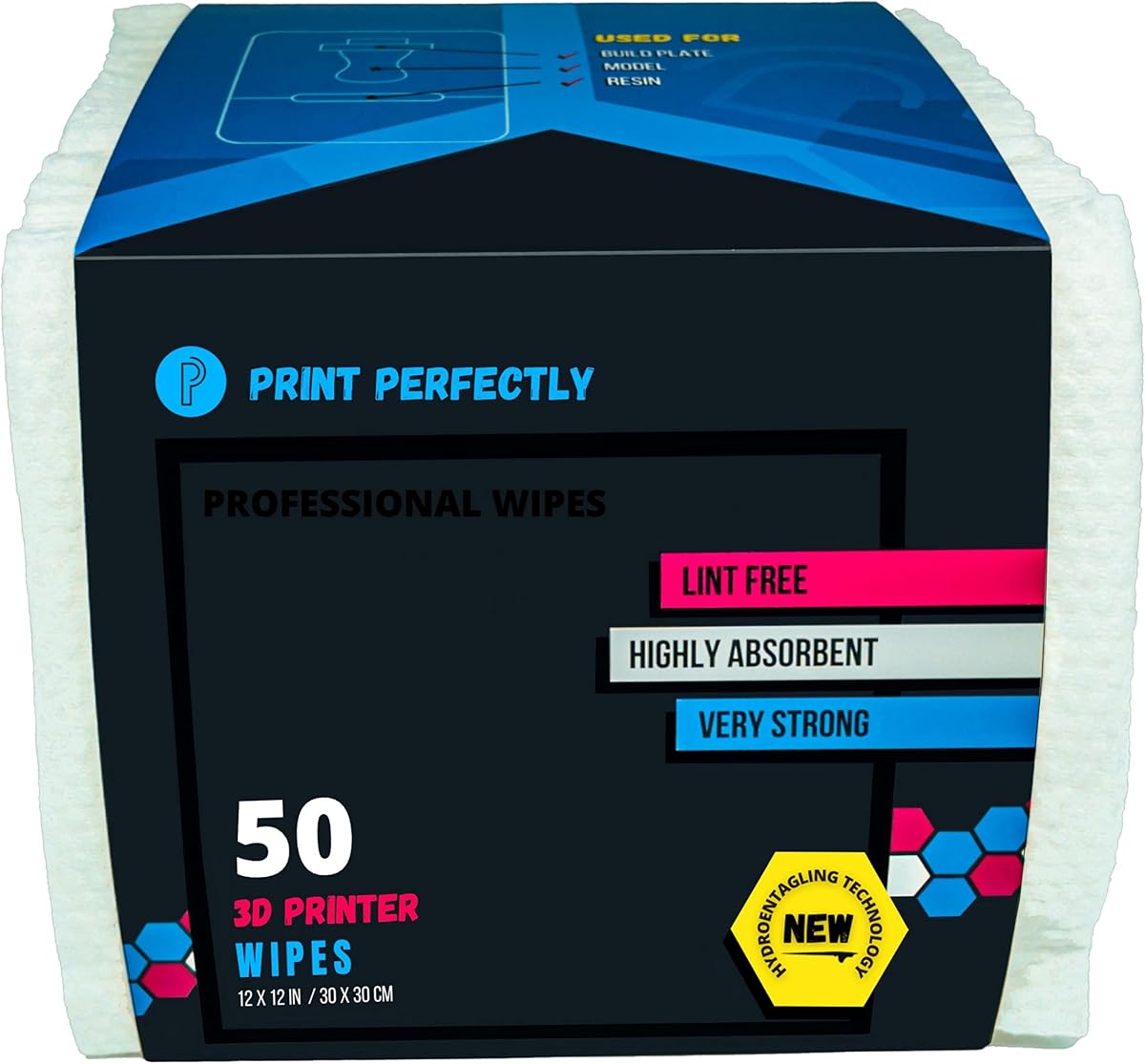
These 12-by-12-inch lint-free towels are the strongest option here for large resin spills and broad-area cleanup. The product has a 4.6 rating, and its listed construction emphasizes high strength, absorbency, fast drying, and visibility of collected debris through ultra-white laser-cut edges.
We may earn a commission when you buy through this link, at no additional cost to you.
The polyester-blend material is described as sterile, nonabrasive, and capable of handling resin, epoxy, filament, models, and general tool cleanup. Their large surface area makes them useful for wiping an entire vat, build plate, workbench, or section of the machine rather than chasing a small droplet with a compact wipe.
A 50-count pack contains fewer individual wipes than many microfiber or cleanroom options, and some users may not need a cloth this large for routine touchscreen or rail maintenance. Their specialized emphasis also makes them less universal than a general six-inch microfiber square. Nevertheless, the combination of strength and coverage is valuable during messy prints and resin changes.
This product is a strong fit for resin-printer owners who regularly clean vats, catch trays, curing areas, and nearby surfaces. It also works for other demanding wipe tasks around automotive or workshop equipment. For compact maintenance, a smaller lint-free cloth would be easier to control; for large spills, this towel is the more efficient choice.
A twelve-inch square can handle a broad vat or workbench section in a single pass. The size is especially helpful when uncured resin requires prompt containment and thorough removal.
The ultra-white material and laser-cut edges help reveal bits of resin and dirt on the cloth after use. That visibility can help users notice when a surface needs another cleaning pass.
We may earn a commission when you buy through this link, at no additional cost to you.
The AAWipes 1200-piece cleanroom package delivers a 4.7 rating and emphasizes controlled, high-volume wiping. Its 55 percent cellulose and 45 percent polyester blend combines the absorbency of a natural fiber with the strength of a synthetic material, making it appropriate for precision components, lab apparatus, electronics, and printing machinery.
We may earn a commission when you buy through this link, at no additional cost to you.
Each wipe measures four by four inches and is sealed in polybags after proper edge treatment. The product is described as Grade A, while the listed 68 GSM specification gives users a tangible reference for the material. It can address solder paste on circuit boards, optical instruments, electronic assemblies, workstation surfaces, and finished products.
The four-inch format is less convenient for an entire build plate than the 12-inch towels in this guide, and the enormous quantity may exceed the needs of an occasional home user. It is also not marketed as a printer-specific kit, so the connection to 3D printing comes through its suitability for cameras, screens, components, and precision surfaces.
Despite those caveats, this is a compelling selection for labs, repair businesses, electronics facilities, and serious makers who consume many disposable wipes. The 1200-piece count reduces the need for constant replenishment, while the cellulose-polyester blend offers a balanced combination of absorption, strength, and clean handling.
Cellulose contributes high liquid absorption, while polyester supports wet and dry strength. The combination is useful when a wipe must remove liquid without disintegrating during repeated use.
With 1200 wipes in the package, this option suits users who clean frequently or need a shared supply. A large number of compact wipes can still cover many small precision and component-level tasks.
We may earn a commission when you buy through this link, at no additional cost to you.
The AAWipes six-inch polyester cloths bring a 4.5 rating and a cleanroom-focused feature set. Made entirely from polyester microfiber with ultra-fine filaments, the wipes are described as extremely soft, nonabrasive, fast drying, and resistant to wear and tearing.
We may earn a commission when you buy through this link, at no additional cost to you.
Their edge construction is a meaningful differentiator. The cloths are laser cut with ultrasonically sealed edges, which helps reduce loose fibers and supports use around sensitive electronic, mechanical, electrical, and optical components. They are also manufactured and laundered in controlled cleanroom conditions before being hermetically sealed.
The downside is that this level of controlled production is likely unnecessary for basic household printer maintenance. A 150-piece package is also smaller than several microfiber and cleanroom options, and the 4.5 rating, while favorable, does not place it among the highest-rated choices here.
The product makes sense for makers working with camera lenses, optical components, microelectronics, or sensitive machine surfaces where minimizing lint matters. It also suits professional repair environments. For routine dust removal on an ordinary build plate, the general 300-piece microfiber kit may provide better convenience and value.
Ultrasonically sealed edges support low-shedding handling around sensitive components. This is particularly relevant when a stray fiber could interfere with a camera lens, optical surface, or precision assembly.
The double-knit polyester construction combines softness with resistance to wear and tearing. It can therefore address delicate surfaces without behaving like a fragile paper towel.
We may earn a commission when you buy through this link, at no additional cost to you.
These nine-inch AAWipes combine the low-lint construction of a cleanroom cloth with enough surface area for broader printer maintenance. The product holds a 4.6 rating and uses a double-knit, 100 percent polyester material with ultra-fine filaments, ultrasonic edge sealing, and controlled cleanroom manufacturing.
We may earn a commission when you buy through this link, at no additional cost to you.
Compared with the four-inch cleanroom cloths, the nine-inch format is easier to use across a build plate, enclosure panel, workbench, or large machine surface. The same construction remains suitable for electronic, mechanical, electrical, optical, and precision instruments, including lenses and microelectronics.
The extra size can be inconvenient when cleaning narrow rails, small screws, or tightly confined components. A user maintaining a compact workspace may find a six-inch wipe easier to maneuver, while a high-volume operation may want a larger quantity than the listed 150 pieces. The cleanroom controls may also feel excessive for ordinary hobby use.
This is an excellent option for users who want both low-lint performance and a generous wiping area. It is particularly useful for resin printers with large vats, printers with glass enclosure panels, and workshops where one cloth can cover multiple adjacent surfaces without frequent changes.
The nine-inch size reduces the number of passes required on large surfaces while retaining cleanroom-style edge control. That balance makes it useful for printer enclosures, vats, and equipment panels.
The high-density weave is described as quick drying and highly absorbent. This helps a wet cloth return to service efficiently and makes it easier to manage liquid pickup during repeated cleaning.
We may earn a commission when you buy through this link, at no additional cost to you.
The 600-count AAwipes package is a versatile cleanroom supply with a 4.4 rating. Its hydro-entangled nonwoven construction combines 55 percent cellulose with 45 percent polyester, allowing natural-fiber absorbency to support the strength of a synthetic wiper during routine cleaning.
We may earn a commission when you buy through this link, at no additional cost to you.
The four-inch wipes are suitable for circuit boards, optical instruments, electronic components, laboratory glassware, workbench surfaces, finished products, and printing machines. Their wet and dry strength makes them adaptable to dust removal as well as more thorough wiping tasks involving moisture or light residue.
They are smaller and less capable of covering a wide build plate in one pass than the nine- or twelve-inch products. The 4.4 rating is also below the ratings of several alternatives. Although 600 wipes is a generous count, users who clean only occasionally may not need a supply of that scale.
For a workshop that already handles electronics, optics, or laboratory equipment, these wipes can easily become a general maintenance staple. Their material balance also makes them an accessible alternative to more specialized cleanroom cloth options.
The blended construction is designed to draw in liquid while resisting breakdown. That balance supports general-purpose wiping without the delicacy associated with single-material paper products.
Because the same format suits solder paste, lenses, lab apparatus, electronics, and workstations, the package can serve as a shared supply across a technical workspace rather than a printer-only accessory.
We may earn a commission when you buy through this link, at no additional cost to you.
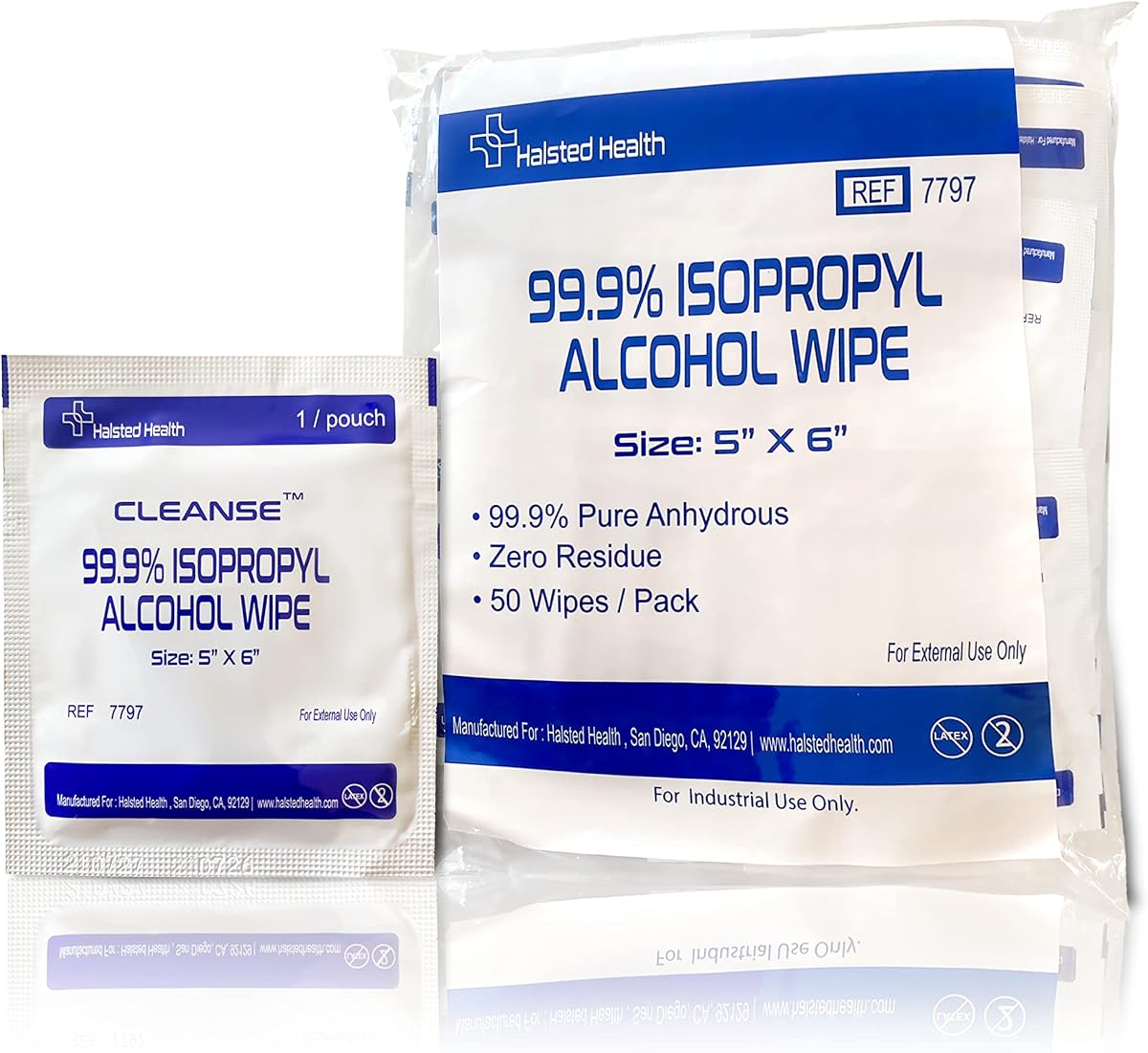
Cleanse offers a different approach from the dry wipe category: each 6-by-5-inch fabric is pre-saturated with 99.9 percent isopropyl alcohol. The product has a 4.6 rating and is marketed for electronics, keyboards, plastics, seals, ceramics, printed circuit boards, screens, and general work equipment.
We may earn a commission when you buy through this link, at no additional cost to you.
The anhydrous solvent is described as removing water and humidity while leaving components dry. It can also lift oxides, ink, dirt, dust, stains, oil, grease, paste, compound, and adhesive residue. Each wipe comes in its own pouch, making the package compact, portable, and less prone to drying out between uses.
The important caution is that alcohol is not universally compatible with every printer component or coating. Users should verify that a surface is alcohol-safe before wiping it, particularly around certain plastics, displays, or specialty finishes. The listed application is industrial and general-purpose rather than medical, and this is a solvent product rather than a neutral dry cloth.
It is best suited to users who specifically need residue removal rather than ordinary dust control. Technical maintenance, electronics cleaning, and carefully selected printer components can benefit from the pre-wetted format, provided the user checks material compatibility and allows surfaces to dry fully.
Pre-saturation removes the need to mix a cleaning solution or overspray a surface. The individually pouched format is especially handy for carrying a small number of wipes to another location.
The high-purity alcohol targets grease, inks, adhesive residue, oxides, and similar contamination more aggressively than a dry wipe. It can be a useful follow-up after dust and loose debris have been removed.
We may earn a commission when you buy through this link, at no additional cost to you.
Tech Spray Wipes provide 50 individually wrapped, alcohol-presaturated cloths for cleaning electronic products and similar items. They carry a 4.4 rating and use a 99.8 percent isopropyl alcohol formulation in a compact 5.5-by-5.5-inch format.
We may earn a commission when you buy through this link, at no additional cost to you.
The nonwoven polyester-cellulose construction is described as plastic-safe, lint-free, and tear resistant, making it suitable for light scrubbing as well as routine surface cleaning. Individual wrapping is a practical feature because it helps prevent the remaining wipes from drying out while a package is open or stored for later use.
Compared with the Cleanse option, the stated alcohol concentration is slightly lower, and its 5.5-inch square provides less area. Users should still check compatibility before applying isopropyl alcohol to coatings, displays, plastics, or other sensitive materials. The product is not described as a general dry printer-maintenance cloth.
This package is most attractive to owners of electronics or technical equipment who want a portable, controlled cleaning solution. For printer maintenance, it can be useful on known-compatible components, but it should complement rather than replace general lint-free wipes used for build plates, rails, and enclosure surfaces.
Each wipe is sealed separately, helping prevent drying and contamination between uses. This is particularly convenient for service kits, tool bags, and travel.
The durable nonwoven format is intended for more than passive dusting. That makes it practical for removing small areas of oily or adhesive contamination from compatible electronic surfaces.
We may earn a commission when you buy through this link, at no additional cost to you.
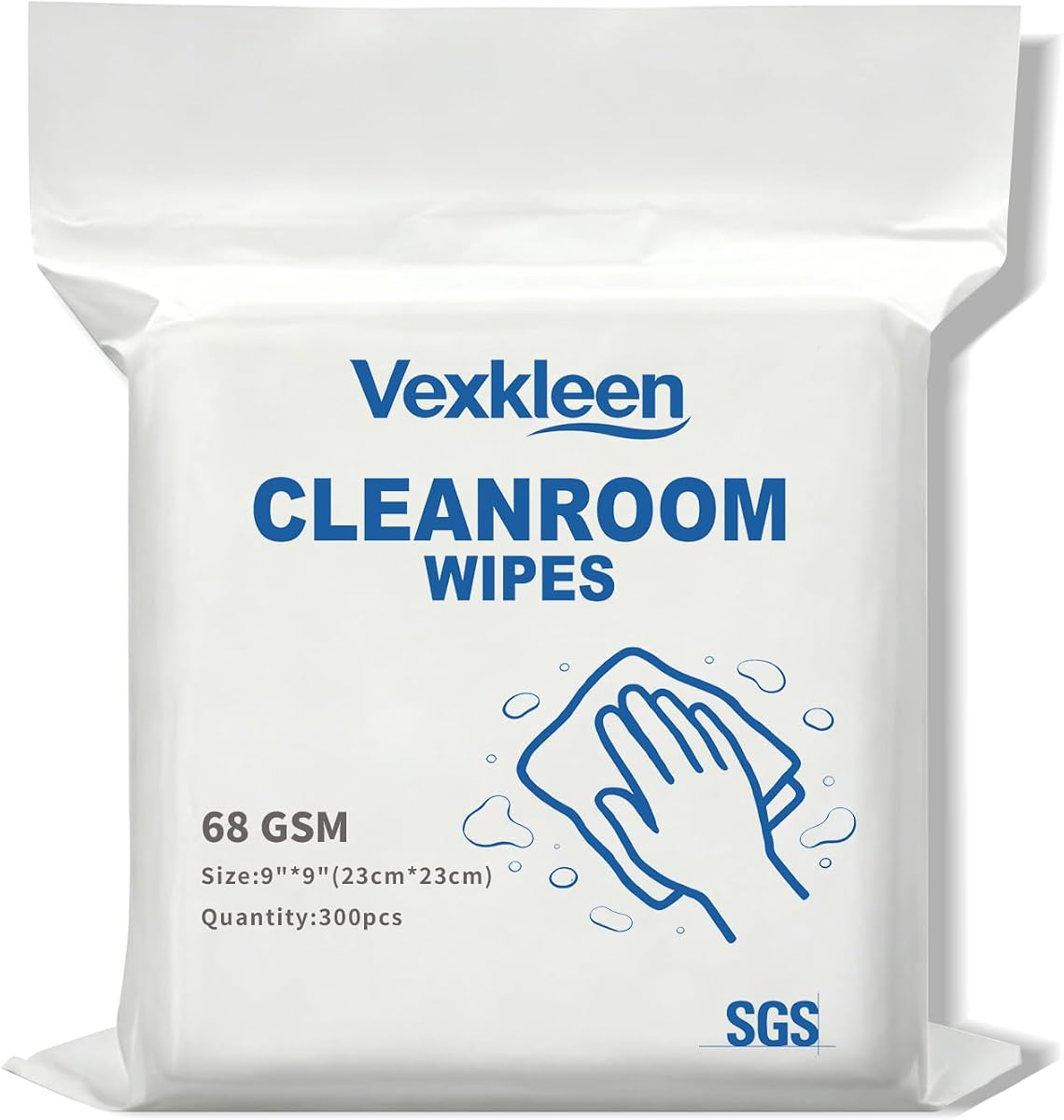
This 300-count package of nine-inch cleanroom wipes has a 4.6 rating and offers an effective balance of absorbency, strength, and size. Its hydro-entangled nonwoven blend contains 55 percent cellulose and 45 percent polyester, with a listed material weight of 68 GSM.
We may earn a commission when you buy through this link, at no additional cost to you.
The product is designed to absorb water and oil, lift grease and dirt, and leave minimal lint. Its tear-resistant texture makes it suitable for demanding cleanup around electronic devices, instruments, machinery, and workshop surfaces. The nine-inch dimensions also allow it to cover build plates, vats, and larger machine panels more efficiently than a compact square.
Its size can be cumbersome around small components, tight machine gaps, or delicate lenses. The supplied description does not specify the same controlled manufacturing and sealed-edge details given for some AAWipes products, so buyers with strict cleanroom qualification needs may require additional documentation.
For general workshop, printer, and electronics maintenance, it remains a versatile high-volume option. The combination of 300 pieces and generous dimensions particularly suits users who want to handle spills, grease, and broad surfaces without running out of wipes quickly.
The cellulose-polyester blend is intended to handle watery and oily residues. That versatility supports use around printers, instruments, electronics, and industrial work areas.
A stronger nonwoven texture can tackle dirt and grease without behaving like a fragile paper towel. The result is a practical option for messy cleanup tasks that require more durability.
We may earn a commission when you buy through this link, at no additional cost to you.
The right wipe depends on the printer, the contaminant, and the surface being cleaned. Material, size, edge quality, absorbency, chemical compatibility, and pack quantity should be considered together rather than treating lint-free labeling as the only requirement.
In short, match the fiber blend to the mess and the sensitivity of the surface.
Prioritize absorbency for spills, and controlled pickup for delicate precision work.
Choose controlled, sealed edges when stray fibers could cause a visible or functional problem.
Match wipe size to the surface, using small cloths for details and large cloths for broad areas.
Use solvent wipes only on confirmed compatible surfaces, and dry cloths for routine nonabrasive maintenance.
Estimate cleaning frequency and storage needs before choosing between compact and bulk packages.
Choose a dual-purpose cloth when flexibility matters, or a dedicated solvent wipe when residue removal is the priority.
Treat contaminated wipes as workshop waste, not ordinary household trash, and follow local disposal guidance.
Start with the machine in a safe state. For an FDM printer, let the hotend and heated bed cool before wiping near them. For a resin printer, follow the manufacturer’s instructions for removing or securing the vat and build platform, wear appropriate protective equipment, and avoid spreading uncured resin during initial wiping. Begin with dry dust removal before introducing moisture or solvent.
Use a fresh section of the wipe for each area and wipe from less-dirty regions toward spills or sticky areas. Fold the cloth to create a clean contact surface, and avoid repeatedly dragging contaminated material across a build plate. For damp cleaning, use only a manufacturer-approved solution and apply it to the wipe rather than pouring it onto the printer. Check coated or sensitive surfaces for compatibility first.
Store unused dry wipes in a sealed container to limit environmental dust and moisture. Keep alcohol wipes in their individual pouches so they do not dry out. Dispose of used resin- or solvent-contaminated wipes according to local workshop guidance, never in a toilet unless explicitly permitted by the relevant waste authority. Replace wipes that tear, shed fibers, or become heavily contaminated.
Large, absorbent, nonabrasive wipes are most useful for resin cleanup because they can contain liquid without tearing quickly. The FYSETC cotton wipes target resin printers directly, while the 12-inch polyester-blend towels provide broad coverage for vats and work areas. Always follow the resin and printer manufacturers’ handling instructions and dispose of contaminated wipes responsibly.
The 300-piece microfiber cleaning kit is specifically described as suitable for PEI, textured PEI, smooth plates, and glass beds. Use it dry for dust or lightly dampened with an approved plate cleaner, and avoid forcing grit into textured surfaces. Before using any cleaning solution, confirm that it will not damage the plate coating or affect adhesion.
Only on components that the printer manufacturer identifies as alcohol-compatible. Isopropyl wipes are useful for grease, ink, and adhesive residue, but they may damage certain plastics, coatings, screens, seals, or finishes. Test first on an inconspicuous area, apply the liquid to the wipe rather than directly to the printer, and allow the surface to dry fully.
Large wipes are better for broad surfaces, resin spills, vats, and workbenches because they cover more area with fewer passes. Small wipes are easier to control around rails, screws, displays, and other confined components. Many users benefit from maintaining both sizes rather than forcing one format to handle every task.
Lint-free means the wipe is designed to shed few or no loose fibers during use. The level of control varies by product, so users cleaning optical surfaces or precision assemblies should look for sealed edges and controlled manufacturing details. Even a low-lint cloth should not be rubbed aggressively against a delicate component.
Reuse is best limited to a clean, dry dust-removal pass on a compatible surface. Once a wipe has picked up resin, grease, adhesive, or solvent, replacing it reduces the chance of spreading contamination. Reusable microfiber cloths are an alternative for routine maintenance, but they should be washed and stored according to the printer and cleaning-solution guidance.
A quick wipe is often helpful because dust, fingerprints, and oily residue can interfere with first-layer adhesion. The exact cleaning method should match the build plate, and users should avoid adding unnecessary liquid or aggressive solvent. A dry microfiber cloth works for ordinary dust, while a lightly dampened approved cleaner may be needed for stubborn residue.
Treat them as potentially hazardous workshop waste rather than household trash or toilet waste. Follow the resin manufacturer’s safety data sheet and local regulations for handling uncured liquid resin. Keep the wipe sealed in an appropriate container during disposal, and never mix solvent-contaminated wipes with ordinary recyclables.
The 300-piece 3D Printer Cleaning Kit is the most versatile choice for everyday upkeep, combining a 5.0 rating with absorbent, low-lint microfiber cloths that work dry or lightly damp. The 1200-piece AAWipes cleanroom package serves high-volume precision work, while the FYSETC cotton wipes provide an accessible, resin-focused option with generous coverage.
Prioritize the contaminant first, then the surface. Use soft dry cloths for routine dust, absorbent nonabrasive towels for resin and broad-area cleanup, controlled low-lint products for optics and precision components, and alcohol wipes only on verified compatible surfaces. Size, edge construction, tear resistance, and package quantity should support the frequency and location of your cleaning routine.
Product ratings and availability can change over time, and current prices should always be checked on the linked listing. Review the printer manufacturer’s cleaning recommendations, confirm surface compatibility, and choose the format that fits both the task and the size of your workspace before making a final purchase.