WiFi Security Alarm System Kit-Wireless 120db Loud Weatherproof Siren Horn
4.4Editor score
120dB wireless siren
Tuya app control
Expandable sensor support
Our Alarm System for Small Bakery guide compares 10 options for loud alerts, app control, wireless setup, entry sensors, and business-ready monitoring.
A small bakery needs an alarm system that protects staff, equipment, ovens, cash handling areas, and delivery inventory without interfering with daily operations. The right setup should provide conspicuous alerts, dependable entry detection, convenient arming controls, and clear smartphone notifications when a protected door or motion zone is triggered.
We compared the ten systems in this guide by examining their sensor coverage, siren output, connectivity, installation requirements, app support, monitoring options, expansion potential, and suitability for compact commercial spaces. The list includes basic wireless kits, larger expandable systems, cellular backup options, and systems capable of professional monitoring.
Each review explains the most useful features and practical trade-offs, helping you match coverage to the bakery's layout and operating schedule. Product configurations, availability, and customer ratings can change over time, so confirm the current package contents and seller details before purchasing.
4.4Editor score

4.6Editor score

4.3Editor score
The comparison below highlights the main differences in sensor quantity, alarm volume, connectivity, monitoring, and installation approach. Use it to identify the system that best fits a bakery's size, staff routines, and need for redundant notifications.
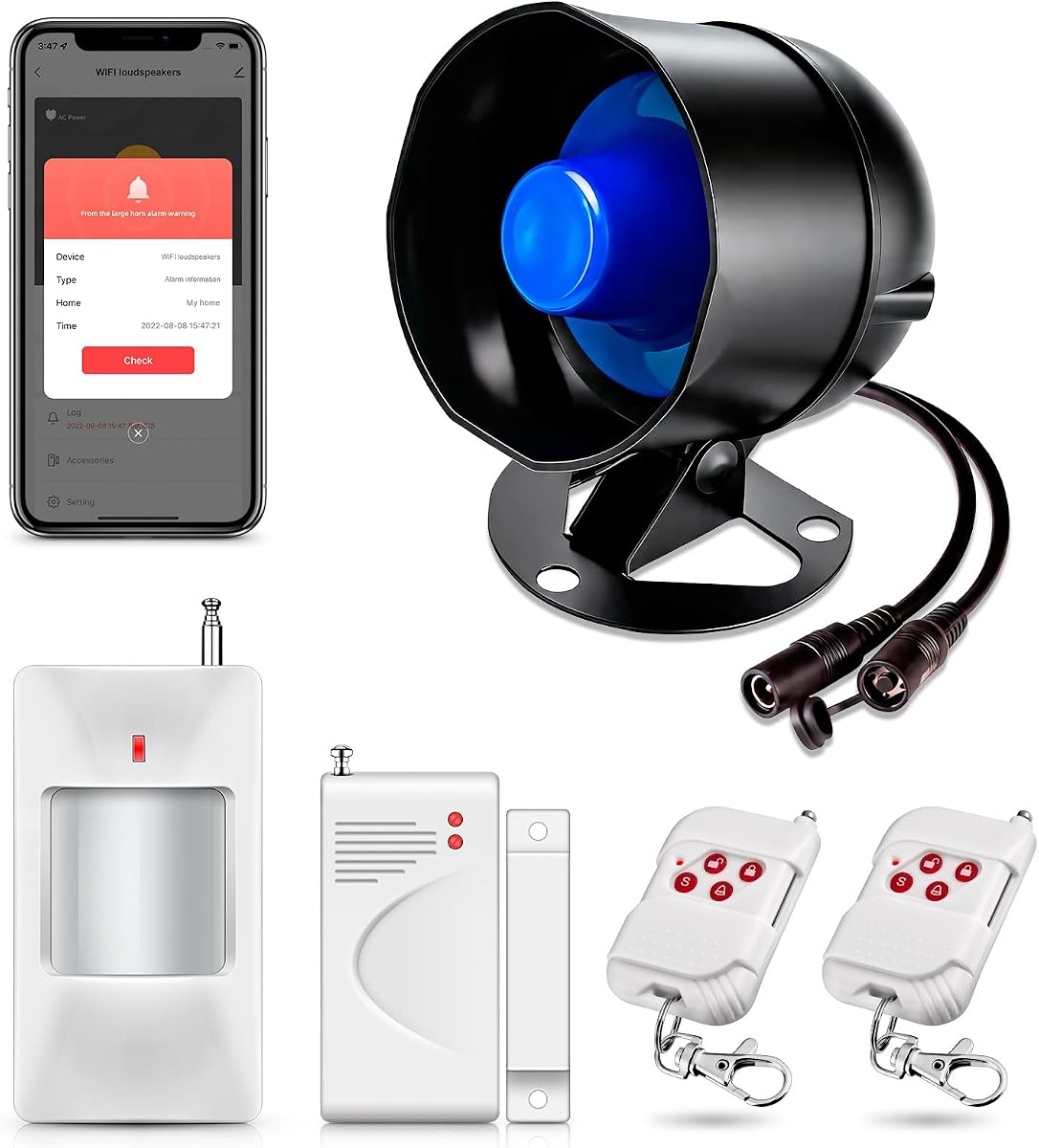


This WiFi alarm system offers an unusually strong combination of loud outdoor-capable alerting and approachable wireless setup. Its 4.4 rating reflects a practical package aimed at users who need immediate deterrence, phone alerts, and room to expand. The included siren, door contact, motion sensor, remotes, and power connection cover the fundamental needs of a compact bakery.
We may earn a commission when you buy through this link, at no additional cost to you.
The most impressive element is the 120dB siren, which is designed to be difficult to ignore from nearby production, storage, or customer areas. Tuya app integration allows staff to check open-door or open-window status, customize delays and alarm duration, and receive notifications when a detector is triggered. Because the horn is weatherproof and plugs into an outlet, it can also serve a garage, delivery entrance, storage area, or other detached commercial space covered by the bakery's WiFi signal.
The trade-offs are straightforward. Six pieces are not much coverage for a bakery with several entrances, freezer rooms, stockrooms, and cash-handling areas, so additional sensors may be necessary. The system supports up to 30 wireless detectors and 20 remotes, but 2.4GHz-only WiFi compatibility means the bakery's network must support that band. The siren is also very loud, which is useful for deterrence but demands careful placement during operating hours.
This is the strongest budget-oriented recommendation for a small bakery that wants a conspicuous alarm, app control, and inexpensive expansion. Place the contact sensor on the staff or delivery door, the motion sensor where it can avoid normal oven-side movement, and the horn near a likely entry. It is less convenient than a kit with a keypad and many sensors already included, but it delivers the essential functions with room to grow.
The 120dB horn provides an immediate local response when someone opens a protected door or crosses a detection zone. Its weatherproof enclosure makes it useful for covered entrances and attached storage spaces as well as indoor production areas.
With support for up to 30 detectors and 20 remote controls, the hub can grow from a basic starter setup into broader bakery coverage. Expansion is particularly useful for a second door, freezer room, stockroom, office, or cash area.
We may earn a commission when you buy through this link, at no additional cost to you.
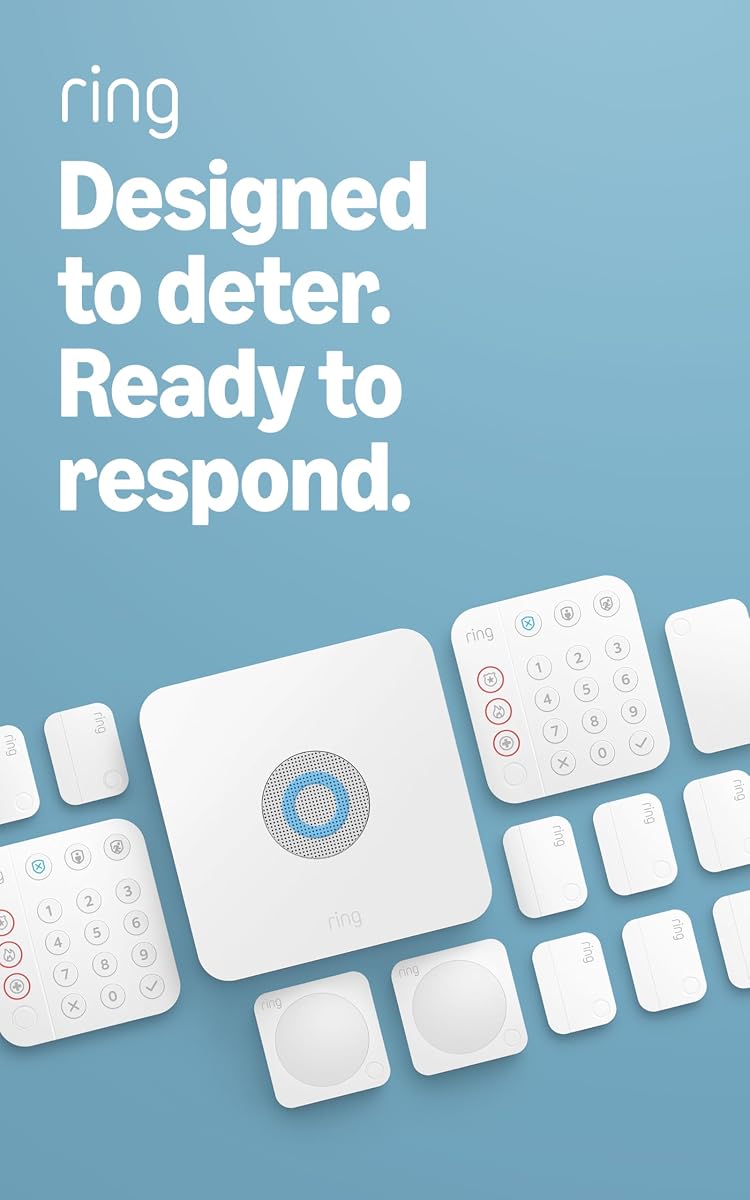
The Ring Alarm 14-Piece Kit is the most complete package for a small bakery that wants meaningful entry and interior coverage from the outset. Its 4.6 rating and balanced assortment make it our overall selection. One base station, two keypads, eight contact sensors, two motion detectors, and a range extender provide enough equipment to cover a modest business without assembling every component separately.
We may earn a commission when you buy through this link, at no additional cost to you.
The two keypads are particularly useful in a working bakery. Staff can arm and disarm the system without reaching for a phone, and their placement can be chosen for convenient access near a staff entrance and another authorized area. Eight contact sensors offer more flexibility for doors and windows than most compact kits. The range extender supports a broader property, while mobile notifications and Ring app management provide centralized visibility into system status.
The most important trade-off involves optional services. Full remote arming, continued operation if WiFi goes down, and 24/7 professional monitoring for police, fire, or medical response require a compatible Ring Protect Plan. That makes the hardware versatile, but buyers should distinguish between the included capabilities and the subscription-enabled features. It is also designed primarily around doors, windows, and movement rather than specialized food-safety or temperature monitoring.
For a bakery with several exterior doors, display windows, stockroom entrances, or separate office spaces, this kit offers the most balanced path from installation to operation. It is also a logical choice for owners who want the option to add professional response later. Anyone working with staff should establish a clear arming routine so the system does not create unnecessary false alarms during production or deliveries.
Eight contact sensors and two motion detectors give this system a meaningful advantage over starter packages. Those detectors can cover customer entry, staff access, windows, storage, and other high-priority openings without requiring an immediate full expansion.
The optional professional monitoring service provides a route to emergency response when the owner cannot personally verify an alert. It is a useful feature for a bakery left unattended overnight or protected only during specific operating periods.
We may earn a commission when you buy through this link, at no additional cost to you.
This 24-piece WiFi and GSM/4G alarm system stands out for owners who want notification options beyond a single WiFi connection. Its 4.3 rating reflects a feature-rich platform that combines app control, phone calls, SMS messages, voice-assistant support, a color status screen, and an emergency SOS function. It is especially relevant to a bakery where an internet outage should not eliminate every route for receiving an alarm notification.
We may earn a commission when you buy through this link, at no additional cost to you.
The main panel connects to 2.4GHz WiFi and accepts a 4G SIM for cellular call and SMS functions. Sensors trigger an alarm exceeding 110dB while simultaneously sending app, phone, and SMS alerts. The tamper-resistant physical design is another meaningful safeguard because removing a device is supposed to trigger an alarm and require a security code to disarm it. A color display shows system status, weather, and date, while the compact SOS device offers a simple panic option.
Its complexity is the principal drawback. A 24-piece package and multiple communication channels require careful setup, and anyone using the cellular feature must provide and manage a compatible SIM card. The product's SMS and call behavior also depends on service coverage, configuration, and local carrier support. The color display and custom sensor naming add useful visibility, but a business owner should still test every notification route before relying on it.
This system is best for a bakery seeking the strongest communication redundancy in the roundup. It suits owners willing to spend more attention on configuration in exchange for phone, SMS, and app channels. If cellular redundancy is unnecessary, one of the simpler WiFi kits will be easier to maintain, but for unattended overnight protection and flexible emergency alerts, this is the premium choice.
The optional 4G SIM pathway allows phone-call and SMS notifications to continue independently of the primary WiFi connection. That redundancy can be valuable when a broadband outage coincides with an attempted intrusion.
An activated detector can produce a loud local alarm and send several forms of notification at once. Redundant reporting makes it easier for staff or a monitoring provider to recognize that a genuine event occurred.
We may earn a commission when you buy through this link, at no additional cost to you.
This compact WiFi system is built around four door and window sensors, a password keypad, smartphone control, and unusually substantial backup power. Its 4.6 rating makes it an attractive option for a small bakery that wants strong entry-point protection without a large collection of motion detectors. The system can be expanded with additional sensors as the business changes.
We may earn a commission when you buy through this link, at no additional cost to you.
The 48-hour rechargeable backup battery is a standout for businesses concerned about brief outages. The hub also has a back-mounted anti-removal mechanism designed to trigger a local alarm and real-time phone alert if it is pried loose or removed. Smart Life and Tuya app support handles arming, disarming, and status checks, while the keypad reduces reliance on phones and adds a security code against casual false operation.
There are two important compromises. First, only four contact sensors are included, so the package may not immediately cover every important opening. Second, the hub requires hole-drilling installation with mounting hardware, making it less convenient for renters or for locations where adhesive placement is preferred. It also operates on 2.4GHz WiFi only, and its stated sensor battery life depends on regular-use conditions.
The product fits a bakery with several essential doors, a compact office, or a limited number of high-value areas. It may also serve as a focused entry system alongside separate interior detection. For owners who prioritize outage resilience, tamper resistance, and password control in a small footprint, it offers an excellent balance, provided the drilling requirement fits the premises.
The built-in rechargeable battery can keep the hub operating for up to 48 hours during a blackout. This gives staff time to check the premises or contact local emergency services without immediate loss of local detection.
The hub's rear anti-removal device is intended to detect attempts to detach it from its mounting surface. This adds a layer of protection against an intruder disabling the system before entering the premises.
We may earn a commission when you buy through this link, at no additional cost to you.
The Ring Alarm 8-Piece Kit earns the highest listed customer rating in this comparison at 4.7, reflecting a well-rounded package for a modest home or business. It includes a base station, keypad, four contact sensors, one motion detector, and a range extender. For a small bakery, that assortment can protect primary doors, a window, and an important interior zone while remaining easier to operate than a large alarm network.
We may earn a commission when you buy through this link, at no additional cost to you.
The intuitive keypad handles arming and disarming, while the contact sensors detect opened doors and windows. A range extender improves the practical reach of wireless communications through a larger premises. Staff can receive mobile notifications through the Ring app and monitor connected Ring devices from one interface. The system is also expandable with additional sensors and accessories, so an owner can begin with the included set and add coverage as necessary.
Compared with the 14-piece version, this package includes one keypad, four fewer contact sensors, and one fewer motion detector. It may therefore require more expansion to achieve comprehensive coverage. As with the larger Ring kit, remote arming, operation during a WiFi outage, voice control, and 24/7 professional monitoring depend on a compatible Ring Protect Plan. The product is security-focused and does not monitor ovens, refrigeration, or food temperature.
This is a strong choice for a one-room bakery, compact storefront, or business with a limited number of critical access points. Its 4.7 rating and simple control scheme make it approachable for staff, while professional monitoring remains available as an upgrade. Buyers who know they need numerous entry sensors immediately should choose the broader kit instead, but for targeted coverage this model provides an attractive balance.
The included keypad gives employees a direct way to arm and disarm the system. That convenience is useful during shift changes, deliveries, and opening or closing routines when reaching for a phone would be inconvenient.
The starter equipment covers essential doors and one motion zone, while the platform accepts additional Ring sensors and accessories. A bakery can add coverage in stages as it identifies blind spots.
We may earn a commission when you buy through this link, at no additional cost to you.
This 10-piece version of the WiFi 120dB security kit offers a more substantial starting package than the six-piece model. It combines four door and window sensors, two motion sensors, two remote controls, a WiFi siren, and a power plug. Its 4.6 rating makes it one of the strongest general-purpose options for covering a modest bakery with several entrances and interior spaces.
We may earn a commission when you buy through this link, at no additional cost to you.
The weatherproof 120dB horn remains the centerpiece. It can warn people nearby while also serving as a deterrent against a forced entry, and its weather resistance makes it suitable for a covered delivery entrance, attached garage, or other semi-outdoor location. The Tuya app supports remote status checks, customizable delays and alarm duration, timers, and instant phone notifications. Wireless sensors can be mounted with adhesive pads or screws, reducing installation disruption.
Compared with compact systems, the included detector quantity reduces the need for immediate expansion, although a busy bakery may still need more. The lack of a keypad means daily arming and disarming is handled through the app or included remotes. Compatibility is limited to 2.4GHz WiFi, so it must join a 2.4GHz network rather than a 5GHz-only connection. Customers should also confirm the hub and app configuration in their own premises.
This system is well suited to a bakery with a customer entrance, rear staff door, display window, and production or storage area that needs motion coverage. It offers a strong detector mix, loud alerting, and support for up to 30 wireless detectors. It is a more complete alternative to the six-piece version, though it remains more DIY-oriented than the Ring systems with integrated keypads.
Four contact sensors and two motion detectors provide a useful combination of perimeter-entry and interior detection. This makes the package more versatile for covering doors, windows, production space, and stockroom traffic.
Adhesive pads offer a straightforward way to position wireless detectors, while screws provide a more secure alternative. That flexibility helps owners test coverage before deciding on permanent attachment points.
We may earn a commission when you buy through this link, at no additional cost to you.
This WiFi DIY alarm system is unusually well equipped for monitoring openings, with ten door sensors, one motion sensor, a keypad, and two remote controls. Its 4.5 rating and no-subscription structure make it a practical option for a bakery that wants broad entry monitoring and simple app alerts. The package includes a base station, keypad, sensors, remotes, manual, and customer support.
We may earn a commission when you buy through this link, at no additional cost to you.
The 120dB indoor siren is designed to produce an immediate local alert, while phone notifications provide remote awareness. Installation requires no wiring, drilling, or professional installation, allowing sensors to be placed with adhesive pads or screws. The system supports expansion to 20 sensors and five remotes or keypads, while the base station's rechargeable battery provides up to eight hours of protection during a power interruption.
Its main limitation is the shorter backup duration compared with the 48-hour system. Eight hours may be sufficient for a short outage but not an extended one. Another consideration is that the listed sensor assortment focuses on doors and motion rather than windows. Depending on the premises, owners may need to add suitable sensors or use contact sensors on accessible windows. The system is also restricted to 2.4GHz WiFi.
This product is a good match for a bakery with numerous doorways, several storage transitions, or an owner who wants to avoid monthly fees. Its included keypad makes arming familiar to employees, and the lack of drilling preserves the premises. For businesses needing longer outage resilience, compare the stated backup period carefully before making this the primary alarm choice.
Ten included door sensors provide a strong foundation for monitoring staff entrances, customer doors, stockroom transitions, and other frequent openings. This reduces the need to buy individual sensors for each protected doorway.
The system sends immediate phone notifications through WiFi without requiring a recurring plan. Owners can receive awareness of triggered sensors while remaining responsible for deciding when emergency services or professional monitoring should be contacted.
We may earn a commission when you buy through this link, at no additional cost to you.
This WiFi home and business alarm is designed around a loud 120dB siren hub, wireless door or window sensors, and motion detection. Its 4.5 rating makes it appealing for a bakery that also has a garage, shed, stockroom, or attached storage space. The system is controlled through the Tuya app, and the supplied features focus on immediate local alerts and remote status information.
We may earn a commission when you buy through this link, at no additional cost to you.
The siren is loud enough to deter many opportunistic intruders and alert people nearby. A triggered sensor produces a local alarm while the app can report a door, window, or movement event. Setup does not require a professional installer: the siren plugs into an outlet, while the wireless sensors can be secured using adhesive pads or screws. That makes the system practical for tenants, small shops, and businesses that need to protect separate areas without extensive wiring.
The supplied information emphasizes the siren and general sensor functions but does not clearly enumerate every item in the package, so buyers should verify the quantity and type of included detectors. The hub requires 2.4GHz WiFi, and it is an indoor-oriented system despite its usefulness for a garage or shed. Maximum expansion is stated at 30 wireless detectors and 20 remote controls, which offers ample room for a growing layout.
The product is a good fit when a loud, flexible local alarm is the priority and the bakery wants to cover more than one compact area. Place the hub where its sound can be heard but not where ovens or routine kitchen movement create unnecessary triggers. Confirm sensor placement carefully before arming. For users who need detailed commercial monitoring or a larger professional platform, one of the keypad-based or professionally monitored systems may be more appropriate.
The system is particularly relevant to a garage, shed, stockroom, or other secondary business area. A loud siren can alert nearby staff and discourage an intruder before valuable equipment or inventory is reached.
Adhesive or screw mounting allows owners to position sensors and evaluate coverage before finalizing a layout. The plug-in hub avoids the need to run power cables to a central alarm panel.
We may earn a commission when you buy through this link, at no additional cost to you.
The Tolviviov 12-Piece system focuses heavily on entry monitoring, supplying a base station, two remotes, and nine contact sensors. Its 4.2 rating is the lowest among the rated products in this guide, but the package remains relevant for a bakery where most security concerns center on doors and windows rather than general interior movement.
We may earn a commission when you buy through this link, at no additional cost to you.
Contact sensors send an early warning to the base station when a protected opening is moved, and the phone receives a real-time alarm notification. Users can control Away, Home, and Disarm modes by voice through Alexa or Google Assistant. The platform supports expansion to 20 sensors and five remotes or keypads, allowing the initial door-focused installation to grow toward wider coverage. There are no contracts or subscription fees.
The package does not include a motion detector, so it cannot immediately provide broad detection inside the production area, stockroom, or office. It is limited to 2.4GHz WiFi, and the backup battery lasts eight hours while the station is connected to its AC adapter during normal use. Buyers should also account for the eventual need to add suitable motion detection if interior coverage is a priority.
This system works well for a bakery with several exterior and interior doors, especially one already using compatible voice-assistant technology. It is less suitable as a complete standalone solution for open production space because motion detection is absent. For owners willing to add a detector, its generous contact-sensor count and contract-free operation make it a sensible perimeter-focused choice.
Voice-control support for Away, Home, and Disarm modes can simplify routine security tasks. It is particularly helpful during busy opening, closing, or delivery periods when the owner has hands occupied.
Nine included contact sensors provide broad door and window coverage without a recurring service charge. Additional sensors can extend the system into storage, staff areas, and other access points.
We may earn a commission when you buy through this link, at no additional cost to you.
The ANNKE 9-Piece system is a distinctive all-in-one package designed for both homes and small businesses. It includes a control panel, four door and window sensors, a PIR camera detector, an indoor sounder, a keypad, and a remote keyfob. No customer rating is supplied for this product, so its performance should be evaluated from its stated features rather than from a comparative rating.
We may earn a commission when you buy through this link, at no additional cost to you.
The camera-equipped motion detector differentiates it from most conventional kits in the roundup. The ANNKE Vision app provides arming, disarming, status checks, real-time alerts, and snapshot capture, allowing the owner to review an image when a threat needs confirmation. Stay, Away, and Disarm modes accommodate different business periods, while the 120dB sounder provides local deterrence. The system also supports adding smoke detectors and other compatible devices.
Installation uses snap-fit mounting without wiring, drilling, or professional installation, making placement straightforward. The system can operate through 2.4GHz WiFi or Ethernet, which is useful if a bakery's network configuration is inconvenient for wireless-only equipment. Sixteen AA batteries must be purchased separately, and prospective buyers should confirm which included devices require them before setup. The claimed professional monitoring capability also needs clarification regarding activation and service terms.
This kit is a compelling choice for a bakery owner who wants visual confirmation of movement alerts and values a cohesive app-controlled system. Its combination of entry sensors, image capture, keypad, remote, and sounder covers several security needs without assembling devices from different ecosystems. It ranks last only because it lacks a listed customer rating and requires a separate battery purchase, not because its stated feature set is limited.
The PIR camera detector can capture snapshots that appear in the app when an event occurs. Visual context may help an owner distinguish an actual concern from routine movement before deciding how to respond.
Support for both 2.4GHz WiFi and Ethernet provides more installation flexibility than a wireless-only hub. Snap-fit components also allow sensors to be repositioned as bakery workflows and coverage priorities evolve.
We may earn a commission when you buy through this link, at no additional cost to you.
The right bakery alarm should cover vulnerable openings, produce a conspicuous local alert, notify staff remotely, and remain practical to operate during deliveries, production, and closing. These factors help translate general security goals into a focused equipment list.
Begin by walking through the bakery after closing and noting every customer door, staff entrance, delivery entrance, accessible window, stockroom opening, office door, and route toward ovens, cash, equipment, or high-value inventory. A contact sensor is most useful where an opening is normally secured, while a motion detector is more appropriate for a space that must remain unoccupied or where movement indicates a possible intrusion. Placement also depends on layout, because appliances, shelving, and partitions can restrict motion coverage.
A loud siren is most effective when it is audible in occupied work areas and audible outside where help might notice it. The systems in this guide include sirens rated from over 110dB to 120dB, although real perceived loudness depends on room acoustics and placement. Avoid positioning a horn beside machinery, fans, or other high background noise. A bakery with ovens and extraction equipment should test whether staff can hear the alarm during production and whether a siren in the production room would create an unnecessary disruption.
Most listed systems require a 2.4GHz WiFi network, and several explicitly do not support 5GHz-only connections. A compatible dual-band router or separate 2.4GHz network may be needed if the bakery's internet service is restricted to 5GHz. Ethernet support, cellular backup, and an eight- or 48-hour battery are useful alternatives when network reliability is a concern. Confirm hub placement, signal strength, and app access before installing sensors in distant storage rooms or detached garages.
App push notifications are convenient because they can inform staff without a local siren, but they depend on the phone's connection and the hub remaining online. Phone calls, SMS messages, professional monitoring, and a local siren offer additional layers. The WiFi and GSM system supports cellular calls and SMS, while the ANNKE system adds snapshot capture through a camera detector. Choose based on who must respond, when they may be unavailable, and how much responsibility the owner wants to retain for verification.
A keypad can make arming and disarming easier for employees who are already handling ovens, customers, and deliveries. Remotes are more portable but can be misplaced or carried away. App control provides remote status checks but may be less convenient during busy routines. Whichever method is chosen, establish clear rules for arming at opening, during unattended production periods, at closing, and before deliveries. A loud alarm accidentally triggered during business hours can disrupt service and undermine confidence in the system.
A bakery's security needs can change as the menu, staff, storage arrangement, and delivery volume evolve. Several systems support roughly 20 to 30 detectors, while the ANNKE platform accepts additional compatible safety devices. Before buying, check whether extra sensors, keypads, remotes, sirens, cameras, and mounting accessories are sold separately and whether they are compatible with the same app. Expansion capacity is useful, but the most important benefit is a base package that already covers the bakery's highest-priority entry points.
Self-monitored systems send alerts to the owner's devices, but somebody must still interpret the event and contact emergency services when appropriate. Professional monitoring provides a route to emergency police, fire, or medical response, subject to the provider's service and availability. Some hardware works without a recurring charge, while advanced remote features or monitoring require a separate plan. For a bakery closed overnight or located in an isolated commercial property, professional response capability may justify a more advanced system.
Adhesive mounting is quick and reversible but may perform less reliably on rough, greasy, dusty, or frequently disturbed surfaces, all of which can occur in a bakery. Screw-mounted sensors are more secure, while a drilled hub installation requires suitable wall material and careful cable-free placement. Schedule regular tests of every contact, motion detector, remote, keypad, siren, and notification path. Replace batteries according to the stated guidance, clean sensors gently, and inspect placement whenever shelving, equipment, or doors are rearranged.
Start with a complete walk-through and a written coverage map. Identify the customer entrance, staff door, delivery route, accessible windows, stockrooms, office, equipment areas, and detached spaces. Pair every detector with the hub before permanent mounting, then test it in both armed and disarmed states. Place a contact sensor at the top of a door or frame where it can detect separation without being exposed to excessive heat, moisture, flour, or physical contact.
Establish an operating routine that matches the bakery's schedule. Arm the system whenever the premises will be unattended, define which zones should remain active while staff are present, and train employees on the keypad, remotes, app, and emergency SOS controls if included. Use the arming delay and alarm duration settings thoughtfully around early-morning baking, delivery handoffs, and cleaning. A clearly posted short procedure is often more effective than assuming every worker understands the system's modes.
Care for the equipment by checking battery levels on a recurring basis, cleaning sensor surfaces with a dry cloth, and making sure adhesive mounts remain secure. Test the local siren, app notifications, and any cellular or professional monitoring pathway regularly. After moving ovens, shelving, partitions, or doors, reassess motion coverage. Periodically verify that the hub remains connected, that emergency contacts and monitoring settings are current, and that every device still has the batteries required for uninterrupted operation.
The Ring Alarm 14-Piece Kit offers the most balanced package for many small bakeries because it includes multiple contact sensors, motion detectors, keypads, a range extender, and app control. A bakery with only a few critical openings may find the 8-Piece Kit more manageable. A lower-cost siren kit or a camera-equipped ANNKE system may suit owners with different priorities, but coverage should always be based on the bakery's actual layout.
Motion sensors are useful when a room, storage area, office, or equipment zone needs to remain protected while doors stay open or when movement itself is meaningful evidence of intrusion. They can also trigger during normal production, so placement requires care. A contact-only system can protect important openings effectively, but adding suitable motion coverage usually creates a stronger overall perimeter.
A loud siren can deter opportunistic intruders and warn nearby staff, but it should be supported by reliable door or window sensors and remote notifications. Sirens are most effective when audible despite kitchen noise and positioned where they cannot be reached or disabled easily. Professional monitoring may add another response layer for a business protected overnight or in an isolated location.
Most of the listed products require 2.4GHz WiFi, and some explicitly exclude 5GHz-only networks. Check the hub requirements before installation and make sure the router offers a compatible 2.4GHz band. The ANNKE system also supports Ethernet, while the WiFi and GSM system can use a 4G SIM for cellular alerts, giving owners alternatives when wireless coverage is inconsistent.
Several listed systems provide core local alarms and app notifications without recurring fees. Ring's remote arming, continued operation during WiFi loss, voice control, and professional monitoring require a compatible subscription, according to the supplied information. The ANNKE product advertises optional professional monitoring and no monthly fees, but buyers should verify activation terms and service details before relying on that capability.
The required number depends on how many critical doors, windows, and interior zones need protection. A compact bakery may be well served by four door sensors, while a larger operation with production, storage, office, and delivery areas may need considerably more. Count the priority openings first, then add motion detection in spaces where normal activity will not cause repeated alarms.
It can if the remote site has a reliable connection to the hub. A 2.4GHz WiFi system may work across a modest building, but distance, walls, and interference can reduce reliability. A wired Ethernet path or cellular alarm may be more dependable for a detached garage, and the outdoor detector or horn must be suitable for the temperature and weather conditions in that location.
Create a simple routine for opening, closing, deliveries, and periods when nobody can respond. Keypads are often easiest for regular staff, while remotes and the app can provide additional convenience. Train employees to avoid leaving the system in an incorrect mode and to report contact or motion alerts rather than assuming every alarm is a false trigger. Written instructions and a responsible staff member are important.
The Ring Alarm 14-Piece Kit is the strongest all-around choice for a bakery that needs a generous selection of contact sensors, motion detectors, keypads, app management, and optional professional monitoring. The Ring 8-Piece Kit offers a simpler version of the same platform for smaller spaces, while the ANNKE kit differentiates itself with a camera-equipped detector and snapshot alerts.
For owners prioritizing immediate deterrence and a low-cost starting point, the 120dB siren systems provide substantial warning power and flexible expansion. The WiFi Four-Sensor Alarm stands out for 48-hour outage support and tamper resistance, while the WiFi and GSM system suits buyers seeking phone, SMS, and cellular redundancy. Prioritize accurate entry coverage, a control method staff will use consistently, dependable power and connectivity, and notifications that someone is responsible to verify.
Before purchasing, confirm the current package contents, sensor compatibility, network requirements, monitoring terms, and available accessories for the bakery's exact layout. Product configurations, customer feedback, seller information, and availability can change, so review the latest listing details carefully before finalizing your security setup.