
Soundcore Q20i
4.5Editor score
Hybrid active noise cancellation
Forty-hour ANC battery life
Dual-device Bluetooth connectivity
Our expert guide compares the best ANC headphones for podcasts, highlighting noise control, microphone quality, comfort, battery life, connectivity, and
ANC headphones can transform podcast recording and listening by reducing distracting background noise, but the most useful model must also capture your voice clearly and remain comfortable through long sessions. The best options balance active noise cancellation, microphone performance, accurate sound, dependable connectivity, and a practical battery life.
This guide compares ten active noise-cancelling over-ear headphones for podcasters, editors, remote workers, and listeners. We evaluated the supplied specifications and customer ratings, focusing on ANC controls, call-focused technologies, comfort features, wired and wireless options, multipoint connectivity, app support, and battery-life claims.
Each numbered review identifies the headphone's strongest use case and notable trade-offs, while the comparison table makes the core differences easy to scan. Ratings and feature availability can change over time, and prices fluctuate frequently, so readers should verify current listings and compatibility before purchasing.
4.5Editor score
4.4Editor score

4.5Editor score
The table below compares all ten models across their principal podcast-relevant characteristics: noise cancellation, microphone capabilities, playback endurance, connectivity, and signature features. Detailed specifications remain limited for some products, so buyers should consult the current product listing before making a final decision.



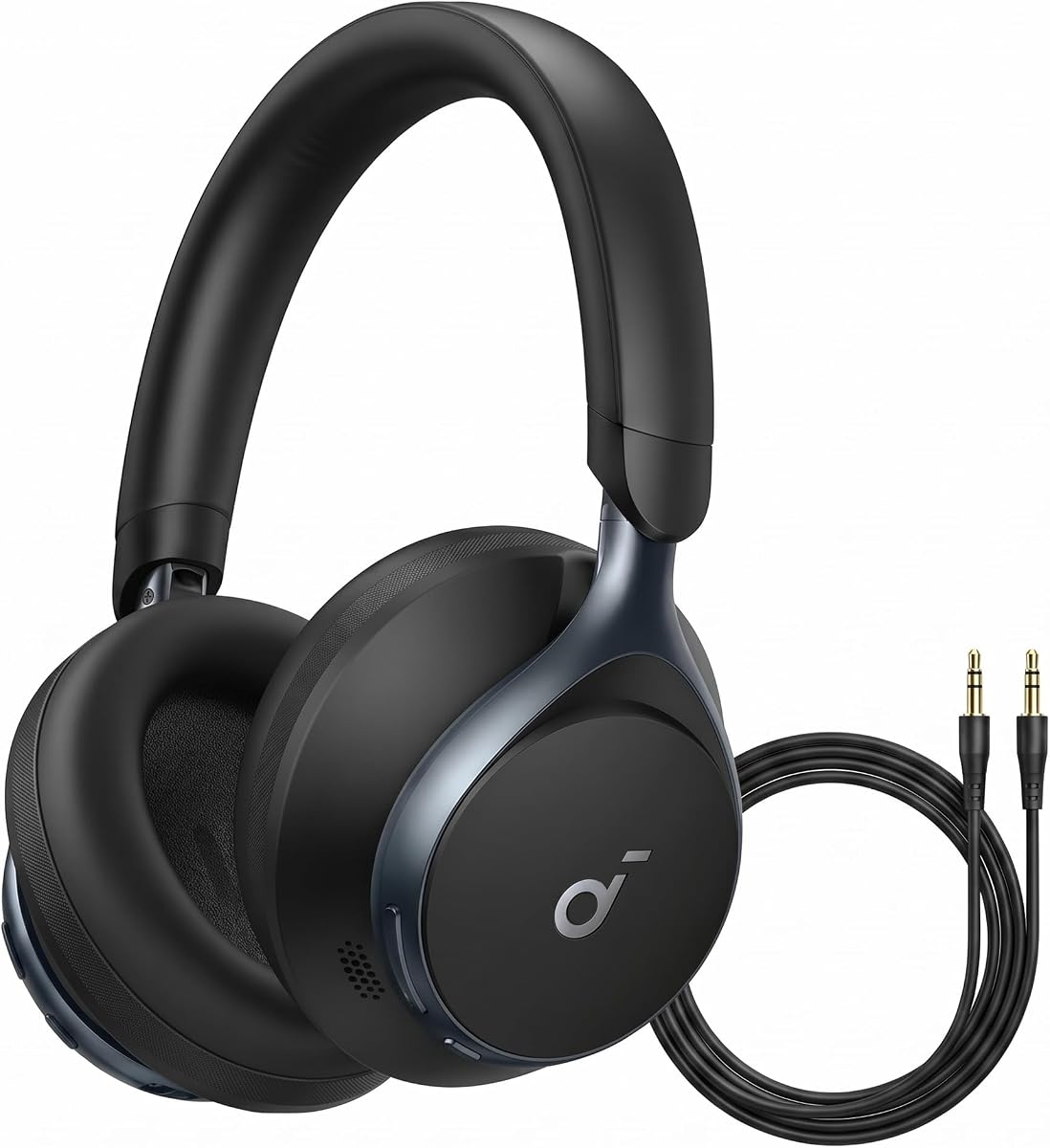
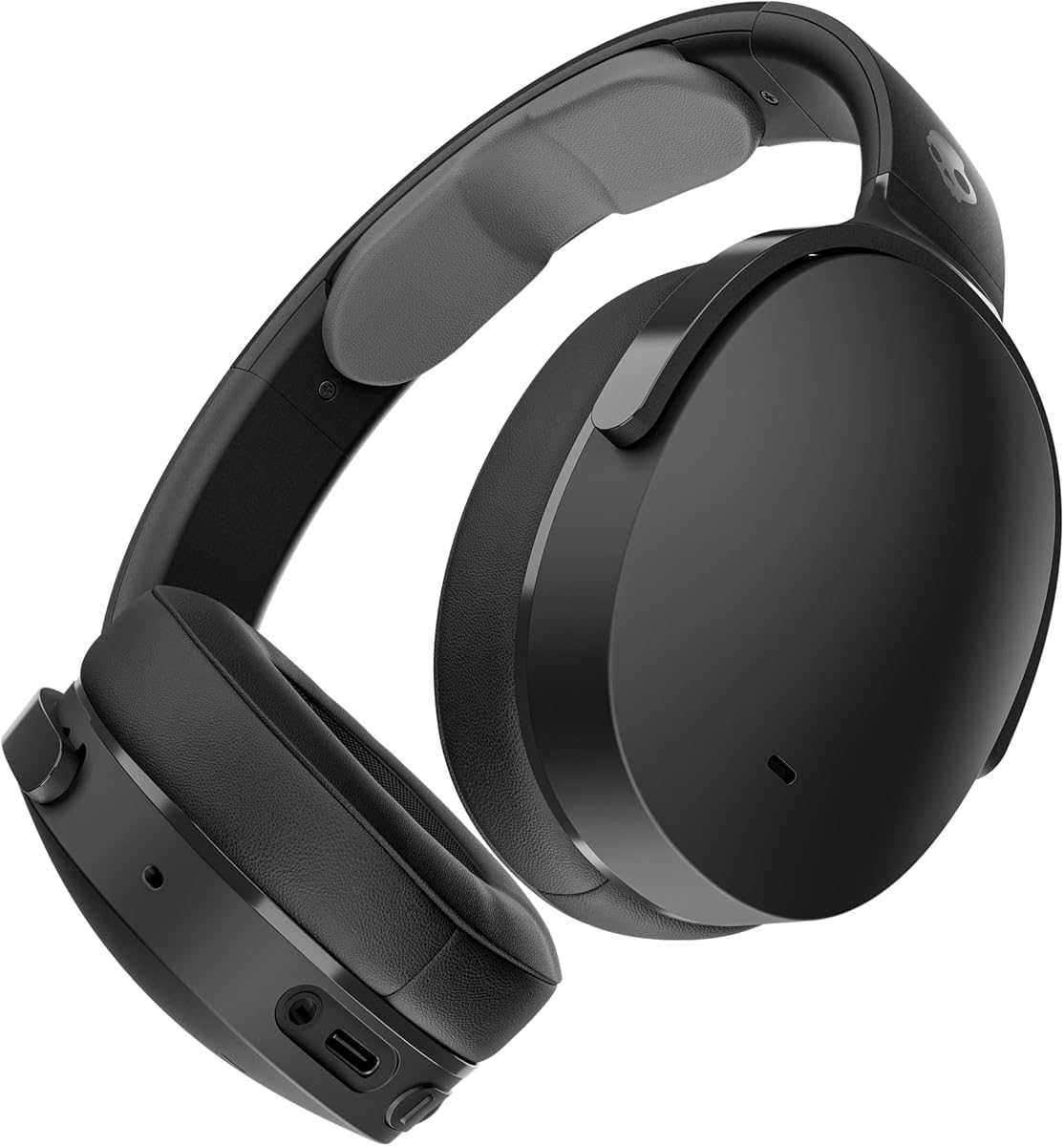
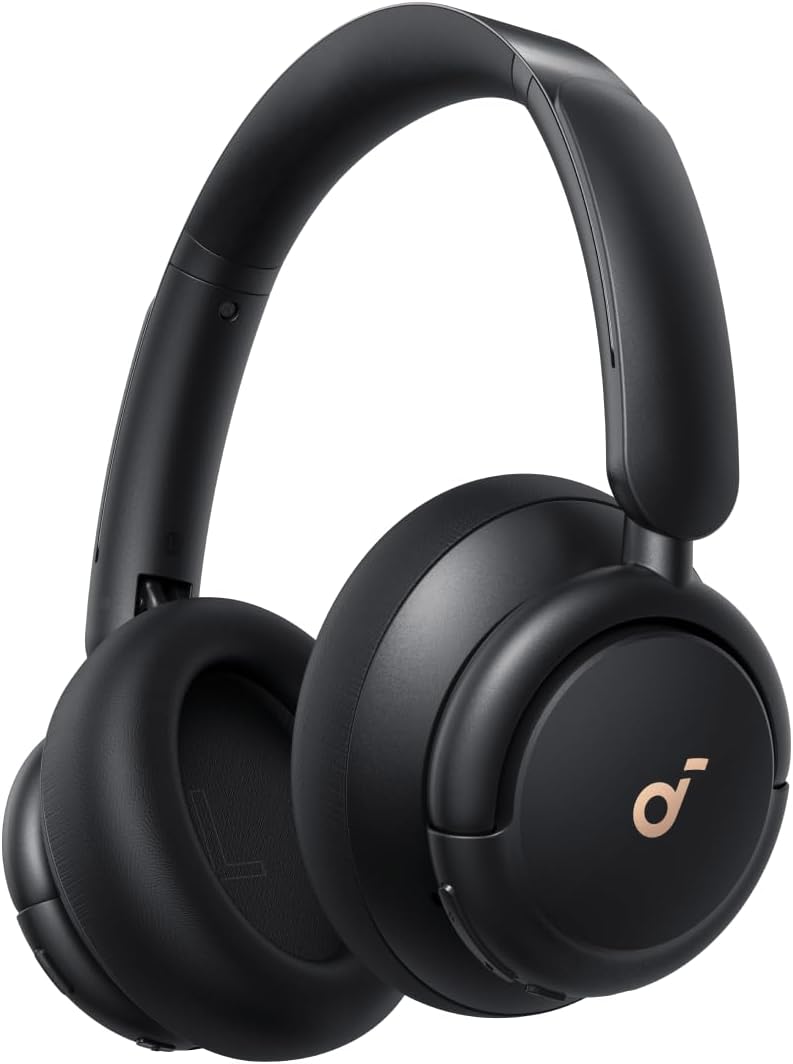
The Soundcore Q20i combines hybrid active noise cancellation, a 4.5 customer rating, and an unusually useful set of connectivity features, making it a strong all-around recommendation for podcast listeners and creators working in shared spaces. Four microphones—two internal and two external—are designed to detect external noise and reduce up to 90%, helping isolate speech and music from trains, offices, and other steady distractions.
We may earn a commission when you buy through this link, at no additional cost to you.
Its 40mm dynamic drivers provide the foundation for clear spoken-word listening, while BassUp adds low-frequency emphasis for music and gaming. For podcast production, the Q20i can be especially useful when editing, monitoring, or reviewing a recording through Bluetooth. The included AUX connection also supports Hi-Res certified playback when a wired setup suits the user's equipment, although the supplied information does not explicitly state whether ANC remains active over that connection.
Battery life is one of the Q20i's strongest attributes. Soundcore advertises up to 40 hours with ANC on and 60 hours in normal mode, while five minutes of charging can add approximately four hours of listening. Bluetooth 5.0 dual connections allow a laptop and phone to remain connected simultaneously, with audio switching automatically when a call arrives. This makes the headphones convenient for hybrid podcasting, where a creator may move between editing, calls, and reference listening.
The Soundcore app expands the value further through 22 EQ presets, manual EQ adjustments, ANC, Normal, and Transparency modes, white-noise access, HearID personalization, Spatial Audio, and firmware updates. Transparency mode is particularly useful for monitoring studio announcements or monitoring surroundings. No dedicated beamforming call system is identified in the supplied specifications, so buyers who need advanced microphone performance may want to compare the Q30, Sony, JBL, Beats, or Crusher models.
Overall, the Q20i is easy to recommend as the best budget-oriented entry in this guide because it combines meaningful noise reduction, long battery life, dual-device connectivity, and broad app support. It is less suited to someone whose only priority is the most advanced voice-isolation technology, but for everyday podcast listening, recording, and editing, it offers a notably balanced feature set.
The Q20i's hybrid ANC and Transparency mode make it useful when the environment changes. Podcasters can reduce distracting background noise while reviewing material, then let in announcements or conversations without removing the headphones. App controls add another layer of adjustment.
Bluetooth 5.0 dual connections are particularly valuable for creators using a computer for editing and a phone for calls or field recording. Automatic device switching reduces the need to manually disconnect and reconnect, supporting a more continuous workflow.
We may earn a commission when you buy through this link, at no additional cost to you.
The JLab JBuds Lux ANC earns a place in this roundup because it combines a 4.5 rating with the straightforward format podcast listeners often want: wireless over-ear headphones with active noise cancellation. Its graphite finish gives it a restrained appearance that should suit recording studios, home offices, and shared workspaces without distracting from the user's equipment.
We may earn a commission when you buy through this link, at no additional cost to you.
The supplied product information does not include detailed driver sizes, ANC reduction percentages, microphone technologies, battery-life figures, or connectivity details. That limited record makes it difficult to position the JBuds Lux ANC against feature-heavy alternatives on specifications alone. Nevertheless, its active noise cancellation and over-ear form are directly relevant to people who want a more enclosed listening experience for voice content, music, and video calls.
For podcast listening, the most meaningful evaluation points will include the clarity of voices, the degree to which background noise disappears, whether the fit remains stable during long edits, and how clearly the microphone performs in a call. None of those specific performance characteristics are confirmed in the supplied data, so this guide does not claim specific recording results. Buyers should treat the 4.5 rating as encouraging customer feedback rather than a guarantee of microphone performance.
The model's appeal lies partly in its relative simplicity. While some alternatives provide multiple ANC levels, spatial processing, app-based personalization, or physical bass controls, the JLab proposition appears focused on the essentials. That can be advantageous for creators who do not want to manage extensive software settings and simply need a wireless, noise-reducing headset for monitoring and communication.
The JBuds Lux ANC is a credible consideration for listeners who value a highly rated, conventional ANC over-ear design. It is not the strongest match in this list for buyers who require documented battery endurance, multipoint connectivity, beamforming microphones, or extensive wired compatibility. Checking the live listing for current specifications would be especially important before choosing it over more thoroughly documented models.
The combination of wireless operation, an over-ear design, and active noise cancellation covers the core needs of many podcast listeners. It may be especially appealing for users who want fewer controls than the app-driven models found elsewhere in the guide.
Detailed specifications are not supplied for this model, so buyers should confirm microphone quality, battery duration, codec support, wired operation, and multipoint behavior on the current listing. Those details can materially affect a podcasting setup.
We may earn a commission when you buy through this link, at no additional cost to you.
The Soundcore Q30 is an Editor's Choice because its hybrid ANC system is organized around three clearly defined environments: Transport, Outdoor, and Indoor. With a 4.4 rating and a claimed reduction of up to 95% of low-frequency ambient sound, it targets the types of persistent noise commonly encountered by commuters, travelers, and remote podcast producers.
We may earn a commission when you buy through this link, at no additional cost to you.
The mode-based approach is more useful than a single ANC setting for many users. Transport mode targets engine noise, Outdoor mode addresses traffic and wind, and Indoor mode is intended to reduce the sound of conversation and activity in busy offices. A creator recording from a shared apartment or working near a kitchen can therefore start with a more appropriate baseline without repeatedly changing levels manually.
Sound quality is supported by 40mm drivers with flexible silk diaphragms, described as producing thumping bass and crisp treble up to 40kHz. The supplied information also notes support for high-resolution music. That combination can make the Q30 suitable for both spoken-word review and music-based podcast production, although the reference to 40kHz extension describes audio reproduction rather than guaranteed recording resolution.
Battery performance is excellent for a production workflow. The headphones can play for up to 50 hours with noise cancellation enabled and 70 hours in standard mode. A five-minute charge provides approximately four hours of use. Ultra-soft protein-leather earcups and memory-foam padding improve comfort during long editing sessions, while the lightweight construction helps limit fatigue.
One important limitation is that ANC is not compatible with the AUX cable. Users who prefer a wired connection must therefore choose between that stable, high-resolution connection and wireless noise cancellation. The product data also does not identify beamforming microphones, so the Q30 may not be the strongest choice for users who rank microphone clarity above all other considerations. Within those limits, it remains an adaptable, durable recommendation for daily podcast work.
Transport, Outdoor, and Indoor modes allow creators to tune noise reduction to the sounds around them. This focused setup is practical for field interviews, travel recording, and editing in busy spaces where consistent environmental conditions are uncommon.
Up to 50 hours of playback with ANC makes the Q30 suitable for intensive editing periods and multi-day recording schedules. Memory-foam padding and soft earcups complement that endurance by prioritizing comfort during extended use.
We may earn a commission when you buy through this link, at no additional cost to you.
The JBL Tune 780NC stands out for communication, making it a compelling option for podcasters who regularly join remote interviews, production meetings, or client calls. Its two beamforming microphones precisely capture speech while noise-reduction technology filters background sound. The supplied specifications explicitly describe clear voice pickup in busy cafés and other environments, addressing a central concern in podcast production.
We may earn a commission when you buy through this link, at no additional cost to you.
Adaptive noise cancellation and Smart Ambient controls offer another layer of separation between the user and the surrounding environment. When full isolation is not appropriate, Smart Ambient can let outside sound back in. This is useful during recording sessions when environmental cues matter, or while moving between calls, travel, and collaborative work.
The headphones use custom 40mm drivers with JBL Pure Bass Sound and support JBL Spatial Sound on compatible devices. Hi-Res audio can also be used through the included USB-C-to-3.5mm cable. For a podcaster, this gives the model flexibility for both critical listening and casual reference material, although exact microphone performance will ultimately depend on the recording environment and connected computer.
Battery life reaches up to 76 hours with ANC off and Bluetooth on, while ANC-on use is rated at up to 50 hours. A five-minute speed charge adds up to five hours, and a full recharge takes about two hours. One practical omission is the charging cable itself, so buyers should confirm whether a suitable USB-C cable is already available.
Bluetooth 6.0 multipoint connectivity allows simultaneous pairing with two devices, making it easy to move between a laptop-based editing session and phone calls. Google Fast Pair and Microsoft Swift Pair support simplify setup on compatible systems. The 4.1 rating is lower than that of the top picks, but the microphone-focused feature set makes the Tune 780NC a strong option when call clarity is the priority.
The dual beamforming microphones target speech pickup while reducing ambient noise. That makes this model particularly relevant for live podcast interviews, editorial reviews, and production calls conducted from cafés, offices, or other active environments.
The JBL Headphones app supports Personi-Fi 3.0, EQ controls, presets, and Smart Ambient settings. These options let creators shape the monitoring experience and adjust how much environmental audio reaches the headphones.
We may earn a commission when you buy through this link, at no additional cost to you.
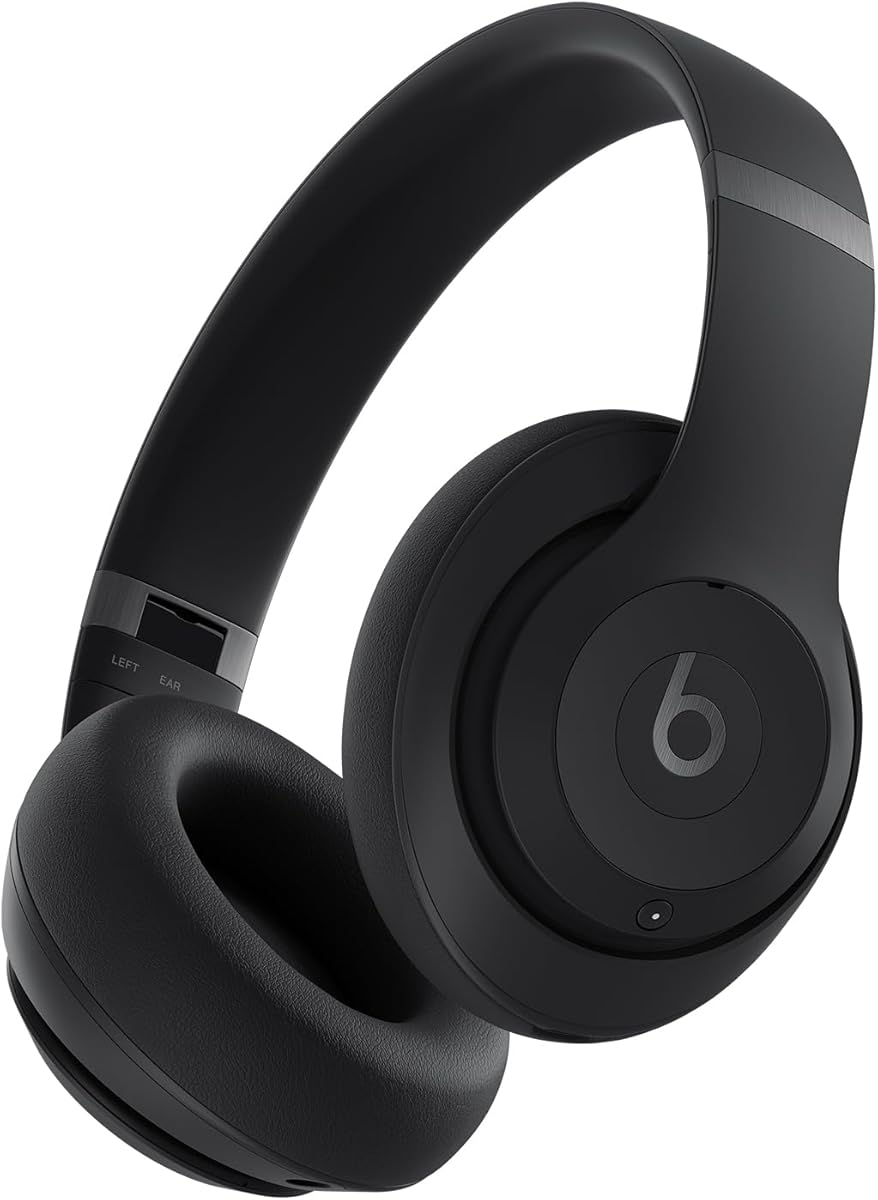
Beats Studio Pro combines a 4.5 rating, active noise cancellation, and broad device support in a polished premium package. Its custom acoustic platform is designed for rich, balanced sound across music, calls, and everyday listening, making it relevant to podcasters who use their headphones for both spoken content and music production.
We may earn a commission when you buy through this link, at no additional cost to you.
The model's strongest technical feature is USB-C lossless audio support, with sound profiles designed to optimize output across devices and environments. A 3.5mm cable provides a standard analog alternative. This wired flexibility is useful for a studio workstation, while wireless performance supports travel and mobile interviews. Users should still verify that their computer, interface, or phone supports the required lossless workflow.
For communication, voice-targeting microphones are designed to reduce background noise and keep calls clear in offices and while traveling. That makes the headphones appropriate for remote interviews and collaborative production. Active Noise Cancelling blocks distractions during work or commutes, and Transparency mode allows environmental sound to mix with the audio when the user needs awareness of the surroundings.
The headphones support one-touch pairing with both Apple and Android devices and can switch across those ecosystems, though multipoint operation is not specified in the supplied data. Battery life reaches up to 40 hours, and Fast Fuel charging provides up to four hours from a ten-minute charge. Class 1 Bluetooth is designed for stable connections with fewer dropouts, an important quality for wireless monitoring.
UltraPlush comfort cushions and an over-ear design support long sessions, while included spatial audio with personalized dynamic head tracking adds immersion for media and entertainment. The travel-ready woven case, 3.5mm cable, and universal USB-C charging cable make the package polished. For creators willing to move into the premium tier, Studio Pro offers an attractive blend of lossless wired audio, clear calls, and refined everyday convenience.
USB-C lossless audio gives creators a high-fidelity wired option, while the included 3.5mm cable expands compatibility. This makes Studio Pro useful for both desktop production sessions and more mobile listening environments.
Voice-targeting microphones reduce background noise for clearer communication. This makes the headphones relevant to remote interviews, editorial meetings, and production calls conducted outside a controlled studio environment.
We may earn a commission when you buy through this link, at no additional cost to you.
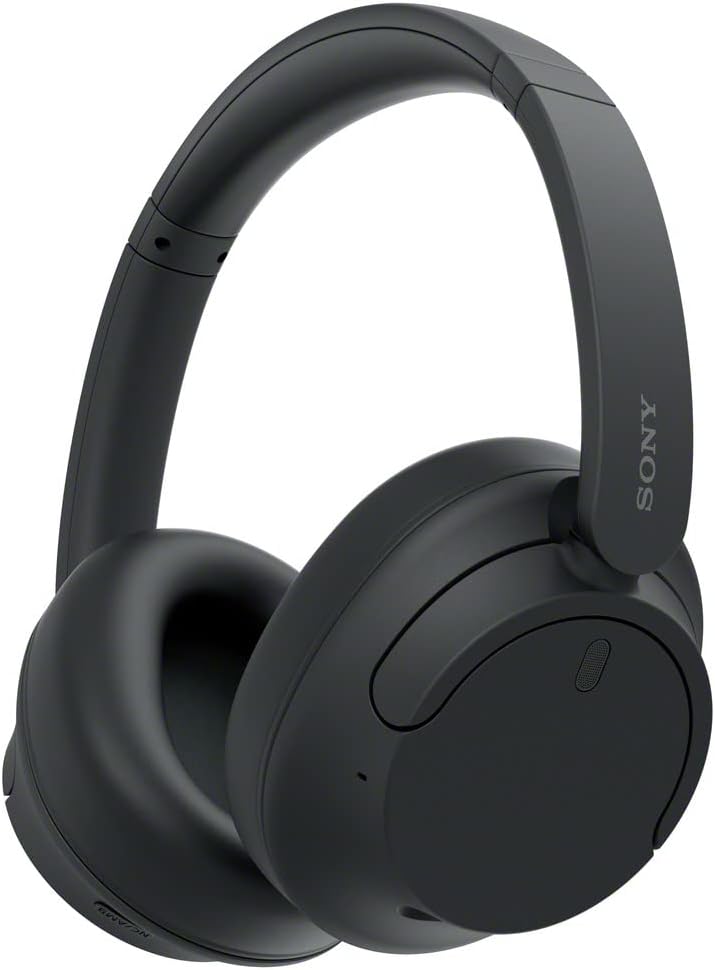
The Sony WH-CH720N is the strongest lightweight recommendation in the guide, weighing only 192 grams. At 4.3 stars, it combines a comfortable design with dual noise sensor technology, the Integrated Processor V1, adaptive sound controls, and multipoint connectivity. For podcasters who move between locations, the low weight can be more valuable during extended sessions than extra battery hours.
We may earn a commission when you buy through this link, at no additional cost to you.
Sony's Integrated Processor V1 drives the noise-canceling system, while the Adaptive Sound Control feature tailors playback to the surrounding environment. The supplied information does not quote a specific noise-reduction percentage, but the presence of dual sensors indicates a system designed to respond to external sound. Natural vocals and balanced tuning are central to the listening profile, which is useful when evaluating spoken-word content.
Call performance receives particular attention through Precise Voice Pickup Technology. Beamforming microphones are used to isolate voices clearly and accurately, making the WH-CH720N a sound option for remote interviews and editorial calls. Multipoint connection allows a user to switch quickly between two devices, a practical feature for creators moving between a laptop, phone, or audio recorder.
Battery life reaches up to 35 hours, with three minutes of charging providing one hour of playback. That is less endurance than several leading alternatives, but the quick-charge function can cover an unexpected gap before a session. A USB Type-C cable is included. The DSEE engine is designed to improve compressed music files, while ANC and ambient modes provide flexible control over outside sound.
Overall, Sony WH-CH720N is a balanced recommendation for users who place physical comfort, clear voice pickup, and understated wireless operation at the top of their priorities. Its 35-hour battery is sufficient for regular podcasting and commuting, although creators with intensive multi-day schedules may prefer one of the models offering 40 to 70 hours of playback with ANC.
At 192 grams, the WH-CH720N reduces the bulk often associated with over-ear headphones. The lightweight headband and soft fit can help prevent fatigue during long editing, review, and listening sessions.
Beamforming microphones focus on capturing voices accurately. That feature makes the headphones a credible choice for podcasters joining remote interviews or discussing edits with colleagues from noisier locations.
We may earn a commission when you buy through this link, at no additional cost to you.
The Skullcandy Crusher 1080 ANC is the most distinctive option in this lineup, combining Bose-licensed QuietControl ANC, TrueSpatial Audio, and SpeechClarity with Skullcandy's patented adjustable Crusher bass. Its 3.7 rating is the lowest among the ten products, but the unusual feature set gives it a clear purpose for creators who want extensive low-frequency control and immersive monitoring.
We may earn a commission when you buy through this link, at no additional cost to you.
Six microphones and adaptive processing power the noise-cancellation system, which was tuned and tested in real environments. Stay-Aware Mode controls how much outside sound enters the mix, allowing creators to maintain awareness without fully removing the headphones. The inclusion of Bose TrueSpatial Audio with head tracking adds depth and places audio more convincingly in front of the listener.
Crusher bass is adjustable from subtle low-end resonance to very high impact using the physical wheel or the Skullcandy app. That control is useful when evaluating music-driven podcast segments, trailers, or advertisements. The risk is that exaggerated settings can make speech harder to analyze over long periods. Voice-focused monitoring is better served by keeping the wheel at a subtler position.
SpeechClarity reduces background noise so the user's voice sounds more natural during calls. The app also provides Personal Sound profiles, five-band EQ modes, customizable buttons, low-latency audio, voice-assistant activation, and multipoint pairing. Wear Detect pauses playback when the headphones are removed and resumes when they are put back on, which is convenient during frequent recording calls and editing breaks.
Battery life reaches up to 50 hours with ANC enabled and 60 hours with it off. Rapid Charge supplies four hours of playback from a ten-minute charge. The model is also 11.8 grams lighter than a leading competitor according to the supplied data, although it remains more feature-heavy than many mainstream alternatives. It is best suited to podcasters who value rich sound and deep customization over having the highest customer rating.
The physical Crusher wheel provides immediate bass adjustment without opening an app. This flexibility is valuable when switching between dialogue-heavy episodes and music beds, trailers, or sound-design segments.
QuietControl ANC uses six microphones and adaptive processing, while Stay-Aware Mode allows environmental sound to be adjusted as needed. Together, these features support both focused monitoring and awareness during collaborative work.
We may earn a commission when you buy through this link, at no additional cost to you.
The Marshall Monitor III ANC pairs a 4.5 rating with standout battery endurance and refined sound shaping. Its active noise cancellation can operate for up to 70 hours, while advanced technology continuously measures ambient noise. Three ANC levels give podcasters a practical balance between maximum isolation and awareness of the surrounding environment.
We may earn a commission when you buy through this link, at no additional cost to you.
Dynamic Loudness adjusts treble, mids, and bass according to volume, helping the sound remain balanced at lower listening levels. This is especially useful for late-night editing when low-volume monitoring is common. Soundstage spatial audio expands the presentation beyond the usual head-centered image, adding immersion for music, film, and narrative podcast material.
The physical design emphasizes portability and durability. Soft ear cushions support all-day comfort, the frame is described as rugged, and the headphones fold flat into a premium hard case. That combination suits a creator who records in different locations and wants one pair of headphones for both editing and travel.
The Transparency mode lets some outside sound return when full isolation is not wanted. This could be helpful when monitoring in a studio where someone may need to hear a knock, doorbell, or production cue. The three noise-cancellation levels make that transition more controlled than relying on a single environment mode.
What remains less clear is the microphone proposition. The supplied details do not identify beamforming microphones, multipoint connectivity, wired audio options, or app-based voice processing. As a result, Monitor III ANC is best suited to podcasters whose priority is listening and mixing rather than advanced call capture. Its exceptional 70-hour ANC battery and refined low-volume balance nevertheless make it a compelling premium recommendation.
Seventy hours of playback with ANC reduces charging interruptions during multi-day projects. The headline battery figure also means the headphones can remain useful for travel and field interviews without requiring frequent top-ups.
Dynamic Loudness adjusts the tonal balance as volume changes. For podcast editors working during quiet late-night hours, that consistency can help preserve detail without needing to raise the playback level excessively.
We may earn a commission when you buy through this link, at no additional cost to you.
The Soundcore Anker ANC over-ear model is defined by unusually granular noise-control options, with five ANC levels available through the soundcore app. Its 4.4 rating, adaptive cancellation, LDAC support, and HearID personalization make it a compelling choice for podcasters who want fine control over their monitoring environment.
We may earn a commission when you buy through this link, at no additional cost to you.
The adaptive system detects surrounding noise and sound leakage, then recalibrates to improve reduction. It is particularly effective against steady low-frequency disturbances such as air-conditioning, engine hum, and train rumble. Five adjustable levels let a creator move from mild background control to stronger isolation without relying on a fixed environment preset.
Audio performance is centered on customized 40mm dynamic drivers with LDAC support for high-resolution wireless playback. HearID can personalize the sound to the listener through the app, alongside EQ modes, Spatial Audio, adjustable ANC settings, and over-the-air firmware updates. These tools make the headphones suitable for creators who prefer to tailor monitoring rather than accept one fixed profile.
Battery life reaches up to 40 hours with ANC enabled and 55 hours with ANC off. That figure comfortably supports regular editing, travel, and recording days. The supplied information repeats the hi-res and app-support description but does not provide specific microphone technologies, multipoint behavior, wired options, or physical control details, so those factors require confirmation before purchase.
For podcast work, the strongest case is personalized quiet. A creator can choose an ANC level appropriate to the room, adjust the tonal balance through the app, and use HearID to tune the presentation. The model may be less compelling than the JBL or Sony for users prioritizing documented beamforming calls, but for listening, reviewing, and editing, its adaptive controls make it an adaptable recommendation.
Five ANC levels provide more precise control than a simple on-or-off arrangement. Creators can tune attenuation for a quiet studio, noisy home, or shared office and change settings as the environment changes.
LDAC support, HearID, EQ modes, and Spatial Audio create several ways to shape the monitoring presentation. App-based personalization is particularly useful for creators who listen for extended periods and want a sound profile tailored to their preferences.
We may earn a commission when you buy through this link, at no additional cost to you.
The Skullcandy Hesh ANC has the highest customer rating in this comparison at 4.6 stars. Its four-microphone active noise cancellation is explicitly designed for music, movies, and podcasts, giving it a clear connection to the needs of audio-focused users. The feature set is less elaborate than that of many rivals, but it concentrates on portability, accessible controls, and noise reduction.
We may earn a commission when you buy through this link, at no additional cost to you.
Its strongest practical advantage is the flat-folding, collapsible construction. The headphones can be packed into a bag or studio case more easily than bulky models, making them suitable for podcasters who record away from a permanent desk. Built-in Tile finding technology adds another layer of convenience by helping locate the headphones through the Tile app after registration.
Physical controls allow users to answer or reject calls, adjust volume, skip forward, or repeat tracks without opening a phone or using voice assistance. These direct controls can be helpful during editing and production calls, particularly when the creator wants to move between sources or manage audio without navigating software.
Battery life is the principal limitation. The Hesh ANC provides up to 22 hours of playback, and a ten-minute rapid charge adds three hours. That duration is shorter than the 35 to 70-hour figures offered by most premium alternatives in this guide, so frequent travelers may need to recharge more regularly.
For podcast listening, frequent travel, and straightforward call handling, the Hesh ANC remains an attractive option. Its 4.6 rating is the strongest customer feedback indicator here, and its folding design reinforces its portability. It is less suited to creators who require extensive app controls, advanced spatial processing, or guaranteed ultra-long ANC endurance, but it delivers the core category features in a straightforward package.
The flat-folding, collapsible design simplifies storage in luggage, equipment cases, and shared workspaces. It is a practical advantage for podcasters who record in different locations or travel regularly.
Call, track, and volume buttons provide immediate physical control over playback. That convenience makes it easier to manage a recording session or call while keeping attention on the conversation.
We may earn a commission when you buy through this link, at no additional cost to you.
The right ANC podcast headphones depend on whether the primary task is monitoring speech, joining remote calls, editing in a shared environment, or reviewing music-driven content. Consider noise control, microphone behavior, comfort, connectivity, battery life, and wired flexibility before choosing.
ANC is most effective against persistent low-frequency sound such as engine noise, air-conditioning, traffic, and train rumble. The Q20i is stated to reduce external noise by up to 90%, while the Q30 claims up to 95% reduction of low-frequency ambient sound. Other models describe adaptive or multi-microphone systems without providing a percentage. For podcast work, the useful comparison is not simply whether a headphone has ANC, but whether its controls can be adjusted to match the environment. The Q30 offers Transport, Outdoor, and Indoor modes; the Soundcore Anker ANC offers five levels; Marshall supplies three levels; and the JBL Tune 780NC uses adaptive cancellation with Smart Ambient settings.
Choose enough control to handle changing rooms without making every setting manual. Maximum isolation is useful for focused editing, while transparency or ambient controls help when announcements, doorbells, or collaborators need to be heard.
A headphone that sounds excellent may still be a poor choice for a podcast interview if its microphone struggles with background noise. The JBL Tune 780NC explicitly uses two beamforming microphones and noise reduction for clear calls. Sony WH-CH720N uses Precise Voice Pickup Technology with beamforming microphones, while Beats Studio Pro employs voice-targeting microphones. Crusher 1080 ANC includes Bose SpeechClarity to reduce background noise during calls. Models without documented microphone technology, including the JLab JBuds Lux ANC in the supplied data, require closer verification before selection.
For remote interviews, prioritize documented voice pickup and noise reduction over general audio specifications. Also consider how you will connect the headphones to your recording device and whether the microphone arrangement suits your speaking position and room.
Podcast work often involves long periods of listening, editing, and reviewing. The WH-CH720N weighs just 192 grams, making it the lightest documented model in this guide. The Q30 uses ultra-soft protein-leather earcups with memory-foam padding, while the Q20i's long battery can reduce the need for uncomfortable all-day wear. Beats Studio Pro adds UltraPlush cushions, and Marshall Monitor III ANC provides soft cushions for extended use. The Crusher 1080 ANC is described as 11.8 grams lighter than a leading competitor and designed for all-day wear.
Comfort includes more than low weight. Headband pressure, ear-cup depth, heat, clamping force, and stability can all affect long sessions. If possible, test the headphones with the type of hairstyle, glasses, and headwear you normally use.
Battery life should match the intensity and portability of your workflow. The Marshall Monitor III ANC leads this group with 70 hours of ANC playback, followed by the Q30 and Crusher 1080 ANC at 50 hours, and the JBL Tune 780NC at 50 hours with ANC. The Q20i and Soundcore Anker ANC offer 40 hours with ANC, the Sony reaches 35 hours, and the Hesh ANC offers 22 hours. Fast charging can compensate for missed opportunities, with several models adding three to five hours from a brief charge. The JBL Tune 780NC does not include its charging cable.
Prioritize endurance for travel and multi-day projects, but also check charging speed and whether the required cable is included. Long stated battery figures usually reflect specific modes, so ANC-off and ANC-on results can differ substantially.
Multipoint connectivity is valuable for creators who use a computer and phone throughout the day. The Q20i supports dual connections through Bluetooth 5.0, the Q30 includes dual-device switching, and the Sony WH-CH720N offers multipoint connection. The JBL Tune 780NC and Crusher 1080 ANC also support pairing with two Bluetooth devices. Beats Studio Pro promises seamless switching across Apple and Android devices, although multipoint is not explicitly stated in the supplied information.
Wired operation can offer stability for editing, and some models provide high-resolution audio over USB-C or AUX. The Q30 cannot use ANC with its AUX cable. The Q20i supports Hi-Res certified audio over AUX, Beats Studio Pro offers USB-C lossless audio, and the JBL Tune 780NC includes a USB-C-to-3.5mm cable for Hi-Res use. Confirm connector, source, and software compatibility before purchasing.
App support can make ANC headphones considerably more useful for a podcasting workflow. The Q20i offers 22 EQ presets, manual EQ, HearID, Spatial Audio, adjustable ANC, and firmware updates. The Q30 provides mode-based ANC rather than the same extensive app suite. JBL supports Personi-Fi 3.0, EQ, presets, and Smart Ambient settings. The Soundcore Anker ANC includes HearID, five ANC levels, EQ modes, Spatial Audio, and firmware updates, while Skullcandy's app manages Personal Sound, EQ, buttons, multipoint behavior, and Wear Detect. App complexity can be a benefit or a drawback depending on your technical preferences.
Check whether the adjustments you want are actually useful for spoken-word monitoring. Excessive bass, spatial effects, or personalized EQ can change how a recording sounds, which may be desirable for entertainment but less neutral for critical editing.
Podcasters need different sound characteristics depending on the program format. The Q30 emphasizes natural vocals, crisp treble, and flexible wired high-resolution listening. Sony describes natural vocals, balanced tuning, and DSEE processing for compressed files. The Q20i includes oversized 40mm drivers and BassUp, while the Marshall Monitor III ANC uses Dynamic Loudness to maintain tonal balance as volume changes. Crusher 1080 ANC provides dramatic adjustable bass, Bose TrueSpatial Audio, and head tracking for immersive content.
Decide whether the headphones are for neutral dialogue review, immersive entertainment, music production, or a mixture. If recording quality is paramount, use separate studio monitors or a dedicated microphone rather than assuming any consumer headphone microphone will capture a professional final mix.
Begin by fully charging the headphones and installing the manufacturer's app if one is included. Pair them with the device you use most for recording, then create a second Bluetooth connection if the model supports multipoint or dual-device switching. Before a session, select the ANC mode that matches the room, adjust the EQ carefully, and confirm the input selected by your recording or conferencing application. Run a short spoken test to establish a consistent monitoring level.
For interviews and calls, keep the microphone unobstructed and position the headphones normally rather than moving them toward the mouth. Use Transparency, Smart Ambient, or Stay-Aware Mode when you need to hear announcements or collaborate with people in the room. Switch to a wired or USB-C connection when your editing software offers greater stability, but verify that ANC, microphones, and controls remain available in that mode. Save separate app profiles for editing, interviewing, and casual listening when the headphones support customization.
Clean the earcups and headband with a soft, dry cloth and avoid allowing liquids to enter the cups. Store the headphones in their case, fold or collapse them only if the design permits, and keep the drivers protected from prolonged heat and direct sunlight. Charge the battery periodically rather than leaving it depleted for long periods, and remove or replace the cable if it shows damage. For collaborative work, also verify microphone permissions and operating-system settings before recording.
ANC headphones can be useful for recording and monitoring, but their microphones are generally not a substitute for a dedicated podcast microphone. ANC is more valuable when listening in a noisy environment, joining remote interviews, or reviewing audio during travel. For the cleanest finished recording, use a suitable standalone microphone and treat the ANC headphones as a monitoring or communication tool.
The Q20i emphasizes budget value, hybrid ANC, 40 hours of ANC playback, dual connections, and broad EQ controls. The Q30 offers a stronger stated noise-reduction figure, three environment-specific ANC modes, 50 hours of ANC playback, and dedicated high-resolution wired listening. Choose the Q20i for flexibility and value, or the Q30 when situational ANC modes and longer endurance matter most.
ANC itself does not inherently damage microphone recordings, but voice-targeting or beamforming features may alter how the microphone captures speech. Some ANC implementations can also create sound artifacts when combined with transparency or ambient modes. Test the complete setup before a live session and keep backups of the raw recording.
Yes. Multipoint or dual-device connectivity lets a creator keep a computer and phone connected at the same time. It is especially useful for moving between remote interviews, editing, and playback without manually disconnecting each source. The Q20i, Q30, Sony WH-CH720N, JBL Tune 780NC, and Crusher 1080 ANC all have documented two-device connection features.
Wired connection can provide a stable link and may unlock higher-resolution audio on supported models. The Q30 cannot use ANC with AUX, while the Beats Studio Pro supports USB-C lossless audio and the Q20i supports Hi-Res certified audio over AUX. Wireless operation offers greater convenience, so the best choice depends on your computer, workflow, and need for uninterrupted mobility.
A full workday generally benefits from at least 20 hours of playback, while multi-day travel or recording schedules favor 40 hours or more. The Q20i, Soundcore Anker ANC, and JBL Tune 780NC provide 40 to 50 hours with ANC, while the Marshall Monitor III ANC reaches 70 hours. Fast charging can help, but it is not a substitute for planning around long sessions.
Several models in this guide support simultaneous pairing. The Q20i and Q30 use dual-connection features, while the Sony WH-CH720N, JBL Tune 780NC, and Crusher 1080 ANC explicitly support multipoint pairing. Beats Studio Pro supports seamless switching across Apple and Android devices, but multipoint is not stated in the supplied specifications. Check the current product details before assuming compatibility.
Bass boost can add impact to music-driven shows, but a strong low-frequency emphasis may fatigue the ears or obscure dialogue. The Q20i includes BassUp, and the Crusher 1080 ANC offers adjustable Crusher bass for more direct control. For voice-focused editing, begin with moderate settings and raise the low end only when evaluating music-heavy material.
The Soundcore Q20i is the strongest budget-balanced choice, offering hybrid ANC, 40 hours of playback with ANC, dual-device connectivity, and extensive app controls. The Soundcore Q30 serves as the Editor's Choice because its three situational ANC modes, 50-hour endurance, and high-resolution wired option suit intensive podcast workflows. For a premium listening experience, the Marshall Monitor III ANC stands out with 70 hours of ANC playback, three adjustable levels, and strong low-volume tonal balance.
Prioritize the feature that most affects your actual work. Choose documented beamforming or voice-targeting microphones for remote interviews, robust multipoint support for editing on a computer while monitoring a phone, and long battery life for travel or multi-day sessions. Neutrality, EQ controls, wired options, and ANC flexibility matter most when the headphones are used to evaluate recorded content.
Ratings, software features, and prices can change, so confirm the current product listing before buying. Check microphone specifications, wired compatibility, included cables, app requirements, and battery claims against the needs of your recording setup, and select the model that best balances quiet, clear communication, and comfort.