
Battery-Free Self-Powered Doorbell
4.4Editor score
Button generates its own power
RGB visual alert system
IP68 weather resistance
Our Battery Free Wireless Doorbell guide compares range, alerts, weather resistance, setup, and receiver features to help you choose the right model for your
Battery free wireless doorbells remove the recurring inconvenience of replacing batteries, while offering a simple way to hear visitors throughout a home or workplace. The best models pair a self-powered transmitter with a plug-in receiver, dependable wireless coverage, weather resistance, and alerts suited to different spaces and hearing needs.
We compared the ten listed products by examining their power source, range, chime selection, volume controls, visual alerts, weather rating, receiver configuration, and installation requirements. The list includes basic kits, models designed for homes, offices, classrooms, clinics, and warehouses, plus two conventional battery-powered options for comparison.
Each review highlights the strongest reason to consider the product, along with relevant limitations from the available specifications. Rankings reflect the supplied ratings and feature combinations, while current prices and availability can change at any time, so readers should confirm those details before purchasing.
4.4Editor score

4.8Editor score

4.6Editor score
This side-by-side overview compares power methods, range, weather protection, alert options, and receiver configurations, making it easier to identify the doorbell that best matches your layout and daily routine.


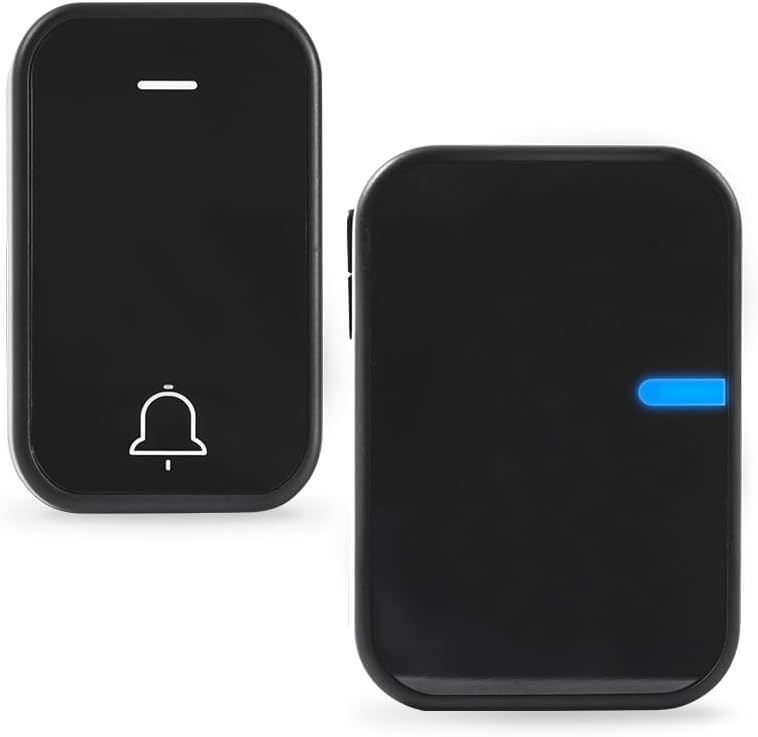


The Anyfree Basic Doorbell combines a self-powered transmitter with a straightforward plug-in receiver, earning a 4.4 rating in the supplied data. Its most appealing quality is the elimination of battery maintenance: pressing the button produces the electrical energy needed to transmit the alert. That makes it a practical fit for households tired of scheduled battery replacements.
We may earn a commission when you buy through this link, at no additional cost to you.
The system offers 60 chimes and five adjustable volume levels spanning silent operation to 100 decibels. It is also designed for practical flexibility, with LED flash alerts, a stated range of up to 600 feet, and no requirement for an app. The receiver and transmitter arrive pre-paired, while the receiver simply needs to be connected to a wall outlet.
Its limitations are practical rather than fundamental. It depends on a plug-in receiver and mains power, so the receiver must be located where its sound or visual signal can reach you. The advertised range also represents an ideal condition, and walls, floors, and other obstacles can reduce real-world performance. Nevertheless, the lack of battery maintenance and broad alert choices offset those constraints.
Choose this model for homes, apartments, offices, clinics, warehouses, and other spaces seeking an uncomplicated chime system with generous sound options. It is especially attractive for users who want a battery-free design without sacrificing volume adjustment, visual notifications, or a wide range of melodies.
The transmitter draws energy from the press itself through Faraday electromagnetic induction. Because there is no battery compartment, users avoid both routine replacements and the need to recharge a doorbell button.
Sixty chimes, five volume levels, and a silent LED mode let the same receiver serve a sleeping child, a busy office, or a home where a visual signal is more appropriate.
We may earn a commission when you buy through this link, at no additional cost to you.
This micro-power door chime earns a 4.6 rating and focuses on a compact combination of weather resistance, long wireless reach, and user-controlled sound. A press generates the electricity needed to send the signal, so the outdoor button does not depend on a replaceable battery or a separate charging cable.
We may earn a commission when you buy through this link, at no additional cost to you.
Its IP68 waterproof rating is one of the strongest in this list, and the listed operating environment includes rain, cold, and heat. The receiver can operate up to 600 feet away in open areas, while 38 melodies and adjustable volume make the chime suitable for homes, garages, and garden-side installations.
The trade-offs concern breadth and placement. Thirty-eight melodies offer less variety than the 60- and 63-chime models, and the receiver still needs a suitable outlet. Because the stated 600-foot distance is an open-area measurement, homes with several masonry walls may need to place the receiver carefully or add another receiver.
This is a compelling choice for anyone prioritizing a truly battery-free button and dependable outdoor construction. It is particularly well suited to exposed entrances where rain, cold, and heat make weather resistance a central requirement.
The IP68 enclosure is intended to withstand demanding outdoor conditions. That makes the transmitter better suited to a side door, garage, garden entrance, or other location exposed to rain and temperature changes.
Installers can choose the supplied adhesive tape for a screw-free mount or use the provided screws for a more permanent attachment. The receiver then operates from a standard wall outlet.
We may earn a commission when you buy through this link, at no additional cost to you.
The Battery-Free 38-Chime Kit has a 4.7 rating and distinguishes itself through a dual-purpose design. It works as an everyday wireless doorbell, but it can also serve as an emergency pager for an elderly person, infant, or pregnant person who needs a simple way to call for assistance.
We may earn a commission when you buy through this link, at no additional cost to you.
The button converts kinetic energy from a press into electricity and then transmits a wireless signal to the receiver. Its stated open-area range is 150 meters, and the product description says the signal can penetrate three to four walls. Thirty-eight chord tunes, four volume levels, and a mute function provide control over the alert experience.
As with all plug-in chime systems, the receiver depends on electrical power and must be placed where it can be heard. A mute function may reduce the usefulness of the emergency-pager role unless visual feedback is separately available, which is not clearly listed for this model. The 38-tune library is also smaller than several competing products.
Despite those limitations, this is one of the most versatile picks for households that want one button to serve both visitor notification and urgent assistance needs. It is a strong choice for larger properties, villas, apartments, offices, shops, and warehouses where reaching several walls matters.
The emergency pager use gives the product more value than a conventional door chime. A person inside can press the self-powered transmitter to request help without navigating a complicated alert system.
A stated 150-meter open-area range and claimed penetration through three to four walls suit larger homes and commercial buildings. Actual results will still depend on building materials and receiver placement.
We may earn a commission when you buy through this link, at no additional cost to you.
The RGB Self-Powered Doorbell combines a 4.4 rating with one of the most useful visual-alert systems in the category. It is designed for homes, classrooms, hospitals, hotels, factories, and apartments, where notifying someone audibly may not always be sufficient or desirable.
We may earn a commission when you buy through this link, at no additional cost to you.
Each press generates enough power for the transmitter to send a stable wireless signal. The receiver adds 63 chimes, four volume levels up to 115 decibels, bright RGB flashing lights, and a mute mode that relies on the visual notification. A stated 600-foot open-air range gives it ample reach for many conventional properties.
Weather protection is another strength. Its IP68 rating covers dust and water resistance, while the listed temperature range extends from -4 to 140 degrees Fahrenheit. The main compromises are the need for a plug-in receiver and the loss of audio information when mute mode is active. The visual signal may also be missed in a distant room.
This model is a particularly good fit for homes with hearing-impaired occupants, quiet sleeping spaces, classrooms, and clinical environments. Buyers who prioritize broad sound selection, conspicuous visual alerts, and rugged exterior construction will find it more versatile than a basic single-feature chime.
The RGB receiver can be set to mute while continuing to flash brightly. This is useful for homes with sleeping children, shared apartments, offices, and environments where audible disturbance is inappropriate.
Sixty-three selections and four volume levels offer more tonal variety than most competing kits. The IP68 rating and stated -4-to-140-degree range support outdoor use in varied seasonal conditions.
We may earn a commission when you buy through this link, at no additional cost to you.
The SECRUI M520 is a 4.7-rated wireless doorbell that serves as a useful conventional-battery alternative rather than a self-powered unit. It includes a 1000-foot stated range, a colorful LED, 58 songs, and five volume levels, giving it an attractive combination of reach and alert selection.
We may earn a commission when you buy through this link, at no additional cost to you.
Installation is straightforward: the receiver plugs into an outlet, and the components are paired before delivery. One-to-one FM signal pairing is designed to avoid incorrect connections with a neighboring system. The description also notes flexible configurations, including one button with one receiver or multiple buttons and receivers.
The key limitation is obvious: its transmitter uses a battery and lists a three-year battery life. That means the system does not deliver the maintenance-free convenience sought by buyers specifically searching for a battery-free product. Its IP55 protection is also less substantial than the IP68 ratings offered by several self-powered alternatives.
SECRUI is worth considering when a long stated range, classic plug-in receiver design, and generous chime library matter more than eliminating battery replacement. It may also suit users who prefer the portability or familiarity of a battery-powered transmitter.
The stated 1000-foot obstacle-free range is among the longest in this comparison. It can be useful for large properties, offices, warehouses, or homes where the receiver must be placed far from the entrance.
Factory pairing removes the need to program the system. The stated configuration options also make it possible to expand beyond the basic one-button, one-receiver arrangement.
We may earn a commission when you buy through this link, at no additional cost to you.
The Self-Powered 600-Foot Kit has the highest supplied rating in the group at 4.8. Its core proposition is direct: the micro-power generation technology converts press motion into electricity, allowing the transmitter to operate without a replaceable battery.
We may earn a commission when you buy through this link, at no additional cost to you.
A stated range of up to 600 feet gives it ample coverage for a home, classroom, kids' room, or office. The outdoor push button carries an IP65 waterproof rating, and the kit uses a familiar plug-in receiver, avoiding the need to run wiring through a wall.
The available information is notably concise, so buyers should verify the chime count, volume controls, mounting hardware, and visual-alert functions before ordering. The IP65 rating is also below the IP68 ratings of several competing models. Most importantly, the system still depends on a powered receiver and therefore does not offer completely wire-free freedom throughout the property.
For anyone seeking a highly rated, uncomplicated battery-free kit with a generous range, this is an excellent candidate. Its simple design is likely to appeal to users who want the maintenance benefit of a self-powered button without expecting a large collection of advanced features.
The transmitter harvests energy from the movement of each press. This removes the routine of replacing or charging the component installed near the exterior door.
The 600-foot stated range supports common homes and small commercial spaces. A plug-in receiver keeps indoor setup simple, while the waterproof push button is intended for exterior use.
We may earn a commission when you buy through this link, at no additional cost to you.
The AURTEC Two-Receiver Kit stands out because one self-powered transmitter is supplied with two plug-in receivers. It holds a 4.6 rating and targets users who need alerts in more than one area without adding another transmitter or buying multiple complete systems.
We may earn a commission when you buy through this link, at no additional cost to you.
The press converts finger movement into the energy needed to operate the button. Each receiver offers 51 chimes, four volume levels, and an automatic LED indicator that illuminates in the dark. The stated 500-foot range is suitable for multi-entrance homes, multi-story properties, offices, and hotels.
Weather protection is the main reason to look elsewhere for an exposed entrance. Its IP44 rating provides less protection than the IP65 and IP68 models in the list. The non-adjustable LED also means buyers cannot assume that its brightness or behavior can be customized, although the visual notification adds useful value in a dark room.
Despite that limitation, the two-receiver arrangement is unusually useful for large homes, offices, clinics, or anyone who wants a visual alert in a bedroom as well as a kitchen. It is a strong premium pick for broad household coverage with genuinely battery-free exterior operation.
Two receivers reduce the need to hear a chime from one central location. Plugging them into separate rooms can make the system especially useful at night or in a multi-level home.
The automatic LED indicator provides a visual cue alongside the chime. Although its settings are not adjustable, it helps users notice an alert in a dim or quiet space.
We may earn a commission when you buy through this link, at no additional cost to you.
The RGB 63-Chime Doorbell offers one of the most extensive sound libraries in the list, paired with conspicuous RGB lighting and true battery-free button operation. It earns a 4.4 rating and is designed for homes, classrooms, hospitals, and other environments where different alert styles may be useful.
We may earn a commission when you buy through this link, at no additional cost to you.
Its self-powered button produces its own operating power whenever pressed. The receiver offers 63 ringtones, four volume levels from zero to 115 decibels, and a 600-foot stated open-space range. Buyers can also silence the ringtone and rely on the flashing RGB light, while the product description references a 120-decibel high-volume capability.
The exterior transmitter has an IP68 dustproof and waterproof rating and a listed operating range of -4 to 140 degrees Fahrenheit. Its compromises are the need for a plug-in receiver and the loss of audible information in mute mode. A bright visual alert is useful, but it still depends on someone seeing the receiver.
This model is a strong fit for households with hearing loss, shared rooms, clinics, and busy facilities. It is also a good choice for anyone who dislikes repeating the same alert tone and wants a single system capable of operating quietly or loudly.
The large chime library allows different family members to identify alerts easily. It also provides enough variety for offices and shared facilities where a familiar tone might be confused with another device.
High-volume output and a bright RGB indicator provide two forms of notification. Users can select the method best suited to their hearing, their environment, and the time of day.
We may earn a commission when you buy through this link, at no additional cost to you.
The Anyfree Two-Button Kit is designed for properties with more than one exterior entrance. It includes two self-powered buttons and one receiver, earning a 4.4 rating while avoiding the need to purchase a second complete kit.
We may earn a commission when you buy through this link, at no additional cost to you.
Both buttons use Faraday electromagnetic induction to generate power when pressed. The receiver provides 60 chimes, four volume levels from zero to 100 decibels, and a silent LED flash mode. A stated 600-foot range supports a broad area, and the factory pairing means users can plug in the receiver and begin using the system.
One receiver is the primary limitation. A larger home may still need another receiver in a distant room, particularly if the second entrance is near a different part of the property. The advertised range remains an ideal measurement, and obstacles can reduce performance. Buyers should also confirm exactly how the two buttons are paired and whether the receiver distinguishes their signals.
This kit makes the most sense for duplex homes, apartments with shared entrances, small offices with two doors, or any property that benefits from self-powered buttons at separate locations. The broad sound selection and visual mode make it adaptable to both active and quiet hours.
Two buttons let a household or small workplace answer visitors at different doors. Each exterior unit generates its own power, so adding a second entrance does not create another battery-maintenance task.
Users can move through four volume levels or activate silent LED alerts. This makes the receiver useful around sleeping children, during rest periods, or in environments where noise is unwelcome.
We may earn a commission when you buy through this link, at no additional cost to you.
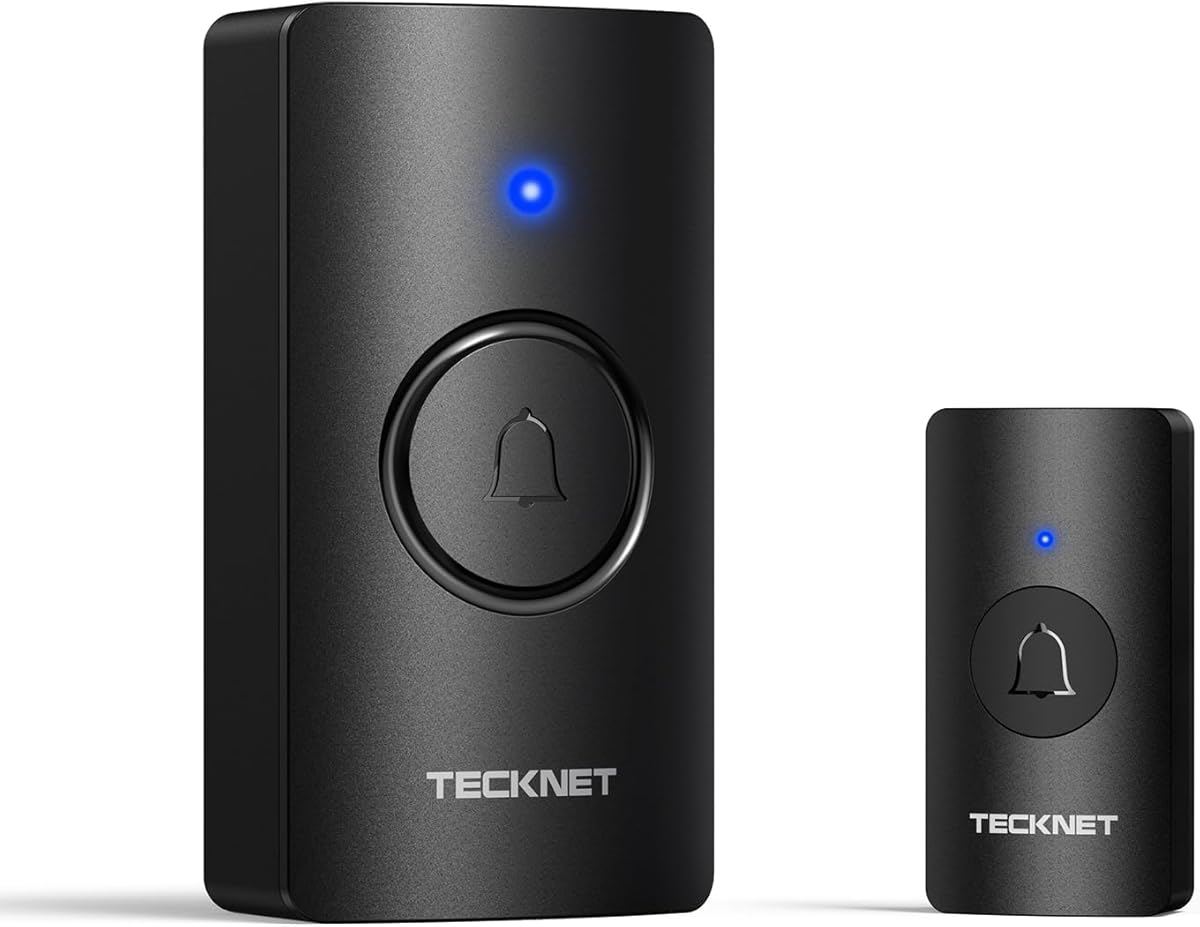
The TECKNET 1312-Foot Doorbell is a battery-powered comparator with a 4.6 rating and the longest stated open-area range in the list. At up to 1312 feet, it is designed for large homes, warehouses, and classrooms where users need flexibility in receiver placement.
We may earn a commission when you buy through this link, at no additional cost to you.
Its portable receiver can sit on a desk or move to a garden, providing a different kind of convenience from a permanently wall-mounted indoor chime. The system offers 60 chimes, five volume levels up to 110 decibels, a silent mode, and a flashing LED. The button has an IP67 rating for protection against dust and water jets.
It does not satisfy a strict no-battery requirement. Although the stated battery life reaches 4.5 years under normal use, the transmitter still needs periodic charging. This makes it a practical alternative for people who value receiver portability and exceptional stated reach more than completely maintenance-free exterior hardware.
TECKNET is a strong option for large properties, renters, and users who want to carry the alert receiver between locations. It can also work well in a classroom or warehouse, provided the user is comfortable managing the rechargeable battery and the receiver remains within practical signal range.
Unlike a typical plug-in chime, the receiver can be moved around the property. That flexibility is useful for garden work, office desks, shared rooms, and other changing alert locations.
The 1312-foot figure is the highest stated open-area range among the ten products. Real performance will depend on walls, layout, and interference, but it gives the system a clear advantage for spacious environments.
We may earn a commission when you buy through this link, at no additional cost to you.
The most important decision is whether true battery-free operation is essential, followed by range, receiver flexibility, outdoor durability, and the type of alert needed. A product that fits the installation and the people using it is more valuable than one with the largest specification on paper.
A true battery-free doorbell generates the energy needed to transmit when the button is pressed. Products using Faraday electromagnetic induction or micro-power kinetic generation remove the need for battery replacement, while conventional battery-powered models still need periodic charging or replacement. Confirm the power method for both the transmitter and receiver, since a battery-free button does not always mean the receiver is also battery-free.
Published range is usually an open-area figure, so the distance between the door and receiver may be shorter in a real building. Measure the route the signal must cross and note the number and material of walls, floors, doors, and obstructions. Models claiming penetration through several walls may suit larger properties, but a receiver placed near the entrance is generally more reliable than relying on maximum distance.
The transmitter is exposed to rain, sunlight, dust, cold, and heat, making its ingress protection rating important. An IP68 model offers the strongest listed protection here, followed by IP67, IP65, IP55, and IP44. A higher rating is particularly helpful for uncovered doors, garden gates, garages, and locations exposed to driving rain or seasonal temperature changes.
Chime libraries range from 38 selections to 63, allowing users to distinguish family members, offices, or different entrances. Volume controls matter even more in homes with sleeping children, shared apartments, clinics, and classrooms. Visual alerts are valuable for users with hearing loss, while mute modes help maintain quiet during rest or work periods.
Most self-powered kits use a plug-in receiver, so an available outlet and an appropriate room are essential. Some packages include one receiver, while the AURTEC kit includes two. Users with a large home may benefit from multiple receivers, while anyone wanting a portable alert can consider the battery-powered TECKNET model, which offers greater placement flexibility at the cost of charging its transmitter.
Most products avoid hardwired installation, but mounting still varies. Some kits include adhesive tape for a screw-free attachment, while others provide screws for a permanent mount. Adhesive is convenient for renters and temporary positioning, although screws may be preferable on rough surfaces or where a more secure attachment is needed. Factory pairing and plug-in receivers also simplify initial setup.
A wireless doorbell can also serve as an internal call button or emergency pager. The Battery-Free 38-Chime Kit explicitly supports this dual purpose, while the AURTEC model can place visual alerts in two rooms. These uses may be more important than having the largest chime library, particularly in homes caring for children, older adults, or people who need a quick way to request assistance.
Begin by identifying a suitable exterior position for the transmitter and an indoor outlet for the receiver. The button should be reachable but protected from accidental damage where possible. Mount it with the supplied adhesive or screws, then connect the receiver and confirm that the listed pairing procedure works as described in the product instructions.
Next, test the alert from the intended locations before treating the installation as complete. Walk through the property and check whether the receiver is audible from bedrooms, offices, kitchens, or other relevant areas. If the signal is weak, move the receiver closer to the transmitter, reposition it away from large metal objects, or consider a second receiver for comprehensive coverage.
Because the self-powered transmitter has no battery compartment, routine care focuses on mechanical function and exposure. Keep the button clean, inspect the mounting for looseness, and avoid obstructing the press surface. For a conventional battery-powered model, recharge or replace the battery according to the manufacturer's guidance and clean the contacts if reception becomes unreliable.
A self-powered wireless doorbell converts the energy of a button press into enough electricity to transmit a radio signal. Technologies described in the products include Faraday electromagnetic induction, micro-power generation, and kinetic energy conversion. The receiver must still be connected to electrical power unless it is a portable battery-powered unit.
The outdoor transmitter can generally send an alert without household electricity because it generates power when pressed. A plug-in receiver, however, loses function if its outlet loses power. A portable battery-powered receiver may continue working during an outage, depending on its remaining battery charge and the manufacturer's guidance.
The right range depends on the distance between the exterior button and receiver, along with walls and other obstacles. A 500- or 600-foot model is usually adequate for many homes, while a 1000- or 1312-foot model may suit large properties and commercial spaces. Actual performance is commonly lower than the maximum open-area figure.
IP68 indicates a high level of protection against dust and water ingress. For a wireless doorbell, it means the outdoor button is intended to tolerate demanding weather conditions. It does not guarantee resistance to every form of impact, flooding, or deliberate submersion beyond the conditions represented by the rating.
Visual alerts can make a doorbell usable when a person has difficulty hearing the chime or when the environment is too quiet or noisy. Models with RGB flashing lights and mute modes provide a visible indication, but the receiver must be in line of sight. Pairing visual alerts with adjustable high volume offers the most complete notification.
Multiple receivers are useful for covering separate floors or rooms, but the available package determines what is included. The AURTEC kit provides two receivers, while the Anyfree two-button kit includes two transmitters and one receiver. Additional receiver compatibility should be confirmed with the seller or manufacturer before purchase.
Adhesive mounting can be convenient and avoids drilling, especially for renters. It works best on a clean, smooth, dry surface and should be given enough time to bond as instructed. Screws provide a more permanent attachment and may be better for rough surfaces, exposed locations, or frequent use.
Choose a self-powered model if avoiding battery replacement and charging is the priority. A battery-powered model can be preferable when the receiver must be portable, the transmitter location has poor exposure, or the product supports a longer stated range. Whichever design you choose, verify actual range and placement in your building.
The Self-Powered 600-Foot Kit leads the group with the highest supplied rating and a clear battery-free design, while the Battery-Free 38-Chime Kit earns attention for its emergency-pager use and wall-penetrating signal claim. The AURTEC Two-Receiver Kit is the premium-oriented choice for users who want visual alerts in two separate locations.
For most shoppers, the best battery free wireless doorbell is the one that combines sufficient real-world range, a strong weather rating, and alerts appropriate to the home. Battery-free operation matters, but placement, receiver quantity, visual notification, and chime controls can determine whether a kit feels genuinely convenient after installation.
Ratings and specifications can change as manufacturers update products, and current prices and availability also fluctuate. Before buying, confirm the latest listing details, included accessories, compatibility, and operating requirements to ensure the chosen model fits your property.