
X100 GPS Digital Speedometer with Odometer
5.0Editor score
Built-in 1000mAh battery
Solar-assisted charging
Dedicated odometer display
Dual speed warning settings
A battery powered speedometer can give drivers or cyclists a clear, dedicated view of speed without relying on a vehicle's original instrument cluster. Useful options range from solar-assisted GPS dashboard displays to wireless bicycle computers, with capabilities such as overspeed alerts, fatigue reminders, odometers, altitude, temperature, and automatic brightness.
This guide compares ten products using the supplied specifications, including display type, positioning method, power configuration, safety alerts, installation approach, vehicle compatibility, and protection against the elements. It covers models intended for cars, trucks, motorcycles, recreational vehicles, and bicycles rather than treating every speedometer as a universal automotive accessory.
Each review explains the strongest reasons to consider a model and any practical limitations visible in the available information. The recommendations range from a focused standalone speed display to multifunction GPS units and a large-screen cycle computer. Product details and availability can change, so readers should confirm specifications and current pricing before purchasing.
5.0Editor score

4.0Editor score

4.2Editor score
As an Amazon Associate we earn from qualifying purchases.
The table below compares the ten products by their primary power method, display, positioning system, core alerts, and intended vehicle type. It makes clear that some products are full automotive GPS dashboards, while others are specialized bicycle computers.



This Car Wireless Headup Display Solar GPS Digital Speedometer combines speed, time, altitude, temperature, and configurable alerts in a single LCD unit. Its 4.0 rating reflects a broadly capable device, while the head-up format and large fonts make it especially practical for drivers who want speed information positioned conveniently within their line of sight.
We may earn a commission when you buy through this link, at no additional cost to you.
The central strength is its combination of positioning and power flexibility. It uses GPS data, synchronizes time, and supports speed compensation intended to improve reading accuracy. A built-in rechargeable battery, integrated solar panel, and USB power connection offer several ways to keep the unit running. The display also adjusts its brightness according to ambient light, reducing the need for manual changes between daytime and nighttime driving.
Safety features add practical value beyond a basic speed readout. Owners can configure an overspeed alarm and a fatigue-driving reminder, with the relevant speed and time thresholds adjustable. That makes the device useful for long routes where awareness of changing limits and extended time behind the wheel matters. The trade-off is that the supplied information does not mention a trip odometer, so buyers wanting mileage should look elsewhere in this list.
This is a strong all-around choice for cars and other compatible vehicles that need a portable GPS dashboard display. It is particularly attractive for users who value solar assistance, automatic brightness, and configurable warnings in one package. Those seeking a dedicated odometer or a more rugged waterproof enclosure may prefer the X100, while drivers who want the simplest possible interface should examine the standalone GPS model.
Showing altitude, temperature, and synchronized time makes this more useful than a speed-only gadget, particularly on road trips. The additional readings provide context without requiring a separate device for every dashboard function.
Solar charging can supplement the internal battery, while USB provides a dependable way to recharge before a trip. Using both options offers flexibility for commuters, long journeys, and vehicles with limited access to a cigarette-lighter socket.
We may earn a commission when you buy through this link, at no additional cost to you.
The X100 GPS Digital Speedometer is a feature-rich dashboard display with a 4.0 rating. Its large high-contrast LCD, carbon-fiber-style housing, and automatic brightness make it easy to inspect, while the stated accuracy within one percent under suitable signal conditions positions it as a precise option for everyday speed monitoring.
We may earn a commission when you buy through this link, at no additional cost to you.
Its specifications cover real-time speed, altitude, temperature, total mileage, and time. Overspeed alerts and fatigue reminders add useful safety functions, while the claimed one-percent accuracy under suitable GPS conditions gives the display more technical credibility than a purely basic counter. The carbon-fiber-style case also gives the unit a more deliberate appearance than a bare auxiliary display.
Power comes from an internal battery that runs for up to 12 hours. A full day of summer sunlight can contribute approximately one to four additional hours, and USB-C charging supplies a wired alternative. The IP67-rated housing is another meaningful advantage, helping resist water and dust during commuting, highway travel, road trips, and off-road use.
The X100 is best for drivers who want more than a basic speed number and value a documented protection rating. It suits people who also want mileage and environmental readings without connecting to the vehicle's diagnostic port. Although solar charging is supplementary rather than transformative, the combination of battery life, USB-C, and rugged construction makes it a premium all-purpose option.
The IP67-rated housing is designed to resist water and dust while the shock-resistant construction supports daily and recreational use. That makes the X100 more persuasive for exposed dashboards, changing weather, and road trips than a basic indoor-style display.
Real-time speed is joined by mileage, altitude, temperature, and time. The result is a compact trip computer that can provide a useful overview without occupying a dedicated instrument cluster.
We may earn a commission when you buy through this link, at no additional cost to you.
This GPS Speedometer MPH Digital Dashboard Display for Cars earns a 4.1 rating and offers a balanced mix of display quality, navigation data, charging, and safety functions. The compact format and automatic brightness are designed for quick glances, while KMH or MPH switching makes it adaptable to different driving locations and preferences.
We may earn a commission when you buy through this link, at no additional cost to you.
The device tracks speed, altitude, temperature, and time while using GPS to synchronize the clock and calibrate the displayed speed. Its stated accuracy is within plus or minus one percent under the described conditions. Overspeed warnings and fatigue reminders are included, so it provides many of the same functions as more elaborate head-up displays without claiming to be a full infotainment replacement.
Solar technology is designed to extend running time during short journeys, with USB charging intended to provide faster replenishment on longer trips. The ruggedized, shock-resistant build is listed for daily use, off-road driving, and motorbikes. Unlike products with a named water-resistance standard, however, this model's description does not provide a specific ingress-protection rating.
This display is a good fit for a driver who wants solar assistance, multiple readings, and simple unit selection. It works for cars and motorbikes, making it more flexible than some car-labeled alternatives. Buyers should choose it for its balanced feature set, while those needing a documented odometer or IP-rated enclosure will find more specialized options elsewhere.
High-contrast digits and automatic brightness help preserve legibility in strong daylight and at night. A display that adjusts itself is especially useful for long trips, where frequent manual control would add unnecessary distraction.
Although marketed primarily for cars, the product information specifically supports off-road and motorbike use. That wider compatibility makes it relevant to riders who want a portable GPS speed reference on varied vehicles.
We may earn a commission when you buy through this link, at no additional cost to you.
The Wireless Solar GPS Digital Speedometer MPH for All Vehicles is designed around a substantial 1000mAh battery and a stated 20-hour runtime. Its 4.0 rating reflects a capable product, with a one-touch MPH or KM/H switch, automatic brightness, and dashboard installation that requires no tools or permanent wiring.
We may earn a commission when you buy through this link, at no additional cost to you.
USB-C is the primary charging method, which supports a more dependable routine than relying on sunlight alone. The integrated solar panel can add approximately two to four hours of operation on sunny days, making it a useful backup for short-distance drivers. A battery indicator is not specifically stated for this model, so keeping the unit charged remains the user's responsibility.
The safety settings are unusually flexible. The overspeed alert can be configured from 10 to 180 km/h, or 6 to 112 mph, and sounds when the selected threshold is exceeded. The fatigue reminder can be set from zero to 11 hours, providing a flexible timing tool for extended journeys. Speed, time, altitude, temperature, and GPS-synchronized time round out the display.
This product is a strong choice for long commutes, road trips, and owners who want a sealed-down wireless installation. Vibration sensing allows the unit to wake when a drive starts and sleep after parking, while a non-slip mat keeps it in place. It may not be the best selection for someone requiring a specified odometer or a confirmed waterproof rating, but its long battery specification is a clear advantage.
The stated 20-hour runtime offers more freedom than many compact dashboard devices. USB-C provides the primary charging route, while the solar panel acts as a helpful extension when conditions are bright enough.
Wide speed thresholds and a fatigue timer that can be customized up to 11 hours make the alerts practical for different roads and trip lengths. Drivers can select limits that are relevant rather than relying on a fixed warning point.
We may earn a commission when you buy through this link, at no additional cost to you.
This Solar Digital Dash Speed Indicator has a 3.7 rating, making it one of the lower-rated products in the group, but its core functions are clearly defined. It shows speed, time, altitude, and temperature on an LCD screen, with automatic brightness, GPS synchronization, a rechargeable battery, solar charging, and USB-C support.
We may earn a commission when you buy through this link, at no additional cost to you.
The GPS system automatically calibrates time and supports speed compensation, which can help the displayed speed remain consistent as conditions change. The multifunction screen provides more information than a speed-only device, yet the description emphasizes straightforward dashboard viewing rather than a complex menu-heavy interface. That focus is appropriate for drivers who want essential information without extensive configuration.
Integrated solar charging works with the internal battery and USB-C connection, giving users two methods of replenishment. The automatic display adjustment keeps the digits visible in daylight and darkness. Vibration wake-up activates the screen when movement is detected, reducing the need to switch it manually before or after a trip.
The product is best for car owners seeking a simple solar-assisted GPS speed display with standard safety reminders. Its lower rating and lack of a specified water-resistance standard deserve attention, but the feature set is practical for everyday use. Buyers prioritizing a documented odometer, longer stated runtime, or rugged protection should compare one of the more specialized X100 alternatives.
Speed remains the primary focus, but time, altitude, and temperature add value without making the screen unnecessarily complicated. This balance is useful for drivers who want a quick reference rather than a full navigation interface.
Vibration wake-up and automatic brightness reduce repeated setup between journeys. These convenience features are particularly helpful for a display that is expected to live permanently on a dashboard.
We may earn a commission when you buy through this link, at no additional cost to you.
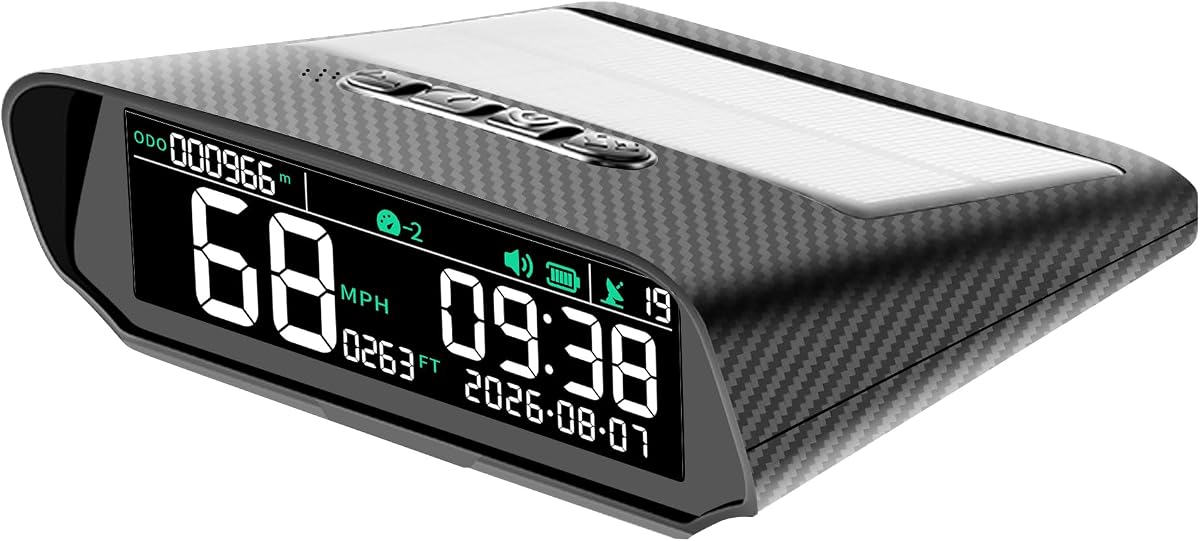
The X100 GPS Speedometer with Odometer has the highest listed rating in the selection at 5.0. It combines real-time MPH speed with total driving distance, satellite status, altitude, time, date, and battery level, giving it one of the most complete dashboard information packages among the automotive products reviewed.
We may earn a commission when you buy through this link, at no additional cost to you.
Its 1000mAh rechargeable battery supports portable placement, while the integrated solar panel provides supplemental charging in suitable sunlight and USB-C offers a wired option. A battery-level reading adds another layer of convenience because the user can see when the unit needs attention. GPS positioning removes the need for an OBD2 connection, which broadens its potential use across different vehicles.
The most distinctive safety feature is support for two speed warning settings. That allows separate limits for different driving conditions, a useful option for mixed routes or changing road environments. Automatic brightness also improves consistency between daytime and nighttime use, while the odometer provides a record of accumulated driving distance.
This is the most complete choice for anyone who specifically wants a GPS speedometer with an odometer. It is listed for cars, pickups, SUVs, trucks, RVs, motorhomes, and older vehicles, covering commuting, highway travel, road trips, and RV journeys. The absence of a stated ingress-protection rating is the main reason it does not stand above the other X100 model in every scenario.
The odometer is the feature that distinguishes this X100 from simpler speed displays. Satellite positioning supplies the information without a wired connection to the vehicle, supporting portable use across a wide range of vehicles.
Saving separate speed warning settings gives the display more flexibility than a single threshold. Drivers can move between suitable limits without reconfiguring the device each time conditions change.
We may earn a commission when you buy through this link, at no additional cost to you.
The WIIYII GPS Head-Up Display uses a three-inch screen, large green digits, and a familiar head-up-display layout. Its 3.9 rating places it in the middle of the group, but the product offers useful vehicle data, one-button unit switching, a speeding alarm, and a fatigue-driving reminder in a straightforward package.
We may earn a commission when you buy through this link, at no additional cost to you.
The display can show speed, driving direction, the number of visible satellites, and other driving information. A green font and green illumination are intended to reduce visual strain during long journeys, while automatic and manual brightness modes help control glare. The ability to switch between kilometers and miles makes the unit useful across different measurement preferences.
Unlike several solar or battery-centered options in this list, the WIIYII relies on a USB cable link. Plug-and-play installation and universal vehicle support simplify setup, while automatic power on and off behavior is designed to avoid unnecessary drain of the vehicle battery. The product information also mentions vehicle performance testing for acceleration and driving distance, though it does not provide a named odometer function.
This HUD is a sensible option for drivers who favor a traditional green display, want a wired installation, or prefer a device that automatically responds when the vehicle ignition changes. It may not suit someone seeking battery independence or a ruggedized body, but it remains a versatile option for adding a clear speed reference to many different vehicles.
The screen presents key information in a format intended to reduce the need to look down at the instrument panel. Its larger digits and green illumination support quick recognition during extended driving.
USB plug-and-play power removes the need for complicated battery installation. The broad vehicle compatibility also makes the product easier to move between cars or to use in an older vehicle without a specialized socket.
We may earn a commission when you buy through this link, at no additional cost to you.
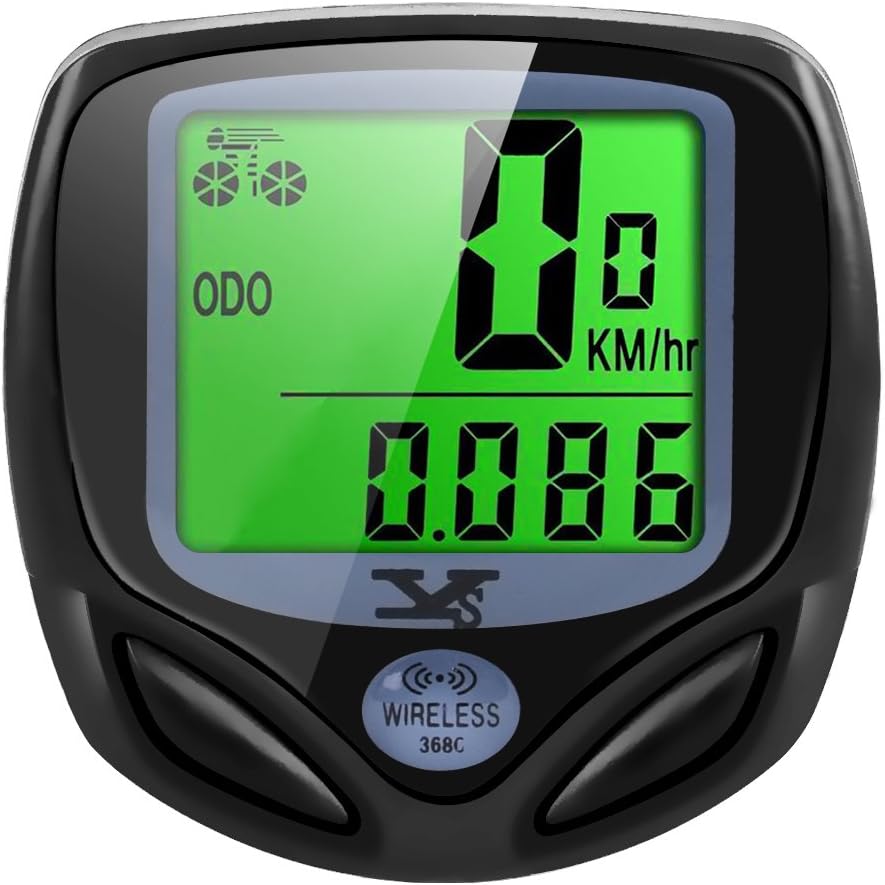
The YS Bicycle Speedometer and Odometer is a sensor-based cycle computer rather than an automotive GPS display. Its 3.8 rating reflects a long-standing wireless design aimed at riders who want speed, distance, and elapsed riding time without relying on satellite positioning or a route map.
We may earn a commission when you buy through this link, at no additional cost to you.
A small sensor, magnet, and handlebar display communicate wirelessly. The computer automatically wakes when it detects vibration, and a bright LCD provides the core ride statistics. Its backlight activates when a button is pressed between 18:00 and 06:00, improving nighttime visibility. The product information notes that a slight rattle is normal because of the wireless automatic function.
Installation is designed to take only a few minutes, and the two-button interface keeps navigation uncomplicated. Riders can customize the device to common tire sizes for more accurate tracking. The lightweight, waterproof construction supports road bikes, mountain bikes, folding bikes, and other common bicycles, while the wireless format avoids a visible cable across the handlebar.
This is the right choice for a cyclist who prefers local wheel sensing over GPS and wants a lightweight, waterproof trip computer. Compatibility with some electric-assist bicycles is uncertain, and the sensor, display, and magnet must be positioned within the required distances. It should not be chosen as a dashboard speedometer for a car or motorcycle.
The wheel-sensor system calculates movement locally, so it can remain useful in areas where a satellite signal is weak. That makes it a practical choice for urban commuting, neighborhood rides, and covered routes.
Two controls, automatic vibration wake, and customizable tire sizes make the bicycle computer approachable. The absence of a handlebar cable also keeps the cockpit visually clean.
We may earn a commission when you buy through this link, at no additional cost to you.
The Standalone GPS Car Speedometer has a 4.2 rating and deliberately concentrates on the essential task of showing speed. Its streamlined design requires few settings, allowing a driver to plug it in, position it, and begin using it without navigating a complicated menu system.
We may earn a commission when you buy through this link, at no additional cost to you.
GPS satellite technology provides real-time speed readings independently of the vehicle's own instrument system. The unit is listed as compatible with cars, trucks, motorcycles, and golf carts, which makes it a broad option for drivers who want one portable display across several types of vehicle. The large LED digits and adjustable brightness should support visibility in different lighting conditions.
A motion sensor provides intelligent power management. The display activates when movement is detected and powers down after three minutes of inactivity, reducing unnecessary energy use. Plug-and-play USB connectivity handles installation, and the compact dimensions of 2.95 by 1.97 by 1.57 inches allow placement in areas where larger dashboard computers would be inconvenient.
This product is best for someone who values a clean, speed-only interface and straightforward operation. It offers fewer extras than the multifunction GPS dashboards in the list, including no odometer, temperature, altitude, or fatigue reminder among the stated features. That focused design can be an advantage, though drivers seeking broader trip data should consider one of the X100 models.
Keeping the interface focused on speed reduces the chance that a small dashboard screen becomes distracting. The product is designed to be usable almost immediately after connecting it to a USB power source.
Automatic activation and sleep behavior make the unit well suited to regular use. Owners do not have to remember to switch it on before every journey or manually turn it off afterward.
We may earn a commission when you buy through this link, at no additional cost to you.
The Large-Screen GPS Bike Computer stands apart with a 3.26-inch anti-glare LCD, the largest display highlighted in the product information. Its 3.7 rating is tied for the lowest listed score, yet the screen size, wireless design, 16-hour battery, and uncomplicated GPS setup offer a clear proposition for cyclists who prefer easier glanceability.
We may earn a commission when you buy through this link, at no additional cost to you.
GPS and BDS dual positioning track speed, distance, and riding time without a wheel sensor or calibration. The product works out of the box with road, mountain, and hybrid bicycles. An anti-glare screen and automatic backlight help riders read information in strong sunlight or during night rides, while a battery indicator provides visibility into remaining power.
The rechargeable battery is stated to last up to 16 hours, supporting commutes, weekend trails, and longer touring routes. IPX6 protection is designed for rain, splashes, and wet roads. At 3.2 ounces, the unit is light enough for a handlebar and installs with an included mount without tools.
This is a strong option for cyclists who want large, readable ride statistics without installing a traditional wheel sensor. Its handlebar fit range of 15 to 48 millimeters covers many common bicycles, and the universal mounting system simplifies setup. It is not an automotive speedometer, and the supplied details do not mention turn-by-turn navigation, so riders should choose it as a simple GPS trip computer rather than a full navigation device.
The 3.26-inch anti-glare display gives speed, distance, and time a larger visual footprint than conventional cycle computers. That visibility can reduce squinting and make the most important ride data easier to check at a glance.
Using GPS and BDS positioning eliminates the need to fit a wheel magnet or calibrate tire size. The result is a cleaner installation that transfers naturally to road, mountain, and hybrid bikes.
We may earn a commission when you buy through this link, at no additional cost to you.
The right battery powered speedometer depends on whether it will serve a car, truck, motorcycle, or bicycle, as well as how much information you want beyond speed. Power method, visibility, positioning, alerts, installation, and environmental protection deserve the most attention.
Automotive GPS speedometers are designed to sit on a dashboard, often near the windshield, and display information to a driver. Bicycle computers use handlebar mounting and either a wheel sensor or satellite positioning. Some car displays can also serve motorcycles, trucks, SUVs, and RVs, but compatibility should be confirmed rather than assumed. Choosing the wrong category can mean dealing with an unsuitable power connection, mounting system, or data format.
A built-in rechargeable battery provides freedom from a permanent wiring connection, while USB or USB-C charging offers a predictable way to replenish the unit before a trip. Solar panels can supplement charging during daylight, but they are not a substitute for planning around the internal battery. Wireless bicycle computers may use replaceable or rechargeable batteries, and some systems wake automatically when they sense vibration. Pay attention to stated runtime, charging connector, and whether the device can operate while connected.
Large digits, strong contrast, and automatic brightness help a speed reading remain legible without demanding prolonged attention. LCD and LED are both common in this category, while some head-up displays use green illumination. Screen size matters most when the unit is mounted away from the driver's direct line of sight. A larger display can also show time, altitude, temperature, and odometer information without making the text too small.
GPS speedometers derive their readings from satellite positioning and generally require no sensor installation or wheel calibration. This makes them convenient across multiple vehicles. Bicycle computers using a wireless wheel sensor can provide consistent local tracking without a satellite signal, but installation takes more care and tire-size settings may be required. GPS and BDS bicycle computers combine the convenience of satellite tracking with a sensor-free handlebar installation.
An overspeed warning is the most common driver-focused feature, but its usefulness depends on whether the threshold can be adjusted. Fatigue reminders can be valuable on long journeys, particularly when the interval can be customized. Some products also support two separate speed limits, which is helpful for roads with changing conditions. Buyers should avoid paying for multiple alerts that they will not configure, while drivers who travel frequently may value them highly.
A speed display answers a narrow question: how fast is the vehicle moving? An odometer adds accumulated distance, while altitude, temperature, time, date, satellite status, and battery level can make a dashboard device more useful on trips. The most comprehensive choice in this category is the X100 with an odometer. If you only need a clear speed number, a focused LED display can be simpler and less distracting.
A named water-resistance standard gives more useful guidance than a general claim of being rugged or shock-resistant. IP67 and IPX6 both indicate water protection for different exposure conditions, while shock-resistant construction adds confidence for off-road and daily use. The mounting method also matters: non-slip dashboard pads, universal handlebar mounts, and USB power placement determine how neatly the device can be installed.
Audible warnings can improve awareness, but excessive volume or poorly placed controls can be intrusive. Look for adjustable speed limits, fatigue intervals, and brightness controls. Automatic dimming, manual brightness, vibration wake-up, and ignition-responsive power are useful for daily use because they reduce repeated setup. A display that starts or sleeps automatically can also reduce distraction and unnecessary energy use.
Begin by mounting the unit in a stable, visible location that does not block the driver's view, controls, airbags, or required instruments. For a car GPS display, follow the supplied instructions and use the included adhesive or non-slip pad if provided. For a bicycle computer, install the handlebar mount securely and place any required wheel sensor and magnet at the specified distances. Avoid placing a screen where glare, condensation, loose cargo, or direct heat can reduce visibility.
Read the unit's instructions before activating it. GPS models may need time outdoors to acquire satellite information, while a wheel-sensor bicycle computer may require tire-size calibration. Select MPH or KMH as appropriate, set the overspeed threshold, and configure the fatigue reminder before beginning a long trip. Charge the internal battery fully through the stated USB or USB-C connection, and use solar charging as supplemental support rather than assuming it can replace a full recharge.
During use, review speed with brief glances and keep your attention primarily on the road or trail. Adjust brightness when changing between strong daylight and darkness, and confirm that audible warnings are audible without being excessive. Check the battery indicator when the product provides one, clean the screen with a soft lint-free cloth, and keep charging ports free of dirt and moisture. Store the unit in a dry, moderate-temperature location when it will not be used for an extended period.
Compatibility depends on the specific model. Many automotive GPS units are marketed for cars, trucks, motorcycles, SUVs, and occasionally RVs, while bicycle computers are designed only for compatible bicycles. Check the listed vehicle applications, power connection, mounting method, and screen orientation before buying. A product that says it works with all vehicles still needs a practical power source and a secure mounting position.
Both methods can be useful, but they work differently. GPS provides a portable speed reference without installing a wheel sensor and is ideal for changing vehicles. A wheel sensor tracks wheel rotation directly and can work consistently where satellite reception is weak, although it may require tire-size calibration and careful magnet placement. Bicycle riders should consider both their route and willingness to install hardware.
Solar panels can supplement the internal battery, especially during daylight driving, but the amount of added runtime depends on sunlight and the product's design. USB or USB-C charging remains important for dependable preparation before long trips. Treat solar as useful backup rather than a guarantee of unlimited operation, and check the device's stated battery runtime and charge indicators before departure.
A head-up display is positioned to place information nearer the driver's forward line of sight, while a dashboard speedometer may sit lower or be mounted with a flexible viewing angle. The distinction is primarily about placement and presentation. A compact digital display can still be read quickly if it has large digits, good contrast, and automatic brightness.
No. These are auxiliary displays intended to supplement the factory instruments with an additional speed reference and related information. A GPS unit may also be useful on older vehicles, motorcycles, or recreational vehicles that lack a convenient digital speed readout. Drivers should continue using their vehicle's original instruments and follow local traffic laws.
Choose an odometer model if you want to track total driving distance, altitude, time, and other trip information. A basic speed display is more appropriate when you want a simple, uncluttered number and easier operation. In this roundup, the X100 models offer the broadest trip data, while the standalone GPS car speedometer is the most focused automotive option.
Possibly, but compatibility is not automatic. Sensor-based bicycle computers can have difficulty with some electric-assist systems, and the display, sensor, and magnet must be placed within the required distances. GPS-based bicycle computers avoid wheel-sensor compatibility concerns because they rely on satellite positioning. Riders should check the specific bicycle model and installation requirements before purchasing.
Automatic brightness is the easiest solution because it adjusts the screen as ambient light changes. Products with manual brightness controls provide an additional fallback. Select a comfortable level before driving, position the unit away from direct glare, and confirm that audible alerts are clear without being unnecessarily loud. A larger screen can also improve nighttime readability by allowing larger digits.
The Car Wireless Solar GPS HUD is the most balanced automotive recommendation because it combines speed, useful trip data, solar and USB power, automatic brightness, and configurable safety alerts. The X100 GPS Digital Speedometer stands out for its stated one-percent accuracy, IP67 protection, and broad dashboard information, while the X100 with Odometer is ideal when accumulated distance and wide vehicle compatibility matter most.
Prioritize the features that match your vehicle and routine. Car owners should consider power flexibility, mounting quality, visibility, and whether they want only speed or a larger collection of trip data. Cyclists should choose between a lightweight wheel-sensor computer and a larger GPS model based on installation preference, route conditions, battery life, and display size. Overspeed settings, fatigue reminders, and odometer data should be secondary to getting the right category and mounting method.
Ratings, specifications, product availability, and current pricing can change, so check the latest listing before buying. Confirm the power connector, compatible vehicles, dimensions, installation requirements, and included accessories. That final verification helps ensure the selected battery powered speedometer fits your vehicle, supports your usual trips, and provides the information you actually need.