
UGREEN 2K 1080P Capture Card
4.5Editor score
Explicit Linux compatibility
Dual USB-A and USB-C
2K30 and 1080p60 output
Driver-free aluminum design
This Capture Card for Linux guide compares 10 HDMI capture cards, focusing on latency, resolution, audio, passthrough, compatibility, and ease of use.
A capture card for Linux can turn a console, camera, or other HDMI source into a recording device for OBS Studio, VLC, and other compatible applications. The right model should combine dependable Linux recognition with the resolution, frame rate, audio features, and passthrough behavior needed for your particular workflow.
This guide compares ten HDMI capture cards using their published specifications, stated platform support, connectivity, recording formats, and buyer ratings. It covers budget USB devices, enthusiast models, and premium cards designed for demanding gaming, streaming, and post-production applications.
Each review explains the strongest reasons to choose a card, along with limitations that could affect a Linux setup. Ratings and product configurations can change, and prices fluctuate, so readers should verify current specifications, software support, and listings before making a purchase.
Every card in the guide is included because its published features make it relevant to at least some Linux capture workflows. Some explicitly list Linux support, while others are better known for Windows, macOS, or broader platform compatibility. The recommendations distinguish those differences instead of treating every HDMI capture device as interchangeable.
4.5Editor score

4.6Editor score

4.2Editor score
The table below compares the ten cards by Linux support, maximum stated capture output, passthrough capabilities, audio options, and major source compatibility, helping readers identify the most appropriate device for gaming, teaching, conferencing, and camera capture.





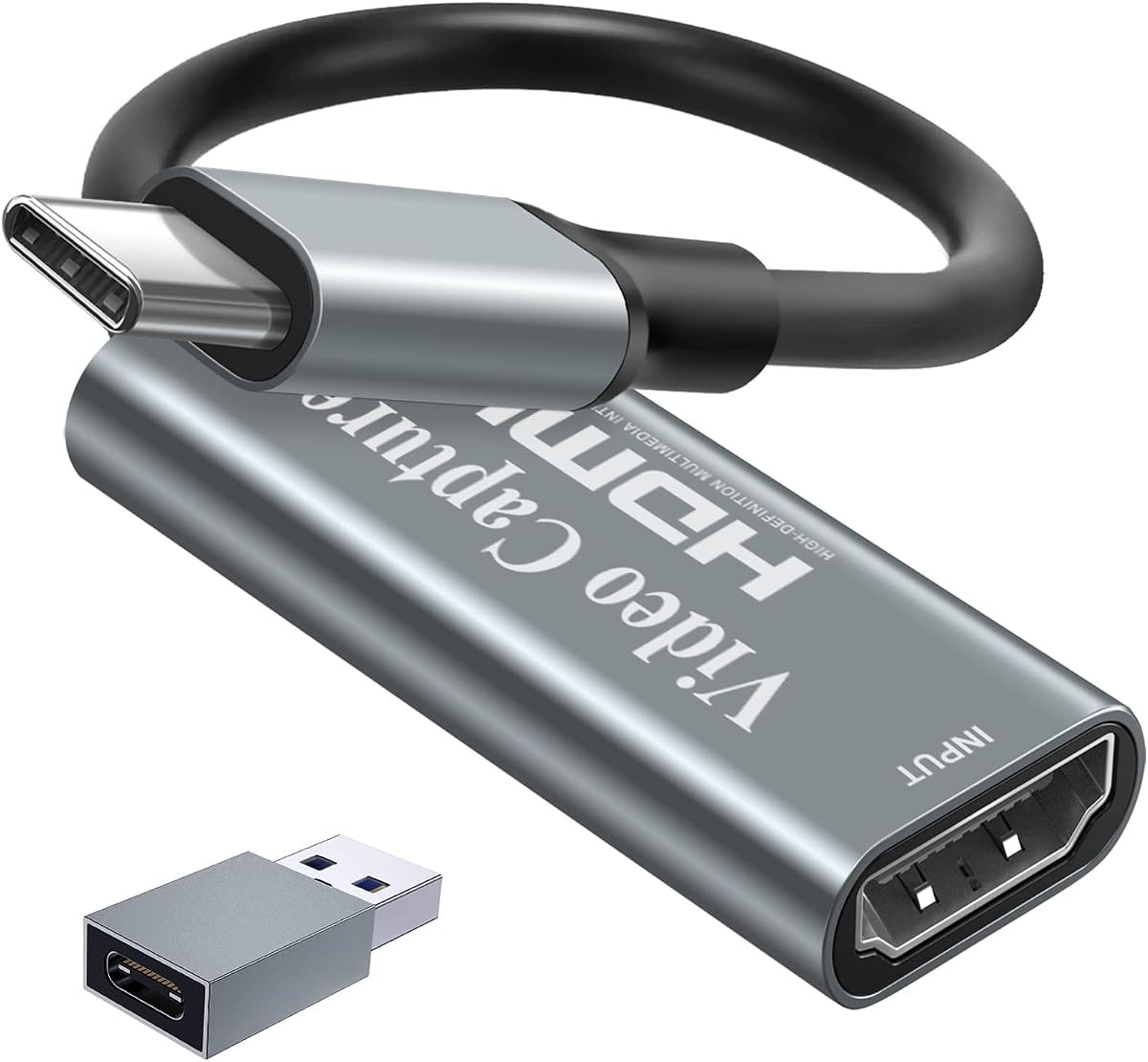
The Acer USB 3.0 HDMI Capture Card combines 4K HDMI input, 1080p60 output, HDMI loop-out, and a direct 3.5mm microphone input. Its published 4.4 rating reflects a broadly capable device that explicitly supports Linux and major capture applications such as OBS, XSplit, VLC, and other streaming tools.
We may earn a commission when you buy through this link, at no additional cost to you.
Its most useful strength is the balance between input and output resolution. The device can accept a 4K signal and provide loop-out for an external display, while recording at 1080p60 through USB 3.0. YUY2 is another meaningful feature because the product information positions it as an alternative to more heavily compressed MJPEG for richer color and cleaner output.
The built-in microphone connection is particularly useful for commentary. A Linux creator can connect a suitable headset or microphone directly rather than routing every audio source through a separate interface. The device is also driver-free, requires no external power, and is compatible with sources including Nintendo Switch, PS4, PS5, Xbox, cameras, PCs, macOS systems, and Android devices.
The trade-off is that 4K describes the input capability, not the maximum recording output, which is listed as 1080p60. There is also no stated headphone output for real-time monitoring. This is still a compelling option for Linux users who want passthrough, direct commentary, and straightforward OBS compatibility in a compact package.
HDMI loop-out lets the source feed both a display and the computer running OBS. That is valuable on Linux when recording from a console or camera while maintaining a local preview.
The 3.5mm microphone input gives streamers a direct route for spoken commentary. It reduces setup complexity, although users should verify headphone and monitoring requirements before buying.
We may earn a commission when you buy through this link, at no additional cost to you.
The UGREEN 4K Loop Out HDMI Capture Card supports 2K30 capture, 4K30 input, and 4K30 HDMI loop-out. It carries a 4.4 rating and stands out for explicit Linux compatibility, a choice of MJPEG and YUY2, and both USB-A and USB-C connections.
We may earn a commission when you buy through this link, at no additional cost to you.
This card is particularly useful for creators who want a 4K source to remain visible on a local monitor while OBS records a downscaled 2K stream. The ability to choose between compressed MJPEG and uncompressed YUY2 provides flexibility for different recording priorities, while the aluminum housing helps dissipate heat during extended sessions.
Its driver-free design, lack of external power requirement, and dual interfaces make it convenient for both desktop and laptop systems. The product information lists Windows, macOS, Linux, and Android support, along with compatibility for Nintendo Switch, Switch 2, PS4, PS5, Xbox Series X, Meta Quest devices, iPads, laptops, and PCs.
The principal limitation is explicit: 4K capture is not supported, even though 4K input and loop-out are available. It also does not work with Fire TV Stick. Linux users seeking 1080p60 or 2K30 recording with strong platform support will find it more relevant than those requiring 4K capture.
USB-A and USB-C ports make the device easier to use across different Linux computers. Users should select a high-bandwidth USB 3.0 connection for the resolution and format settings they intend to record.
The 4K30 loop-out is useful for viewing a high-resolution source locally. It does not change the card's stated 2K30 maximum capture resolution, so recording and display quality should be considered separately.
We may earn a commission when you buy through this link, at no additional cost to you.
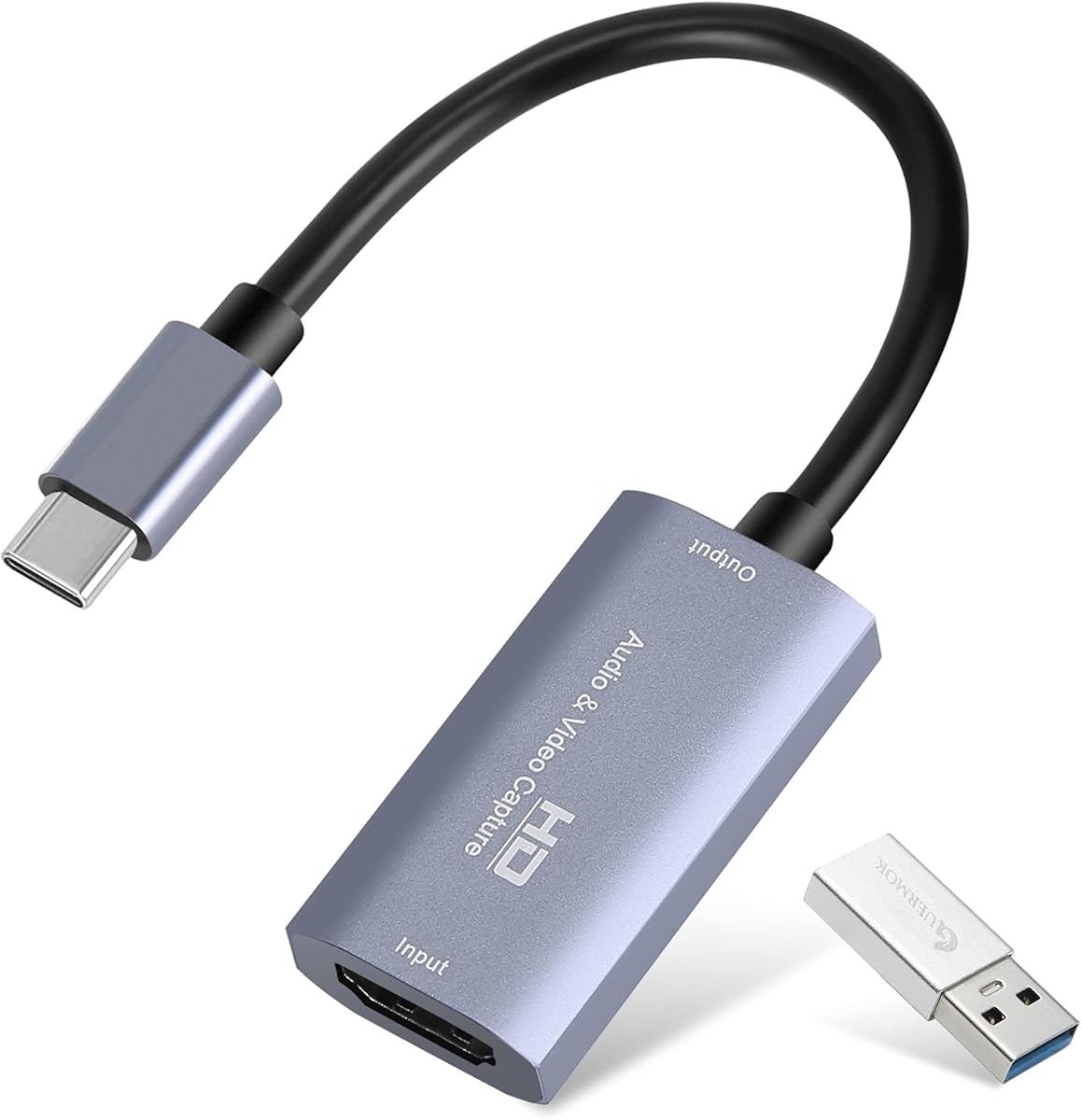
The Guermok Video Capture Card is a compact USB 3.0 option with a 4.4 rating, 4K30 input, and output at either 1080p60 or 2K30. It explicitly supports Linux and is designed for online capture, live recording, meetings, gaming, teaching, and portable streaming.
We may earn a commission when you buy through this link, at no additional cost to you.
The aluminum alloy body is both durable and helpful for heat dissipation. Its plug-and-play operation avoids additional drivers and external power, while the included USB 3.0-to-USB-C adapter broadens the range of computers it can serve. Compatibility information includes Windows, macOS, Linux, Android, OBS Studio, VLC, PotPlayer, Zoom, and a long list of HDMI sources.
This is a one-way HDMI-to-USB capture device, not a general-purpose converter. The product information warns that USB-C-to-HDMI conversion can lose signal because of cable protocol differences and advises using a USB 3.0 port for the necessary bandwidth. It also notes that decoding introduces millisecond-level latency.
That latency is normal for capture cards and does not necessarily make the product unsuitable for streaming. Linux users who prioritize portability, broad source compatibility, and 1080p60 recording may appreciate it, while competitive players sensitive to even small delays should account for that behavior in their setup.
The small aluminum unit needs only an HDMI source, a compatible computer, and capture software. Its included adapter and driver-free operation make it practical for mobile teaching and streaming setups.
The card sends HDMI video into a computer through USB; it does not provide a general USB-C-to-HDMI conversion path. Users should follow the stated connection direction and use a genuine USB 3.0 pathway.
We may earn a commission when you buy through this link, at no additional cost to you.
The Newhope USB 3.0 HDMI Capture Card offers 1080p60 recording, 4K passthrough, and a 3.5mm microphone input. Its 4.2 rating places it behind several higher-rated options, but its explicit Linux support and straightforward installation make it a credible choice for commentary and standard capture tasks.
We may earn a commission when you buy through this link, at no additional cost to you.
Real-time HDMI loop-out allows gameplay to remain visible on an external display while the same source is captured through USB. The microphone port accepts a 3.5mm TRS standard headset, giving streamers an easy way to add spoken commentary without relying entirely on a separate audio interface.
No drivers or external power are required, and the device is compatible with Windows, macOS, and Linux. OBS and VLC are named as suitable applications, while PS4, PS5, Xbox, Switch, DSLR cameras, and set-top boxes are listed among compatible sources. That makes the card relevant to both gaming and general-purpose HDMI capture.
The main drawback is the absence of a stated headphone output, so real-time monitoring of the captured audio cannot be assumed. Its 4.2 rating may also give cautious buyers more pause than the 4.4-rated alternatives, although ratings should be considered alongside verified specifications and Linux support.
A standard 3.5mm headset can feed commentary directly into the card. This keeps the audio path simple for Linux streamers who do not need a more complex mixer or interface.
The card's list of supported consoles, cameras, set-top boxes, and applications covers common capture scenarios. OBS support makes it easier to integrate the device into an existing Linux production workflow.
We may earn a commission when you buy through this link, at no additional cost to you.
The 4K HDMI Video Streaming Capture Device records 1080p60 over USB 3.0 and has a 4.4 buyer rating. Its compact design, passthrough support, and broad compatibility with consoles, cameras, and PCs make it appealing for creators who move between streaming locations.
We may earn a commission when you buy through this link, at no additional cost to you.
The device requires no drivers and is listed as compatible with OBS Studio, Streamlabs, and XSplit. Nintendo Switch, PS5, Xbox Series X, DSLR cameras, and PCs are among the named HDMI sources. Its low-latency approach is useful for reducing the visible gap between gameplay and the recorded or streamed output.
The 4K reference applies to the HDMI input and passthrough experience, while the stated recording quality is 1080p60. That is an entirely practical target for many live streams and recorded videos, especially when the host computer or internet connection cannot conveniently handle 4K encoding.
The primary issue for this guide's specific topic is that Linux support is not clearly stated in the supplied product information. Since the capture protocol may work in Linux even when a listing emphasizes OBS, Streamlabs, and XSplit, buyers should confirm UVC compatibility and their chosen application before ordering.
Its lightweight, portable form is useful for events, LAN parties, and temporary recording stations. A Linux creator can pair it with a compatible UVC application, subject to confirming current device recognition.
1080p60 is a strong general-purpose target for live streaming and video capture. The device's 4K passthrough allows the local source display to remain separate from the resolution sent into the recording computer.
We may earn a commission when you buy through this link, at no additional cost to you.
The UGREEN 2K 1080P Capture Card combines explicit Linux compatibility with 2K30 and 1080p60 output. Its 4.5 rating is the second-highest among the products in this guide, and the combination of USB-A, USB-C, driver-free operation, and an aluminum housing makes it a strong budget recommendation.
We may earn a commission when you buy through this link, at no additional cost to you.
It accepts 4K30 input while capturing at up to 2K30 or 1080p60, depending on the source and chosen output configuration. USB 3.0 is used for lower delay and sufficient throughput, and the card is backward compatible with USB 2.0. The one-way path runs from HDMI input to USB output, which suits recording rather than general-purpose signal conversion.
The product information lists Windows, macOS, Linux, phones, and tablets, with support for OBS Studio, XSplit, PotPlayer, and QuickTime Player. Compatible sources include Switch, Switch 2, PS4, PS4 Pro, PS5, Xbox Series X, and Meta Quest devices. Consoles require protected content to be disabled, and iPad use requires iPadOS 17 or later.
Its built-in cable uses specified copper conductors, while the aluminum alloy case promotes cooling and reduces electromagnetic interference. Linux users seeking a capable general capture card without moving into premium enthusiast hardware will find the UGREEN option particularly well balanced.
The card can work at 2K30 for higher-detail recording or 1080p60 for smoother motion. Checking the source and capture computer before setting the output avoids unnecessary format mismatches.
Both USB-A and USB-C simplify installation on varied Linux systems. Use a USB 3.0 port whenever the intended resolution and format require the extra bandwidth.
We may earn a commission when you buy through this link, at no additional cost to you.
The 4K HDMI Capture Card for Streaming is the strongest all-around recommendation in this guide. It has the highest listed buyer rating at 4.6, explicit recognition by Windows, macOS, and Linux, 1080p60 capture, and both microphone input and headphone output for a complete commentary workflow.
We may earn a commission when you buy through this link, at no additional cost to you.
Its input support extends to 4K at 30Hz or 60Hz and 1080p at 120Hz or 144Hz, while output reaches 2K30. The product's strongest practical feature for creators is the built-in 3.5mm microphone and headphone arrangement, allowing audio capture and monitoring without a separate interface.
Compatibility covers Nintendo Switch 2, Switch OLED, PS5, PS4, PS3, Xbox Series X/S, Xbox One, Steam Deck, cameras, and other HDMI sources. Installation is driver-free, and the package includes the capture card, a USB 3.0 cable, an HDMI cable, and a manual. An 18-month warranty is also stated.
Although the name emphasizes 4K, the maximum stated capture output is 2K30 rather than 4K. That distinction matters for buyers who need native 4K recording. For 1080p60 Linux capture, however, the combination of platform recognition, monitoring, source support, and included cables makes this the most complete general-purpose option.
Separate 3.5mm microphone and headphone connections make it easier to record commentary while hearing the final mix. This is a meaningful convenience for streamers, teachers, and podcast-style video sessions.
The broad source list spans modern consoles, older systems, handheld gaming devices, and cameras. Linux users can configure the card in a UVC-compatible application such as OBS after connecting the included cables.
We may earn a commission when you buy through this link, at no additional cost to you.
The AVerMedia StreamLine MINI+ GC311G2 is designed for gaming-focused creators who value high-refresh passthrough. It supports 4K60 HDR and up to 1440p144 or 1080p240 at the display side, while recording at 1080p60. Its 4.0 rating is the lowest in the group, but the specifications target a distinct enthusiast use case.
We may earn a commission when you buy through this link, at no additional cost to you.
NV12, YUY2, and MJPEG formats give users options for different capture pipelines. The product works with OBS, CameraFi, Camo Studio, and other applications, and AVerMedia's Streaming Center provides a beginner-friendly setup path. No drivers are required, which can simplify installation on supported systems.
Its 4K60 HDR passthrough and near-instant response are the major advantages for console and PC gamers who want a high-quality local display while streaming a 1080p60 feed. Switch 2, Xbox, and PS5 are specifically mentioned, and the same device can also handle camera-based streaming and quick content sharing.
For a Linux-specific purchase, the omission of explicit Linux support is the decisive concern. The underlying format support looks promising, and OBS is listed, but the supplied information does not confirm the behavior of AVerMedia's own software on Linux. Buyers should verify device recognition and official platform guidance before relying on it for a Linux-only workflow.
The card can preserve high-refresh output for local viewing while recording a broadcast-friendly 1080p60 stream. This separation gives creators flexibility when their monitor and source are more demanding than the recording target.
NV12, YUY2, and MJPEG provide different bandwidth and quality characteristics. Linux users can select the format supported by their chosen application, subject to the card's stated platform limitations.
We may earn a commission when you buy through this link, at no additional cost to you.
The Papeaso Video Capture Card records 1080p60 and accepts HDMI input up to 3840 by 2160 at 60Hz. Its 4.2 rating and USB 2.0 foundation distinguish it as a basic option, but explicit Linux support makes it relevant for straightforward, lower-bandwidth capture tasks.
We may earn a commission when you buy through this link, at no additional cost to you.
The device does not require driver installation and works with Windows, Android, macOS, and Linux. Streaming and recording software named in the product information includes OBS, PotPlayer, VLC, Twitch, YouTube, Facebook, and Twitter. Older and current game systems, cameras, webcams, set-top boxes, DVDs, and other HDMI sources are listed as compatible.
Its USB-C-oriented connection can be convenient on laptops and compact systems, and a USB-C adapter is included. The source-to-computer arrangement is described as HDMI input with USB output, so it should not be mistaken for a general-purpose bidirectional adapter.
The main limitation is USB 2.0 bandwidth, which is less future-proof than USB 3.0 alternatives and may restrict higher-resolution or uncompressed workflows. Older platform references in the compatibility list may also make buyers want current confirmation. For basic 1080p60 Linux recording, it remains a functional budget choice.
The included adapter makes the card easier to connect to systems without a convenient USB-A port. Linux users should check whether their chosen output settings fit comfortably within the available USB 2.0 bandwidth.
The long source list includes older consoles and devices such as PS3, PS4, Xbox 360, and Xbox One. This makes the card relevant to retro, archival, or mixed-generation capture setups.
We may earn a commission when you buy through this link, at no additional cost to you.
The AVerMedia Live Gamer Ultra S GC553Pro is the most specialized and premium-oriented card in this guide. It supports 4K60 HDR and VRR passthrough, high refresh rates up to 1440p144 or 1080p240, 5.1-channel audio capture, and ultrawide input resolutions.
We may earn a commission when you buy through this link, at no additional cost to you.
Its recording capabilities are aimed at demanding gaming and production environments. The product information mentions Discord streaming at 1080p or 4K resolution, OBS Studio and Streamlabs workflows, VRR recording through Streaming Center, and RGB24 output. A USB 3.2 Gen 1 Type-C connection provides the modern interface.
The hardware is compatible with PS5, PS5 Pro, Xbox, Nintendo Switch 2, and PC sources using unencrypted HDMI. The listed host systems are Windows 10/11, macOS 13 or later, and iPadOS 17 or later, making the official compatibility focus noticeably different from the explicitly Linux-oriented products in this guide.
For a Linux buyer, that platform omission is a substantial limitation. A Linux user may find the hardware and standards attractive, but the supplied information does not confirm official Linux support or whether every listed AVerMedia utility is available. The Live Gamer Ultra S is therefore a premium recommendation for cross-platform enthusiasts who can verify Linux operation, rather than a risk-free Linux-first choice.
HDR and VRR passthrough preserve demanding console and PC display features during capture. This is especially useful for creators who want high-quality local play while recording a separate stream.
Five-channel audio capture and OBS-oriented utilities support more structured production work. Linux users should confirm the availability of the required management and routing software before purchasing.
We may earn a commission when you buy through this link, at no additional cost to you.
The most important choice is the one whose video format, USB bandwidth, platform support, and audio routing work with your Linux computer and capture software. Review the source, output target, and passthrough needs before comparing models.
Begin with explicit platform information rather than assuming every capture card behaves identically under Linux. The Acer, both featured UGREEN models, Guermok, Newhope, and Papeaso cards expressly list Linux compatibility, while the AVerMedia models emphasize Windows and macOS. Linux-based capture normally depends on the device presenting itself as a standard UVC webcam, but the listing should still confirm that expectation and any kernel-related caveats.
Choose a card with published Linux support whenever possible. If considering a model without an explicit mention, check its current manufacturer documentation, community reports, and the capture application you intend to use before committing.
Do not confuse HDMI input resolution with the resolution the card sends to the computer. A model may accept 4K while recording at 1080p60 or 2K30, while the AVerMedia Live Gamer Ultra S goes further with 4K capture capabilities. 1080p60 is sufficient for many streams and recordings, 2K30 offers more spatial detail, and 4K demands substantially more storage, processing, and encoding capacity.
Prioritize the resolution and frame rate you will actually record, not merely the largest number in the product title. Ensure that your Linux CPU, application, and storage can handle the selected output without interruptions.
USB 3.0 is the practical baseline for modern 1080p60 and 2K workflows. USB 2.0 devices can still capture 1080p60 in some formats, but the narrower pipeline can constrain resolution, frame rate, or compression choices. YUY2 provides uncompressed video and can demand more bandwidth, while MJPEG reduces data through individual frame compression.
Use a high-speed USB 3.0 port and a cable capable of carrying that bandwidth. In OBS or another Linux capture application, compare the available formats and test the intended settings before a live broadcast or important recording.
HDMI loop-out or passthrough sends the source image to a local monitor while the capture card also feeds the computer. This is important for console gaming, live demonstrations, and camera work where you need an immediate visual reference. The Acer, UGREEN 4K model, Newhope, and the general-purpose streaming device include passthrough features, though their maximum resolutions differ.
Decide whether passthrough is essential or merely optional. If it is required, confirm both the supported input modes and the output mode at your display's native resolution, refresh rate, HDR mode, and VRR requirements.
Video capture does not automatically solve microphone, headset, console, or multichannel audio routing. The Acer and Newhope cards offer a 3.5mm microphone input, while the highest-rated 4K HDMI USB 3.0 model includes both microphone input and headphone output. The premium AVerMedia Live Gamer Ultra S supports 5.1-channel audio capture on Windows through its software.
List every audio source you expect to record before buying. Linux users who need reliable monitoring should favor a card with a headphone output or plan to use a separate audio interface and properly configured monitoring path.
Console capture may depend on whether protected content or HDCP is disabled. The UGREEN cards specifically note that supported consoles must have HDCP turned off, and the Guermok card warns that some adapters can reduce signal quality. Linux users should also account for iPad restrictions, including the stated iPadOS 17 requirement on one UGREEN model, and incompatibility with Fire TV Stick on another.
Verify the exact source device, output resolution, color format, and protection setting. A capture card cannot defeat copy protection, and compatibility claims may depend on particular hardware revisions or system updates.
A strong hardware specification has limited value if your Linux application cannot open the required format. OBS is named across most of the supported options, but Linux users should also consider VLC, PotPlayer, XSplit, and other tools as appropriate. The StreamLine MINI+ supports NV12, YUY2, and MJPEG, giving it more stated format flexibility than many basic cards.
Choose a device whose formats are supported by the application you already use. Review the source's color depth, chroma format, and frame timing as well as the resolution, because compatibility is more than simply finding a preview window in OBS.
Aluminum housings appear on both UGREEN models, the Guermok card, and other well-reviewed options. Aluminum can help dissipate heat during long capture sessions and offers a more durable enclosure than a minimal plastic enclosure. The UGREEN 2K model also specifies a built-in cable with tinned copper conductors for conductivity and reduced signal loss.
For regular streaming, choose a design that dissipates heat effectively and includes the connections you need. Portable users should consider size and included cables, while stationary setups may prioritize cooling, mounting, and long-term reliability.
Connect the HDMI source to the capture card, then connect the card to the Linux computer using the correct USB-A or USB-C port and a suitable high-speed cable. Power the source, select its desired output resolution, and make sure any protected-content setting is handled according to the source's own requirements. Open OBS Studio or another compatible UVC application and choose the capture device from its video source settings.
Configure the application's input format and resolution to match what the card actually supports. For example, do not request 4K capture from a device whose maximum capture output is 1080p60 or 2K30. Add a microphone source or configure the 3.5mm headset connection, confirm audio levels, and then use a short test recording to check image stability, synchronization, framing, and dropped frames before beginning a longer session.
Keep the device connected directly rather than through an unpowered hub, allow the aluminum housing to dissipate heat, and avoid sharply bent or damaged cables. After use, stop recording and the application before unplugging the device. Periodically check for kernel or application updates, clean dust from connectors gently, and revisit the capture format if you change computers, sources, storage limits, or streaming destinations.
No. Linux compatibility depends on the device, its drivers or UVC implementation, and the capture application. Several cards in this guide explicitly list Linux, while the two featured AVerMedia models emphasize Windows and macOS instead. Check the current manufacturer documentation and verify recognition in your chosen Linux software before purchasing.
A USB 3.0 connection is strongly recommended for a modern 1080p60 workflow because it provides much more usable bandwidth than USB 2.0. The Papeaso card uses USB 2.0 and may still provide basic 1080p60 capture, but format and frame-rate options can be more constrained. Use a genuine high-speed port and cable for dependable results.
Generally, no. Capture cards cannot bypass HDCP or other content protection, and a console may output a blank or protected screen when capture is attempted. Several products state that compatible consoles work when HDCP is disabled, but users must follow the console's own settings and accept the limitations that apply to protected media.
4K input means the card can receive a 4K HDMI signal, while 4K capture means it can send 4K video to the recording computer. A card may accept 4K and provide 4K loop-out but record only at 1080p60 or 2K30. Always check the maximum capture output separately from the input and passthrough specifications.
The UGREEN 2K 1080P model is a strong budget starting point because it explicitly supports Linux, offers USB-A and USB-C connections, works without drivers, and supports common applications such as OBS Studio. The highest-rated 4K HDMI USB 3.0 model adds microphone and headphone connections, making it more complete for commentary and monitoring.
OBS Studio can capture a directly supported graphics source without an external card, but a capture card is valuable when recording from a console, camera, set-top box, or another computer. It also allows a local display to receive HDMI loop-out while the Linux system records the source through USB.
YUY2 is uncompressed and generally offers high color quality, but it needs more USB bandwidth and storage. MJPEG compresses each frame, reducing data requirements at the cost of compression. The best choice depends on your USB connection, Linux application, recording drive, and whether color quality or bandwidth takes priority.
Connect the source and card, open a UVC-compatible application, and look for the capture device in its video source menu. If it is missing, check the USB cable and port, try another USB 3.0 connection, confirm that the source is outputting a supported resolution, and review system logs or device information for recognition errors.
The UGREEN 2K 1080P Capture Card is the best budget option because it combines explicit Linux support, 2K30 and 1080p60 output, USB-A and USB-C connectivity, and a 4.5 rating. The highest-rated 4K HDMI USB 3.0 Capture Card takes the overall recommendation with its Linux recognition, microphone and headphone connections, and broad source coverage.
The AVerMedia Live Gamer Ultra S is the premium selection for creators who prioritize 4K60 HDR and VRR passthrough, high-refresh capture, RGB24, and 5.1-channel audio. Before choosing either AVerMedia model for a Linux-only workstation, confirm current platform support and software availability. Otherwise, prioritize a card with explicit Linux support, a suitable video format, and enough USB bandwidth for the intended output.
Current prices, ratings, firmware, and product configurations can change, and Linux behavior may vary by kernel and application. Before purchasing, verify the capture output, passthrough mode, source restrictions, included cables, and latest compatibility information. Testing with a short local recording is the safest way to confirm that the selected card works as expected.
