
Universal Phonak Hearing Aid Charger
4.4Editor score
Supports multiple Phonak model families
Works with RIC and BTE
Optional power pack supported
Our expert guide compares 10 chargers for hearing aids, covering compatibility, charging speed, portability, power options, everyday reliability, and value.
Chargers for hearing aids are highly specialized because charging hardware must match the exact brand, product family, and receiver style of the devices it is intended to support. A well-made charger should provide dependable overnight charging, convenient status feedback, and a secure place to store the hearing aids while their batteries recharge.
This guide compares ten desktop and portable chargers based on the supplied compatibility information, charging speed, power features, physical design, and intended use. The selection includes options for Phonak, Starkey, Oticon, Signia, TruHearing, and Widex users, with a separate analysis of each charger rather than a general comparison of unrelated charging standards.
Each review explains what distinguishes the charger from the alternatives and where compatibility restrictions make it less versatile. The top selections represent the strongest combinations of useful features, while the complete list also covers narrower models and practical backup options. Product availability and pricing can change, so readers should confirm both before purchasing.
4.4Editor score

4.6Editor score

4.7Editor score
The comparison below highlights each charger's core design, compatibility, charging behavior, and most useful feature, making it easier to identify the right match for a specific hearing aid model and daily routine.


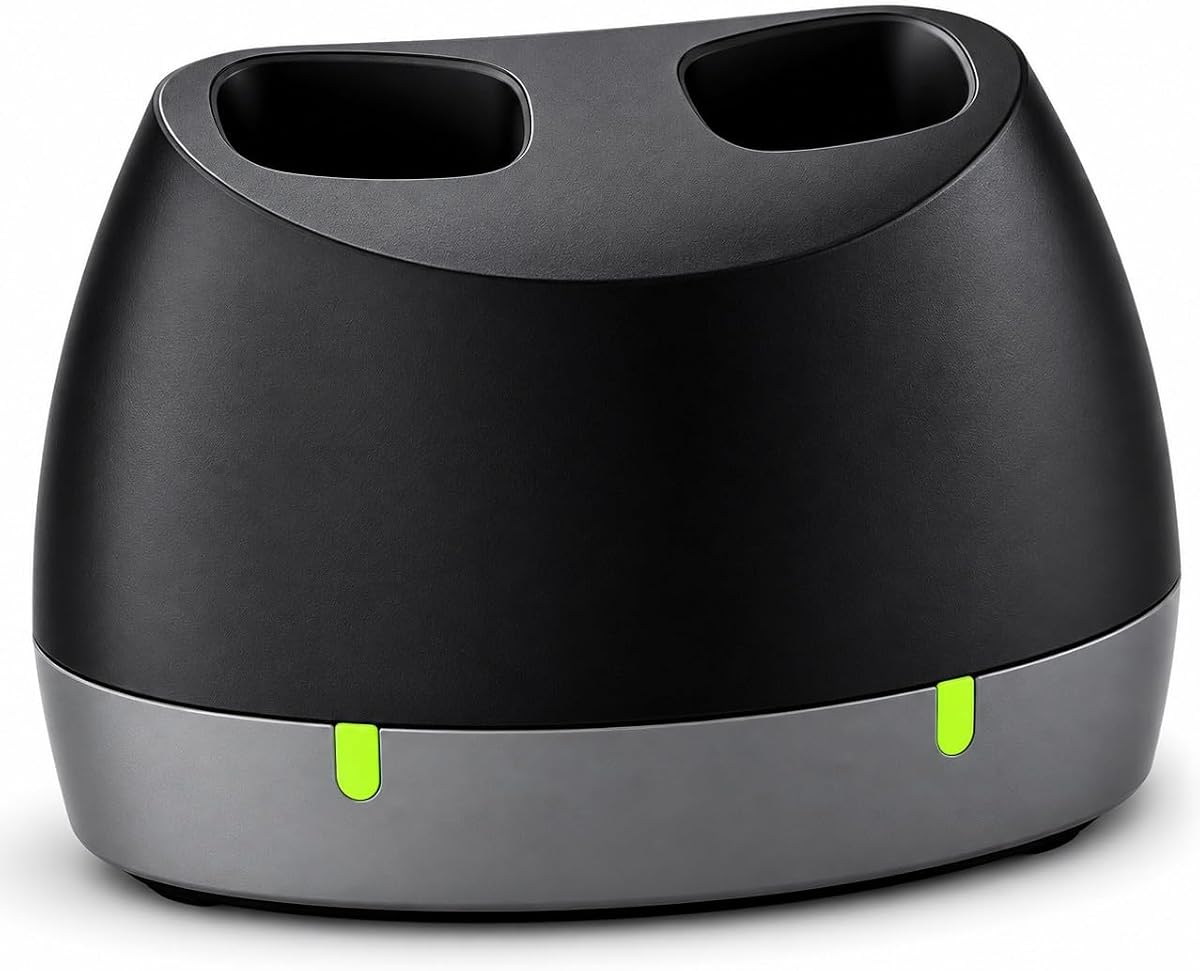


The Universal Phonak Hearing Aid Charger for RIC and BTE Models earns a 4.4 rating and stands out for supporting several rechargeable Phonak families through one charger. Its compatibility covers Naída L-PR and Sky L-PR, along with Marvel, Paradise, and Lumity RIC devices and Paradise and Lumity BTE devices, making it a practical option for owners who want a single current charger for more than one Phonak generation.
We may earn a commission when you buy through this link, at no additional cost to you.
The major strength is the breadth of the stated model support. Rather than being tied to a single family, it can serve compatible Naída, Sky, Marvel, Paradise, and Lumity devices in the listed RIC and BTE formats. It can also be combined with a compatible power pack for charging away from an outlet, although that battery accessory is sold separately and must be considered as an additional purchase.
Those same restrictions also define the trade-offs. The charger is not a general-purpose hearing aid charger, and buyers should not assume that every Phonak product will work simply because the hearing aids share the same brand. The separate power pack may also make the complete traveling setup less economical or convenient than an integrated portable model.
This is a strong choice for a Phonak user whose device appears on the compatibility list, particularly someone who appreciates one charger covering several model families. It is also a sensible replacement candidate when the original charger is no longer available. Before ordering, confirm the exact hearing aid series, receiver style, and whether a separate power pack is required for mobile use.
The broad stated compatibility is the main reason to consider this model. It can simplify ownership for someone who has moved between compatible Phonak RIC or BTE generations or keeps a matched pair of different supported generations.
The desktop charger handles routine charging, while compatibility with a separately sold power pack extends the setup to locations without a wall outlet. Buyers should plan for the complete portable system rather than expecting the power pack to be included.
We may earn a commission when you buy through this link, at no additional cost to you.
The Starkey StarLink Premium 2.0 Charger has a 4.6 rating and is the most complete traveling option in this guide. Its onboard battery can provide three full hearing aid charges before the charger itself must be recharged, giving users a meaningful amount of independence from wall outlets during travel, workdays, and other mobile routines.
We may earn a commission when you buy through this link, at no additional cost to you.
This charger can charge two hearing aids simultaneously, making it well suited to users with bilateral hearing loss. Individual LED indicators show the charging status of each device, so it is easier to see when both aids are ready. The fast-charging design is another meaningful benefit for someone who needs a short top-up between longer charging sessions.
Compatibility is the decisive limitation. It is designed for Starkey Genesis mRIC and RIC RT hearing aids, so it will not serve users of unrelated Starkey families or devices from other manufacturers. The onboard battery also introduces a component that must be maintained over time, although the ability to recharge the charger at a wall outlet keeps that issue manageable.
For a compatible Starkey Genesis user who regularly travels, the StarLink Premium 2.0 offers the strongest balance of portability, charging capacity, and visibility in this roundup. It is especially attractive as the primary charger for a bilateral set because both aids can charge together and each has a dedicated status light. Confirm the precise model before ordering rather than relying only on the Starkey brand name.
Three full charges distinguish this model from simple protective cases with limited backup power. It can support several days away from an outlet when both hearing aids are recharged as needed, although actual results depend on the compatible aids and the condition of the internal battery.
Separate LED indicators remove the uncertainty of judging charging progress through sound or a single shared light. That visibility is especially useful for bilateral users who want to confirm that both devices are charging and fully prepared for the next day.
We may earn a commission when you buy through this link, at no additional cost to you.
The Oticon Tech Oticon Charger 1.0 receives a 4.6 rating and is a strong home-charging choice for compatible miniRITE R users. It uses inductive charging to bring compatible hearing instruments to a full charge in three hours, while the supplied green LED provides a simple indication that the charger is connected and ready.
We may earn a commission when you buy through this link, at no additional cost to you.
The detailed charging schedule is especially useful. It states that approximately 30 minutes provides 25 percent charging and 60 minutes provides 50 percent, while three hours supplies a full charge. Magnetic charging sockets help keep the devices seated correctly, which supports a consistent connection and reduces the chance that an aid will be left improperly positioned.
The package also includes a USB cable, power features, an indicator light, and a travel pouch for storage. However, this remains fundamentally a desktop charger permanently connected to a power supply. It is optimized for users who mainly charge at home and want a stable overnight routine rather than a self-contained traveling battery.
The charger is appropriate for listed Oticon miniRITE R families and is also described as compatible with compatible Sonic and Bernafon rechargeable hearing aids. Because the product title and detailed model support differ slightly, buyers should verify their precise hearing aid model before ordering. For someone seeking a permanent bedside station with informative charging stages, this is a polished and practical match.
Published 25 percent, 50 percent, and full-charge milestones make the charger easier to integrate into a morning or evening routine. A short morning session can provide a useful top-up, while a full three-hour cycle is intended for overnight preparation.
The magnetic sockets help hold compatible aids in their intended positions. This is a practical advantage in a bedside setting because the devices are less likely to rest loosely in the charging wells.
We may earn a commission when you buy through this link, at no additional cost to you.
The Oticon Desktop Charger 1.0 has a 4.4 rating and is a well-equipped home station for several compatible Oticon RIC families. It supports Oticon More, Opn S, Opn Play, and Ruby models, while the supplied information also references compatible RIC receiver-in-canal families including Real and Zircon.
We may earn a commission when you buy through this link, at no additional cost to you.
Its strongest benefit is the combination of a full three-hour charge and a useful short-charge option. The product details state that a 30-minute session can deliver approximately six hours of power, which is convenient when a user wants a top-up without waiting for the complete cycle. Inductive technology and a magnetic connection help position the devices securely during charging.
The supplied package includes the desktop charger, USB cable, wall plug-in, and manual, so the core setup is straightforward. Its limitation is that it is designed for permanent home use rather than mobile power. A buyer searching for an integrated battery or case capable of charging while traveling would need one of the portable alternatives in this guide.
This charger is a good match for an Oticon user with one of the listed generations who wants a dedicated bedside station and values included installation accessories. The compatibility list is broad within the Oticon ecosystem, but it remains model-specific. Confirm the hearing aid series, receiver type, and physical charging interface before placing the order.
The stated 30-minute charging period can provide several hours of additional use, reducing pressure to complete an entire overnight cycle every time. It makes the desktop charger more flexible than a unit that only supports a full overnight routine.
A USB cable, wall plug, and manual are included with the charger. That makes the initial arrangement straightforward for a bedside or desk and reduces the need to source separate basic accessories.
We may earn a commission when you buy through this link, at no additional cost to you.
The Signia Pure Standard Charger has a 4.7 rating, the highest numerical rating among the listed products, and combines a full charge with strong claimed use time. It is designed specifically for Signia Pure Charge and Go IX and Charge and Go AX RIC hearing aids, offering up to 23 hours of hearing aid use from a three-to-four-hour charge.
We may earn a commission when you buy through this link, at no additional cost to you.
Fast charging is its most useful differentiator. The product details state that a 30-minute session can provide an additional seven hours of hearing aid use, which is valuable during short breaks, early appointments, or days when the devices were not placed in the charger overnight. The relatively compact form also fits naturally on a bedside table or desk.
The trade-off is strict model compatibility. This is not a universal Signia charger, and the product title explicitly limits it to Pure Charge and Go IX and AX RIC models. It also lacks an onboard battery, so portability means moving the hearing aids to a stationary charging point rather than carrying a self-powered charger.
This is a particularly compelling recommendation for a user with one of the specified Pure Charge and Go devices who values a short, useful charging session and a long claimed runtime between charges. It is also our top choice for the strongest listed user rating. Confirm the exact hearing aid line before buying, as similarly named Signia products may require different hardware.
The stated seven-hour use from a 30-minute charge gives the model a meaningful fast-charge advantage. It is especially convenient when a full four-hour cycle is impractical, while still supporting a more complete overnight routine when time is available.
A claimed 23 hours of hearing aid use can cover a full day for many users. The benefit depends on matching the charger to a compatible hearing aid and following the manufacturer's recommended charging routine.
We may earn a commission when you buy through this link, at no additional cost to you.
The Signia Pure Portable Charger is a lightweight option for users of compatible Signia and TruHearing RIC hearing aids. Its stated compatibility covers Signia iX, iX BCT, AX, and TruHearing 6 and 7 models, while its low-profile form is designed to fit easily into a bag or pocket during travel.
We may earn a commission when you buy through this link, at no additional cost to you.
Operation is deliberately uncomplicated. Compatible hearing aids are placed into the charger, where a secure fit helps prevent accidental slips or misplacement. That focus on a short daily interaction is valuable for users who want charging to become an automatic part of removing their hearing aids at the end of the day.
The supplied product information does not provide a numerical customer rating, a specific full-charge time, or a stated number of backup cycles. Those details should therefore not be assumed. Because this charger spans several Signia and TruHearing families, exact compatibility remains the most important purchasing consideration.
This is a sensible choice for a compatible user who values a slim portable form more than a stationary desktop design. It is also useful for travel, carrying between work and home, or keeping close to a hearing aid storage case. Confirm the precise model and charging standard, and consult the relevant product documentation if dependable backup capacity is a priority.
The slim profile reduces the bulk of carrying a charger alongside other daily essentials. It can serve as the main home charger or travel with the hearing aids without occupying substantial space in a bag.
Drop-in operation makes the charging process quick, while the designed secure fit helps keep the devices in place. Those details are particularly helpful in a portable case that may be moved while the hearing aids are charging.
We may earn a commission when you buy through this link, at no additional cost to you.
The Pure IX Portable Charger has a 3.9 rating and offers a refreshingly simple approach for people who use TruHearing 6 or 7 in-ear hearing aids. The hearing aids are placed into the case and the lid is closed, with no buttons or setup procedure described for routine use.
We may earn a commission when you buy through this link, at no additional cost to you.
Its compact size makes it suitable for a purse, small work bag, or suitcase pocket. The design can function as a primary charger or remain available as a backup, which gives users flexibility to keep the devices protected and charged in several locations rather than relying on one fixed station.
The main weaknesses are narrow compatibility and the lower numerical rating relative to the other rated products. The charger is built specifically for TruHearing 6 and 7 devices, so owners of other in-ear models should not assume that a similar physical appearance guarantees support. The supplied details also do not specify a full-charge duration or backup-cycle count.
For a compatible TruHearing user who prioritizes uncomplicated handling and compact storage, this case remains a practical option. Its strongest appeal is the absence of controls or a complicated setup sequence. Confirm the hearing aid model, inspect the case regularly for wear, and verify the expected charging indicator behavior before relying on it as the only charging solution.
The uncomplicated routine reduces the likelihood that charging will be skipped. With no buttons to press and no elaborate setup, a user can form a quick end-of-day habit of placing both aids in the case and closing the lid.
Keeping the compact charger in a separate bag provides a convenient backup location for charging. It is a practical arrangement for users who split their time among home, work, and travel destinations.
We may earn a commission when you buy through this link, at no additional cost to you.
The Connexx Pure Desktop Charger is designed for Signia Pure Charge and Go iX, iX BCT, and AX RIC devices, as well as TruHearing 7 BCT, 7, and 6 RIC models. Its compact desktop form is intended to sit neatly on a nightstand or desk without becoming a prominent part of the room.
We may earn a commission when you buy through this link, at no additional cost to you.
The product emphasizes a simple overnight routine. Compatible hearing aids are placed in the charger, and the stationary format makes it easy to maintain a consistent end-of-day charging habit. The lack of complicated setup also makes it approachable for users who want a dedicated charging point without a dense control panel.
Because the supplied data does not include a customer rating, charging time, or detailed battery-runtime claim, prospective buyers should treat those specifications as unconfirmed. The charger is also model-specific, and the long compatibility list can be misleading if it is interpreted as covering every Signia or TruHearing device.
This model is best for a compatible user who wants an unobtrusive home station, especially one with limited nightstand space. Its straightforward design may appeal more than a portable battery to someone who always charges at home. Before ordering, compare the exact model number on the hearing aid with the stated list and confirm the required power connection.
The compact desktop form preserves valuable space beside a bed or on a work surface. That makes the charger easier to keep in the same location each night, which can support a more consistent routine.
Its primary purpose is uncomplicated overnight charging. Users who reliably return to the same charging location can benefit from making that behavior a simple and predictable part of the daily routine.
We may earn a commission when you buy through this link, at no additional cost to you.
The Starkey Premium Standard Charger has a 4.2 rating and supports several Starkey families, including Evolv AI, Livio Edge AI, Livio AI, Livio RIC, and Muse IQ devices. It accepts compatible RIC and BTE hearing aids, giving owners of multiple listed generations a single branded charging solution.
We may earn a commission when you buy through this link, at no additional cost to you.
Its onboard battery allows charging on the go, separating it from a purely stationary desktop charger. This is the defining feature for users who want more freedom around the house or the ability to maintain their hearing aid routine while traveling. The product title also states clearly that the charger is limited and not universal.
Compatibility exclusions deserve careful attention. It is explicitly not compatible with ITE hearing aids, and the supplied details extend that warning to ITC and CIC styles. Buyers should therefore identify the shape and model of their hearing aids before ordering instead of relying on a general description such as Starkey or AI.
This is a useful option for a compatible Starkey RIC or BTE user who wants portable power across several supported product generations. It may be particularly attractive to households that want one charger for more than one listed Starkey family. Exact model confirmation is essential, and the seller states that buyers can contact them for help determining compatibility.
The integrated battery allows the charger to operate away from a wall outlet. Combined with support for five named model families, this creates a useful option for users who may own compatible devices from more than one recent Starkey generation.
The product does not support ITE, ITC, or CIC hearing aids. Those restrictions are not minor details because physical appearance can vary considerably among Starkey models, so the exact model label should be checked before purchase.
We may earn a commission when you buy through this link, at no additional cost to you.
The Widex sRIC Charger has a 4.3 rating and is designed for Widex Moment mRIC and Sheer sRIC rechargeable hearing aids. Its stated four-hour full recharge time is longer than the charging cycles described for several Oticon and Signia options, but the charger is claimed to deliver up to 30 hours of continuous use afterward.
We may earn a commission when you buy through this link, at no additional cost to you.
The compact design makes it easy to carry, while the plug-and-charge process keeps daily operation straightforward. The hearing aids are placed inside after connecting the charger to power, reducing the number of separate controls or complicated setup steps involved in routine charging.
The trade-off is the four-hour full-charge time. A user who relies on very brief top-ups may find a faster charger more convenient, particularly if the two devices need to be ready before leaving the house. Compatibility is also restricted to the named Widex Moment mRIC and Sheer sRIC devices, so the exact receiver style and product family must be confirmed.
This charger is a solid recommendation for a compatible Widex user who values compactness and a long claimed runtime more than the fastest possible recharge. It works well as a dedicated home or travel charger, provided the user can plan around the longer full cycle. Checking the hearing aid model and following the manufacturer's charging guidance remain essential.
The stated ability to power the hearing aids for up to 30 hours provides a long listening window between full cycles. That can be particularly helpful for users who wear their devices throughout a demanding day.
The compact enclosure and plug-and-charge routine make the unit straightforward to include in a travel setup. A full cycle takes about four hours, so planning a complete charge before a long trip is advisable.
We may earn a commission when you buy through this link, at no additional cost to you.
The correct charger depends more on the hearing aid model than on aesthetics or general charging speed. Start with exact device compatibility, then consider charging time, portability, status feedback, included accessories, and the reliability of the routine you expect to maintain.
Chargers for hearing aids are often designed around a particular brand, product family, receiver type, and generation. Two hearing aids from the same manufacturer may still require different chargers, and products with similar names can be physically or electronically different. The most important first step is to locate the precise model designation on the hearing aid, its packaging, or the original charger rather than relying only on the brand name.
RIC, BTE, miniRITE R, mRIC, sRIC, ITE, ITC, and CIC describe distinct physical formats. A charger intended for a receiver-in-canal or behind-the-ear device may not support a in-the-ear or in-canal device, even when both are listed under the same brand. Compatibility also depends on the charging contacts and receiver arrangement, so confirm both the product family and the physical style named in the charger description.
A full-charge time matters for nightly preparation, while a short-charge option can be valuable when the user needs a quick top-up. The Oticon Charger 1.0 publishes progress at 25 and 50 percent, the Signia Pure Standard Charger provides a claimed seven hours of use from 30 minutes, and the Widex model takes about four hours for a full cycle. Compare realistic time requirements rather than focusing only on the fastest headline figure.
A desktop charger is usually simpler and more consistent because it remains connected to a power supply. A portable charger with an onboard battery is more valuable for frequent travel, workdays away from home, or users who want charging flexibility. Options such as the Starkey StarLink Premium 2.0 and Starkey Premium Standard Charger provide built-in power, while the Signia and Pure IX portable cases emphasize a compact, travel-ready enclosure.
Portable capacity should be considered in complete hearing aid cycles rather than vague statements about being portable. The Starkey StarLink Premium 2.0 states that its onboard battery can provide three full charges before needing to be recharged, which is a more concrete benchmark. For compact cases with fewer published details, users should look for a verified full-charge time and number of backup cycles before depending on them away from an outlet.
Charging contacts must connect properly for reliable operation. Magnetic sockets, secure wells, and fitted cases can keep hearing aids aligned and reduce the chance that a device will be inserted incorrectly. This matters most in portable cases that may be moved, but it also improves the bedside routine of desktop chargers. Confirm that the charger is designed to hold the user's specific receiver style securely.
Useful feedback tells the user when the charger is ready and whether each hearing aid is charging. The Starkey StarLink Premium 2.0 provides individual LED indicators, while the Oticon Charger 1.0 uses a green connection indicator. Not every charger in the guide provides the same level of detail, so users who have difficulty judging charging progress should prioritize visible status feedback or an indicator described in the product documentation.
A charger may be only one part of the required system. The Phonak option can be combined with a separately sold power pack, while the Oticon Desktop Charger 1.0 includes a USB cable, wall plug, and manual. Consider the power source, included cables, storage pouch, replacement availability, and whether the charger serves as the primary unit, a travel spare, or a backup for a second location.
Before the first use, confirm the hearing aid model against the charger's compatibility information and inspect both the charger and hearing aid for visible damage. Place the charger on a dry, level surface connected to its specified power source, then use the manufacturer instructions to establish any initial charging requirements. A desktop charger should be positioned where its cable cannot be pulled, stepped on, or exposed to moisture.
Remove the hearing aids according to their normal care routine, wipe away visible moisture or debris, and inspect the charging contacts. Place each compatible aid in the designated charging position without forcing it. If the charger uses magnets, a fitted case, or dedicated sockets, confirm that the device is seated correctly before relying on the status indicator. Close a portable case fully and avoid using it if the latch, contacts, or internal wells appear damaged.
Allow the charger to complete the recommended cycle, and check its light indicators or other status features. Do not interrupt a fast-charge cycle unnecessarily, and do not use a charger, cable, or power source that the hearing aid manufacturer has not approved. Keep the charger clean and dry, inspect the cable and contacts periodically, and replace the unit if it no longer charges reliably, becomes unusually warm, shows physical damage, or stops displaying an expected status.
Most hearing aid chargers are not universal. They are designed for particular manufacturers, model families, receiver styles, and charging interfaces, even when several products appear under the same brand. Check the exact model designation on your hearing aids and compare it with the charger's complete compatibility list before ordering.
Only when the manufacturer explicitly identifies the charger as compatible with that exact model or family. A physical fit is not enough because the charging contacts, power control, and communication process can differ. Using an unsupported charger may fail to charge the hearing aids or could create a safety concern, so manufacturer and model confirmation is essential.
A desktop charger is generally the simpler choice if you charge at the same location every night. A portable charger is more useful if you travel frequently, spend time away from a wall outlet, or want a spare for a work bag. Portable models may have limited battery capacity, so compare the number of complete charging cycles rather than relying on size alone.
The chargers in this guide list full-charge times ranging from about three hours to four hours, depending on the model. Some also provide short-charge periods that add several hours of use. These figures apply to compatible devices and normal conditions, so follow the hearing aid manufacturer's guidance for the most accurate routine.
Many of the listed desktop and portable chargers are designed to hold a matched left and right pair. The Starkey StarLink Premium 2.0 specifically provides simultaneous dual charging and individual LED indicators. For other products, confirm that both the charger description and your hearing aid models support bilateral charging before assuming two devices can be placed together.
First check that the model is compatible, the charger has power, and the hearing aid is seated correctly in the charging position. Inspect the hearing aid contacts and charger sockets for moisture, debris, or visible damage, then clean them according to the manufacturer's instructions. If the issue continues, stop using a damaged charger and contact the hearing aid provider for troubleshooting or replacement advice.
It depends on the model. A portable case with an internal rechargeable battery can usually charge the hearing aids after the case itself has been charged, while a basic portable desktop charger may still require a constant power connection. Check whether the internal battery is included, how many complete hearing aid charges it provides, and what cable or wall adapter is required.
A shorter charging time can be convenient, but speed should be considered alongside compatibility, secure positioning, and long-term reliability. A model that completes a full charge overnight and maintains a stable connection may suit a user's routine better than a faster unit with narrower model support. The best choice is the one approved for the user's hearing aids and practical for their daily schedule.
The Starkey StarLink Premium 2.0 is the leading choice for compatible Genesis mRIC and RIC RT users because it combines three full portable charges, simultaneous charging for two devices, and individual status lights. The Signia Pure Standard Charger stands out for its higher listed rating, 30-minute charging option, and claimed 23-hour runtime, while the Universal Phonak Charger offers broad support across several compatible Phonak families.
For everyone else, prioritize the exact hearing aid model above all other features. Once compatibility is established, decide whether a permanent desktop station or a portable battery better fits the routine, and then compare full-charge time, short-charge performance, secure positioning, and status feedback. A backup charger in a second location can provide useful redundancy without complicating the main nightly setup.
Product availability, included accessories, and pricing can change over time, so verify the current listing and manufacturer guidance before purchasing. Most importantly, compare the charger against the complete model name of the hearing aids rather than relying on a brand name or visual resemblance. That final check helps prevent an otherwise convenient charger from being incompatible on arrival.