
Eko CORE 500
4.2Editor score
Integrated full-color display
Three-lead ECG capability
Up to 60 hours per charge
Digital electronic stethoscopes with amplification can make faint heart, lung, and body sounds easier to hear while adding filters, recording, visualization, and other digital tools. A useful model should balance clear audio, noise control, comfort, dependable battery performance, and an app that supports your intended clinical, educational, or wellness routine.
This guide compares ten supplied products across amplification, listening modes, active noise cancellation, displays, recording functions, connectivity, patient-use positioning, and practical considerations. It also examines the listed automotive tools and a conventional stethoscope to clarify which products truly belong in the digital medical category and which serve different purposes.
Each review highlights the strongest reasons to consider a model, along with meaningful limitations and the users most likely to benefit. Ratings reflect the supplied product data, availability and pricing can change, and readers should verify current specifications, regulatory claims, compatibility, and accessory requirements before purchasing.
4.2Editor score
4.6Editor score

4.4Editor score
As an Amazon Associate we earn from qualifying purchases.
This side-by-side comparison covers all ten listed products, separating true digital medical stethoscopes from conventional and automotive diagnostic tools while highlighting amplification, listening controls, recording, connectivity, and intended use.


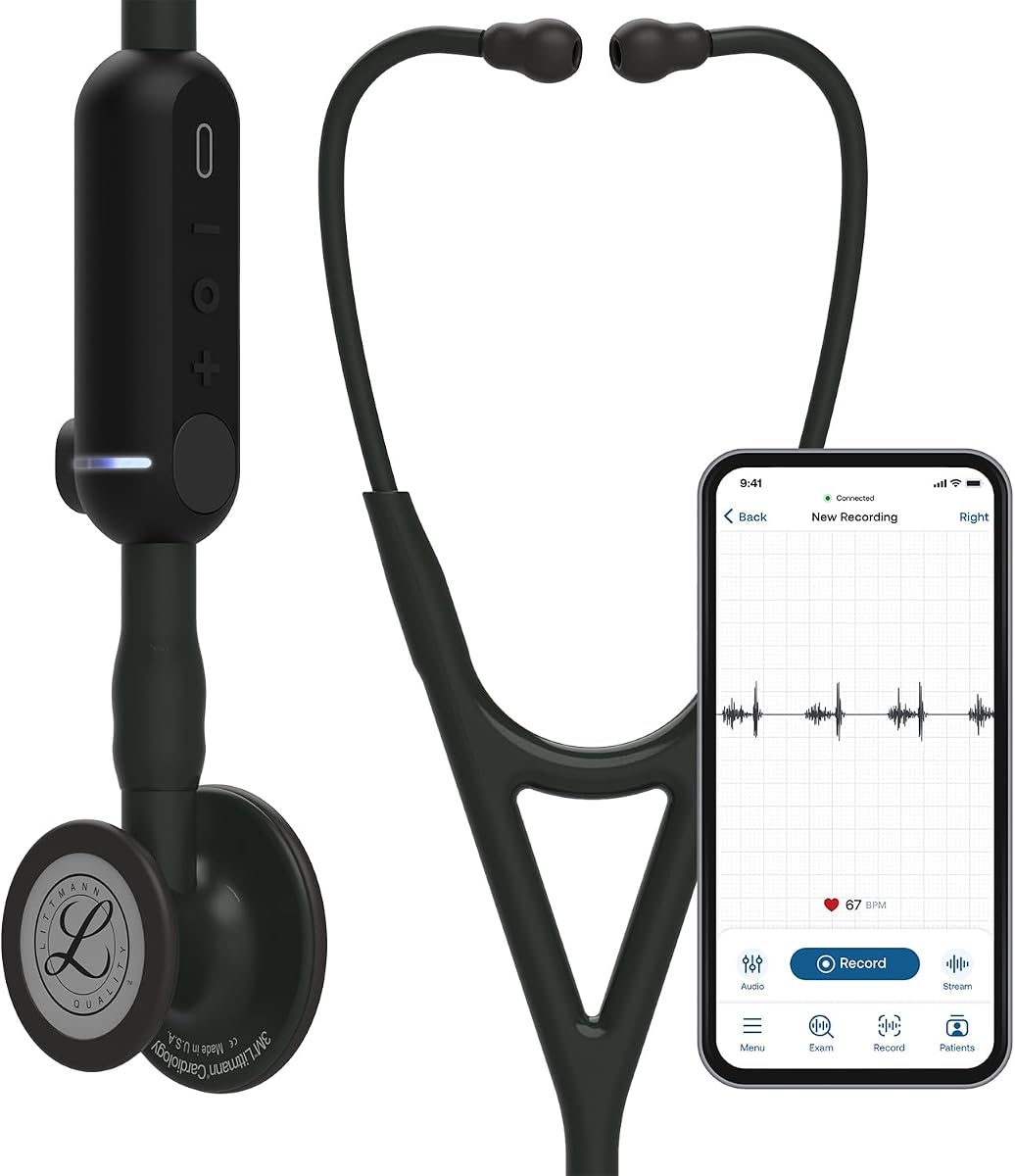
The 3M Littmann CORE Digital Stethoscope 8480 combines a familiar clinical chestpiece with up to 40x peak amplification, active noise cancellation, and Eko software integration. Its supplied rating is 4.6, and its balanced feature set makes it the strongest all-around recommendation for clinicians and learners who want an established stethoscope platform with meaningful digital functionality.
We may earn a commission when you buy through this link, at no additional cost to you.
One of its most important advantages is the ability to switch between analog and amplified listening. That option is valuable because a user can compare conventional acoustic assessment with digitally enhanced sound rather than relying on amplification alone. The active noise cancellation system also helps suppress distracting background noise, while the tunable, dual-sided stainless steel chestpiece supports both open and closed bell use.
The Eko connection expands the device beyond simple volume enhancement. Compatible users can visualize heart sound waveforms, record information, and share data through the software. There are important qualifications: the smart device is not included, and some software features require a subscription. Those points make the CORE less convenient for someone who wants an entirely self-contained purchase.
This model is best suited to healthcare professionals, medical students, and educators who already value the Littmann platform and can adapt to an app-based workflow. Its combination of amplification, analog listening, noise cancellation, waveform visualization, and adult and pediatric positioning makes it our Editor's Choice, provided the buyer considers the device and software requirements before ordering.
The ability to toggle between analog and amplified modes gives users more control over the examination experience. Amplification may help with faint sounds, while analog mode provides a familiar reference for traditional auscultation techniques.
Eko software support adds waveform visualization, recording, and sharing capabilities to the physical stethoscope. That makes the device more useful for education and collaborative review, although a compatible smart device and potentially a subscription are required.
We may earn a commission when you buy through this link, at no additional cost to you.
The Eko CORE 500 is the most feature-rich premium model in this list, pairing up to 40x amplification with a full-color display, three-lead ECG capability, background-noise reduction, and Eko app support. Its supplied 4.2 rating reflects a highly capable device, while the integrated display gives it an advantage over stethoscopes that place all digital information on a phone.
We may earn a commission when you buy through this link, at no additional cost to you.
The device screen can show heart rate, ECG data, exam insights, and settings without requiring the user to look away to another display. Its Cardio, Pulmonary, and Wide audio filters are designed to isolate different categories of body sounds, and the active-noise-reduction system supports clearer listening in distracting environments.
The CORE 500 also includes a free 14-day Eko+ trial. That trial unlocks murmur and atrial fibrillation detection as well as unlimited recording, but the membership is listed at a yearly rate afterward. The basic app remains available without Eko+, so buyers should distinguish between the hardware experience and the optional subscription features.
This is the premium choice for healthcare professionals, educators, and clinical programs that want a stethoscope, ECG capability, and a screen in one device. The rechargeable battery is advertised for up to 60 hours of regular clinical use, and the water- and shatter-resistant construction is intended for demanding shifts. Those features justify the premium position for users who need more than amplified audio.
The full-color screen provides heart rate, ECG information, exam insights, and settings directly on the stethoscope. This integrated presentation can simplify a workflow in which clinicians want immediate patient data without repeatedly handling a separate phone.
Three-lead ECG support and optional Eko+ detection features broaden the clinical scope of the device. Users who value these functions may find the subscription worthwhile, while those focused only on amplified listening can still use the core features.
We may earn a commission when you buy through this link, at no additional cost to you.
The 24x Digital Stethoscope Hi-Fi Amplified Stethoscope Blue offers a straightforward digital upgrade with a supplied 5.0 rating. It provides 24x amplification, dedicated Lung, Heart, and Full Spectrum modes, adjustable volume, and the ability to connect to headphones or speakers for private listening or teaching.
We may earn a commission when you buy through this link, at no additional cost to you.
Its multi-mode approach is easy to understand. Instead of asking the user to manipulate a complicated interface, it presents recognizable categories for common body sounds. The adjustable volume knob gives additional control, and connection to external audio equipment can make the device useful for demonstrations where a group needs to hear a recorded or live sound.
Recordings can be stored on the device for review and sharing, according to the supplied information. However, the listing provides fewer details about waveform visualization, regulatory status, app compatibility, battery life, and included accessories than the Littmann and Eko listings. It also lacks an advertised active noise cancellation system.
This model is worth considering for medical students, home health users, educators, and anyone seeking a simpler digital listening tool. Its five-star rating is encouraging, but ratings should be considered alongside the limited specifications. Buyers who prioritize maximum amplification or advanced clinical workflow may be better served by a 40x model.
Heart, Lung, and Full Spectrum modes make the device approachable for listeners who may not need every control available on a clinical platform. These modes also provide a useful framework for comparing different types of body sound.
Headphone or speaker output can support group instruction, while on-device recording provides a way to revisit sounds later. These features broaden the stethoscope's appeal beyond a single-user examination.
We may earn a commission when you buy through this link, at no additional cost to you.
The Niroga 470 stands out because it combines up to 40x amplification with app-based recording, storage, review, and sharing without a subscription for those stated features. Its supplied 4.4 rating and spoken heart-rate function also distinguish it from simpler amplified stethoscopes, while the product is explicitly positioned for general wellness, listening, and educational use.
We may earn a commission when you buy through this link, at no additional cost to you.
Users can choose Heart, Lung, and Wide-Band filter modes, while Bluetooth connectivity allows the companion app to display sound waveforms. The ability to share recordings with family members, caregivers, educators, or wellness professionals supports the product's consumer and family-care positioning. Built-in AI assist is also advertised, though the supplied details do not specify the exact scope of its outputs.
The most important limitation is regulatory and intended-use related. Niroga expressly states that the product is not intended to diagnose, treat, monitor, cure, or prevent a medical condition, and it is not a substitute for professional medical advice. That makes it suitable for personal listening and educational workflows but inappropriate as a replacement for a medically positioned stethoscope.
For buyers seeking a capable digital listening and sharing device without a recurring subscription, the Niroga 470 is a strong choice. It is especially relevant to families, wellness users, educators, and people who want adjustable amplification for easier listening. Clinicians should consider a medically positioned model with stronger documentation and workflow features.
The absence of a subscription for the advertised recording, storage, review, and sharing functions removes one common source of long-term cost. Users can explore the main app workflow without committing to a membership.
Spoken heart rate, waveform visualization, and wireless sharing give the device a more consumer-friendly focus. These features make observations easier to discuss with caregivers or educators while the wellness disclaimer keeps the intended use clear.
We may earn a commission when you buy through this link, at no additional cost to you.
The 24x Digital Stethoscope Hi-Fi Heart/Lung Mode Amplified provides a familiar set of digital features at a simpler level of complexity. It offers 24x amplification, dedicated Lung, Heart, and Full Spectrum modes, an adjustable volume knob, integrated storage, and connection to headphones or speakers. Its supplied rating is 3.5.
We may earn a commission when you buy through this link, at no additional cost to you.
The main appeal is a direct listening workflow. Users can select a mode, adjust the volume, and store recordings for later review without needing to navigate a particularly elaborate set of controls. External audio output adds flexibility for teaching and private listening, while the ergonomic shape and non-slip grip are intended to improve comfort during extended sessions.
The lower supplied rating suggests that some buyers may have been less satisfied with the overall experience, although the listing does not provide enough detail to identify a specific defect. There is no advertised active noise cancellation, and the supplied information says relatively little about app support, battery life, regulatory positioning, or included accessories.
The model is best considered by learners, educators, and users seeking a basic digital upgrade with selectable filters and integrated storage. A buyer who values a stronger rating, more advanced connectivity, or active noise reduction may want to move up the list. Its straightforward feature set remains practical as long as those limitations are acceptable.
Three modes and a physical volume control provide the core controls needed for many listening sessions. The result is a streamlined experience that may appeal to users who do not want to manage a complex clinical interface.
Integrated storage lets users save and manage recordings for later playback. That is useful for education and repeated listening, although buyers should verify storage capacity and transfer options before purchasing.
We may earn a commission when you buy through this link, at no additional cost to you.
The Digital Stethoscope with App, 40x Amplification, and Active Noise Cancellation is a noteworthy middle-ground option. It combines up to 40x amplification with active noise cancellation and a compatible app for real-time listening, recording, saving, playback, and review. Its supplied 4.6 rating places it among the better-rated choices in the list.
We may earn a commission when you buy through this link, at no additional cost to you.
Active noise cancellation may be particularly useful in busy clinical rooms, training spaces, care environments, or homes where environmental sounds can interfere with focused listening. The app-centered design adds useful review and playback features without requiring an extra subscription, according to the supplied information.
The listing describes the device as FDA-cleared and eligible for qualified health spending accounts, but it provides fewer product-specific details than the leading medical platforms. There is no onboard screen, ECG capability, or detailed filter list in the supplied data. App naming and compatibility are also generic, so buyers should confirm which devices and operating systems are supported before relying on the full workflow.
This stethoscope is a strong candidate for users who want more amplification and noise control than a basic digital model without a recurring fee. It may particularly appeal to trainees, home health users, and clinicians who primarily need recording and playback rather than a screen or advanced AI assessment. Verify regulatory documentation and app requirements for the intended setting.
Active noise cancellation helps reduce distracting background sound during an examination or lesson. It is a meaningful feature for users who work or listen in environments where ambient noise can mask quieter body sounds.
The app supports listening, recording, saving, playback, and review without an additional subscription. That combination makes it easier to consider the device as a complete digital listening setup rather than only a hardware purchase.
We may earn a commission when you buy through this link, at no additional cost to you.
The 24x Digital Stethoscope with Hi-Fi Heart/Lung Modes is a red, cloud-ready model aimed at users who want amplified audio and flexible storage. It includes 24x amplification, Lung, Heart, and Full Spectrum modes, an adjustable volume knob, and cloud storage support. Its supplied rating is 2.5, the lowest among the listed products.
We may earn a commission when you buy through this link, at no additional cost to you.
Its core listening controls are similar to those of the other 24x models. Dedicated filters make it easier to focus on particular types of body sound, and external headphone or speaker compatibility supports private listening and teaching. Cloud storage may be convenient for retaining or moving recordings across compatible devices, although the listing does not specify storage limits or account requirements.
The low rating warrants caution. The supplied information does not explain whether concerns involve hardware, software, cloud access, sound quality, or another aspect of the experience. Buyers should therefore examine recent feedback, verify what is included, and confirm whether essential functions require an internet connection or separate service.
The product can still make sense for an educational buyer who specifically values cloud storage and a three-mode listening setup. However, it is not our leading recommendation because stronger-rated alternatives offer more detailed specifications, noise cancellation, or higher advertised amplification. Treat it as a budget-sensitive choice that deserves closer verification before purchase.
Cloud support can make recorded material more accessible across devices and simplify later retrieval. The benefit depends on account setup, service availability, and the terms associated with storing clinical or personal audio.
Heart, Lung, and Full Spectrum modes provide a useful starting point for different types of auscultation. External audio output adds flexibility for education and shared listening.
We may earn a commission when you buy through this link, at no additional cost to you.
The Steelman EngineEAR II is an electronic stethoscope, but it is designed for automotive diagnostics rather than heart, lung, or body auscultation. It uses a sensitive microphone and headphones to locate mechanical noises in cars, trucks, farm equipment, and heavy machinery. Its supplied rating is 4.3.
We may earn a commission when you buy through this link, at no additional cost to you.
The decibel meter offers seven control settings ranging from 60 to 120 decibels. A flexible gooseneck reaches tight spaces, while the solid aluminum probe has a non-conductive rubber boot intended to avoid damaging sensitive electronic components. Fully covering professional mono headphones help block surrounding noise during diagnosis.
This distinction is essential because none of the clinical workflows associated with digital medical stethoscopes apply here. It does not provide amplification for auscultation, listening filters, patient data, heart-rate measurement, waveform visualization, or medical software integration. Its probe and controls should not be interpreted as heart and lung examination tools.
The EngineEAR II is an excellent choice for mechanics and diagnostic technicians who need to isolate mechanical noise, and its rating supports that focused use. It should not be selected by a healthcare professional seeking amplified body sounds. For that purpose, choose one of the medically or wellness-positioned models earlier in this list.
Seven sound-level controls and a sensitive listening probe help technicians identify changing engine, drivetrain, and equipment noises. The adjustable range supports comparisons across vehicles and working environments.
The gooseneck reaches confined areas, and the non-conductive rubber boot helps protect sensitive electronics. Covering headphones support concentration by reducing competing ambient sound.
We may earn a commission when you buy through this link, at no additional cost to you.
The BGS 3531 is a vehicle-oriented electronic listening kit designed to locate noise sources and shorten diagnostic time. It includes a six-way amplifier, six color-coded probes, clamps for acoustic coupling and mounting, and padded headphones with a stand. Its supplied rating is 4.5.
We may earn a commission when you buy through this link, at no additional cost to you.
The color-coded probe system helps technicians organize different test points across an engine, transmission, or shaft. A user can mount the probe at a selected location and listen while the vehicle operates or moves. The one-way amplifier supports quick acoustic testing, while the padded stand and headphones improve comfort during prolonged diagnostics.
Despite the word stethoscope in its name, the BGS 3531 has no medical auscultation functions. It does not amplify heart or lung sounds for patients, provide clinical filters, record body sounds, or support medical software. Comparing its amplifier to the 24x and 40x amplification figures used by digital medical stethoscopes would be misleading because they serve different applications.
This product is best for automotive technicians, mechanics, and equipment specialists. Its variety of probes and mounting hardware makes it more versatile for fixed test points than a simple handheld listening tool. Healthcare buyers should skip it and focus on the medically positioned or wellness-labeled digital models, while noting that those choices also carry different intended-use limitations.
Six color-coded probes make it easier to assign a specific contact point to each part of an engine or transmission. This organization helps reduce confusion during repeated diagnostic sessions.
The included clamps allow the electronic probe to remain coupled at a test location while the technician listens. That hands-free arrangement is practical when monitoring a vehicle at different operating points.
We may earn a commission when you buy through this link, at no additional cost to you.
The Welch Allyn 5079-322 Harvey DLX is a traditional acoustic stethoscope rather than a digital electronic model. It offers a full-range, 28-inch configuration with a rotatable triple-head chestpiece, chrome-plated brass components, a rotatable binaural, and interchangeable comfort-sealing ear tips. Its supplied rating is 4.3.
We may earn a commission when you buy through this link, at no additional cost to you.
The triple-head design provides different listening surfaces within one instrument, including the listed brass bell, flat diaphragm, and corrugated diaphragm options. The long tubing allows the examiner to maintain comfortable positioning around a patient, while the rotatable binaural and sealing ear tips support fit and acoustic isolation through traditional means.
The Harvey DLX does not offer the defining features of this roundup: there is no electronic amplification, active noise cancellation, app connectivity, waveform display, recording, ECG, or spoken heart rate. It can still be an excellent acoustic instrument, but buyers who need digital enhancement should view it as an alternative rather than a direct match.
This model makes sense for users who prefer a conventional clinical design, already use Welch Allyn equipment, or want a simple stethoscope without electronics. It is also useful as a benchmark for comparing acoustic and digital workflows. For anyone specifically shopping for amplified listening, the CORE models and other digital choices offer a closer fit.
The rotatable triple-head chestpiece supports different acoustic techniques through the bell and two diaphragm configurations. This variety is valuable for clinicians accustomed to conventional auscultation methods.
Long tubing, a rotatable binaural, and interchangeable sealing ear tips help the instrument sit comfortably during an examination. These are physical design strengths rather than digital features.
We may earn a commission when you buy through this link, at no additional cost to you.
The right digital stethoscope depends on your setting, required level of amplification, need for noise control, recording workflow, and tolerance for app-based services. The following factors help separate genuinely useful features from specifications that may not improve your particular routine.
Amplification is one of the first specifications to compare because it determines how much electronic gain the product can provide. Models in this list range from 24x to 40x, with the latter generally promising greater potential for faint sounds. Higher amplification is not automatically better, however; excessive gain can also make artifacts or background noise more obvious, so users should compare comfort, clarity, and control rather than chasing the largest number.
Choose based on your listening environment and the intended user. A maximum-gain model may help someone with hearing difficulty, while a clinician may prioritize natural sound reproduction, adjustable filtering, and a reliable analog reference mode.
Active noise cancellation can make a major difference in busy rooms, shared wards, clinics, and homes with persistent environmental noise. It is especially relevant when the goal is to isolate subtle body sounds from nearby conversations, equipment, or household activity. Not every digital model in the list advertises this feature, so buyers should confirm it explicitly rather than assuming all electronic stethoscopes include it.
For frequent users in noisy locations, noise cancellation deserves meaningful weight. For quiet teaching environments or personal use, a model with strong filters and adjustable volume may provide enough background control without the added expense.
Dedicated Heart, Lung, Wide, Cardio, Pulmonary, or Full Spectrum modes can reduce the effort required to distinguish different body sounds. The naming varies among products, so the important issue is whether the device offers filters that correspond to the sounds you routinely assess. A broad mode is useful for general exploration, while focused filters may help learners compare similar sounds with less trial and error.
Look for several modes and an easy way to switch between them. If you are new to digital stethoscopes, a straightforward selection system may be more useful than a deeply technical equalizer.
Recording and waveform visualization can turn a stethoscope into a teaching and review tool. The Littmann CORE supports visualization and sharing through Eko software, the Niroga 470 includes app-based waveforms and no-subscription access to its stated features, and the CORE 500 combines recording features with an onboard display. Storage location matters because local, cloud, and subscription-based services carry different privacy, convenience, and long-term requirements.
Users focused on education should compare recording limits, playback speed, sharing controls, and device compatibility. Users who want only live listening may avoid paying or creating accounts for features they will not use.
A digital stethoscope may depend on a compatible phone, tablet, computer, or wearable for some of its best features. The Littmann CORE does not include a smart device, and some features require a subscription. The Eko CORE 500 includes a trial for its advanced Eko+ features, while the Niroga 470 and the 40x app model advertise core app features without extra subscription fees.
Before buying, verify supported phone models, operating systems, wireless protocols, account requirements, and which functions continue without service. Also confirm how recordings are stored and whether privacy terms suit the intended environment.
A built-in display changes how information is presented during an examination. The CORE 500 is the clear leader in this group because its full-color screen can show heart rate, ECG data, exam insights, and settings directly on the device. Other models rely on a phone or companion app for visualization. ECG capability is similarly unique to the CORE 500 among the supplied medical and wellness products.
Choose an onboard display if fast access to patient information matters. Choose a phone-based model if you prefer a smaller stethoscope, already use a particular mobile device, or want a potentially less expensive hardware package.
Digital electronics make battery life and charging logistics central to ownership. The CORE 500 is advertised to remain charged for up to 60 hours of regular clinical use, while detailed battery information is not provided for most other devices. Comfort is equally important because the chestpiece is held for long periods and repeatedly repositioned. The 24x models mention an ergonomic, non-slip shape, while the Littmann CORE provides soft sealing ear tips and a tunable stainless steel chestpiece.
For daily clinical work, verify battery endurance, charging time, charger inclusion, and whether the device can operate while charging. For all users, compare tubing, ear-tip fit, weight, grip, and cleaning requirements before making a final choice.
The products in this list are not all medical stethoscopes. The Steelman EngineEAR II and BGS 3531 are automotive and machinery diagnostic tools, while the Welch Allyn Harvey DLX is a conventional acoustic stethoscope. The Niroga 470 is marketed for general wellness, listening, and education and expressly excludes diagnosis, treatment, and medical monitoring. The CORE 500 is described as FDA-cleared in selected features, while other listings make more limited claims.
Always choose according to intended use. Healthcare professionals should review the manufacturer's labeling, intended users, and regulatory documentation rather than assuming that the word digital or electronic makes every product suitable for patient assessment.
Begin by reading the manufacturer's instructions, charging the stethoscope as directed, and confirming that its app works with your phone or tablet. Fit the earpieces or headphones correctly, select an appropriate chestpiece and listening mode, and test the device with a known sound source before relying on it for a real examination. Start with modest amplification or volume and increase it only as needed.
During use, keep the chestpiece properly positioned and move it only after the sound has stabilized. Compare digital results with a conventional acoustic stethoscope when appropriate, especially when learning a new filter or setting. Clean the chestpiece, tubing, ear tips, and other reusable contact surfaces according to the supplied care instructions; do not immerse a non-waterproof electronic unit unless its manual explicitly permits it.
Review recordings only when privacy and storage arrangements are appropriate for the data involved. Save files, share them, and manage cloud or app content according to your organization's policy. Keep the device charged, replace damaged tubing or ear tips, and have the unit serviced when audio quality, filters, microphones, or connections behave abnormally rather than trying to repair it without guidance.
An acoustic stethoscope transmits sound physically through air and tubing without electronic amplification. A digital electronic stethoscope captures sound through a microphone and may amplify it, apply filters, reduce background noise, display waveforms, or record information. Digital models often require charging and may connect to an app or other accessories, while acoustic models are generally simpler and immediately ready for use.
No. A higher maximum amplification figure can help with faint sounds, but practical performance also depends on microphone quality, noise control, filters, speaker quality, and user comfort. Excessive gain may make artifacts or background noise more prominent. The best choice is the model that makes relevant sounds easier to interpret without creating distortion or disrupting the user's hearing.
Only products labeled and approved for the relevant patient population and intended clinical use should be used for patient assessment. Some models specify adult and pediatric use, while the Niroga 470 is limited to general wellness, listening, and educational purposes. Automotive electronic stethoscopes are not medical devices, and a conventional acoustic model does not provide digital amplification. Check the product labeling and professional guidance before clinical use.
It depends on the product and the functions being used. The Littmann CORE states that some features require a subscription, and the Eko CORE 500 offers a trial before charging for Eko+ membership. The Niroga 470 and the 40x app model advertise core app features without extra subscription fees. Buyers should verify which hardware functions remain available without a paid service and review ongoing terms before purchasing.
Several models are designed partly for teaching and review. The Littmann CORE supports recording and waveform sharing through Eko software, the 24x models store recordings and can connect to speakers or headphones, and the Niroga 470 includes app-based recording and sharing. Users must still follow privacy policies, obtain appropriate consent, and avoid sharing protected health information through an unauthorized service.
A medical digital stethoscope is intended to capture and process body sounds such as heart, lung, and other auscultation sounds. An electronic diagnostic stethoscope may use a microphone and amplifier to locate mechanical noise in engines, transmissions, or machinery. The Steelman EngineEAR II and BGS 3531 are automotive tools, so their decibel meters, probes, and diagnostic accessories should not be interpreted as clinical auscultation features.
Follow the manufacturer's cleaning instructions for the chestpiece, tubing, ear tips, display, and electronic controls. Remove disposable parts when the instructions permit, clean compatible surfaces with an approved agent, and avoid immersing the device or flooding openings unless the manual specifically allows it. Allow all parts to dry fully before storage, and discontinue use if moisture or a suspected contamination cannot be safely addressed.
No. A built-in display is valuable when quick access to heart rate, ECG information, or exam insights is important, as on the Eko CORE 500. If your primary need is amplified listening, filters, recording, and waveform review, a phone-based model may be sufficient. Choose the onboard display when it solves a specific workflow issue rather than simply adding more functions.
The 3M Littmann CORE is the most balanced overall recommendation because it combines 40x peak amplification, active noise cancellation, analog and amplified modes, and established Eko waveform support. The Eko CORE 500 is the premium choice for users who value a full-color display, three-lead ECG capability, and extended battery life, while the Niroga 470 stands out as a capable no-subscription option for wellness, education, and family listening.
Prioritize the features that directly support your routine: maximum gain for difficult listening, active noise cancellation for busy environments, filters for focused auscultation, and app or display features for teaching and review. Also verify intended use before making a clinical decision. Two products in the list are automotive diagnostic tools, one is a conventional acoustic stethoscope, and one is explicitly limited to nonmedical wellness and educational use.
Specifications, ratings, promotions, availability, and prices can change, so check the current listing and manufacturer instructions before ordering. Confirm app compatibility, subscription terms, included accessories, battery expectations, cleaning requirements, and regulatory positioning. With those checks completed, the right amplified stethoscope becomes a practical tool for clearer listening rather than simply another electronic accessory.