
Amazon eero Outdoor 7
4.5Editor score
IP66 outdoor weather resistance
Up to 15,000 square feet
Flexible AC or PoE+ power
Our Distance WiFi Router guide compares coverage, Wi-Fi generation, mesh expansion, ports, device capacity, and security to help readers choose the right model.
A distance WiFi router must place a strong, stable signal where traditional routers often struggle, including upstairs rooms, detached offices, finished basements, and outdoor living spaces. The right model balances wireless range, throughput, multi-device handling, wired options, and easy expansion rather than relying on a single maximum-speed claim.
We compared all ten models using the supplied specifications, focusing on Wi-Fi generation, stated coverage, device capacity, Ethernet connectivity, mesh support, management features, and security tools. The list covers conventional routers, Wi-Fi 6 and Wi-Fi 7 systems, multi-node mesh bundles, and an outdoor-focused eero model.
Each review explains the most useful capabilities and the compromises that shoppers should consider. Product listings and availability can change over time, so readers should verify current specifications, compatibility, and pricing with the retailer before making a final purchase.
4.5Editor score

4.3Editor score

4.2Editor score
This side-by-side comparison highlights each router's wireless standard, stated coverage, connection capacity, expansion options, and wired features to make the differences easier to understand.



The TP-Link AXE5400 Tri-Band WiFi 6E Router combines broad wireless capability with useful expansion options, earning a 4.3 rating. Its tri-band design separates traffic across 2.4, 5, and 6 GHz frequencies, while a stated aggregate throughput of up to 5400 Mbps provides ample headroom for modern homes. It is the most versatile conventional router in this group for buyers who want long range without immediately committing to a full mesh system.
We may earn a commission when you buy through this link, at no additional cost to you.
The 6 GHz band is the model's defining feature. It offers more bandwidth and low-latency capacity, which is particularly useful for compatible laptops, phones, streaming devices, and other recent hardware. The 5 GHz band supplies 2402 Mbps of rated throughput, while 2.4 GHz adds 574 Mbps for longer-distance connections and crowded devices. OFDMA helps the network serve multiple clients more efficiently, and the stated fourfold capacity increase gives busy households additional room to grow.
Processing and memory are unusually generous for a router in this category. A 1.0 GHz dual-core CPU, 512 MB of high-speed memory, and a housing designed for heat dissipation support sustained performance. The EasyMesh compatibility also makes this a practical starting point: owners can add compatible routers, extenders, or wireless powerline adapters later if the home proves larger than one unit can handle. VPN server and client functions add another layer of versatility for compatible services.
This is the strongest general recommendation for shoppers who want modern tri-band performance, a 6 GHz network, and flexible future expansion. It is not the best choice for a household seeking 2.5-gigabit wired connections, nor does a single unit guarantee flawless coverage in a very large or complex home. Even so, its combination of speed, capacity, memory, security features, and EasyMesh support makes it an excellent overall distance WiFi router for a typical medium-to-large residence.
EasyMesh compatibility means this router can become the anchor of a broader system without locking the household into a single mesh ecosystem. It is a sensible option for consumers who want one strong unit today and may need additional access points later.
HomeShield includes network scanning, IoT device identification, basic parental controls, quality of service, and reporting features. Supporting both VPN server and VPN client roles also makes the router more useful for compatible remote-access and privacy workflows.
We may earn a commission when you buy through this link, at no additional cost to you.
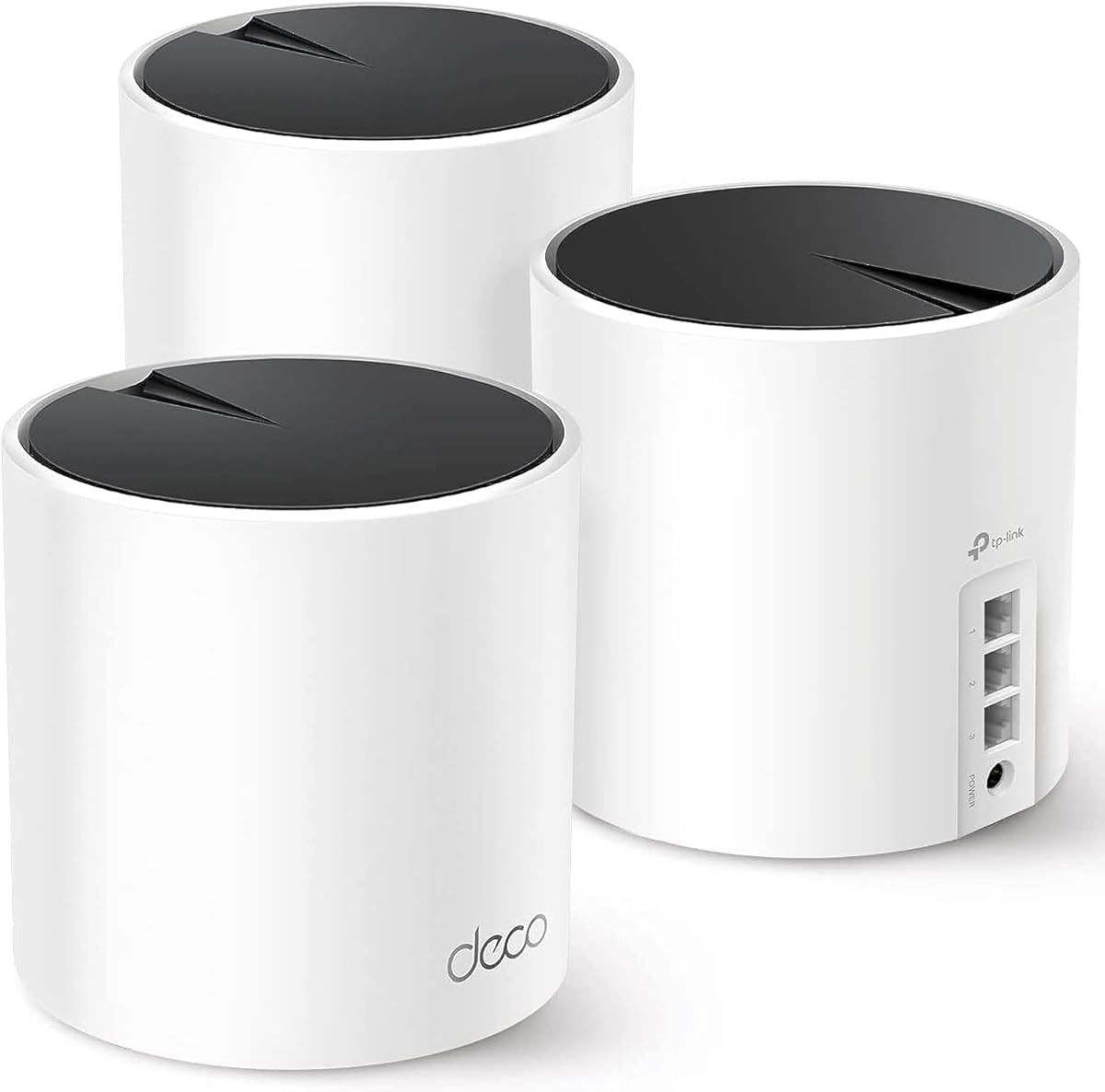
The TP-Link Deco X55 AX3000 WiFi 6 Mesh System provides one of the clearest solutions for extending connectivity throughout a large home. Its three-pack can cover up to 6500 square feet according to the supplied specifications and connect as many as 150 devices. The 4.4 rating reflects a well-regarded combination of mesh convenience, adequate performance, and strong household capacity.
We may earn a commission when you buy through this link, at no additional cost to you.
Each node uses dual-band WiFi 6, with a 2×2 5 GHz link rated at 2402 Mbps and a 2×2 2.4 GHz link rated at 574 Mbps. That makes the system well suited to homes where consistent roaming and broad coverage matter more than the newest wireless generation. AI-driven mesh features allow the system to learn its environment and coordinate traffic, while the Deco app provides guided setup and remote management without requiring the user to navigate a dense technical interface.
The three-unit arrangement is a major advantage over a conventional router with a single extender. Traditional range extenders often create separate network names, weaker backhaul connections, or awkward placement decisions. Deco instead presents one network and allows connected devices to move between units as they roam. Every unit includes three Gigabit Ethernet ports, giving the package nine wired connections in total, and any unit may serve as the router when connected to the internet source.
Wired Ethernet backhaul is especially important in homes with thick walls, multiple floors, or renovation-resistant pathways. Shoppers can connect the nodes with Ethernet and preserve stronger throughput between access points than a purely wireless placement may provide. This makes the X55 a strong recommendation for anyone who prioritizes dependable whole-home coverage and has a home large enough to benefit from three nodes. The absence of WiFi 7 and 2.5-gigabit ports makes it less forward-looking for users with newer hardware or multi-gig service.
A dedicated unit can be positioned on another floor, near a garage, or toward an office, reducing the need to stretch a single radio signal through every obstruction. The result is usually a more consistent experience than relying on one router placed in a central location.
The system's Gigabit Ethernet ports allow nodes to use a wired connection between access points. This is the preferred arrangement when the home has a structured cabling option or when avoiding wireless backhaul is important for stability.
We may earn a commission when you buy through this link, at no additional cost to you.
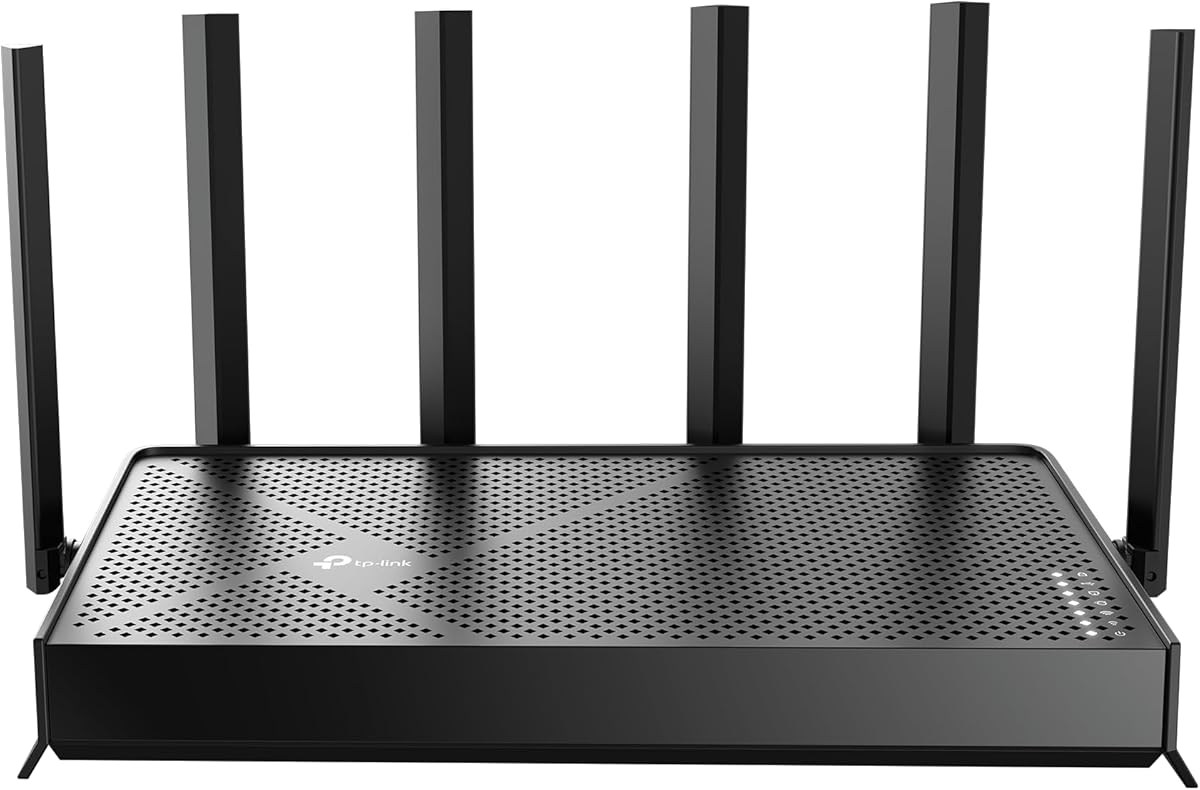
The TP-Link Archer BE400 brings WiFi 7, Multi-Link Operation, and multi-gigabit Ethernet to a conventional dual-band router. Its 4.3 rating and generous specification sheet make it an attractive option for a home that wants modern wireless technology without buying a complete mesh system. The stated coverage of up to 2400 square feet and support for up to 90 devices position it between entry-level and high-capacity routers.
We may earn a commission when you buy through this link, at no additional cost to you.
On the 5 GHz band, the router is rated at 5764 Mbps, while the 2.4 GHz band provides up to 688 Mbps. Although the aggregate BE6500 label can look different from the combined interface rates, the important point is that this is a genuine WiFi 7 platform with Multi-Link Operation, Multi-RUs, and 4K-QAM. These features can improve throughput, responsiveness, and reliability when used with compatible devices such as recent flagship phones and laptops.
Wired connectivity is another significant strength. One 2.5 Gbps WAN/LAN port and one 2.5 Gbps LAN port can support a multi-gig internet plan, while three additional Gigabit LAN ports connect everyday devices. The router also supports VPN client and server roles, HomeShield security, and EasyMesh expansion. It can work with compatible routers and range extenders, although it is not compatible with Deco mesh systems, so buyers should verify their expansion plans before installation.
This model is well suited to users with compatible WiFi 7 devices, multi-gig service, and moderate-to-large homes. It is not the top selection for buyers seeking a dedicated 6 GHz band or the broadest possible automatic roaming across many floors. Its combination of modern wireless features, multi-gig ports, and easy expansion still makes it one of the most forward-looking conventional routers in this comparison.
Multi-Link Operation allows compatible devices to use multiple frequency bands simultaneously. In suitable conditions, this can reduce congestion, improve responsiveness, and maintain connections more reliably as network conditions change.
The dedicated 2.5-gigabit ports make the Archer BE400 relevant for homes with faster service tiers. Users can take advantage of a multi-gig connection without needing every LAN port to operate at that speed.
We may earn a commission when you buy through this link, at no additional cost to you.
The TP-Link Archer BE230 delivers the most important elements of WiFi 7 at a comparatively accessible price point. It carries a 4.2 rating and provides Multi-Link Operation, Multi-RUs, and 4K-QAM on a dual-band platform. With stated coverage of up to 2000 square feet and support for up to 60 devices, it is a sensible fit for medium homes that want modern features without moving to a premium tri-band model.
We may earn a commission when you buy through this link, at no additional cost to you.
Rated speeds reach 2882 Mbps on 5 GHz and 688 Mbps on 2.4 GHz. Real-world results will vary with distance, walls, interference, and client devices, but the platform provides a useful upgrade path for compatible WiFi 7 hardware. Four internal antennas and beamforming focus signal toward connected clients, helping the router serve rooms that are not directly adjacent to its placement.
Its networking ports are unusually good for this tier. The router includes one 2.5 Gbps WAN/LAN port, one 2.5 Gbps LAN port, and three 1 Gbps LAN ports. This arrangement supports multi-gig service from the modem to the router and gives a nearby computer or entertainment device a dedicated high-speed wired path. A 2.0 GHz quad-core processor helps manage the higher throughput promised by the platform.
HomeShield supplies network protection, parental controls, and IoT security, while the Tether app handles setup, management, and firmware updates. EasyMesh compatibility allows expansion with compatible TP-Link routers or range extenders. This is the strongest budget-oriented recommendation for buyers who specifically want WiFi 7, but it remains a dual-band router and cannot provide the dedicated 6 GHz airtime found in higher-end models.
The Archer BE230 does more than add a newer label to the product category. Its multi-link features, 4K-QAM support, modern processor, and multi-gig ports create a foundation that can remain useful as compatible household devices continue to evolve.
The Tether app makes everyday configuration approachable, while EasyMesh support offers a route beyond the stated 2000-square-foot coverage. Buyers should confirm compatibility before adding another mesh-style component.
We may earn a commission when you buy through this link, at no additional cost to you.
The NETGEAR Nighthawk WiFi 7 Router RS90 combines a 4.3 rating with a straightforward app experience and up to 3.6 Gbps of combined dual-band throughput. It covers up to 2000 square feet and supports up to 50 devices, making it a solid conventional option for medium homes. The product emphasizes ease of management, multi-gig readiness, and automatic security updates rather than a bundled mesh system.
We may earn a commission when you buy through this link, at no additional cost to you.
WiFi 7 features include MU-MIMO and OFDMA, allowing multiple devices to transmit and receive data concurrently. The router also works with an existing cable, fiber, DSL, or satellite provider through Ethernet, although some gateway or modem-router combinations may require bridge mode. That makes it broadly relevant to households that want to preserve an existing internet arrangement rather than replace a capable modem.
The Nighthawk app provides guided setup, WiFi management, speed tests, device pausing, and guest-network controls from iOS or Android devices. A dedicated 2.5 Gig WAN port can take advantage of multi-gig internet plans, while four Gigabit LAN ports provide connections for computers, consoles, televisions, and network storage. NETGEAR enables security features out of the box and provides automatic firmware updates for ongoing protection.
The RS90 is a good choice for buyers who prefer a single, app-managed access point with modern WiFi performance. Its stated capacity of 50 devices is lower than several competing models, and NETGEAR itself notes that larger or multistory homes may benefit from an Orbi mesh system. Within a suitably sized home, however, it delivers a polished setup experience and a capable wired foundation.
The Nighthawk app puts everyday controls within easy reach, including guest access, device pausing, and remote administration. This reduces the need to understand advanced router menus for common household tasks.
Ethernet connectivity and broad provider compatibility make the RS90 a straightforward upgrade for many homes. Owners with a combined modem and router may need to enable bridge mode before the Nighthawk takes over routing.
We may earn a commission when you buy through this link, at no additional cost to you.
The TP-Link Archer BE550 is a high-capacity tri-band WiFi 7 router with a particularly strong wired specification. Its 4.0 rating is the lowest among the ten products, but the underlying features are impressive: up to 5760 Mbps on 6 GHz, 2880 Mbps on 5 GHz, 574 Mbps on 2.4 GHz, and five 2.5-gigabit Ethernet ports. It is designed for buyers who want premium wireless and wired performance in one unit.
We may earn a commission when you buy through this link, at no additional cost to you.
Multi-Link Operation, Multi-RUs, 4K-QAM, and support for 320 MHz channels distinguish it from dual-band WiFi 7 routers. Six strategically positioned antennas and beamforming support reliable, higher-capacity connections, while TP-Link's WiFi optimization technology is intended to reduce interference. The dedicated 6 GHz band creates room for modern compatible clients, while the other bands continue serving distance-oriented and legacy devices.
Its Ethernet configuration is especially attractive for media servers, gaming systems, workstations, and homes with multi-gig service. One 2.5G WAN port and four 2.5G LAN ports allow fast connections from the modem through multiple local devices. The router also supports VPN client and server roles, HomeShield, WPA3 encryption, and a private IoT network that separates compatible smart-home devices from the main network.
EasyMesh compatibility gives buyers an expansion path using compatible routers, extenders, and wireless powerline adapters. That makes the BE550 a good starting point for a larger home that may eventually require additional access points. It is less attractive for small apartments where a simpler system is enough, and its 4.0 rating suggests checking recent customer feedback carefully. For compatible WiFi 7 clients and demanding wired networks, however, its capability is substantial.
The 6 GHz band gives compatible modern devices a separate, spacious channel environment. This can be valuable in congested homes where neighboring 2.4 and 5 GHz networks are already crowded.
Every LAN port operates at 2.5 Gbps, removing the need to reserve the fastest wired connection for only one device. The design is especially useful for local storage, high-resolution media, and demanding home-office workflows.
We may earn a commission when you buy through this link, at no additional cost to you.
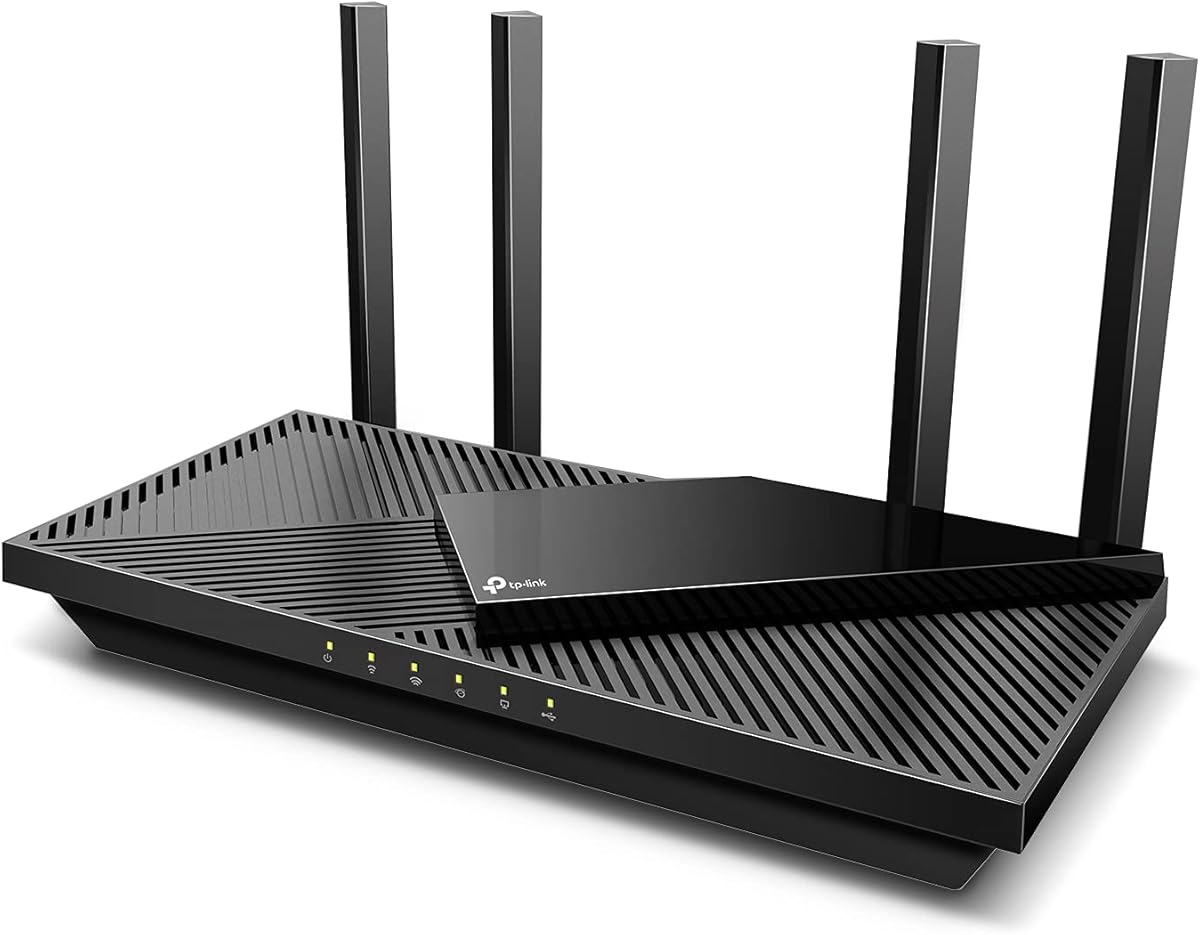
The TP-Link Dual-Band AX3000 Wi-Fi 6 Wireless Gigabit Internet Router remains a compelling value-oriented option, reflected in its 4.4 rating. It provides 2402 Mbps on 5 GHz and 574 Mbps on 2.4 GHz, along with the efficiency benefits of OFDMA. For households seeking dependable dual-band performance without requiring WiFi 7, this router covers the essential needs of browsing, streaming, gaming, and connected-home use.
We may earn a commission when you buy through this link, at no additional cost to you.
OFDMA allows multiple clients to share a band simultaneously, which can reduce latency and jitter when many devices are active. Four external high-gain antennas and beamforming are designed to extend coverage through a home, while Target Wake Time helps compatible devices communicate more efficiently and conserve power. These features make the router a practical middle ground for homes with many active clients but limited need for newest hardware.
Thermal design receives unusual attention for a value-focused router. A larger heat sink and revised case help keep the system cool and reduce the likelihood of throttling in varied environments. TP-Link also supports VPN server and client operation, Alexa control, and HomeShield tools such as network scanning, IoT identification, parental controls, quality of service, and periodic reports.
The router is most appropriate for buyers who want a proven WiFi 6 platform and strong rating rather than a premium new standard. It does not include multi-gig Ethernet or WiFi 7, and it is not itself a multi-node mesh system. Still, its combination of OFDMA, beamforming, robust antenna design, and thoughtful thermal engineering makes it an excellent general-purpose option for apartments, condos, and medium homes.
OFDMA is valuable in homes where numerous devices request data at once. Splitting transmission opportunities among clients can make the connection feel more responsive without requiring a tri-band radio.
The enlarged heat sink and redesigned enclosure help the router dissipate heat efficiently. Sustained cooling is important in a device that may remain powered on through heat, entertainment, and remote work.
We may earn a commission when you buy through this link, at no additional cost to you.
The Amazon eero 7 combines WiFi 7, mesh-oriented software, and multi-gig connectivity in a streamlined system. It carries a 4.4 rating, supports internet plans up to 2.5 Gbps, and offers wireless speeds up to 1.8 Gbps. Although the package shown is a one-pack, its main strength is the ability to expand into a larger mesh network using compatible eero units.
We may earn a commission when you buy through this link, at no additional cost to you.
The router supports 120 or more devices and provides stated coverage of up to 2000 square feet. TrueMesh, TrueRoam, and TrueChannel work together to keep clients on reliable connections, and Multi-Link Operation brings a WiFi 7-specific improvement. This makes eero 7 a strong choice for busy homes that prioritize automatic management and smooth roaming over a highly configurable interface.
Two auto-sensing 2.5GbE ports simplify connections for a multi-gig modem or capable local devices. The system can replace an existing router as the gateway, or join an established eero network to extend its reach. Backward compatibility with previous eero generations makes upgrades more flexible, while compatibility with eero Built-in on select Amazon Echo devices extends the concept beyond a conventional router accessory.
This is an excellent premium pick for households that want straightforward setup, a polished mesh experience, and room to add nodes later. A single unit may not cover a very large or complex home by itself, so buyers should plan according to building materials, floor count, and the location of demanding devices. The eero platform removes many traditional configuration headaches, making it particularly approachable for less technical users.
TrueMesh, TrueRoam, and TrueChannel are the core of eero's coordinated experience. These technologies focus on keeping devices associated with dependable access points as they move around the property.
The auto-sensing Ethernet ports can serve either the WAN or local network role as needed. Starting with one eero 7 and adding compatible units later offers a gradual path toward broader coverage.
We may earn a commission when you buy through this link, at no additional cost to you.
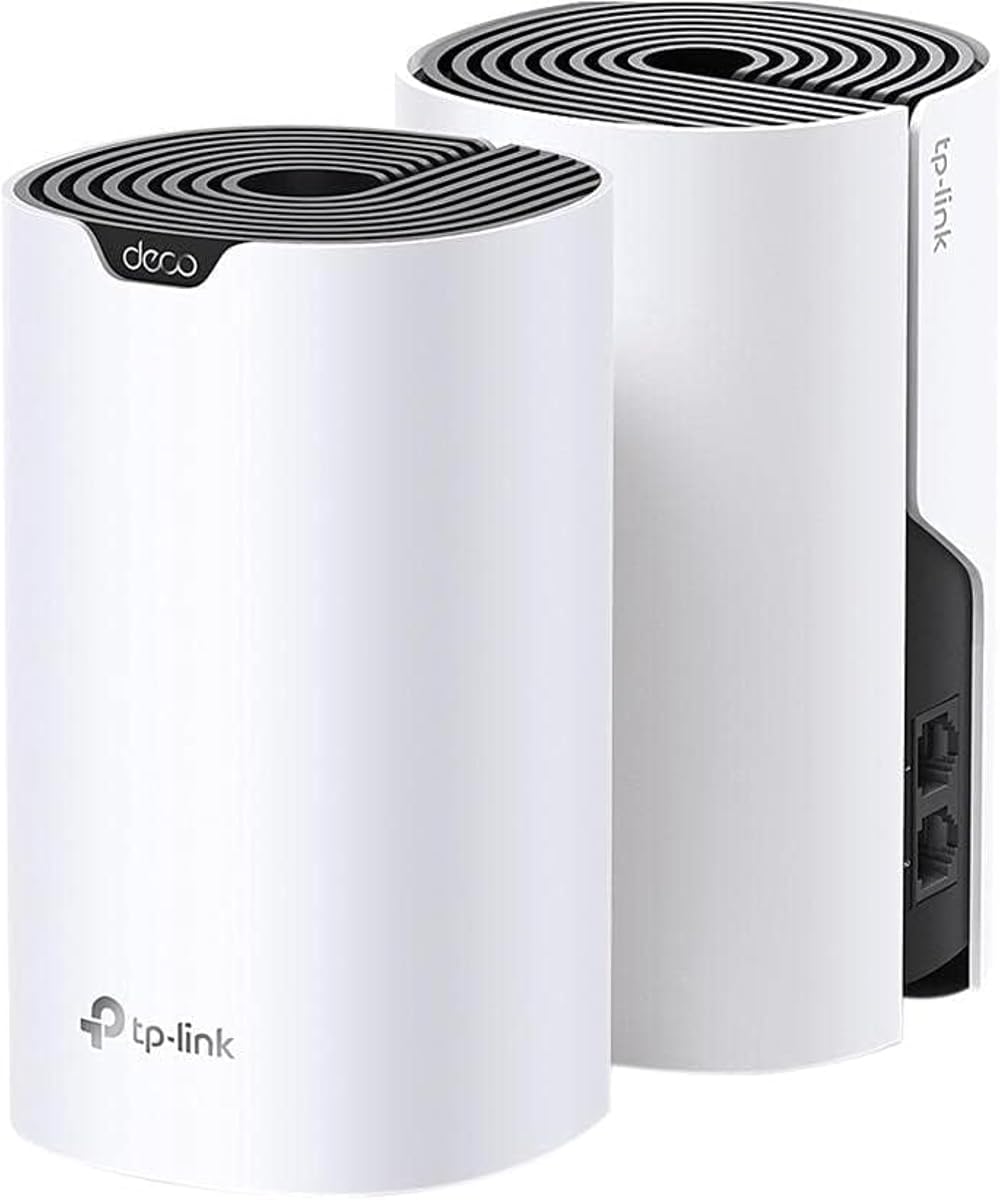
The TP-Link Deco S4 Whole Home Mesh WiFi System carries the highest rating in this comparison at 4.5. Its two units create a unified mesh network with stated coverage of up to 3800 square feet and support for up to 75 devices. It is a compelling budget choice when the priority is eliminating dead zones and maintaining one simple network throughout the home.
We may earn a commission when you buy through this link, at no additional cost to you.
The system uses dual-band AC1900 connectivity with three streams and three spatial streams per band. While this is older WiFi 5 technology rather than WiFi 6 or WiFi 7, its mesh architecture can still be more useful across a difficult property than a newer single router with a similar coverage figure. Devices roam between the two Decos under one network name and password, avoiding the separate credentials associated with many basic range extenders.
Each unit includes two Gigabit Ethernet ports, providing four total in the two-pack, and the network supports wired Ethernet backhaul. Any unit can act as the WiFi router. This makes placement flexible, particularly in homes where the primary router and an outbuilding or upstairs office are far apart. The Deco app guides setup and management, and Alexa can be used to turn the guest network on or off.
Parental controls allow administrators to create individual profiles, limit online time, and block inappropriate websites. These features add household value beyond raw range. The important compromise is wireless generation: users with recent WiFi 6 or WiFi 7 devices will not benefit from the throughput improvements of newer standards. For budget-conscious shoppers focused on simple, seamless coverage, the Deco S4 remains a strong choice.
The unified Deco network simplifies both device use and administration. Clients can move between access points without reconnecting to a separate extender network, making the experience less confusing for household members.
Two units can be positioned strategically around a home, and Ethernet backhaul can improve stability between them. The system's straightforward app setup lowers the barrier for households that want better coverage without a complex installation.
We may earn a commission when you buy through this link, at no additional cost to you.
The Amazon eero Outdoor 7 is the specialist choice for extending a network beyond the walls of a home. With a 4.5 rating, an IP66 weatherproof rating, and stated outdoor coverage of up to 15,000 square feet, it is designed for patios, pools, gardens, decks, and other exterior spaces. It is the clear choice for consumers whose distance problem exists primarily outdoors.
We may earn a commission when you buy through this link, at no additional cost to you.
The unit uses dual-band WiFi 7 with wireless speeds up to 2.1 Gbps and supports more than 100 devices. Its outdoor coverage is listed as a 70-foot radius, while the 15,000-square-foot figure describes a larger planned mesh environment. TrueMesh, TrueRoam, and TrueChannel work with compatible eero equipment to keep clients on dependable access points. Backward compatibility with previous eero generations also makes it easier to incorporate into an existing system.
Unlike an indoor router placed near a window, the Outdoor 7 has an enclosure tested for dust, rain, and snow protection. It is also tested to operate between -40°F and 131°F, making it suitable for year-round deployment in supported climates. Power can come from AC or Power over Ethernet, and the package includes a 30W PoE+ adapter. That flexibility helps installers choose a more practical power location without relying on a nearby indoor outlet.
Setup uses the eero app, which guides installation, network control, automatic updates, and remote management. Optional eero Plus security provides advanced protection, VPN, malware defense, and password-management features through a subscription. This router is specialized rather than universal: indoor-only homes do not need its weatherproofing, and outdoor installations require careful placement, power access, and a suitable extension of the home network.
The IP66 enclosure protects against dust, rain, and snow, while the broad temperature range supports outdoor operation across varied seasons. This is a meaningful advantage over placing a standard indoor router in a sheltered but still exposed location.
AC and PoE+ power options allow the access point to be positioned according to coverage needs rather than being forced directly beside an outlet. The included 30W PoE+ adapter supports practical wired deployment.
We may earn a commission when you buy through this link, at no additional cost to you.
Long-range performance depends on wireless generation, antenna design, placement, building materials, and network architecture. These factors help determine whether a single router will suffice or whether a mesh system, wired backhaul, or outdoor access point is the better solution.
Coverage figures provide a useful starting point, but they do not predict performance in every home. Thick concrete, brick, metal appliances, mirrored surfaces, lower floors, and dense cabinetry can reduce radio range. A compact home may be served by one capable router, while a multistory property often benefits from a mesh system or access points placed on different floors. The eero Outdoor 7 is designed for a different challenge: extending connectivity into yards and other exposed areas.
WiFi 6 remains a capable standard for many households, while WiFi 7 adds Multi-Link Operation, Multi-RUs, 4K-QAM, and wider channel support on compatible devices. The Deco X55 and TP-Link AX3000 router are WiFi 6 options, whereas the BE400, BE230, RS90, Archer BE550, eero 7, and eero Outdoor 7 provide WiFi 7. Newer standards deliver the most benefit when phones, laptops, televisions, and other clients support the relevant features.
A dual-band router uses 2.4 and 5 GHz, while a tri-band model adds a third radio, commonly the less congested 6 GHz band. The TP-Link AXE5400 and Archer BE550 offer dedicated 6 GHz capacity, which can reduce interference for compatible modern clients. Dual-band systems remain effective for ordinary homes, especially when the router is well placed and the household has a manageable number of demanding devices.
A larger stated coverage area does not guarantee a strong signal in every room. Mesh systems coordinate multiple units under one network, making them better suited to long layouts and multiple floors. The Deco X55 and Deco S4 include multiple nodes, while the eero 7 can be expanded with compatible eero hardware. Several conventional routers also support EasyMesh, allowing additional compatible routers or extenders to be introduced when needed.
The fastest theoretical wireless rate is only one part of a useful network. A weak placement, limited client support, crowded spectrum, or outdated device can prevent that rate from being reached. Coverage, latency, signal stability, and the number of simultaneous users often have a greater effect on daily satisfaction. OFDMA, MU-MIMO, beamforming, and multi-link features are useful indicators of how well a router can manage a busy household.
Wired connections remain important for desktop computers, gaming consoles, smart televisions, network storage, and home-office equipment. Gigabit ports are sufficient for most conventional internet plans, but the BE400, BE230, RS90, BE550, and eero 7 include 2.5-gigabit options. A multi-gig router only delivers a major benefit when the modem, service plan, switch, and local devices also support the higher speed.
Every listed router has a stated device capacity, but the number alone does not reveal how comfortably it will perform. The Deco X55 supports up to 150 devices, the BE400 up to 90, the BE230 up to 60, the RS90 up to 50, and the outdoor eero up to 100. Processor speed, memory, radio design, and the behavior of demanding clients also influence performance under sustained load.
Ease of setup matters because placement has a major effect on range. TP-Link systems use the Tether or Deco apps, NETGEAR uses the Nighthawk app, and eero provides guided app-based installation. Security options across the group include parental controls, IoT identification, guest networks, network scanning, WPA3 support, automatic updates, and optional subscription services. Buyers should also understand which features are included at no additional cost.
Begin by positioning the main router near the center of the home and relatively high off the floor. Avoid placing it beside televisions, microwaves, metal shelving, large mirrors, or other appliances that may create interference. If using a mesh system, give each node a clear line of sight toward the area it serves, and place nodes where connected devices will receive a strong signal rather than at the exact edge of the existing coverage.
Connect the internet source to the designated WAN or gateway port and complete setup through the manufacturer's app. Update the firmware, change the administrator credentials, and select a strong WiFi password before adding many devices. Users of a mesh system should consider Ethernet backhaul between nodes when the property permits it. For the eero Outdoor 7, follow the app's guidance, provide appropriate AC or PoE+ power, and ensure the installation method complies with electrical and network safety requirements.
After installation, test performance in every room rather than only beside the router. Walk with a phone or laptop and note areas with weak signal, high latency, or frequent disconnections. Use the app to create guest networks, update parental controls, pause devices when needed, and review connected-device lists. Keep firmware current, avoid sharing administrator credentials, and periodically check whether any security functions you rely on require a subscription.
The right amount depends on floor plan, construction, device placement, and interference. Start with the manufacturer's stated coverage as a general guide, but walls and obstacles can reduce it substantially. A multistory or large home may need multiple coordinated access points rather than one router operating at its maximum range.
A mesh system is usually better when signals must travel through several floors, around corners, or into separate buildings. It coordinates multiple units under one network and improves roaming. A single router can be simpler and less expensive in a compact space where the original signal already reaches every important room.
No. WiFi 7 can provide significant benefits when the internet service, router, and client devices all support the relevant capabilities. Older clients will continue using the standards they support, and congestion, distance, and placement can still limit results. The benefit is greatest in modern, crowded homes with compatible devices.
Ethernet backhaul generally creates a more stable connection between mesh nodes and preserves throughput for local traffic. It is particularly useful in homes with thick walls, multiple floors, or high-bandwidth applications. If running cable is difficult, a well-placed wireless mesh can still provide a substantial improvement over a single router.
An outdoor router can cover substantial exterior areas, but terrain, fences, trees, buildings, and power access affect the result. The eero Outdoor 7 has a stated maximum outdoor coverage of 15,000 square feet in a compatible mesh setup and can also operate as a single access point. A larger property may require additional nodes and careful placement.
A standard gigabit connection is sufficient for many homes and most devices. Multi-gig Ethernet becomes useful with faster internet plans, network storage, high-end workstations, or demanding local traffic. To benefit, the modem, service, switch, and connected device must all support the corresponding speed.
The listed capacities range from 50 devices on the NETGEAR RS90 to 150 on the Deco X55, with the outdoor eero supporting more than 100. These figures are maximum system claims rather than guarantees of identical performance for every device. Households should consider what each device does, whether many devices use the same band, and whether the network has enough processing capacity for simultaneous activity.
Begin by moving the primary router to a more central position and testing for interference. If weak areas remain, add a coordinated mesh node near each problem location or use Ethernet backhaul where possible. Extenders can help, but they may introduce separate network names or weaker links unless the system is designed to coordinate properly.
The TP-Link AXE5400 Tri-Band WiFi 6E Router is the strongest all-around choice for its combination of dedicated 6 GHz capacity, tri-band throughput, generous memory, security tools, and EasyMesh expansion. The Amazon eero Outdoor 7 is the specialized premium option for exterior coverage, while the TP-Link Archer BE230 brings WiFi 7 and multi-gig Ethernet to a more accessible conventional router.
Prioritize placement, building materials, and expansion architecture before focusing on the largest headline number. A multi-node system is usually better for large or multistory homes, while a single tri-band or dual-band router may be sufficient for a compact property. Verify WiFi client compatibility, modem requirements, wired port speeds, and the availability of any optional security subscription before finalizing a purchase.
Retailer listings, configurations, and prices can change, so confirm the current package contents and specifications on the linked product page. That final check is especially important for mesh bundles and outdoor equipment, where accessory inclusion, regional compatibility, and installation requirements can affect whether the chosen router is right for your property.