
EMEET C960 4K
4.5Editor score
True 4K CMOS sensor
PDAF automatic focus
Dual omnidirectional microphones
Adjustable privacy cover
Broad platform compatibility
Our dual camera webcam guide compares 4K imaging, AI tracking, PTZ, autofocus, audio, compatibility, and privacy for streaming, meetings, and teaching.
A dual camera webcam combines multiple imaging viewpoints in one desktop device, giving creators more framing flexibility than a conventional single-lens webcam. The best models can switch between wide scenes and tighter views, automate subject tracking, or pan and tilt toward active speakers. These features make them especially useful for meetings, teaching, demonstrations, and live streaming.
We compared the ten featured webcams by examining camera configuration, maximum resolution, autofocus behavior, audio hardware, field of view, motorized movement, controls, privacy features, and computer compatibility. The list includes dedicated dual-camera models as well as established single-camera options that provide useful alternatives for buyers seeking simpler setups, polished image quality, or straightforward plug-and-play operation.
Each recommendation highlights a different strength: flexible dual views, advanced tracking, budget-friendly simplicity, premium 4K clarity, or flexible framing. Ratings and specifications reflect the supplied product information, while feature compatibility may depend on the selected resolution, frame rate, application, and operating system. Prices and promotions can change, so confirm current details before purchasing.
4.5Editor score

4.6Editor score

4.4Editor score
This side-by-side comparison covers resolution, framing, audio, tracking, controls, and compatibility. Because the category includes dedicated dual-camera systems and simpler single-camera alternatives, the table highlights which product best fits each workflow rather than treating every webcam as a direct substitute.




The EMEET C60E is a purpose-built dual-camera webcam with a 4.5 rating, combining a wide-angle view for people and surroundings with a telephoto view for close details. Its two cameras share a 1/2.8-inch CMOS 4K sensor, offering a flexible alternative to repositioning a conventional webcam whenever the subject changes.
We may earn a commission when you buy through this link, at no additional cost to you.
Its most useful feature is the hybrid zoom range of 1X to 11X, controlled through the included remote or EMEET STUDIO. PDAF autofocus is designed to maintain clarity as the view changes, while the telephoto camera is intended for detailed subjects at its recommended operating distance. RGB lighting adds a visible operating indicator and a distinctive dual-eye appearance.
There are important operating limitations. Zoom is not supported in 4K at 60FPS or in YUY2 mode, so users who want maximum magnification may need another resolution or frame-rate setting. The C60E also provides only two microphones rather than the three-microphone array found on the PIXY and Piko models. Despite these constraints, the dual perspective remains more versatile than a standard webcam.
This webcam is a strong recommendation for streamers, teachers, product demonstrators, and meeting hosts who often alternate between a room view and a tight detail. It is especially attractive when the physical position of the computer cannot be adjusted. Buyers should verify that their preferred software supports the necessary controls and resolution modes.
The wide-angle camera preserves environmental context, while the telephoto camera isolates faces, objects, and small details. Switching between them can make presentations more engaging without relying on multiple separately positioned cameras.
The remote handles zoom, color, and camera adjustments without interrupting a live presentation. EMEET STUDIO adds finer control over brightness, focus, and RGB lighting for more precise image setup.
We may earn a commission when you buy through this link, at no additional cost to you.
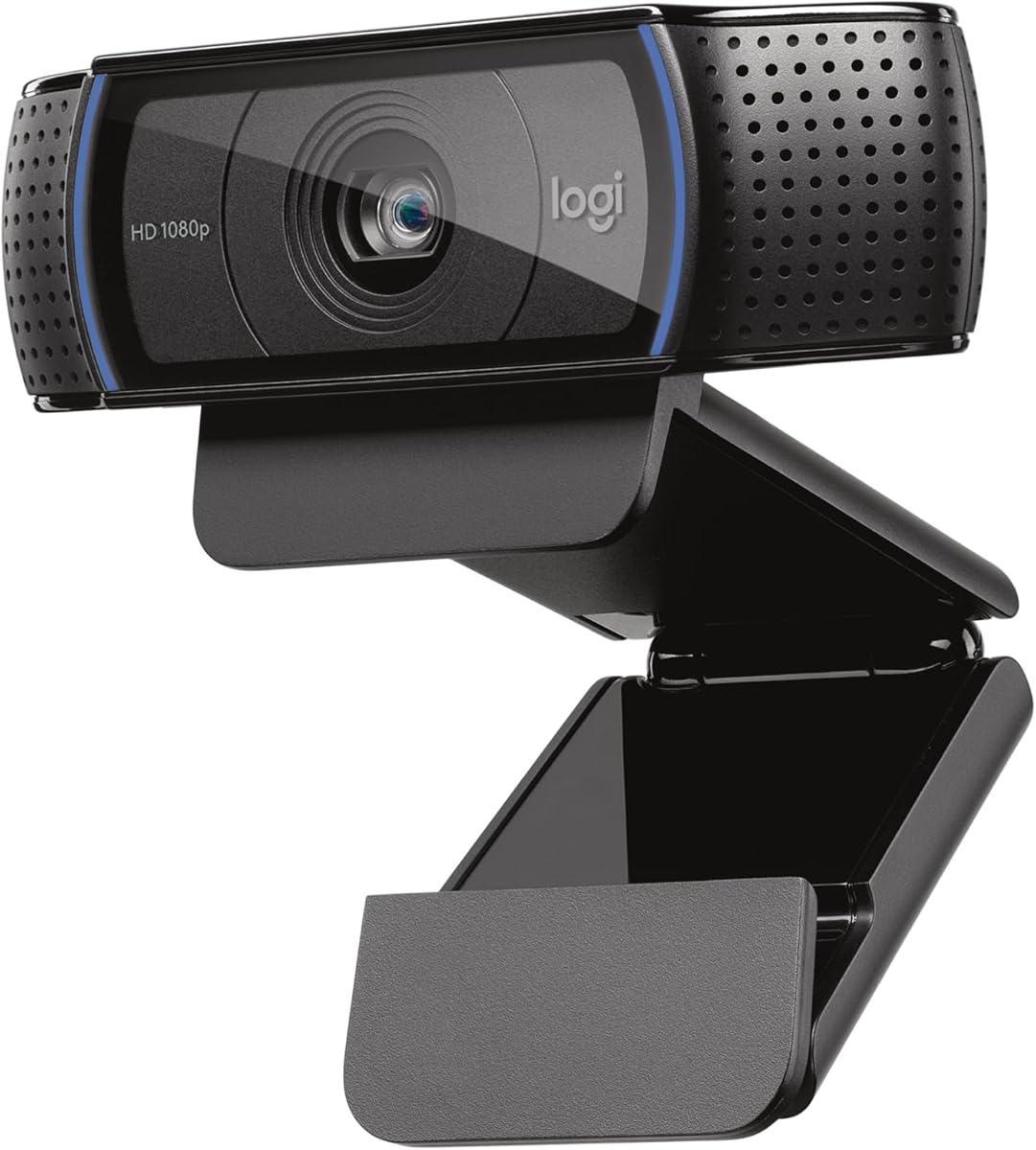
The EMEET C960 combines a 4.5 rating with a genuine 4K CMOS sensor, PDAF autofocus, and a pair of omnidirectional microphones. It is a single-camera model rather than a purpose-built dual-camera system, but it offers a straightforward way to obtain detailed video without the complexity of motorized tracking or remote-controlled lens switching.
We may earn a commission when you buy through this link, at no additional cost to you.
Its 73-degree field of view is designed to keep the primary speaker prominent while reducing excess background clutter. Automatic light correction helps in bright or dim rooms, and the autofocus system is intended to remain stable during business conferences and lectures. The dual microphones are positioned to capture natural-sounding speech for calls, online teaching, and recorded communication.
A minor complication is that video defaults to 1080P, even though the hardware supports 4K. Users must change the setting through the built-in camera software or an application such as PotPlayer or OBS. The webcam also lacks a second lens and therefore cannot deliver the alternate wide-and-close perspectives of the EMEET dual-camera products.
The C960 is best for budget-conscious buyers who prioritize a real 4K sensor, effective autofocus, and clean voice capture over advanced tracking. It also suits straightforward office setups because its USB-A plug-and-play design, privacy cover, 360-degree horizontal adjustment, and 1/4-inch tripod thread make installation uncomplicated.
PDAF focuses quickly and automatically as subjects move, while automatic light correction adjusts the image in overexposed or low-light conditions. Together, these features reduce the need for manual adjustment during everyday meetings.
The included privacy cover physically blocks the lens, which is useful when the webcam shares a room with other sensitive activity. Its flexible mount also supports both monitors and tripod-based positioning.
We may earn a commission when you buy through this link, at no additional cost to you.
The EMEET PIXY 4K PTZ pairs a 4K main camera with an auxiliary AI camera that detects a face and helps optimize focus and exposure. It carries a 4.3 rating and is built for moving presenters, instructors, performers, beauty streamers, and product demonstrations where keeping a subject framed is more important than manually following them.
We may earn a commission when you buy through this link, at no additional cost to you.
Its three-chip intelligent tracking system combines stable framing, motion and lighting prediction, and motorized movement. The camera can pan across 310 degrees and tilt through 180 degrees, while an open palm held in the center for two seconds activates gesture control. EMEET STUDIO adds preset positions, whiteboard mode, privacy activation, and automatic shot lists and movements.
The 4K and 1080P 60FPS modes lock the field of view for stability, while adjustable FOV is available in 1080P and 2K at 30FPS. A three-microphone array provides Live, Noise Canceling, and Original Sound modes for different production needs. The separate remote is sold independently, which adds an optional accessory to the initial setup.
Choose PIXY when autonomous movement is the priority. It is best suited to solo creators, teachers, coaches, and remote presenters who need the camera to follow action across a stage or room. Buyers who want maximum framing freedom, sophisticated tracking, and minimal operator involvement will find it more useful than a fixed-position webcam.
The auxiliary camera locates the face while the main camera preserves image quality. This division allows the camera to react quickly as a presenter moves without requiring continual manual corrections.
Live Mode reduces continuous background noise, Noise Canceling Mode handles both steady hums and sudden sounds, and Original Sound Mode preserves a fuller acoustic character for music or singing.
We may earn a commission when you buy through this link, at no additional cost to you.
The CZUR Halo X Pro is a genuine dual-camera webcam with a 4.3 rating and a design centered on physical flexibility. The main camera records at 1080P and 60fps, while the secondary camera records at 1080P and 30fps. Both can point in different directions, allowing one lens to retain a wide view as the other focuses on a separate subject.
We may earn a commission when you buy through this link, at no additional cost to you.
Each camera offers manual rotation: the upper camera adjusts through 270 degrees horizontally, and the base rotates through 180 degrees. A 90-degree field of view helps each camera capture enough of the surroundings for calls, teaching, recording, gaming, and streaming. USB plug-and-play operation means no driver installation is required.
The main limitation concerns application behavior. Some software may not be able to use both cameras simultaneously, so the included CZUR Camera software should be installed to manage the system. The product also offers no advanced AI tracking, hybrid zoom, or motorized pan and tilt, leaving users responsible for physical aiming.
The Halo X Pro is best for buyers who want to point two separate lenses in different directions and accept 1080P output. It can be particularly useful for demonstrations, classroom coverage, and dual-angle presentations. It is less appropriate for creators who need automatic tracking or a single seamlessly reframed image.
Unlike electronic view switching, the upper and lower cameras can maintain different physical perspectives. That makes the webcam suitable for showing both a presenter and a work area at the same time.
The webcam works with Windows and Mac systems and supports major services such as Zoom, FaceTime, OBS, Twitch, and YouTube. Its straightforward USB connection also makes it convenient for portable setups.
We may earn a commission when you buy through this link, at no additional cost to you.
The Logitech C920x holds a 4.6 rating and remains a familiar choice for buyers who prioritize dependable Full HD video, automatic exposure, and straightforward operation. Although it does not have two lenses, its strong core performance makes it a useful alternative for people searching for a dual camera webcam but deciding that a simpler fixed view better suits their needs.
We may earn a commission when you buy through this link, at no additional cost to you.
Automatic HD lighting adjustment brightens the image and reduces the harsh appearance of low-light footage. Autofocus keeps faces clear without requiring repeated manual adjustments. Dual microphones capture natural stereo audio, while the included three-month XSplit VCam license allows users to remove, replace, or blur the background without a green screen.
Its maximum output is 1080p at 30fps, which remains highly practical for meetings and standard streaming but falls behind 4K alternatives when fine detail or higher frame rates matter. It also lacks a privacy shutter, so users who require immediate physical lens blocking must take another precaution. The supplied listing specifically notes compatibility with Windows 11 and Nintendo Switch 2 GameChat.
The C920x is a good recommendation for office calls, online classes, and conventional streaming where 1080p is the target. It is particularly appealing to users who value automatic image correction and background flexibility without needing AI tracking, motorized movement, or multiple perspectives.
The webcam automatically fine-tunes exposure to produce a brighter, sharper image in challenging light. This reduces visual inconsistency when room lighting changes during a meeting or recording.
The temporary XSplit VCam license adds a practical way to obscure or replace the background. It is useful when a workspace cannot be cleaned or rearranged before every call.
We may earn a commission when you buy through this link, at no additional cost to you.
The Logitech MX Brio Ultra HD 4K is a premium conventional webcam with a 4.4 rating and an emphasis on image quality, intelligent processing, and polished meeting features. It records in 4K at 30fps or 1080p at 60fps through a sensor with pixels that Logitech states are 70 percent larger than those in its previous-generation webcam.
We may earn a commission when you buy through this link, at no additional cost to you.
AI-enhanced processing improves face visibility in difficult lighting by combining auto-exposure, auto white balance, noise reduction, and autofocus. Users can select automatic operation or manually adjust ISO, shutter speed, tint, vibrance, lighting, and white balance. This combination makes MX Brio well suited to creators who want to shape the image rather than rely entirely on automatic corrections.
Dual beamforming noise-reducing microphones use AI to improve voice clarity. Show Mode tilts the camera downward to share notes and sketches, while the rotating built-in cover physically blocks the lens between meetings. The webcam supports Windows, macOS, Chrome OS, and Linux and is certified for major meeting and streaming services.
MX Brio is the premium recommendation for professionals who value polished image control, clean audio, and effortless collaboration. It does not provide the dual-lens perspectives or automatic tracking found in the EMEET PIXY and Piko, but it may be the more refined choice for executive meetings, polished streaming, and collaborative desk work.
Automatic settings provide a convenient baseline, while manual controls let creators tune exposure, color, and contrast. That flexibility is valuable when a room's lighting or monitor setup is already carefully calibrated.
Show Mode makes it easy to redirect the lens toward documents or sketches, while the physical privacy cover provides a clear visual indication when the camera is concealed.
We may earn a commission when you buy through this link, at no additional cost to you.
The Logitech Brio 101 is a straightforward Full HD webcam with a 4.4 rating, designed for meetings, streaming, and users who prefer minimal setup. It does not duplicate the EMEET models' dual-lens arrangement, but it provides a clear and economical way to improve on a built-in laptop camera without adding complicated control software.
We may earn a commission when you buy through this link, at no additional cost to you.
RightLight can increase brightness by up to 50 percent and reduce facial shadows, helping the subject remain visible in ordinary indoor lighting. A built-in microphone handles voice capture, and the integrated sliding cover blocks the lens when the webcam is not in use. The included Logi Options+ app supports adjustments to zoom, framing, and camera settings.
Its primary limitation is the absence of advanced features such as 4K recording, AI subject tracking, motorized panning, and a second perspective. The webcam also uses a built-in USB-A cable rather than the USB-C arrangement offered by the MX Brio, although plug-and-play operation remains straightforward.
The Brio 101 is best for students, remote workers, and occasional streamers who need a reliable camera for daily communication. Its physical privacy cover and automatic lighting are especially practical, while its range of colors makes it easy to coordinate the webcam with a personal workspace.
RightLight reduces deep shadows that can make facial expressions difficult to see on a call. The result is a more balanced image without requiring users to reposition every light in the room.
The integrated cover slides across the lens, offering a direct way to prevent unwanted capture. It is a straightforward safeguard for shared offices and busy home workspaces.
We may earn a commission when you buy through this link, at no additional cost to you.
The EMEET NOVA 4K Dual is designed around business communication, meetings, presentations, and training. It has a 4.3 rating and uses two camera perspectives: a wide-angle camera for complete-room coverage and a telephoto camera for close-ups of speakers or small details.
We may earn a commission when you buy through this link, at no additional cost to you.
Like the C60E, NOVA supports 1X to 11X hybrid zoom and PDAF autofocus. A remote provides quick zoom, color, and camera-switching adjustments, while EMEET STUDIO gives more precise control over brightness, focus, and RGB lighting. This dual-control arrangement lets an operator adjust framing during a meeting without physically moving the camera or interrupting the discussion.
Its professional RGB lighting is described as restrained and primarily functional, giving users a visible indication of active camera status. NOVA supports Windows 10 and 11 as well as macOS 10.14 and later. The included USB Type-C to Type-C cable and C-to-A adapter provide setup flexibility, and a 1/4-inch tripod mount broadens placement options.
NOVA is a strong choice for conference rooms, training spaces, and hybrid presenters who frequently need to alternate between context and detail. It lacks the AI tracking and PTZ movement of PIXY and offers only two microphones, but it remains a capable dual-camera option for structured business workflows.
The remote can move between the wide and telephoto views while a meeting continues. This makes it easier to alternate between a full-room discussion and a focused speaker or screen detail.
Subtle RGB accents communicate camera activity without dominating the device's appearance. USB Type-C connectivity and the included adapter make NOVA adaptable to modern desktops, laptops, and dedicated meeting-room equipment.
We may earn a commission when you buy through this link, at no additional cost to you.
The EMEET PIXY 2K PTZ combines a 4.6 rating with the advanced tracking and motorized framing found in PIXY's 4K model. Its main camera uses a 2K resolution and 1/2.55-inch sensor, while an auxiliary AI camera detects the face to help refine focus and exposure.
We may earn a commission when you buy through this link, at no additional cost to you.
The three-chip tracking system can pan 310 degrees and tilt 180 degrees, allowing the camera to follow performers, instructors, or presenters. PDAF and AI autofocus work together with a stated focusing time of 0.2 seconds. An open palm held in the center for two seconds activates gesture control, reducing the need to reach a physical control during a presentation.
EMEET STUDIO 2 provides preset positions, whiteboard detection, privacy activation, and framing controls. The triple-microphone array offers Live, Noise Canceling, and Original Sound modes. Compared with the 4K PIXY, this version is resolution-limited, and its field of view is locked at 1080P 60FPS while remaining adjustable at 2K and 1080P 30FPS.
This PIXY is an excellent value for creators who consider tracking and movement more important than 4K resolution. It supports OBS, Twitch, YouTube, Facebook, XSplit, and ManyCam across Windows and macOS. The separately sold remote should be considered when hands-free framing and quick angle changes are important.
The combination of face detection, motion prediction, and rapid autofocus allows the camera to respond to movement. That makes the webcam useful for dance streams, fitness demonstrations, and active teaching.
Preset camera positions, whiteboard mode, privacy controls, and multiple audio profiles create a more production-oriented workflow. These tools help reduce repeated manual adjustments when changing presentation styles.
We may earn a commission when you buy through this link, at no additional cost to you.
The EMEET Piko Dual-Camera 4K combines a 4.6 rating with a well-balanced set of features for streaming, teaching, meetings, and product demonstrations. A wide-angle camera captures the full setting, while a telephoto camera provides sharper views of faces, expressions, objects, and small details.
We may earn a commission when you buy through this link, at no additional cost to you.
Its 1X to 11X hybrid zoom and stated 0.2-second autofocus make transitions between the two perspectives quick and stable. The wireless remote controls zoom, focus lock, and camera switching, while EMEET STUDIO supports precise adjustments to zoom, brightness, and white balance. That separation between mobile and desktop control is particularly useful during moving presentations.
Three built-in microphones provide voice and environmental capture, including an Original Sound mode for commentary and recording. Zoom is unavailable in 4K at 60FPS and YUY2 modes, an important configuration limitation to consider. The magnetic panda privacy cover adds visual personality while providing a physical way to shield the lenses.
Piko is the strongest overall recommendation for buyers seeking a true dual-camera webcam without the motor-driven complexity of PIXY. It supports Windows and macOS, works with Zoom, Teams, OBS, and Twitch, and balances flexible framing, fast focus, remote operation, and capable built-in audio in one creator-friendly design.
The wide lens preserves context while the telephoto lens brings attention to a detail. Creators can move between the two without relocating the webcam, making the system particularly effective for demonstrations and teaching.
Wireless remote control supports on-the-go adjustments, including focus lock and camera switching. EMEET STUDIO provides stable, fine-grained desktop adjustments when a stationary operator needs precise results.
We may earn a commission when you buy through this link, at no additional cost to you.
The most useful webcam depends on whether you need alternate camera angles, automatic subject tracking, high-resolution detail, or a simple setup. Review resolution, framing hardware, autofocus, audio, software support, privacy, and connection requirements before choosing.
A true dual-camera webcam uses two separately oriented lenses to capture different views. The EMEET C60E, NOVA, and Piko combine wide-angle and telephoto perspectives, while the CZUR Halo X Pro allows each lens to point in a different direction. These designs can show both a presenter and a product, retain environmental context, or provide a tighter view without physically moving the webcam. A single-camera model may still produce excellent footage, but it cannot reproduce these simultaneous perspectives.
Prioritize a genuine dual-camera system when your work involves frequent changes in subject distance or framing.
Resolution determines how much fine detail the camera can capture, while frame rate affects motion smoothness. The EMEET dual-camera models and Logitech MX Brio support 4K at 30fps, while the C960 also uses a 4K sensor. PIXY 2K records at 2K, and several alternatives provide 1080p output. Zoom and frame-rate combinations are not always interchangeable: the EMEET C60E, NOVA, and Piko do not support zoom in 4K at 60FPS or YUY2 mode.
Choose a mode that matches the application and avoid assuming every feature remains available at the maximum resolution.
PDAF autofocus uses phase differences to correct focus quickly, making it useful when a speaker moves toward or away from the camera. The PIXY models combine autofocus with an auxiliary AI camera and three-chip tracking, while the C60E and NOVA rely on PDAF for their dual-camera systems. AI tracking is particularly valuable for solo presenters, instructors, fitness streams, and performers who cannot manually correct the frame.
Choose strong tracking for movement, or conventional autofocus for a stationary talking-head setup.
Pan, tilt, and zoom capabilities let one webcam cover a much larger area than a fixed device. The PIXY models offer motorized 310-degree pan and 180-degree tilt, while the EMEET dual-camera products provide hybrid zoom across wide and telephoto views. PTZ adds automation but can introduce mechanical movement and takes up more desk space. Hybrid zoom is more compact and aimed at close detail rather than broad motorized movement.
Select PTZ for large stages and rooms; select hybrid zoom for a fixed desk with changing subject scale.
Built-in microphones can reduce the need for a separate desk microphone, but their array design and processing modes matter. The C960 and C60E use dual omnidirectional microphones, the Piko has three built-in microphones, and PIXY offers a triple array with Live, Noise Canceling, and Original Sound modes. Noise processing helps in meetings and teaching, while an original-sound profile may preserve more atmosphere for music or commentary.
Match the audio profile to your environment instead of assuming every recording mode suits every source.
A physical privacy cover provides a dependable barrier against unwanted capture. The C960, Logitech Brio 101, and Logitech MX Brio include integrated covers, while the Piko uses a magnetic panda cover. RGB lighting on the C60E and NOVA also communicates active camera status in a visually distinctive way. The Logitech C920x listing notes that it does not include a privacy shutter, so buyers concerned about physical privacy may need a separate solution.
Prioritize a physical cover when the device sits in a shared or frequently accessible space.
Check both operating-system support and application behavior. The CZUR Halo X Pro may require CZUR Camera software because some applications cannot use both lenses simultaneously. EMEET STUDIO adds advanced framing, privacy, and whiteboard features to several EMEET models, while Logi Options+ supports the Brio 101 and Logitech software expands MX Brio control. Broad compatibility does not guarantee that every dual-camera feature will work in every meeting application.
Verify the exact application, resolution, frame rate, and device settings you intend to use before purchase.
A secure, adaptable mount can determine whether the webcam stays properly framed. The C60E, C960, NOVA, and Piko support 1/4-inch tripod mounting, while PIXY includes a clip and supports a separately sold tripod. Connection formats vary: the C60E and C960 use USB Type-A, the NOVA uses USB Type-C with an adapter, the Logitech MX Brio uses USB-C, and the Brio 101 uses USB-A.
Check the port on your computer and the position of your monitor before selecting a mounting arrangement.
Begin by mounting the webcam at eye level or close to it, then connect the specified USB cable and select it as the camera and microphone in your operating system. For dual-camera models, open the relevant control software, verify that both lenses are active, and test the wide and close views. Set the native resolution and frame rate before adjusting zoom, since some modes disable digital magnification.
Choose the framing mode that matches the scene. Use the wide perspective for group discussions and environmental context, the telephoto view for speakers, products, demonstrations, or whiteboard details, and AI tracking when a presenter moves significantly. For PTZ models, establish useful preset positions before going live. Select an appropriate microphone mode, allowing more processing for noisy rooms and preserving original sound for richer recordings.
Clean the lenses gently and avoid touching optical surfaces with fingers. Keep the camera stable, keep cables out of moving equipment, and use the included privacy cover whenever recording is unnecessary. Test autofocus, exposure, audio levels, and application compatibility before important calls. Updating the associated software and checking settings after a major operating-system or application change can prevent unexpected resolution or feature changes.
A dual camera webcam can provide a wide scene and a tighter perspective without physically moving the device. This is useful when switching between presenters, close-up demonstrations, products, and room views. Some designs switch electronically between lenses, while others allow the two cameras to point in different directions. Confirm which behavior your chosen model supports.
That depends on the webcam and application. The CZUR Halo X Pro explicitly notes that some software may not support simultaneous use and recommends CZUR Camera software. Other dual-camera models may present the views as switchable outputs rather than two separate desktop devices. Testing in your intended application is the safest way to confirm the available workflow.
No. Resolution is only one part of image quality, and focus, exposure, sensor performance, lighting, and audio also influence the result. A carefully positioned 1080p camera may look better than a poorly lit 4K model. Consider the intended resolution and frame rate together, especially because zoom is disabled in certain high-end modes on several EMEET devices.
AI tracking is most valuable for solo presenters, instructors, performers, and creators who move around a room. For a stationary user in a standard call, PDAF autofocus and manual framing may be sufficient. PIXY-style tracking adds automation and convenience, but it also adds cost, software dependencies, and mechanical complexity.
Built-in microphones are convenient for calls, classes, and casual streams, but dedicated microphones can provide more control over voice isolation and placement. The EMEET PIXY and Piko offer multiple microphones and processing modes, while the C960 and C60E include dual omnidirectional arrays. Evaluate the room, speaker distance, and software controls before deciding whether an external microphone is needed.
Position the lens near eye level, keep the subject within the recommended distance, and provide even front-facing light. Clean the lens and use the correct autofocus or tracking mode. If you use digital zoom, avoid unsupported high-resolution modes and check the final framing in the recording application before going live.
A physical privacy cover is the clearest safeguard because it blocks the lens without relying on software. The C960, Brio 101, MX Brio, and Piko include physical covers of different styles. RGB status lighting can also help indicate when a camera is active. If a model lacks a cover, consider whether its applications provide reliable equivalent controls.
Choose 1080p at 60fps for smooth motion when that mode is important, or 4K at 30fps when fine detail and post-stream editing take priority. On the C60E, NOVA, and Piko, hybrid zoom is unavailable at 4K 60FPS and in YUY2 mode. Match the setting to your platform, computer performance, and editing requirements.
The EMEET Piko Dual-Camera 4K is the strongest all-around choice for buyers who want wide and telephoto views, rapid autofocus, three microphones, and wireless remote control without a bulky PTZ mechanism. The C60E and NOVA offer similar dual-camera concepts for high-detail streaming and structured business use, respectively. PIXY models stand apart for automatic tracking and motorized movement.
Prioritize the feature your workflow actually needs. Choose hybrid zoom for changing close-ups, PTZ and AI tracking for presenters who move, 4K for detailed capture, and a simpler 1080p webcam for fixed talking-head calls. Also confirm resolution limits, application support, microphones, connection type, privacy hardware, and mounting options before finalizing a purchase.
Product ratings, specifications, availability, and promotions can change over time, and prices are especially subject to variation. Review the current listing and confirm the exact camera behavior, included accessories, software requirements, and compatibility before buying. That final check helps ensure the selected dual camera webcam fits both the intended platform and the real production environment.