
Faraday Defense Jacket Pro
4.5Editor score
Heavy-duty CORDURA exterior
Double-fold magnetic closure
Compact phone and fob fit
Evidence-preservation design
Discover the best Faraday bag with charging port options, comparing shielding, capacity, connectivity, durability, and portability for phones and electronics.
A Faraday bag with charging port combines wireless signal isolation with the convenience of keeping a connected device powered. The best choice depends on closure security, shielding performance, port placement, device fit, and how you will use the bag during travel, fieldwork, meetings, or digital-detox periods.
We compared ten options using the supplied product information, focusing on usable capacity, supported devices, shielding claims, physical protection, closure design, portability, and charging access. Although only one model explicitly includes a charging system, the remaining products provide useful alternatives for buyers prioritizing phone, key, laptop, or large-equipment protection.
The top selections show three distinct priorities: a dedicated shielded charging setup, a rugged phone-oriented pouch, and a compact phone-and-key option. Product ratings, features, and availability can change over time, so verify the current listing and confirm that its dimensions and connectivity arrangement suit your devices before ordering.
4.5Editor score

5.0Editor score

4.5Editor score
The table compares all ten bags by their strongest documented features, with particular attention to the one model offering shielded charging, the capacity of multi-size kits, and the portability of phone-focused designs.





The Faraday Backpack is a general-purpose signal-blocking bag for phones, laptops, and key fobs, and its supplied 4.8 rating is the highest among the non-charging alternatives. Its most appealing feature is the combination of generous internal capacity and backpack portability, which makes it more accommodating than the many phone-sized pouches in this guide.
We may earn a commission when you buy through this link, at no additional cost to you.
The product information describes a universal Faraday cage design intended to fit most laptops and smartphones while remaining easy to carry. Waterproof construction, tough materials, and a protective seal are especially useful for airport travel, hiking, camping, and other situations where the bag may be exposed to rain, dirt, or frequent handling. Key-fob support adds a useful security benefit for vehicle users.
Its primary limitation is that no charging port or filtered charging path is listed. This backpack therefore functions as a shielded storage solution rather than a device that can remain connected to power without leaving the protected enclosure. It may also be less convenient than a slim pouch when all you need is a phone and a few cards.
This is a strong choice for buyers who need one portable bag for several device types and prioritize travel durability over in-bag charging. Choose it when the ability to carry a laptop or larger electronics matters more than maintaining power while the device remains shielded.
The generous interior is the central advantage over compact phone pouches. Buyers can move between phones, laptops, and key fobs without changing products, provided each item is fully enclosed and the closure is properly secured.
Its lightweight backpack format and waterproof construction suit travel and outdoor use. The trade-off is that it takes up more room than a pocketable signal pouch and does not offer the documented in-bag charging access found elsewhere in the list.
We may earn a commission when you buy through this link, at no additional cost to you.
Simket's two-pack consists of extended-size signal-blocking pouches for phones, car keys, GPS devices, radios, and small electronics. Its 4.4 rating reflects a practical alternative to single-device sleeves, while the two-bag arrangement makes it possible to separate a phone from a key fob or organize belongings between users.
We may earn a commission when you buy through this link, at no additional cost to you.
The shielding fabric is described as upgraded, double-layer reinforced metal fiber with effectiveness above 80dB. The supplied information lists coverage for Wi-Fi, Bluetooth, RFID, GPS, NFC, cellular signals, and car key fob signals. A useful self-test method is also outlined: place a phone inside, make a call from another device, and confirm that the incoming call and messages are cut off.
These pouches are advertised as fireproof, waterproof, and shockproof, making them more physically protective than basic fabric sleeves. The dimensions of 8.2 by 4.7 inches provide useful room beyond a compact phone case, although that room comes at the cost of easy pocket carry. No charging port is documented, so connected charging would interrupt the shielded storage arrangement.
Buy this pair if you want two versatile pouches for separating devices or sharing a system between two people. It is especially useful for commuters and travelers who want broader device compatibility than a slim phone sleeve without moving up to a laptop-sized kit.
The documented call test gives buyers a straightforward way to check shielding at home. A second phone can attempt to call the enclosed device, allowing the user to confirm that the pouch interrupts cellular communication.
The extended dimensions can accommodate a phone, key fob, GPS unit, or compact electronic accessory. Buyers should still compare those dimensions with their own devices and recognize that this model offers isolation rather than a protected charging path.
We may earn a commission when you buy through this link, at no additional cost to you.
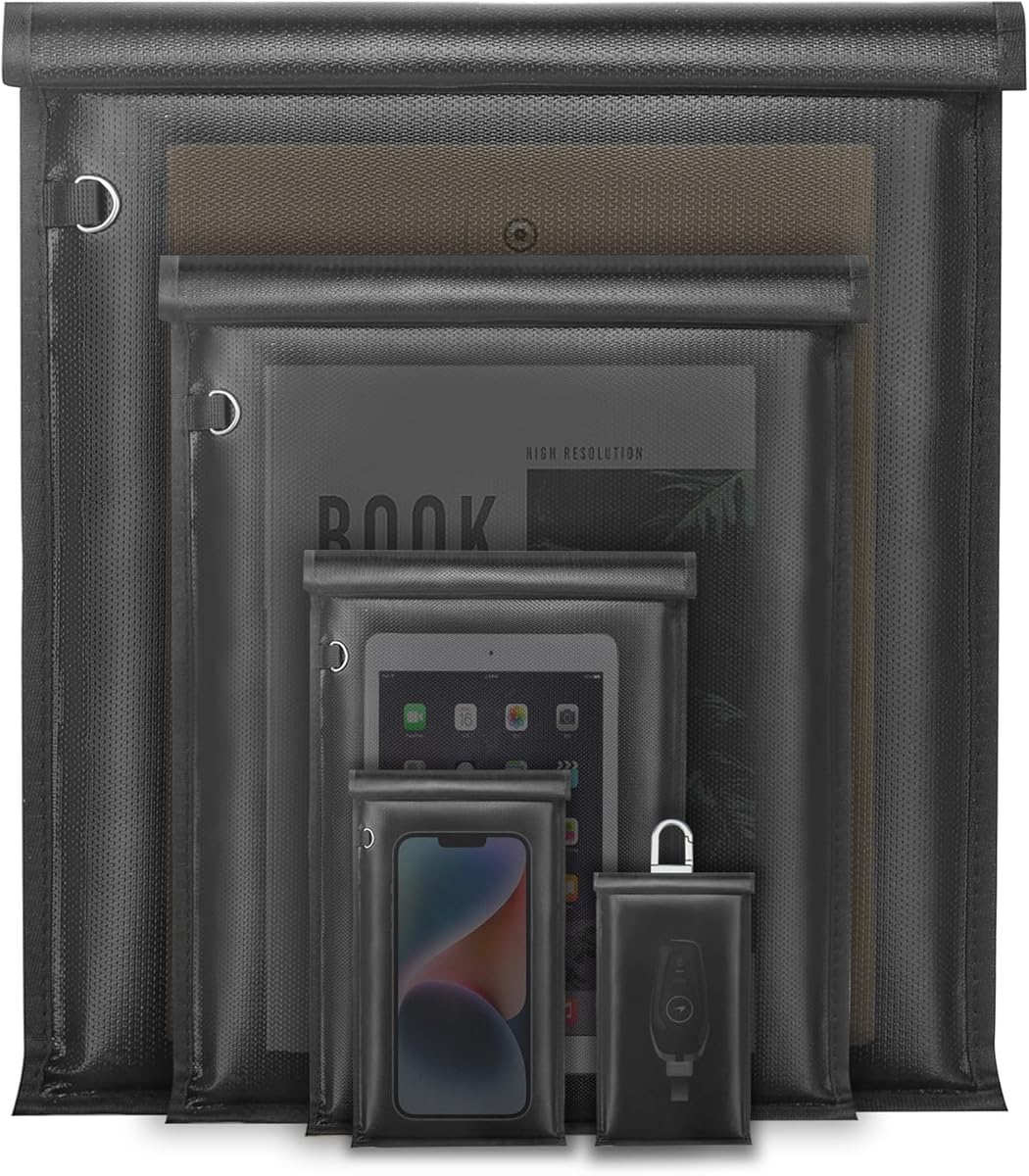
The Yaokvide kit includes five signal-blocking pouches ranging from a 16.93-by-15-inch model intended for large laptops and files to a compact 5.71-by-3.78-inch key-fob protector. Its 4.6 rating and broad size selection make it one of the most versatile collections in the guide, even though it does not include a charging port.
We may earn a commission when you buy through this link, at no additional cost to you.
The two largest bags are meant for laptops, tablets, phones, radios, and similar electronics. Smaller pouches hold watches, cards, cash, passports, transponders, and vehicle remotes. This graduated system is valuable for households or professionals who want different levels of storage without forcing every item into one generic sleeve.
The construction uses silicone-coated fiberglass and shielding cloth, with a claimed ability to withstand temperatures up to 2000 degrees Fahrenheit and resist water jets. Double-roll designs and hook-and-loop closures add security and durability, while foldability helps the pouches remain compact when they are not in use.
This kit is a good fit for travelers, field workers, and anyone managing several device categories. It does not solve the need to charge a device while it remains shielded, and carrying five separate bags may be inconvenient. Even so, the size range and protective design offer more flexibility than most single-pouch alternatives.
Five sizes let users match protection to the item rather than forcing a tablet, phone, and key fob into the same enclosure. That makes the kit practical for staged travel kits, work bags, or household privacy storage.
Silicone-coated fiberglass and reinforced closures support repeated use while allowing unused pouches to fold. The documented heat and water resistance adds physical protection, but the kit provides no documented charging interface.
We may earn a commission when you buy through this link, at no additional cost to you.
This phone-oriented pouch is designed for mobile phones and car keys, measuring 4.7 by 7.5 inches. Its 4.5 rating reflects a straightforward product aimed at users who want a small, portable signal barrier rather than a multi-device kit or connected charging system.
We may earn a commission when you buy through this link, at no additional cost to you.
The supplied information lists full-band shielding for 5G, Bluetooth, Wi-Fi, GPS, and RFID. It also describes a waterproof, flame-retardant, and scratch-resistant exterior, giving the pouch physical protection in addition to wireless isolation. A detachable wrist strap is included for commuting, travel, and outdoor activities.
The pouch is not documented as having a charging port, so the enclosed phone cannot be charged while maintaining the advertised shield. Its capacity is also intentionally focused: phones and car keys fit comfortably, but tablets and laptops do not. Buyers wanting a charger will need a different design.
This is an approachable option for digital-detox periods, confidential meetings, exam environments, or ordinary trips where the goal is simply to disconnect a phone. Its compact dimensions and wrist strap make it especially convenient for users who want more structure than a loose sleeve.
The pouch offers an uncomplicated way to isolate a phone from cellular and wireless networks. It is well suited to meetings and personal focus periods where having the device powered but unreachable is the goal.
A detachable strap can keep the pouch attached to a wrist, bag, or other suitable point. This supports convenient transport, although it does not change the fact that wired charging is not supported.
We may earn a commission when you buy through this link, at no additional cost to you.
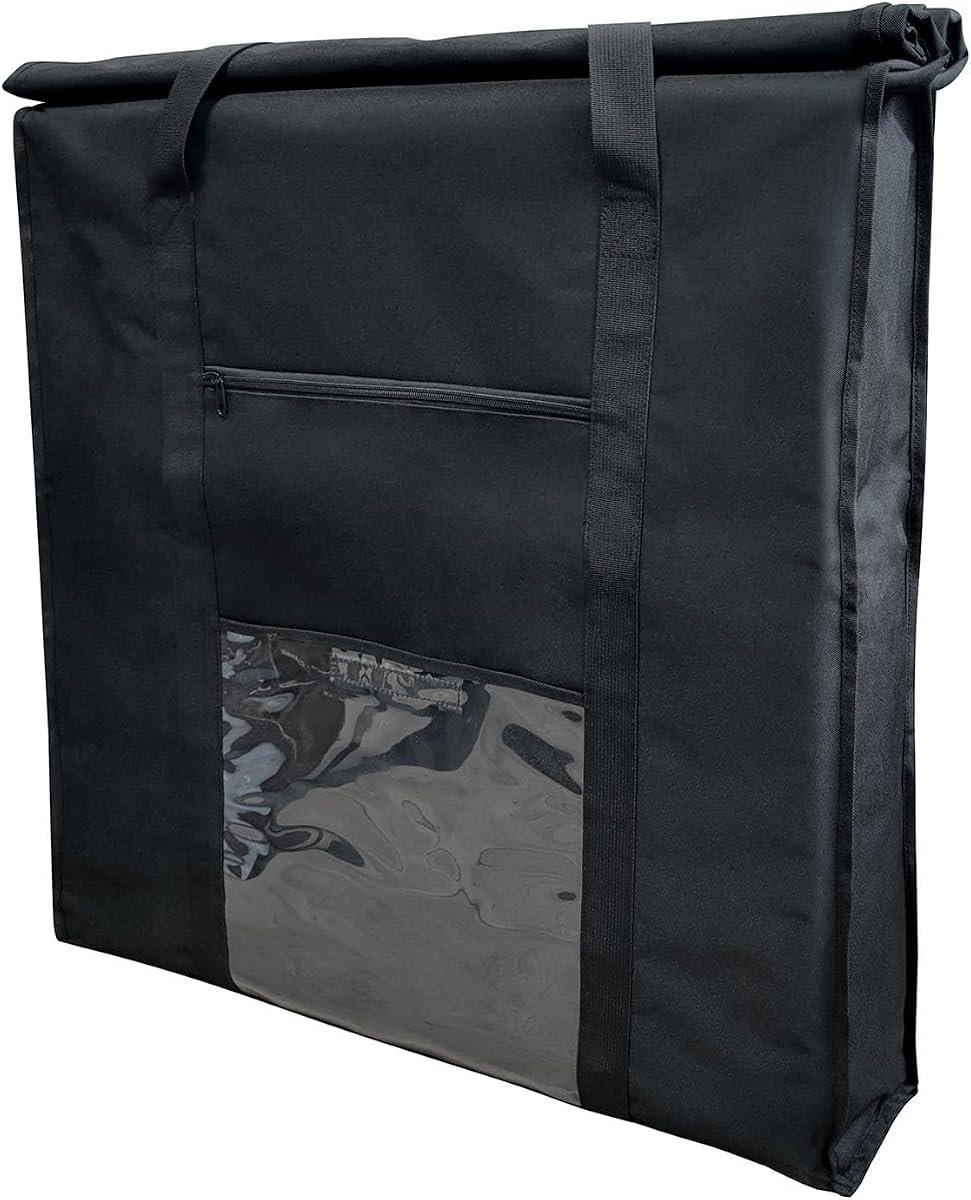
This large military-grade Faraday bag is built for solar panels, portable generators, laptops, hard drives, power banks, and other large or sensitive electronic devices. Its 4.7 rating makes it one of the strongest-rated options here, although its specialized scale places it outside the normal phone-pouch category.
We may earn a commission when you buy through this link, at no additional cost to you.
The product uses high-shielding materials and dual-layer construction, with the supplied information highlighting protection against electromagnetic pulses, geomagnetic storms, and solar flares. It also blocks Wi-Fi, Bluetooth, GPS, RFID, and cellular signals, making it relevant to emergency preparation, field operations, digital forensics, and anti-surveillance work.
The generous interior is the defining benefit, but it comes with obvious bulk and weight considerations. There is no documented charging port, meaning large devices must be disconnected from external cables during storage. Buyers should also account for the bag's larger footprint when packing it into vehicles, cases, or shelters.
Choose this model if a regular phone pouch is too small for your equipment. It is less relevant to someone who only wants a shielded phone and cable, but it offers the strongest capacity-focused proposition for sensitive gear and emergency kits.
Unlike standard pouches, this bag can accommodate solar panels, portable generators, and larger electronics. That makes it better suited to preparedness and professional equipment storage than to a minimalist carry-on setup.
Dual-layer shielding and a tear-resistant exterior address both communication exposure and rough handling. The lack of a charging path means devices remain fully disconnected during storage.
We may earn a commission when you buy through this link, at no additional cost to you.
The Lanpard set includes two signal-blocking pouches sized at 4.13 by 8.26 inches, large enough for phones up to 6.8 inches and vehicle key fobs. Its 4.4 rating and two-pack configuration make it a practical choice for households with multiple key sets or for people who want to separate daily essentials.
We may earn a commission when you buy through this link, at no additional cost to you.
Each pouch has two internal layers of signal-blocking material and a carbon-fiber-style outer surface. The supplied information lists coverage for phone calls, text messages, Wi-Fi, Bluetooth, 5G, RFID, and NFC. Waterproof construction adds environmental protection, while the key ring allows a pouch to hang from a bag.
The design does not include a charging port, so its value rests on isolating devices and cards rather than maintaining a live connection. It is also less compartmentalized than dual-section designs, meaning related items are generally stored together rather than separated into independent shielded zones.
This two-pack is best for car-key protection and straightforward phone storage. It works well for commuters and travelers, while buyers who need continuous shielded charging or separate compartments for cards and keys should choose a more specialized product.
The pouches are particularly relevant to keyless-entry vehicles because the shielding layer is intended to block a fob's wireless signal. Keeping the fob enclosed can reduce opportunities for remote relay-style access when the pouch is properly closed.
Two pouches offer more flexibility than a single sleeve and can separate two key sets or divide phone and card storage. The key ring further supports quick attachment, though there is no protected wired-charging option.
We may earn a commission when you buy through this link, at no additional cost to you.
This five-bag kit is similar in concept to other multi-size collections, but it distinguishes itself with handles, reflective strips, hanging ropes, metal strap clips, and hook-and-loop closures. Its 4.3 rating is the lowest in this group, though the documented feature set remains broad for travel and professional use.
We may earn a commission when you buy through this link, at no additional cost to you.
The largest pouches are listed at 16.9 by 15 inches and 13.2 by 10.4 inches, while the smaller pieces step down to 5.7 by 3.78 inches. This range supports laptops, tablets, cameras, phones, remote controls, cards, cash, documents, radios, and GPS devices, making the set easier to organize by device type.
Silicone-coated fiberglass and shielding cloth form the body. The manufacturer describes resistance to temperatures up to 2000 degrees Fahrenheit and to water spray in many conditions. Reflective details improve visibility, while the various handles and clips make the bags easier to carry through airports, work sites, or outdoor environments.
There is no documented charging port, so the kit is best for full isolation rather than live operation. Its lower rating does not eliminate the clear utility of having five sizes and multiple attachment methods, but buyers seeking a single charging-compatible product should look elsewhere.
The graduated set lets users dedicate a bag to a laptop, another to travel documents, and smaller pouches to phones or key fobs. This avoids overstuffing one enclosure and makes the contents easier to manage.
Handles, reflective strips, hanging ropes, and clips offer several ways to keep the bags accessible. Those physical carrying features distinguish it from basic sleeves, although electronic charging remains unsupported.
We may earn a commission when you buy through this link, at no additional cost to you.
The Dual-Compartment Faraday Pouch separates a phone, cards, and car keys within two independently shielded sections. Its 4.5 rating reflects a versatile organization-focused design that is more structured than a simple phone sleeve, though it does not offer a charging port.
We may earn a commission when you buy through this link, at no additional cost to you.
Two integrated card slots can hold credit cards, identification, hotel keys, or access cards. The compartment structure helps separate a phone from a key fob, and the three layers of shielding material create a multi-layer barrier. Soft cushioning adds protection against bumps and scratches, while the exterior is described as resistant to fire, water, and surface wear.
The product is intended for meetings, commuting, travel, classrooms, family time, and offline periods. Its main limitation is the lack of a charging interface: connecting a cable would require opening or routing around the shielding, depending on the design. The compact format is also not intended for laptops or oversized equipment.
This pouch is an excellent fit for users who want cards and keys organized alongside a phone while keeping those items in separate shielded spaces. It is particularly useful for travel documents and briefcase carry, but not for users who need a connected device to remain powered.
The two-compartment layout is more useful than a single open cavity because the phone can remain separated from the key fob and card area. Each section must be fully closed and secured to maintain its intended isolation.
Integrated slots reduce the need for a separate wallet and provide dedicated space for frequently used cards. The soft lining and resistant outer shell also protect the contents during ordinary travel and commuting.
We may earn a commission when you buy through this link, at no additional cost to you.
The Faraday Defense Jacket Pro is a compact, field-oriented phone pouch with a 4.5 rating. Its 4.5-by-8-inch interior accommodates regular phones, key fobs, credit cards, small hard drives, and USB drives, giving it broader utility than a basic sleeve without becoming a bulky travel bag.
We may earn a commission when you buy through this link, at no additional cost to you.
Heavy-duty, water-resistant CORDURA nylon forms the exterior, while double-stitched seams and abrasion-resistant construction support rough use. A magnetic double-fold closure combines fast access with a secure seal. The shielding material contains nickel and copper elements, and the product information claims 85dB attenuation from 400MHz to 4GHz.
This model is also framed around evidence preservation and data extraction, making it relevant to law-enforcement, forensic, and security workflows. The magnetic closure is intended to remain secure while still allowing controlled access. As with the other non-charging pouches, however, it does not provide a protected port for operating a phone while it stays connected.
The Jacket Pro is our premium pick for buyers who prioritize ruggedness, compact organization, and a refined closure mechanism. It is less suitable for laptops, key-fob-only storage, or live powered use, but it is a strong everyday choice for phone, card, and small-drive protection.
Water-resistant CORDURA, reinforced seams, and abrasion-resistant materials make this pouch suitable for demanding daily conditions. Its compact shape is easier to carry than a large electronics cage while still providing a protective structure around sensitive items.
The magnetic double-fold closure provides a quick, secure way to open and reseal the pouch. It is particularly appealing for professional workflows, although the absence of a charging port keeps the device disconnected during storage.
We may earn a commission when you buy through this link, at no additional cost to you.
The Mission Darkness Charge & Shield is the only product in this list explicitly designed to charge or extract data from a device while it remains inside a shielded enclosure. Its 5.0 rating is the highest listed, and the inclusion of an inner hub, outer hub, shielded USB filter, and cable set sets it apart from ordinary signal pouches.
We may earn a commission when you buy through this link, at no additional cost to you.
The device connects to the inner USB hub inside the bag, while a power source or extraction tool connects to the outer USB hub. The supplied cable assortment includes USB A-to-A, Lightning, micro USB, USB-C, and an extension cable. This arrangement supports controlled charging and data extraction without opening the shielding enclosure.
Two layers of TitanRF Faraday fabric cover all sides, with dual paired seam construction. The stated average attenuation is 90dB from low MHz to 40GHz, covering Wi-Fi at 2.4 and 5GHz, Bluetooth, cellular networks including 5G, GPS, RFID, and radio signals. The product is also described as compliant with MIL STD 188-125 and IEEE 299-2006 specifications.
Its external dimensions are 17 by 10.25 inches, so it is much larger than a pocket pouch despite fitting all phones, small tablets, and similar devices. A patented NeoLok double-roll magnetic closure is intended to make sealing dependable, including for users wearing conductive gloves. For anyone who needs a device to remain connected while shielded, this is the clear choice.
The internal and external USB hubs create a path for power or data while the device remains enclosed. A shielded USB filter is included to help prevent unwanted external communication through the connection.
The bag was created for law-enforcement and military forensic use, where a phone may need to remain live during transport or data extraction. Its high attenuation claim and paired seams make it more specialized than the everyday pouches included in this guide.
The included USB A-to-A, Lightning, micro USB, USB-C, and extension cables cover several common connection standards. Buyers should verify the connector and protocol required by their own device and extraction equipment.
We may earn a commission when you buy through this link, at no additional cost to you.
Choosing a connected Faraday bag requires balancing shielding, charging architecture, closure security, device fit, and physical protection. Because only a small number of products offer a true protected charging path, buyers should confirm the connection arrangement rather than assuming that every signal pouch supports live charging.
A genuine charging-compatible Faraday bag needs a deliberate path through the shielding. The Mission Darkness model uses an inner USB hub for the device, an outer hub for power or an extraction tool, and a shielded USB filter. This is materially different from a pouch with a simple cable opening, because a loose opening can undermine the enclosure's shielding. Buyers who need a phone to remain connected should look for documented internal and external connection points, supported data protocols, and an explanation of how the filter protects the connection.
In short, confirm that the bag supports powered use inside the shield before purchasing. A standard signal pouch is best for disconnected storage, not ongoing charging.
Faraday products may claim protection against cellular signals, Wi-Fi, Bluetooth, GPS, RFID, NFC, radio signals, electromagnetic pulses, or geomagnetic events. The strongest descriptions include a frequency range or attenuation figure, although these figures are manufacturer-supplied and should not be treated as universal proof of performance. A broader specified range is useful when the bag must handle multiple wireless standards, forensic equipment, or communications of different frequencies.
Look for a clear list of covered signals and a secure closure design. Also consider whether your actual use requires routine communication isolation, key-fob protection, emergency gear storage, or all three.
The closure is one of the most important parts of a Faraday bag. A rolled flap secured with hook-and-loop, a double-roll magnetic seal, and a double-fold magnetic closure are all described among the selected products. The relevant question is whether the closure can create a continuous seal around the opening without leaving gaps. Magnetic closures are quick and convenient, while hook-and-loop closures allow adjustable compression and may suit users who prefer a visible locking action.
Always fully close the chosen design as instructed. A bag cannot be expected to isolate signals reliably when its flap remains partially open, especially if a cable port is not itself filtered.
Dimensions matter more than a general compatibility label. Some pouches are sized for phones and key fobs, some fit tablets or radios, and only the larger kits are intended for laptops. Connected use also depends on connector type because phones and extraction tools may require USB-A, USB-C, Lightning, or micro USB. The supplied dimensions can be compared with the device body, but a snug fit alone does not prove that an antenna will be fully isolated.
Match both the device and cable to the documented interior dimensions. For powered workflows, confirm connector type, hub arrangement, and whether data transfer is as important as charging.
A Faraday bag may be exposed to rain, dirt, abrasion, heat, and repeated folding. Waterproof or water-resistant fabric, scratch-resistant coatings, reinforced seams, and fire-resistant materials can extend the useful life of the enclosure. CORDURA construction and double stitching are especially relevant for field use, while foldable shielding cloth is useful for travel. These physical claims are separate from signal performance: a rugged exterior does not prove that the closure maintains a radio-frequency seal.
Choose materials that suit the environment, but prioritize a complete closure and appropriate interior fit. Outdoor users may value water and heat resistance more than a wrist strap, while commuters may prioritize compactness.
Faraday bags range from pocket-sized pouches for one phone to backpacks and extra-large cages for solar panels or portable generators. Compact models are easier to use during meetings, classes, and short trips, whereas larger kits are more appropriate for professional equipment and emergency preparedness. Multi-size sets are convenient because each category can have a properly sized bag, but they also require more storage and may be less likely to remain in a single daily carry.
Consider how often the bag will travel and what must accompany it. A larger connected bag may be justified for extended forensic work, while a slim pouch is usually more practical for routine digital-detox periods.
Separate compartments, card slots, key rings, handles, reflective strips, hooks, and wrist straps can make a pouch more useful for specific routines. Dual compartments keep a phone apart from a key fob and cards, while card slots reduce clutter. Cable kits and USB filters are essential for a connected bag, whereas other accessories are optional conveniences. The value of extras should be judged by whether they solve a real carry or organization problem.
Prioritize the connection hardware and fit first. Once those requirements are met, accessories such as straps, handles, and card slots can improve convenience without changing the bag's fundamental shielding function.
The most suitable bag depends on whether the primary task is phone disconnection, key-fob protection, evidence handling, device charging, or large-equipment shielding. Everyday commuters may value compact phone pouches, while forensic teams may need filtered USB access, a reliable magnetic seal, and a broad device fit. Emergency-oriented buyers may prioritize a large bag that accepts generators or solar equipment, whereas travelers may prefer a foldable multi-size kit.
Write down the main workflow before comparing models. Choosing a specialized design for that task usually produces a better result than selecting the most elaborate bag for a simple phone-storage need.
Before first use, confirm that the bag comfortably accommodates the intended device and that its closure can fully seal around the opening. For a connected model, connect the device to the inner hub, attach the appropriate shielded filter and cable, and then close the roll or flap before attaching the external power or extraction equipment. For a standard pouch, place the phone, key fob, card, or other device inside, remove excess air where practical, and secure the closure according to the manufacturer's instructions.
Test a standard signal pouch by attempting a cellular call, message, or another wireless connection to the enclosed device. Keep the phone in airplane mode for a simpler power-saving check. A connected forensic-style bag should be checked according to its prescribed workflow, including the integrity of the filter, cable routing, hub connection, and closure. Do not cut, pierce, or alter the shielding material, and avoid leaving gaps around cables unless the manufacturer has designed and documented that exact arrangement.
Clean the exterior with a lightly damp cloth and mild soap appropriate for the stated materials, then allow it to dry completely before storing electronics. Do not immerse the bag, use aggressive chemicals, or dry it at high heat. Store it away from prolonged moisture, direct heat, sharp objects, and heavy items that may crush the shielding or distort the closure. Periodic checks of the seams, closure, filter, and cable connectors can reveal wear before it compromises a sensitive workflow.
Only when the bag has a purpose-built and properly shielded charging path. A conventional pouch with a simple opening may allow unwanted signals to enter, so opening it for a cable can reduce the protection it was designed to provide. The Mission Darkness model in this guide uses inner and outer USB hubs with a shielded filter for that purpose.
The Mission Darkness Charge & Shield is the only product here explicitly designed for charging or data extraction while the device remains enclosed. It includes a shielded USB filter, internal and external hubs, and several cable types. Its larger size and professional design make it more specialized than a standard phone pouch.
No. The supplied product descriptions vary, with many listing cellular, Wi-Fi, Bluetooth, GPS, RFID, and NFC, while some also address radio signals, electromagnetic pulses, geomagnetic events, or solar flares. Buyers should compare the documented coverage with the threats relevant to their devices rather than treating every Faraday pouch as identical.
Place the phone inside, fully secure the closure, and use a second device to attempt a call or message. The Simket product explicitly recommends this test. For connected forensic equipment, follow the manufacturer's verification procedure because cable, filter, and hub configuration can affect the result.
Several options in this guide are specifically designed for key fobs, including the Simket pouches, the Yaokvide and five-bag kits, the Lanpard set, and the Faraday Defense Jacket Pro. The fob must be fully inside and the bag properly closed for the shielding enclosure to work as intended.
Look for a model that explicitly lists laptop compatibility and compare its dimensions with the computer. The Yaokvide and five-bag kits include large pouches around 16.9 by 15 inches, while the Faraday Backpack also lists most laptops. Smaller phone pouches are not suitable substitutes for a properly sized electronics enclosure.
Several products in the guide are described as waterproof or water-resistant, but their closures and seams still need to be fully secured. Water resistance does not mean the bag can be left open or submerged. Follow the specific care instructions and dry the exterior before storing a device inside.
They are designed to isolate stored devices from external wireless signals when properly closed, which can reduce exposure to cellular communication, wireless connections, and tracking signals. They are not a substitute for device updates, strong account security, encryption, or careful handling of sensitive information.
The Mission Darkness Charge & Shield is the leading choice when a device must remain connected, charged, or available for controlled data extraction inside a shielded enclosure. The Faraday Defense Jacket Pro stands out for rugged construction, compact organization, and a secure magnetic closure, while the phone signal blocker pouch is a straightforward option for portable, disconnected storage.
For the rest of the field, prioritize the job your bag must perform. A multi-size kit serves mixed device collections, a large electronics bag accommodates larger equipment, and dual-compartment or key-focused pouches help organize travel essentials. Most of these products are designed for full isolation rather than live operation, so a conventional pouch should not be treated as a connected charging solution.
Before ordering, verify the current product details, interior dimensions, supported devices, connector standards, shielding claims, and closure procedure. Product designs and listings can change, and checking the latest information is essential when a bag is being used for privacy, professional evidence handling, key-fob protection, or uninterrupted powered operation.