
USB Fingerprint Reader for Windows 10/11 ONLY
4.3Editor score
Native Windows Hello sign-in
Local match-in-sensor processing
Four-foot extension cable
Fingerprint Readers Windows options compared for Windows Hello compatibility, biometric security, setup ease, multi-user support, and everyday performance.
Fingerprint Readers Windows devices add fast, touch-based sign-in to compatible desktops and laptops without built-in biometric hardware. The best models deliver reliable Windows Hello integration, clear privacy protections, flexible cable placement, and straightforward setup while supporting the number of users and fingerprints your computer requires.
This guide compares ten USB fingerprint readers based on the supplied feature information, compatibility details, security architecture, cable length, multi-user capacity, and intended use. It includes basic Windows-only designs, FIDO2 security-key options, enterprise-oriented readers, and upgraded models with wider authentication capabilities.
Each entry explains the hardware's strongest benefits, notable limitations, and ideal buyer profile. Ratings provide an additional purchasing signal, but feature fit matters more than a single score. Prices and availability change frequently, so verify the current listing and your computer's requirements before ordering.
4.3Editor score

4.1Editor score

4.1Editor score
The table below highlights the principal differences among all ten readers, including operating-system support, authentication standards, fingerprint capacity, and physical placement options.

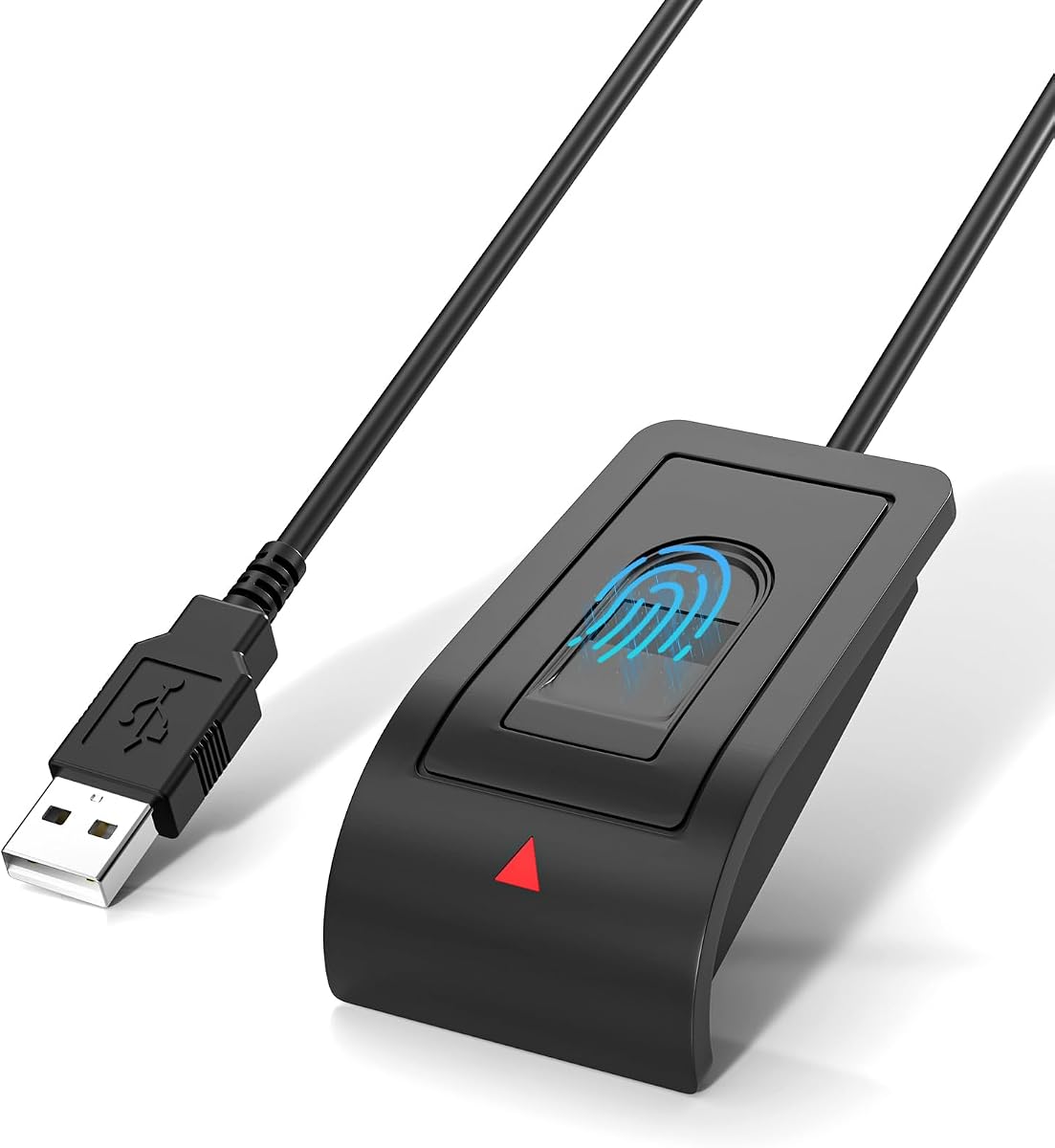



This Windows-only fingerprint reader combines a straightforward USB design with the native Windows Hello sign-in experience. Its 4.3 rating is the highest among the products in this guide, while its match-in-sensor architecture provides a clear privacy advantage: fingerprint matching occurs within the reader rather than exporting fingerprint images for remote processing.
We may earn a commission when you buy through this link, at no additional cost to you.
Its strongest qualities are focused and easy to understand. The device is designed for genuine Windows 10 and 11 systems, supports up to 10 fingerprints, and includes a four-foot extension cable for positioning the angled sensor near a keyboard or on the opposite side of a larger desk. Users can replace repeated password entry with a single touch after enrollment through Windows Hello.
The important limitation is its deliberately narrow scope. It provides biometric input to Windows but does not communicate independently with websites or applications, so support for a particular service depends on Windows Hello and that service's own capabilities. Mac and Linux systems are expressly unsupported, and some users may need a Windows update or configuration change before the reader appears in Windows Hello settings.
This is a compelling choice for a Windows desktop or laptop that lacks a built-in fingerprint sensor, particularly when the priority is simple sign-in, local processing, and flexible placement. It is less appropriate for Mac, Linux, Chrome OS, or ARM-focused workflows, and it should not be selected as a universal website authentication key when broader FIDO functionality is required.
On a compatible genuine Windows system, the reader is recognized by Windows Hello without third-party applications. The enrollment process is handled through familiar Windows settings, allowing up to 10 fingerprints to be registered for personal or shared-computer use.
Match-in-sensor processing keeps fingerprint comparison inside the device. The supplied product information states that biometric data remains local and that fingerprint images are not uploaded, synced, or stored externally.
We may earn a commission when you buy through this link, at no additional cost to you.
The Kensington VeriMark Desktop 1.0 is a 4.1-rated reader with unusually broad authentication coverage. It supports Windows Hello, FIDO U2F, and FIDO2 WebAuthn, allowing one piece of hardware to serve Windows sign-in, passwordless authentication, multifactor workflows, and compatible browser-based security-key functions.
We may earn a commission when you buy through this link, at no additional cost to you.
Its business-oriented credentials distinguish it from many simpler Windows Hello adapters. Windows Hello for Business support is included, along with compatibility for services such as Office 365, Microsoft Entra ID, and Outlook. The device also uses match-in-sensor processing and anti-spoofing technology, with stated false acceptance and false rejection rates of 0.001% and 2%, respectively.
There are trade-offs. Windows ARM-based computers are not supported, which narrows its appeal for users working with newer ARM Windows hardware. In addition, Tap-and-Go is a security-token interaction that does not itself use biometric authentication, so buyers should understand the distinction between fingerprint sign-in and FIDO passwordless use. The feature set may also be more than a home user needs.
The VeriMark Desktop 1.0 is best suited to organizations, security-conscious professionals, and users who want more than basic desktop unlocking. Its certifications, anti-spoofing design, and Windows Hello for Business support make it a stronger long-term choice for managed environments, provided the computer is not ARM-based.
The reader can participate in Windows Hello and FIDO2 workflows, giving users options that include single-factor, dual-factor, multifactor, and Tap-and-Go experiences where the connected service and browser support them.
Windows Hello for Business, encrypted end-to-end processing, and stated false-rate metrics make this reader well suited to professional identity workflows. The supplied information also notes readiness for U.S. federal institutions and compliance-minded organizations.
We may earn a commission when you buy through this link, at no additional cost to you.
The ineo reader is a 4.1-rated Windows Hello adapter designed around two frequent desktop tasks: signing in and locking the computer. Its one-touch locking feature makes it especially relevant for users who routinely step away from an active workstation and want a faster way to secure the session.
We may earn a commission when you buy through this link, at no additional cost to you.
The hardware uses a high-precision optical sensor and promises quick fingerprint recognition. Installation is straightforward through USB, while the five-foot cable provides enough reach to position the compact reader conveniently beside a monitor, laptop, or keyboard. Its understated design avoids the decorative elements found on some more specialized readers.
What it does not advertise matters just as much as what it does. It is not compatible with Mac, and the supplied feature details do not identify a fingerprint capacity or multi-user limit. It also focus on Windows Hello sign-in and locking rather than advertising FIDO2, password-manager, or enterprise identity certifications.
This reader fits individuals who want a straightforward fingerprint reader for a Windows 10 or 11 PC, particularly when rapid session locking matters. It may be less attractive for shared offices requiring extensive enrollment or for buyers who need the broader authentication standards offered by the Kensington models.
After touching the sensor, the Win-L shortcut can lock the Windows session immediately. That makes the reader useful for employees, students, and home users who want one consistent gesture for both access and departure.
A high-precision optical sensor is intended to balance quick response with stable daily recognition. The five-foot cable and compact housing make it practical for shared desks and workstations without requiring a permanently occupied USB port.
We may earn a commission when you buy through this link, at no additional cost to you.
This fingerprint reader stands apart through its 38 RGB lighting effects and touch-controlled illumination. It receives a 3.0 rating, the lowest in the comparison, but the supplied feature set is expansive: Windows Hello, FIDO U2F, FIDO2, match-in-sensor security, ten-fingerprint enrollment, and a five-foot cable are all included.
We may earn a commission when you buy through this link, at no additional cost to you.
Its broader authentication support lets it function as a Windows biometric reader and as a FIDO2 security key for compatible websites and applications. The stated 0.001% false acceptance rate, 0.1% false rejection rate, and sub-half-second authentication target make it appealing for users who prioritize technical capabilities and quick access.
The 3.0 rating is the main reason for caution. It reflects a weaker customer satisfaction signal than the other devices in this roundup, and the listing mentions that some non-genuine Windows systems may require a manual driver update. Its compatibility statement also includes Windows 12, although Windows 12 availability should be verified against the current environment and the listing's support details.
This is a good match for a Windows desktop where RGB lighting and dual-purpose FIDO functionality matter more than the highest customer rating. It is not the safest recommendation for a corporate rollout or a highly standardized environment where predictable certification and driver support matter more than appearance.
The touch sensor can control flowing RGB effects, making the device easier to locate on a large desk. The lighting is functional as well as decorative, offering visible feedback when the reader is touched or powered.
Besides Windows Hello, the reader can act as a FIDO2 security key for supported services. This makes it a flexible option for people who want one adapter for PC sign-in and phishing-resistant website authentication.
We may earn a commission when you buy through this link, at no additional cost to you.
This Windows Hello Fingerprint Reader is a 4.1-rated option built around straightforward PC sign-in. It connects by USB, registers through the native Windows Hello interface, and adds password-free access to compatible Windows 10 and 11 systems without requiring a separate application.
We may earn a commission when you buy through this link, at no additional cost to you.
Match-in-sensor processing is the defining technical feature. Fingerprint verification takes place inside the sensor, while the supplied information states that fingerprint information stays local and is never uploaded or shared externally. The device also supports up to 10 fingerprints and includes a four-foot cable for flexible desktop placement.
Its limits are practical rather than alarming. It is designed for Windows PCs, not Mac, Linux, or Chrome OS. Unlike the FIDO-capable models in this list, it does not advertise passkey security-key support or broad browser authentication. Users should also expect to follow standard Windows enrollment steps rather than relying on a proprietary management interface.
Choose this reader when the goal is dependable, privacy-conscious Windows sign-in without extra software. It is particularly well suited to home and small-office PCs that need one or several enrolled fingerprints and a flexible cable, but less suitable for IT departments seeking extensive enterprise protocol support.
The sensor performs fingerprint matching internally, reducing the need to transmit biometric images externally. Enrollment is handled by Windows itself, which keeps configuration within familiar operating-system settings.
An angled sensor surface supports natural finger positioning, while the four-foot extension cable lets the reader sit near a laptop or on a larger workstation. The compact form is practical for repeated daily use.
We may earn a commission when you buy through this link, at no additional cost to you.
The Verifi P2000 Desktop is a 3.9-rated reader with an emphasis on 3D touch capacitance and broad application compatibility. It is Windows Hello certified, supports Windows Hello for Business, and is listed as compatible with leading password-management software as well as additional Microsoft services.
We may earn a commission when you buy through this link, at no additional cost to you.
Its passkey compatibility makes it more versatile than a reader designed solely for local PC sign-in. Users can potentially use the same desktop hardware with Windows and compatible online services, while password-manager support adds another route for unlocking stored credentials. The 3D capacitive scanning approach is intended to improve touch recognition across a range of contact conditions.
The supplied information is less detailed than for some newer models. It does not state a maximum fingerprint count, supported cable length, false acceptance rate, or false rejection rate. Its 3.9 rating is respectable but trails the highest-rated products, and the absence of explicit FIDO U2F or FIDO2 language makes the exact scope of security-key use worth confirming before purchase.
This reader is a sensible choice for Windows users who rely on password managers and want one device for several authentication layers. It may appeal particularly to organizations with Windows Hello for Business requirements, but buyers should verify the exact passkey and service compatibility for their workflow.
Compatibility with leading password-management software makes the P2000 useful beyond Windows sign-in. It can support secure access to stored credentials when the relevant application and authentication protocols are properly configured.
The device uses 3D touch capacitance technology for fingerprint imaging. This focus on contact-based recognition supports consistent desktop use and differentiates it from basic optical scanners.
We may earn a commission when you buy through this link, at no additional cost to you.
The Kensington VeriMark Gen2 combines Windows Hello enrollment with the Tap-and-Go CTAP2 protocol. Its 3.7 rating is among the lower scores in the guide, but the product remains relevant for users who need biometric PC access and security-key-style authentication in one device.
We may earn a commission when you buy through this link, at no additional cost to you.
Advanced match-in-sensor processing provides 360-degree readability, anti-spoofing technology, and encrypted transfer of the match result. The reader supports up to 10 fingerprints and works with Windows 10 and 11. Tap-and-Go support also extends the device toward passkey access and compatible password managers such as Dashlane, Keeper, and RoboForm.
The main caveat is compatibility scope. MacOS and ChromeOS are explicitly unsupported. Some listed password-manager integrations require premium subscriptions, and CTAP2 functions still depend on the target website or application. The 3.7 rating also warrants more caution than the stronger customer scores among the other Windows-focused readers.
This is a good option for a Windows professional who values both local biometrics and browser or password-manager workflows. It is less suitable for a mixed household using Mac and Chrome OS devices, or for buyers whose priority is the highest customer rating rather than enterprise-oriented protocol support.
Windows Hello handles biometric PC sign-in, while Tap-and-Go CTAP2 provides a security-key path for compatible online services. This versatility can reduce the number of separate authentication devices a user carries or keeps nearby.
Fingerprint data is isolated and secured within the sensor, with only an encrypted match transferred. The device can support organizational security measures aligned with privacy laws including GDPR, BIPA, and CCPA.
We may earn a commission when you buy through this link, at no additional cost to you.
The Upgraded USB-A Fingerprint Reader offers a 4.2 rating and some of the most ambitious performance claims in the guide. It uses capacitive technology, 360-degree fingerprint detection, anti-spoofing features, and a stated 0.05-second response while supporting up to 10 user identities.
We may earn a commission when you buy through this link, at no additional cost to you.
Its multi-user design makes it a strong contender for family computers and shared office PCs. Once users enroll through Windows Hello, each person can receive personalized access without sharing one account. The device can also work with protected folders and website credentials when the relevant Windows features are configured, adding useful layers beyond desktop sign-in.
Its 0.05-second response and specified false rates should be understood as supplied product claims rather than independently verified results. The reader also does not advertise FIDO U2F, FIDO2, or a dedicated Windows Hello for Business certification. Buyers seeking formal protocol or enterprise credentials may find one of the Kensington options more clearly documented.
This is a compelling pick for a shared Windows 10 or 11 PC where rapid recognition and multiple accounts are priorities. The included 1.5-meter extension cable gives it better reach than a short integrated cable, while its compact USB-A body remains easy to carry between home and office.
Supporting up to 10 user IDs allows family members or coworkers to enroll separate fingerprints. Each person gains a personal Windows Hello identity instead of relying on a shared password or PIN.
The capacitive sensor is designed for rapid detection from multiple angles. Its stated 0.05-second response and 360-degree recognition are particularly appealing for frequently used workstations.
We may earn a commission when you buy through this link, at no additional cost to you.
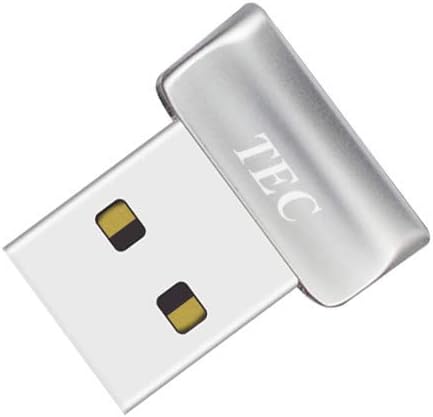
The TEC Mini reader is a compact 4.2-rated USB dongle with a different emphasis from many fingerprint adapters. Its listed capabilities include Windows Hello authentication, password-free access, document and folder encryption, 360-degree touch recognition, and registration of multiple fingerprints.
We may earn a commission when you buy through this link, at no additional cost to you.
Its strongest differentiator is encrypted-file functionality. When appropriately configured, a supported fingerprint can gate access to protected documents or folders rather than serving only as a Windows sign-in method. The small footprint also makes it convenient for laptop users who want a biometric option without dedicating significant desk space.
Compatibility caveats are meaningful. The product is not compatible with ARM-based chipsets, so it should not be assumed to work with every modern Windows machine. The supplied listing also points buyers toward troubleshooting instructions and manufacturer support, suggesting that installation may occasionally require assistance or extra configuration steps.
Choose the TEC Mini for Windows users who explicitly want encrypted-file access and a small adapter. It is less suitable for ARM devices, buyers who require detailed FIDO certification information, or anyone seeking a reader with a long cable and obvious visible status feedback.
The reader can participate in document and folder encryption workflows, offering a way to tie protected data access to a registered fingerprint. Setup should be completed through the manufacturer's instructions and compatible Windows tools.
The mini dongle format occupies little desk space and can move easily between compatible PCs. Its 360-degree touch recognition and multi-fingerprint registration support convenient daily use.
We may earn a commission when you buy through this link, at no additional cost to you.
The Yoidesu reader is a 3.9-rated option that combines Windows Hello login with a roughly 0.5-second 360-degree recognition target. It supports multiple Windows accounts and up to 10 fingerprints per user, making it practical for shared home computers as well as individual workstations.
We may earn a commission when you buy through this link, at no additional cost to you.
Its Smart-ID features are intended to protect saved passwords and encrypted folders through supported Windows functionality. The compact scanner works with desktops and laptops that lack integrated fingerprint sensors, while the plug-and-play approach reduces setup time on genuine Windows installations.
The compatibility notes are unusually important. It does not support Windows Lite, because that streamlined edition lacks the required biometric component. It also cannot encrypt USB drives or files directly, and the manufacturer recommends a motherboard USB 2.0 port because USB 3.0 docking stations may introduce power or interference problems.
This reader is a reasonable choice for a genuine Windows 10 or 11 system used through a direct USB 2.0 connection. It is not appropriate for Mac, Linux, Chrome OS, Windows Lite, or setups where users rely on a USB 3.0 dock and need dependable file-encryption functions.
Each supported Windows account can enroll as many as 10 fingerprints. This makes the reader practical for families or small teams sharing a computer while retaining separate sign-in identities.
For the most stable recognition, the supplied guidance recommends a motherboard USB 2.0 port. USB 3.0 docking stations may create power-supply or interference issues, a useful distinction to consider for laptop users.
We may earn a commission when you buy through this link, at no additional cost to you.
The right fingerprint reader depends on Windows version, authentication goals, connection method, shared-user requirements, and privacy expectations. Review these factors before choosing a device.
Begin with operating-system and processor compatibility rather than assuming every USB biometric reader will work identically. Most products in this guide target Windows 10 and 11, while the RGB model also states Windows 12 support. Some Windows features may require a genuine installation and a current system build. The Kensington VeriMark Desktop 1.0 does not support Windows ARM-based computers, and the TEC Mini likewise excludes ARM-based chipsets. The Yoidesu reader supports original 32-bit and 64-bit Windows 10 or 11 editions but not Windows Lite.
Check your Windows edition, processor architecture, USB port, and Windows Hello status before buying. If Windows Hello is disabled or missing, update or configure the operating system first; some readers only become visible after those steps are completed.
Windows Hello integration is the central function of most desktop fingerprint readers. A genuinely plug-and-play unit should be recognized through the native Windows enrollment interface without a separate management application. The rank-one reader, the Windows Hello Fingerprint Reader, the upgraded USB-A model, and the Yoidesu reader all describe direct Windows setup, although individual system configurations can affect the process.
Favor devices whose enrollment occurs entirely within familiar Windows settings. This keeps setup understandable and makes it easier to add, remove, or rotate fingerprints without learning another software interface.
Match-in-sensor processing is one of the most important security distinctions in this category. It means matching occurs inside the reader, and the operating system receives a verification result rather than an exported fingerprint image. Products including the rank-one reader, the Windows Hello Fingerprint Reader, and both Kensington readers explicitly describe this architecture.
Do not confuse a reader's ability to support Windows Hello with a complete guarantee about every application or cloud workflow. Also verify how a manufacturer describes local storage, external transmission, and deletion before enrolling sensitive biometric information.
If you want to use one reader for compatible websites, FIDO2 and WebAuthn support can be more valuable than Windows-only operation. The RGB reader and both Kensington options explicitly advertise FIDO2 or related protocols. The Verifi P2000 is listed as passkey compatible, while the Kensington Gen2 supports Tap-and-Go CTAP2 for compatible password managers and services.
Remember that website support is determined by the site, browser, operating system, and enabled authentication method. A physical reader cannot add passkey support to an account whose service has not implemented it.
Shared PCs benefit from readers that support multiple Windows accounts and several registered fingerprints. The rank-one device, the Windows Hello Fingerprint Reader, the RGB reader, the Kensington Gen2, and the upgraded USB-A model advertise support for as many as 10 fingerprints. The Yoidesu reader supports up to 10 fingerprints per user account.
Choose sufficient capacity for everyone who regularly uses the computer, and register more than one finger per person when appropriate. That creates a fallback for minor cuts, dirt, or awkward finger placement.
Cable length determines whether the reader can sit comfortably near your hand. Options in this guide range from the Yoidesu model's compact direct-connection approach to five-foot cables on the ineo and RGB readers. The Kensington VeriMark Desktop 1.0 includes a 3.9-foot cable, while the rank-one and Windows Hello readers include four-foot extensions.
For a laptop, a short attached lead may be sufficient. For a large desktop or monitor-mounted workstation, a longer cable reduces awkward reaching. Avoid sharp cable bends and position the sensor where you can touch it naturally.
Certifications can clarify how a reader is intended to participate in authentication. The Kensington VeriMark Desktop 1.0 is described as FIDO U2F certified and FIDO2 WebAuthn compatible, while the VeriMark Gen2 and Verifi P2000 are Windows Hello certified. Stated false acceptance and false rejection rates offer additional context, but they come from the supplied product information and should not be treated as identical to independent testing.
For enterprise use, prioritize documented certifications and centralized identity features over a colorful enclosure or a single advertised response speed. For personal use, native Windows Hello support and consistent enrollment usually matter more.
Additional features should match your workflow rather than add unnecessary complexity. The ineo reader emphasizes one-touch session locking, the TEC Mini highlights encrypted folders and documents, and the RGB unit offers touch-controlled lighting. These features may be valuable, but they do not compensate for poor compatibility or an authentication standard your services do not support.
Choose extras that solve a clear daily problem. For standard home sign-in, a reliable sensor, secure enrollment, and cable reach may matter more than passkey functions, animated lights, or specialized folder encryption.
Before connecting the reader, confirm that Windows is genuine, updated, and configured to support Windows Hello. Connect the device to a suitable USB port, open the Windows Settings biometric options, and choose the fingerprint setup option. Clean and dry the finger, then follow the on-screen prompts to position it over the sensor and complete several scans.
Register more than one finger when permitted, particularly for a frequently used account. Test the reader after enrollment by locking the PC with Win-L and signing back in. If recognition is inconsistent, clean the sensor, dry your finger, adjust the placement of the reader, and repeat enrollment. Avoid repeatedly pressing hard enough to obscure the sensor.
For long-term care, keep the sensor surface clean and free of moisture, oils, dust, and adhesive residue. Store the reader with the cable loosely coiled, and do not yank it from the port. Update Windows when prompted, review enrolled fingerprints and user accounts periodically, and remove the device when it is no longer needed. Readers that support FIDO2 or password managers should also be tested with the intended service after any major Windows or browser update.
Most support Windows 10 and 11 on compatible x86 systems, but that does not guarantee universal operation. Genuine Windows editions generally provide the smoothest setup, while Windows Lite may lack required biometric components. Check the product's processor, architecture, edition, and USB connection requirements before purchasing.
Windows Hello can provide password-free sign-in after suitable enrollment, but Windows normally retains a PIN or other recovery mechanism. The reader supplies biometric authentication to Windows; it does not independently control every website or application. You can still keep a secure PIN available in case a fingerprint cannot be recognized.
Security depends on the hardware architecture, operating-system configuration, and the services involved. Match-in-sensor readers perform matching inside the device and avoid exporting fingerprint images, while device-specific claims about local storage should still be reviewed. Encrypt important data and maintain a separate recovery method regardless of the reader used.
Windows Hello uses enrolled biometrics for supported Windows and application sign-in. FIDO2 uses a compatible security-key protocol for website authentication and can resist phishing through origin-bound credentials. A reader supporting both gives you more options, but each service must also support the relevant authentication method.
Several models support multiple fingerprints, and Windows can associate separate fingerprints with separate user accounts. The rank-one reader, Windows Hello Fingerprint Reader, RGB reader, Kensington Gen2, upgraded USB-A reader, and Yoidesu model advertise capacity for as many as 10 fingerprints. Each user should still enroll through their own Windows account.
A dirty or moist sensor, a poorly positioned finger, an outdated driver, Windows Hello configuration issues, or USB interference can affect recognition. Try a direct USB port, clean and dry both the finger and sensor, and check for Windows updates. Some models specifically recommend USB 2.0 because certain USB 3.0 docks may cause instability.
Most products in this guide are specifically limited to Windows, and several explicitly exclude Mac, Linux, or Chrome OS. Kensington Gen2 also states that MacOS and ChromeOS are unsupported. If you need cross-platform use, look for a standards-based security key and verify the exact compatibility matrix before buying.
Most genuine Windows systems recognize the reader through the built-in Windows Hello interface, so third-party applications are generally unnecessary. The operating system may still require updates or configuration changes, and certain non-genuine systems may need manual driver updates. Always follow the instructions provided with the specific reader.
The USB Fingerprint Reader for Windows 10/11 ONLY is the most balanced budget-oriented choice, offering a strong rating, local match-in-sensor processing, ten-fingerprint support, and a practical extension cable. The Kensington VeriMark Desktop 1.0 stands out for organizations and advanced users because it combines Windows Hello with FIDO U2F and FIDO2 support, while the ineo reader is ideal for people who prioritize simple enrollment and one-touch session locking.
Prioritize compatibility before any extra feature. Confirm your Windows edition, processor architecture, available USB ports, and desired authentication protocols, then assess multi-user capacity and cable placement. A device that supports exactly the services and computers you use is more valuable than one loaded with functions you will never configure.
Finally, check the current listing and price before ordering, since pricing and availability can change. Review recent customer feedback, confirm included accessories and manufacturer support, and make sure your computer meets the reader's stated requirements. Those final checks can prevent most compatibility disappointments.