
MAQIHAN Plant Covers Frost Protection
4.5Editor score
Economical flexible coverage
One-ounce breathable nonwoven fabric
Supports direct or hoop mounting
Garden row covers create a protective microclimate around vegetables, seedlings, shrubs, and tender perennials. The best options combine frost protection with breathability, light transmission, practical sizing, and a structure that suits both raised beds and traditional rows.
This guide compares ten row covers by fabric weight, dimensions, included supports, intended uses, installation method, and customer rating. The list includes large floating covers, raised-bed enclosures, hoop-supported kits, and cut-to-fit frost cloths for different garden layouts.
Each pick highlights a distinct advantage, from broad coverage to low-cost flexibility or complete support hardware. Product ratings and availability can change over time, and prices fluctuate, so shoppers should confirm current details before purchasing.
4.5Editor score

5.0Editor score

4.6Editor score
As an Amazon Associate we earn from qualifying purchases.
The comparison below organizes all ten options by product type, dimensions, fabric weight, and setup method, making it easier to identify the cover that fits a particular bed, crop, and seasonal protection plan.


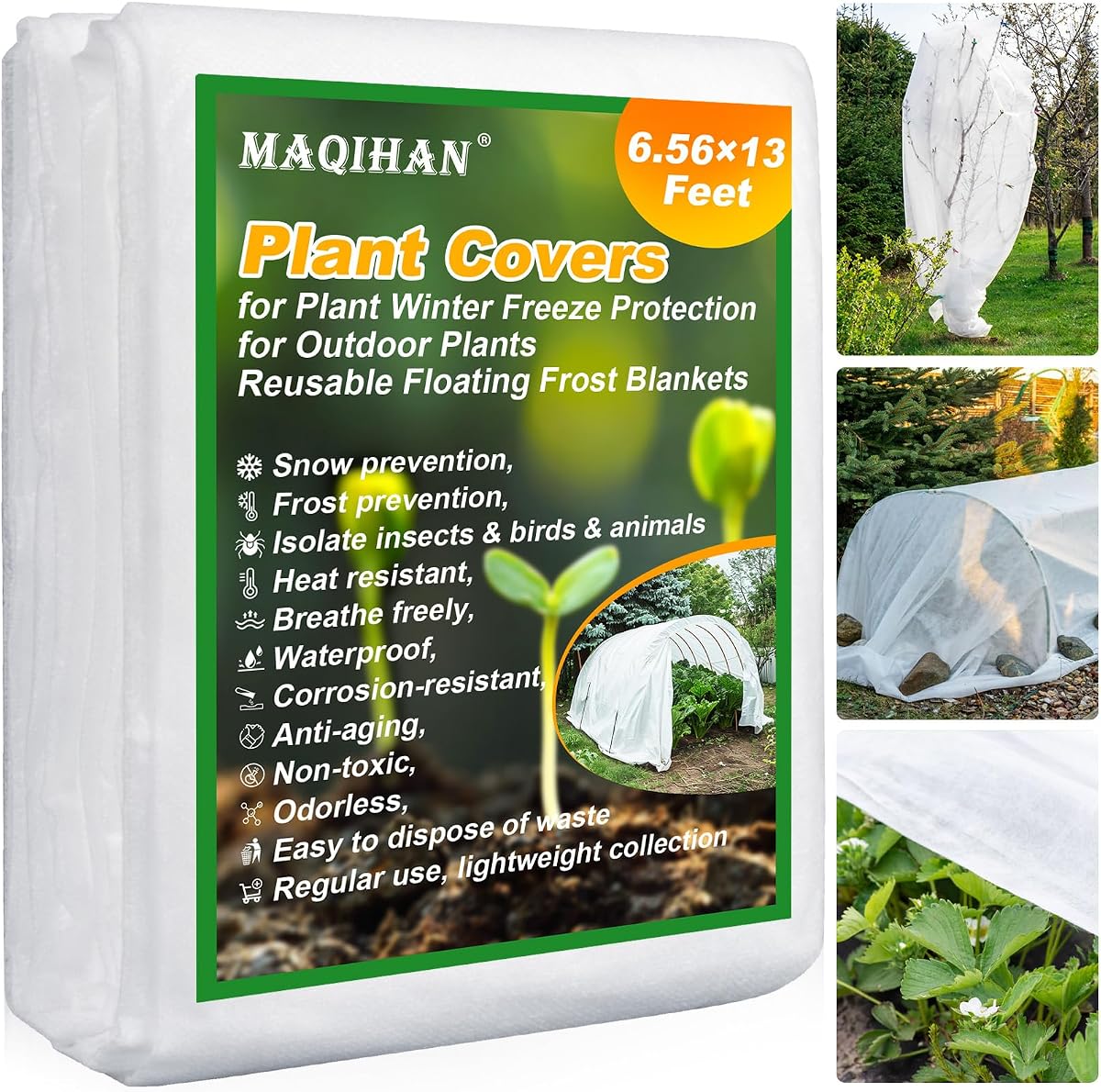


The MAQIHAN Plant Covers Freeze Protection – Frost Cloth & Floating Row Cover is a flexible, economical option for gardeners who need protection without committing to a rigid miniature greenhouse. Its 4.5 rating reflects a generally positive buyer experience, while its one-ounce nonwoven fabric provides a practical balance of insulation, light transmission, and airflow.
We may earn a commission when you buy through this link, at no additional cost to you.
The cloth can serve as frost, snow, animal, insect, and sun protection. Gardeners may drape it loosely over individual plants, cut it to fit a particular bed, or mount it on hoops or frames. That versatility makes the product useful for quick seasonal protection around vegetables, flowers, and tender shrubs without requiring specialized installation hardware.
Its main limitation is that it is a basic fabric cover rather than a complete support system. The material is also lighter than the 1.5-ounce and 1.77-ounce options in this guide, and buyers expecting a rigid tunnel or guaranteed protection at a specific low temperature should not assume those features. The fabric can also develop condensation if it traps too much moisture without adequate ventilation.
This is a strong pick for budget-conscious gardeners, first-time users, and anyone who wants one roll that can be adapted to many beds. Install it before sunset to retain residual warmth, and remove or ventilate it after temperatures rise. For gardeners seeking a fuller setup, the hoop kit is more convenient, but for a flexible cut-to-fit sheet, this cover delivers the essentials.
The best use is a simple, low-cost layer added to an existing garden plan. It should be secured against wind with soil, stones, staples, or another suitable anchor, and it should never be left in place after rainfall if the material is wet and difficult to air out.
Because the cloth can be cut and mounted in several ways, it works for isolated containers, short garden rows, or broad sections of a raised bed. Direct draping is convenient for low crops, while hoops add airflow and headroom for plants that continue growing beneath the cover.
Beyond frost, the nonwoven material can act as a barrier against wind, insects, animals, and excessive sun. Removing it during mild daytime periods helps plants receive direct light and prevents trapped heat from becoming damaging.
We may earn a commission when you buy through this link, at no additional cost to you.
The 10 FT x 30 FT Frost Cloth Kit with 6 Garden Hoops is the most complete row-cover setup in this list. It combines a 1.5-ounce breathable frost cloth with a six-set support kit containing straight tubes, curved tubes, connectors, and clips. Its 5.0 rating makes it an especially strong candidate for gardeners who value a ready-to-assemble tunnel rather than a loose sheet.
We may earn a commission when you buy through this link, at no additional cost to you.
The hoops hold the fabric above the plants, reducing direct pressure and leaving room for airflow and vertical growth. A ten-by-thirty-foot area can serve long rows, raised beds, seedlings, flowers, shrubs, and young plants. The thicker cloth is intended to provide stronger seasonal coverage while still allowing air and moisture to move through the material.
Assembly is straightforward: connect the straight and curved tubes, place the hoops in the soil or raised bed, drape the cloth over the frame, and fasten it with the included clips. The trade-off is that the sheet is less adaptable than a large roll that can be cut into several covers, and six hoops will not necessarily create a tunnel over every possible bed shape.
Choose this kit when a ready-made support structure, generous fabric weight, and straightforward setup are the priorities. It is particularly useful for spring seedlings, winter vegetables, and garden rows that need dependable ventilation. Gardeners with unusual or very large beds may need additional anchors or support, while compact setups may be better served by cut-to-fit cloth.
Overall, the kit balances protection and convenience better than a basic floating sheet. It gives new gardeners a complete framework while still providing a broad 10-by-30-foot fabric panel for seasonal versatility.
The included tubes, connectors, and clips eliminate the need to assemble a separate support frame. This makes the kit convenient for gardeners who want frost protection without measuring and fitting hoops independently.
Raising the cloth away from the foliage reduces crushing and improves air movement. It also allows light to reach the covered area more evenly than a tightly draped sheet.
We may earn a commission when you buy through this link, at no additional cost to you.
Thicker Plant Covers Freeze Protection 1.77 oz/yd², 10ft x 33ft Reusable stands out for its substantial fabric construction. The cover uses 98% nonwoven polypropylene with a 2% UV protector and carries a 4.6 rating. Its 1.77-ounce material is heavier than the standard cloth used by many garden row covers.
We may earn a commission when you buy through this link, at no additional cost to you.
The material resists tearing, blocks damaging ultraviolet rays, and provides protection from frost, snow, and wind. Unlike impermeable plastic, the porous construction lets sunlight, air, and rain pass through, reducing the likelihood of condensation. It can also absorb daytime warmth and reduce evaporation overnight, helping plants retain moisture.
A ten-by-thirty-three-foot panel is less expansive than many ten-by-fifty-foot rolls, and no support hoops are included. The heavier material may also feel less convenient for one person to reposition than lightweight cloth. These are reasonable trade-offs for a product emphasizing durability, UV resistance, and substantial frost protection.
This pick is ideal for gardeners seeking a durable, reusable cover for raised beds, vegetables, bushes, and individual plants. It can be tailored to the covered area and used directly or elevated on a frame. Those who want a complete tunnel from the box should consider the hoop kit, but this cover is the stronger option for rugged fabric and all-season durability.
Its 10-by-33-foot size is substantial while remaining more compact than the longest rolls. That balance makes it useful for medium and large garden sections without creating a large piece of material that must be stored away from light and moisture.
The 1.77-ounce construction is designed to resist tearing during installation, removal, and storage. That durability supports repeated use across cold seasons, germination periods, and warmer-weather pest or sun protection.
The porous fabric allows rain, light, and air to pass through while helping limit condensation. These properties make it more appropriate for long covering periods than a solid plastic sheet, provided ventilation is monitored.
We may earn a commission when you buy through this link, at no additional cost to you.
The AlpineReach Plant Covers are a large, all-purpose sheet designed for cold weather, wind, sun exposure, and broader seasonal garden protection. The ten-by-fifty-foot cover provides substantial area for long rows or multiple beds, while its 1.2-ounce fabric offers a moderate middle ground between thin and heavyweight cloth.
We may earn a commission when you buy through this link, at no additional cost to you.
Its listed low-28-degree capability gives shoppers a clearer indication of the intended winter use. The breathable design allows essential light, air, and water to pass through while helping create a warmer microclimate. Additional UV and wind protection makes the cover useful beyond the coldest months.
The primary compromise is that it arrives as fabric only, so gardeners must add hoops, frames, stones, stakes, or other anchors. A large sheet can also be cumbersome to handle alone, and actual results depend on how securely it is mounted, how long it remains in place, and the specific crop and local conditions.
This cover suits backyard growers seeking one long roll to cover several garden sections, especially when cold-weather protection is the main goal. It is less convenient than a ready-made hoop kit but more versatile in cut-and-fit applications. The large dimensions make it a strong choice for growers with multiple rows or a broad raised-bed layout.
Its combination of coverage size, frost rating, and multi-season use makes it a versatile middle option in this guide. It should be installed before temperatures fall and checked periodically for condensation, pooling, or damage.
The ten-by-fifty-foot length can span multiple beds or be divided into tailored covers. This reduces the need to join several smaller pieces when a large garden requires protection.
The fabric also provides wind buffering and UV shielding. That makes it practical for transitional weather, seedling establishment, and periods when direct sun or drying winds could stress young plants.
We may earn a commission when you buy through this link, at no additional cost to you.
The 10 ft x 30 ft Floating Row Cover is a straightforward sheet for frost protection, sun protection, and pest exclusion. Its 4.4 rating indicates generally favorable reception, and the 0.9-ounce polypropylene fabric is among the lighter options in the comparison. The ten-by-thirty-foot size works well for a single long row or several smaller beds.
We may earn a commission when you buy through this link, at no additional cost to you.
Because the material is lightweight, it can be draped directly over plants and secured with soil, stones, or staples. Gardeners who need more space beneath the cover can cut it and support it with hoops. The breathable construction allows sunlight to reach plants while protecting them from frost and helping create favorable conditions for germination.
The main limitation is that 0.9-ounce cloth provides less material and less potential insulation than the heavier covers in this guide. It is also smaller than the ten-by-fifty-foot alternatives, although it may be more convenient for storage and installation in a limited garden area.
This is a practical choice for spring propagation, cold-sensitive vegetables, and gardeners who want a simple floating sheet without a support kit. It can be cut into individual pieces for containers, shrubs, tomatoes, peppers, and other plants. Buyers seeking maximum cold-weather insulation should select a heavier option, but this fabric remains useful for mild frosts and seasonal pest barriers.
Its simplicity and manageable dimensions make it an accessible choice for beginners and for gardeners who want flexible coverage rather than a permanent tunnel.
The sheet can be divided into smaller covers without complex tools, making it useful for spot protection. It also allows gardeners to match the covering area closely to a plant or group of plants.
A lightweight floating cover can help warm soil and protect emerging seedlings. The fabric should remain breathable and should be managed once daytime temperatures rise to avoid overheating.
We may earn a commission when you buy through this link, at no additional cost to you.
KLEWEE Plant Covers combine a large ten-by-fifty-foot sheet with 1.5-ounce spun polypropylene fabric. The cover has a 4.5 rating and is designed for frost, snow, hail, wind, germination, pests, birds, and summer overheating. Its UV-stabilized construction is an important addition for gardens that receive prolonged sunlight.
We may earn a commission when you buy through this link, at no additional cost to you.
Compared with basic 0.6- to 0.9-ounce fabrics, the stated 1.5-ounce material is described as thicker, warmer, and more tear resistant. Gardeners can use a single layer for a loose cover, double it over a bed, or add layers over selected areas when conditions warrant more insulation. The breathable fabric allows air, sunlight, and moisture to reach the plants.
As with most large floating sheets, the product does not include a support frame. The fabric must be secured with soil, stones, staples, or hoops, and its larger roll may require more storage space. Multiple layers can also reduce airflow, so gardeners should monitor covered crops for heat or moisture buildup.
This is a strong choice for large gardens, intensive vegetable plots, and growers who want a durable sheet that can be divided among several beds. It also works well for cold-season shrubs and flowers. For a ready-made tunnel, the separate hoop kit would be more convenient, but this product offers greater freedom in coverage layout.
The combination of large dimensions, layered use, and UV stabilization makes it particularly versatile across spring, fall, and winter. Proper anchoring and regular ventilation are essential to obtain the full benefit.
The fabric can be doubled or tripled over vulnerable plants. Layering increases the amount of trapped air, making the cover more useful in exposed locations where a single lightweight sheet may be insufficient.
The added UV protection helps the material withstand sunlight without breaking down as quickly. That makes the cover better suited to seasonal storage and repeated use than an unprotected basic sheet.
We may earn a commission when you buy through this link, at no additional cost to you.
The Plant Freeze Protection Cover, 7×100 FT Floating Row Cover provides an unusually long sheet for gardens with multiple rows, containers, or scattered plants. Its 4.6 rating reflects a strong customer reception, while the 0.9-ounce breathable nonwoven fabric keeps the product light and easy to handle.
We may earn a commission when you buy through this link, at no additional cost to you.
The cover is intended for strawberries, vegetables, tomatoes, fruit trees, citrus plants, shrubs, and potted plants. It can provide frost, wind, snow, ice, animal, insect, bird, and shade protection. Because the fabric can be cut and shaped, one long roll can serve many different applications over multiple seasons.
The seven-foot width is narrower than the ten-foot options, so it may require overlapping pieces on broad beds. Its light fabric also depends on secure anchoring to resist wind. Despite those limitations, the 100-foot length offers exceptional flexibility for covering narrow rows or producing many small, tailored sections.
This product is a good fit for gardeners who want a general-purpose roll rather than a complete tunnel. The fabric may be placed over pots, raised beds, vegetables, or garden hoops and secured with stones, stakes, or supports. It is especially useful where cold nights alternate with mild days and the cover must be moved frequently.
Its strength lies in adaptability and length. A gardener can cut only the amount required for each planting area, preserve the remainder for later use, and deploy the same material in winter, spring, or summer.
The extended length makes it practical to cover several separated beds or create numerous small covers for individual plants. Cutting the material to size also reduces unnecessary fabric blocking sunlight or collecting moisture.
The cloth can support an extended growing season, protect early spring seedlings, and provide shade or animal deterrence during warmer weather. Its reuse value helps justify the larger amount of material.
We may earn a commission when you buy through this link, at no additional cost to you.
The 10×50 FT Frost Cloth is a versatile, moderate-weight cover with a 4.6 rating. Its 1.2-ounce nonwoven fabric is light, soft, breathable, and reusable, making it suitable for direct draping or hoop support. The large sheet provides ample material for rows, raised beds, and individual garden plants.
We may earn a commission when you buy through this link, at no additional cost to you.
Beyond frost protection, the cover can form a barrier against insects, pests, birds, and weeds. It permits light and water to reach the crops, which helps support growth and continued yields. Gardeners can use it around strawberries, herbs, perennials, small fruits, citrus, shrubs, and greenhouse plants.
The fabric only forms a complete floating row cover when it is secured properly. Loose edges can admit cold air or lift in wind, and the cover should be checked for condensation. No hoops are included, so the setup is less convenient than a kit that arrives with a ready-made support system.
This is a good general-purpose option for gardens that need one large cloth for several seasonal tasks. It can be cut into custom sections and installed directly over plants, anchored with soil or stones, or raised on hoops. It is particularly suitable for gardeners who want useful coverage without moving to a heavyweight model.
The product's balance of moderate thickness, generous dimensions, and multiple uses makes it an approachable choice for both new and experienced gardeners.
Because the cover is breathable and allows light to pass through, it can function as a physical barrier without creating a solid greenhouse. It may reduce damage from birds and small garden pests while protecting foliage.
Cutting the roll into smaller panels makes it easier to fit round shrubs, containers, and isolated beds. Remaining sections can be folded for later seasonal use without discarding excess material.
We may earn a commission when you buy through this link, at no additional cost to you.
The 2 Pack Garden Covers for Raised Beds are compact, rigid enclosures intended for beds measuring approximately 45 by 22 inches. Each cover combines PVC side panels with breathable mesh, while a transparent top makes it easy to observe the plants. The set includes eight garden staple stakes for installation.
We may earn a commission when you buy through this link, at no additional cost to you.
Unlike a floating fabric sheet, these covers form a small tunnel over compatible raised beds. Zippered sides allow access and controlled ventilation, and the transparent top gives gardeners a clear view of seedlings, vegetables, flowers, and potted plants. The reinforced mesh is designed to resist tearing while promoting airflow.
Their fixed dimensions are the main constraint. They will not suit long rows or beds with a substantially different shape, and two units may not fully cover a larger growing area. The rigid construction also means these are not as easy to tailor as fabric, although the ability to fold each cover down to 13 by 13 by 1.2 inches helps with off-season storage.
This pair is a good choice for gardeners with matching small raised beds who want more enclosure than a floating row cover provides. They can protect seedlings, flowers, fruits, and vegetables during cold spring or autumn nights while also acting as barriers against birds, poultry, and other animals.
For a compact or highly organized raised-bed garden, the structured design is convenient. For broad rows or variable bed dimensions, a cut-to-fit frost cloth offers more flexibility.
The zippers let gardeners check plants, adjust ventilation, and perform routine maintenance without dismantling the whole cover. This is especially useful for seedlings that require frequent observation during establishment.
The flexible tunnel folds into a small package for off-season storage. That convenience makes the covers practical for gardeners who want dedicated bed protection without a large permanent frame.
We may earn a commission when you buy through this link, at no additional cost to you.
The 10x50ft Green Frost Blanket is a large, dark green cover designed for frost, snow, insect, and sun protection. Its 4.6 rating indicates strong customer reception, while the 1.23-ounce polypropylene fabric provides a moderate weight intended for repeated seasonal use.
We may earn a commission when you buy through this link, at no additional cost to you.
The product's listed low-23-degree capability is notable for shoppers seeking protection during severe cold. It also blocks harsh sunlight to help prevent sunburn and allows 40 to 50 percent of sunlight through for plant growth. The green color blends into a garden more discreetly than a bright white sheet.
The cover does not include hoops, and the dark fabric will not transmit as much light as white material. Gardeners should therefore use it mainly during the periods when protection matters most and remove it when sufficient daylight and mild temperatures return. Anchors are also needed to keep the broad sheet from lifting.
This pick suits large gardens, shrub borders, vegetable rows, and beds where an extended cold season is a concern. Its 10-by-50-foot size can be divided among several plantings, and the fabric can be secured with stakes or soil. It is less suitable for gardens seeking maximum light transmission under the cover.
The combination of low-temperature capability, substantial dimensions, and understated color makes it a useful all-season choice, especially for frost protection rather than year-round shade management.
The stated low-23-degree rating makes this cover a candidate for gardeners in colder regions or for protecting particularly vulnerable plants. Actual performance still depends on installation, exposure, crop, and the severity and duration of the weather.
The dark green material can blend into a landscaped area better than a conspicuous white sheet. It also provides some shade and sun protection, although the reduced light transmission makes removal during suitable daytime conditions important.
We may earn a commission when you buy through this link, at no additional cost to you.
The right garden row cover depends on garden dimensions, crop sensitivity, installation style, and the severity of the weather. Material weight, light transmission, support design, and ventilation should be evaluated together rather than treating the thickest option as automatically superior.
Begin by measuring the length, width, and height of the area you want to protect. Long rows favor ten-by-fifty-foot or seven-by-100-foot rolls, while a ten-by-thirty-foot panel may be sufficient for a single bed. Fixed-size raised-bed tunnels are best for beds whose dimensions closely match the manufacturer specifications.
Choose dimensions with enough material to reach the ground or frame without large unsecured gaps. Remember that extra length can be cut for smaller projects, but a narrow sheet may need overlapping pieces across a wide bed.
Lighter 0.9-ounce cloth is easy to handle, inexpensive, and suitable for mild frost, germination, and pest exclusion. A 1.2- to 1.5-ounce fabric offers greater potential insulation and tear resistance, while 1.77-ounce material is aimed at durability and stronger cold protection. Heavier does not guarantee a specific outdoor low temperature because exposure and installation matter.
Prioritize the lightest material that reliably matches your climate and crop. Weightier fabric is useful for severe cold, repeated use, and tear-prone areas, but it can be harder to position and store.
Directly draped cloth is quick, inexpensive, and suitable for short crops and individual plants. Hoops or a rigid frame create a tunnel with more airflow and headroom, reducing the chance that the fabric will press on tender growth. A complete hoop kit offers the most convenient installation for first-time users.
Consider crop height and wind exposure. Low vegetables can work under a floating sheet, while tall tomatoes, flowers, and young shrubs benefit from a supported structure. Large covers need strong edge anchoring regardless of mounting method.
Garden covers should generally permit some light, air, and moisture movement rather than trapping a completely sealed atmosphere. Breathability helps reduce condensation, while appropriate light transmission supports photosynthesis under the fabric. White covers generally transmit more light, while dark green covers can provide stronger shading.
Check whether the cover must be removed during warm days. Gardeners using a fabric through an extended season should plan ventilation and inspect it regularly, particularly after rain or on sunny afternoons.
Some covers provide a stated low-temperature capability, while others are described only as frost protection. A numerical rating can help narrow the shortlist, but it should not be treated as a guarantee for every plant. Local wind, soil moisture, cover angle, duration, and crop tolerance all influence the outcome.
For especially vulnerable plants, use the warmest safe location, avoid leaving gaps, and add a second layer where appropriate. A well-supported tunnel generally performs better than a loose sheet with poorly secured edges.
A versatile cover can protect against frost, wind, snow, birds, insects, excessive sun, and weed emergence. It can also extend the growing season by warming soil and protecting seedlings. Reusable, cut-to-fit material is particularly useful for gardens with several beds or changing crop arrangements.
Look for UV stabilization, tear resistance, and foldable construction if the cover will remain in the garden across several seasons. Store clean, dry fabric away from light and moisture when it is not in use.
Basic products may include only the fabric, while complete kits can provide hoops, connectors, clips, and stakes. Extra accessories reduce setup time but do not necessarily guarantee a better seal. Gardeners should also check whether a cover includes replacement fasteners and whether its anchoring method suits raised beds, in-ground rows, or containers.
A complete kit is most useful for beginners or first-time setup. Experienced gardeners with existing hoops may prefer purchasing a larger, heavier roll of fabric and use their own support system.
Large rolls offer flexibility but require dry, dedicated storage space. A fixed-size tunnel folds compactly, while lightweight cloth is easier to handle and cut. Consider how often you will install, remove, wash, and refit the product over a full season.
Avoid leaving a cover permanently installed when it is no longer needed, especially during warm, humid weather. Proper ventilation, prompt removal, and complete drying help preserve material quality and reduce plant stress.
Prepare the bed before covering it. Water the soil when appropriate, remove weeds and damaged growth, and position hoops or a frame if the cover will be elevated. Install the cover before sunset or before a cold front arrives so residual soil warmth is retained under the fabric.
Drape the cover evenly, keep edges close to the ground, and anchor them with soil, stones, staples, stakes, or the included clips. Inspect the structure after windy weather. During mild, sunny periods, lift or open the cover so plants receive direct light and excess heat and moisture can escape.
Clean the fabric gently according to its care instructions, let it dry completely, and fold it away from light and moisture. Replace torn sections when possible, rotate the material to distribute wear, and check for fading or UV-related deterioration before reusing it during the next cold season.
Breathable nonwoven polypropylene is common because it allows some light, air, and water movement while providing a layer of insulation. Fabric weight matters: lighter cloth is easier to handle, while heavier material generally offers greater durability and cold protection. The best choice also depends on whether the cover must remain in place during sunny weather.
No. Short plants and seedlings can often be covered directly, with the fabric secured around the edges. Hoops or frames are preferable for taller plants because they prevent the cloth from pressing on foliage and create better airflow. They also make inspection, watering, and ventilation easier.
A properly installed cover can reduce frost damage by slowing heat loss and creating a warmer microclimate around the plants. Results depend on the crop's cold tolerance, wind exposure, soil moisture, cover weight, and how long temperatures remain low. No cover should be treated as an unconditional guarantee for every temperature.
It depends on the weather and plant. During cold nights, leaving the cover in place can protect plants, but direct sun under fabric can raise the temperature and cause overheating or dry conditions. Open, remove, or raise the cover when daytime warmth and sunlight are sufficient.
Yes. Most nonwoven row covers in this guide are designed to be cut for individual plants, containers, or smaller beds. Use a clean cutting tool and avoid cutting near areas that will be heavily stressed. The cut edge should still be anchored so wind cannot pull the fabric away from the plant.
No. Heavier fabric can provide greater potential insulation and tear resistance, but it is also harder to handle and may block more light. A lightweight cover is often enough for mild frost, pest exclusion, and seedling establishment. Choose the weight that matches the conditions rather than automatically selecting the thickest option.
Use breathable fabric, avoid sealing the cover airtight, and provide ventilation whenever daytime temperatures rise. Propping up one edge or removing the cover temporarily allows warm, moist air to escape. If the fabric becomes wet, dry it before reuse to discourage mildew and material damage.
Clean off soil and plant debris, dry the fabric completely, and fold it loosely in a dry location away from prolonged sunlight and moisture. Check the material for tears or UV deterioration before the next season. A rigid raised-bed cover should be fully collapsed according to its folding instructions.
The Frost Cloth Hoop Kit is the most convenient all-around choice because it combines a supported tunnel, a 1.5-ounce breathable cloth, and the hardware needed for assembly. The Thicker Plant Covers offer the strongest fabric construction in the group, while the MAQIHAN cover provides a flexible, economical starting point for basic protection.
Prioritize the feature your garden actually needs: a complete frame for convenience, a long roll for multiple beds, heavier fabric for repeated cold protection, or a rigid zippered enclosure for small raised beds. Match the cover to plant height and measure the bed before ordering, because correct sizing and ventilation are as important as fabric weight.
Ratings, product details, availability, and prices can change, so check the current listing before making a final purchase. Review included accessories, dimensions, care instructions, and anchoring requirements to ensure the selected garden row cover fits the intended setup.