
Garmin inReach Mini Dive Case
4.4Editor score
Water-resistant dive protection
Ten ATM protection rating
Mini-compatible protective design
Purpose-built aquatic use
Our Garmin Inreach Protective Case guide compares ten protective cases for fit, impact resistance, portability, weather protection, storage, and model
A Garmin inReach protective case should do more than cover a satellite communicator. It should preserve access to controls, support the way you travel, and guard against scratches, bumps, dust, moisture, and the occasional drop while keeping charging cables and other essentials organized.
The products in this guide cover several inReach generations and use different protection strategies, including fitted silicone sleeves, rugged hard-shell cases, semi-hard pouches, and a water-resistant dive case. We compared supported models, closure design, attachment options, internal organization, portability, and the degree of device protection described by each manufacturer.
Each review explains where a case excels, where its design imposes limits, and which user is most likely to benefit. The list includes options for the Mini family, Messenger family, and older or specialized devices. Product availability and pricing can change, so confirm the current listing and exact model compatibility before buying.
4.4Editor score

4.9Editor score

4.7Editor score
This side-by-side comparison organizes all ten options by protection style, device compatibility, portability features, and practical outdoor use.
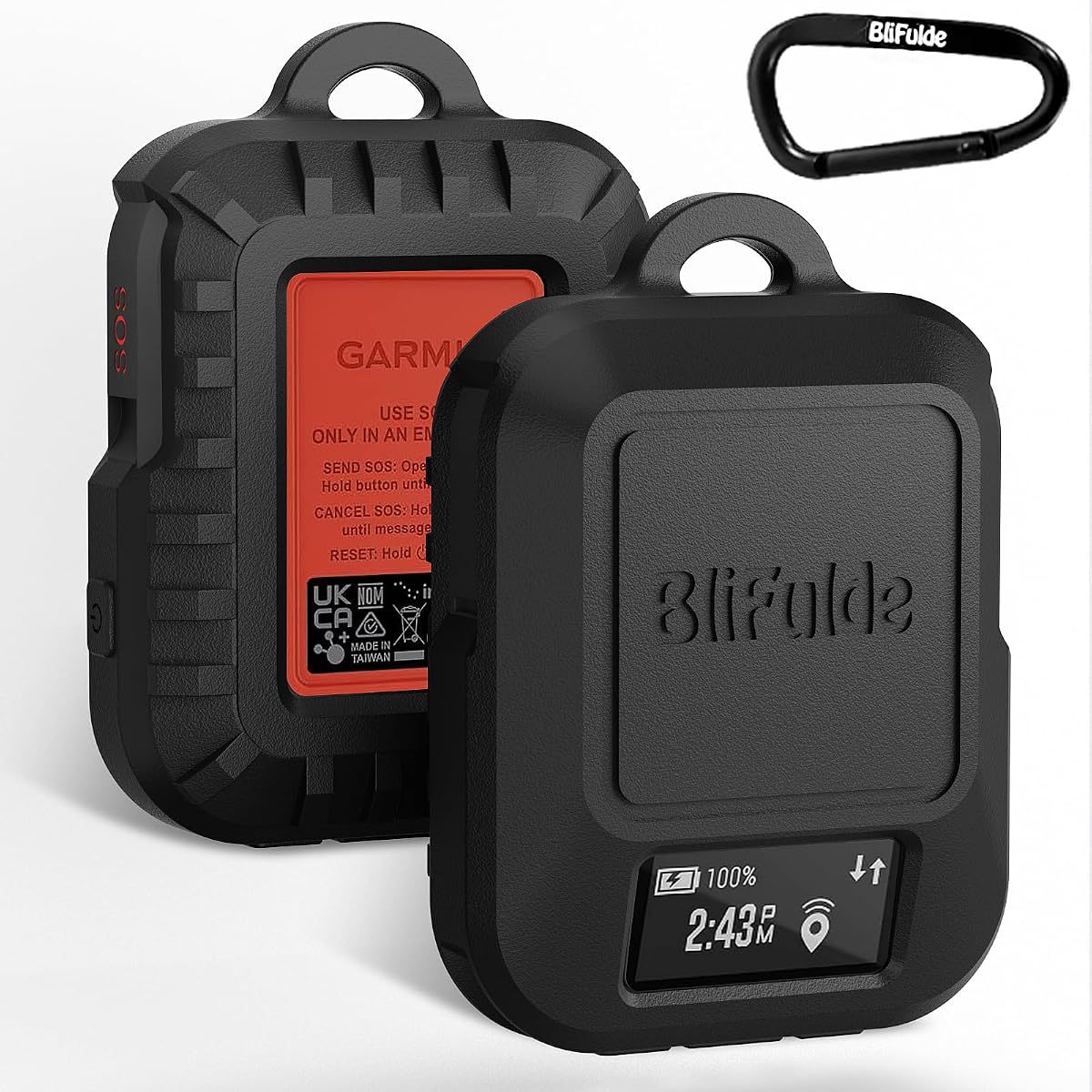


The Custom Silicone Case for Garmin inReach Messenger and Messenger Plus is a fitted protective sleeve rated 4.5 by customers. Its defining feature is the custom shape, which follows the contours of both supported Messenger devices while leaving the screen, buttons, charging port, and SOS controls accessible. It offers practical everyday protection without the bulk of a travel case.
We may earn a commission when you buy through this link, at no additional cost to you.
Flexible silicone helps shield the communicator from scratches, dust, minor bumps, and ordinary wear while creating a more secure grip than a bare device. The raised fit around the body helps limit direct contact with surrounding surfaces, and the lightweight black finish adds little bulk to a pocket or pack. Precise openings mean users can check messages, operate controls, and connect a charger without repeatedly removing the case.
This option is less protective than a hard-shell enclosure because it does not fully surround the device against crushing forces or substantial impacts. It also provides no dedicated area for cables or other accessories. The included BliFulde aluminum carabiner is useful for clipping the covered communicator to a backpack, belt, or gear loop, although the manufacturer explicitly states that it is not intended for climbing or load-bearing use.
Choose this silicone case when you carry the inReach Messenger or Messenger Plus in a pocket, jacket, or day pack and want low-profile protection with convenient access. It is a strong fit for users who value weight, handling, and accessibility more than hard-shell storage. For travelers carrying loose accessories or expecting severe impact, one of the hard travel cases would be more suitable.
The close-fitting silicone profile creates a useful barrier against scratches, dust, and minor bumps without surrounding the device in a bulky enclosure. It is particularly practical for everyday carry.
Purpose-made openings preserve access to the screen, physical buttons, charging connection, and SOS controls, reducing the need to remove the case during an urgent situation.
We may earn a commission when you buy through this link, at no additional cost to you.
The Flaxune Hard Travel Case for Garmin inReach Mini 3 carries a 4.9 rating, the highest customer rating among the cases reviewed. It is designed to accommodate the Mini 3, Mini 3 Plus, Mini 2, and original Mini, making it a versatile choice for users who own or encounter different generations of Garmin's compact communicator line.
We may earn a commission when you buy through this link, at no additional cost to you.
Its durable nylon construction and waterproof design provide defense against water, dust, and scratches, while the double-zipper closure helps keep the communicator enclosed during transport. Dedicated compartments organize the device and small accessories such as charging cables, reducing loose-item clutter. A comfortable hand strap also makes the case easier to carry between a vehicle, campsite, boat, or lodging area.
The case is not a true dive housing and should not be treated as one. Its water resistance is intended to protect against outdoor exposure rather than sustained underwater use. The listing also includes a wide range of model references, but the shared dimensions and internal arrangement may not offer the same close, custom fit as a case designed exclusively for one Mini generation.
This is our Editor's Choice because it balances broad compatibility, organized storage, travel portability, and meaningful environmental protection. It suits hikers, campers, boaters, and international travelers who want more than a fitted sleeve. Buy it when keeping the communicator and its charging essentials together is as important as shielding the device from rough travel conditions.
Support for several Mini models reduces the risk of purchasing the wrong enclosure when you upgrade devices. Buyers should still compare the listed dimensions and model names with their exact communicator.
Dedicated storage for the communicator and charging cables keeps essential communication equipment together, while the hand strap offers a straightforward way to move the entire kit.
We may earn a commission when you buy through this link, at no additional cost to you.
The CaseSack case for the Garmin inReach Mini family holds a 4.7 rating and offers a middle ground between a soft pouch and a rigid hard case. Its semi-hard PEVA construction is described as protecting against shock, shaking, and scratches while also offering water resistance.
We may earn a commission when you buy through this link, at no additional cost to you.
The compact, lightweight format makes it convenient for travel and storage at home. A zipper provides clear access to the communicator, and the included carabiner allows the case to be attached to a belt, backpack, or other gear. The product information indicates compatibility with the original inReach Mini, inReach Mini 2, and the associated charger, with the title also referencing Mini 3 and Mini 3 Plus.
Because it is semi-hard rather than fully rigid, the case offers less resistance to crushing than the EVA cases in this guide. It also appears more focused on holding the device and charger than on providing multiple separately organized accessory spaces. Model references can sometimes broaden over time, so buyers should verify the current dimensions and interior arrangement for the Mini 3 Plus.
This case works well for travelers who want a structured, splash-resistant enclosure that is easier to carry than a bulky hard shell. It is also useful for keeping a Mini communicator and charger together between outings. Choose it when moderate protection, compactness, and simple access matter more than a precisely molded tray or extensive accessory organization.
The semi-hard PEVA structure adds meaningful protection against bumps and scratches while remaining lighter and less imposing than a fully rigid travel case.
The integrated carabiner provides a convenient connection point for a pack or belt, helping keep the protected communicator close during travel and outdoor activities.
We may earn a commission when you buy through this link, at no additional cost to you.
The BOVKE hard carrying case is rated 4.6 and stands out for supporting a much wider range of Garmin equipment than a model-specific inReach case. Its compatibility list includes the GPSMAP 64sx, 66i, 67, 67i, 66sr, 66s, 65s, and 78sc, as well as the inReach Explorer+ GPS handheld and satellite communicator.
We may earn a commission when you buy through this link, at no additional cost to you.
A hard EVA exterior supplies a semi-waterproof, shockproof, and dust-resistant barrier. Two smooth zipper pulls provide access, while two internal elastic bands hold the handheld or navigator in position and limit movement inside the case. A mesh area accommodates a USB cable and small accessories, creating a more complete equipment organizer than a simple fitted sleeve.
The trade-off is universal versatility. At 7.42 by 3.54 by 2.55 inches, the case is larger than most compact inReach Mini enclosures and may not be molded around a particular device. It is also not the case to choose if the goal is a thin, always-attached cover for the Messenger or a custom tray for the Mini 3 Plus.
This option makes sense for users who carry an inReach Explorer+ alongside other Garmin handhelds, or who want one durable storage solution for multiple compatible GPS devices. The included carabiner and detachable lanyard offer flexible carrying choices, while the rigid shell is well suited to travel, hiking, cycling, geocaching, and general gear storage.
Support for numerous GPSMAP and inReach Explorer+ devices makes this a useful shared enclosure for people who carry more than one type of Garmin navigation equipment.
Elastic retention straps limit movement, while the mesh accessory area keeps a cable or other small items visible and separated from the main device.
We may earn a commission when you buy through this link, at no additional cost to you.
The Baval hard travel case for the Garmin inReach Messenger has a 4.8 rating and is tailored specifically for that communicator family. The case combines EVA and nylon materials in a structure intended to resist deformation, wear, collisions, and moisture, while a soft velvet interior helps prevent scratches on the device surface.
We may earn a commission when you buy through this link, at no additional cost to you.
An elastic band holds the inReach Messenger or Messenger Plus securely inside, reducing movement during travel. A mesh pocket creates a dedicated place for small accessories, allowing the communication kit to remain together. The included carabiner makes it straightforward to attach the case to a backpack during wilderness trips, travel, or other outdoor activities.
The case measures 4.05 by 3.85 by 1.96 inches, a compact format for a Messenger device, but it is not intended for Mini models. The product is also sold as the case only; the Garmin communicator and its accessories are not included. Buyers should also distinguish general moisture resistance from certified underwater protection, particularly when boating or diving.
This is a strong recommendation for Messenger owners who want more impact protection and interior organization than a fitted silicone sleeve provides. It is especially useful for trips where the device will spend time in a pack, vehicle, or travel bag. Choose it when dedicated Messenger compatibility, a soft-lined interior, and an external attachment point are the leading priorities.
The velvet-like interior adds a soft layer between the communicator and the shell, helping reduce direct contact, rubbing, and scratch risk during storage.
A mesh pocket and internal retention band organize the device and small essentials, reducing the chance that cables or accessories will be separated from the communicator.
We may earn a commission when you buy through this link, at no additional cost to you.
The TUSITA Silicone Case for the Garmin inReach Mini 2 has a 4.7 rating and offers a lightweight alternative to bulky hard cases. It fits the original inReach Mini and inReach Mini 2, with a molded construction designed to keep the device secure while preserving access to ports and features.
We may earn a commission when you buy through this link, at no additional cost to you.
The manufacturer describes the liquid silicone as soft, durable, anti-slip, and resistant to yellowing over time. Raised edges add protection around the display, while reinforced corners and a shock-absorbing structure are intended to manage the effects of drops. A non-slip frame improves handling and reduces the likelihood of the communicator slipping from the user's hand.
The case does not provide storage for a charging cable or other gear, and its model support does not include the Mini 3. As a flexible sleeve, it also cannot match a rigid case for resistance to crushing or severe impacts. Users should verify their communicator generation because the Mini and Mini 2 are not interchangeable in every accessory.
This is our Best Budget selection for its combination of useful protection, low weight, and straightforward access. It is a sensible choice for Mini or Mini 2 owners who carry the device in a pocket or pack and want a grippy cover rather than a separate enclosure. For hard-shell protection or Mini 3 compatibility, consider one of the newer custom cases.
Raised edges and reinforced corners add protection at common impact points while keeping the overall cover close to the shape and weight of the communicator.
The flexible silicone and non-slip frame make the communicator easier to hold in wet or demanding outdoor conditions, where a smooth bare device may be more difficult to manage.
We may earn a commission when you buy through this link, at no additional cost to you.
The hard case for the Garmin inReach Mini 2 has a 4.6 rating and focuses on a tailored protective interior. A sponge tray supports the communicator, a partition helps keep the screen separated from surrounding contents, and a mesh pocket stores charging cables or other small accessories.
We may earn a commission when you buy through this link, at no additional cost to you.
The exterior is designed to resist water splashes, dust, and everyday bumps, while the internal support adds resistance to shock. Its dimensions are listed as 5.27 by 4.01 by 2.12 inches, and a smooth zipper provides access without requiring the user to pull the device through a narrow opening. A detachable carabiner adds another carrying option for a backpack, belt, or suitcase.
The specific model fit is the main limitation. This case is intended for the inReach Mini 2 and does not indicate support for the Mini 3, Mini 3 Plus, original Mini, or Messenger. It is sold as a bag only, with the Garmin device and accessories excluded. The protective claims also concern splashes and general outdoor exposure rather than underwater use.
This product is best for Mini 2 owners who want a rigid travel case, a close-fitting interior, and a place for a charging cable in one compact package. It is useful for home storage, travel, hiking, and camping, and the detachable carabiner makes it easy to keep the entire kit accessible. Verify the model before ordering to avoid choosing an older enclosure for a newer Mini.
The molded tray and sponge support limit movement and add shock resistance, which helps protect the communicator when the case is set down or carried through a busy travel environment.
The shell is intended to defend against splashes, dust, and routine impacts, making it a practical option for outdoor travel where fine dirt and moisture are likely.
We may earn a commission when you buy through this link, at no additional cost to you.
The hard case for the Garmin inReach Mini 3 Plus carries a 4.8 rating and offers one of the most model-specific designs in the roundup. Its custom-molded foam interior is shaped for the Mini 3 Plus, creating a secure cradle that helps prevent the communicator from shifting during transport.
We may earn a commission when you buy through this link, at no additional cost to you.
A soft, particle-lined partition helps protect the touchscreen from scratches, while a sponge support layer contributes impact resistance. The outer shell is described as splash resistant and tough enough for everyday bumps, drops, dust, and dirt. Additional molded space accommodates a charging cable, spare batteries, and other small essentials without mixing them against the device.
This premium position reflects the refined fit, layered protection, and deliberate organization rather than a premium price claim. It is exclusively designed for the Mini 3 Plus, so it will not serve Mini 2, Messenger, or other Garmin users. The case is sold alone, and the Garmin device plus accessories are not included.
For a Mini 3 Plus owner who wants a travel-ready enclosure with room for a complete communication kit, this is a particularly convincing choice. It suits backpacking, camping, travel, climbing, and everyday storage, while the detachable carabiner provides flexible attachment. Its tailored construction makes it less versatile, but more purposeful, than a universal GPS case.
The molded foam cradle is designed around the Mini 3 Plus, providing more precise positioning than a general-purpose pouch and reducing movement within the enclosure.
A soft particle-lined divider helps isolate the touchscreen from the rest of the kit, while the surrounding shell handles bumps, splashes, dust, and dirt.
We may earn a commission when you buy through this link, at no additional cost to you.
The Garmin inReach Mini Dive Case is a specialized option rated 4.4 by customers. Unlike general travel pouches, it is explicitly designed to carry the inReach Mini on dives and provide water-resistant protection, including a stated protection depth of 10 ATM, or 100 meters.
We may earn a commission when you buy through this link, at no additional cost to you.
The product information states compatibility with the inReach Mini and inReach Mini Marine Bundle. Its underwater purpose is important, while also requiring a clear limitation: GPS tracking and satellite communication do not work underwater. The case is designed to protect the equipment and provide peace of mind when the device is surfaced, not to make the communicator functional while submerged.
This specialized construction is unnecessary for many everyday users and may be less convenient for routine hiking or travel. It also does not offer the accessory organization visible in several hard travel cases. Users should confirm the exact communicator model and understand the stated depth rating rather than assuming every inReach Mini variant is covered.
Choose the dive case if boating, scuba diving, or repeated water exposure is central to how you use your inReach Mini. It is the most purpose-specific product in this guide and provides a level of aquatic protection that ordinary nylon pouches do not claim. For standard outdoor travel, one of the hard travel cases will usually be more versatile.
The stated 10 ATM protection and 100-meter depth capability make this enclosure suitable for divers who need the Mini physically protected during submersion and surfacing.
The communicator cannot perform GPS tracking or satellite communication underwater, so divers should plan to use the device after surfacing rather than treating the case as an underwater communications solution.
We may earn a commission when you buy through this link, at no additional cost to you.
The Premium Protective Silicone Case Cover for the Garmin inReach Mini 3 is designed specifically for the newer Mini 3. Its custom profile is intended to integrate with the device's buttons, ports, charging interface, and an integrated opening for a Spine Mount Adapter. A thickness-reduced treatment around the antenna area is another model-specific design detail.
We may earn a commission when you buy through this link, at no additional cost to you.
The eco-silicone construction is described as durable, shock absorbent, and resistant to scratches during rugged outdoor use. Reinforced edges add protection around vulnerable areas, while an anti-static coating is intended to reduce dust buildup. The case remains non-slip and maintains access to essential controls rather than requiring users to remove it for routine operation.
No customer rating is currently provided, so its market feedback is less established than that of the other cases in the guide. It is a close-fitting cover rather than a travel enclosure, meaning it has no separate storage for cables or batteries. Screen protector compatibility is useful for buyers who want a layered setup, though the screen protector itself is not listed as included.
This silicone cover is best for Mini 3 owners who prefer a close, grippy design and may use a Spine Mount Adapter. It offers a modern fit, convenient access, and basic drop and scratch protection without the weight of a hard case. For full-kit organization, select a molded hard travel case; for streamlined everyday protection, this option fills that role well.
The opening for the Spine Mount Adapter and reduced-thickness antenna area show attention to Mini 3-specific design, helping the cover fit around features that generic sleeves may obstruct.
Support for a tempered glass screen protector allows buyers to combine surface and edge protection, which can be useful in bags containing keys, tools, or other hard equipment.
We may earn a commission when you buy through this link, at no additional cost to you.
The right case depends on your exact inReach model, protection requirements, and carrying habits. Use the following factors to distinguish a lightweight sleeve from a travel enclosure or specialized dive case.
Garmin inReach cases are not interchangeable across the entire product line. The Messenger, Messenger Plus, Mini, Mini 2, Mini 3, and Mini 3 Plus have different dimensions, control layouts, antenna arrangements, and mounting needs. A listing that mentions several models may still be designed around one internal shape, so check the model list and dimensions before ordering. Paying close attention to the exact suffix also prevents confusion between the Mini 3 and Mini 3 Plus.
In short, verify the complete model number and the fit notes before buying.
Silicone covers prioritize low weight, grip, and direct access, while hard-shell cases offer stronger separation from impact, dirt, and moisture. Semi-hard pouches occupy the middle ground and often work well for travel storage. Specialized dive cases provide a much narrower function centered on underwater exposure. Choose based on the hazards your device actually faces rather than assuming the thickest option is always necessary.
In short, use a sleeve for daily wear and a rigid case for travel or rough handling.
Raised edges, a soft-lined partition, or a separate internal divider can keep the display from contacting the case shell, cables, or other objects. These details are particularly valuable when the communicator is stored with keys, tools, or charging accessories. Silicone covers offer less separation from the environment, so checking for raised lips and a secure face fit is especially important. Models that accept a screen protector offer another way to reduce scratch risk.
In short, prioritize raised edges, a padded divider, or screen-protector support.
Terms such as waterproof, splash resistant, and water resistant can describe different levels of protection. Most general travel cases are intended to resist rain, splashes, and dust rather than support prolonged submersion. A dive case with a stated ATM and depth rating serves a more specialized purpose. Users should avoid inferring underwater capability from a sealed zipper or nylon shell alone and should follow the manufacturer's care guidance.
In short, use a dive-rated case only when genuine underwater protection is required.
A hard case with a mesh pocket, elastic retention system, or dedicated compartments can keep a charging cable and other small items together with the communicator. This reduces the chance of leaving a vital accessory behind or finding it damaged at the bottom of a bag. Silicone sleeves generally do not provide this organization, but they keep the device itself close at hand. Decide whether you need a device cover or a complete organized communication kit.
In short, choose a compartmented case when accessories must travel together.
A carabiner, lanyard, or hand strap determines how easily the protected device can move between a backpack, belt, suitcase, and vehicle. Carabiners are useful for quick attachment, while straps can improve handling when carrying a larger kit. Check whether the hardware is detachable and whether the stated use includes climbing or load-bearing activities. As with all clips, users should follow the stated limitations and avoid placing valuable equipment on an unsuitable attachment point.
In short, match the attachment hardware to your normal packing method.
A fitted silicone cover adds little bulk and remains easy to operate during a hike, while a hard travel case occupies more pack space but protects the device during transit. Universal cases can be especially useful for people with several compatible Garmin handhelds, although they may not hold a device as precisely. Measure the space available in your pack and consider how often you will need to reach the device without removing it from protection.
In short, prioritize low bulk for quick access or structured storage for organized travel.
A custom-molded foam tray, sponge support, or elastic band can prevent the communicator from shifting when the case is set down or moved. Secure retention is valuable in vehicles, luggage, and backpacks where objects may move. The interior should also separate the screen from accessories and avoid placing pressure against buttons or the antenna. Look for a close fit without loose gaps that allow the device to rattle.
In short, choose a fitted interior that limits movement and protects the screen.
Before installing a new case, confirm that the device model matches the case's supported list. Clean and dry both the communicator and the case, then inspect the openings, zipper, straps, and attachment points. For a silicone cover, align the cutouts carefully and work around the edges rather than forcing the device into place. For a hard case, seat the device in the molded tray and position the screen against the protective divider.
In daily use, keep charging cables in the designated pocket or compartment and avoid forcing accessories against the touchscreen. Check that zippers close fully and that straps or carabiners are secure, but do not treat the included clip as a load-bearing point unless its manufacturer explicitly permits that use. If the case gets wet, open it and allow both the device and the case to dry fully before closing the enclosure.
Long-term care depends on the material. Wipe silicone with a soft, damp cloth and mild soap if needed, then let it air dry. Do not use harsh chemicals that could degrade the material. For hard cases, remove grit from the foam and zipper tracks, inspect for tears or deformation, and store the device somewhere clean and dry. Follow the original manufacturer's instructions if they differ from general care recommendations.
No. Cases are usually designed for a specific model or closely related generation, and the Messenger, Mini, Mini 2, Mini 3, and Mini 3 Plus do not share identical dimensions. A universal-style case may support several models through adjustable retention, while others merely list several compatible devices but retain one molded interior. Always check the exact model names and dimensions before purchasing.
A silicone case is usually better for lightweight everyday carry because it improves grip and keeps controls accessible. A hard case offers stronger protection from impacts, dirt, and splashes while providing a better place for charging cables. Choose the sleeve when low bulk and quick access dominate, or select the hard case when the communicator will spend time in luggage, vehicles, or shared gear bags.
Most regular travel cases are designed for rain, splashes, dust, and general outdoor exposure rather than immersion. The dedicated dive case in this guide has a stated protection of 10 ATM, or 100 meters, and is intended specifically for dives. GPS tracking and satellite communication do not work underwater, even when the device is safely enclosed.
A properly fitted case should preserve access to the screen, buttons, charging connection, and SOS controls, but compatibility still matters. Some generic sleeves can obstruct antennas, ports, or specific buttons. Check the product's cutout list and model compatibility, and ensure any screen protector or mount is also compatible with the case.
Look for raised case edges, a padded screen divider, or a design that keeps cables and other objects away from the display. The Mini 3 Plus hard case includes a soft particle-lined partition, while the Mini 3 silicone cover is designed to work with a tempered glass screen protector. A dedicated screen protector adds useful protection when the communicator shares space with keys or tools.
Yes, when the case includes a suitable carabiner, lanyard, or hand strap. Check the attachment point and load limits stated by the manufacturer. Some clips are intended only for quick attachment and are not designed for climbing or supporting weight. Keep the case closed while moving through wet, dusty, or crowded environments.
No. The cases reviewed are protective accessories, and the listings that explicitly state this are case-only products. A Garmin inReach communicator, charging cable, batteries, and screen protectors must be obtained separately. Always read the package contents to distinguish the enclosure from a complete communications kit.
Store the communicator clean and completely dry, with cables arranged so they do not press against the screen. Keep the case away from direct heat, strong chemicals, and prolonged moisture. For a hard case, remove loose dirt from the interior so it cannot abrade the device, and periodically inspect the zipper, foam, and shell for damage.
The Flaxune Hard Travel Case stands out for its strong customer feedback, support across several Mini generations, organized accessory storage, and comfortable hand strap. The Garmin inReach Mini Dive Case is the specialized choice for genuine aquatic exposure, while the TUSITA Silicone Case offers a lightweight, grippy, budget-conscious approach for the Mini and Mini 2. Each serves a distinct use rather than attempting to replace every other style.
Prioritize exact model compatibility first, then decide whether you need a close everyday cover or a rigid travel enclosure. Screen retention, water exposure, attachment method, and cable storage should shape the final decision. Newer Mini 3 and Mini 3 Plus users may benefit from model-specific designs, while Messenger owners should choose a case with appropriate button and port access.
Before ordering, confirm the current listing details, included components, and available product information. Prices and product configurations can change over time, and a listing that once included an accessory may change without altering the product's core function. Comparing the current description with the protection and carrying features you actually need is the safest final step.