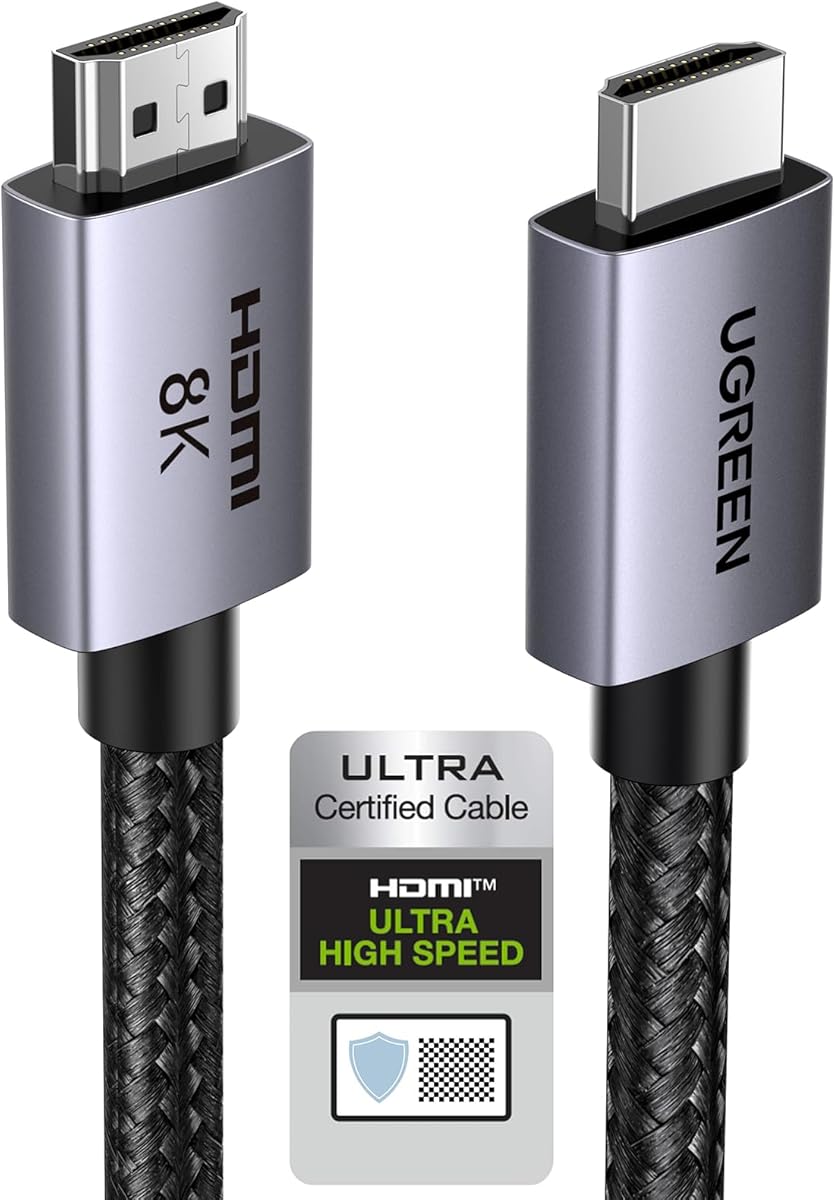
UGREEN 8K HDMI 2.1 Cable
4.8Editor score
Certified 48 Gbps bandwidth
Supports 8K at 60Hz
Dynamic HDR and eARC
Our HDMI Cable for 8K guide compares ten high-speed cables for bandwidth, certification, gaming features, durability, compatibility, and setup needs.
An HDMI Cable for 8K must carry far more data than a conventional 4K cable, especially when gaming at high refresh rates or using advanced HDR, VRR, and audio features. Certification, bandwidth, build quality, and device compatibility all influence whether a cable delivers the performance its source equipment and display are designed to provide.
We compared ten cables using their stated specifications, supported resolutions, refresh rates, gaming functions, physical construction, length, and intended uses. The list includes certified 48 Gbps options, a multi-pack for dual setups, a 10-foot model, and an advanced 96 Gbps cable designed for newer HDMI specifications.
Each review identifies the reason a cable stands out, while also noting practical limitations. Ratings and feature details reflect the supplied product information, and availability, specifications, and prices can change, so readers should confirm current details before making a final purchase.
4.8Editor score
4.8Editor score

5.0Editor score
The comparison below highlights bandwidth, maximum resolution, gaming support, and construction details. These factors help separate basic 8K-ready cables from options better suited to high-refresh gaming, home theater, long installations, or multiple devices.
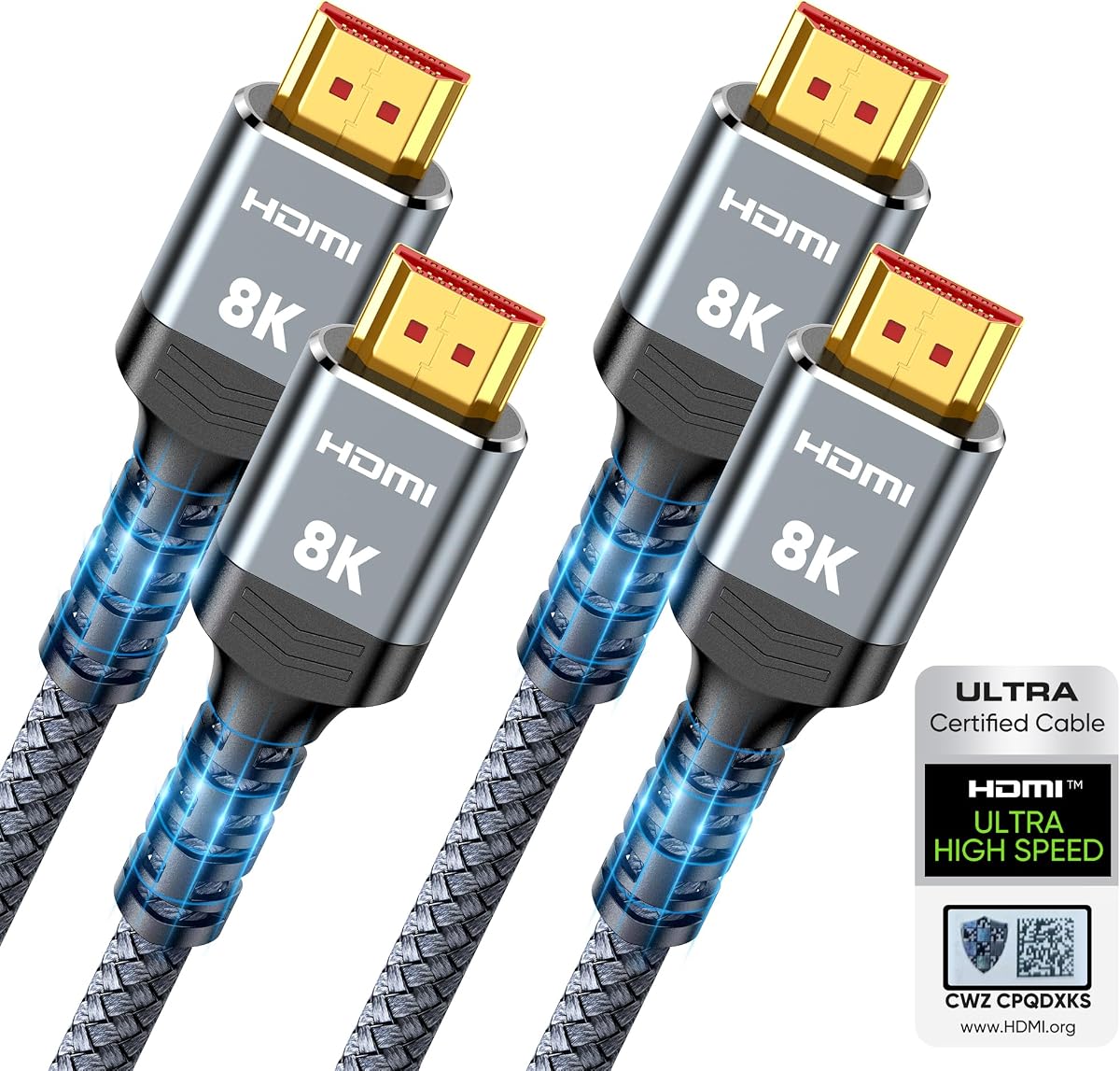


The Highwings 8K HDMI 2.1 Cable 2-Pack offers a broad combination of bandwidth, gaming support, and physical durability. Its 4.7 rating reflects a well-received product, while the two-cable format gives buyers more flexibility than a conventional single-cable package. Each cable is listed as a certified Ultra High Speed design with 48 Gbps bandwidth.
We may earn a commission when you buy through this link, at no additional cost to you.
Resolution support is the main attraction. The cable supports 8K at 60Hz, 4K at 120Hz, and 4K at 240Hz, making it suitable for high-end televisions, modern gaming consoles, and compatible computer hardware. Its stated game support includes variable refresh rate, which can help a capable display and source synchronize frame delivery more effectively.
The construction is designed for regular handling. Aluminum alloy shells protect the connector areas, while the nylon material and reinforced tail are intended to reduce damage from bending. The two-pack is especially useful for connecting two displays, moving a cable between rooms, or keeping a spare available without buying another identical cable.
This is a strong recommendation for buyers who want several 8K-capable connections or a flexible gaming setup. The main compromise is length: at approximately 6.6 feet, each lead may need an extension in rooms where the television or monitor is far from the console. Within that limitation, the combination of certification, two cables, and gaming capabilities is compelling.
The two-pack format is practical for dual-screen rooms, separate gaming and media-center installations, or simply avoiding the inconvenience of relocating one permanently installed cable. It also provides a ready replacement if a connector is taken into a different part of the home.
Support for 8K at 60Hz, 4K at 120Hz, and 4K at 240Hz gives this cable ample headroom for demanding displays. Variable refresh rate support adds further value for compatible consoles and PCs.
We may earn a commission when you buy through this link, at no additional cost to you.
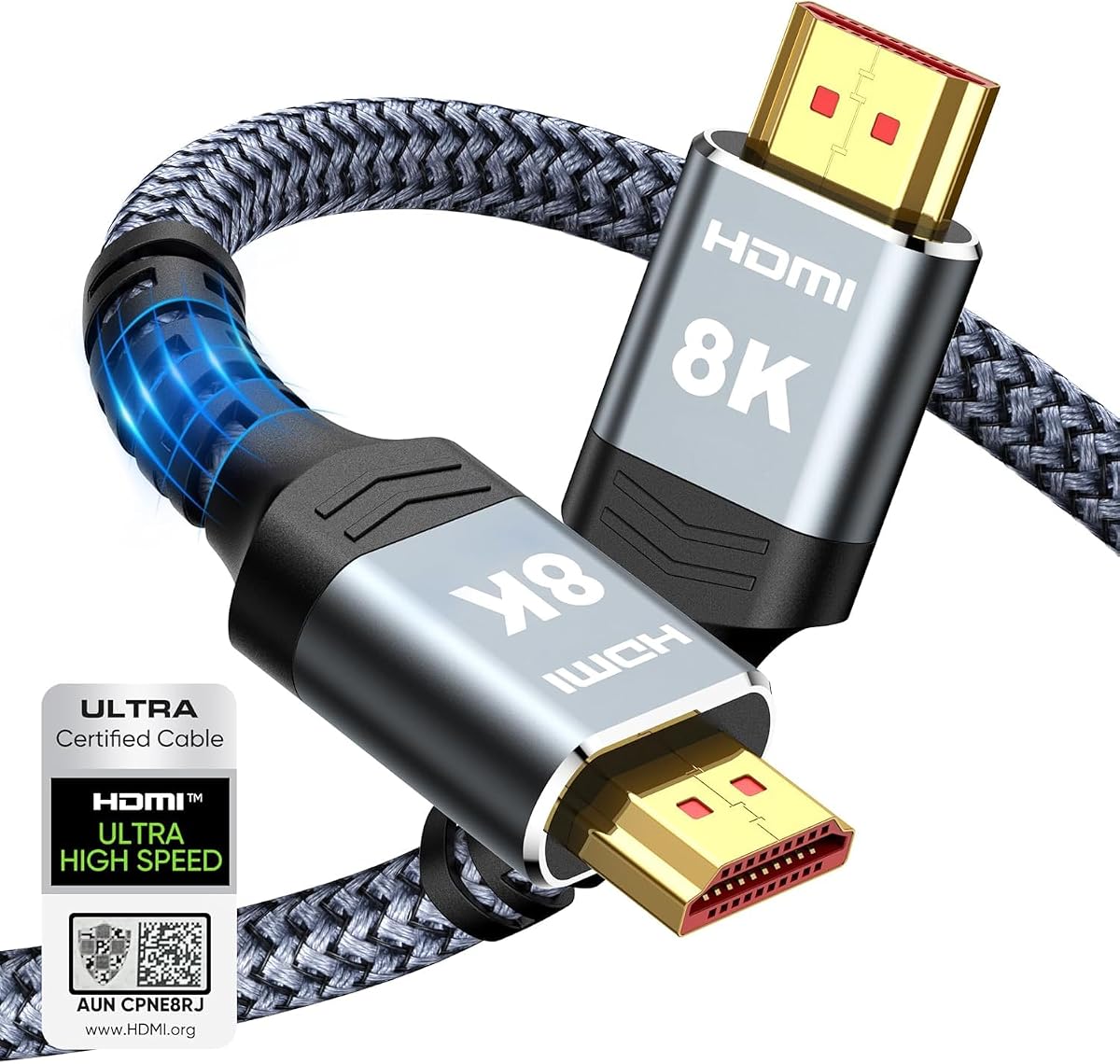
The UGREEN 8K HDMI 2.1 Cable is an excellent all-around recommendation, combining a 4.8 rating with certified 48 Gbps bandwidth and extensive compatibility. Its feature set goes beyond basic 8K transmission, covering 10K, 4K at 240Hz, variable refresh rate, Quick Frame Transport, Dynamic HDR, and eARC.
We may earn a commission when you buy through this link, at no additional cost to you.
The cable is specifically described as an HDMI 2.1 Certified Ultra High Speed product. At 48 Gbps, it has enough stated bandwidth for uncompressed 8K video and demanding high-refresh gaming modes. Its support for QFT is intended to reduce display latency during certain source-switching situations, while auto low latency mode helps compatible gaming equipment respond more quickly.
Audio and imaging features are equally notable. Dynamic HDR is listed alongside 12-bit color support, while eARC can carry full-resolution audio formats such as Dolby Atmos and DTS:X from a television to a soundbar or receiver. The aluminum housing, nickel-plated contacts, and braided nylon jacket are intended to withstand repeated bending without making the cable unnecessarily difficult to route.
UGREEN's compatibility list includes gaming consoles, streaming devices, computers, projectors, televisions, monitors, and audio equipment, making this a practical choice for a mixed household. Its only obvious limitation is that one cable is included and its length is around 6.6 feet. For most living-room and desktop arrangements, however, the feature balance makes it one of the strongest choices in the guide.
This cable supports several of the most useful contemporary HDMI functions. VRR, QFT, Dynamic HDR, eARC, HDCP 2.3, and HDCP 2.2 make it suitable for modern consoles, televisions, receivers, and soundbars rather than only basic 8K displays.
The aluminum alloy housing and nickel-plated connectors pair with a durable nylon braid to handle routine plugging and bending. This construction is well suited to a gaming console that may be moved occasionally or a desktop setup that is reconfigured regularly.
We may earn a commission when you buy through this link, at no additional cost to you.
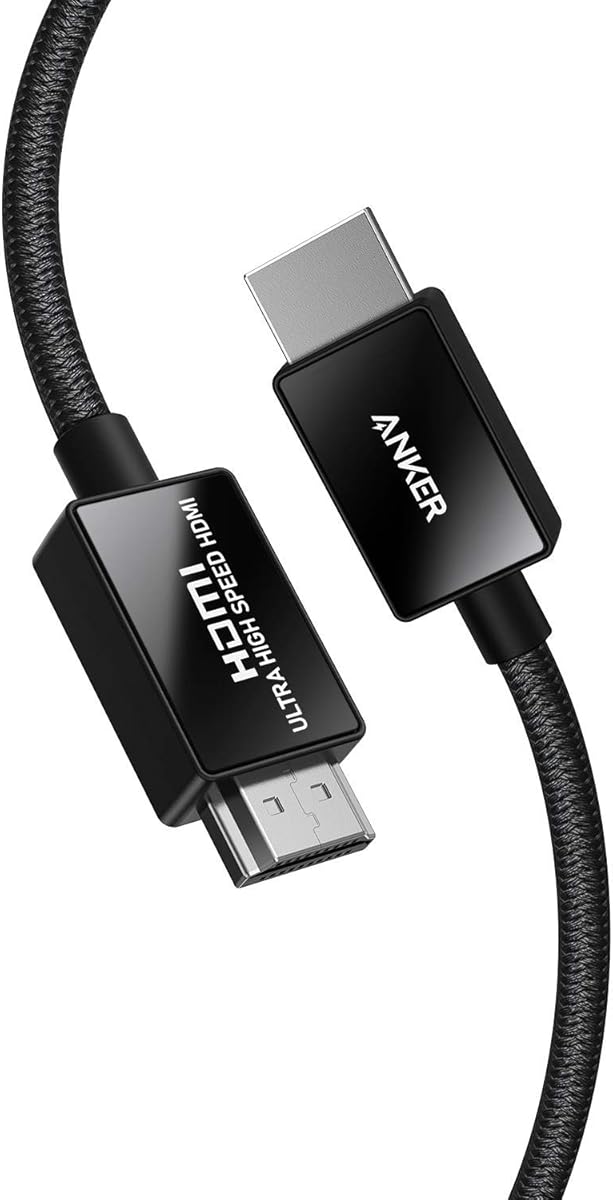
The Anker HDMI 2.1 Cable delivers a clear combination of high bandwidth, broad device use, and durability. It carries a 4.7 rating and is listed as a certified Ultra High Speed HDMI cable with 48 Gbps bandwidth, making it suitable for users seeking 8K support without paying for a specialized multi-cable package.
We may earn a commission when you buy through this link, at no additional cost to you.
The stated resolution coverage includes 8K at 60Hz and 4K at 120Hz, along with standard 4K at 60Hz. That range covers the principal requirements of current 8K televisions, high-refresh gaming monitors, and compatible consoles. The product is also positioned as a general-purpose connection for tablets, laptops, projectors, desktop displays, and other HDMI-equipped devices.
Durability is a notable point. Anker states that the cable is designed to withstand up to 1,000 bends during its lifespan, which is useful for installations where the connector may be handled often. The package includes a welcome guide and an 18-month warranty, adding reassurance for buyers who want recognizable brand support.
This is a sensible recommendation for a console, gaming PC, projector, or television that will remain close to the source equipment. It does not list 4K at 240Hz in the same way as some higher-ranked alternatives, and the six-foot lead is shorter than the 8- and 10-foot options in the guide. Even so, the combination of certification, clear performance specifications, and restrained physical design makes it easy to recommend.
With support for 8K at 60Hz and 4K at 120Hz, the cable covers the major high-resolution modes used by contemporary displays. It is a solid choice for modern console gaming when the source and television or monitor share the same room.
The stated 1,000-bend tolerance targets normal use rather than extreme routing stress. It offers useful reassurance without requiring buyers to choose a heavily shielded cable intended for permanent professional installations.
We may earn a commission when you buy through this link, at no additional cost to you.
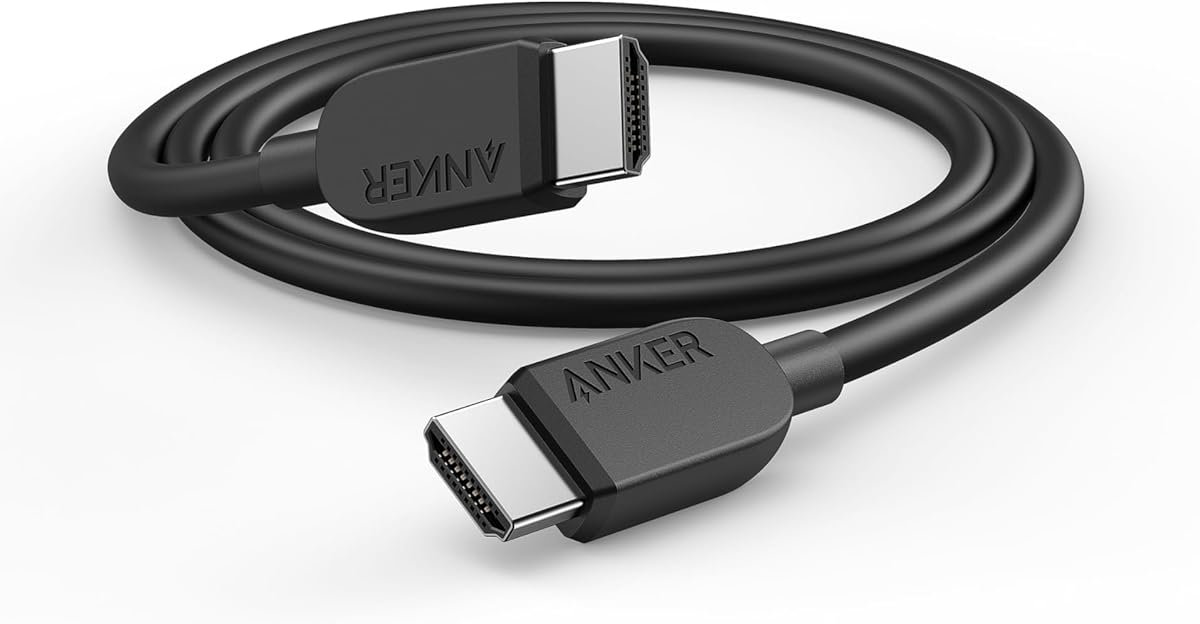
The Anker HDMI 2.1 Cable with 8K at 60Hz is a refined option for buyers who value certification and physical construction. Its 4.8 rating is among the highest in this collection, and the product is described as one of the first officially certified Ultra High Speed HDMI cables after rigorous electromagnetic-interference testing.
We may earn a commission when you buy through this link, at no additional cost to you.
At 48 Gbps, the cable supports 8K at 60Hz and 4K at 120Hz. That makes it suitable for PlayStation 5, Xbox Series X/S, 8K televisions, Apple TV, and streaming devices such as Roku Ultra, provided the connected display and source support the selected resolution and refresh rate.
Its physical design is more elaborate than that of a basic cable. Carbon steel connector bodies, gold connector pins, and a double-braided nylon exterior are intended to improve wear resistance and maintain a dependable connection. Anker states that the cable can be plugged and unplugged as many as 10,000 times without issue, a notable claim for a frequently handled gaming connection.
This cable earns a strong recommendation for anyone replacing an older 4K cable with a future-oriented connection for a modern console or home theater. The package contains one cable, a welcome guide, and an 18-month warranty. It costs more than several basic options, but the combination of formal certification, premium materials, and brand support makes it a persuasive long-term choice.
Official Ultra High Speed certification is particularly valuable when buyers want confidence that the cable meets demanding electrical and signal-integrity standards. It also supports confidence when connecting high-end displays, consoles, and AV equipment.
Gold-plated connector pins, carbon steel bodies, and a double-braided jacket create a more refined cable than a basic option. These details are especially useful for gaming setups where cables may be moved or disconnected more often than permanent home-theater wiring.
We may earn a commission when you buy through this link, at no additional cost to you.
The Highwings 8K at 60Hz 10-Foot Cable is a practical choice when standard six-foot leads are too short. It retains a 4.7 rating and offers certified 48 Gbps bandwidth, 8K at 60Hz, and 4K at 120Hz in a room-friendly 10-foot format.
We may earn a commission when you buy through this link, at no additional cost to you.
Gaming is an important part of the product's positioning. The cable lists support for variable refresh rate, which is valuable for compatible graphics cards, gaming PCs, current consoles, and high-refresh displays. Backward compatibility with HDMI 2.0b, 2.0a, 1.4, 1.3, 2.1, and 2.0a extends its usefulness across older and newer source devices.
The classic cable profile includes an upgraded anti-bending design at the tail and military-grade tensile nylon material. These features are intended to protect the most vulnerable point of the cable, which is where repeated flexing can gradually damage internal conductors or the connector connection.
This model works well for a wall-mounted television, entertainment center, conference display, or projector positioned farther from the source. Its main limitation is that only one cable is supplied, and it is optimized for one extended run rather than serving multiple rooms. For buyers who need more reach without giving up 8K and high-refresh gaming bandwidth, it is a focused and effective solution.
A 10-foot length offers useful placement flexibility when the television, projector, or monitor is not directly beside the console or source device. It can also reduce visible cable routing or eliminate the need for an unnecessary extension.
The stated backward compatibility broadens the range of devices that can be connected. At the same time, current 8K and 4K high-refresh support keeps the cable relevant for newer consoles, PCs, and displays.
We may earn a commission when you buy through this link, at no additional cost to you.
The Ubluker 10K 8K 4K HDMI Cable is distinguished by an exceptionally broad list of stated capabilities. It has a 4.7 rating, official HDMI certification, 48 Gbps bandwidth, and support for an extensive collection of resolution, refresh-rate, color, gaming, and audio functions.
We may earn a commission when you buy through this link, at no additional cost to you.
The cable is listed for 10K at 60Hz in 12-bit YCbCr 4:4:4, 6K and 5K at up to 165Hz, and 4K modes ranging from 90Hz to 240Hz. Gaming-related functions include VRR, ALLM, QFT, and QMS. Dynamic HDR, HDR10+, HDCP 2.2, and HDCP 2.3 are also included, giving it a broad feature set for compatible displays and source equipment.
Audio support includes eARC, ARC, DTS Master, DTS:X, Dolby TrueHD, Dolby Atmos, and Dolby Vision support as listed. An Ethernet channel is also specified, adding a useful capability when compatible source and display equipment can use the cable for network functions in addition to audiovisual signals.
Compatibility extends across computers, monitors, projectors, televisions, streaming devices, game consoles, Blu-ray players, receivers, soundbars, and other HDMI devices. The eight-foot length is versatile for most rooms. The only practical drawback is that the extensive specification list can make the cable difficult to compare with simpler models, so buyers should confirm that their own devices support the exact features they need.
Few cables in this guide list quite as many combinations of resolution, refresh rate, gaming, color, and audio functions. That breadth makes the Ubluker especially interesting for users who want one cable to connect many types of equipment.
Support for eARC and major high-bitrate audio formats strengthens its home-theater appeal. The Ethernet channel adds another potential use when both source and display support compatible network functionality.
We may earn a commission when you buy through this link, at no additional cost to you.
The Zeskit Certified 2.1 8K HDMI Cable balances home-theater features, gaming support, and a practical length. Its 4.7 rating and formal Ultra High Speed certification make it a credible option for buyers who want a conventional 48 Gbps connection without a multi-pack or unusually lengthy cable.
We may earn a commission when you buy through this link, at no additional cost to you.
The 48 Gbps bandwidth supports 8K at 60Hz, 4K at 120Hz, and up to 10K resolution according to the supplied product information. Its listed feature set includes Dynamic HDR, HDR10, eARC, ALLM, QFT, QMS, and VRR. Dolby Vision, Dolby Atmos, DTS:X, HDCP 2.2, and HDCP 2.3 support make it particularly relevant to a modern television-and-soundbar installation.
At approximately 6.5 feet, the cable is long enough for many entertainment centers while remaining easy to manage. Its backward compatibility with earlier HDMI versions means it can also be used with devices that do not require the full 48 Gbps bandwidth, making it less disposable than a narrowly targeted high-end lead.
The Zeskit is best suited to gamers and home-theater users who want certification and broad feature compatibility in a standard size. Its supplied information does not emphasize detailed connector materials or a multi-pack arrangement, so it may not be the first choice for buyers prioritizing a heavily shielded permanent installation or several included cables. Within its intended role, though, it is a well-balanced option.
The combination of eARC, Dynamic HDR, Dolby Vision, Dolby Atmos, and DTS:X support makes this cable suitable for linking modern televisions with capable audio equipment. It is particularly relevant when a user wants one lead to carry both high-resolution video and advanced audio.
VRR and ALLM support modern gaming features, while backward HDMI compatibility lets the cable remain useful with a broader collection of consoles, streaming devices, and displays.
We may earn a commission when you buy through this link, at no additional cost to you.
The Stouchi 8K HDMI 2.1 Cable 8-foot 2-Pack is built for setups that benefit from substantial shielding and more than one connection. Its 4.7 rating is supported by a 48 Gbps specification, 8K at 60Hz support, 4K at 120Hz support, and a design aimed at stable high-bandwidth transmission.
We may earn a commission when you buy through this link, at no additional cost to you.
Thirty-AWG copper wire and triple-tin shielding form the core of its signal-integrity approach. The shielding is intended to block electromagnetic interference, while the robust construction is positioned for permanent home-theater, professional, or high-intensity gaming installations. Nylon braiding and gold-plated connectors add resistance to everyday wear and corrosion.
Modern gaming features are included through VRR and ALLM, and the cable is described as compatible with devices such as the PS5, Xbox Series X, Apple TV 4K, NVIDIA SHIELD, Mac mini M4, and other HDMI 2.1 equipment. Two eight-foot leads make it useful for dual-display arrangements, separate media and gaming areas, or keeping one cable as a replacement.
The principal tradeoff is physical flexibility. Stouchi explicitly notes that the heavy-duty shielding makes the cable thicker and stiffer, which is beneficial for permanent runs but inconvenient behind compact consoles or through narrow furniture openings. Buyers who value stable high-bandwidth construction and a two-pack over a lightweight, highly flexible cable should find this option especially practical.
Triple-tin shielding and 30-AWG copper wiring prioritize stable transmission, particularly at high bandwidth. This makes the cable well suited to fixed entertainment centers and professional installations where signal reliability matters more than compact routing.
Two eight-foot cables support dual displays or two separate locations. The included 24-month customer assurance also gives buyers a stated period of support beyond the standard package.
We may earn a commission when you buy through this link, at no additional cost to you.
The Highwings HDMI 2.2 Cable is the forward-looking option in this guide, with a stated 96 Gbps bandwidth and support claims extending to 16K resolution, 8K at 240Hz, 12K at 120Hz, and 4K at 480Hz. Its 4.6 rating is the lowest among the selected products, but that figure should be considered alongside its unusually ambitious specification set.
We may earn a commission when you buy through this link, at no additional cost to you.
For current gaming systems, the cable supports VRR and ALLM, while Dynamic HDR and Dolby Vision are included in the feature list. It also provides eARC for high-quality television-to-soundbar audio and an Ethernet channel for compatible devices. These functions make it more than a simple future-proof cable; it is positioned as a complete high-end audiovisual link.
Construction includes a flexible double-braided nylon jacket, 24K gold-plated connectors, and enhanced aluminum foil shielding for electromagnetic and radio-frequency interference rejection. The design is intended to maintain a stable connection while also resisting everyday wear, tears, and tangles.
This recommendation is most relevant to buyers who want maximum bandwidth headroom or are building a system around the newest HDMI 2.2 capabilities. Many currently available televisions, consoles, and graphics cards will not use its full potential, making a certified 48 Gbps cable a more rational choice for ordinary 8K systems. For cutting-edge equipment, however, its bandwidth and shielding are compelling.
The 96 Gbps specification is the central advantage of this cable. It offers substantially more theoretical headroom than 48 Gbps models and positions the cable for advanced 8K, high-refresh, and potential 16K applications.
Aluminum foil shielding supports signal stability in demanding installations, while the double braid protects against daily wear. Gold-plated connectors, eARC, and the Ethernet channel round out a technically comprehensive design.
We may earn a commission when you buy through this link, at no additional cost to you.
The Monster 8K HDMI Cable is the premium selection in this roundup, combining a perfect 5.0 rating with an 8K-certified 48 Gbps design and polished connector construction. Its eight-foot length suits many entertainment centers, while its stated compatibility extends to the PlayStation 5, Xbox Series X, and other 8K-ready devices.
We may earn a commission when you buy through this link, at no additional cost to you.
The cable supports 60Hz and 120Hz refresh rates and is described as capable of up to 10K resolution. Dynamic HDR is included for compatible source and display combinations, while eARC offers a convenient route for carrying advanced audio formats between a television and a soundbar or receiver.
Monster highlights the 24K gold contacts as a central construction feature. Gold is used on the connector pins to support corrosion resistance and conductivity, while the broader build is presented as a durable choice for home theaters, gaming consoles, workspaces, TV production environments, and technical installations.
This is the ideal recommendation for a buyer who wants a premium cable, extensive compatibility claims, and a product positioned equally for gaming and professional applications. The tradeoff is straightforward: it costs more than most certified 48 Gbps alternatives and only one cable is included. For a single polished, high-end connection, however, Monster provides one of the most attractive feature and construction packages in the guide.
The 24K gold contacts distinguish this cable from many conventional alternatives. They are intended to preserve conductivity and resist corrosion, supporting dependable use in frequently connected home and professional setups.
Compatibility with current consoles, 8K displays, soundbars, workspaces, and production equipment makes the cable broadly useful. The eight-foot length provides extra placement flexibility without becoming cumbersome in most rooms.
We may earn a commission when you buy through this link, at no additional cost to you.
Choosing an HDMI Cable for 8K involves more than matching a connector shape. Resolution, refresh rate, certification, gaming features, construction, length, and the devices in your setup should all influence the decision.
Bandwidth determines how much uncompressed audiovisual data the cable can carry. An 8K display at 60Hz requires a cable with sufficient headroom for that signal, and high-refresh 4K gaming raises the data requirements further. Most current 8K-ready cables in this guide provide 48 Gbps, while the Highwings HDMI 2.2 model lists 96 Gbps for newer standards. More bandwidth can add future flexibility, but only if the source, display, and cable all support the desired mode.
Choose based on the highest mode your equipment can actually produce, not on the largest number printed on the packaging. A 48 Gbps cable is sufficient for mainstream 8K at 60Hz and 4K high-refresh use when properly certified.
Resolution and refresh rate are separate parts of the image specification. A cable may support 8K at 60Hz while also supporting 4K at 120Hz, 4K at 144Hz, or 4K at 240Hz. Gaming users should compare these values with the modes offered by their console, graphics card, television, or monitor. Home-theater buyers may prioritize 8K at 60Hz, HDR, and audio return functions over the highest gaming refresh rate.
Always verify the complete resolution, refresh rate, and color format as a set. Claims such as 10K or 16K are most useful when the connected equipment and content can actually use those modes.
Official HDMI certification indicates that a cable has been evaluated against defined requirements for Ultra High Speed performance and signal integrity. That assurance is particularly relevant for 8K, high-refresh gaming, and long runs, where poor construction or weak shielding can lead to instability. Several products in this guide explicitly identify themselves as certified, including UGREEN, Anker, Highwings, Ubluker, Zeskit, and Monster.
Certification should be considered alongside honest specification matching. A genuine certification label is a stronger choice than an unsupported headline, particularly when connecting expensive 8K displays and current gaming hardware.
Variable Refresh Rate, Auto Low Latency Mode, Quick Frame Transport, and Quick Media Switching can materially improve modern gaming and source-switching experiences. VRR synchronizes frame delivery between compatible source hardware and displays, while ALLM helps the television recognize a gaming scenario and apply the appropriate low-latency behavior. These features only work when the console, PC, television, monitor, and cable all support them.
For an 8K gaming setup, prioritize 48 Gbps bandwidth, 4K at 120Hz or higher, and VRR support. Treat other advanced functions as useful additions rather than substitutes for the core bandwidth and resolution requirements.
An 8K cable may be expected to carry more than video. Dynamic HDR, HDR10+, Dolby Vision, HDCP 2.2, and HDCP 2.3 relate to protected high-resolution content and extended color or contrast. eARC, ARC, Dolby Atmos, DTS:X, and Dolby TrueHD determine whether the cable can support advanced audio return between a television and a soundbar or receiver. These capabilities add value in a home theater, though they depend on compatible endpoints.
For gaming-only setups, bandwidth and refresh-rate support usually matter most. For a living-room media center, a cable with eARC and broad HDR support can be the more useful choice.
Cable length should follow the distance between source and display without leaving unnecessary slack. Six-foot and 6.6-foot options work well for entertainment centers and desks, while eight-foot and 10-foot cables offer more freedom for wall-mounted televisions, projectors, and larger rooms. Very long runs can be harder to route and may require better shielding or a carefully engineered active solution.
Avoid buying the longest cable merely because it is available. A shorter, properly supported run is generally easier to manage and can reduce strain on the connectors.
Connector plating, housing materials, jacket construction, and shielding influence durability and resistance to interference. Gold-plated contacts can resist corrosion, while braided nylon jackets protect against everyday abrasion. High-quality shielding is particularly valuable around computers, power adapters, and other sources of electromagnetic interference. Heavily shielded cables may be less flexible, which is a meaningful tradeoff behind compact consoles or inside narrow furniture.
Choose the construction that fits the installation. A frequently handled gaming cable should be flexible and rugged, while a permanent theater or professional run may benefit more from substantial shielding.
A single cable is sufficient for one display, while two-packs make sense for dual-screen systems, multiple rooms, or spare replacement. Package contents and warranty terms can also influence confidence, particularly for higher-end products. UGREEN, Stouchi, and Monster offer clear package or support information in the supplied data, while several other cables include a welcome guide and stated warranty coverage.
Choose the quantity that matches the planned setup rather than buying several identical cables unnecessarily. Confirm the package contents and current warranty terms before checkout.
Connect the cable directly from the source device to the television, monitor, projector, soundbar, or receiver that will process the signal. Power on the display and source, then select the appropriate HDMI input. If the picture is absent, confirm that the connector is fully seated and that the display has selected the correct input. Firmly connected plugs should require no unusual force.
For the highest resolution and refresh rate, configure the source and display appropriately. On modern consoles and PCs, check the available video-output settings and enable the mode supported by both devices. Some displays require a separate game-mode or enhanced setting, while audio features such as eARC may need to be enabled on the television and soundbar.
Route high-speed cables away from sharp bends, pinch points, and power cables when possible. Do not coil a cable tightly around a power brick or place stress on either connector. When disconnecting, grasp the plug housing rather than pulling the cable itself. Keeping the connection clean and dry will help preserve reliable contact and reduce avoidable hardware problems.
No. An 8K-capable cable must provide sufficient bandwidth and meet appropriate HDMI performance requirements. Older cables may work at lower resolutions but can fail to establish a stable 8K connection, particularly at high refresh rates or with HDR enabled. Certification and a stated 48 Gbps bandwidth are useful indicators for current 8K systems.
For mainstream 8K gaming at 60Hz, a properly certified 48 Gbps cable provides the core bandwidth needed. However, many current games and consoles run 4K rather than native 8K, often at 120Hz or more. Check the modes supported by your console, graphics card, television, and monitor before choosing a cable.
The principal difference is data capacity. An 8K cable is engineered to carry the higher bandwidth associated with 8K video and can therefore support more demanding refresh rates and HDR formats. A conventional 4K cable may work for basic 4K use but could be unreliable with 8K signals, high refresh rates, or demanding color formats.
Length can matter because signal integrity becomes more difficult to maintain over longer runs. The six- to ten-foot options in this guide are positioned as room-friendly choices for ordinary installations. For unusually long runs, a quality-certified cable, careful routing, and compatible equipment are especially important.
The cable itself provides a connection between compatible HDMI ports, while eARC can return audio from a television to a soundbar or receiver over HDMI. You still need the appropriate ports and must enable the relevant audio-return setting. The cable does not eliminate the need for compatible speakers, processing equipment, or source formats.
Not necessarily. VRR is valuable for compatible gaming because it synchronizes frame delivery and can reduce tearing, but it does not determine whether the cable can carry 8K. If gaming is important, choose a cable that supports VRR along with the required bandwidth, resolution, and refresh rate.
A two-pack is useful for dual displays, separate gaming and media areas, or keeping a spare connection. It is unnecessary for a single display if the included cable reaches and routes cleanly. The Highwings and Stouchi options are particularly useful because their packs contain relatively long leads.
Usually not for a current mainstream 8K system, because certified 48 Gbps cables already support core 8K modes. A 96 Gbps model can make sense when targeting newer HDMI specifications, very high future refresh rates, or equipment designed around the expanded bandwidth. Compatibility with actual source and display hardware remains essential.
UGREEN stands out as the strongest all-round choice because its certified 48 Gbps design combines 8K at 60Hz, 4K at 240Hz, VRR, Dynamic HDR, eARC, and a durable braided exterior. The Highwings two-pack is ideal for dual connections, while the premium Monster cable provides 24K gold contacts and broad professional and home-theater appeal.
Prioritize bandwidth and certification first, then match the cable's refresh rates and length to your actual devices. Gaming users should also look for VRR and ALLM, while home-theater buyers may place greater weight on eARC, HDR formats, and audio support. A multi-pack is most valuable when two connections or a spare are genuinely needed.
Product specifications, ratings, availability, and prices can change over time, so confirm the current listing and connector requirements before purchasing. The most capable cable still cannot create resolution or refresh-rate support that the television, console, graphics card, or other equipment does not provide.