
Electric Hot Knife Plastic Cutter
4.7Editor score
Adjustable 200–500°C temperature
Ten blades and round tip
Cool-touch insulated handle
Compare 10 of the best Hot Knife Cutting Tool options for foam, fabric, rope, and crafts, with ratings, blade kits, heat controls, and safety details.
A hot knife cutting tool uses controlled heat to slice, seal, or engrave materials that can drag, fray, or crumble under a conventional blade. The best model for you depends on the material, cut complexity, temperature control, blade range, and safety features that match your projects.
This guide compares ten hot knives and hot wire cutters using their published ratings, power levels, temperature ranges, blade collections, material compatibility, and included accessories. It covers options for foam carving, model making, signage, fabric, rope, webbing, upholstery, and general craft work.
Each review explains the strongest feature, practical tradeoffs, and the type of maker who will benefit most. Ratings reflect the supplied customer feedback, while product details may change. Product pricing and availability also fluctuate, so check the current listing before purchasing.
4.7Editor score

4.1Editor score
4.6Editor score
The table below compares all ten cutters by power, heat control, blade or tip configuration, and intended material range, making it easier to identify the most suitable tool for foam, fabric, rope, or mixed craft work.




The Electric Hot Knife Plastic Cutter Heated Cutting Tool is a versatile, budget-conscious choice for makers who need one tool to handle plastic sheets, foam, fabric, ribbon, rope, and detailed thermal carving. Its supplied rating of 4.7 is the highest among the ten products considered, reflecting strong customer satisfaction despite the absence of independent test results.
We may earn a commission when you buy through this link, at no additional cost to you.
The most impressive feature is the adjustable 200–500°C range, which provides meaningful separation between low-temperature foam and plastic work and higher-temperature fabric or rope cutting. Ten integral blades in different widths and thicknesses expand the range of cuts that can be made without changing the basic tool, while the round tip adds carving and engraving capability.
Comfort and operational awareness are addressed by the curved silicone handle and illuminated on/off switch. A four-wire ceramic heating core is specified to warm quickly and maintain stable output, while the thermostat is designed to support consistent temperature control. The broad accessory set makes the tool particularly useful for experimentation, although the less formal product naming provides fewer clues about included dimensions or exact blade profiles.
This is an excellent choice for hobbyists, teachers, costume makers, and home crafters who want flexible capability without moving to a dedicated industrial tool. Begin at the lower end of the range and increase heat gradually, especially with unfamiliar plastics, because the most suitable setting depends on the material and the speed of the cut. For users prioritizing accessories, adjustable heat, and cross-material versatility, it is the strongest overall balance in this list.
A broad temperature range is particularly valuable when a single project involves both delicate foam and tougher rope or plastic. The adjustment system makes it possible to develop heat gradually rather than forcing every material into one operating setting.
The varied blade widths and thicknesses support straight cuts, narrower contours, and deeper passes. The round tip expands the package from basic cutting into thermal carving and engraving work.
We may earn a commission when you buy through this link, at no additional cost to you.
The Preciva Hot Knife Foam Cutter is a feature-rich option for workshop users who want more visible heat adjustment and protection against overheating. It carries a supplied rating of 4.1, placing it behind several higher-rated models, but its digital interface, automatic protection, and broad 200–600°C operating range make it particularly practical for foam and mixed-material cutting.
We may earn a commission when you buy through this link, at no additional cost to you.
Twenty selectable settings give users a more granular way to approach different foam densities, rope, fabric, and insulation. The screen displays a reference number rather than a direct Celsius or Fahrenheit measurement, an important distinction for users. The supplied conversion formula allows the actual Fahrenheit temperature to be calculated, while slight differences between blade lengths are acknowledged as normal.
The pure copper blade holder is designed to transfer heat quickly and spread it evenly, which can support consistent cuts across PE foam, XPS, EPE foam, rope, fabric, and insulation. Three heat-resistant nickel-chromium blades are included, along with a wrench and a rear metal hook for storage. Overheat protection displays an error indication and resets after approximately 30 seconds.
This cutter suits serious foam modelers, cosplay prop builders, packaging workers, and DIY users who value visible controls and automatic safeguards. The display may initially seem less intuitive because it does not show a conventional temperature, but the conversion guidance reduces ambiguity. It is a strong pick for controlled workshop use where a digital interface and overheat recovery are more important than having the highest customer rating.
Twenty levels and a visible reference display make the adjustment process more systematic. Users can record a working setting for repeated materials and make small changes as cut speed or thickness changes.
Automatic protection is particularly helpful during long cutting sessions. When the system overheats, it identifies the condition and resets rather than requiring the user to intervene immediately.
We may earn a commission when you buy through this link, at no additional cost to you.
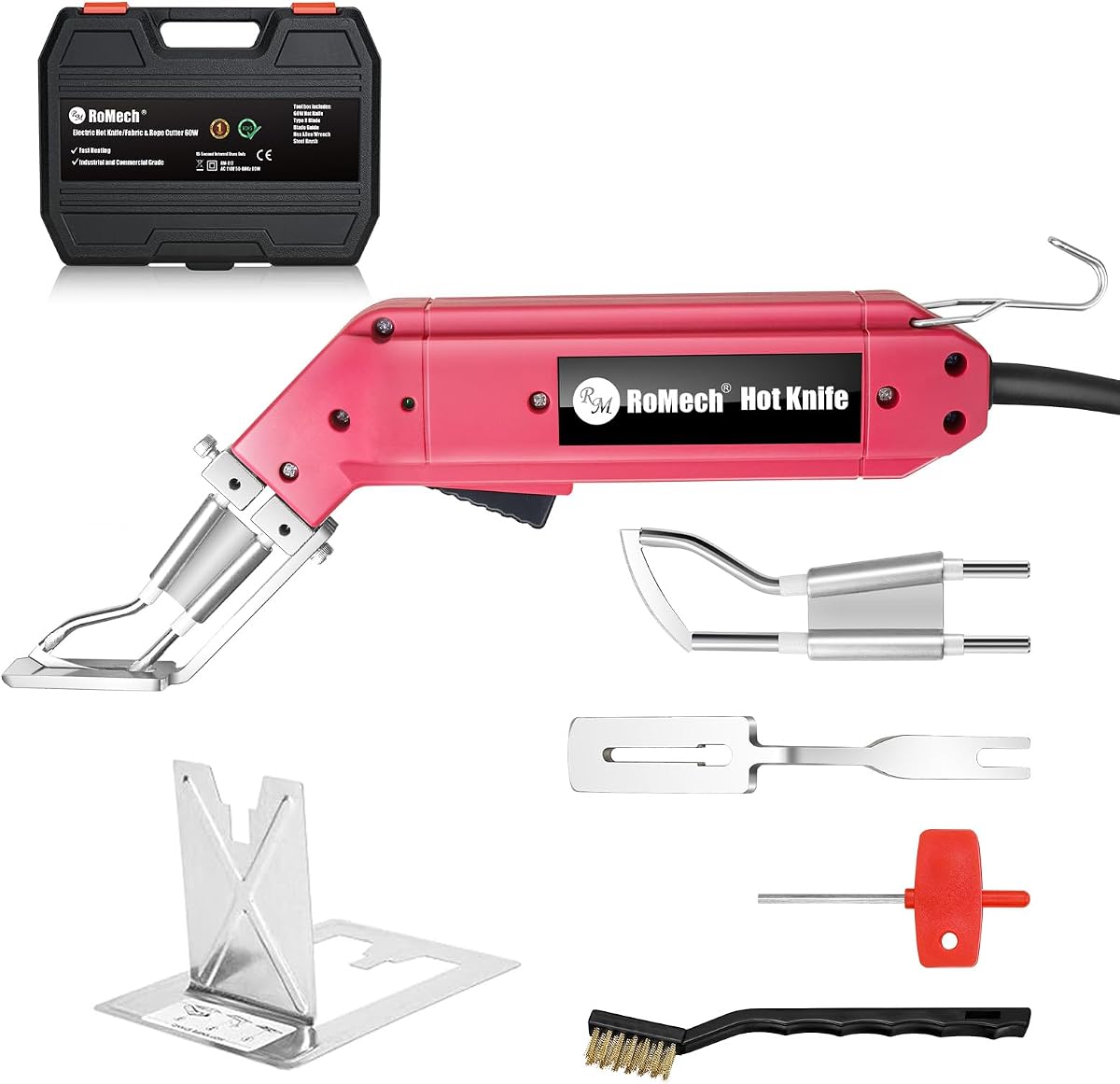
The ROMECH 60W Hot Knife Fabric Cutter is the top choice for rope, webbing, ribbon, belting, canvas, and synthetic fabric. Its supplied rating of 4.6 and commercial-workshop positioning distinguish it from general-purpose foam pens, while the complete carrying case gives it a more professional presentation.
We may earn a commission when you buy through this link, at no additional cost to you.
The central benefit is the fused edge produced by the heated blade. As the tool passes through synthetic cord, canvas, webbing, or belting, it cuts and seals the material in one movement, reducing the fraying that often remains after conventional scissors or craft blades. This is especially valuable for rigging preparation, upholstery work, marine line, and packaging tasks.
A 60W pure copper inductive coil is specified for rapid heating and even distribution along the blade, helping avoid cold spots that could create incomplete or jagged edges. The stated compatibility extends from lightweight cloth and cord to nylon rope and polyester straps. The kit includes the R-type blade, a guide, hex wrench, cleaning brush, and hard case.
Choose this cutter when preventing frayed rope ends and producing sealed fabric edges are central to the task. It is less obviously suited to thick foam or rigid plastic, which gives the earlier general-purpose options an advantage. For dedicated rope, ribbon, and textile work, however, its specialized blade, clean accessory organization, and production-oriented design make it the most premium-specific recommendation here.
The heated blade performs two related jobs at once: separating the material and fusing its edge. That combination reduces cleanup and helps prevent loose fibers from spreading after the cut.
The pure copper inductive heating system is intended to reach working heat quickly while avoiding localized cold spots. Consistent heat supports cleaner results when moving across different synthetic materials.
We may earn a commission when you buy through this link, at no additional cost to you.
The Komsepor Foam Cutter is built for users who need a broader range of cutting power and blade shapes than a compact hot wire pen offers. Its supplied rating of 4.3 reflects a generally positive reception, while the 20–200W range and 14 precise settings make it an adaptable choice for detailed and deeper foam cuts.
We may earn a commission when you buy through this link, at no additional cost to you.
Six blades include 2-inch, arc, and 6-inch options, allowing users to move from fine detailing and grooves to deeper straight cuts. Short and long blades fit the same handle, which simplifies the tool collection and reduces the need to switch between entire devices. A screen makes the selected setting visible during work.
Active air cooling is a meaningful distinction for sustained cutting at the upper end of the power range. The stated material range includes lightweight foam, KT board, EPS, XPS, Styrofoam, polyester foam, sponge, cord, cloth, and rope. A cleaning brush is included, and the listing also mentions performance testing before shipment and a 30-day return or replacement policy.
This model makes sense for serious crafters, model builders, signage workers, and users moving from lightweight sheets into thicker rigid foam. It is less attractive for someone wanting the smallest possible tool, but the cooling system, six-blade system, and broad output range justify its larger design. It is a strong all-round foam cutter for projects that may outgrow a simple entry-level model.
The interchangeable blade set covers fine work, curved cutting, grooving, and deeper passes. Keeping all blades in one handle simplifies setup and makes it easier to match the blade to the cut.
Active air cooling helps the tool maintain smooth performance during demanding work. It is a meaningful advantage over small pens designed mainly for light craft foam and short sessions.
We may earn a commission when you buy through this link, at no additional cost to you.
The GOCHANGE 18W Hot Knife Cutting Tool is a versatile foam-carving package for medium and low-density materials. Its supplied rating of 4.2 reflects steady user satisfaction, while three cutting configurations make it useful for both shaping blocks and producing more precise outlines or lettering.
We may earn a commission when you buy through this link, at no additional cost to you.
The package includes 12cm and 7cm wand-style hot knives, an 18cm bow blade, replacement bow wire, an 18W adapter, and a holder. The shorter wand reaches 100°C in five seconds and has a maximum temperature of 280°C, while the 12cm wand can reach 350°C. The bow blade is stated to stabilize around 200°C.
The product data provides unusually practical guidance for a compact cutter. It recommends the 7cm wand for 1–4cm low-density boards and the 12cm wand for 1–7cm material. A preheat-and-slow-feed method is advised for denser foam, while low-density material benefits from a faster movement to avoid scorching.
This tool is ideal for teachers, students, art students, and hobbyists making costume pieces, models, signs, or decorative objects. It should not be treated as a heavy-duty cutter for hard, high-density boards. Within its stated range, the clear configuration system and detailed operating advice make it especially approachable for newcomers.
The two straight wands suit different foam thicknesses, while the bow blade provides a wide cutting method for slabs and dimensional pieces. The combination reduces the need for separate tools in basic foam work.
The recommended preheat times, feeding techniques, and cooling breaks help users adapt to material density. These practices are more useful than treating every foam board as though it behaves identically.
We may earn a commission when you buy through this link, at no additional cost to you.
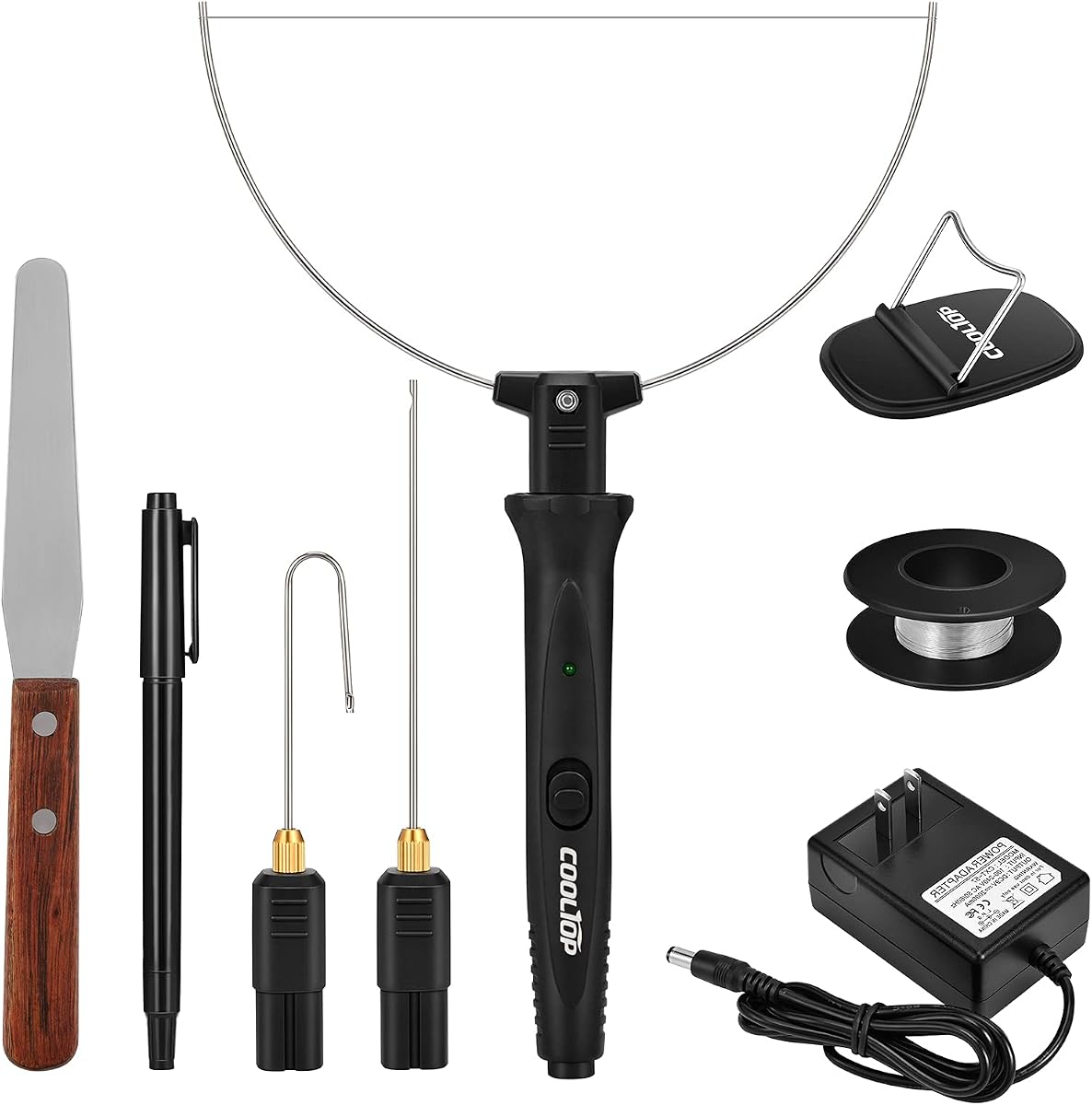
The Cooltop Foam Cutter is a straightforward hot wire pen for low-density foam, foam board, pearl cotton, EPP, KT board, EPS, and similar soft material. Its supplied rating of 4.2 places it among the more highly rated compact options, although its intended material range is narrower than that of full blade-style hot knives.
We may earn a commission when you buy through this link, at no additional cost to you.
The cutting pen reaches its stated 100°C operating temperature in approximately ten seconds, allowing users to begin working quickly. A three-in-one arrangement supplies a hot wire tip, a holing tip, and an engraver tip. This range makes it possible to create outlines, pierce controlled holes, and add surface details without purchasing separate heated implements.
Safety and convenience are addressed with an on/off button, an LED reminder light, overheat protection, and a heat-safe tip-changing design. The included cleaning pen removes residue from the working ends, while replaceable wires and tips simplify maintenance. The tool is made from stainless steel and plastic and can cut foam from different angles.
This cutter suits beginners, families, and school projects that involve light foam shapes, decorations, and basic engravings. It is not a suitable choice for very dense or hard material, and the instruction to rest after 30 minutes should be followed. Within its compact remit, it offers a friendly combination of quick heating, interchangeable functions, and simple controls.
The heating, holing, and engraving tips provide enough versatility for many small foam projects. Users can change functions without carrying a larger blade-style cutter.
A ten-second warmup reduces setup delays, while replaceable elements and the supplied cleaning pen simplify upkeep. The LED helps users confirm that the pen is powered.
We may earn a commission when you buy through this link, at no additional cost to you.
The GONYTIA 190W Hot Knife Foam Cutter is a strong option for clean, high-volume foam cutting. Its supplied rating of 4.5 is among the best in the group, and the combination of substantial power, four blades, and 16 adjustment levels suits users who regularly work with packaging, sculpture, or rigid foam.
We may earn a commission when you buy through this link, at no additional cost to you.
Two 6-inch blades handle most foam materials, while two 8-inch blades are intended for thicker stock. Stainless steel construction is specified for fast heating and smoother passage through material. The broad adjustment range allows users to select an operating level suited to the job rather than relying on a single fixed temperature.
A folding safety stand helps prevent accidental contact with the hot blade during storage or setup. The package also includes a scraper for blade cleaning and an L-shaped wrench for blade replacement. Stated applications include lightweight foam, KT board, pink foam, polyurethane, polyethylene, EPS, XPS, Styrofoam, polyester foam, sponge, and rubber.
This model is a good fit for dedicated foam fabricators, art departments, packers, and serious model makers. The high output and long blades make it less convenient for delicate one-handed craft work than a compact pen. For larger sheets and repeated cuts, however, the combination of blade length, fast heating, and clean-edge performance is compelling.
The included 6-inch and 8-inch blades support different cut depths and material sizes. Longer blades are particularly useful when users want a straighter edge across broader foam panels.
The folding stand keeps a heated blade from lying directly on the work surface. It makes temporary storage and setup more organized while reducing accidental contact.
We may earn a commission when you buy through this link, at no additional cost to you.
The Honoson 19-Piece Electric Hot Knife Cutting Tool is a compact carving package distinguished by its large accessory selection. Its supplied rating of 3.9 is the lowest among the listed products, so buyers should pay particular attention to the stated operating guidance, but 14 carving blades offer considerable creative flexibility.
We may earn a commission when you buy through this link, at no additional cost to you.
The kit includes an electric hot cutter handle, metal stand, three chuck sleeves, and 14 carving blades. It is intended for shaping foam, wax, plastic, cloth, and faux pumpkins. Light, thin, or soft materials can be cut with a quick, light pass, while thicker or harder material calls for a slower, steadier movement.
A built-in air-cooling mechanism is intended to prevent the handle from heating as the nozzles reach the stated 212°F or 100°C. The metal stand supports the tool while a heated head is removed or changed, helping reduce burn risk. The package includes instructions and is designed for US 110V power.
This product is most appropriate for hobby carvers working on small objects and detailed forms, particularly those who value blade variety. The listing states a working time of 30–45 minutes and recommends turning the power off for a rest. Its lower rating and defined voltage requirement make it a less universal recommendation than the higher-rated models, but for small-scale decorative carving, the accessory breadth remains useful.
The broad blade assortment allows users to select different tip shapes for carving, outlining, and smaller details. Multiple chuck sleeves make changing working ends more convenient.
The handle's air-cooling system and separate metal stand address two different heat-management needs. The stand is useful while changing a heated tip, while cooling helps maintain control during the permitted work period.
We may earn a commission when you buy through this link, at no additional cost to you.
The 8-in-1 Foam Cutter is an approachable hot wire tool for foam boards, Styrofoam, pearl cotton, EPP, EPS, and similar low-density materials. Its supplied rating of 4.3 is solid for a compact craft cutter, and the combination of a thick non-slip handle, metal stand, and clear operating guidance makes it accessible to beginners.
We may earn a commission when you buy through this link, at no additional cost to you.
Despite the 8-in-1 name, the supplied information describes three available cutting options or configurations. The cutting wire is reported to reach a stable working temperature of 100 degrees in about ten seconds. A stated speed range of 10–20 centimeters per minute gives users a practical reference for moving through foam without rushing or dragging.
A switch and LED reminder provide straightforward power status, while stainless steel and plastic construction form the body. The cutting pen can be operated in open environments, and slight smoke or a small amount of foam residue is described as normal during cutting. A metal stand gives the heated pen a dedicated resting place.
This tool is appropriate for home and school craft projects, decorative carving, model making, and commercial artwork where soft foam is the primary material. It is not the right choice for high-density board, rigid plastic, or heavy workshop production. Its strengths are simple handling, rapid heating, and a clear concept that helps novices settle into a steady cutting rhythm.
The thick non-slip handle and visible power indicator help new users maintain control and understand the tool's state. A dedicated stand reduces the temptation to set a hot pen on an unsuitable surface.
The stated 10–20-centimeter-per-minute range gives beginners a practical speed target. Moving steadily within that range can improve edge consistency and reduce scorching.
We may earn a commission when you buy through this link, at no additional cost to you.
The GOCHANGE 4-in-1 Hot Wire Foam Cutter is a comprehensive kit for soft foam cutting and engraving. Its supplied rating of 4.4 places it well among the stronger options, while the 18W tool combines two wand cutters, a bending-style knife, and an 18cm bow cutter in one package.
We may earn a commission when you buy through this link, at no additional cost to you.
The straight wands reach 160°C in five seconds and 280°C after 20 seconds, with a maximum temperature of 350°C. The bow wire stabilizes at 200°C after approximately ten seconds. This range of timing information helps users distinguish between rapid warmup and the point at which a more stable working temperature is available.
The kit includes an 18W power supply, an on/off safety button, 12cm and 7cm wands, a 5cm bending-style hot knife, an 18cm bow blade, 10m of replacement bow wire, and a cutter holder. The stated application list covers low-density Styrofoam, pearl cotton, EPS, sponge, EPP, Halloween costumes, model making, advertising lettering, and general DIY work.
This set is a good choice for beginners and experienced hobbyists who want several foam-working methods without managing multiple separate kits. The clear limitation is material density: it is not intended for XPS, extruded board, or plastic board. Regular ventilation, a break after more than 30 minutes of continuous work, and prompt cleaning after cooling are necessary to preserve performance.
Two straight wands, a bending-style knife, and a bow cutter cover straight slicing, shaping, engraving, and broader cuts. The range lets users work on both dimensional foam and flat pieces.
The separate heat-up times for the straight wands and bow wire help users judge readiness more accurately. Preheating longer is advised for thicker foam or material with a higher melting point.
We may earn a commission when you buy through this link, at no additional cost to you.
Choosing a hot knife means matching heat capacity, blade style, and controls to the materials you actually cut. The most important factors are material compatibility, temperature control, cut geometry, and the amount of continuous work expected from the tool.
Start with the material you expect to cut most often. Some compact hot wire pens are designed only for low-density foam, pearl cotton, EPP, EPS, and similar soft products. Blade-style hot knives may also handle plastic sheets, cloth, rope, rubber, insulation, or rigid foam. Read the material list carefully because a tool marketed for foam is not automatically suitable for thick XPS, extruded board, or plastic.
Heat control determines how cleanly a tool can move between soft and difficult materials. A wide temperature range is useful for mixed projects, while a digital display and multiple settings help repeat the same result. The Preciva offers 20 reference-based settings, the Komsepor provides 14 settings across a 20–200W range, and the GONYTIA uses 16 levels. Display values should be interpreted according to the manufacturer's instructions.
Blade shape determines the kinds of lines and cut depths the tool can make. Straight blades are versatile for panels, curved blades follow contours, arc blades support grooves and detail, and long blades cover broader cuts. Wire and pen tips excel in light foam but are less suitable for hard stock. Kits with several blade lengths or shapes offer more flexibility than single-tip tools.
Higher power can support deeper cuts and longer working sessions, but it also makes careful handling more important. Active air cooling, copper components, and rapid-heating systems are especially useful for repetitive foam cutting. Smaller tools may need a rest after 20 or 30 minutes, while some products specify a 30–45-minute working window. Treat those limits as operating guidance rather than optional suggestions.
Look for an on/off switch, indicator light, insulated grip, heat-resistant stand, and overheat protection. A metal stand gives heated tips or blades a safe place to rest. Foldable stands are convenient for storage, while insulated handles reduce the chance of burns during longer cuts. Always switch the tool off and allow the working end to cool before changing blades or tips.
Accessories can make a smaller package much more useful. Cleaning brushes and scrapers help remove residue, wrenches make blade changes easier, and spare wires extend the usable life of bow cutters. Holders and stands improve organization, while multiple chuck sleeves can simplify changing working ends. The ROMECH includes a complete hard case, and several foam kits include several cutting configurations.
The blade is only part of a successful cut; the handle, visibility, and movement determine precision. Non-slip or ergonomic grips help maintain a steady path, while a screen can make temperature changes easier to understand. Pen tools are intuitive for outlines and simple shapes, but a larger blade-style cutter usually provides more stability for straight lines, deep cuts, and repeated work.
Begin by reading the instructions supplied with the selected model and identifying the correct blade or tip for the material. Work on a stable, heat-resistant surface in a ventilated area, keep combustible materials away, and place the tool on its stand or in its holder when not in use. Check that the adapter is firmly connected and that the power indicator is illuminated before beginning.
For the first cut, start at a low or moderate setting and use a slow, steady movement. Increase heat gradually if the blade is dragging or fails to seal the material, and move faster through low-density foam to reduce scorching. Dense material generally benefits from preheating followed by a controlled feed. For rope and fabric, keep the blade fully engaged so the heated edge can cut and seal the material in one pass.
Switch off the tool before changing an accessory, and allow the blade or wire to cool before cleaning. Remove residue with the supplied brush, scraper, or damp sponge only after the working end has cooled. Follow any stated rest interval, ventilate the workspace, and store the tool with its blade protected. Regular cleaning and correct resting periods help maintain movement, heat transfer, and cut quality.
Some hot knives can cut plastic, but only models explicitly listed for plastic should be used on it. Soft plastic sheets may work at lower settings, while harder plastics can melt, discolor, or create hazardous fumes. Begin with the lowest suitable temperature, work in a ventilated area, and stop if the material produces excessive smoke or an unpleasant odor.
A hot knife uses a heated blade to cut and often seal material along the blade's edge. A hot wire cutter uses a thin resistance wire that moves through the workpiece, making it especially effective for light foam. Blades generally support deeper cuts and more materials, while wires are compact and effective for simple outlines in soft foam.
Only models with sufficient heat capacity and a suitable blade should be used on thick foam. Compact 18W tools are generally limited to low-density and medium or low-density material, while higher-power tools may handle XPS, XPS-style rigid foam, and thicker sheets. Follow the stated thickness and density limits, and use a slower feed with a brief preheat when appropriate.
A dirty blade, a loose connection, insufficient heat, or a feed speed that is too slow can all produce drag and rough edges. Let the tool cool, clean the blade, check that it is securely fastened, and confirm that it has reached a stable working temperature. Increase heat gradually or move faster through very light material if scorching is the issue.
A small amount of smoke or foam residue can occur during normal operation, particularly with low-density material or a blade that has accumulated debris. Heavy smoke, persistent fumes, or a burning odor are not normal and call for switching off the tool, allowing it to cool, improving ventilation, and cleaning the working end before trying again.
The safe operating interval depends on the model. Some compact cutters recommend a rest after 30 minutes, while the Honoson lists a 30–45-minute working time, and higher-capacity tools may support longer sessions. Follow the product-specific guidance and allow the handle and working end to cool between demanding cutting runs.
Yes, when the tool is designed for those materials. Heated blade models can cut synthetic fabric, canvas, webbing, belting, nylon rope, and polyester straps while sealing edges to limit fraying. Keep the tool moving at a controlled pace and select a temperature suited to the material and blade.
Switch the tool off, disconnect it as directed by the instructions, and let the blade cool completely. A metal stand or holder can support the heated assembly while it cools. Never try to remove a blade or wire while it is hot, because the working end and chuck can remain hot enough to cause burns.
The Electric Hot Knife Plastic Cutter is the strongest overall option because it combines a 4.7 rating, a wide 200–500°C range, ten blades, a carving tip, and a comfortable insulated handle. The ROMECH stands out for rope and fabric, while the Preciva is the most feature-rich choice for users who value a digital display, 20 settings, and automatic overheat recovery.
Prioritize material compatibility first, then choose the tool whose blade geometry and heat capacity match your typical work. Compact hot wire pens suit light foam and beginner projects, while higher-powered blade cutters are better for thick stock, clean edges, and repetitive workshop tasks. Safety features, resting breaks, ventilation, and careful cleaning matter regardless of the model selected.
Finally, check the current product listing, electrical requirements, included accessories, and availability before ordering. Product pricing and configurations can change, and the current version may differ from the details reviewed here. Choose the cutter that matches your materials and workflow rather than selecting on power or accessory count alone.