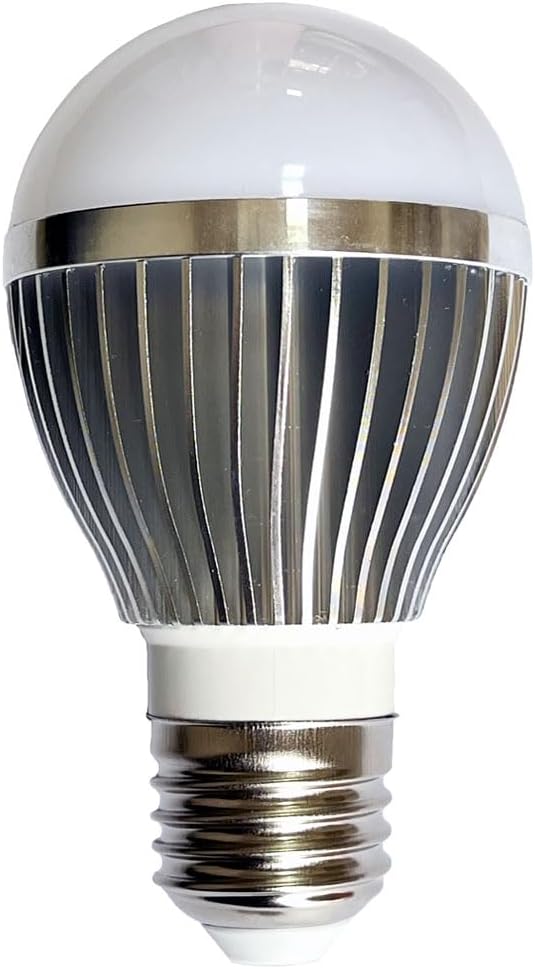
15W 850nm Wide-Angle Illuminator
3.6Editor score
180-degree broad coverage
Up to 25-foot stated range
E26/E27 compatible base
Explore the 10 best IR LED light bulbs for CCTV night vision, comparing wavelength, coverage, wattage, base type, and installation needs in this guide.
IR LED light bulbs are specialized infrared sources designed to improve the night performance of compatible security cameras. Unlike ordinary visible-light bulbs, they emit radiation at selected wavelengths that a camera can detect. Choosing well means matching the wavelength, beam pattern, electrical requirements, and intended installation environment to your surveillance system.
This guide compares ten products listed for IR LED light bulbs, focusing on wavelength, power, coverage angle, socket or board format, operating voltage, and ease of installation. The list includes screw-in fixtures, individual 940nm emitters, and a camera-mounted circuit board. It also distinguishes true IR illuminators from unrelated color-changing bulbs and products with limited information.
Each review explains the strongest feature, practical trade-offs, and ideal buyer for every available listing. The top selections provide the best balance of camera compatibility, broad coverage, and simple installation, while lower-cost components suit builders. Ratings and product details can change over time, and current availability, camera requirements, and pricing should be confirmed before purchasing.
3.6Editor score

4.4Editor score

3.2Editor score
The comparison below evaluates all ten listings by infrared wavelength, output configuration, coverage method, electrical requirements, and installation format. Because these products are not interchangeable, compatibility with the intended camera is the most important distinction.


This 850nm E26 infrared spotlight is the strongest all-around choice in the guide, combining a straightforward screw-in format with a focused beam and a stated maximum range of 30 feet. Its 4.4 rating reflects a generally favorable customer history, although the product’s real-world usefulness still depends on whether the target security camera can detect 850nm infrared illumination.
We may earn a commission when you buy through this link, at no additional cost to you.
The fixture uses three high-power 3W LEDs, providing a useful amount of concentrated output without requiring complicated wiring. A polycarbonate diffuser is intended to spread the illumination across an approximately 45-degree angle. The listing specifies an E26, 120V American socket and describes the bulb as always on because it has no automatic light sensor.
Its principal trade-off is beam direction. A 45-degree cone can produce stronger, more focused illumination than a very wide diffuser, but it requires more careful placement. If the illuminator is mounted beside or above a camera, aim it toward the same area of interest rather than expecting one bulb to cover an entire property. The always-on design is another limitation for users who prefer illumination that switches only when darkness is detected.
This is a good choice for indoor rooms, porches, entries, driveways, and other areas where an existing E26 socket makes installation unusually convenient. It is especially appealing to buyers who know their camera supports 850nm and want a dedicated IR source rather than relying solely on the camera’s built-in illuminator. Verify socket voltage, camera sensitivity, and placement before buying.
The three 3W LED configuration and narrow 45-degree distribution are intended to concentrate infrared energy over a meaningful area. That makes the bulb practical for illuminating a doorway, path, vehicle approach, or other defined zone where a broader but weaker beam could leave important details dim.
An E26 screw base makes this one of the simplest options to deploy. Install the bulb in a suitable lamp holder, position the socket near the camera’s field of view, and keep it within the stated operating voltage. Because it remains on whenever powered, use a separate switched socket if manual control is important.
We may earn a commission when you buy through this link, at no additional cost to you.
This 15W 850nm illuminator offers the most expansive straightforward coverage in the guide, using five LEDs and a milky diffuser to distribute light across approximately 180 degrees. Its 3.6 rating places it behind the top-ranked spotlight, but the broad beam can be a more useful characteristic for large rooms, yards, and driveways than maximum intensity alone.
We may earn a commission when you buy through this link, at no additional cost to you.
The fixture is designed for 850nm-capable CCTV cameras and is claimed to improve black-and-white night footage in darkness. Its stated reach is up to 25 feet, with an emphasis on eliminating central hot spots and dark corners. The E26/E27 base and broad 85-265V voltage range also make it adaptable to more installations than a fixed-voltage household bulb.
The main compromise is that 850nm light can produce a faint red glow. That glow is normal for the wavelength and may be noticeable at close range, so the product is less appropriate where absolutely invisible illumination is essential. The modest rating also suggests that buyer experience has been mixed, and buyers should review current customer feedback for details not captured in the listing.
Choose this bulb when you want to cover a broad area from one socket and your camera is explicitly sensitive to 850nm. It is a sensible value-oriented option for indoor spaces and sheltered outdoor areas where a wide, even field is more important than invisibility. Confirm that the fixture is weather-appropriate for the location and that the camera’s IR-cut filter can switch correctly.
The built-in diffuser is designed to reduce a concentrated hotspot and spread the infrared output across a wide area. This makes the bulb useful when one lamp holder must illuminate a room or exterior section without requiring several narrowly aimed fixtures.
Support for both E26 and E27 bases and an 85-265V operating range simplifies installation in common lamp sockets. Check the socket rating, use a fixture appropriate for the environment, and position the bulb where its broad output overlaps the camera’s night-vision field.
We may earn a commission when you buy through this link, at no additional cost to you.
The 9W 850nm indoor illuminator is a compact three-LED option designed specifically to supplement an existing IR-capable surveillance camera. It has no numerical customer rating, so there is no rating history to support a reliability claim. Its stronger appeal comes from the documented aluminum housing, wide beam, and simple E26/E27 installation.
We may earn a commission when you buy through this link, at no additional cost to you.
Three 3W LED chips are housed in an aluminum alloy body intended to dissipate heat and support a stated service life of up to 50,000 hours. The 180-degree beam provides broad room coverage, while the 85-265V voltage range allows operation across varied electrical systems. One bulb is included and no extra wiring is required.
This product is explicitly limited to indoor use, which reduces its suitability for exposed exterior installations. Its faint visible glow is described as normal rather than a defect. Buyers also need to accept the lack of customer feedback: checking the current listing, manufacturer information, and warranty terms is especially important when a product has no established rating history.
It is best for a home interior, pet camera, or small CCTV installation where an existing lamp holder is available and the camera supports 850nm illumination. The product is not a camera and cannot turn an ordinary phone into a night-vision device. Choose it for indoor supplemental lighting rather than outdoor coverage or fully invisible operation.
The aluminum alloy housing is intended to move heat away from the LED chips, which can support consistent performance during extended operation. As with any high-output light source, allow normal airflow around the bulb and avoid enclosing it in a fixture that traps heat.
This illuminator adds infrared energy to an already compatible camera’s viewing area. It does not record footage, transmit video, or add night vision to a camera that lacks an IR-sensitive sensor, so camera compatibility must be confirmed before installation.
We may earn a commission when you buy through this link, at no additional cost to you.
The CHANZON set consists of 100 individual 5mm 940nm emitter diodes rather than a finished household bulb. Its 4.5 rating is among the strongest in this guide, but the product serves a very different purpose. It is best suited to electronics builders who want to create a custom invisible-light source for a camera, sensor, remote, or experimental circuit.
We may earn a commission when you buy through this link, at no additional cost to you.
The diodes operate from a 1.2V to 1.5V DC source at a stated 20mA, use a through-hole DIP package with two leads, and emit over an approximately 45-degree angle. The long lead is the anode and the shorter lead is the cathode. Their small size allows multiple emitters to be distributed around a camera housing or aimed at separate areas.
The disadvantages are practical rather than product flaws. This package cannot simply be screwed into a lamp holder, and it lacks the diffuser, driver, enclosure, and power supply required for a complete illuminator. Incorrect polarity or current can damage components, so buyers need basic soldering and circuit knowledge or should plan to have the assembly completed by someone with electronics experience.
This is an excellent option for a custom 940nm build, particularly when a standard E26 lamp cannot provide the needed shape or placement. It is not a direct substitute for the screw-in options in this guide. Before buying, consider the current-limiting resistor or driver, heat management, physical mounting, and whether the camera detects 940nm infrared.
Because each diode is a small through-hole component, multiple emitters can be arranged around a camera or directed toward different surfaces. This flexibility is valuable for a custom enclosure, but the array will need an appropriate low-voltage supply and current control.
The listed compatibility includes phototransistors, communication equipment, IR beam sensors, remote controls, Arduino and Raspberry Pi projects, science experiments, and CCTV work. That makes the pack more versatile than a dedicated surveillance illuminator for builders with a broader electronics workload.
We may earn a commission when you buy through this link, at no additional cost to you.
This five-LED 940nm illuminator is the leading option for buyers who prioritize a lack of visible glow. Its 3.2 rating is the lowest numerical score among the reviewed products with ratings, which warrants checking recent customer feedback. Functionally, however, the 940nm wavelength, 180-degree diffuser, and five high-power LEDs directly address discreet CCTV illumination.
We may earn a commission when you buy through this link, at no additional cost to you.
The product is intended only for cameras sensitive to 940nm infrared light. Its stated maximum distance is 20 feet, with 15 feet described as the optimal range, and the broad output is designed to cover an entire dark room without a concentrated spotlight effect. Installation uses a standard E26/E27-style socket at 120V, and the bulb operates whenever it has power.
The main compromise is compatibility. Unlike the 850nm spotlight, which supports several camera types, this fixture is limited to 940nm-capable cameras. Its lower customer rating also means buyers should not treat the invisibility feature as proof of flawless performance. A camera that is optimized for 850nm may not render 940nm illumination effectively.
Choose this illuminator for discreet indoor or sheltered surveillance where a red glow would be noticeable or undesirable. It offers a good balance of wide coverage and substantial output, but only after the camera’s wavelength sensitivity is confirmed. It is less appropriate for users who need compatibility with many camera models or a stronger long-distance result.
The 940nm output is designed to be invisible to human eyes while remaining detectable by compatible night-vision sensors. This is valuable in bedrooms, offices, entryways, and other spaces where even a faint colored glow could reveal the auxiliary light.
Five 3W emitters and a milky polycarbonate diffuser create a roughly 180-degree field of distribution. The result is intended to cover larger indoor areas evenly, although the stated optimal distance is shorter than that of the leading 850nm spotlight.
We may earn a commission when you buy through this link, at no additional cost to you.
This 850nm camera board is a compact illuminator module for builders integrating infrared lighting directly into a compatible CCTV camera housing. Its 4.2 rating indicates generally positive customer feedback, although there is no conventional bulb to install. The board carries 48 small F5 LEDs on a circular platform designed to fit a camera shell with a 50mm diameter.
We may earn a commission when you buy through this link, at no additional cost to you.
Operating from 12V DC, the board provides dense infrared coverage close to the camera. That can be advantageous in a small enclosure where a room lamp would be impractical or visually intrusive. The 53mm board diameter and numerous closely spaced emitters suggest a broad, even illumination pattern, but the product does not publish a precise beam-angle specification.
As a bare board, it requires more technical integration than an E26 product. You need a suitable 12V supply, secure mounting, and a housing that accommodates the board without obstructing the camera. Buyers should also confirm polarity and power requirements against the board and camera design. The stated fit for 50mm camera shells should be checked rather than assumed.
This module is a good choice for a maker building or refurbishing a compact CCTV unit with a 50mm shell. It is less convenient for improving an existing camera through an existing lamp socket. The high emitter count can provide dense coverage, but the board is not a complete camera, power supply, or weatherproof housing.
Forty-eight closely arranged emitters can cast strong, even IR light from a position immediately beside the camera lens. This integrated approach is useful for compact devices and limits the need to mount a separate auxiliary lamp nearby.
The circular board is described as suitable for a 50mm-diameter camera shell and measures 53mm across. Builders should verify the available space, provide a stable 12V source, and ensure that the enclosure protects the electronics from heat and moisture.
We may earn a commission when you buy through this link, at no additional cost to you.
The three-LED 940nm bulb offers a basic screw-in way to add invisible infrared illumination to a compatible security camera. It shares a 3.6 rating with the wide-angle 850nm alternative, but its defining feature is a 940nm output designed to avoid visible glow. A milky polycarbonate diffuser spreads the light over an approximately 180-degree angle.
We may earn a commission when you buy through this link, at no additional cost to you.
The listing cites 20 feet as the effective distance and 10 feet as the optimal range, making it more modest than the higher-output five-LED 940nm model. The E26, 120V base simplifies placement, while the always-on design means a separate switched socket is needed for manual control. The product is explicitly not compatible with dimmers.
Its limitations are concentrated around compatibility and adjustment. A camera must detect 940nm infrared for the added light to improve the image, and dimmer use should be avoided. The modest optimal range also means the bulb should be positioned close to the area that needs detail, rather than expecting it to provide powerful long-distance illumination.
This is a practical option for discreet indoor lighting where 940nm cameras are already in use and a simple E26 fixture is available. Choose the five-LED 940nm model instead when broader output and a longer effective range matter more. Before installation, check camera specifications, socket voltage, and dimmer compatibility.
The standard E26 base allows the bulb to be installed like an ordinary lamp while producing invisible infrared output. A switched holder provides convenient on-and-off control, and a diffuser helps distribute the illumination rather than creating a harsh concentrated spot.
The stated 10-foot optimal range is shorter than that of the top-ranked spotlight. For a room, doorway, or small exterior area, position the bulb near the camera and direct it toward surfaces that might otherwise disappear into shadow.
We may earn a commission when you buy through this link, at no additional cost to you.
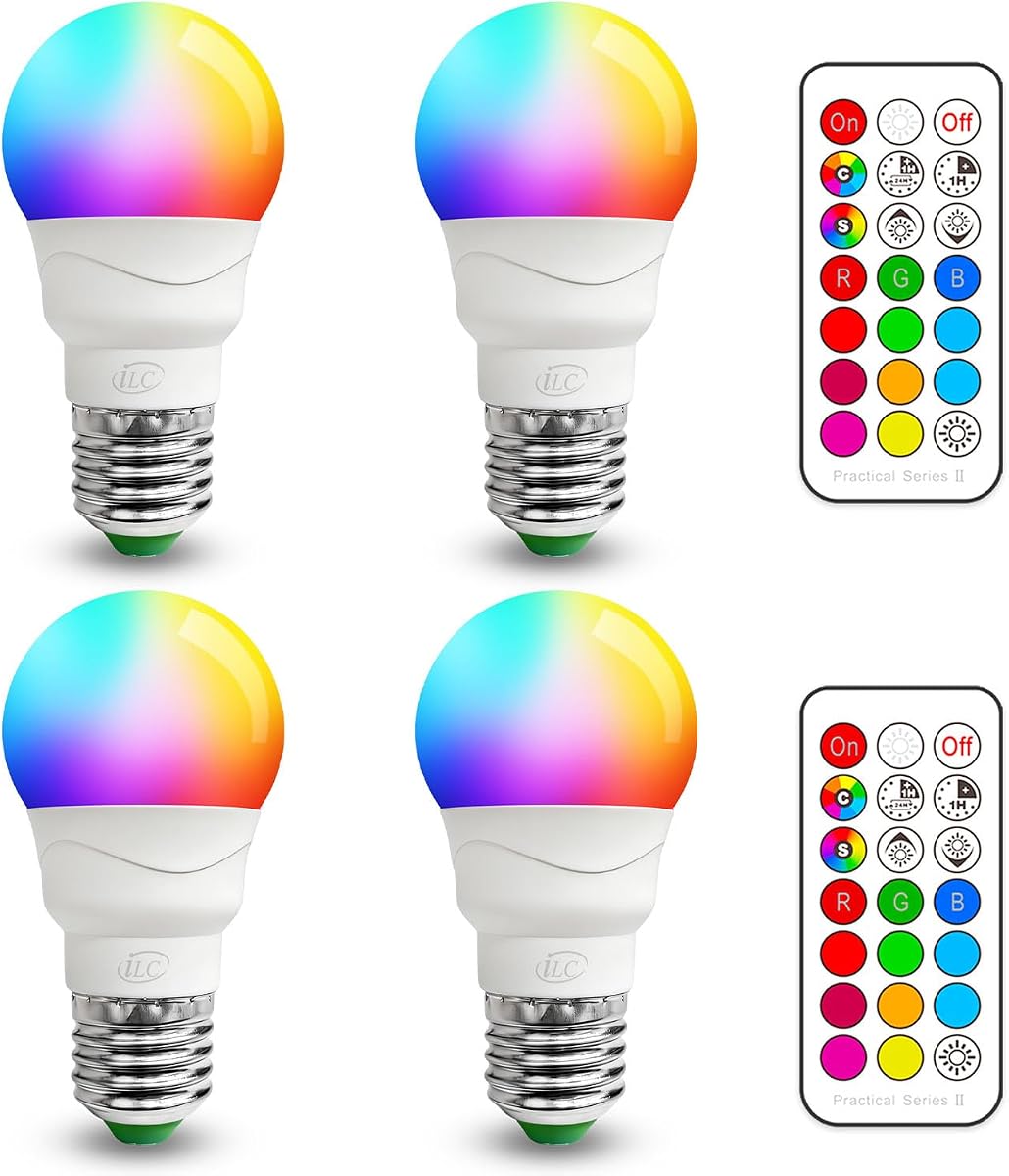
The ILC RGBW bulb is not an IR LED light bulb in the surveillance sense. It is a visible color-changing lighting product that happens to use an infrared remote for control. Its 4.7 rating is the highest among the ten listings, but that score should not be interpreted as evidence of night-vision performance because the product does not emit dedicated surveillance IR.
We may earn a commission when you buy through this link, at no additional cost to you.
The four-bulb pack produces 450 lumens, includes a warm-white mode at 2700K, and offers 12 colors with three brightness levels. The bulbs have a 270-degree beam, a 5W power draw described as equivalent to a 40W incandescent bulb, and an E26 base. Remote controls color, mode, timing, brightness, and synchronization among multiple bulbs.
For IR-focused buyers, this is a functional mismatch. Visible light can improve ordinary camera images in some circumstances, but it may also make subjects easier to see, expose details that would otherwise remain hidden, and alter the atmosphere of a space. The term infrared in the title refers to the remote-control method, not the light source. It also should not be used with dimmer switches.
It is worth considering only for visible accent lighting that accompanies a surveillance system. The strong rating, color selection, timing function, warm-white mode, and four-pack make it a capable decorative bulb, but it should not replace an 850nm or 940nm illuminator. Buyers seeking invisible or camera-specific IR output should move to one of the dedicated products in this guide.
Twelve colors, three brightness levels, flash, smooth-cycle, and one-button night-light modes make this a versatile visible bulb. It is intended for bedrooms, porches, corridors, chandeliers, ceiling fans, and accent areas where atmosphere matters more than covert surveillance illumination.
The included infrared remote supports timing, color selection, and synchronization across compatible bulbs. A memory function can retain the last selected color or mode, while a 24-hour cycle can automate operation in courtyard, court, or corridor settings.
We may earn a commission when you buy through this link, at no additional cost to you.
This 980nm E26 spotlight is a specialized option for cameras specifically designed to detect 980nm infrared illumination. Its 4.5 rating is among the strongest in the guide, and the three-LED configuration provides a familiar alternative to the top-ranked 850nm model. The 45-degree beam concentrates output over a defined area.
We may earn a commission when you buy through this link, at no additional cost to you.
The product is claimed to cover distances of up to 30 feet, with 20 feet described as the effective range and 15 feet as optimal. A polycarbonate diffuser supports more uniform distribution than a bare emitter. Installation uses an E26, 120V socket, and there is no light sensor, so the bulb remains on whenever powered.
The biggest issue is camera compatibility. Although the listing also references support for 850nm and 940nm camera types, the product itself emits 980nm, and many consumer cameras are optimized specifically for 850nm or 940nm. Unless the camera documentation clearly identifies 980nm sensitivity, this is a riskier purchase than the broadly used 850nm option.
Choose the spotlight when your camera has documented 980nm support and you need a concentrated source for a doorway, path, or other defined target. It is not the most convenient choice for uncertain compatibility, and the always-on behavior may require a switched socket. Confirm the camera’s spectral sensitivity before installation.
A 45-degree beam is useful when the surveillance target can be defined within a narrower area. The three 3W emitters and diffuser can provide more concentrated illumination than a wide-angle setup, helping define facial, vehicle, or entry details at moderate distances.
The value of this product depends on precise camera compatibility. Review the camera’s IR specifications or test the wavelength before relying on it for critical coverage. A 980nm source will not necessarily produce the same performance as the more common 850nm and 940nm options.
We may earn a commission when you buy through this link, at no additional cost to you.
The listing associated with ASIN B07TDP67LR does not provide enough factual information to evaluate it as an IR LED light bulb. The supplied product record contains no title, description, image, rating, or specification. As a result, it cannot responsibly be compared with the nine products that have documented wavelength, construction, and installation data.
We may earn a commission when you buy through this link, at no additional cost to you.
The absence of information makes wavelength the first unresolved issue. A useful surveillance illuminator should specify whether it emits 850nm, 940nm, or another wavelength, because that determines camera compatibility. Output, beam angle, operating voltage, base type, enclosure rating, and included components are also unknown, so buyers cannot assess whether the item is a ready-made bulb, an individual diode, or a camera board.
Its main practical drawback is the risk of an unsuitable purchase. A visible-light bulb, a non-IR component, or an illuminator for the wrong electrical system could appear under a broad search but fail to improve the intended camera. Without ratings, there is also no customer feedback available to help assess quality, installation difficulty, or long-term reliability.
This entry should be considered only after the live listing supplies enough information to confirm that it is genuinely infrared and compatible with the planned camera and installation. Check the wavelength, dimensions, base or board format, power requirements, environmental rating, and package contents. If those details remain unavailable, choose one of the fully documented options instead.
Do not assume that a search-result position establishes that the item is a suitable IR illuminator. Review the current product page for a clear description, technical specifications, and compatibility information before making a decision.
For a security installation where dependable camera compatibility is essential, a model with a stated wavelength, known electrical requirements, and defined coverage is easier to evaluate. The documented products in this guide provide that information.
We may earn a commission when you buy through this link, at no additional cost to you.
The most important buying factors are camera wavelength sensitivity, required coverage, electrical format, and installation environment. Review each factor before choosing a bulb because a visually similar product may be unable to produce useful night-vision images.
Short summary: Match the bulb wavelength to the camera before considering output or coverage.
Short summary: Choose broad coverage for rooms and focused output for defined outdoor targets.
Short summary: Match beam angle to placement, using wide angles for rooms and narrow angles for targets.
Short summary: E26 bulbs offer convenience, while boards and diode packs require technical integration.
Short summary: Compare the full LED and electrical configuration, not emitter count alone.
Short summary: Indoor ratings do not transfer outdoors, so use protected fixtures and verify environmental limits.
Short summary: Choose 940nm for invisibility, but accept a possible glow when 850nm is required.
Short summary: Verify dimmer limits, use a switched socket if needed, and do not confuse controls with IR output.
Begin by identifying the camera’s supported IR wavelength and reviewing the bulb’s electrical requirements. Remove power from the fixture before installation, confirm that the socket is compatible, and make sure the enclosure is suitable for the location. For a screw-in model, install the bulb securely but avoid overtightening it. For a bare board or individual diode, follow the appropriate low-voltage circuit and polarity guidance before connecting power.
Position the illuminator so its beam overlaps the camera’s viewing area. A wide-angle bulb can sit farther from the camera, while a focused spotlight should be aimed directly at the important subject. Test the setup at night with the camera’s IR-cut filter switching normally. Compare footage before and after adding the illuminator, then adjust the angle, distance, exposure, and camera placement to reduce glare, reflections, and overexposure.
Clean the diffuser or lens with a soft dry cloth and keep the fixture free of dust, insects, and moisture. Do not touch exposed LED chips or electrical contacts. Monitor for flickering, unusual heat, discoloration, or unstable output, and stop using the product if any of these signs appear. Replace screw-in bulbs in a standard lamp holder; have camera-mounted boards and custom diode arrays serviced or modified only when the circuit and enclosure are understood.
An IR LED light bulb supplies infrared illumination that compatible security cameras can detect in darkness. It can brighten subjects that would otherwise appear as silhouettes, particularly in monochrome night vision. The bulb does not record or transmit footage, and it cannot add night vision to a camera that lacks infrared sensitivity.
Choose 850nm when the camera supports it, strong illumination is the priority, and a faint red glow is acceptable. Choose 940nm when the camera specifically supports that wavelength and discreet, invisible operation matters. Camera compatibility must come first because an IR bulb outside the camera’s supported range may add little or no useful illumination.
They work only when the camera’s imaging sensor is sensitive to the selected infrared wavelength and the camera’s filters and settings allow the IR light to be recorded. A basic phone camera or non-IR surveillance camera may show the glow but may not deliver improved night footage. Check the camera manual or manufacturer specifications before installation.
Some dedicated bulbs do not support dimming, and the 940nm E26 model in this guide is specifically marked as incompatible with dimmers. Even products that physically fit a dimmer may flicker, change output, or fail to switch normally. Use a standard on-and-off circuit unless the manufacturer explicitly approves dimming.
A faint red glow is a normal characteristic of 850nm infrared illumination because some visible light is present at the edge of human perception. The glow can help identify an operating illuminator, but it also means the source is not completely invisible. A compatible 940nm illuminator is the appropriate choice when stealth is important.
Only if the bulb and fixture are rated for the intended outdoor conditions. A standard indoor socket may expose the product to rain, moisture, dust, or temperature extremes, and the 9W 850nm model is explicitly indoor-only. Use a weather-protected enclosure, avoid water entry, and follow all local electrical safety requirements.
The listed products state maximum distances ranging from about 20 to 30 feet, with some operating optimally at closer distances of 10 or 15 feet. Actual performance depends on wavelength, beam angle, camera sensitivity, surface reflectivity, ambient conditions, and the scene. Treat published ranges as guides and test the illuminator where the camera will actually operate.
A finished screw-in bulb is a complete household-style fixture with a specified base and voltage, making it easy to add to an existing socket. A camera-mounted board is a bare component that must be integrated into an enclosure, connected to a suitable 12V supply, and protected from the environment. The board can suit compact custom cameras, but it requires more technical work.
The 850nM E26 Infrared Spotlight is the strongest overall pick because it combines three high-power LEDs, a focused 45-degree beam, a stated 30-foot maximum range, and exceptionally simple installation. The 15W 850nm Wide-Angle Illuminator is the best value-oriented option when broad room coverage matters, while the five-LED 940nm fixture is the leading discreet choice for cameras that support invisible infrared illumination.
Prioritize wavelength compatibility before any other feature. Then match the beam angle, output, range, socket, voltage, and environmental requirements to the exact camera and installation. Builders can consider the CHANZON diode pack for a custom 940nm array or the 48-LED 850nm board for a 50mm camera housing, but both require more technical work than a finished screw-in bulb.
Product details, ratings, availability, and pricing can change, so check the current listing and camera documentation before purchasing. This guide is intended to simplify technical comparisons, but the final choice should always be the one that safely matches your camera’s supported wavelength and the environment where the illuminator will operate.