
HP 17.3-inch Ryzen 5 Laptop
4.6Editor score
Ryzen 5 7430U processor
16GB DDR4 memory
1TB solid-state storage
Windows 11 Pro
A laptop for engineering students must balance computational performance, display quality, portability, and practical connectivity. Coursework may involve circuit diagrams, spreadsheets, CAD, statistical analysis, programming environments, and video calls, but the right model also needs to remain dependable between classes. This guide covers ten options for different needs and budgets.
The products were compared using their stated processors, memory, storage, displays, ports, connectivity, battery claims, weight, and included software. Particular attention was given to the balance between capability and portability rather than raw specifications alone. The list includes basic study laptops, higher-powered Core i5 and Ryzen 5 systems, large displays, and bundles with added storage.
Each numbered review explains who the laptop suits, which strengths matter most, and where compromises appear. The top picks represent the strongest balanced, premium, and value-oriented choices within this group. Product listings, configurations, availability, and offers can change, so readers should verify the current specifications and accessories before purchasing.
4.6Editor score

4.3Editor score

5.0Editor score
As an Amazon Associate we earn from qualifying purchases.
The comparison highlights the processor, memory, storage, display, and connectivity differences among all ten laptops, making it easier to identify the model that matches your engineering workload and preferred level of portability.


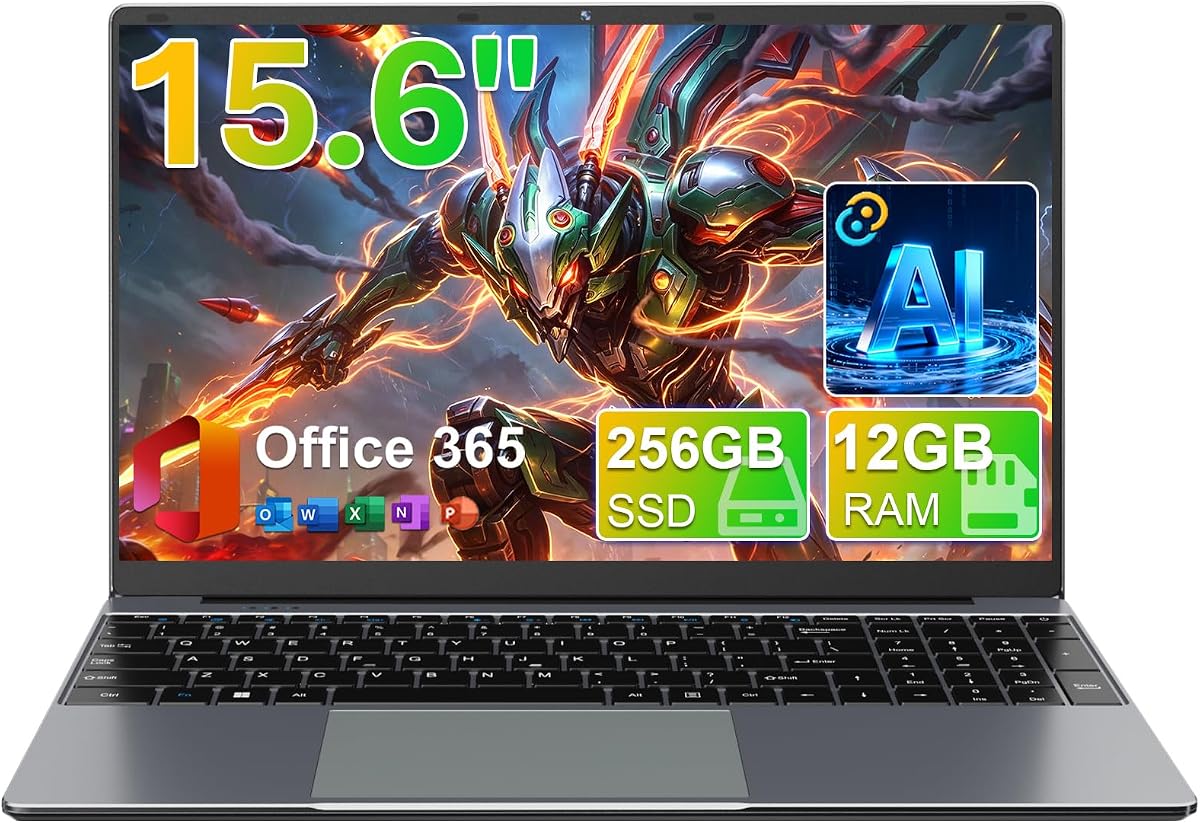


This Windows 11 laptop combines an Intel Core i3 processor, 12GB of RAM, and a 256GB SSD in a portable 15.6-inch design. Its 4.5 rating reflects a well-rounded configuration for college study, office work, online classes, and HD streaming. It is a practical choice for students who need more capability than a basic browser machine without carrying a large workstation.
We may earn a commission when you buy through this link, at no additional cost to you.
The standout strength is the balance between memory and everyday responsiveness. Twelve gigabytes gives students room to keep a browser, video meeting, document editor, and several learning applications open at once. A full HD anti-glare panel also makes longer lectures and spreadsheet work more practical, while the backlit keyboard is useful during evening study sessions.
Connectivity is another important advantage. Three USB 3.0 ports, HDMI 2.1, USB Type-C with charging support, Wi-Fi 6, Bluetooth 5.2, and a TF card slot provide more flexibility than many compact alternatives. The main limitations are the modest SSD capacity and reliance on integrated Intel UHD Graphics 620, which may not satisfy demanding CAD, rendering, or advanced simulation work.
This is a strong recommendation for general engineering coursework, Python, MATLAB, statistical analysis, documentation, and online collaboration. Students who need specialized engineering software should check its specific requirements first. For everyone else, it offers a useful mix of memory, screen quality, portability, and practical connections.
The 12GB memory configuration is the key practical advantage. It leaves more room for concurrent applications, large spreadsheets, browser tabs, and video calls than machines equipped with only 4GB, making the laptop better suited to a demanding academic schedule.
The 1920 by 1080 anti-glare screen offers a useful balance of detail and readability, while the backlit keyboard supports late-night work. Together, they make the system comfortable for lectures, note-taking, and extended document preparation.
We may earn a commission when you buy through this link, at no additional cost to you.
The HP Stream 14-inch prioritizes memory, storage, and affordability with 16GB of RAM, a 64GB eMMC drive, and a 1TB docking-station storage bundle. Its Intel Celeron N4120 is designed for consistent daily responsiveness rather than intensive engineering computation. The result works best for coursework, research, office applications, media, and remote classes.
We may earn a commission when you buy through this link, at no additional cost to you.
Its most appealing feature is the generous 16GB memory relative to the entry-level processor. Students can keep many browser tabs, documents, and communication tools open with less concern about memory pressure. The included seven-in-one dock, 1TB storage, 32GB microSD card, cables, and cleaning cloth make the package especially relevant for users who want a desk setup and more file capacity.
The trade-offs are the modest Celeron N4120 and a 1366-class HD-class 14-inch display described in the listing. The processor is appropriate for spreadsheets, note-taking, coding lessons, and lighter engineering applications, but it is not a strong foundation for advanced simulation, large datasets, or demanding CAD work. Wi-Fi 5 also trails newer Wi-Fi 6 options elsewhere in this list.
Choose the Stream if your definition of an engineering-student laptop emphasizes memory, storage, and a complete accessory bundle. It is well suited to budget-conscious students who will mostly use cloud applications and general academic tools. Students running specialized engineering software should inspect the software's processor and graphics requirements before settling on this configuration.
The included dock and extensive storage are especially useful in a dorm or home workspace. They can reduce dependence on a single connection while making it easier to organize lecture recordings, design files, and larger project folders.
With 16GB installed, the Stream can support a busier software mix than most basic models in the roundup. That makes it worthwhile for students who routinely keep documentation, browser research, spreadsheets, and remote-learning tools open together.
We may earn a commission when you buy through this link, at no additional cost to you.
This HP 14-inch laptop combines an Intel Processor N150 with 8GB of RAM, 128GB UFS storage, and a 3.24-pound chassis. Its 4.4 rating and stated all-day battery performance make it appealing for students traveling between lectures, labs, and study spaces. The processor is positioned for professional tasks, research, presentations, and ordinary engineering coursework.
We may earn a commission when you buy through this link, at no additional cost to you.
The N150 is a four-core chip that reaches up to 3.6GHz, providing more apparent processing capability than the smallest dual-core alternatives. Eight gigabytes of memory is adequate for office applications, web research, code editors, and video meetings, while Wi-Fi 6, USB-C, and HDMI 1.4 support connected work. The included one-year Microsoft 365 subscription helps new students begin with familiar productivity tools.
The main limitations are the small 128GB storage allocation and 8GB memory. Engineering students may quickly need external storage for software, datasets, and simulation packages, while heavier multitasking can make 8GB feel constrained. The listing calls the display 14-inch FHD in one area, so buyers should also confirm its exact resolution on the current product page.
This is a good middle-ground pick for general study, introductory programming, data review, and communication-heavy engineering programs. It offers a portable format, modern wireless support, and adequate processing power for routine academic work. It is not the strongest choice for rendering, large simulations, or students who need to retain many large applications on internal storage.
The claimed battery life of up to 11 hours and 3.24-pound weight make the laptop easy to carry between classes. Those convenience features can be as valuable as peak processing performance for a student moving across campus all day.
Wi-Fi 6 is beneficial in busy campuses, while USB-C and HDMI 1.4 allow the system to connect to an external display. That flexibility makes it easier to move between a personal setup and shared project space.
We may earn a commission when you buy through this link, at no additional cost to you.
The HP 2026 Essential Laptop is built around an Intel N150 processor, 4GB of LPDDR5 memory, and 128GB of UFS storage. It targets everyday tasks such as browsing, document editing, email, streaming, and light productivity. At 3.24 pounds, it prioritizes mobility and straightforward daily use over demanding engineering performance.
We may earn a commission when you buy through this link, at no additional cost to you.
Its strongest features include Wi-Fi 6, Bluetooth 5.4, a 10Gbps USB-C port with DisplayPort 1.2, two USB-A ports, HDMI, and a card reader. The anti-glare 14-inch display, 720p camera, dual microphones, and stated battery figures of up to 11 hours for video playback make it well aligned with online classes and communication. Windows 11 Home and one year of Microsoft 365 Personal are also included.
The difficult compromise is 4GB of memory. That amount is workable for one or two basic applications, but it is not ideal for running CAD, statistical environments, development tools, and a video conference simultaneously. The 1366 by 768 display and 128GB storage also place it below the more comfortable configurations in this roundup for sustained academic work.
It is best for students whose current needs are centered on lectures, research, note-taking, and communication, particularly those who value light weight and modern connections. Before buying, verify whether at least 8GB or 16GB of memory is required by your engineering applications. If so, a higher-memory option will serve you better.
The port selection is unusually useful for an entry-level system. USB-C display output, HDMI, multiple USB-A ports, and a card reader cover common student accessories without requiring a large assortment of adapters.
The stated mixed-use battery figure and low weight support all-day study. This makes the Essential Laptop more appealing for frequent campus carry, provided its memory and storage are sufficient for the intended applications.
We may earn a commission when you buy through this link, at no additional cost to you.
This 15.6-inch student laptop pairs a Celeron J4105 quad-core processor with 12GB of RAM and a 256GB SSD. Its 4.6 rating reflects a combination of useful specifications, a high-resolution display, and flexible physical design. It is best suited to document-heavy coursework, research, communication, and lighter technical applications.
We may earn a commission when you buy through this link, at no additional cost to you.
The 1920 by 1080 16:9 display is the most notable feature for academic work, providing more visible detail than the HD panels in several neighboring models. A hinge that opens flat to 180 degrees adds practical flexibility for sharing, presenting, or changing viewing position. The 7000mAh battery, USB 3.2, USB Type-C, and Mini HDMI support regular mobile use.
The J4105 processor is the principal limitation. Although its four cores can manage normal productivity tasks, it is not well suited to computationally intensive CAD, rendering, large simulations, or other engineering software with strict processor requirements. The unusual claim of 5G Wi-Fi should also be confirmed with the seller, because the listed connectivity specification does not otherwise explain the technology.
Choose this model if screen quality, memory, expandability, and a flexible display position matter more than maximum processing power. Its 12GB RAM and full HD panel make it more comfortable for long study sessions than many basic alternatives. Heavy engineering workloads call for one of the Core i5 or Ryzen 5 models in this guide.
The full HD 15.6-inch screen provides a useful balance of document space and portability. It gives students more room to inspect code, compare diagrams, edit spreadsheets, and view recorded lectures without relying on an external monitor.
The 180-degree hinge can be useful during collaboration, demonstrations, or desk-based work. It is a modest physical convenience, but one that adds versatility to an otherwise conventional student-laptop design.
We may earn a commission when you buy through this link, at no additional cost to you.
The HP 14-inch Willow configuration is a portable everyday laptop built around the Intel N150, 4GB of LPDDR5 memory, and 128GB of UFS storage. Its 4.3 rating reflects a capable entry-level platform for browsing, document editing, video streaming, and light productivity. The 14-inch chassis weighs 3.24 pounds and includes Windows 11 Home.
We may earn a commission when you buy through this link, at no additional cost to you.
Modern connectivity strengthens its appeal. Wi-Fi 6, Bluetooth 5.4, a USB-C port supporting DisplayPort 1.2, two 5Gbps USB-A ports, HDMI, and a media card reader cover most common student accessories. A 720p camera, dual-array microphones, and dual speakers support classes and online meetings, while the stated battery life reaches up to 11 hours for video playback.
However, 4GB of RAM is the limiting factor for modern multitasking. Even light engineering coursework can involve several applications at once, and 128GB leaves limited room for engineering software, virtual machines, and large datasets. While the N150 itself is suitable for ordinary productivity, the memory configuration narrows the machine's long-term flexibility.
This is a sensible option for a student focused on browsing, writing, video conferencing, and compact portability. It works particularly well for first-year students who have not yet identified demanding software needs. Students entering CAD, machine learning, graphics, or simulation-heavy tracks should prioritize more memory and storage or a more capable processor.
At 3.24 pounds, the Willow model is straightforward to place in a backpack and carry between buildings. Its compact dimensions also reduce the desk space required when working in a library or shared study room.
USB-C display output, HDMI, and multiple USB-A ports make it possible to connect an external monitor, storage device, mouse, and wired network adapter when the assignment demands a larger workspace.
We may earn a commission when you buy through this link, at no additional cost to you.
The HP Rose Gold laptop combines an Intel N200 quad-core processor, Windows 11 Home, and 640GB of combined storage from a 128GB UFS drive and a 512GB PLUSERA docking set. Its 5.0 rating makes it the highest-rated option here, although ratings should be considered alongside the more constrained 4GB memory configuration.
We may earn a commission when you buy through this link, at no additional cost to you.
Storage is the main attraction. Students who need to retain datasets, lecture videos, coursework archives, and software installers can use the internal drive while taking advantage of the additional bundled capacity. The N200 reaches up to 3.7GHz across four cores, includes 6MB of cache, and should deliver adequate performance for web research, office work, code editing, and introductory technical applications.
The listing contains an important inconsistency: the product title refers to a 14-inch laptop, while the description specifies a 15.6-inch 1280 by 720 display. It also provides only a general DDR4 memory statement without a precise installed amount in the feature bullets, despite the title stating 4GB. Buyers should verify both the physical size and memory before ordering.
As a value-oriented pick, it is attractive when storage and included accessories matter more than maximum computing power. The numeric keypad is also helpful for entering numeric data, and the camera privacy shutter provides a straightforward privacy benefit. It is less appropriate for advanced engineering software or large simulations, where processor performance and upgradable memory would be more valuable.
The internal drive and docking set provide a generous total capacity for lectures, documents, media, and project files. This is particularly useful for students who want to keep coursework organized without relying entirely on cloud storage.
The numeric keypad makes repetitive data entry more convenient, while the camera privacy shutter helps when a webcam is not needed. One year of Microsoft 365 adds familiar tools for documents, spreadsheets, and presentations.
We may earn a commission when you buy through this link, at no additional cost to you.
This HP 14-inch bundle shares the core configuration of the Willow model: an Intel N150 processor, 4GB of LPDDR5 memory, 128GB of UFS storage, and a 3.24-pound design. Its distinguishing addition is a thin 500GB portable drive, bringing the listed combined capacity to 628GB. The 4.3 rating reflects a capable everyday configuration.
We may earn a commission when you buy through this link, at no additional cost to you.
The external drive gives students more room for coursework, videos, design files, and backups without changing the laptop's internal storage. Wi-Fi 6, Bluetooth 5.4, USB-C with DisplayPort 1.2, two USB-A connections, HDMI, and a card reader make the system easy to connect to peripherals. A 720p camera, dual microphones, and dual speakers support virtual classes.
Its limitations match those of the similarly configured Willow model. Four gigabytes of memory is the more important concern for engineering students, because it can restrict concurrent applications and make more demanding software less comfortable. The 1366 by 768 anti-glare panel is suitable for ordinary study but offers less workspace than a full HD display.
Choose this version over the standard Willow bundle if the additional portable drive appeals to you, particularly for offline storage or regular backups. It remains best for general engineering study, introductory programming, and administrative coursework. Students who will run advanced technical applications should save up for a higher-memory or higher-performance configuration.
The included portable drive provides additional capacity without requiring a full internal upgrade. It is a practical way to separate project files, backups, lecture recordings, and media from the limited space available on the internal UFS drive.
The USB-C display function, HDMI, USB-A ports, and wireless capabilities support both mobile and desk-based use. These connections are valuable when a student needs to move between a personal laptop setup and a shared laboratory workstation.
We may earn a commission when you buy through this link, at no additional cost to you.
The Dell DC15250 pairs a 15.6-inch Full HD display with an Intel Core i5 1334U processor and Windows 11 Home. Its 4.3 rating reflects a mainstream configuration with enough processor capability for a broad range of academic and engineering applications. It stands out as the most balanced choice for students who need stronger general performance than an entry-level N-series or Celeron laptop.
We may earn a commission when you buy through this link, at no additional cost to you.
The Core i5 is a meaningful step up for multitasking, programming, statistical tools, and moderately demanding engineering applications. A full HD screen provides enough space and detail for technical documents, diagrams, and spreadsheets. The roomy keyboard, separate numeric keypad, lifted hinges, and calculator hotkey improve everyday usability, while Dell ComfortView software helps reduce blue-light emissions during extended viewing.
The supplied information does not specify the installed RAM or storage capacity, so those details must be checked carefully. There is also no mention of discrete graphics, meaning the laptop is better suited to general computational work than GPU-intensive rendering, 3D simulation, or machine-learning workloads. A Full HD panel is useful, though students should also consider size and weight for daily carrying.
This laptop is a strong recommendation for general engineering study, including programming, data handling, technical writing, and software that benefits from a Core i5 processor. The one-year onsite service adds practical support value. Before buying, verify memory, storage, and graphics specifications against the particular software required by your engineering discipline.
The Core i5 1334U provides a more capable foundation than the Celeron and N150 models in the list. It is a sensible match for students who expect to use several productivity applications, development environments, and moderately technical software during the same day.
Lifted hinges create a more natural typing angle, and the separate numeric keypad is helpful for data entry. The calculator hotkey also supports quick access to common calculations during coursework.
The included one-year onsite service can be valuable if a covered hardware issue arises. Dell ComfortView adds another practical benefit by reducing potentially harmful blue-light emissions during extended computer use.
We may earn a commission when you buy through this link, at no additional cost to you.
The HP 17.3-inch Ryzen 5 laptop is the most performance-oriented configuration in the guide, with an AMD Ryzen 5 7430U processor, 16GB of DDR4 memory, and a 1TB SSD. Its 4.6 rating reflects a capable combination of processing power, storage, and a large display. It is well suited to students who want a roomy, dependable machine for advanced coursework and sustained multitasking.
We may earn a commission when you buy through this link, at no additional cost to you.
The Ryzen 5 7430U provides six cores and 12 threads with speeds up to 4.3GHz, giving it a significant advantage over the four-core entry-level chips. The 16GB memory and 1TB SSD remove many of the storage and multitasking constraints seen in less expensive models. A 17.3-inch Full HD IPS anti-glare display offers 178-degree viewing angles and a large workspace for simulations, diagrams, and spreadsheets.
Windows 11 Pro adds professional management and security features, while a dedicated Copilot key, fast charging, Wi-Fi 6, Bluetooth 5.4, USB-C, USB-A, and HDMI create a versatile platform. The trade-off is size: a 17.3-inch chassis is less convenient to carry than the 14-inch alternatives. The listing also does not mention discrete graphics, so it is not an automatic choice for GPU-heavy engineering work.
This is the premium pick for students handling substantial code, large files, multiple research applications, and productivity-heavy schedules. It also works well as a dorm-room or home-workstation machine because the large screen, ample memory, and generous storage reduce the need for immediate upgrades. Those needing mobile CAD rendering should still confirm graphics requirements or consider a system with a dedicated GPU.
Six cores and 12 threads give the Ryzen 5 7430U a meaningful performance advantage for compiling code, sorting data, and managing several engineering applications. It is a better foundation for students whose workload will expand over time.
The 16GB RAM supports substantial multitasking, while the 1TB SSD offers room for class materials, engineering applications, and local project files. This configuration reduces the likelihood that storage or memory becomes the first major limitation.
The Full HD IPS panel provides crisp visuals, wide viewing angles, and enough area to compare data or keep reference material visible. Its anti-glare treatment also makes it more practical for long study sessions than a highly reflective display.
Windows 11 Pro, a dedicated Copilot key, and HP Fast Charge add convenience and productivity. The ability to restore up to 50 percent battery in approximately 45 minutes helps reduce disruption between classes.
We may earn a commission when you buy through this link, at no additional cost to you.
The right engineering-student laptop depends on the software, workload, and mobility involved. Processor class, memory, storage, display, connectivity, and support should be evaluated together rather than treating any single specification as a guarantee of performance.
Processor choice should follow the software your program actually uses. Web research, office applications, lectures, and introductory programming place the Core i3, Celeron, and N-series options in a reasonable range, although 8GB of memory is preferable when several applications remain open. Core i5 and Ryzen 5 processors provide a more capable margin for data analysis, development environments, simulation, and engineering applications with heavier computational demands. Always check the recommended processor, graphics, and memory for every required tool instead of relying on a general performance label.
Memory determines how comfortably a laptop can retain several open applications. Four gigabytes is increasingly limited for browsers, communications, spreadsheets, and technical tools running together, while 8GB is a more realistic starting point for a student. Twelve or 16 gigabytes provides additional breathing room for large spreadsheets, development tools, virtual meetings, and multiple research windows. Memory is particularly important when a processor is otherwise capable, because a fast chip cannot compensate fully when the system runs out of memory.
Storage should accommodate the operating system, required engineering software, project files, and course materials without making every lesson wait for a slow drive. SSD and UFS storage provide faster file access and boot behavior than traditional hard drives. A 128GB configuration may be manageable with cloud storage and an external drive, but engineering software can consume considerable room. A 256GB drive is more comfortable, while 1TB models offer the greatest freedom to retain datasets and applications locally. Check whether the storage is internal or included in a docking or external-accessory bundle.
Display quality affects long study sessions more dramatically than many buyers expect. A 14-inch panel is easy to carry, while a 15.6- or 17.3-inch screen provides more room for code, diagrams, and side-by-side research. Full HD 1920 by 1080 resolution is preferable when working with detailed technical documents. HD 1366 by 768 screens are adequate for ordinary classes but offer less usable space. Anti-glare coatings help under bright campus lighting, while IPS panels generally provide more consistent viewing angles when a group gathers around the screen.
Engineering students often connect a laptop to external monitors, laboratory instruments, USB peripherals, wired networks, and presentation equipment. Look for at least one USB-A port and an HDMI output, with USB-C video support adding flexibility for modern docks. A media card reader can be convenient for transferring files, and a headphone jack supports private study sessions. Wi-Fi 6 provides a useful improvement in crowded environments, though campus infrastructure and router support ultimately determine real-world performance.
A laptop that lasts through a full schedule of classes is more useful than one that requires frequent access to an outlet. Manufacturers quote different battery scenarios, so video playback and mixed-use figures should not be treated as identical. Weight and dimensions matter just as much: a compact 14-inch machine is easier to carry between buildings, while a 17.3-inch display is usually better suited to a dorm-room workstation. Consider charger size, battery claims, and the number of hours spent away from dependable power.
General engineering study, programming, and document work do not always require dedicated graphics. CAD, 3D rendering, machine learning, computational fluid dynamics, and large simulation packages can place substantially higher demands on the graphics system. Integrated graphics may be sufficient for introductory assignments, but students in graphics-intensive disciplines should verify the recommended GPU rather than relying on processor branding alone. A large memory allocation and fast storage also influence the experience with large engineering files even when a dedicated GPU is not installed.
Support can influence long-term ownership. The Dell includes one year of onsite service, while several HP models provide one year of Microsoft 365 or Office 365. Bundled docks, external drives, memory cards, and cables can add convenience, but they do not replace adequate core specifications. Compare the actual laptop with the bundle: a useful storage accessory cannot solve a four-gigabyte memory limitation, and extra software does not strengthen an underpowered processor. Verify what is preinstalled, what is temporary, and what remains covered after the included subscription period.
Begin by organizing project files into clear folders and copying important work between the internal drive and a reliable external or cloud backup. Use a separate system drive for applications where possible, avoid filling the storage to capacity, and keep engineering datasets organized by course or project. This prevents slow performance and makes it easier to recover work if a device needs repair or replacement.
For long study sessions, adjust brightness and text scaling to a comfortable level, use the anti-glare screen as intended, and take brief movement breaks. Connect a larger monitor or docking setup for detailed CAD and spreadsheet work when permitted. Use the included privacy shutter or disable the camera when it is not needed, and keep ventilation openings clear so the processor can maintain performance.
Treat the laptop as portable equipment rather than a desktop. Carry it in a padded bag, avoid leaving it in extreme heat or direct sunlight, and use a surge-protected outlet when charging. Clean the screen with a soft microfiber cloth, keep liquids away from the keyboard, and update the operating system and required engineering software on a regular schedule. Before classes or deadlines, confirm that chargers, adapters, and backup storage are working.
At least 8GB of RAM is a practical starting point for most university engineering coursework. Twelve or 16 gigabytes is preferable when you expect to run large spreadsheets, programming environments, multiple browser tabs, and video meetings at the same time. Specialized software can require still more memory. Check your program's recommended hardware list rather than choosing solely by screen size or processor branding.
A Core i5 is generally a stronger all-purpose choice than an N-series processor and is often easier to find in mainstream laptops. A Ryzen 5 configuration can offer comparable or better multicore performance, depending on the model. For CPU-intensive simulation or rendering, compare sustained performance, cooling, memory, and graphics support rather than relying on the family name alone.
Not for every engineering discipline. General coursework, documentation, introductory programming, and many statistical tools can run on integrated graphics. Advanced CAD, 3D modeling, rendering, machine learning, and computational simulation may benefit substantially from a dedicated GPU. Confirm the requirements published by your school and the individual software you expect to use before choosing a configuration.
It is larger and heavier than a typical 14-inch model, but it can still be practical for students who spend most of the day in one location and value a large workspace. A 14-inch laptop is easier to move between classes and study areas. Consider your daily schedule, available bag space, and whether you will regularly work at a desk before deciding.
A 128GB drive can work if you use cloud storage and keep large files on an external drive, but engineering applications and project folders may fill it quickly. A 256GB drive provides a more comfortable balance, while 1TB is ideal for retaining datasets and software locally. Remember that some bundles label combined dock and external capacity as part of the total, so check where the storage physically resides.
Full HD 1920 by 1080 is the most comfortable choice in this group for reading code, reviewing diagrams, and comparing spreadsheet cells. A 1366 by 768 panel can handle ordinary lessons but provides less workspace. IPS viewing angles and anti-glare treatment add usability when studying in bright locations or collaborating with classmates.
They are helpful but not strictly necessary for every student. An external SSD provides additional capacity, faster transfers, and a convenient way to keep large datasets separate from the system drive. It becomes more valuable as project sizes and software libraries grow. Use a reputable drive, maintain at least one additional backup, and keep an offline copy of critical submissions.
It is very important if your day includes long classes, labs, and study sessions away from an outlet. A lightweight design and strong battery claims improve mobility more than a small increase in processor speed. Compare mixed-use and video-playback claims carefully because they measure different workloads, and carry a charger when your schedule includes extended travel.
The Dell DC15250 is the most balanced overall recommendation because its Core i5 processor, Full HD display, numeric keypad, and onsite service cover the needs of many engineering students without the uncertainty of some bundled configurations. The HP 17.3-inch Ryzen 5 model is the premium option for students who value six-core performance, 16GB memory, 1TB storage, and a large IPS display. The HP N200 Rose Gold laptop stands out as the value pick when combined storage and included accessories matter most.
For a more portable alternative, the first Windows 11 i3 laptop offers 12GB memory, Wi-Fi 6, a broad port selection, and a Full HD screen. The HP N150 with 8GB RAM is another balanced choice, while the 15.6-inch Celeron model is appealing for display space and hinge flexibility. Before purchasing any configuration, confirm the exact memory, graphics capability, storage type, screen dimensions, and software compatibility.
Engineering software requirements can change as a student advances through a program, so a model that feels adequate today may need more memory, storage, or graphics capability later. Current listings, configurations, bundles, and offers can also change, making it wise to review the final specifications directly before making a purchase.