BEVIGOR 1.5V Long-Lasting Lithium Batteries AA 24 Pack, 20-Year Shelf Life
4.3Editor score
Twenty-four AA lithium cells
Steady 1.5V output
Low self-discharge rate
Wide operating temperature range
Leak and short-circuit protection
Our lithium batteries for trail cameras guide compares 10 options for capacity, compatibility, rechargeability, cold-weather performance, and field convenience.
Trail cameras operate far from power outlets, so dependable battery performance is essential. A useful lithium battery should provide consistent output, tolerate changing outdoor temperatures, fit the intended camera, and remain practical to store or recharge between monitoring trips. Capacity, compatibility, and ease of maintenance matter as much as headline runtime claims.
This guide compares ten lithium battery options covering standard AA cells and rechargeable packs designed for specific trail camera brands. We considered stated capacity, voltage, supported camera models, charging methods, storage life, temperature specifications, safety features, and the convenience of maintaining a field rotation. The list is intended to simplify research rather than imply hands-on testing.
Each review explains the product's strongest traits, limitations, and ideal role in a trail camera setup. Some choices prioritize broad compatibility, while others make unattended monitoring easier through rechargeable packs, solar-panel support, or multi-battery charging. Availability and pricing can change, so confirm the camera requirements and current listing details before purchasing.
4.3Editor score

4.3Editor score
4.2Editor score
The table below compares standard AA lithium cells with rechargeable, camera-specific packs, focusing on capacity, compatibility, charging method, storage or runtime considerations, and outdoor suitability.




The Energizer Ultimate Lithium AA 24 Pack is a broad, dependable choice for trail cameras that accept standard AA lithium cells. It carries a 4.7 customer rating and is designed for high-drain devices, including outdoor surveillance systems and digital cameras. Its main appeal is the combination of a generous 24-cell count, 1.5V AA compatibility, and a stated storage life of up to 25 years. That makes it particularly useful for maintaining backup power in a location where replacing cells infrequently is important.
We may earn a commission when you buy through this link, at no additional cost to you.
The most useful feature is the flexibility to distribute the batteries across multiple cameras. Some trail cameras use several cells at once, while others accept only a smaller number, so twenty-four cells can create a practical rotation without requiring constant purchases. Energizer describes leak-resistant construction for standard use, a meaningful benefit when batteries remain inside a camera through rain, humidity, and temperature swings. The advertised operating range of minus 40 to 140 degrees Fahrenheit also suits hunters and wildlife observers working in cold regions or hot summer environments.
This pack is not rechargeable, and that distinction matters for buyers who want to top up a battery bank at home instead of replacing cells in the field. Although lithium AA cells are generally less prone to leakage than conventional alkaline chemistry, actual runtime will depend on the camera, its transmission frequency, image activity, and temperature. The listing also presents batteries as a general-purpose power source, so it does not provide the exact camera models it supports. For those reasons, this is best treated as a flexible supply of standard cells rather than a tightly integrated camera accessory.
Choose this 24-pack when your cameras use AA lithium batteries, you want a healthy reserve, and storage convenience is more important than rechargeability. It is a strong candidate for standard trail camera maintenance kits because the cells are simple to install, widely understood, and ready for long-term backup storage. Confirm the battery type required by your camera before ordering, and keep unused cells in their original packaging and under appropriate temperature conditions. For owners seeking a plug-and-play power supply with a large inventory, this remains one of the most practical options in the guide.
Twenty-four cells give owners room to rotate batteries between compatible cameras while keeping reserve cells available. This reduces the chance of being caught with a partially depleted set during an active monitoring period.
The stated storage life of up to 25 years makes this format attractive for emergency kits and cameras that are deployed only during particular hunting seasons. Always store the cells in their original packaging and away from extreme moisture or heat.
We may earn a commission when you buy through this link, at no additional cost to you.
The Energizer Ultimate Lithium AA 8 Pack provides a more compact version of the same dependable standard-cell approach. It has a 4.7 rating and uses 1.5V lithium AA batteries, making it appropriate for trail cameras that specifically accept lithium AA cells. The smaller count is easier for users to rotate through a single camera or carry as backup without accumulating a large collection of loose batteries.
We may earn a commission when you buy through this link, at no additional cost to you.
Its notable attributes include a storage life of up to 25 years and a stated operating range of minus 40 to 140 degrees Fahrenheit. That combination is useful for cameras that remain in remote stands through variable seasons, particularly when the owner does not want to recharge a proprietary battery pack repeatedly. The listing also describes the cells as leak-proof based on standard use, providing reassurance for unattended cameras, although careful installation and prompt replacement of exhausted cells remain important.
The main limitation is quantity. Eight cells may not fill the requirements of a camera that takes a large number of batteries, and they can disappear quickly if used across two devices. As with the 24-pack, these are disposable cells rather than rechargeable packs, and the product information does not promise a fixed number of hours of trail camera operation. High image activity, frequent uploads, weak cellular signal, and cold conditions can all influence how quickly the available energy is consumed.
This 8-pack is best for a single-camera setup, a compact vehicle kit, or owners who prefer to purchase replacement cells gradually. Its long storage specification makes it especially sensible for seasonal equipment that is deployed only a few months each year. It is less attractive for a multi-camera camp requiring a large number of cells, but it offers a focused, recognizable battery format without complicated chargers or proprietary connections. Users should verify that their trail camera accepts 1.5V lithium AA batteries and should avoid mixing cell types or charge levels within the same camera.
Eight cells create a manageable replacement cycle for many single-camera arrangements. Buyers can rotate the cells without carrying the much larger inventory found in a 24-pack.
Long-term storage capability is valuable when equipment is used only during hunting seasons. Keeping cells sealed in their original packaging helps preserve their condition until they are needed.
We may earn a commission when you buy through this link, at no additional cost to you.
The Energizer Ultimate Lithium AA Batteries are a straightforward choice for trail camera owners who prefer familiar, replaceable cells. The product has a 4.7 customer rating and is manufactured by Energizer, a well-established battery brand. Its attraction lies in simplicity: there is no proprietary charger, special battery door, or separate control circuit involved in the power source. It is simply an AA lithium battery option for devices designed to accept that format.
We may earn a commission when you buy through this link, at no additional cost to you.
For trail camera use, standard AA lithium cells can be attractive because replacement is uncomplicated and a small number can be carried in a vehicle or field bag. The familiar format also makes it easier to build a rotation of batteries, particularly for users who own more than one camera with matching requirements. There are no complex charging procedures to learn, and the batteries can be kept on hand as backup units for a camera that is already installed in the field.
The supplied product data is limited compared with the other listings. It identifies Energizer as the manufacturer but does not provide a pack count, storage-life figure, temperature range, or detailed leak-resistance claims. Those omissions make it more difficult to compare the exact quantity and long-term readiness with the clearly specified 8-pack and 24-pack options. It is also not possible to determine from the provided information whether this listing represents a particular pack configuration, so buyers should inspect the package details before ordering.
This option makes the most sense for a user who already trusts the Energizer Ultimate Lithium line and wants a simple AA cell without paying for a camera-specific rechargeable system. The high rating is encouraging, but compatibility remains the decisive issue: the trail camera must accept AA lithium batteries rather than a proprietary rechargeable pack. Check the camera manual, compare the cell dimensions and voltage requirement, and confirm the package quantity. If the listing offers the quantity and specifications you need, it can be a convenient general option for maintaining a standard-cell battery rotation.
Users do not need a dedicated charger or proprietary connection cable. That simplicity can be valuable when the priority is keeping a field kit lightweight and immediately usable.
Energizer is the only manufacturer detail supplied for this listing, and the product holds a strong 4.7 rating. The simplified presentation favors buyers who already recognize the brand and understand the AA format.
We may earn a commission when you buy through this link, at no additional cost to you.
The Duracell CR123A 3V Lithium Battery is the highest-rated product in this guide, with a 4.8 customer rating, but it is intended for a narrower class of trail cameras than the AA choices. It uses the CR123A coin-cell format at 3 volts and comes in a six-count package. The listing specifically names home security cameras, including Ring, Nest Cam, and Arlo, as applications, so compatibility with the user's exact trail camera must be confirmed before purchase.
We may earn a commission when you buy through this link, at no additional cost to you.
Its strongest feature for remote monitoring is the 10-year storage guarantee. That is particularly useful for spare cells kept in a vehicle, emergency kit, or camera bag. Duracell also describes the chemistry as high-energy lithium with greater energy density than standard alkaline batteries in high-drain devices. The cells are stated to perform from sub-freezing conditions to high heat, which makes them suitable for equipment subject to seasonal temperature variation.
A six-count pack may not be enough for extensive rotations, particularly if a device uses multiple coin cells. The battery is also not interchangeable with AA lithium cells, so buyers should not assume that all trail cameras can use it. A CR123A battery can have a different physical size, voltage, and replacement interval than an AA cell. As with every battery option, low temperatures and frequent wireless transmission can reduce usable runtime even when the cell is described as high power.
This product is worth considering only when the camera or recording device explicitly requires a CR123A 3V lithium battery. In that case, the high rating, long storage guarantee, and high-drain focus make it an attractive option. It is less suitable as a universal trail camera battery, so check the original battery compartment, the replacement instructions, and the camera manual before buying. Owners with compatible devices may also use it to maintain a small emergency reserve for cameras or sensors that rely on the same cell format.
The 10-year storage guarantee makes these cells useful for emergency reserves that may sit unused for long periods. Store them sealed and away from moisture to maintain their readiness.
The high-energy lithium chemistry and 3V format target equipment with demanding power needs. Matching the cell exactly to the device is essential because these batteries are not a universal trail camera solution.
We may earn a commission when you buy through this link, at no additional cost to you.
The BEVIGOR 1.5V Long-Lasting Lithium Batteries AA 24 Pack stands out as a high-volume, budget-conscious choice for standard-cell trail cameras. It holds a 4.3 rating and contains twenty-four 1.5V lithium AA batteries. The pack is designed for a broad range of electronics, and its product information specifically names blink cameras, flashlights, gaming controllers, outdoor security, and trail cameras.
We may earn a commission when you buy through this link, at no additional cost to you.
A major benefit is the claimed 20-year shelf life paired with a self-discharge rate of less than 1 percent per year. That slow discharge is valuable for users who keep spare cells for seasonal cameras and want them to remain ready without frequent replacement. The listing also states that the cells maintain full voltage nearly to the end, contrasting them with alkaline batteries that gradually lose power. That claim makes the pack relevant to devices that benefit from more consistent output.
The safety section is unusually specific for an AA battery product, listing leak-proof construction, an explosion-proof valve, and short-circuit protection. The cells are also stated to operate from minus 40 to 140 degrees Fahrenheit, which supports use in both freezing and hot environments. At 15 grams each, they are described as 42 percent lighter than 26-gram alkaline cells, although that smaller weight offers limited practical benefit in a stationary trail camera.
The principal drawback is the 4.3 rating, which is lower than the leading Energizer options, and the absence of a rechargeable design. The listing also provides fewer details about specific leak-resistant testing than the established products higher in the list. Despite that, buyers needing many inexpensive standard cells will appreciate the quantity, low self-discharge claim, and broad stated compatibility. This pack is best for cameras that explicitly accept 1.5V lithium AA batteries and for users who prefer a simple disposable supply over camera-specific battery packs.
Twenty-four cells suit owners of several AA-powered cameras or anyone who prefers to replace batteries in full groups. The larger inventory also reduces the inconvenience of keeping only one partial set in reserve.
A stated annual self-discharge rate below 1 percent supports the long shelf-life claim. This makes the pack useful for cameras that are installed only during selected seasons or remain packed between trips.
We may earn a commission when you buy through this link, at no additional cost to you.
The Lesaps 2-Pack 6000mAh Rechargeable Reveal Lipo Lithium Batteries Pack offers one of the most balanced approaches for owners of compatible Tactacam Reveal trail cameras. It has a 4.3 rating, two 6000mAh rechargeable batteries, and a broad compatibility list that includes X Ultra 3.0, X Gen 3.0, 2.0, X Pro 3.0, Pro, SK, XB, and X models. The LED power meter helps determine charging status without requiring a guess about remaining capacity.
We may earn a commission when you buy through this link, at no additional cost to you.
Its flexibility comes from three charging methods. A USB-C port and included cable work with a standard USB charger, while the 12-volt DC input supports vehicle chargers and compatible solar panels. The stated full-charge time is approximately five hours, and solar-panel support is valuable for extended outdoor deployments. The product information also emphasizes compatibility with Tactacam solar panels, allowing users to reduce the frequency of manual charging when the setup receives adequate sunlight.
A broad set of protections strengthens the case for regular field use. The control chip and materials provide over-charge, over-discharge, over-voltage, over-current, over-heating, and short-circuit protection. The batteries are also specified to operate from minus 20 to 140 degrees Fahrenheit. That range covers many outdoor conditions, although buyers operating in sustained extreme cold should understand that low temperatures can temporarily reduce lithium-ion performance even when a product is designed for cold use.
The main limitation is dependence on compatible Reveal hardware, and the pack must be recharged rather than used as a disposable AA supply. Its 4.3 rating is solid but not the highest in this comparison. Even so, the combination of capacity, two-pack convenience, multiple inputs, and solar compatibility makes it an excellent choice for users who want fewer disposable batteries and more control over a renewable field power setup. Confirm the exact camera model, connector fit, and solar-panel requirements before buying.
USB-C, 12-volt DC, and solar-panel charging provide several ways to replenish the batteries. That flexibility is particularly useful when the camera is installed far from a dependable wall outlet.
Each pack is rated at 6000mAh, and the two-battery configuration supports rotation during a trip. A visible LED meter reduces uncertainty when determining which battery is charging or ready.
We may earn a commission when you buy through this link, at no additional cost to you.
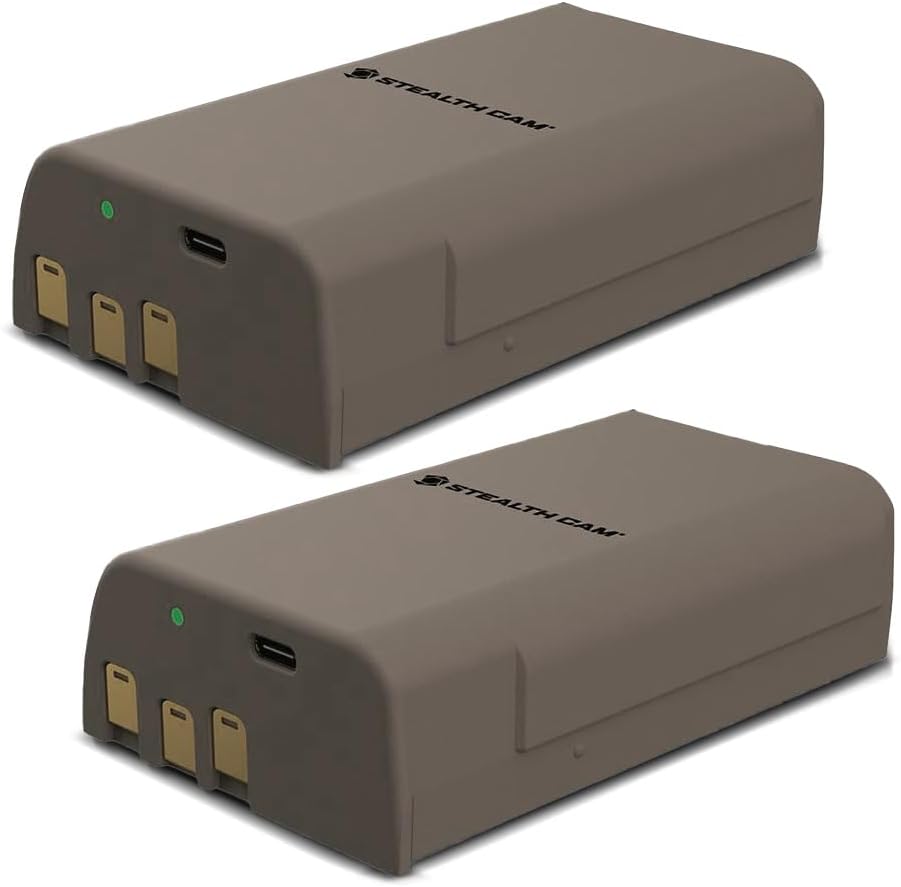
The Stealth CAM FieldMax MAX-PAK is a purpose-built rechargeable cartridge for owners of compatible Stealth Cam cellular trail cameras. It has a 4.5 rating and a two-pack configuration, with each lithium-ion cartridge rated at 12 volts and 5000mAh. The included USB cable and cartridge format make it more integrated than a loose-cell solution and remove much of the guesswork involved in managing rechargeable camera power.
We may earn a commission when you buy through this link, at no additional cost to you.
Compatibility is stated for the Flashback, Deceptor MAX, Fusion MAX, and Connect MAX models. That focused support gives owners of these cameras a convenient option that should simplify installation compared with improvised battery arrangements. The 5000mAh capacity is designed for extended monitoring, while rechargeability means the same cartridges can be prepared for another trip rather than discarded after use. For regular users, the two-pack can support a rotation while one battery is charging.
The cartridge is described as weather-resistant and engineered for extreme temperature swings. This focus makes sense for a product intended to live inside an outdoor camera enclosure, where heat, cold, and moisture can shorten the life of less suitable power systems. The listing also positions the MAX-PAK for low-light environments where solar-powered alternatives may struggle, which is a useful consideration for wooded properties with limited direct sunlight.
The important limitation is that this is not a universal lithium battery. It is explicitly designed for compatible Stealth Cam models, so owners of other brands should not assume that the dimensions or connector will fit. Unlike the Reveal packs that explicitly support solar panels, this product's stated charging method is USB. That can still be a strong long-term approach if users regularly return to base or charge through a portable power solution, but it may be less convenient for completely unattended installations.
The rechargeable cartridge format is designed around compatible Stealth Cam equipment. It avoids the repeated handling of loose cells and can simplify rotation during routine maintenance.
The product is specifically highlighted for low-light areas where sunlight is limited. Rechargeable cartridges can be especially helpful for users who prefer a reusable power source over a large disposable inventory.
We may earn a commission when you buy through this link, at no additional cost to you.
The Lesaps 2Pack 7000mAh Rechargeable LIT-22 Battery for SPYPOINT Trail Camera is designed for owners of compatible SPYPOINT cameras who prioritize capacity. Its 4.2 rating is the lowest among the ten products, but the specification sheet provides a compelling reason to consider it: each battery is rated at 7000mAh and 7.7 volts. The product information states that it lasts 30 percent longer than standard batteries, although that comparison should be understood as a manufacturer claim rather than a universal result.
We may earn a commission when you buy through this link, at no additional cost to you.
The pack is presented as a direct replacement for the SPYPOINT LIT-22 battery. It is compatible with Flex-M, Flex G-36, Flex-Plus, Flex-S, and other SPYPOINT trail camera models. This makes it attractive for users who want a dedicated rechargeable solution without dealing with loose batteries. The product also includes a Type-C cable and uses LED indicators that show red while charging and green when the battery is fully charged.
A charging time of approximately six hours provides a useful estimate for trip preparation. The pack supports standard USB-C chargers, and its six-layer safety system covers over-charge, over-discharge, over-voltage, over-current, heat, and short-circuit conditions. The stated operating range is minus 20 to 140 degrees Fahrenheit, supporting year-round outdoor use across cold and hot conditions. As with all rechargeable lithium-ion products, repeated full depletion and exposure to severe cold can affect performance.
This battery is best for SPYPOINT users who have several cameras, need a substantial capacity reserve, or want a reusable battery rotation. The 7000mAh rating and two-pack format support that role well, while the Type-C connection simplifies charging at home or while traveling. Buyers should not choose it for Reveal or Stealth Cam equipment because compatibility is brand-specific. They should also verify the physical fit and LIT-22 requirements for their camera model. With that check completed, the high capacity makes this a practical choice for extended monitoring.
The 7000mAh rating gives the batteries substantial energy storage, while two packs allow one battery to charge while the other is prepared for deployment. This is useful for owners of multiple compatible cameras.
Separate red and green charging indicators make it easier to distinguish a battery that is charging from one that is ready. The simple Type-C connection also works with many common USB-C chargers.
We may earn a commission when you buy through this link, at no additional cost to you.
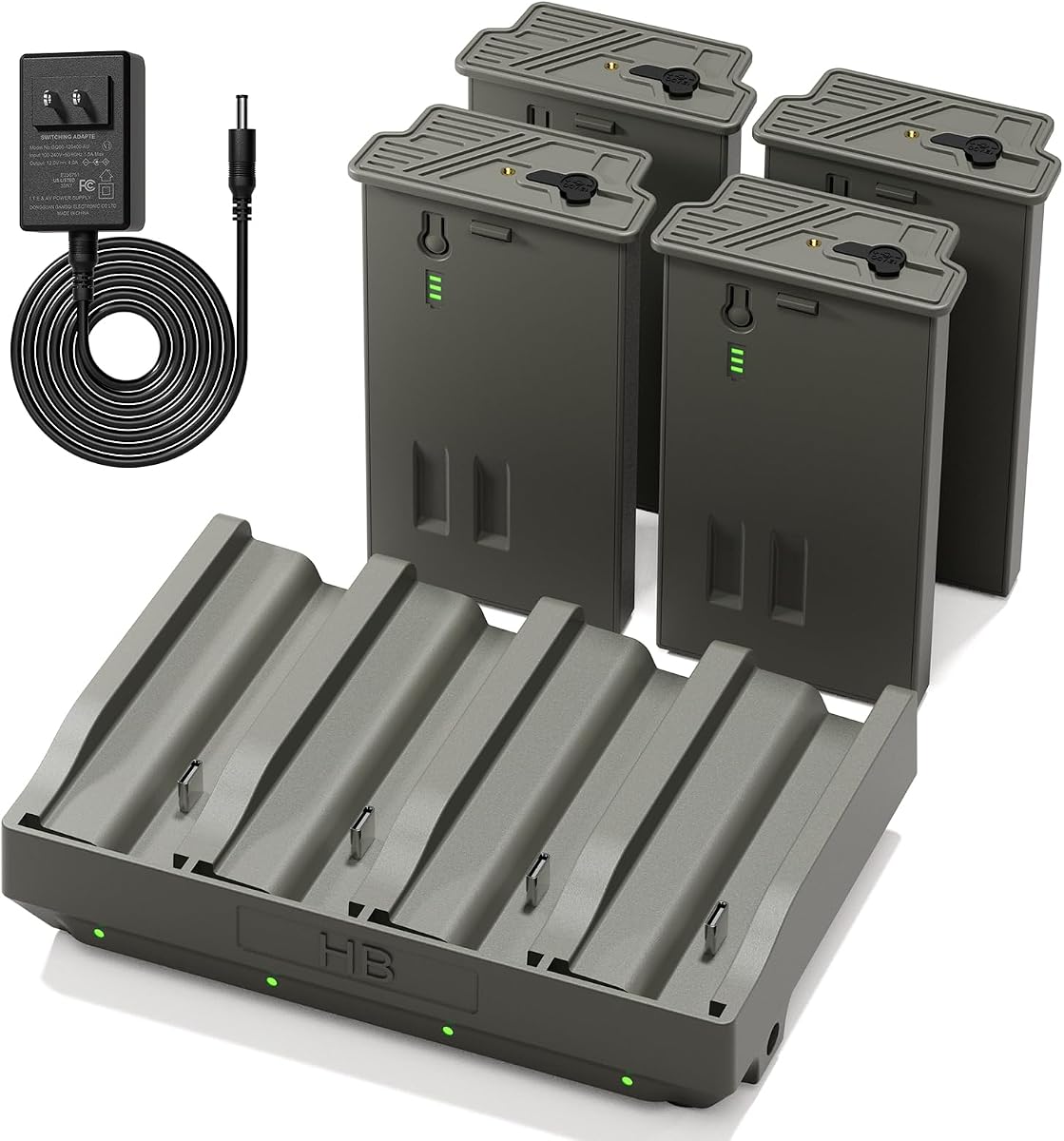
The New Reveal Lithium Battery Trail Camera Battery + 4 Port Battery Charger is a premium option for Reveal users who want a centralized charging setup. It has a 4.2 rating and combines a 5000mAh rechargeable camera battery with a charger capable of charging one to four compatible batteries independently. The charger is the distinguishing feature: it removes the need to pair each battery with a separate adapter or wait for a single-channel charger to cycle through the set.
We may earn a commission when you buy through this link, at no additional cost to you.
The included battery is engineered for Trail Cameras Ultra, Pro 3.0, X Gen 2.0, 3.0, X Pro, XB, SK, and X series cameras. The product information specifies high-performance Japanese battery cells, built-in protection circuitry, and CE/FCC-certified components. An integrated LED power indicator gives a quick visual indication of remaining power, while sequential flashing during charging and solid illumination when full make the charger easier to interpret.
Type-C charging supports modern, widely available power sources. The four independent channels are especially valuable for owners of several compatible cameras because all four batteries can be replenished at once. The listing describes rapid-charging technology, although it does not provide a precise full-charge time, so buyers should treat the charging duration as something to verify in current product information. The included battery is not accompanied by four spare batteries; the multi-port feature expands the charging system rather than supplying a full rotation.
This bundle is best for a user who already owns several compatible Reveal cameras and wants a compact, organized charging hub. The premium feature is not simply the battery cell; it is the ability to manage multiple batteries simultaneously and independently. Those who only operate one camera may find the added charger capability less valuable and could choose a smaller Reveal pack instead. Confirm camera compatibility, the number of batteries needed, and the included components before ordering.
The charger can accommodate one to four compatible batteries and charge them simultaneously. Independent operation is particularly helpful for multi-camera owners who want every battery ready at the same time.
Integrated LEDs, Type-C charging, and protection circuitry create a convenient management experience. The system is designed to make routine preparation less confusing than handling loose rechargeable cells.
We may earn a commission when you buy through this link, at no additional cost to you.
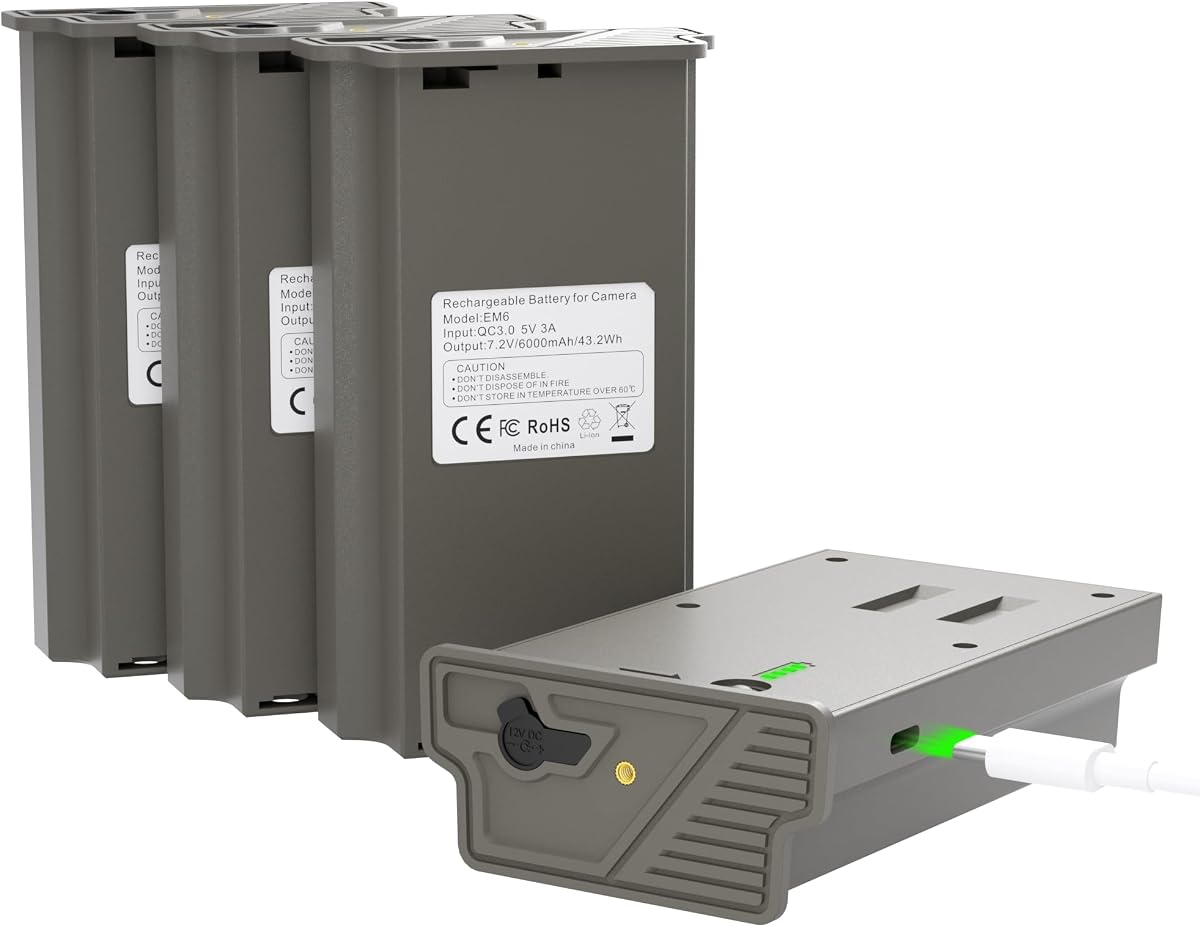
The 4 Pack New Reveal Lithium Battery Pack Compatible with Trail Camera is a comprehensive rotation for owners of several supported Reveal trail cameras. It has a 4.4 rating and includes four rechargeable 7.4-volt packs, each rated at 6000mAh. Rather than supplying one battery and requiring separate purchases, this package gives users an immediate group of spare cells for compatible cameras, making it convenient for large properties or multi-camera monitoring plans.
We may earn a commission when you buy through this link, at no additional cost to you.
Compatibility is listed for X, XB, SK, X Gen 2.0, X Gen 3.0, X Pro, and X Pro 3.0 models. Each battery supports a matched solar panel, which can reduce the need for manual charging during suitable outdoor conditions. The package also includes four USB-C cables, so every battery can be connected to a compatible USB-C charger or charging setup. A built-in LED power meter can be checked by pressing the button without installing the pack in the camera.
The intelligent protection system covers over-heating, over-charge, over-discharge, over-current, over-voltage, and short-circuit conditions. The product is also described as stable across variable outdoor temperatures. These features make the bundle feel designed for regular field deployment rather than a short-term novelty. The LED lights flash during charging and remain solid when full, providing a simple way to organize batteries before a trip and confirm that each unit is ready.
The main drawback is that four 6000mAh batteries create a sizable charging workload, and the four-port charger featured elsewhere in this guide is not included. Users must have enough compatible charging capacity, planning time, and a safe storage location for all four packs. The product is also limited to specific Reveal models. Nevertheless, for a buyer who wants a ready-made rotation and the flexibility to connect matched solar panels, this four-pack is a strong and practical choice.
Four interchangeable packs provide a usable inventory without requiring four separate product selections. The included cables make it possible to prepare each battery separately before deployment.
Support for matched solar panels can help maintain power where the camera receives sufficient sunlight. Users should still monitor charge state and keep backup cells available for shaded or stormy conditions.
We may earn a commission when you buy through this link, at no additional cost to you.
The right battery depends on camera chemistry, voltage, physical fit, operating temperature, and how often the user can service the equipment. These factors determine whether standard cells, a rechargeable cartridge, or a multi-battery charging system is the most practical choice.
Match voltage, size, chemistry, and quantity exactly. Compatibility is the first filter in any trail camera battery search.
Treat capacity as an important metric, but also budget for charging time, camera activity, and signal conditions. Capacity alone does not guarantee a particular number of monitoring hours.
Choose disposable lithium cells for low-maintenance reserves and rechargeable packs for frequent deployments. Select the system that matches how reliably you can recharge or replace power.
Check the rated low-temperature limit against local conditions. Keep spare cells protected from deep cold until they are needed, especially when using rechargeable lithium-ion packs.
Prioritize compatible charging inputs, sufficient charger capacity, and optional solar support. Always retain a manual charging plan for low-sun or high-demand periods.
Look for recognized overcharge, over-discharge, thermal, and short-circuit safeguards. Correct installation and careful handling remain essential with every battery chemistry.
Verify the exact camera model, voltage, physical fit, and connector before ordering. Shared brand names do not guarantee compatibility across every generation.
Choose a rotation that matches camera count and charging capacity. A larger inventory is useful only when it can be charged, organized, and replaced without confusion.
Before installation, identify the required chemistry, voltage, size, and quantity from the camera manual. Inspect each cell or pack for cracks, swelling, corrosion, leakage, or damaged contacts. For rechargeable products, use the specified charger and cable, and confirm that the battery model is compatible with the camera. A visual match is not always enough because proprietary packs can use different locking mechanisms or electrical contacts.
Install batteries according to the polarity markings and avoid mixing lithium cells with alkaline cells, rechargeable packs with disposable cells, or batteries of significantly different ages in the same compartment. Keep terminals clean and dry. If a camera will remain outdoors, close the compartment fully and ensure the seal is seated correctly. Do not leave loose batteries in a vehicle or storage area where they could be crushed or exposed to extreme heat.
Manage rechargeable packs through a regular rotation. Check the LED indicators, remove packs that remain unusually warm, and stop using any battery showing physical damage or unexpected charging behavior. For solar-assisted deployments, treat solar power as an aid and retain a charged backup. Disposable lithium cells should be replaced as a matched set when performance declines, and remaining cells should be stored in their original packaging in a cool, dry location.
Lithium batteries are generally better suited to long-duration trail camera use because they offer a longer shelf life, lower self-discharge, lighter weight, and more consistent output. They also perform well across a broad temperature range when the camera accepts the appropriate chemistry. Alkaline cells may still be the only supported option for some cameras, so compatibility must always be checked first.
No. Rechargeable camera packs are usually designed for specific brands, models, voltages, and connectors. Even if a pack appears similar in size, it may not fit mechanically or may communicate differently with the camera. Confirm the supported model list and the required battery specification in the camera manual before buying a proprietary replacement.
The required quantity varies by camera model, and some devices use several AA cells while others use a single proprietary lithium-ion pack. Never rely on a general rule or on the number of batteries included in another product. Check the camera's battery compartment and manual, and replace cells as a complete matched set when mixing could create uneven performance.
Cold can temporarily reduce the usable output and runtime of lithium batteries, particularly rechargeable lithium-ion packs. Keeping spare cells warm before installation and maintaining a rotation can help. Products with stated low-temperature ratings are better suited to winter conditions, but the rating should not be interpreted as full capacity at every temperature in the range.
No. Solar panels can reduce charging frequency, but charging output depends on sunlight, panel orientation, weather, snow cover, and camera power demand. A location with heavy shade or short winter days may require regular manual charging. Keep a charged backup battery available and check charge indicators before relying on a solar-only setup.
AA lithium cells are convenient for standard-cell cameras, long-term emergency reserves, and locations where maintaining a charger is difficult. Camera-specific rechargeable packs are usually better for frequent deployments because they can be rotated and recharged, particularly when paired with suitable charging or solar equipment. The best choice depends on compatibility, visit frequency, and access to power.
Many rechargeable packs in this guide include LED indicators that flash during charging and remain solid when fully charged. The behavior can vary by model, so read the included instructions rather than assuming every light pattern is identical. Check the indicator outside the camera and allow enough charging time for the complete battery and charger system to reach its specified condition.
Store disposable lithium cells in their original packaging and rechargeable packs in a cool, dry location away from moisture, direct heat, and physical damage. Keep different battery types and states of charge clearly separated so they are not accidentally mixed. A labeled case with one position per battery is particularly useful for maintaining a rotation between field trips.
The Energizer Ultimate Lithium AA options lead the list for standard-cell users, with the 24-pack offering the most convenient inventory and the 8-pack suiting a focused single-camera rotation. The BEVIGOR 24-pack is a strong high-volume alternative with a long stated shelf life, while the Duracell CR123A choice is reserved for devices specifically designed for that 3V coin-cell format. These products are most useful when low-maintenance storage matters most.
For owners of compatible Reveal, SPYPOINT, or Stealth Cam equipment, rechargeable packs can make field operations more systematic. The Lesaps 6000mAh Reveal pack balances capacity, charging flexibility, and solar support; the Lesaps LIT-22 pack offers the highest stated capacity for compatible SPYPOINT devices; and the Stealth CAM MAX-PAK provides an integrated cartridge solution. The Reveal four-pack and four-port charger bundle best serve users managing several cameras or multiple batteries.
Before buying, verify the exact camera model, required format, voltage, and quantity, then choose based on how the setup will be maintained. Prioritize compatibility first, followed by temperature suitability, charging convenience, and a rotation that matches the number of cameras. Product availability and pricing can change, so review the current listing and manufacturer requirements before placing an order.