Wiha 40010 Magnetizer Demagnetizer
4.5Editor score
Pocket-sized magnetic control
Works with tools over 1.35 inches
No batteries or electrical power
Shatter-resistant plastic housing
Magnetizer Demagnetizer Tools guide compares ten options for screwdriver bits, steel tools, fasteners, portability, strength, and electronics work at home.
Magnetizer and demagnetizer tools make small fasteners easier to control by attracting them to a screwdriver bit or removing residual magnetism from delicate components. A useful model should suit the tools, workspace, and balance of magnetic strength and precision you need, whether you repair electronics, work as an electrician, or handle everyday household projects.
The ten products in this guide were compared using their stated construction, compatibility, magnetic functions, portability, ease of use, and suitability for common repair tasks. The list covers single tools, multi-piece sets, pocket-sized designs, and specialized options for screwdriver tips, bits, and other ferrous hardware, with each pick rated as presented by its manufacturer or listing.
Each review explains the product's strongest use case and any visible trade-offs, helping you distinguish between simple screw-holding blocks and more specialized magnetic tools. Ratings and product details can change over time, while marketplace pricing and availability also fluctuate, so confirm the current listing and specifications before making a purchase.
4.5Editor score
4.7Editor score

4.5Editor score
This side-by-side overview compares magnetic strength, operating method, compatibility, portability, and pack size across ten magnetizer demagnetizer tools, helping you identify the most practical option for a repair kit, toolbox, or electronics bench.




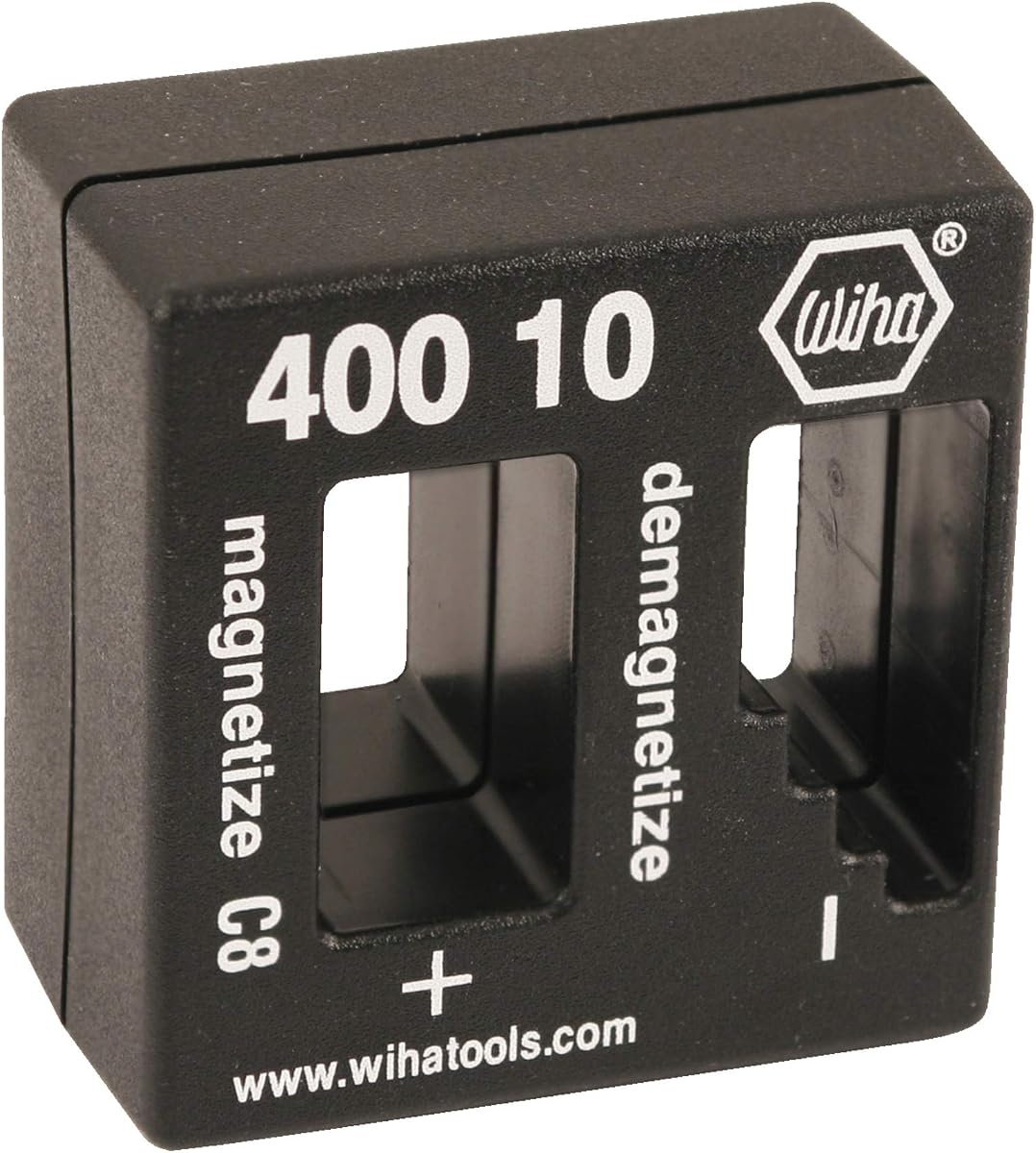
The Wiha 40010 combines a compact 2-by-2-by-1.125-inch body with two C8 industrial ceramic magnets, earning it a 4.5 rating in the supplied product data. Its main attraction is straightforward magnetic control: steel tools and small parts can be magnetized or demagnetized immediately, without batteries, electrical power, or a complicated operating process.
We may earn a commission when you buy through this link, at no additional cost to you.
The tool is designed to work with items longer than 1.35 inches and up to 1/8 inch, or 3mm, in diameter. That range suits many precision screwdrivers, driver bits, and small fasteners, allowing a screw to remain attached to the tip when space is limited. Leaving one hand free can make installation and removal more controlled, particularly inside cabinets, equipment housings, and other confined areas.
Its limitations are closely tied to that compact format. The stated length and diameter restrictions mean it will not accommodate every bit, plier, or larger tool. Although the shatter-resistant plastic housing is well suited to portable use, buyers seeking a larger workbench device or a multi-tool set may prefer a model designed to handle a broader range of ferrous items.
This is a strong pick for technicians, electricians, electronics hobbyists, and anyone who wants a pocket-sized way to control small screws without modifying the tool itself. It is especially appealing when simplicity matters: insert the compatible tool, use the magnetic function, and continue the job. For the stated compatibility range, the Wiha delivers a convenient and economical all-purpose solution.
A magnetized tip keeps a small screw attached to the driver, reducing the need to balance it with a second hand. This is particularly useful around wiring terminals, narrow housings, and other areas where a dropped fastener would be inconvenient or difficult to retrieve.
Because the 40010 uses permanent ceramic magnets and requires neither batteries nor electrical power, it can move easily between a tool pouch, pocket, and remote job site. Its small enclosure also makes it straightforward to keep within reach of precision tools.
We may earn a commission when you buy through this link, at no additional cost to you.
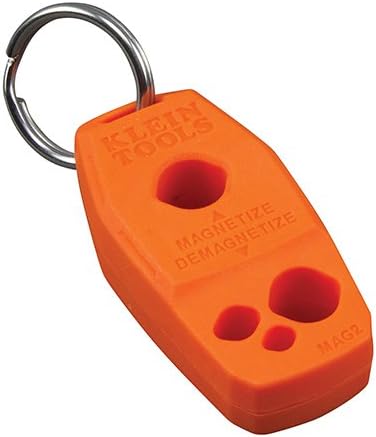
The Klein Tools MAG2 is the highest-rated option in this group, carrying a 4.7 rating in the supplied data. It focuses on a common workshop problem: controlling loose screws on a driver tip without changing the driver itself. Powerful rare-earth magnets provide immediate magnetization and demagnetization through a straightforward slot-based process.
We may earn a commission when you buy through this link, at no additional cost to you.
Compatibility is one of its strongest features. The slot accommodates precision screwdrivers, 1/4-inch slotted drivers, #2 Phillips drivers, and #3 Phillips drivers. That range covers common household, electrical, and assembly work, while the one-swipe operation makes it quick to switch between holding a screw and releasing magnetic attraction around electronic components.
The included stainless steel key ring adds practical portability without requiring a separate pouch. You can attach the MAG2 to a tool bag or backpack and keep it close to the driver it serves. The trade-off is its targeted format: this is primarily a screwdriver and bit accessory rather than a general magnetic block for nuts, bolts, sockets, or bulky tools.
This is an excellent selection for users who want a dependable, dedicated tool rather than a multipurpose magnetic accessory. Electricians, repair technicians, builders, and serious DIY users can benefit from the broad driver compatibility and rapid operation. It is the most balanced choice in the list for anyone who regularly works with standard screwdrivers and needs both magnetization and demagnetization.
The magnetic action is designed to be immediate, reducing interruptions when moving from a screw-holding task to sensitive work. Users insert the screwdriver fully into the slot and withdraw it slowly without rotating the shaft, a simple process that helps preserve consistent magnetic control.
Supporting precision, slotted, and common Phillips drivers makes the MAG2 more adaptable than a tool limited to one shaft size. It is a strong fit for mixed repair kits where a single driver may need to switch between carrying a screw and working cleanly around components.
We may earn a commission when you buy through this link, at no additional cost to you.
The JPT Screwdriver Magnetizer & Demagnetizer earns a 4.4 rating and is clearly aimed at electricians, computer technicians, mobile repair shops, and electronics work. Its bi-directional magnetic block is designed to switch a screwdriver tip between holding fasteners securely and losing unwanted magnetic attraction when delicate components are nearby.
We may earn a commission when you buy through this link, at no additional cost to you.
Operation requires no battery, charging, or electrical connection. A screwdriver is simply slid through the marked slot to activate the appropriate magnetic behavior, allowing a user to change the tool's state at a workstation, in a vehicle, or at a customer site. The compact format is convenient for pockets, toolboxes, and workshop kits where space is limited.
One drawback is that the supplied specifications focus on screwdriver tips and provide less detail about accepted shaft dimensions or larger ferrous objects. It therefore appears less versatile than the Master Magnetics products designed for screws, drill bits, sockets, nuts, bolts, nails, and other tools. Buyers with specialized bit sizes should verify physical clearance before relying on it.
For a compact electronics-oriented workflow, the JPT is a practical option. It addresses both sides of the magnetic-control problem: retaining small screws during installation and reducing magnetic attraction around sensitive parts. It is best suited to technicians who want a simple, portable block and know that their drivers will fit the marked slot.
Residual magnetism can make tiny metal fragments adhere to a bit or magnetic attraction become a nuisance around sensitive electronics. This tool is designed to let the user remove that charge by passing the tip through the opposite direction of the marked slot.
The lack of a power requirement keeps the tool ready for mobile service, repair benches, and remote installations. There is no charging routine to manage, and the compact body is easy to place in a technician's kit or carry between locations.
We may earn a commission when you buy through this link, at no additional cost to you.
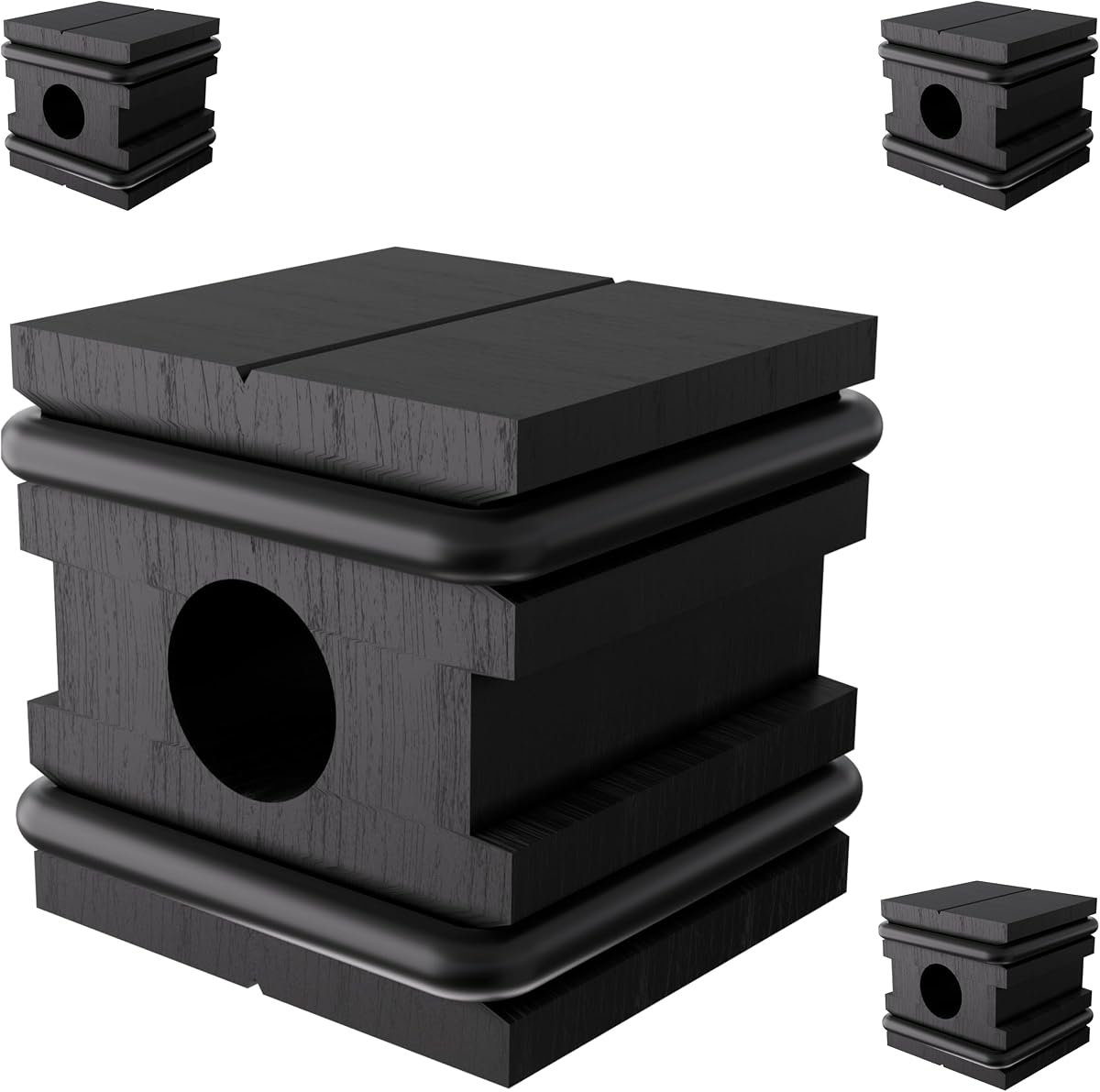
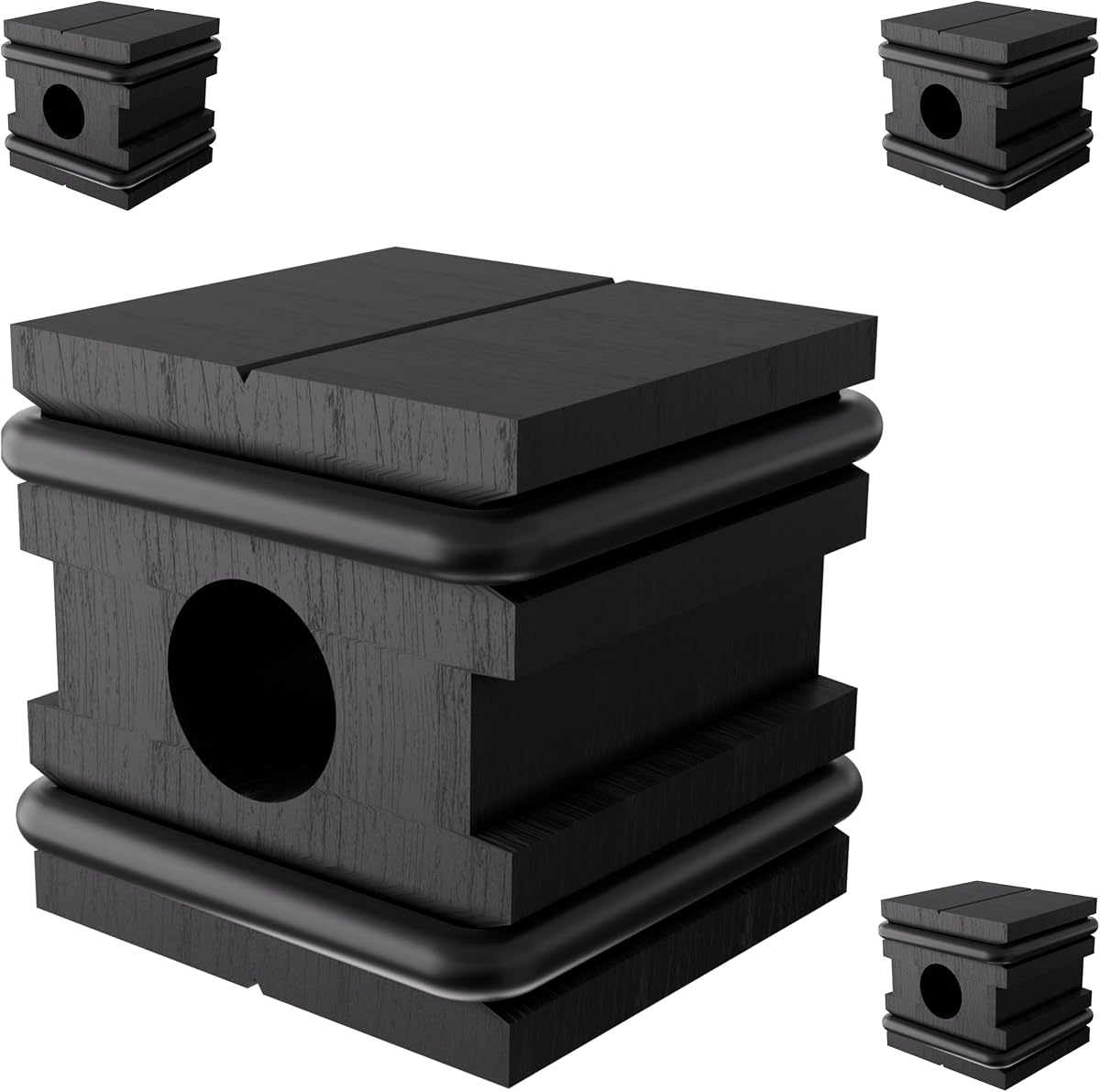
The Master Magnetics Screwdriver Magnetizer Demagnetizer four-pack provides a practical way to keep magnetic control available in several work areas. Its 4.1 rating is still solid within this category, and the supplied information highlights permanent magnets, bonded rubber construction, and a 1-by-1-inch format designed primarily around small tools and fasteners.
We may earn a commission when you buy through this link, at no additional cost to you.
Its operating layout is more informative than that of many basic blocks. To magnetize a tool, the user slides it through the center hole, where attraction helps retain small screws and metal components. To demagnetize it, the tool passes through one of the exterior channels, providing a separate route for reducing unwanted magnetism on a workpiece.
The four-pack format is the defining advantage. Instead of carrying one unit between a vehicle, workshop, and bench, you can leave a copy in several tool-storage locations. The units can also hold themselves to a steel toolbox or another similar steel surface, which is useful when a quick magnetic-control accessory should remain visibly accessible.
This is a good choice for mechanics, electricians, and DIYers who work in several places or want a backup within reach. The main limitation is its emphasis on small tools rather than a broad industrial range. Its relatively compact dimensions may not suit large driver shafts, but for precision screwdrivers, small bits, and loose hardware, the four-unit arrangement is especially convenient.
The center hole and exterior channels provide a visually distinct method for switching magnetic states. That makes the tool easier to use consistently, particularly when one operation is needed to retain a screw and the other is needed to prepare a tool for cleaner work.
A four-pack can cover a primary toolbox, portable kit, workbench, and vehicle storage area. Since the blocks can attach themselves to steel surfaces, they can remain close to the tools they support without taking up much drawer space.
We may earn a commission when you buy through this link, at no additional cost to you.
The Master Magnetics 07524X4 blue four-pack combines a 4.4 rating with unusually broad tool compatibility for a simple magnetic block. It is designed to magnetize or demagnetize screwdriver tips, bits, small and large tools, screws, drill bits, sockets, nuts, bolts, nails, and other ferrous objects.
We may earn a commission when you buy through this link, at no additional cost to you.
Each of the four units measures 2 by 2 by 1 inches, making them compact enough for a toolbox while remaining substantial enough for a wider range of hardware than a precision-only magnetizer. The set works without batteries or electricity, so it can be used anywhere a standard tool is available and there is no charging or power-management concern.
The four-piece configuration is useful for anyone who wants one unit near the workbench, another in a mobile kit, and others in separate storage areas. It also provides a simple redundancy if a unit is misplaced. The trade-off is that four separate blocks occupy more space than one compact tool, and the permanent-magnet design does not offer adjustable electronic control.
This set is well suited to mechanics, installers, builders, and general DIY users who want a broad collection rather than a screwdriver-only accessory. It can improve control over a loose screw during installation and reduce magnetic attachment when a clean working surface is needed. Among the products reviewed, it stands out for matching broad ferrous compatibility with a multi-unit format.
Screws, bolts, nuts, nails, and sockets are all listed as compatible ferrous items. That versatility lets a technician keep one magnetic control accessory ready for different assembly tasks rather than searching for a specialized tool each time the hardware changes.
Four units make it easy to establish the same magnetic-control routine at several stations. The compact 2-by-2-by-1-inch size helps each block fit into crowded toolboxes, while the shared blue design makes the matching units easy to recognize.
We may earn a commission when you buy through this link, at no additional cost to you.
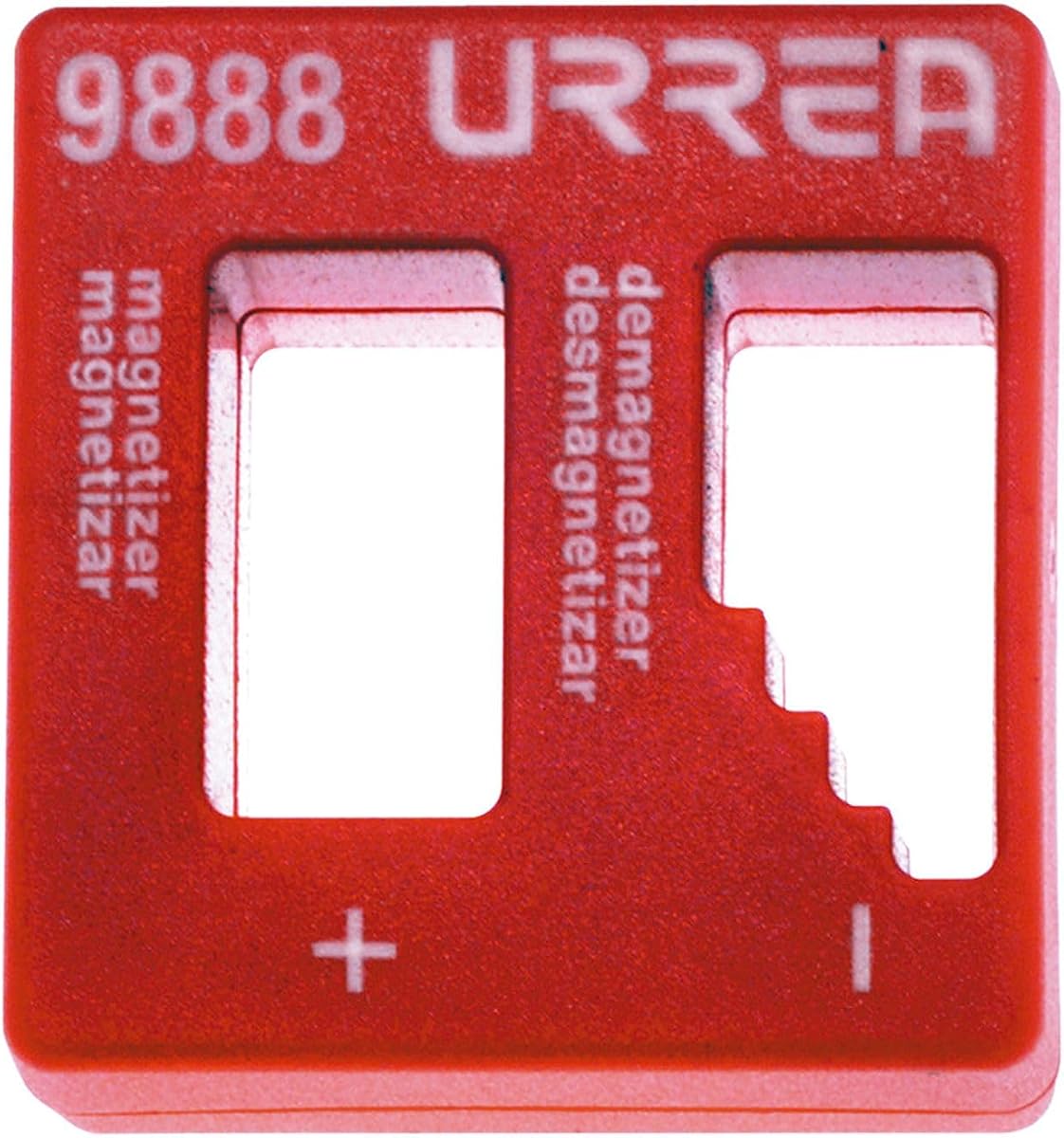
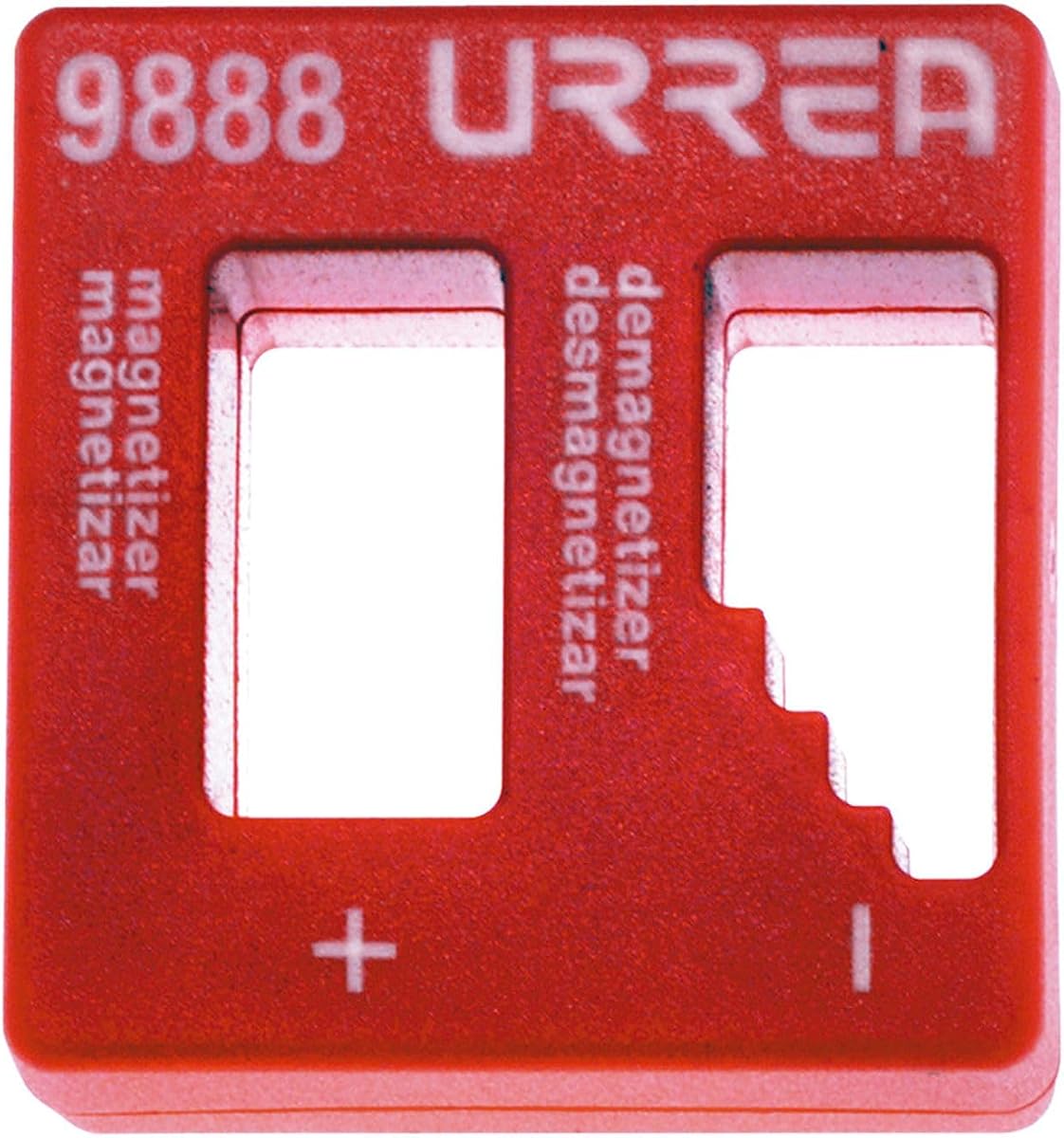
The URREA 9888 is a dedicated magnetizer and demagnetizer with a 4.5 rating. Its most distinctive feature is the use of clearly designated positive and negative terminal cavities, allowing a user to select the intended magnetic state before placing a screwdriver tip into the relevant opening.
We may earn a commission when you buy through this link, at no additional cost to you.
The listing specifically identifies offset screwdrivers, making this a focused option for technicians who regularly work with that driver style. A magnetized tip can improve control over a loose screw, while the negative cavity is intended for electronic parts where a demagnetized tool is preferable and unwanted magnetic attraction could interfere with the task.
Because the product is specialized, its advantages may be less relevant to someone who needs a general magnetic block for drill bits, sockets, or other ferrous hardware. It also lacks the explicit key-ring or multi-unit portability features highlighted by some competing products. Nevertheless, its dual-cavity approach makes the intended state easy to identify before use.
The URREA 9888 is best for offset-driver users and repair professionals who want a simple, dedicated tool for alternating between magnetic holding and demagnetized work. Its positive-versus-negative arrangement offers a clear learning curve and quick operation. Buyers with other driver types should check fit and intended use before adding it to a general-purpose kit.
Labeled positive and negative cavities help prevent accidental use of the wrong function. The screwdriver is placed in the positive cavity to magnetize it and in the negative cavity when the workpiece requires a demagnetized tip.
A demagnetized driver can reduce the chance that small metal parts will cling to the tip during sensitive repair work. This makes the dedicated negative cavity relevant to technicians who alternate between fastening hardware and servicing electronic components.
We may earn a commission when you buy through this link, at no additional cost to you.
The Bosch Magnetizer/Demagne stands out with a 4.5 rating and the most explicit magnetic-performance specification in the group. It uses two ferrite magnets with a minimum field strength of 90mT, a measurable detail that helps distinguish it from models described only in general terms as powerful or compact.
We may earn a commission when you buy through this link, at no additional cost to you.
The device is intended for quick, easy magnetization and demagnetization of screwdrivers and bits. Its self-explanatory icons reduce the learning curve, making it easier to identify the correct magnetic state before placing a driver through the tool. That visual guidance is particularly useful for users who do not want to rely on trial and error.
At only 80 grams, the Bosch is light enough to carry without becoming a burden in a technician's kit. The compact design supports fast work at a bench or on the road. The supplied information does not detail compatibility with sockets, nuts, or larger tools, so its strongest case remains focused on screwdriver tips and bits rather than general ferrous hardware.
This is a premium-oriented choice for technicians and serious DIY users who value stated field strength, low weight, and intuitive operation. It combines the relevant features of a compact magnetic accessory without adding batteries, electronics, or a complicated control system. The result is a focused tool that should appeal particularly to users who work repeatedly with screwdrivers and interchangeable bits.
A minimum field strength of 90mT provides a concrete performance figure rather than relying solely on a general claim of strong magnetism. That makes the specification easier to compare when choosing between compact professional-oriented tools.
The 80-gram body is easy to include in a technician's kit and comfortable to handle during repeated use. Portability is especially valuable for field service, where every carried accessory should provide a clear function without adding unnecessary bulk.
We may earn a commission when you buy through this link, at no additional cost to you.
The Master Magnetics 07524 has a 4.0 rating and offers a straightforward way to magnetize small tools. Its product information is intentionally concise, identifying easy-to-use construction and positioning the tool for do-it-yourselfers, mechanics, and electricians without introducing batteries or powered controls.
We may earn a commission when you buy through this link, at no additional cost to you.
The main benefit is accessibility. A user can add magnetic holding to a compatible small tool without modifying the tool or learning a complicated interface. This can make a loose screw easier to place in a restricted location, while the demagnetizing function can help prepare a tool for work where unwanted magnetic attraction is inconvenient.
Compared with the other Master Magnetics products, this single unit provides less information about dimensions, channel design, and compatibility. That limited detail makes it harder to judge against the four-packs, which clearly list broader ferrous-item support and multiple units. Its 4.0 rating also sits below the leading products in the group, so buyers seeking more specification should compare carefully.
Even so, the 07524 is a sensible choice for a basic repair kit that needs a small, uncomplicated magnetic accessory. It suits users who do not require specialized features but want the convenience of attaching a screw to a driver or removing magnetism from a small workpiece. Its simplicity is both its strength and the reason it may feel less specialized.
The easy-to-use construction makes this a practical introduction to screwdriver magnetization. Users can add or reduce magnetic attraction without relying on batteries, charging, or a separate electronic control system.
Mechanics, electricians, and DIYers all encounter situations where a loose fastener needs to remain on the driver. A simple tool for small steel tools therefore fits naturally into a mixed maintenance or repair kit.
We may earn a commission when you buy through this link, at no additional cost to you.
The VESSEL NMC-1PB takes a different approach from a handheld magnetic block. It attaches to a bit or driver and uses powerful magnetic force to secure fasteners, giving it a 4.3 rating in the supplied information. Its stated ability to catch long threads is particularly relevant for difficult-to-handle hardware.
We may earn a commission when you buy through this link, at no additional cost to you.
The unit can be magnetized and demagnetized, allowing the user to adjust the tool according to the task. It can also be demagnetized when chips or small fragments stick to the bit. The important caveat is that magnetic force remains even after the unit is removed from the bit, so the tool should be handled with that residual attraction in mind.
Because the device remains associated with the driver or bit, it can be more convenient than repeatedly passing a tool through a stationary block. The trade-off is that attachment mechanics and exact fit details are not provided in the supplied listing. Users may also need to store the tool carefully, since a magnetized attachment can attract nearby metal objects.
The NMC-1PB is a good fit for technicians who want a magnetic holder that travels with a bit and who regularly work with long threaded fasteners. It is less obviously suited to general-purpose magnetic blocks for assorted tools. Its strongest selling points are direct attachment, flexible magnetization, and the ability to remove unwanted chips from a bit.
Once attached, the NMC can accompany the bit or driver as it moves through a task. This is useful in confined work areas where carrying a separate magnetic block and repeatedly transferring the driver would be less convenient.
The product is described as securely catching even long threaded fasteners, which is a notable benefit in deep or awkward locations. Its demagnetizing mode also helps when metallic chips cling to a bit and need to be released.
We may earn a commission when you buy through this link, at no additional cost to you.
The Multi-Function Powerful Magnetizer ULTRA earns a 4.4 rating and offers the most varied control method in this group. Mounted on a compatible bit, its front side provides full magnetization for holding screws, while the reverse side reduces magnetic force for stages of a task that require less attachment.
We may earn a commission when you buy through this link, at no additional cost to you.
The product is compatible with standard 1/4-inch, or 6.35mm, bits used by professionals and DIYers. Its patented Korean construction is designed for durability, and the unit remains mounted to the bit while changing the intensity of the magnetic effect. This makes it more adaptable than a fixed on/off block for users who need both strong and reduced attraction.
Demagnetization is handled in two distinct ways. Sliding the unit's side along the bit provides a manual demagnetizing motion, while the stated iron-powder removal method involves touching the back of the mounted unit to another magnetizer. The latter approach may be less convenient for a user who owns only one accessory, and the reduced-strength mode is not the same as fully demagnetizing a bit.
This is a compelling choice for users who work primarily with quarter-inch bits and want more than simple on/off behavior. It can prevent screws from dropping during powered drilling or screwdriver work, then reduce the magnetic pull for handling. The main limitation is its narrower bit-size focus and the extra accessory required for the product's most convenient iron-removal method.
The dual-sided design lets a user select strong magnetic holding or a reduced level of attraction. That range is useful when a screw should remain secure at the start of a task but a lighter magnetic grip is more suitable during later handling.
Compatibility with standard 1/4-inch bits makes the ULTRA a natural addition to many common driver and drill systems. Mounting it directly to the bit keeps the magnetic control close to the fastening point without requiring a separate block at the work surface.
We may earn a commission when you buy through this link, at no additional cost to you.
Choose a magnetizer demagnetizer tool by matching its magnetic operation, tool compatibility, portability, and construction to the fasteners and repair tasks you routinely handle. The right accessory should improve control without being cumbersome, difficult to operate, or unsuitable for the tools in your kit.
A useful magnetizer must hold a small screw securely enough to prevent drops but still permit controlled removal. A demagnetizer should also release magnetic attraction cleanly when you are working near electronic components or want the tool to remain less attractive to nearby metal. Some products use rare-earth magnets for quick, strong results, while others rely on permanent ferrite or ceramic magnets. Because strength claims are not directly comparable without a stated measurement, pay particular attention to products that provide a field-strength specification, such as the Bosch model's 90mT minimum.
Prioritize dependable control over dramatic holding power. A very strong magnet can be useful in overhead or confined work, but it may also make screws difficult to release or cause chips to adhere to a bit. Choose adjustable or clearly differentiated operating modes when your work involves several stages.
The tool must physically accept the shafts or bits you use most often. Some models are built around a screwdriver slot, while others provide a center hole, exterior channels, or a direct-attachment design. The Klein MAG2 specifically supports precision screwdrivers, 1/4-inch slotted drivers, #2 Phillips, and #3 Phillips. The URREA 9888 focuses on offset screwdrivers, and the Multi-Function ULTRA is designed for standard 1/4-inch bits. General-purpose Master Magnetics products claim support for a wider collection of ferrous objects.
Check shaft length, diameter, and overall shape before buying. A feature that appears compact may not accept a long bit or a narrow precision driver. If you work with varied hardware, favor a tool explicitly described as compatible with screws, bolts, sockets, drill bits, and other ferrous items.
A true magnetizer demagnetizer should provide a clear way to switch between magnetic and nonmagnetic states. Some tools use separate slots, while others slide the driver through different directions, mount to the bit, or use a dual-sided design. The important factor is whether the process is easy to understand and repeat in a busy work environment. Clearly labeled positive and negative cavities, self-explanatory icons, and a marked slot can reduce mistakes.
For consistent results, follow the included instructions when inserting or withdrawing the tool. Some products specifically recommend drawing the shaft out slowly without rotating it, while others depend on sliding the side of an attached unit along a bit. Choose an operation that suits your habits and the space in which you work.
Portability matters when the tool must move between a service vehicle, a home workshop, and customer locations. A pocket-sized design such as the Wiha 40010 is easy to carry, while the Klein MAG2 includes a stainless steel key ring for attachment to a tool bag or backpack. Compactness should be balanced against acceptance of your driver shafts; an overly small unit may exclude the tools you use most.
Consider how the device will be stored when magnetized. A magnetic block can attract steel objects inside a toolbox, and the VESSEL unit retains magnetic force even after removal from a bit. Keep accessories away from sensitive electronics, stored batteries, compasses, and other items that could be affected by a magnetic field.
Look for a housing that can survive repeated insertion, removal, and transport. The Wiha uses a shatter-resistant plastic box, the Master Magnetics four-pack includes bonded rubber, and the Multi-Function ULTRA uses patented Korean construction. These details suggest attention to the realities of a working tool kit, although material alone does not reveal every aspect of long-term durability.
Permanent-magnet tools also benefit from careful handling. Avoid striking the magnetic assembly against hard surfaces, use the intended slots for the compatible tool, and store the product where it cannot collect metal debris. When multiple units are included, the extra copies can serve separate work areas and provide a ready replacement if one is misplaced.
Different jobs reward different magnetic behaviors. Electricians and electronics technicians may prioritize easy demagnetization around delicate parts, while mechanics and installers may value the ability to hold screws above or inside a workpiece. Mechanics working with long threads may prefer an attached holder such as the VESSEL, while users with quarter-inch bits may value the ULTRA's adjustable strength and direct mounting.
Think about the complete task rather than only the magnetic benefit. A tool that retains a screw but makes it difficult to place or release may not improve productivity. Look for an operation that supports both installation and removal, and confirm that the advertised tool types match the accessories in your case.
A single compact unit is usually sufficient for one workstation or a portable kit. A four-pack is useful when you work in several locations, divide duties among team members, or want a spare available in a vehicle and at a bench. The Master Magnetics sets are particularly relevant for distribution across a shop, while the Wiha and Klein products are easier to carry as single accessories.
Avoid buying multiple units simply because they are available if your work is concentrated in one place. For one active repair kit, portability and compatibility may be more valuable than having several copies. For a busy shop, a multi-pack can improve availability and make it less likely that the tool will be missing when a small screw needs to be controlled.
Demagnetization is not simply the inverse of holding a screw. It can help prevent tiny metal fragments from remaining on a bit or reduce interference when working around electronic parts. The JPT tool emphasizes this electronics use, the URREA provides a dedicated negative cavity, and the VESSEL can be demagnetized when chips stick to a bit. The ULTRA also offers a way to remove iron particles using another magnetizer.
Choose a product with an explicit demagnetizing method if electronics repair is part of your routine. Confirm that the technique is practical with the tools you own. If the only effective cleaning method depends on a second accessory, account for that before deciding whether the design fits your workflow.
Before using a magnetizer, identify the correct magnetic function and inspect the tool for a compatible slot, channel, cavity, or attachment point. Slide or insert the screwdriver tip or bit in the direction specified by the product instructions. The Wiha and Master Magnetics models use distinct magnetic paths, the URREA uses positive and negative cavities, and the Klein MAG2 requires a full insertion followed by a slow, non-rotating withdrawal.
Test the result on a small ferrous screw before working on the actual workpiece. A properly magnetized tip should hold the screw securely but still allow you to begin installation without excessive force. When a task changes, switch to the demagnetizing function and check that the tip no longer attracts chips or nearby hardware. For attached products, follow the specified method: the VESSEL can be demagnetized while connected, while the ULTRA uses side sliding or an additional magnetizer for iron-particle removal.
Store the device in a dry, secure place away from electronic components, loose metal objects, and anything sensitive to magnetic fields. Do not force incompatible bits into an opening, strike the magnetic assembly, or leave a magnetized unit where it can unexpectedly attract tools. Periodically remove debris from the slot or cavity, and keep the tool in the protective role for which its dimensions and magnetic construction were designed.
It is used to give a screwdriver or bit temporary magnetic attraction or to remove residual magnetism from it. Magnetization helps small screws and other ferrous fasteners stay attached to the tip, while demagnetization can reduce unwanted attraction to chips, nearby metal parts, and electronic components.
None of the reviewed products requires batteries or an electrical power source. They use permanent magnets and manual movement of the tool or driver, which makes them suitable for mobile repair kits, workshops, and remote job sites without charging or power-management concerns.
No, physical compatibility still matters. Check the opening dimensions, shaft diameter, driver length, and intended attachment method, and choose a model that explicitly supports your screwdriver or bit type. Offset drivers, precision drivers, and standard quarter-inch bits each have different requirements.
No. Stronger magnetic attraction can be useful in overhead or confined work, but it may also make a screw difficult to release and encourage chips to cling to the bit. Adjustable strength or a simple demagnetizing function is often more useful when work changes between fastening and sensitive repair tasks.
A magnetized tip can attract tiny metal fragments and may be undesirable around delicate electronic components. Demagnetization helps the bit behave more like a nonmagnetic tool, reducing unwanted metal attachment and making controlled work easier in sensitive assemblies.
A multi-pack is valuable when you work across several benches, vehicles, or shared tool-storage areas. It can keep a unit close to each active workspace and provide a spare. If you only use one kit in one location, a single portable model may be more convenient and less wasteful.
That depends on the model. The Master Magnetics 07524X4 is explicitly described as compatible with drill bits, sockets, nuts, bolts, nails, screws, and other ferrous items. More specialized products may focus on screwdriver tips, selected bit sizes, or offset drivers, so check their stated compatibility before use.
Keep it away from electronic components, magnetic storage media, and sensitive instruments, and do not leave it where it can attract loose metal objects. Store the unit in a dry, protected area, clean debris from its slot occasionally, and avoid dropping or striking the magnetic housing.
The Wiha 40010 is a compact and affordable-feeling general pick for compatible small tools, while the Klein Tools MAG2 is the strongest all-around choice for common screwdrivers. The Bosch Magnetizer/Demagne is the premium-oriented selection for users who value a stated 90mT field strength, an 80-gram body, and intuitive operating icons. Each solves the same basic problem with a different balance of size, compatibility, and magnetic control.
Prioritize physical fit before considering any other feature. Confirm the shaft type, dimensions, and intended use, then decide whether you need simple on/off control, separate magnetizing and demagnetizing positions, adjustable force, direct bit attachment, or several units distributed around a workspace. Electronics technicians should place particular importance on a clear demagnetizing method, while installers and mechanics may prioritize dependable screw retention.
Before purchasing, review the current product listing for the latest specifications, rating information, dimensions, and marketplace availability. Product design and compatibility details can evolve, and pricing changes over time, so confirming the latest listing helps ensure that the selected magnetizer demagnetizer tool still matches your driver collection and typical repair workflow.