
BTMETER BT-100
4.5Editor score
Five wind speed units
Temperature and wind chill
Tripod-compatible threaded mount
Marine anemometer guide comparing ten handheld, digital, masthead, display, and mounting options for boating, sailing, weather monitoring, and HVAC use.
A marine anemometer measures wind speed, direction, temperature, and related conditions, but the most useful model depends heavily on where it will be used. Handheld instruments suit dinghies, small boats, sailing activities, and quick weather checks, while permanent masthead systems serve equipped cruising vessels and sailboats.
The ten products in this guide range from compact digital meters to integrated Raymarine wind systems, replacement sensor components, and magnetic-mount instruments. We compared the stated measurement functions, mounting approaches, display features, environmental suitability, accessories, and user ratings, while also separating complete tools from display-only or replacement parts.
Each review shows what the product is best suited to, along with important compatibility and installation considerations. The top three selections represent a budget handheld option, a premium complete marine system, and a specialized magnetic-mounted instrument. Product availability and pricing can change, so confirm current specifications before purchasing.
4.5Editor score

4.4Editor score

4.7Editor score
This side-by-side overview highlights the major differences among handheld meters, permanent Raymarine systems, display-only instruments, sensor assemblies, and specialty mounting options, making it easier to identify the right format for your vessel and measurement needs.



The BTMETER BT-100 is a handheld digital anemometer that combines wind speed, temperature, and wind chill in one compact instrument. Its 4.5 rating reflects broad buyer satisfaction, while the stated measurement range of 0.67 to 67.1 mph gives it enough scope for sailing, boating, drone flying, shooting, kite flying, and other outdoor activities. It also suits basic airflow checks around HVAC installations and ducts.
We may earn a commission when you buy through this link, at no additional cost to you.
Five selectable wind speed units—m/s, km/h, ft/min, knots, and mph—make the meter practical for sailors as well as users accustomed to aviation, construction, or everyday weather measurements. Temperature can be viewed in Celsius or Fahrenheit, and the included backlit display improves visibility in dark conditions. The stated accuracy for wind speed is plus or minus 2% of readings, with resolution listed at 0.1 m/s.
A metal threaded hole in the bottom gives the BT-100 a useful advantage over purely handheld meters. It can be fixed to a tripod for continuous readings, which is useful when monitoring conditions before sailing, during outdoor filming, or while operating a drone. The included batteries help the instrument remain ready for use, and automatic or manual shutdown options offer control over power consumption.
Its main limitation is that it is not a permanently installed wind sensor for a boat. It does not provide a separate masthead transducer, a helm display, or automatic directional information. Even so, the BT-100 offers a strong combination of functions, portable construction, and mounting flexibility, making it an accessible choice for recreational boaters and anyone who wants a dependable spot-check instrument.
The unit conversion options make it easy to match wind readings to familiar boating measures, particularly knots and miles per hour. Wind temperature and wind chill add context beyond speed alone, helping users compare conditions during time on the water or while preparing a boat.
The bottom tripod opening allows a more stable, hands-free setup than a purely handheld reading. This is particularly helpful during sailing, shooting, climbing, and drone-related activities where holding the instrument for an extended period would be inconvenient.
We may earn a commission when you buy through this link, at no additional cost to you.
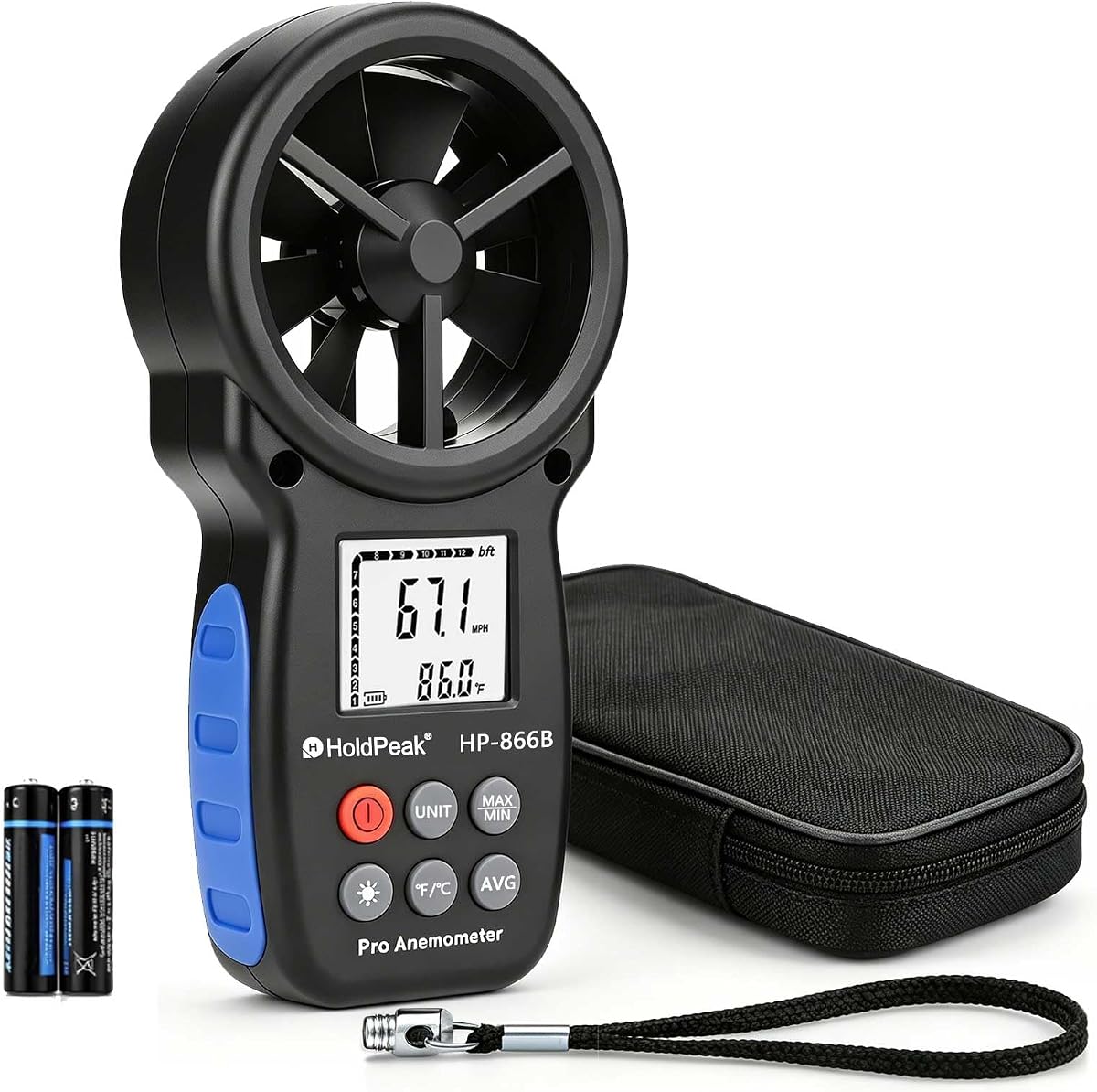
The HoldPeak 866B is a digital handheld anemometer aimed at outdoor users who need more than a single instantaneous wind-speed reading. It carries a 4.5 rating and uses dual temperature sensors, eight vanes, and a smooth fan shaft to detect wind speed, temperature, and wind chill. The stated range is 0.67 to 67.1 mph, with accuracy of plus or minus 2% of readings.
We may earn a commission when you buy through this link, at no additional cost to you.
Unlike a basic spot-check meter, the 866B includes maximum, minimum, and average wind speed functions. That makes it useful when tracking changes over a period, such as comparing gusts with calmer conditions during a sailing session. Wind speed can be shown in m/s, km/h, ft/min, knots, or mph, while temperature can switch between Celsius and Fahrenheit. A battery indicator, automatic shutdown, and backlight add practical everyday controls.
The included hand strap reduces the chance of dropping the device outdoors, and the carrying pouch provides a place to store it between uses. A tripod hole allows the meter to be mounted on the included triangular bracket for hands-free operation. The package also contains AAA batteries, a user manual, and a screwdriver, reducing the need to source basic accessories separately.
This is not a fixed marine wind system and it does not provide a dedicated wind-direction display. Sailors will still need another instrument or onboard system for apparent and true wind direction. Even with that limitation, the HoldPeak 866B is a well-equipped portable option for boating, surfing, golf, drone flying, and low-flow HVAC work, with a stronger emphasis on recorded readings than the BT-100.
Maximum, minimum, and average modes make the HoldPeak 866B more useful for observing changes rather than simply capturing a snapshot. These functions are valuable when a user wants to understand how conditions vary during an outdoor session or around an airflow outlet.
The combination of a hand strap, protective carry pouch, backlight, and tripod option is well suited to boating and other outdoor environments. It gives the user several practical ways to secure, read, and transport the meter.
We may earn a commission when you buy through this link, at no additional cost to you.
The Magnetic Mount Anemometer by Inspeed stands apart from the handheld digital meters because its mounting concept is designed for a fixed onboard position. It has a 4.7 rating, the highest numerical rating among the ten products listed here, and the supplied product information specifically identifies it as calibrated. That makes it a compelling option for users who value a compact, permanently oriented instrument.
We may earn a commission when you buy through this link, at no additional cost to you.
The magnetic mount is the defining feature. Rather than requiring a threaded socket or a traditional masthead installation, the instrument can be positioned on a suitable metal surface, provided that the mounting area is compatible with the magnetic system. This approach may be attractive to owners of smaller boats who want a dedicated wind indication without installing a full sensor and display network.
The available product information is concise, so buyers should not assume capabilities that have not been specified. Wind speed, direction, measurement range, display style, included components, and marine installation details should all be checked before purchase. Compatibility with the vessel's surfaces, placement relative to obstructions, and the effect of surrounding metal should also be considered.
Within this roundup, the Inspeed model is best suited to a boater seeking a compact, calibrated, magnetically mounted instrument rather than a feature-rich handheld or a full Raymarine system. Its strong rating and distinctive installation format make it a specialized premium pick, but careful compatibility verification is essential to ensure that it will perform as intended on the intended vessel.
The explicit calibration claim gives this model an advantage for buyers who care about measurement confidence. Calibration status alone does not reveal accuracy specifications, so users should verify the detailed technical documentation and installation requirements.
Magnetic attachment can simplify placement on an appropriate metal surface and reduce the invasiveness of a traditional permanent installation. A secure, unobstructed mounting position remains essential for meaningful wind readings.
We may earn a commission when you buy through this link, at no additional cost to you.
The Raymarine Instrument Wind i60 Display Only is a helm-oriented unit intended for boats that already use compatible Raymarine wind sensing equipment. Its 3.9 rating is the lowest numerical score in this group, which may reflect the specialized nature of the product rather than a simple handheld comparison. Crucially, this listing is for the display only; it is not a complete anemometer package.
We may earn a commission when you buy through this link, at no additional cost to you.
For a boater replacing a damaged or outdated display, a dedicated instrument can be more practical than buying a full system unnecessarily. The product's black and grey styling also suits a modern marine instrument layout. However, the listing's supplied information does not state the full range of on-screen data fields, backlighting behavior, connector details, or installation requirements.
Compatibility is the decisive issue. Before buying, a sailor should identify the existing masthead transducer, system generation, cabling, and Raymarine instrumentation in use. The display-only designation means a buyer must not expect a wind speed or direction reading without connecting a suitable external sensor and completing the proper installation.
This model makes the most sense for an owner who wants to retain a compatible sensor arrangement or replace only the cockpit display. It is a poor choice for someone seeking a portable meter, a complete new installation, or an independently functioning anemometer. In those cases, the TopTes TS-301 or HoldPeak 866B is better suited, while the complete Raymarine i60 Wind System is the more straightforward integrated choice.
Display-only products can prevent unnecessary replacement of functioning marine hardware. The potential savings are especially relevant when an existing sensor, cable, or mounting point remains in good condition and is compatible with the new instrument.
Marine instrument compatibility often depends on the broader system, not just the physical shape of the unit. Confirm the transducer model, wiring, mounting location, and system requirements with Raymarine before treating this display as a complete solution.
We may earn a commission when you buy through this link, at no additional cost to you.
The TopTes TS-301 is a handheld digital anemometer designed to balance a large display with a broad set of environmental readings. Its 4.6 rating places it among the strongest-rated products in the guide. The 2.26-inch backlit LCD is a notable feature for a portable instrument, making wind speed and temperature easier to check during sailing, boating, flying, or outdoor work.
We may earn a commission when you buy through this link, at no additional cost to you.
Six wind speed units are supported: feet per minute, feet per second, miles per hour, knots, kilometers per hour, and meters per second. The display also includes temperature and relative humidity, with the listed humidity range extending from 0.0% to 99.9% RH. The stated temperature range is -4.0°F to 140.0°F. The manufacturer notes that the temperature and humidity sensors may require at least 30 minutes to adjust to a new environment.
Its one-handed operation and compact body make the TS-301 convenient for hiking, biking, running, sailing, windsurfing, kite flying, boating, frisbee, golf, and shooting. It can also assist with indoor airflow checks around HVAC systems, vents, dust collectors, and heat registers. An automatic shutdown after ten minutes of inactivity helps conserve power, and the package includes three AAA batteries, a manual, and a carry pouch.
The TS-301 is best for a user who values screen readability and wants temperature and humidity information in addition to wind speed. It does not provide wind direction, and its environmental sensors should be allowed to stabilize when moved between very different conditions. Compared with the BTMETER BT-100, it offers a larger screen and humidity measurement, while the BT-100 adds wind chill and a built-in tripod thread.
The 2.26-inch backlit display is particularly useful when a sailor or outdoor user wants to check conditions without squinting at a small readout. Backlighting also supports use around dawn, dusk, and other dim conditions.
Temperature and humidity readings can help explain how conditions feel and provide a broader environmental snapshot. The acclimation note matters most when moving from a cool cabin to a warm deck or from one indoor environment to another.
We may earn a commission when you buy through this link, at no additional cost to you.
The Raymarine E28081 Weather and Bowls is a replacement anemometer bowl and vane assembly rather than a standalone wind meter. Its 4.1 rating applies to this specific replacement component. It is designed to fit the Raymarine ST50, ST60, and ST80 families, making it most relevant to owners of compatible legacy equipment whose existing sensor head has been damaged or worn.
We may earn a commission when you buy through this link, at no additional cost to you.
The included package contains the vane, counterweight, speed plates, fixing screws, and an Allen key. Those components allow a user to replace the moving sensor parts rather than purchase an entirely new system. The inclusion of the counterweight and fixings is useful because a functional wind head requires more than just cups and a vane.
This is not a suitable choice for someone who wants a handheld meter, a new display, or a complete wind system. The product cannot provide readings without the associated Raymarine instrumentation, cabling, and installation. Compatibility should therefore be checked carefully against the existing product model before ordering.
For owners of a compatible ST50, ST60, or ST80 setup, the E28081 offers a targeted repair path. Its value lies in preserving a functioning system and restoring its wind-sensing hardware. For a new boat installation or for casual recreational checks, the complete i60 system or a portable digital meter will be a clearer and less complicated route.
When the main display and cabling remain serviceable, replacing the moving head can be a focused solution. This approach preserves the existing system while renewing the components exposed to wind and weather.
The stated fit for ST50, ST60, and ST80 units is the key buying point. Buyers should verify the model and installation rather than assuming that all Raymarine wind equipment shares identical parts.
We may earn a commission when you buy through this link, at no additional cost to you.
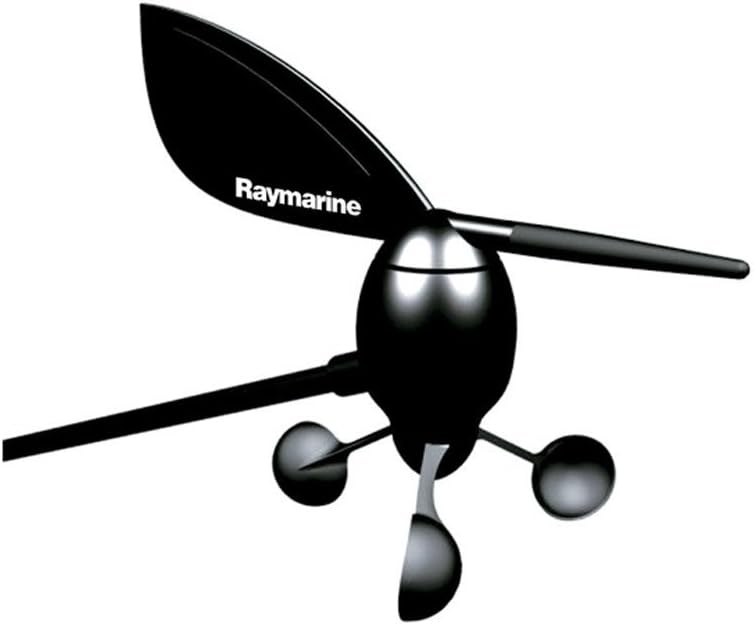
The Raymarine Masthead Only Wind Arm is a fixed-installation sensor component for boats requiring a masthead vane and cups. It has a 4.4 rating, placing it among the better-rated products in the roundup, but it is important to distinguish this assembly from a complete anemometer. The listing identifies a masthead-only wind arm rather than a handheld meter or display package.
We may earn a commission when you buy through this link, at no additional cost to you.
A masthead sensor offers the advantage of positioning the wind sensor above the vessel, away from many of the disturbances that affect readings near the deck. The vane and cups form the moving parts used to sense wind direction and speed. Because this is an installed component, the overall result depends on the display, cabling, masthead base, and compatible Raymarine system used with it.
The supplied description is limited and directs buyers to seek further details. Consequently, important questions such as the exact compatibility list, included hardware, cable requirements, and installation procedure should be confirmed before purchase. Users should also consider access to the masthead, the routing of the cable, and whether a technician is needed.
This product is best for a boat owner with a compatible system whose masthead wind arm needs replacement. It is not appropriate for portable readings or a new display installation. Buyers who want a complete matched arrangement should consider the Raymarine i60 Wind System with Masthead or the i60 Display System with Masthead Wind Vane Transducer instead.
A masthead arm places the wind-sensing components above much of the boat's superstructure. This installation logic can reduce interference from onboard structures when the sensor is installed correctly.
The wind arm is only one part of a functional instrument chain. Confirm the compatible display, transducer or base, cable, and masthead installation before ordering to avoid ending up with a component that cannot be integrated.
We may earn a commission when you buy through this link, at no additional cost to you.
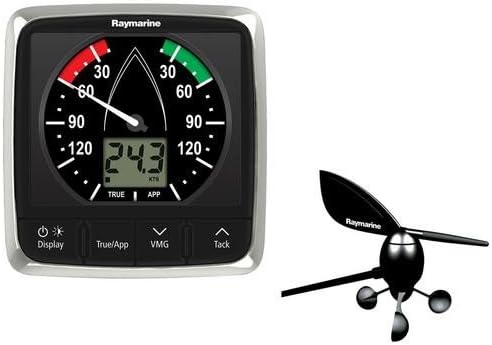
The Raymarine i60 Wind System with Masthead is the most complete dedicated marine wind package in this guide. It receives a 4.4 rating and includes a masthead transducer, a 30-meter cable, and a base. Rather than offering a temporary reading, it is designed to provide a permanent wind speed and direction display at the helm.
We may earn a commission when you buy through this link, at no additional cost to you.
The system displays wind speed, direction, Beaufort information, maximum wind speed, VMG, and tack. VMG and tack are particularly valuable to sailors because they help describe progress toward a target and the vessel's position relative to the wind. The analog dial is designed for quick interpretation, while high-contrast text and graphics support navigation at a glance.
Nighttime operation is supported by red backlighting, which is less disruptive in darkness than a bright white display. Low power consumption is another important benefit for a permanently installed instrument. The system's stated 110 mm by 115 mm footprint matches older Raymarine ST60+ instrumentation, which can simplify certain upgrade decisions when the surrounding installation is already compatible.
This is the leading choice for a boat owner seeking a traditional, fixed wind instrument rather than a handheld gadget. It requires appropriate masthead placement, cable routing, and electrical integration, so installation planning is essential. Among the listed products, it offers the most clearly defined combination of complete hardware, sailing-focused information, and helm-ready display functionality.
VMG and tack information make the i60 more than a simple speed display. These functions give sailors context about performance and heading, while Beaufort and maximum wind readings add useful environmental and short-term tracking information.
The analog dial, high-contrast graphics, red nighttime backlighting, and low power consumption are all consistent with an instrument intended for continuous onboard use. The matching legacy footprint may also help owners of compatible Raymarine installations.
We may earn a commission when you buy through this link, at no additional cost to you.
The Raymarine i60 Wind Display System with Masthead Wind Vane Transducer is a feature-rich installed system centered on a masthead sensor. No numerical customer rating was supplied for this listing, so its comparison here relies on the stated features rather than a rating comparison. It is designed to provide live wind speed and direction from the masthead to an onboard display.
We may earn a commission when you buy through this link, at no additional cost to you.
The display information can include current wind speed, apparent wind angle, true wind angle, and other wind data. Users can customize screen configurations and data fields, allowing the most relevant information to remain visible. Adjustable backlighting improves readability during both daylight and nighttime conditions, while the described controls are intended to make menu navigation straightforward.
The masthead wind vane transducer is described as a precision instrument built for demanding marine conditions, with a robust design intended to tolerate saltwater exposure and extreme weather. Real-time updates allow the helmsman to monitor changing conditions without leaving the display to retrieve a handheld instrument.
This system is best for a boat owner who wants detailed, configurable wind data and a permanent marine installation. Buyers should still verify the complete package contents, compatibility, mounting requirements, and cable arrangement for their particular vessel. It is more involved than a handheld meter, but it offers a much richer onboard information display for sailors who depend on wind direction and angle data.
Customizable data fields let users prioritize the information they use most. Apparent and true wind angles are especially relevant when evaluating sailing performance, while the complete displayed set is broader than a basic speed-only instrument.
A masthead transducer and adjustable backlighting align with permanent onboard use. The stated emphasis on marine durability addresses the exposure and weather conditions that a permanently mounted sensor must withstand.
We may earn a commission when you buy through this link, at no additional cost to you.
The Mcbazel 3-in-1 is a compact handheld digital anemometer that measures wind speed, wind temperature, and wind level using the Beaufort scale. Its 4.5 rating indicates solid user satisfaction, while its three-part display gives it a clear functional identity. It is suitable for HVAC work, sailing, fishing, and general indoor or outdoor airflow checks.
We may earn a commission when you buy through this link, at no additional cost to you.
Five wind speed units are available: meters per second, kilometers per hour, knots, feet per second, and miles per hour. The double-line LCD can show wind speed and temperature together, while the Beaufort scale presents wind level from 1 to 12. A backlight improves legibility in low-light settings, and MAX, MIN, AVG, and data-hold functions make short-term comparisons more convenient.
Its portable body and AAA power source make it easy to carry to a deck, dock, fishing area, or mechanical room. Automatic power-off helps conserve batteries, and a low-battery indicator supports reliability. One practical limitation is that AAA batteries are not included, so users should obtain a suitable pair before the first use.
The Mcbazel is a good pick for a buyer who wants more than a bare speed reading without moving to a full onboard instrument. It is not designed to show wind direction, and its Beaufort reading should be viewed as a convenient wind-level indicator rather than a replacement for detailed navigation data. For casual checks and portable versatility, it offers a clear, approachable package.
The simultaneous display of wind speed, temperature, and Beaufort level provides more context than a single-value meter. That makes the instrument useful for quickly comparing conditions across fishing, sailing, HVAC, and other tasks.
MAX, MIN, AVG, and hold options support quick recording and comparison of changing readings. These controls are useful when the instrument cannot be watched continuously throughout an entire measurement period.
We may earn a commission when you buy through this link, at no additional cost to you.
The right marine anemometer depends on the vessel, installation, and information required. Start by deciding whether you need a portable spot-check meter, a fixed cockpit display, a complete masthead system, or a replacement component, then compare the available functions and compatibility.
Match the instrument format to the use case rather than choosing solely by feature count. Choose a handheld model for convenience, a complete system for continuous sailing data, and a component only when the rest of the existing system is known to be compatible.
Prioritize the measurements you will actually use. Direction and angle data are central to sailing, while temperature and Beaufort level are often more useful for general boating, fishing, and outdoor conditions.
Never assume that a similarly named Raymarine component will work with every installation. Confirm the transducer, cable, base, display, connector, and mounting requirements, and consult manufacturer documentation when anything remains uncertain.
Look for the units you use regularly and check the listed accuracy before relying on a reading for a safety-related decision. For portable instruments, the presence of max, min, average, and hold modes can add value without changing the underlying sensor.
Test the information hierarchy rather than looking only at screen size. The best display makes current speed, direction, and temperature easy to distinguish without cycling through several pages.
Choose accessories that match how the instrument will be used. A compact meter without a secure grip may be awkward on a wet deck, while a tripod setup is unnecessary if readings will only be taken for a few seconds.
Check whether batteries are included before planning a first outing. The Mcbazel requires AAA batteries that are not included, whereas several competing portable meters include them. Installed equipment should be evaluated for continuous power and nighttime visibility instead.
For casual use, favor portability and readable essential measurements. For serious sailing, prioritize a complete compatible system with direction, angle, and sustained onboard operation.
Before use, read the included instructions and identify the correct wind unit for your activity. For a portable meter, install the specified batteries, select the unit, and allow the sensor and fan to stabilize. A tripod can help when a sustained reading is needed, but the instrument should still be placed where airflow is not blocked by the boat, cabin, hands, or nearby equipment.
For an installed system, follow Raymarine's compatibility and installation guidance. Confirm that the masthead transducer, cable, base, display, and power supply are matched, route the cable safely, and seal or protect penetrations as required. Do not substitute a display-only unit, masthead-only arm, or replacement bowl for a complete system when the required components are absent.
Protect the sensor and connectors from saltwater, debris, and impact, clean the moving vane and cups with appropriate care, and inspect fixings before rough weather. Store handheld units in their pouches when possible, remove batteries during long storage, and replace damaged parts rather than forcing seized vanes or cups. Check the manufacturer's guidance for service intervals and compatible replacement components.
A handheld anemometer can be useful for a quick wind check, but its reading depends on correct placement and steady operation. Hold it in open airflow, away from cabin structures, and allow time for the sensor to stabilize. For continuous sailing decisions and accurate wind direction, a properly installed masthead system is generally the more appropriate format.
Apparent wind is the wind felt by a moving vessel, combining true wind with the airflow created by the boat's motion. True wind is the wind measured relative to the water and is calculated using boat speed and heading. A system that displays both can help sailors understand the conditions they actually experience while underway.
Several of the listed handheld meters are designed to measure low airflow around HVAC installations, ducts, vents, dust collectors, and heat registers. For a basic estimate, airflow in CFM can be calculated by multiplying wind speed by the duct's cross-sectional area. The meter should be positioned in a steady airflow, and the duct geometry must be known accurately.
It depends on how much detail you need and how the boat is used. A handheld meter is convenient for launch conditions and casual outings, while a masthead system continuously provides speed and direction at the helm. Small-boat owners should balance information needs against installation complexity, compatible equipment, and available space.
The Beaufort scale expresses wind strength in a series of numbered levels based on observed conditions. The Mcbazel 3-in-1 displays wind level from 1 to 12, allowing users to interpret conditions more quickly than by reading speed alone. It is a general descriptive scale, so a numerical speed reading remains useful when more detail is required.
A display-only unit needs a compatible external sensor to provide wind measurements. The Raymarine Instrument Wind i60 Display Only is therefore intended to complement an existing system, not function as a standalone anemometer. Verify the transducer, cable, base, power, and compatibility before purchasing only the display.
Portable sensors can take time to acclimate after a change in temperature, humidity, or surrounding air. The TopTes TS-301 specifically notes that its temperature and humidity sensors may require at least 30 minutes to adjust to a new environment. Taking an early reading after moving between a cabin and deck can therefore produce a misleading result.
Inspect the vane, cups, fixings, cable, and connectors regularly, especially after severe weather. Saltwater and debris can reduce moving-part performance, while damaged cables or loose hardware can affect the complete installation. Use manufacturer-approved replacement components and service instructions rather than modifying sensor parts or the masthead mount.
The BTMETER BT-100 is the most accessible all-around handheld pick, offering multiple units, temperature and wind chill, and a tripod-compatible threaded base. The Raymarine i60 Wind System with Masthead is the leading complete marine choice, with an analog helm display, sailing-focused data, and an integrated masthead package. The Magnetic Mount Anemometer by Inspeed stands out for its calibrated, compact, magnetic-mount design.
For most casual boaters, a portable meter provides the simplest way to check conditions before departure or during an outing. Sailors who rely on continuous direction, angle, VMG, or tack information should consider a properly matched installed system. Buyers repairing an older installation should identify the exact Raymarine component required rather than buying a complete package unnecessarily.
Finally, verify the current specifications, included accessories, compatibility, and installation requirements before ordering. Product configurations and availability can change, and prices fluctuate over time. Comparing the present listing with the vessel's existing hardware ensures that the selected marine anemometer is both practical and compatible.