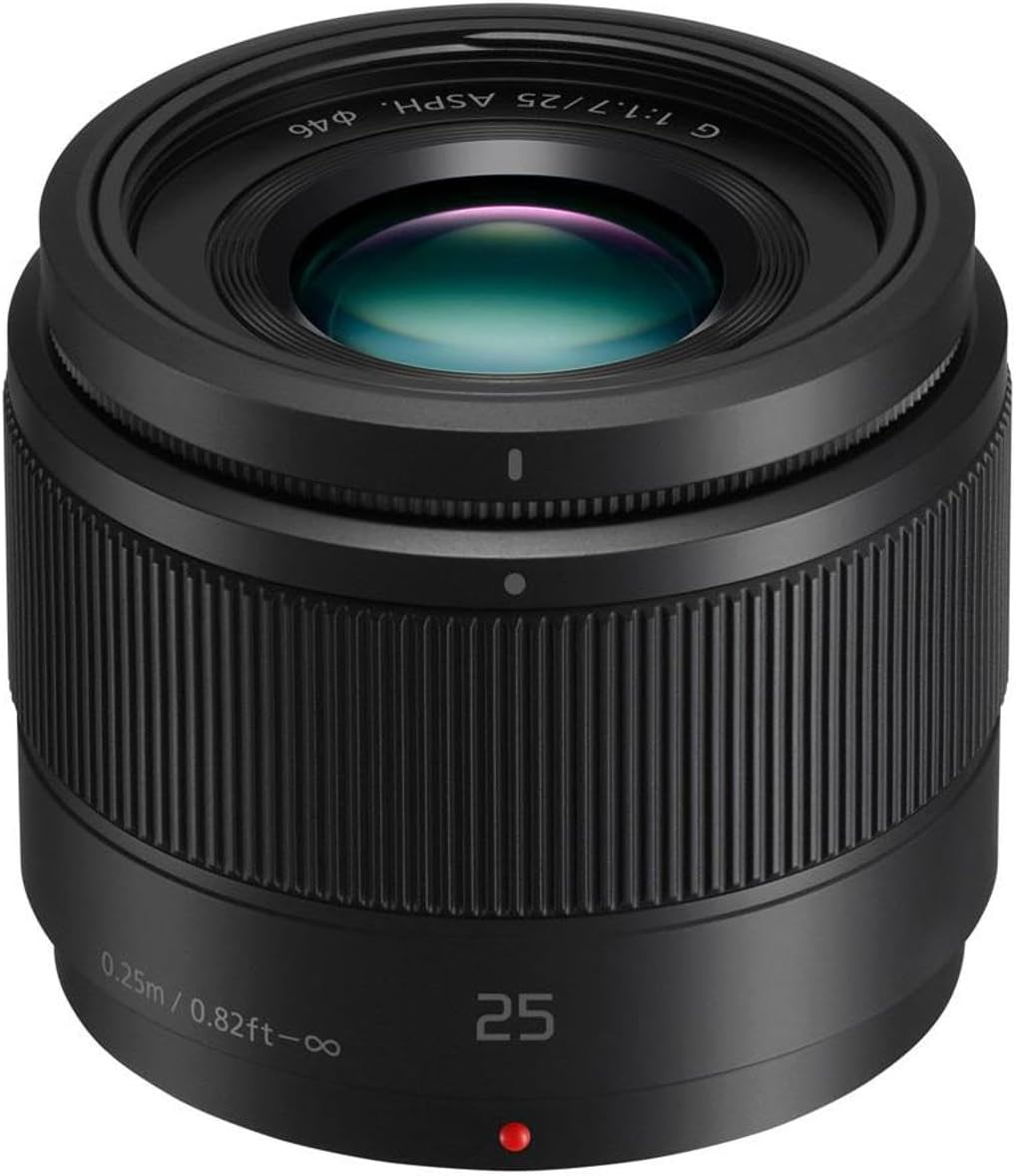
Panasonic LUMIX G 25mm F1.7 ASPH
4.8Editor score
Natural 50mm-equivalent field of view
Bright f/1.7 maximum aperture
Compact 125g stepping-motor design
Best Mft Lens for Video guide comparing 10 Micro Four Thirds lenses for focus, stabilization, zoom, low-light performance, and video workflow needs in 2026.
Micro Four Thirds lenses offer a compelling combination of compact size, useful focal lengths, and features designed for moving-image creators. A strong Mft Lens for Video should focus smoothly, deliver controlled exposure, remain easy to handle, and produce a pleasing image at the focal length and light level required by the shoot.
The lenses in this guide were compared using the information supplied for each model, including focal length, maximum aperture, focus behavior, stabilization, zoom design, close-focus capability, mounting compatibility, and video-specific features. The list covers prime and zoom options for Micro Four Thirds cameras, from compact travel lenses to specialized wide-angle and telephoto choices.
Each review explains where the lens stands out, what trade-offs may matter, and which kind of creator is most likely to benefit from it. Ratings reflect the supplied product data, while recommendations and comparisons are based on documented specifications. Product availability and pricing can change, so confirm current details before buying.
4.8Editor score

4.7Editor score

4.7Editor score
This side-by-side comparison highlights each Micro Four Thirds video lens by focal range, aperture, focusing approach, stabilization, and practical video features, helping creators identify the option that best matches their camera and production needs.


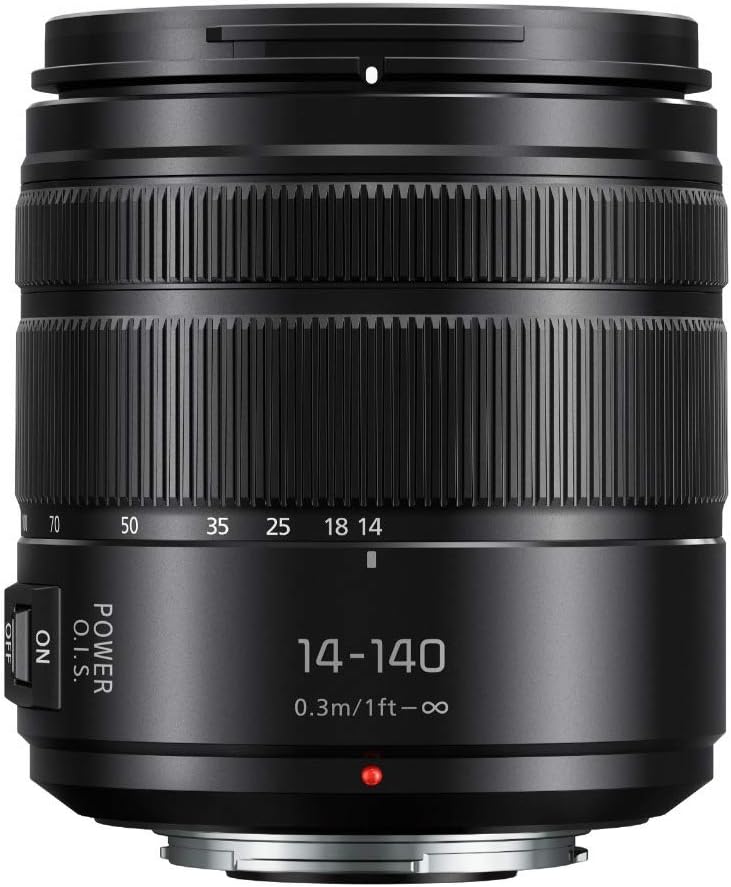


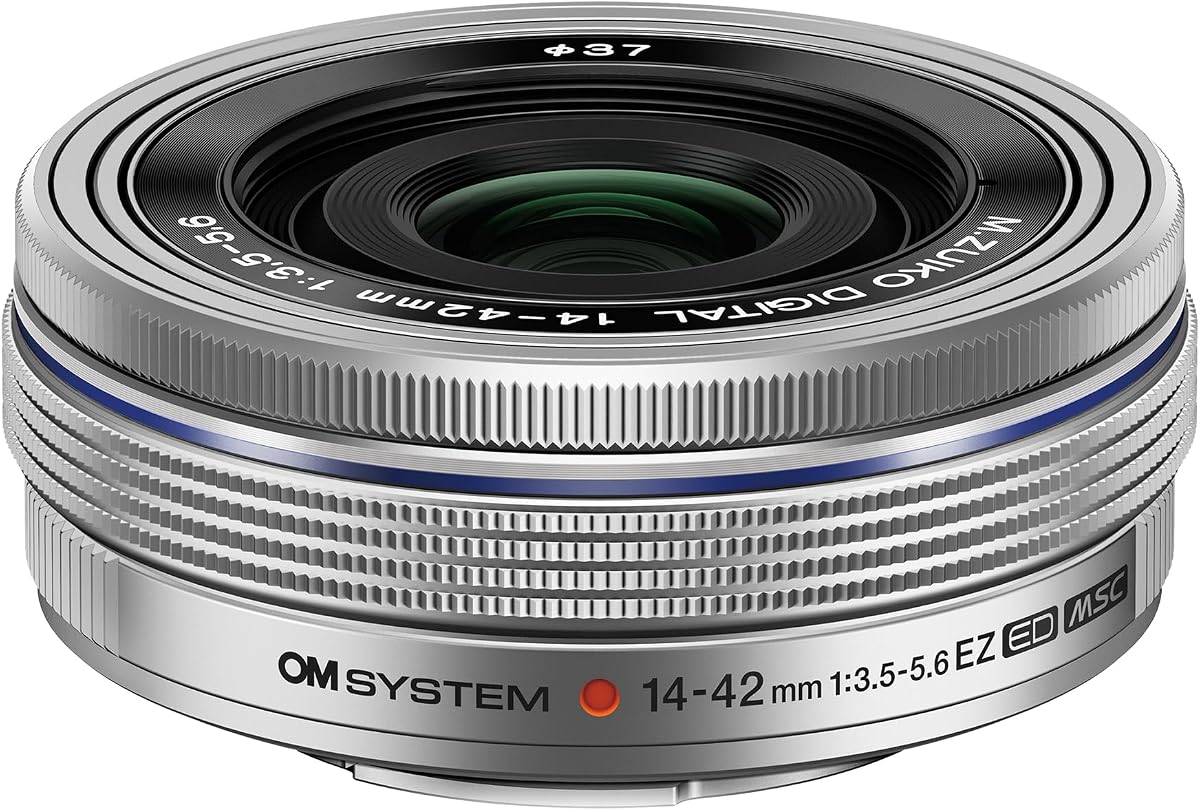
The Panasonic LUMIX G 25mm F1.7 ASPH is a compact prime with a 4.8 rating and a natural 50mm-equivalent field of view. Its appeal for video comes from a useful combination of a bright f/1.7 aperture, an eight-element optical design, and a stepping motor intended to deliver quiet, smooth focusing during still photography and HD video recording.
We may earn a commission when you buy through this link, at no additional cost to you.
The focal length is particularly versatile for everyday storytelling. It is wide enough to establish a location or frame a person within an environment, yet normal enough for interviews, product demonstrations, and observational footage. The f/1.7 aperture can create visible background separation, while the large-aperture design is advantageous when natural light is limited.
Handling is another major strength. At a listed 125 grams and 2.05 inches long, the lens is easy to carry and should pair comfortably with a compact Micro Four Thirds body. The trade-off is that its fixed focal length cannot be zoomed, and the supplied specifications do not list optical stabilization, so stabilization depends on the camera body or the creator's support setup.
This is a strong choice for creators who want one dependable normal-view prime rather than a broad zoom. It suits everyday vlogging, documentary work, interviews, and short films where a natural perspective, fast aperture, and compact autofocusing prime matter most. For its balance of size, brightness, and straightforward framing, it is an especially accessible Micro Four Thirds video lens.
The 25mm focal length provides a 50mm-equivalent perspective on Micro Four Thirds, giving creators a natural-looking view for interviews, walk-and-talk clips, demonstrations, and general observational footage. That makes it easier to compose without the distortion associated with very wide lenses.
The f/1.7 aperture supports shallow depth of field and gives creators more exposure latitude in dim scenes. Its background-blurring potential can also add visual separation around interviews, food, portraits, and detail-focused subjects.
We may earn a commission when you buy through this link, at no additional cost to you.
The Panasonic LUMIX SUMMILUX 9mm F1.7 ASPH is a specialized ultra-wide prime built for creators who need expansive framing in a portable package. Its 4.7 rating reflects a lens that combines a large f/1.7 aperture with video-oriented characteristics such as minimal focus breathing and smooth aperture control.
We may earn a commission when you buy through this link, at no additional cost to you.
The 9mm focal length offers a dramatically wider field of view than a conventional video lens. It can be useful for establishing shots, confined spaces, action coverage, vlogging, close perspectives, and sequences in which spatial context is important. The exceptional 0.095-meter minimum focusing distance further expands its creative usefulness, especially when a dramatic near-field and distant background are desired.
Video operation is central to the design rather than an added feature. Minimal focus breathing helps limit unwanted changes in apparent framing while focus is adjusted, and smooth aperture control supports more gradual exposure and depth-of-field transitions. The listed dust-, splash-, and freeze-resistant design also makes the lens suitable for field use where conditions may be less controlled.
The main challenge is that ultra-wide framing can distort subjects near the edges, particularly close to the camera. A fixed focal length also prevents reframing by zooming. Even so, creators who specifically need a very wide Micro Four Thirds perspective should find this focused and unusually capable lens compelling.
A 9mm prime is well suited to footage that needs to communicate scale, surround movement, or work within a confined environment. Its wide view lets creators place a subject in context without stepping back, while the compact design remains practical to carry.
Minimal focus breathing and smooth aperture control are especially relevant when a shot changes focus or depth of field during recording. These characteristics support a smoother visual result than a lens that shifts its apparent field of view noticeably while focusing.
We may earn a commission when you buy through this link, at no additional cost to you.
The OM SYSTEM M.Zuiko Digital 40-150mm F4.0-5.6 R is a versatile telephoto zoom with a 4.6 rating. Its 40-150mm focal range provides an 80-300mm equivalent field of view, covering everything from moderately tight portraits to distant sports and event coverage without changing lenses.
We may earn a commission when you buy through this link, at no additional cost to you.
Video suitability comes from a nearly silent autofocus system that works with both movie and still recording. That is important when subjects move during a take, because it reduces distracting mechanical noise. The 3.75x zoom also allows creators to adjust composition between shots or reframe during a scene, although the actual zoom factor is not documented in the supplied specifications.
The trade-off is maximum aperture. An f/4.0-5.6 range is less bright than the f/1.4, f/1.7, and f/1.8 primes in this guide, so low-light work may require a higher ISO setting or additional light. The 90-centimeter macro focus range and 1:6.25 maximum reproduction ratio are useful for tighter detail shots, but the lens is not a close-focusing macro specialist.
This lens is an excellent second option for creators who need reach without carrying a long prime. It fits interviews with distant subjects, outdoor events, sports, wildlife observation, and detailed B-roll. For a Micro Four Thirds kit built around flexibility, the 40-150mm R offers a practical balance of range, portability, and quiet focusing.
The 80-300mm equivalent coverage lets creators move from contextual portraits to tightly framed action. It is particularly useful when variable framing is important and changing lenses between shots would be inconvenient.
The nearly silent autofocus system is a meaningful video feature because mechanical sounds can be recorded during quiet scenes. This makes the zoom more practical for interviews, observational footage, and moments that depend on natural ambient sound.
We may earn a commission when you buy through this link, at no additional cost to you.
The OM SYSTEM M.Zuiko Digital 45mm F1.8 is a compact portrait prime with a 4.7 rating. Its core appeal is a bright f/1.8 aperture paired with a 45mm focal length, giving creators a conventional perspective for interviews, portraits, and detailed narrative footage.
We may earn a commission when you buy through this link, at no additional cost to you.
The optical design produces a defocused background that can isolate faces and small subjects. Its rounded seven-blade diaphragm is also described as contributing to a pleasing bokeh quality, with the curved blade shape designed to render out-of-focus highlights in a smoother way. The maximum aperture is valuable indoors or after sunset, where every additional stop of light can reduce the need to raise ISO.
A 0.20-meter minimum focusing distance allows a relatively close working distance, which is useful for detail inserts, tabletop food footage, and intimate portraits. The lens uses a quiet, movie- and still-compatible drive, reducing the chance that focus movement will distract in a recorded scene. The optional LH-40B hood can provide extra shielding in bright conditions.
Its limitations are typical of a dedicated prime. There is no zoom, so reframing requires physically moving the camera or subject, and the supplied information does not list optical stabilization. Creators who want a dedicated normal-view lens for beautiful backgrounds, clean audio, and attractive low-light exposure should consider this compact option.
The f/1.8 aperture creates a strong shallow-focus look without requiring the extreme aperture of an f/1.4 prime. That makes it a balanced option for portraits, interviews, and detail footage where both subject separation and exposure flexibility matter.
The rounded seven-blade diaphragm is designed to shape out-of-focus points more smoothly than a simple polygonal aperture. The result can be especially attractive in scenes with bright background highlights, restaurant interiors, and nighttime street footage.
We may earn a commission when you buy through this link, at no additional cost to you.
The Panasonic LUMIX G X Vario 14-42mm is a compact standard zoom rated 4.4. Its 14-42mm range corresponds to a 28-84mm equivalent field of view, making it a flexible choice for travel, everyday vlogging, street footage, and short-form production.
We may earn a commission when you buy through this link, at no additional cost to you.
Two features stand out for video users. Power zoom allows the zoom action to be controlled through supported camera functions, which can be useful for remote or carefully composed shots. POWER O.I.S. also adds optical stabilization inside the lens, helping suppress small hand movements in low-lit recordings when the camera's own stabilization is absent or insufficient.
The variable f/3.5-5.6 aperture is the main limitation compared with the fast primes in this list. It is particularly important to consider that the maximum aperture changes across the zoom range, and neither the supplied data nor this guide should be read as a promise of consistent low-light performance at every focal length. Nano Surface Coating helps minimize reflections across the visible light range.
For creators who want greater framing flexibility than a prime can offer, this lens remains a logical general-purpose choice. Its compact body, built-in stabilization, and electronic zoom support make it particularly friendly to run-and-gun workflows. It is best suited to creators who value adaptability and easy operation more than maximum aperture or telephoto reach.
A 3x zoom lets creators move from environmental compositions to tighter details with one lens. That flexibility can reduce downtime between shots and makes the lens useful for mixed-location projects.
Lens-based optical stabilization can smooth small camera movements during handheld recording. Power zoom adds another layer of control, allowing supported camera systems to manage zoom operation during filming.
We may earn a commission when you buy through this link, at no additional cost to you.
The Panasonic LUMIX G Vario 14-140mm is a broad 10x zoom rated 4.6. It is designed to cover a wide variety of production situations without requiring several different lenses, spanning wide-angle establishing material through normal perspectives and well into telephoto coverage.
We may earn a commission when you buy through this link, at no additional cost to you.
The supplied specifications identify 14 optical elements in 12 groups, including three aspherical elements and two ED lenses. These are intended to reduce distortion and chromatic aberration while maintaining image quality. For video, the more immediate benefit is the ability to stay with a subject as distance and composition change, particularly in documentary, event, travel, and outdoor work.
Power O.I.S. provides optical stabilization for small movements and low-light conditions. The lens also has a durable metal Micro Four Thirds mount and a rugged splash- and dust-resistant construction, making it a practical choice for field use. The important trade-off is its f/3.5-5.6 maximum aperture, which becomes less bright as the zoom range is used.
This lens makes the most sense for creators who need one all-purpose lens rather than the brightest possible prime. It cannot match the shallow depth of field of an f/1.4 or f/1.7 lens, but it offers exceptional working flexibility. Documentary filmmakers, travel storytellers, and event videographers should find that balance especially valuable.
The 10x range allows a creator to begin with a wide composition and tighten the framing without returning to the camera bag. This makes the lens efficient for locations where several shot sizes may be needed in a short period.
The durable mount and splash- and dust-resistant construction are meaningful advantages for outdoor or travel production. Combined with optical stabilization, they support practical operation beyond a controlled studio environment.
We may earn a commission when you buy through this link, at no additional cost to you.
The Sigma 56mm F1.4 DC DN is a fast Micro Four Thirds prime with a 4.7 rating. It belongs to Sigma's Contemporary line and is characterized by a compact design, low weight, and image quality focused on practical shooting, including a smooth and quiet autofocus system designed with video in mind.
We may earn a commission when you buy through this link, at no additional cost to you.
The f/1.4 maximum aperture is the headline specification. It provides a bright starting point for indoor scenes and supports pronounced background separation when a creator wants the subject isolated. The 56mm focal length produces a tighter perspective than the wider primes in this guide, which can be useful for portraits, interviews, food, and compressed-looking detail shots.
Autofocus behavior is particularly noteworthy. When paired with a camera that provides compatible face-recognition or eye-detection functions, the lens can maintain focus on a face or eye as the subject moves during recording. Quiet operation helps creators capture usable audio without prominent focus-mechanism noise, while the smooth focus response supports conversational pacing.
The fixed 56mm focal length means creators cannot zoom to adjust composition, and the longer perspective requires more camera distance than a wide lens. Even so, the combination of a wide aperture, quiet autofocus, and subject-recognition support makes this a compelling lens for creators who frequently work with people and need refined low-light exposure.
An f/1.4 maximum aperture provides a strong foundation for low-light recording and controlled depth of field. It is particularly useful for interviews, evening street scenes, and images where the subject must stand apart from a busy background.
Compatible face and eye detection can keep a moving subject in focus during a take. The smooth, quiet system also reduces the visual distraction and recorded sound associated with less refined focus mechanisms.
We may earn a commission when you buy through this link, at no additional cost to you.
The TTARTISAN 23mm F1.4 is a manual-focus wide-angle lens and the highest-rated product in this guide at 4.9. It is designed around an APS-C-style 23mm perspective, described as equivalent to a 35mm full-frame lens with a natural 62-degree field of view for travel, street, interior, landscape, portrait, and low-light work.
We may earn a commission when you buy through this link, at no additional cost to you.
Its f/1.4 aperture is the central attraction. It can help photographers and videographers retain a bright exposure in dim cafes or at sunset, while the ten-blade aperture is intended to produce attractive background bokeh. The lens can focus as close as 20 centimeters, allowing subjects to fill more of the frame even though the lens is relatively wide.
Manual focus is the defining trade-off. The lens provides a tactile aperture ring with clicks from f/1.4 through f/16, but creators must adjust focus manually. This can be rewarding for cinematic work, deliberate focus pulls, and shooting with a camera that offers focus peaking or magnification assistance, although it requires more attention than an autofocus prime.
The optical construction includes six groups and eight elements, with one extra-low dispersion element and three high-refractive-index elements intended to reduce chromatic aberration and spherical distortion. The supplied compatibility list covers a broad range of Olympus and Panasonic Micro Four Thirds cameras. This is best suited to creators who value character, brightness, and manual control over automated focus.
The 23mm design offers enough width for environmental storytelling without moving into an extreme fisheye-like perspective. That makes it relevant to travel films, walk-and-talk clips, interiors, street sequences, and scenes that benefit from visible surroundings.
Manual focus invites intentional focus placement and cinematic transitions. The clicky aperture ring provides a tactile way to adjust exposure and depth of field, though smooth focus changes will depend on the camera's live-view aids and the creator's technique.
We may earn a commission when you buy through this link, at no additional cost to you.
The Panasonic LUMIX G Vario 45-150mm is a medium telephoto zoom with a 4.5 rating. Its 45-150mm focal range gives creators a 90-300mm equivalent field of view, filling the gap between the standard zoom in this guide and a much longer telephoto setup.
We may earn a commission when you buy through this link, at no additional cost to you.
For video, the stepping motor is designed to deliver smooth, near-silent focusing during both still and video recording. An inner-focus system supports resolution and contrast from full life-size magnification through infinity. Mega O.I.S. adds optical stabilization intended to suppress blur from small hand movements in low-lit situations.
The optical design uses 12 elements in nine groups, including one UHR element and two aspherical elements, with multicoating intended to reduce ghosting and flare. A seven-blade aperture gives out-of-focus areas a smoother appearance at wide apertures, helping the lens create a more gradual background blur.
The f/4.0-5.6 maximum aperture is modest compared with fast primes, and the supplied data does not identify an electronic zoom control. Even so, the combination of smooth near-silent focusing, stabilization, and a useful medium-telephoto range is compelling for portraits, outdoor events, wildlife, and distant details.
The 90-300mm equivalent range is useful when a subject needs isolation but the full reach of a super-telephoto lens would be unnecessary. It also creates a flattering, compressed perspective for portraits and distant action.
Mega O.I.S. helps stabilize handheld movement, while the stepping motor focuses smoothly and near silently. Together, they support recorded footage in locations where camera noise and low-light shake could otherwise disrupt the result.
We may earn a commission when you buy through this link, at no additional cost to you.
The OM SYSTEM M.Zuiko Digital 14-42mm F3.5-5.6 EZ is a compact 3x standard zoom with a 4.4 rating. It is designed for Micro Four Thirds cameras and emphasizes convenient operation, particularly electric and wireless zoom control for video shooting.
We may earn a commission when you buy through this link, at no additional cost to you.
Electric zoom removes the need to turn a conventional zoom ring during recording. On a compatible camera, this can make framing changes more consistent and allows wireless control when supported. The fully rotating focus ring adds another practical video-oriented feature, giving creators a straightforward way to manage focus using camera assistance or manual technique.
The 14-42mm range provides a useful standard zoom for travel, everyday vlogging, street scenes, documentation, and general-purpose production. A 3x ratio makes it easier to move between wide and tighter compositions without changing lenses. The maximum aperture varies from f/3.5 to f/5.6, so low-light performance changes across the range, and no optical stabilization is listed.
This lens is best for creators who prioritize compactness, electronic framing control, and straightforward everyday coverage. It may not be the first choice for heavily low-dependent work or highly specialized portraits, but it is a versatile default lens for a Micro Four Thirds video kit.
Electric zoom can produce a more consistent zoom action than manually rotating a ring, which is useful during recording. Wireless control expands the possibilities for remote or stabilized camera arrangements when the camera system supports it.
The 3x range covers common wide-to-normal compositions without the bulk of a longer travel zoom. It works well as a primary lens for creators who want one general-purpose option for everyday footage.
We may earn a commission when you buy through this link, at no additional cost to you.
Choosing a Micro Four Thirds video lens involves balancing field of view, aperture, focus method, stabilization, physical size, and compatibility. The most useful lens is the one that supports the subjects, locations, and production style you actually expect to film.
Focal length determines how much of a scene a lens includes and how subjects are portrayed. A 9mm lens is suited to expansive environments and close wide-angle work, while 23mm and 25mm primes provide natural general-purpose views. The 45mm and 56mm primes create a tighter, more portrait-oriented perspective. For changing needs, the 14-42mm and 14-140mm zooms provide greater framing flexibility across different shot sizes.
Choose the shortest or longest focal length according to how you move, where you can place the camera, and how closely you need to isolate your subject. A fixed prime is simpler during a focused shoot, while a zoom reduces lens changes and makes rapid reframing more convenient.
The maximum aperture affects exposure and depth of field. The f/1.4 options from Sigma and TTARTISAN offer the greatest light-gathering potential, while the Panasonic 25mm f/1.7 and OM SYSTEM 45mm f/1.8 also provide bright, background-blurring capability. Variable-aperture zooms offer framing flexibility but become less bright toward their slow ends.
Match the aperture to the lighting. Bright primes are advantageous indoors and after dark, while a creator with dependable lighting may prioritize a zoom's range over maximum light. Remember that a shallow depth of field can also make maintaining focus more demanding.
Autofocus is essential for most modern video work, particularly interviews, vlogging, events, and moving subjects. The Panasonic 25mm uses a stepping motor for quiet, smooth focusing, the OM SYSTEM 40-150mm is described as nearly silent for movies, and the Sigma 56mm offers smooth, quiet autofocus with compatible face and eye detection. The TTARTISAN 23mm is manual focus and therefore requires a different workflow.
Decide whether dependable automation is more important than the creative control of manual focus. A manual lens can produce deliberate cinematic focus effects, but it calls for practice, live-view magnification, focus peaking, or other camera assistance during critical recordings.
Optical image stabilization can reduce small camera movements in low-light footage. The Panasonic 14-42mm and 14-140mm include Power O.I.S., while the 45-150mm offers Mega O.I.S. Stabilization does not replace a tripod, gimbal, or stable support for large movements, and it cannot fully prevent motion blur caused by a moving subject.
Check whether your camera body also provides stabilization, because combining systems can sometimes introduce conflicts on some camera bodies. The remaining primes in the list do not list lens-based stabilization, so body stabilization or another stabilization method may be important.
A traditional zoom ring is familiar and direct, while an electric zoom can make framing changes more consistent during recording. The OM SYSTEM 14-42mm EZ provides electric zoom and wireless zoom control, and the Panasonic 14-42mm includes power zoom. Most other zooms in this list use conventional zoom rings based on the supplied product information.
Electronic controls can be especially helpful when the camera is mounted beyond arm's reach or operated remotely. They do not change the optical range, however, so a broad zoom still cannot match a dedicated telephoto lens at maximum reach.
Minimum focusing distance indicates how close a lens can bring its subject into acceptable focus. The Panasonic 9mm SUMMILUX reaches 0.095 meters and provides a 0.25x magnification ratio, making it a standout for dramatic close perspectives. The TTARTISAN 23mm focuses as close as 20 centimeters, while the OM SYSTEM 40-150mm offers a 90-centimeter macro focus range.
Short focus distances are valuable for tabletop footage, tiny products, food, and intimate portraits. If your work is mostly environmental or distant, close-focus capability may matter less than focal range, aperture, or stabilization.
A compact lens is easier to carry and less tiring during long production days. The Panasonic 25mm is listed at 125 grams, while the Panasonic 9mm SUMMILUX emphasizes a lightweight, compact design. Some larger zooms trade size for reach. For outdoor work, the 9mm and 14-140mm offer documented dust-, splash-, and freeze-resistant features, with the 9mm specifically designed for harsh field conditions.
Build a kit around the number of lenses you will genuinely carry. A light prime and one broader zoom can cover many situations, while several specialized lenses may be worthwhile when every focal length has a defined role in the production.
All ten products use the Micro Four Thirds system, but features such as electronic zoom, wireless zoom, face detection, eye detection, and quiet movie focusing depend partly on camera support. The TTARTISAN product includes a detailed camera compatibility list, while the Panasonic and OM SYSTEM lenses are designed for compatible Micro Four Thirds bodies.
Check the camera manufacturer's lens list before ordering, especially if you depend on electronic controls or automatic subject recognition. Also confirm whether stabilization is provided by the lens, the body, or both, and review the camera's support for the lens's intended video features.
Mount the lens according to the camera manufacturer's instructions, align the white alignment marks, and lock it in place before operating the zoom or focus controls. Confirm the camera recognizes the lens and verify that electronic zoom, stabilization, and subject-detection features are available in the menu when they are part of your planned workflow.
Before a recording session, test the lens at the focal length and aperture you expect to use. Check focus speed, breathing, zoom control, stabilization behavior, and background separation with the actual subject and lighting. For manual-focus models, use live-view magnification, focus peaking, a matte box, or another assist available on the camera to place focus accurately.
Keep the front element protected with a lens hood or cap when the lens is not being used, clean glass with an appropriate lens cloth and blower, and avoid touching exposed optical surfaces. Store the lens in a padded, dry place, remove it during prolonged storage, and avoid leaving it in intense heat, direct sun, or moisture-prone locations. For outdoor shoots, check seals and keep ports covered before the lens is exposed to rain or dust.
The best focal length depends on the type of footage. A 9mm or 23mm lens is useful for expansive environments and mobile shooting, while 25mm and 45mm primes provide more natural framing for interviews and general-purpose work. A 56mm lens offers a tighter portrait perspective, and a 14-140mm zoom gives the most flexible coverage in a single lens.
A bright f/1.4 lens can be highly advantageous because it gathers more light and creates shallower depth of field than slower lenses. It may also produce a more noticeable background blur. However, aperture does not tell the whole story: autofocus behavior, focus control, focal length, stabilization, and the camera's support features are equally important to the video result.
Micro Four Thirds lenses are used for professional and enthusiast video production across documentary, event, travel, studio, and online content. The available options range from fast primes to stabilized travel zooms. Professional suitability also depends on the camera, recording format, workflow, support equipment, and the creator's delivery requirements.
Optical stabilization can improve handheld footage by reducing small camera movements, especially in low-light conditions. It is most helpful for static or gently moving subjects and less effective for large walking movements or fast pans. Several lenses in this guide include lens-based stabilization, while some primes rely on stabilization in the camera body or a separate support system.
Manual focus can be valuable for deliberate cinematic work, precise focus pulls, and situations where the creator wants complete control. It requires practice and camera aids such as live-view magnification or focus peaking. The TTARTISAN 23mm F1.4 in this guide is a manual-focus option with a wide perspective, bright aperture, and close focusing distance.
A zoom is convenient when framing and subject distance change frequently, since one lens can cover wide, normal, and telephoto perspectives. A prime generally offers a simpler operation and a distinct visual character for a chosen type of shot. Many creators use a fast prime as their primary lens and keep a broader zoom for flexibility.
These lenses use the Micro Four Thirds mount and are intended for compatible cameras from the major Micro Four Thirds system brands. Electronic zoom, wireless controls, stabilization, face detection, and eye detection may depend on the camera model. Check the camera maker's current lens support before buying if any of those features are essential.
Begin with a lens designed for quiet operation, such as the stepping-motor Panasonic 25mm, the near-silent OM SYSTEM 40-150mm, or the quiet-focus Sigma 56mm. Keep the subject within the lens's focus range, use good lighting to reduce focus hunting, and monitor the microphone during autofocus adjustments. A manual lens can avoid internal focus noise, but it demands more precise control.
The Panasonic LUMIX G 25mm F1.7 stands out as a balanced everyday choice, combining a natural perspective, bright aperture, compact construction, and smooth stepping-motor focus. The SUMMILUX 9mm F1.7 is the specialist option for very wide, immersive footage, while the Sigma 56mm F1.4 offers a bright telephoto perspective with smooth, quiet autofocus and subject-recognition support.
Prioritize the feature your production cannot work without: reach for a telephoto zoom, a natural field of view for a prime, electronic control for smooth reframing, stabilization for handheld low-light work, or manual focus for deliberate cinematic technique. Focal length and aperture matter greatly, but compatibility, focus behavior, portability, and the way the lens works with the actual camera are equally important.
Before purchasing, confirm the camera's support for the lens and any electronic or subject-detection features you intend to use. Product availability and pricing change over time, so compare the current listing and current product details carefully before making a final decision.