
Talking Products Voice Pad Voice Recorder
4.1Editor score
Forty-second recording window
Large tactile recording controls
Photos fit beneath clear cover
Works for phonics practice
Discover the best tape recorder for kids, comparing portability, recording features, controls, connectivity, and learning activities for every age and family
A tape recorder for kids can support storytelling, language practice, music discovery, and old-fashioned creative play. The best models make recording approachable with accessible controls, useful playback options, and enough flexibility for bedrooms, classrooms, travel, and family activities.
This guide compares ten options ranging from compact cassette players to child-friendly digital recorders. We evaluated the supplied specifications for recording methods, speakers, microphones, connectivity, portability, age guidance, and practical extras, while distinguishing dedicated cassette machines from modern digital alternatives.
Each review explains the strongest reasons to consider the product, along with important limitations. The top selections include a creative learning device, a feature-rich cassette player, and a budget-friendly voice pad, while availability and current prices can change over time.
4.1Editor score

4.7Editor score

3.8Editor score
The comparison below covers cassette-based recorders, a child-focused music device, and a digital voice recorder, highlighting the most important differences in format, recording capacity, connectivity, and portability.


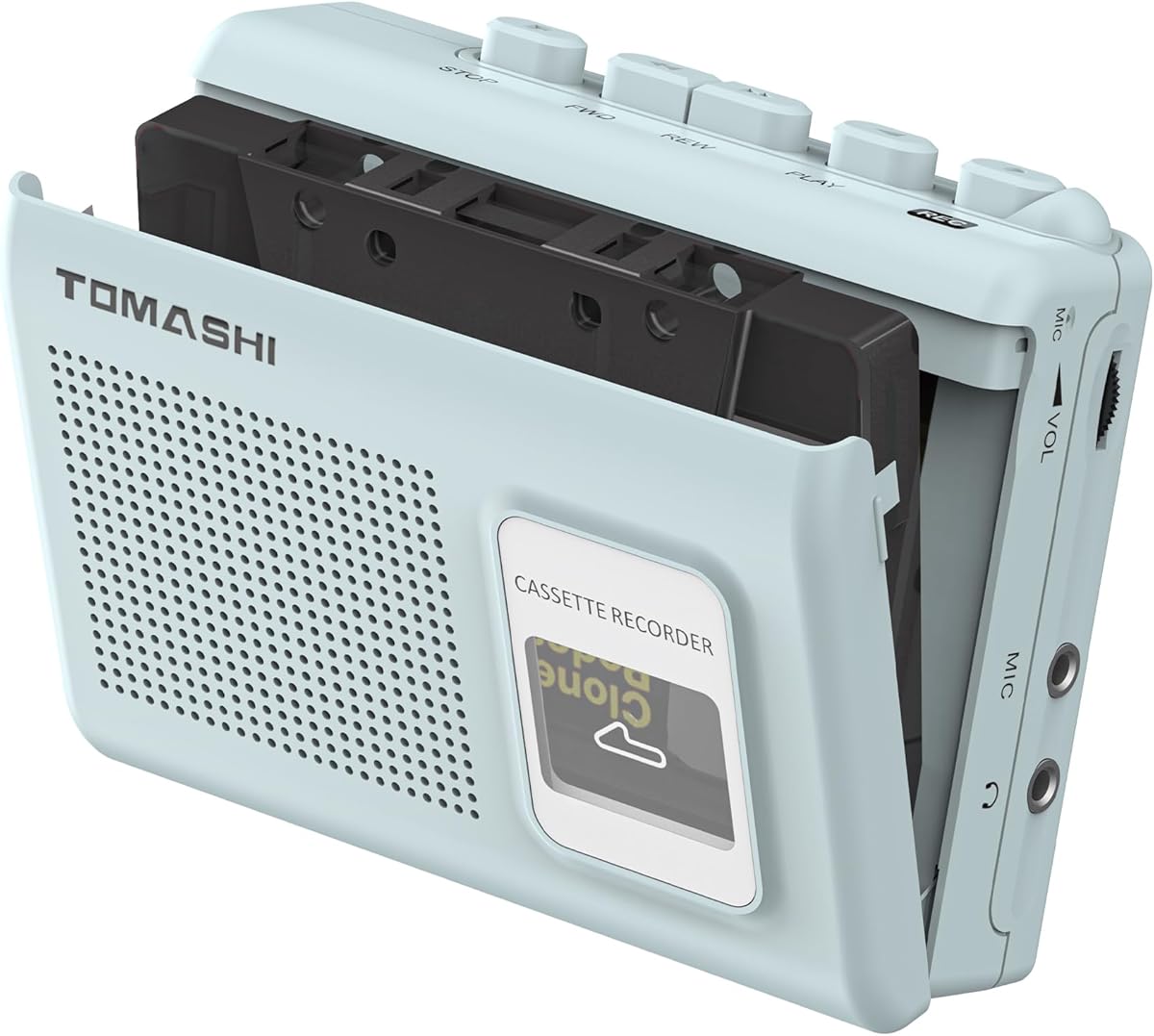


The TOMASHI Portable Cassette Player Tape Recorder combines playback, recording, and portable operation in a compact 4.57 by 3.54 by 1.38-inch body. Its 3.9 rating reflects a practical rather than flawless user experience, but the feature set is unusually versatile for a small unit: a built-in speaker, built-in microphone, headphone jack, and cassette transport controls are all included.
We may earn a commission when you buy through this link, at no additional cost to you.
Its strongest benefit is flexibility. Children can record a message, story, song, or spoken exercise through the built-in microphone and then play it back through the speaker. Headphone mode supports quieter listening, while the transport buttons cover rewind, fast-forward, stop, play, and record. The automatic stop system releases the play button when a tape ends, helping reduce unnecessary wear on the cassette mechanism and pinch roller.
The trade-offs are that batteries and a USB power supply are not included, and the physical controls may need more supervision than touchscreen-style devices. The unit also relies on cassette media, so families need compatible tapes. Automatic stopping helps with one common problem, but it does not change the basic nature of manually rewinding and changing tapes.
This is a sensible choice for a child who wants a traditional tape experience at home, in a classroom activity, or during a road trip. It works especially well for families with existing cassette collections or for anyone who values the visible, mechanical nature of recording. It is less suitable as a completely self-contained digital activity system, but as a portable cassette player and recorder, it covers the essential functions clearly.
Unlike a cassette player that only plays prepared tapes, this model records directly through its built-in microphone. That makes it useful for oral histories, imaginative storytelling, language practice, and recording songs without needing a connected device.
The built-in speaker allows a group to hear a recording, while the headphone jack provides a quieter option for one child. This flexibility helps the same recorder fit into both group learning and individual listening situations.
We may earn a commission when you buy through this link, at no additional cost to you.
The LeapFrog Let's Record! Music Player is the most child-focused product in this guide and carries a 4.7 rating. It is intended for children aged 18 months and older, combining a voice recorder, music player, and collection of early-learning activities in one teal unit designed to encourage movement, singing, and creative sound-making.
We may earn a commission when you buy through this link, at no additional cost to you.
The recording system provides three-minute audio slots with a total capacity of 30 minutes. Children can record their own voices, silly sounds, performances, or spoken messages and then play them back. The supplied music includes ten active songs, ten lullabies and classical selections, ten favorite children's songs, and ten learning songs covering letters, counting, animals, and weather.
Bluetooth is the feature that most clearly separates this product from a conventional voice pad. It can stream music, soundscapes, and other content from a compatible device, expanding the range of listening material without changing the core child-oriented design. The trade-off is that this is not a cassette recorder, so families seeking a traditional tape mechanism should choose one of the cassette models instead.
The device requires four AA batteries, and the included batteries are described as being for demonstration purposes, making fresh batteries advisable for regular use. Even so, it is a strong pick for preschool and early-elementary families who want a recorder that supports both open-ended creativity and structured learning. It is less suited to older children who specifically want to make and manage cassette recordings.
The combination of free recording and educational music gives children several ways to interact with sound. They can sing, perform, make sound effects, listen for letters and numbers, and revisit their own recordings without requiring complicated setup.
Active songs, lullabies, classical music, and familiar children's material cover a wide range of listening situations. Parents can use energetic tracks for movement, gentle selections for quiet time, and learning songs for focused educational play.
We may earn a commission when you buy through this link, at no additional cost to you.
The Talking Products Voice Pad is a straightforward communication and sensory-learning recorder for children, with a 4.1 rating. It records and plays back up to 40 seconds of speech, music, or sound effects, making it suited to brief spoken prompts, phonics practice, listening activities, and simple communication exercises.
We may earn a commission when you buy through this link, at no additional cost to you.
Large tactile buttons make the core operation approachable for young children. The built-in microphone and speaker support both recording and playback, while re-recording allows a child to try a phrase, story, or sound repeatedly. A removable clear cover adds another educational dimension: families can place photographs or pictures beneath it and associate those visual prompts with the recorded audio.
The main limitation is the short recording window, which makes the device less suitable for long stories, songs, or interview projects. It is also not a cassette machine and cannot preserve recordings on physical tape. Replaceable batteries and the simple control layout mitigate the learning curve, but families should understand that this is a compact communication tool rather than a full music studio.
The Voice Pad is a strong budget pick for speech and listening activities, classroom support, sensory play, and children who benefit from large tactile controls. It can be wall-mounted, positioned with its built-in magnets, or displayed using the rear kickstand. For those seeking a simple way to prompt, practice, and play with recorded sound, it offers focused functionality without unnecessary complexity.
The removable transparent cover turns the recorder into a simple communication board. Children can associate a familiar image with a spoken word, sound effect, or reminder, while adults can create tailored prompts for speech and listening practice.
Large tactile buttons make the device easier for young children to understand and operate. The wall hole, magnets, and kick stand also allow adults to position the recorder where a child can reach it comfortably.
We may earn a commission when you buy through this link, at no additional cost to you.
The JENSEN Portable Cassette Player and Tape Recorder offers a more expansive take on the traditional format, earning a 4.0 rating. Its shoebox-style enclosure, one-touch recording control, built-in condenser microphone, and retractable handle make it suitable for children who want to create actual cassette recordings without navigating a complicated recording menu.
We may earn a commission when you buy through this link, at no additional cost to you.
Automatic level control is a meaningful feature for family and classroom use. It adjusts recording volume to support more consistent results, reducing the need to monitor levels closely while a child speaks, performs, or records an interview. The auxiliary input expands the creative possibilities by allowing a smartphone, tablet, or another audio source to be connected.
Listening can be private through the included headphone jack or shared through the external microphone jack and built-in speaker, depending on the setup. The trade-off is size: this is a more substantial retro-styled unit than the pocket-sized TOMASHI models, so it is better suited to a room, table, classroom, or supervised activity than to very compact travel use.
This is the pick for a child who wants a traditional tape deck with convenient recording and modern connection options. It works well for music-making, oral-history projects, classroom activities, and preserving recordings in a tangible format. Adults should supervise the physical controls and ensure compatible cassettes are available, but the overall design makes recording approachable.
Automatic level control helps the recorder adapt as voices or other sounds change. This is particularly useful for children who may move closer to or farther from the microphone during an activity.
The auxiliary input allows a connected device to become part of a cassette workflow, while the built-in microphone, headphone jack, and external microphone jack provide several ways to capture and hear audio.
We may earn a commission when you buy through this link, at no additional cost to you.
The blue TOMASHI Portable Cassette Player Tape Recorder is a compact, colorful option with a 3.9 rating. It follows the same basic format as the black version in the list: a built-in speaker and microphone, headphone support, standard transport controls, and an automatic stop system for the end of a tape.
We may earn a commission when you buy through this link, at no additional cost to you.
Its appeal for children comes from the small 4.57 by 3.54 by 1.38-inch format and distinctive blue finish. The built-in speaker allows recordings to be shared immediately, while the microphone supports stories, performances, and spoken exercises. Headphone listening is available when the child needs a quieter or more personal experience.
The automatic stop function helps protect the pinch roller by releasing the play button when a tape finishes. This is a thoughtful mechanical safeguard, although the machine still depends on manual rewinding, stopping, and tape changing. Batteries and a USB power supply are not included, so the family should plan for replacement cells or an appropriate power source before use.
This model suits children who like colorful personal accessories and want a small format for a backpack, desk, or supervised travel activity. It offers a more traditional recording experience than a digital voice recorder, but it does not offer the broader media compatibility seen in the QFX model. For its size, the core functions cover the main needs well.
The small body makes the unit practical for children who want to carry a recorder between activities. Its blue appearance also helps distinguish it from adult audio equipment and gives the device a more playful identity.
The built-in speaker means a child can hear a newly recorded story or message without attaching headphones. That makes the machine useful for family show-and-tell sessions and simple classroom demonstrations.
We may earn a commission when you buy through this link, at no additional cost to you.
The TOMASHI Portable Stereo Cassette Tape Player pairs a 4.6 rating with a distinctive pink-and-green design. It is positioned as a lightweight personal cassette player with recording capability, using earphones for listening and a dedicated 3.5mm microphone jack for improved recording options.
We may earn a commission when you buy through this link, at no additional cost to you.
A stereo playback head separates left and right channels when playing stereo-recorded tapes through earphones. The included pair of earbuds allows immediate use, although the stated recommendation is to use preferred earbuds or headphones for a better personal listening experience. The playful two-tone frame gives the product a child-friendly retro appearance without resembling the larger shoebox recorders.
The built-in microphone records voices, thoughts, and ambient sounds directly onto a blank cassette. A dedicated external microphone jack can accept a compatible microphone, though one is not included. The main drawback is that there is no built-in speaker, so the product is less convenient for spontaneous group playback than the TOMASHI, JENSEN, PROSCAN, QFX, and Deluxe Products models.
The device is powered by two AA batteries or through a Type-C connection, with batteries and a cable not included. It is a strong choice for a child who wants private listening, enjoys a playful design, and is excited by the process of recording onto physical tape. It is less appropriate when shared, speaker-based playback is essential.
The stereo playback head gives compatible stereo tapes a more separated left-and-right presentation through earphones. This makes the model appealing for children who are beginning to explore the cassette format as a personal music medium.
The pink-and-green enclosure creates a playful vintage look, while Type-C external power adds a modern convenience. The child still experiences a tactile cassette mechanism, but the recorder is easier to replenish with power when batteries are available.
We may earn a commission when you buy through this link, at no additional cost to you.
The PROSCAN Cassette Player and Recorder is a black, carry-handle-equipped unit with a 3.9 rating. It combines traditional cassette playback and recording with a one-touch record button, automatic level control, a headphone jack, and an auxiliary input, making it relevant for children creating stories, interviews, or class presentations.
We may earn a commission when you buy through this link, at no additional cost to you.
A major advantage is the included free-standing microphone. Children can position it on a desk or table while telling a story, reading aloud, or participating in an interview, and the external microphone jack adds further flexibility. Automatic level control is intended to support crisp, consistent recordings, while one-touch recording reduces the number of steps between being ready and capturing audio.
The unit weighs 1.8 pounds and is bulkier than compact personal players, so portability means moving it between rooms or using the handle rather than slipping it into a pocket. Fast-forward and rewind controls support tape management, and AC/DC operation adds setup flexibility. The trade-off is that recording still depends on cassette media, which may be less convenient than digital storage.
This is a capable choice for a child interested in interviews, performances, audiobooks, or classroom-style recording projects. The included microphone and straightforward record control make it particularly practical for collaborative activities. Families seeking something tiny should instead consider one of the TOMASHI personal recorders or the child-focused LeapFrog device.
The free-standing microphone is useful when a child records a performance or speaks from a fixed position. It also makes the system more approachable for interviews because the microphone can be placed across from another person.
One-touch recording and automatic level control reduce technical barriers for younger users. A teacher or parent can explain the activity once, and the child can focus on delivering the message rather than managing multiple settings.
We may earn a commission when you buy through this link, at no additional cost to you.
The QFX RETRO-39BT is the most connected product in the guide, offering a 3.8 rating and an unusually broad set of recording and playback options. It remains a portable shoebox-style cassette player and recorder, but it can also play MP3 files from a USB drive, receive Bluetooth audio through its built-in 3.5-inch speaker, and listen to FM radio stations.
We may earn a commission when you buy through this link, at no additional cost to you.
Its defining feature is direct USB-to-cassette recording. Digital audio from a USB drive can be placed onto cassette tape, while other sources—including cassette, Bluetooth, FM radio, microphone, and line-in—can be recorded to USB with the push of a button. That two-way relationship makes it a practical bridge between physical media and connected devices for creative school projects, music activities, and family storytelling.
Connectivity includes USB input, line-in and line-out jacks, external microphone support, Bluetooth playback, and a sizable built-in speaker. The swivel carrying handle makes the unit easier to move, and it can operate from an included AC cord or four C batteries, although those batteries are not included. Its 3.8 rating is the lowest in this roundup, so buyers should not expect every advanced function to be equally suited to younger children.
This is the premium pick for families that want more than a simple tape deck and have older children capable of handling USB, Bluetooth, and multiple input sources. It is particularly compelling when a child wants to preserve digital projects on cassette or combine a phone, radio, and microphone with tape. Younger children may benefit more from the LeapFrog or Talking Products models.
Direct USB-to-cassette recording gives children a tangible way to save digital audio in an analog format. That makes the machine useful for school presentations, music experiments, and mixed-media projects where keeping a physical copy matters.
Bluetooth, FM radio, MP3 files, USB storage, line connections, and a microphone give children access to many kinds of content. The built-in speaker also makes it possible to share those sources without immediately relying on headphones.
We may earn a commission when you buy through this link, at no additional cost to you.
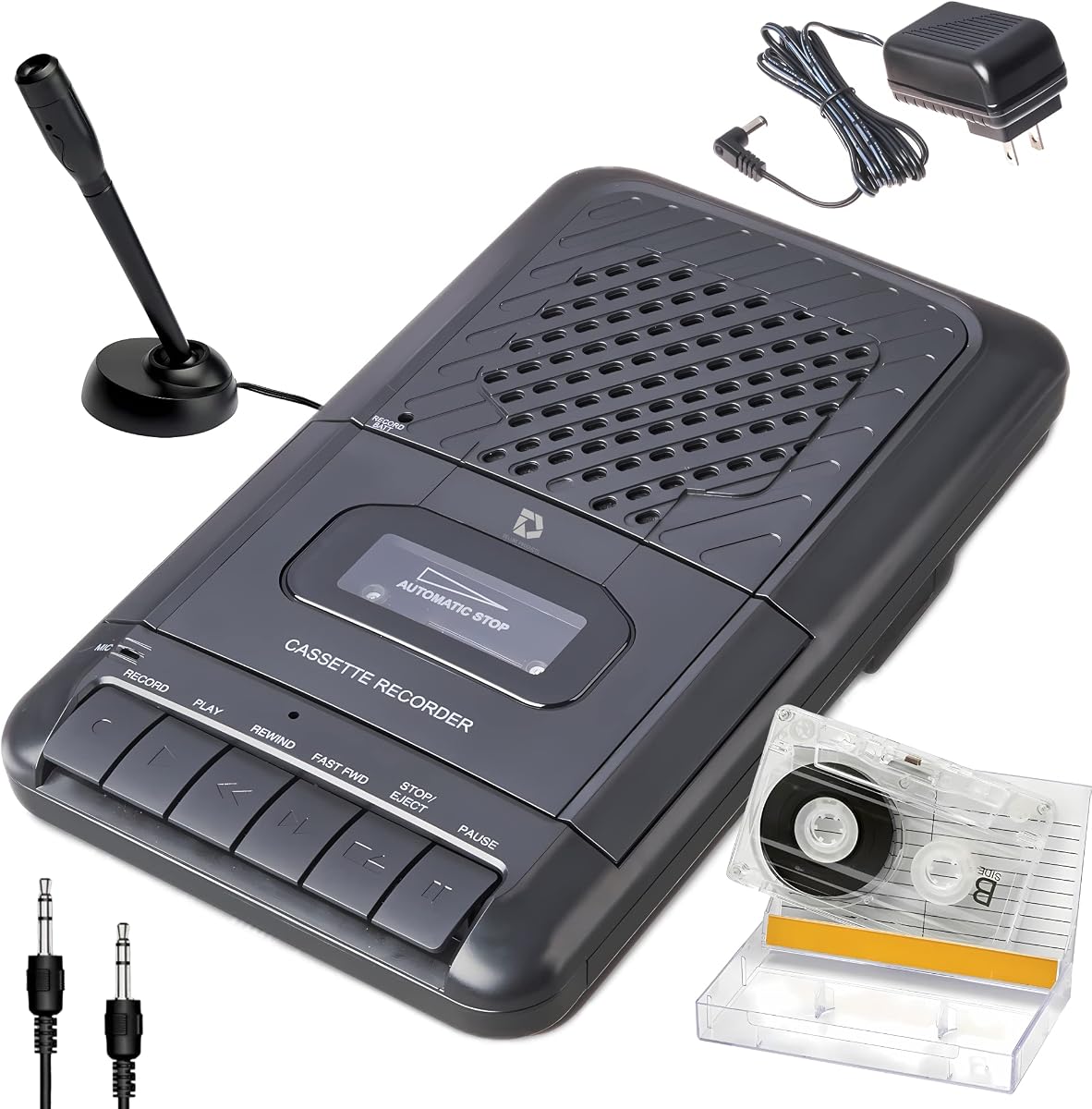
The Deluxe Products Portable Cassette Player Tape Recorder provides a well-equipped traditional recording package with a 3.9 rating. The bundle includes the cassette recorder, external microphone, AC adapter, and auxiliary cable, while the unit itself also has a built-in speaker and built-in condenser microphone.
We may earn a commission when you buy through this link, at no additional cost to you.
There are several routes for recording. A child can use the built-in condenser microphone for a voice, performance, or nearby sound; the included external microphone can capture interviews or place the child more comfortably away from the recorder. The included auxiliary cable also allows a smartphone, laptop, or tablet to be connected for recording, provided the source device has a headphone output jack.
Large, easy-to-press playback buttons and the familiar shoebox format make the machine approachable for children who enjoy physical controls. A built-in carrying handle supports movement around the home, and the included AC adapter offers a convenient mains-power option. The trade-off is that portable operation requires four C batteries, which are not included.
This is an appealing pick for a child who wants to make physical recordings from a phone or laptop, as well as those who will use the external microphone for a more polished project. It is also a well-rounded gift because the necessary microphone, cable, and adapter are in the box. Families prioritizing the smallest possible design or digital file management should choose a more specialized alternative.
The included auxiliary cable expands the recorder beyond microphone-only use. A child can record audio playing from a compatible phone, laptop, or tablet directly onto cassette for a tangible creative project.
The external microphone and AC adapter make the package more complete than many alternatives. It is a convenient choice for a birthday or holiday gift because the main recording accessories are already included.
We may earn a commission when you buy through this link, at no additional cost to you.
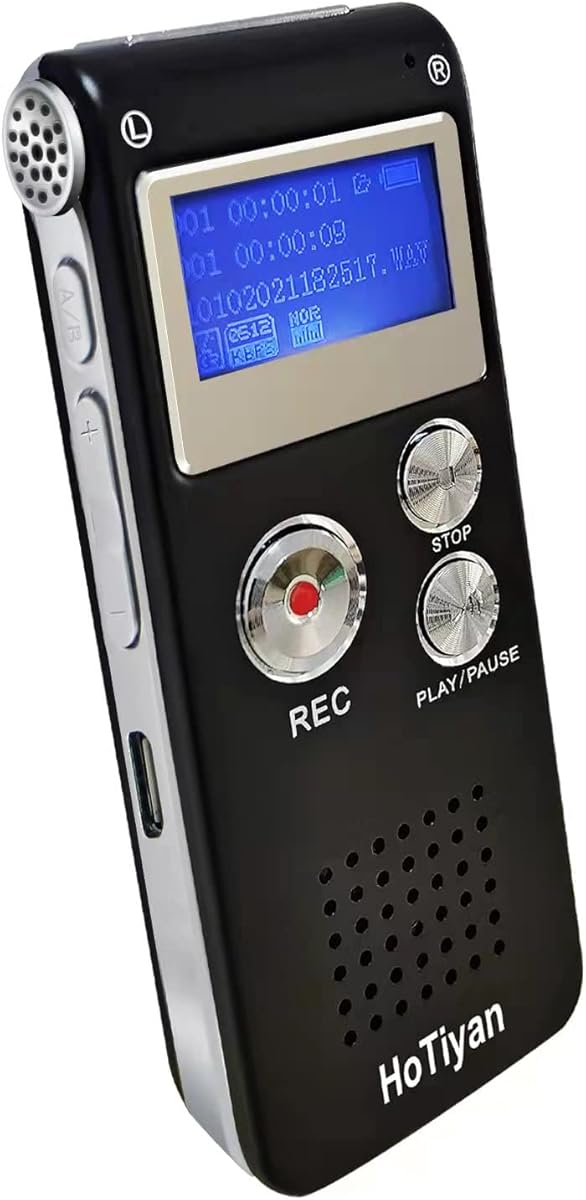
The 8GB Digital Voice Recorder offers a modern alternative to cassette devices and carries a 4.1 rating. It records in MP3 and WAV formats, stores files internally, includes playback functions, and can serve as an MP3 player. That makes it most relevant to older children, students, or families who value storage capacity over a physical tape mechanism.
We may earn a commission when you buy through this link, at no additional cost to you.
A sensitive microphone, noise-reduction function, and recording chip support higher-quality stereo capture. Voice activation is another useful feature: the recorder begins when sound reaches the configured threshold and stops when it falls below that level. This can reduce unnecessary silence in a lecture, meeting, or interview, although an adult should set expectations and permissions appropriately for younger children.
The built-in 8GB storage can hold a substantial number of files at several supplied bit-rate estimates, and the rechargeable lithium battery supports approximately 20 hours of continuous recording or eight hours of headphone playback according to the product information. Files can be transferred to a computer with the supplied Micro USB cable. The trade-off is that it does not save to cassette and has a more technical interface than the toddler-focused devices.
This model is a good fit for a child studying independently, rehearsing presentations, recording interviews, or building an audio library. Features such as A-B repeat, variable playback speed, timestamps, file naming, and password protection add value for school-aged users. It is less suitable for a child who specifically wants to experience tape transport, although it can still serve as a versatile digital recorder.
Eight gigabytes of built-in storage separates this recorder from short-message voice pads. A child can retain multiple projects, class sessions, and practice takes without swapping memory cards.
A-B repeat and variable playback speed are especially useful for learning and practice. A student can revisit a difficult passage, compare a performance, or study a recording section by section.
We may earn a commission when you buy through this link, at no additional cost to you.
The right recorder depends on the child, the available media, and the type of activity. Consider format, recording capacity, controls, connectivity, power, portability, and safety before making a selection.
Choose cassette for hands-on music and storytelling, or digital for capacity and file management.
Match the recording window to the length of the child's typical activity.
Favor large, obvious controls for younger children and one-touch recording for easy setup.
Choose a built-in speaker for sharing or headphones for private, portable listening.
Choose an external microphone for interviews and auxiliary connections for outside audio sources.
Choose advanced connectivity for older children; keep it simple for early learners.
Match size, handle style, and power requirements to where the child will use the recorder.
Choose controls and features that match the child's developmental stage and independence.
Before recording, read the device instructions and identify the play, stop, record, rewind, fast-forward, microphone, headphone, and power controls. For a cassette machine, insert the tape in the correct orientation and select a blank cassette for original recordings. For a digital model, confirm the remaining storage and choose a suitable file format before starting. With a child-focused voice device, demonstrate one complete cycle of pressing record, speaking, stopping, and playing back.
Place the microphone at a comfortable distance and speak or sing clearly. Keep the device stable, avoid touching the microphone opening unnecessarily, and stop the recording after the intended message to prevent extra silence. For cassette recorders, use the automatic stop feature when available and rewind the tape before removing it. When transferring digital files, organize recordings with clear names and timestamps so a child can find them without help.
Store the recorder in a dry place and clean the exterior with a soft, dry cloth. Protect cassette players from moisture, dust, and impact, and avoid opening the mechanism. Remove batteries from long-term storage devices if instructed by the manufacturer, and keep charging contacts clean for rechargeable models. Replace worn cassettes, check cables for damage, and supervise younger children around batteries, magnetic attachments, cords, and small removable parts.
The LeapFrog Let's Record! Music Player is the most age-specific choice, with guidance for children 18 months and older, large activity-based controls, short recording slots, and built-in music. The Talking Products Voice Pad is another simple option, offering large tactile buttons and a straightforward record-and-play workflow. Young children should still receive supervision when changing tapes, handling cords, or recording personal information.
Yes. The TOMASHI compact and blue models, TOMASHI Wallkman, JENSEN, PROSCAN, QFX, and Deluxe Products recorder all support cassette recording. They require compatible blank tapes, while the QFX also offers direct USB-to-cassette recording. The LeapFrog, Talking Products, and 8GB digital recorder save audio electronically rather than on physical cassette.
A recorder with a built-in microphone and automatic level control is well suited to reading practice. The JENSEN and PROSCAN options include those features, and both offer external microphone connections. The LeapFrog device may be more engaging for a preschooler, while the 8GB digital recorder provides storage, repeat playback, and variable speed for an older child who wants to review a performance.
Several models can transfer audio from a connected source to cassette. The Deluxe Products recorder includes an auxiliary cable, while the JENSEN provides an auxiliary input, and the QFX supports USB-to-cassette recording along with line-in options. The source device must provide a compatible output, and an adult should manage the connection and confirm that recording is permitted.
The Talking Products Voice Pad records a single sequence of up to 40 seconds, making it best for short words, sounds, prompts, and reminders. The LeapFrog device stores up to three minutes on each of several sound buttons, for 30 minutes total. The LeapFrog option therefore supports longer recordings, while the Voice Pad prioritizes a compact, simple communication format.
They can be, but adult guidance is important. The LeapFrog device streams music and soundscapes from a compatible device, and the QFX supports Bluetooth playback through its speaker. Parents should control source material, downloads, and connected devices, and they should avoid allowing unattended access to unknown content or open communication channels.
The supplied product information does not state that cassette tapes are included. Families should check the package contents and obtain compatible blank cassettes for original recordings. The QFX also supports playback from MP3 files on a USB drive, while the other digital-style alternatives can provide additional ways to store or stream audio without cassette media.
Keep the unit dry, protect it from impact, and wipe the exterior with a soft, dry cloth. Do not push objects into the microphone, headphone, or auxiliary openings, and avoid opening the cassette mechanism. Store batteries according to the instructions, inspect cords regularly, and keep magnetic accessories away from young children who could swallow them.
The LeapFrog Let's Record! Music Player is the strongest all-around pick for young children because it combines creative recording, active and calm music, learning content, and Bluetooth streaming. The Talking Products Voice Pad offers a focused, economical option for short speech and phonics activities, while the QFX RETRO-39BT provides the broadest connection between cassette, USB, Bluetooth, MP3, and FM sources.
Prioritize the format that matches the child's interests and the family's media. Choose a simple tactile model for early creative play, a microphone-equipped cassette deck for interviews and physical recordings, or a high-capacity digital recorder for school-aged children who need long sessions and computer transfer. Portability, speaker access, power requirements, and adult supervision should be considered alongside recording features.
Product listings, bundle contents, ratings, and current prices can change, so confirm the specifications and included accessories before purchasing. With the right balance of simplicity, creativity, and recording capacity, a tape recorder for kids can become a tool for stories, music, communication, and learning that extends well beyond a single play session.